
Leeds Beckett University - City Campus,
Woodhouse Lane,
LS1 3HE

Harnessing our graduate skills to revolutionise the future of water monitoring
Last year, LBU joined forces with Aquatrust Water and Ventilation Limited on an innovative new Knowledge Transfer Partnership (KTP) project, to create a bespoke remote system to monitor water for Legionella bacteria. Managing the project as a KTP Associate, is Leeds Beckett graduate Christina Thompson-Mountford. Here, Christina shares the innovation behind the project and how the team are tackling it, the opportunities she has experienced so far as a KTP Associate, and her aspirations for the future.

What was your background before starting the KTP?
I graduated from Leeds Beckett University in 2023 with a degree in Robotics and Automation. During my degree, I took part in a module where we had to research different ways that water conditions could be monitored to prevent Legionella Growth. It was actually through this module that I first heard about the KTP. It sounded like a great way to get hands-on with research and technology.
What was the motivation for Aquatrust to start a KTP?
The idea to start the KTP came from Paul Kenny, Aquatrust’s Sales Director. After completing the Help to Grow: Management scheme at Leeds Beckett University, he came across KTPs and saw the potential they offered. Around the same time, Aquatrust was also exploring various remote monitoring technologies available on the market to support clients in rural areas and work towards becoming a more sustainable company. However, they quickly realised that none of the existing options quite met their needs.
So, Aquatrust decided to take matters into their own hands. They aimed to create a product designed specifically for water hygiene—developed by a water hygiene company. The KTP was the perfect opportunity to turn that vision into a reality.

Christina
Can you give a brief overview of the project?
Over the 32-month project, the primary goal is to create a remote monitoring system for measuring the temperature of various water systems. Monitoring temperature is important in identifying the conditions in which legionella is likely to be present. The core of this system is an IoT (internet of things) device that will take regular temperature readings and transmit the data remotely.
This data will then feed into a backend landing platform, built using software like Azure IoT, where it will be securely stored and processed for analysis. While this platform is primarily backend-focused, it will provide Aquatrust with reliable data storage and integration, enabling them to use the information to monitor trends and identify any potential issues across their sites.

Christina working on the Aquatrust prototype
What opportunities have you undertaken during the KTP?
Recently, I had the exciting opportunity to attend The Things Conference (TTC) in Amsterdam as part of my work on the KTP. TTC specifically focuses on LoRaWAN (Long Range Wide Area Network) and IoT technologies, bringing together professionals to share developments in the field.
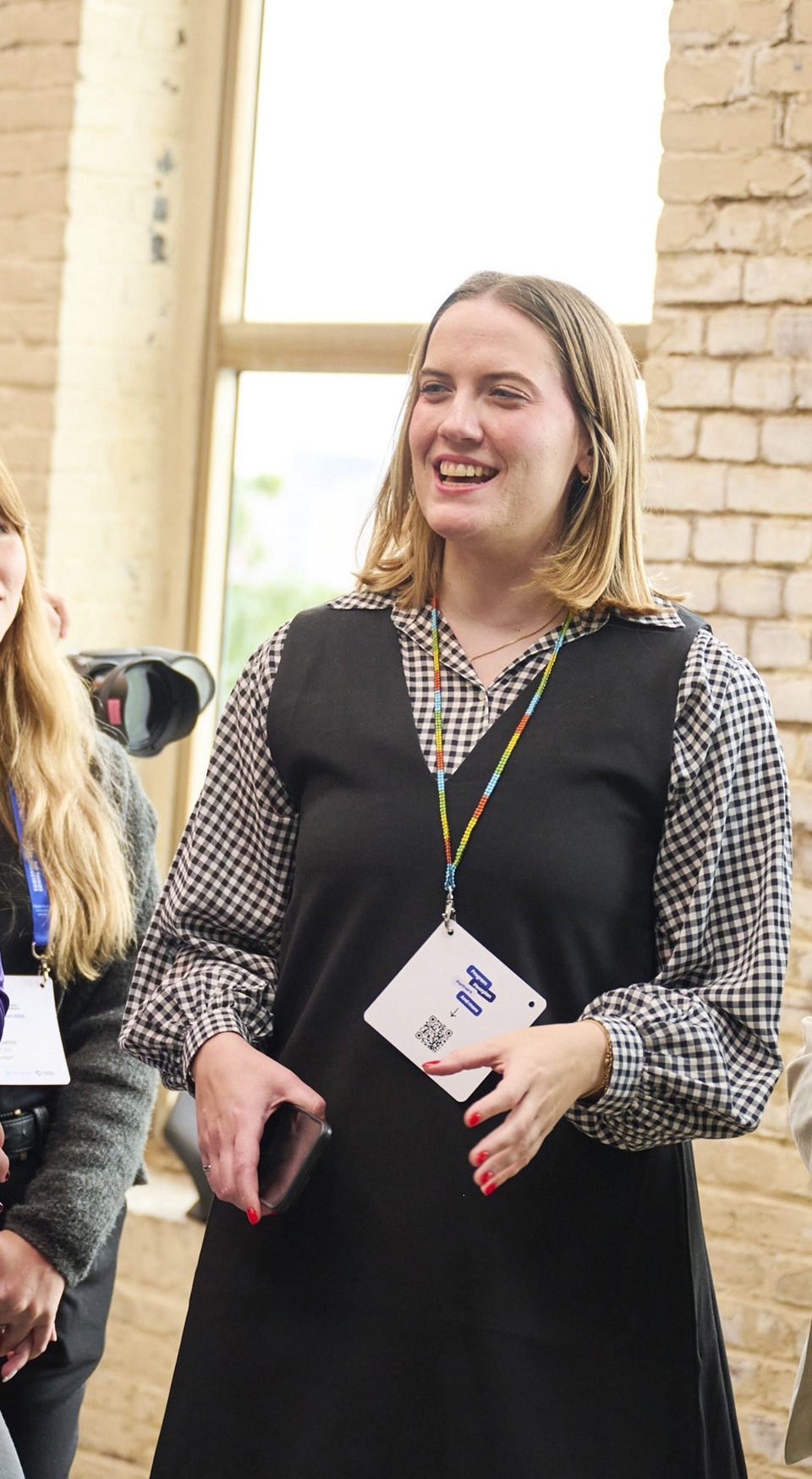
Attending the conference was incredibly valuable for my project, I gained a lot of knowledge about the latest advancements, which could be applied directly to the work we are doing. During the conference, I had the chance to attend a Women in IoT meetup. It was an inspiring session where women from all walks of life shared their journeys into the IoT space. Hearing their stories about how they were welcomed into the field and the challenges they overcame was both motivating and insightful.
On a personal note, this was also my first time travelling abroad on my own, which felt like a major achievement. Navigating a new city and meeting new people was both exciting and a little nerve-wrecking, but ultimately gave me a real sense of accomplishment.
In addition to the KTP, I’ve recently been able to start my PhD that aligns closely with this project. The work I’m doing for my PhD builds onto the foundation of my KTP but will branch into new and innovative areas after the KTP concludes. It’s a great way to dive deeper into research and some novel applications.

Christina at The Things Conference during the Women in IoT Meet-up
What has been achieved so far in the project?
I’m currently 12 months into the KTP project, and it has been a busy year of learning and development.
In the first few months, I focused on getting to know Aquatrust as a company- everything from its internal systems and processes to the specific guidelines around Legionella control. This included a lot of background research and writing reports on relevant legislation to make sure I had a thorough understanding of the industry standard. I also went on several site visits to see firsthand the challenges they face and to get a feeling for how our monitoring technology might help.
Once I had a good grasp of the requirements, I began developing the initial prototype based on a minimum requirements list, which was created alongside the Aquatust team. After some rounds of testing and refining the prototype, I moved on to creating a more permanent version. This version could be tested in real-world conditions to ensure it met all of Aquatrust’s requirements before we moved towards manufacturing the final device later in the project.
Alongside developing the prototype further, I’ve also been gathering data for mini-case studies that feed into an academic paper I’m working on. This paper explores the sustainability benefits of using a remote monitoring system, looking into factors like miles travelled, emissions produced, and potential cost savings. Another area I’m researching is how different pipe materials affect water temperature readings and, consequently, the accuracy of our remote monitoring system. This data helps us to understand the practical considerations and the benefits of using our technology in different settings.

Close-up of the prototype
So, what’s next?
Over the next few months, I’ll be working on designing the Printed Circuit Board (PCB) and getting the project ready for manufacturing. This is such an exciting part of the process because it’s all about turning the breadboard prototype into a real device that can be installed and tested at Aquatrust’s sites. It’s really rewarding to think that the work I’ve done could have a real impact on the industry.
Looking further ahead, I’d like to complete my PhD at Leeds Beckett University, building on the knowledge and skills I’ve gained through this project. My aim is to deepen my expertise in this field and explore innovative solutions that could benefit both Aquatrust and the wider industry.

Christina Thompson-Mountford
Christina is a KTP Associate, working on the Knowledge Transfer Partnership between Leeds Beckett University and Aquatrust. She is a graduate of LBU’s BEng Robotics and Automation degree and is passionate about using technology to solve real-world problems and drive innovation.
You can connect with Christina on LinkedIn here.





