

Contact us
Email us with any questions you might have.

Leeds Beckett University - City Campus,
Woodhouse Lane,
LS1 3HE
Altitude training is an effective method to enhance performance at sea-level as well as competition at altitude. Typically, altitude training takes place at higher elevations, which necessitates travel to other countries for several weeks at a time. More recently, research and our practice have shown that carrying out regular training sessions in an artificial altitude environment can be just as effective, more convenient and more cost-effective.
This reduced availability of oxygen stimulates a range of specific adaptations that are almost impossible to create at lower altitudes. We can use this stimulus in combination with exercise to target muscle adaptations for the specific requirements for your sport or activity to help you achieve otherwise unattainable levels of physiological capacity and performance.
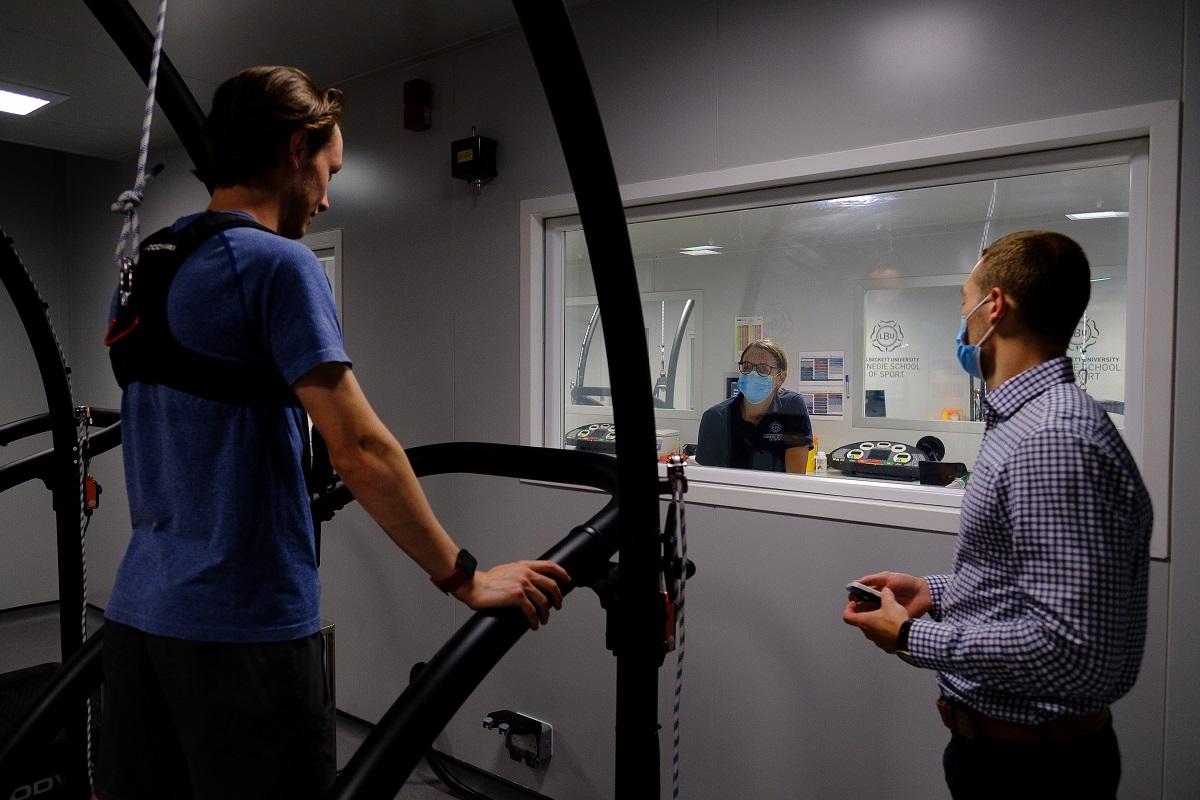
We use our state-of-the-art environmental chambers to simulate precise hypoxic conditions and deliver our evidence-based Intermittent Hypoxic Training (IHT) modalities:
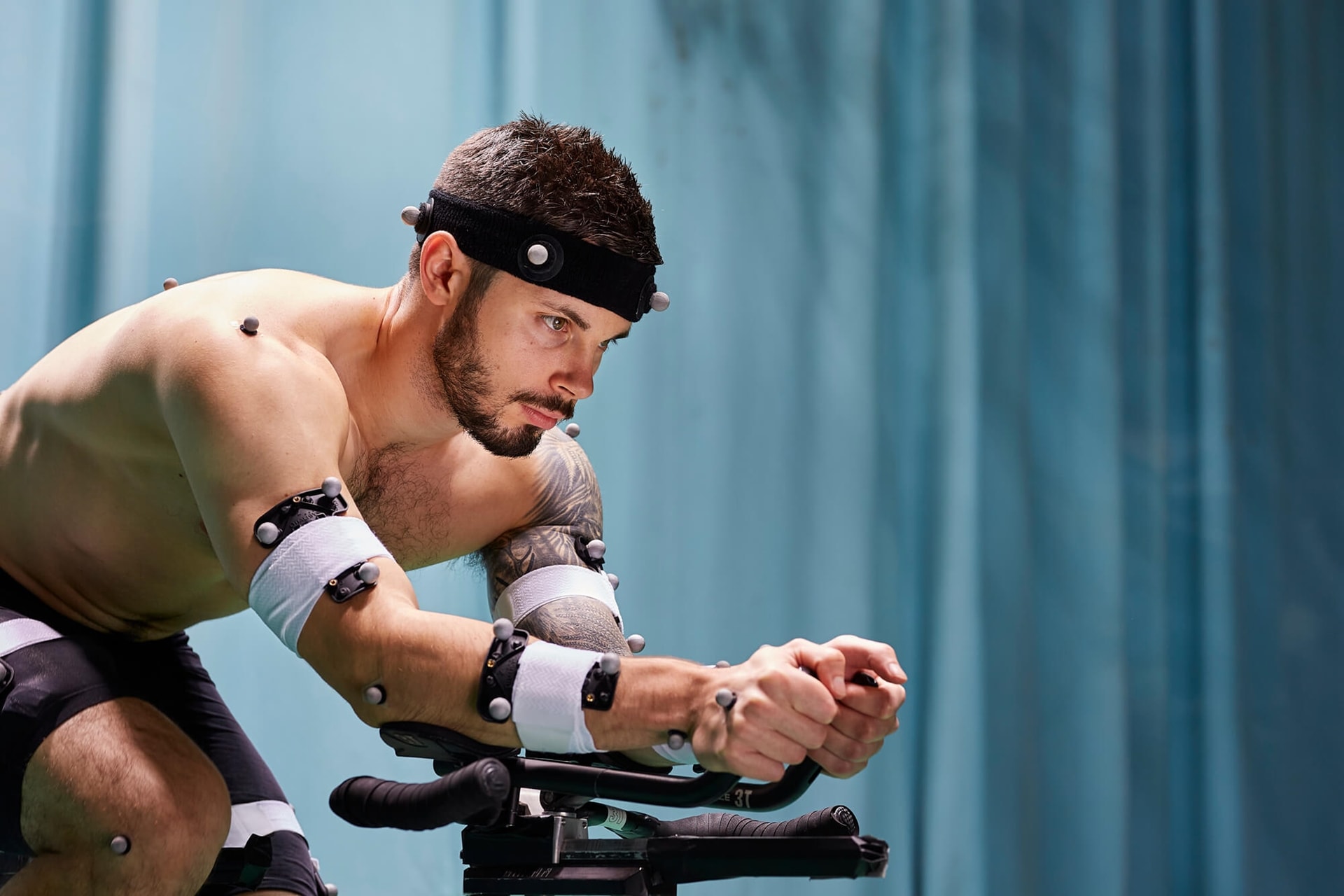
We provide bespoke protocols, continuous monitoring, and a sports‐science framework that supports safe, progressive adaptations for your sport and event. This mode of training is particularly beneficial for those individuals who want to fully optimise their performance in all disciplines of running, cycling, triathlon, and rowing, as well as in team sports such as rugby (both codes), football, basketball and hockey.
For more information and to understand more about how our Hypoxia services can help you or your team reach the next level.
We also provide hire of the Cloud 9 altitude generator system, allowing individuals to complete hypoxic exercise sessions at home.
To find out more, please book a FREE online consultation or email us at humanperformance@leedsbeckett.ac.uk
We provide bespoke protocols, continuous monitoring, and a sports‐science framework that supports safe, progressive adaptations for your sport and event. This mode of training is particularly beneficial for those individuals looking to optimise physiological adaptation for sports performance and/or individuals looking to pre-acclimatise to high altitude.
An initial hypoxic response test (HRT) is recommended to better understand your physiological responses (arterial oxygen and muscle oxygen saturation, cardio-respiratory and perceptual responses) under hypoxia (3000-6000m). This includes a treadmill-based protocol at a fixed-speed, with increasing gradient every 3-minutes until exhaustion. Pre/ Post HRTs are costed at £520, or pre/mid/post at £725.
IHT sessions, supervised by a qualified physiologist, can be booked in our environmental chamber at £115/session. This includes 1-hour training sessions at (3000-5000 m), involving treadmill walking/running at set intensities based off the HRT.
We offer an initial 1-hour walkthrough of the system, training mask set up, safety considerations, and personalised programme guidance. Price £70. Included free with all 3-month rentals.
Cloud 9 Rental packages
Book a free consultation with one of our advisors and they will discuss your ambitions, context, and altitude training needs, helping to establish a bespoke package which is best for you.
Dan delivered a novel intermittent hypoxia training intervention for a group of GB&NI Team athletes, priming a research question about its efficacy in this population. The work demonstrated meaningful change in key variables linked to long-distance running performance and insights into said changes, e.g. increased muscle oxygen saturation and haemoglobin mass. Dan's reporting to athletes and coaches clearly explained the application of results to inform their ongoing practice.
Dan delivered intermittent hypoxia training to one of our athletes to supplement her cross-training for eight weeks. In my experience, as an international coach, this athlete returned to running sessions with ease, looking stronger than any other athletes that just did regular cross-training. We found it to be a very positive experience for the athlete making the return to running plus it did not take long for the athlete to compete at the levels prior to her injury.
We have a long history of supporting athletes preparing for racing in hot conditions as long ago as 1993. More recently we worked with a number of triathletes and track athletes alongside their national federations to develop specific acclimatisation strategies and provide heat acclimatisation exposures in the lead up to the Tokyo Olympics. Here are some of our expert team who will inform and support your training.
Dr Daniel Snape is a researcher in endurance and environmental physiology. His research focuses on heat acclimation for competition in hot environments and has supported athletes preparing for major championships.
Dr Barney Wainwright is a Senior Research Fellow with 25 years of experience providing applied services to athletes and teams from recreational to Olympic level. He has expertise in endurance performance physiology, biomechanics, and fluid mechanics, with a focus on cycling, running, and canoeing.
Professor John O'Hara is the Director of the Centre for Human Performance. He is an applied scientist with expertise in carbohydrate metabolism, endurance performance, environmental physiology and nutrition. John is an accredited sport scientist with the British Association of Sport and Exercise Sciences.
Dr Daniel Snape is a researcher in endurance and environmental physiology. His research focuses on heat acclimation for competition in hot environments and has supported athletes preparing for major championships.
Dr Barney Wainwright is a Senior Research Fellow with 25 years of experience providing applied services to athletes and teams from recreational to Olympic level. He has expertise in endurance performance physiology, biomechanics, and fluid mechanics, with a focus on cycling, running, and canoeing.
Professor John O'Hara is the Director of the Centre for Human Performance. He is an applied scientist with expertise in carbohydrate metabolism, endurance performance, environmental physiology and nutrition. John is an accredited sport scientist with the British Association of Sport and Exercise Sciences.