

Leeds Beckett University - City Campus,
Woodhouse Lane,
LS1 3HE
How to become an art therapist
Art isn't just about creating beautiful pieces, use it to help people facing difficult and distressing issues.
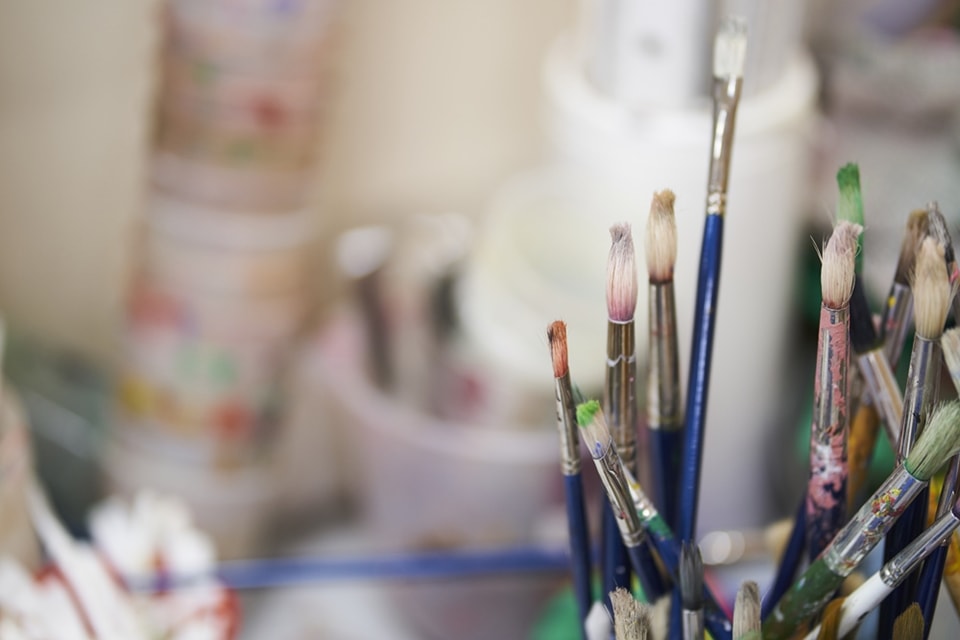
What is an art therapist?
Art therapists work with a wide variety of clients who have suffered trauma, have learning disabilities, or life-limiting conditions.
Art therapy aims to channel a client's energy and focus into an art-based activity to give them an alternative way to express their emotions and reflect on the challenges that they face. As an art therapist, you'll have the dual role of guiding clients through the creative process, while also helping them to understand and deal with the emotions that surface.
What qualifications do you need to be an art therapist?
Undergraduate degrees - a degree-based background in art - including fine art, visual art, or graphic design - would usually form the basis of acceptance onto relevant postgraduate studies. Graduates from a health, education, or social care background may also be accepted onto a postgraduate course if they have a proven commitment in practicing visual arts.
Postgraduate studies - to be an art therapist, you'll need to be registered with the Health & Care Professions Council (HCPC). To qualify for registration, you'll need to complete a HCPC approved postgraduate course, which will lead to a professional qualification. Successful completion of the postgraduate course will also make you eligible for membership of the British Association of Art Therapists (BAAT).
What does an art therapist do?
As an art therapist, you'll combine your professional experience and love for visual arts and therapeutic support to guide clients through a creative process designed to draw out emotions and reflect on emotional issues.
You'll develop and deliver programmes and activities based on the needs of individual clients or groups.
Clients may be referred to you for many reasons and you'll collaborate with other practitioners to identify a client's needs and build a tailored plan featuring appropriate arts-based activities.
Clients will often have little or no experience with art, so you'll need to give them the confidence to explore different media and use their imagination. You'll help them to understand how what they've produced might relate to their suppressed emotions and internal conflicts, supporting positive changes in their behaviour and wellbeing. This will be an iterative process which involves exploring new media and artistic styles that produce more positive outcomes. You may find yourself having to challenge clients to open up to the process and its outcomes.
You might work for the NHS, the private health sector, local authorities, charities, or the prison service or you might be self-employed, receiving referrals from multiple organisations or individuals. Whichever path you choose, many of the activities within the role will be the same.
Becoming an art therapist could be for you if…
-
You're an artist by nature
Art therapy is a great way to pass on your love of art to others in ways that will have a profound positive impact.
-
You're empathetic
The ability to understand a client's emotions and conflicts is essential to being able to support them in exploring and understanding themselves.
-
You're a deep thinker
Art therapy requires the ability to analyse - with a professional and scientific approach - a client's needs based on data provided and your own assessments.
-
Communication comes naturally
It's essential to be able to pitch your communications at the correct level and to a wide audience.
-
You think outside the box
Developing individual programmes of therapy for clients requires inventive, imaginative, and inspirational thinking skills.
What are the typical working hours for an art therapist?
If you work within the NHS, local authority, prison service or other state organisations, you're likely to work Monday to Friday 9am to 5pm.
Private health providers will probably require more flexibility, as they tend to work around clients' schedules.
If you choose the self-employed route, you may have more flexibility, but, of course, any successful business will need to react to customer demand.
In the NHS there are a number of pay grades (Bands):
- A newly qualified therapist - is likely to be in Band 6, starting at £37,338 rising to £44,962
- Experienced NHS art therapists - can earn between £46,148 and £52,809 (Band 7)
- Senior and principal art therapists would be in Band 8a with salaries ranging from £53,755 to £60,504
These rates are based on Agenda for Change pay scales as of April 2024.
In the private health sector, salaries can be more varied and negotiable.
As a self-employed art therapist, you'd typically charge an hourly rate depending on your experience and the rates negotiated with different organisations:
- Individual sessions - £45-£70 per session (usually 50 minutes - 1 hour)
Remember that as a self-employed art therapist you may have significant overheads such as rental of consultation and workshop space, utilities, and professional indemnity insurance which need to be taken into account.





