
Leeds Beckett University - City Campus,
Woodhouse Lane,
LS1 3HE
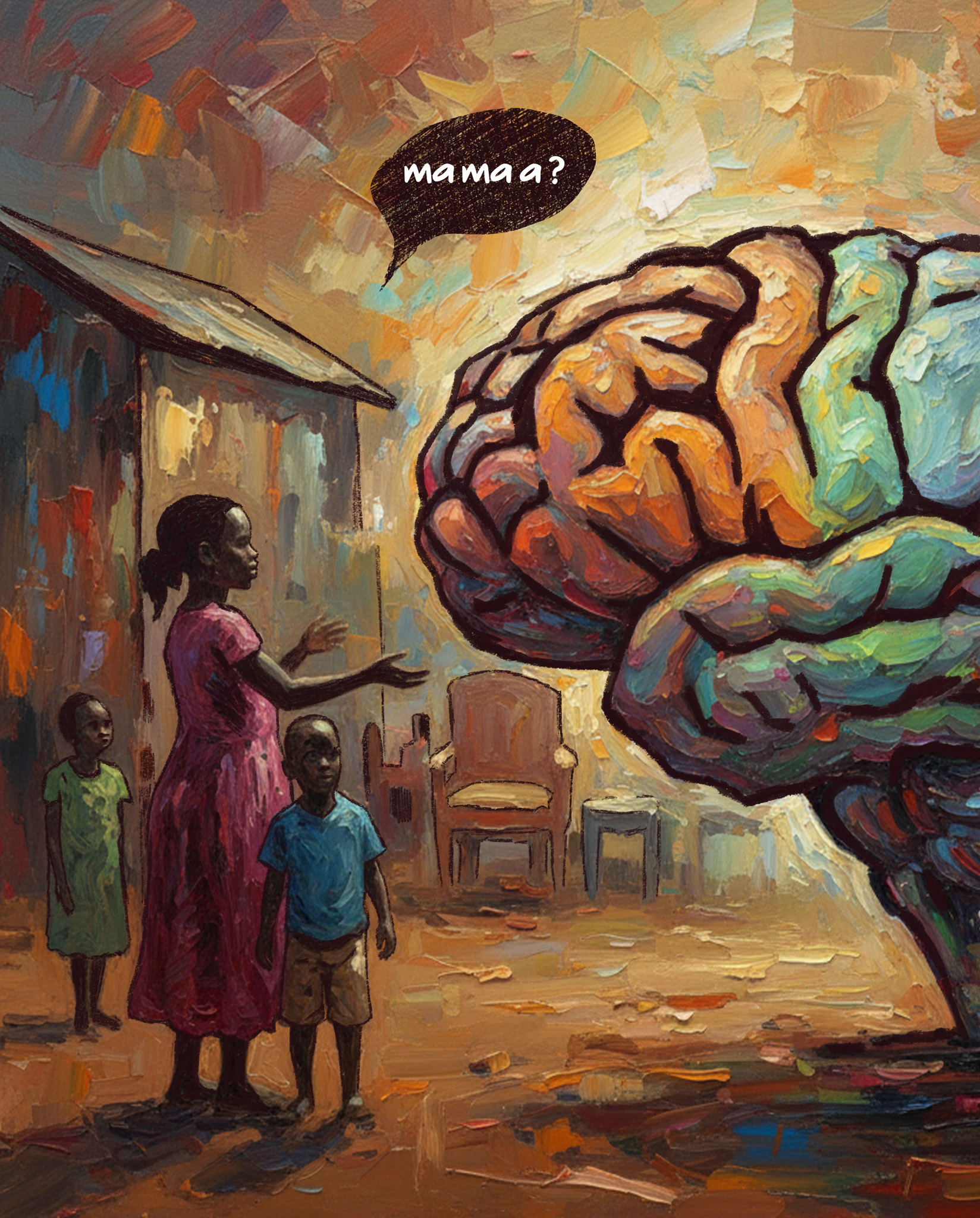
Anchored and rooted
A story about a mother whose strength and the kindness of others helped her find her way back home.
For many survivors of human trafficking, home is often where the pain began or what they spent years trying to escape. When they finally make it back, comfort isn't guaranteed. Some find silence where warmth should be, judgment instead of care. They must rebuild from nothing, piecing together a new life in solitude. But for me, home was different. My roots held firm even when life tried to uproot me. Through hardship abroad and the long road to healing, my family, and the strangers who became family, anchored me. Home has always meant safety that breathes, belonging that forgives, and love that stays even when everything else falls apart.
***
This really proved to be true on the day that I returned to Nairobi. I'd only been able to reach my uncle, asking him to send me fare. I thought he'd be the only one waiting at the bus stop. Instead, when I alighted, he was there with my grandmother, my aunts, and other relatives who had rushed from upcountry. Shock. Joy. Shame. They all knew what had happened to me. The night air was thick with dust and tears, and as their arms closed around me, I felt my body remember what safety felt like, solid ground, familiar hearts, the sound of home breathing me back to life. Tears filled every eye, ululations cut through the night, and for a moment, the pain I carried felt lighter.
***
I was born in Kiambu County, in Mangu where I was christened Anastacia Njeri. Life at home was never easy, though I grew up with both parents. I still remember my mother's voice calling from the smoky kitchen, the clatter of sufurias and the smell of boiling maize, which was all we had to eat sometimes, scents and sounds that clung to me long after I left home. They struggled to educate us, and by Grade Seven, I had to drop out to work as a house help. I was just a child, barely a teenager, scrubbing floors and cooking for strangers.
After three years, I met a man who made me his wife. When he first smiled at me, I fantasized about how marriage would finally bring rest, a place to be seen, protected, and loved without fear, but the reality of things quickly showed me how heavy life could be. I became a mother of two, juggling housework and a job in a small hotel. Still, the money was never enough, and my husband's temper made home a battlefield.
Eventually, I went back to my mother's house, broken but determined to rebuild. I'd heard of opportunities for young women in the Gulf. I wanted better for my children, and to ease the burden on my family. My mother didn't say much when I told her I was leaving, just held my hand a little longer than usual, her silence heavy with both fear and faith. I sold what little I had, paid an agent, and left Kenya full of hope.
When I landed in Saudi Arabia, I was assigned to a doctor's household. The air smelled of antiseptic and loneliness, and the unfamiliar words swirling around me made my heart race, making me feel small, clumsy, and utterly out of place. The work was hard, but for the first two months, they treated me decently. In the third month, everything changed. They added more work, but at least when I protested, the agency intervened. After four months, as per the contract, I was under my employer's total control.
The hours got longer. The insults became sharper. My back and my spirit broke in silence.
Desperate, I sought help from Kenyan workers I found online. Each message I typed trembled with doubt, what if they betrayed me? But the loneliness was louder than fear, and hope, however fragile, pushed me to trust strangers with my truth. I couldn't tell my mother what was happening because it would have crushed her. The women in those forums told me about "Kemboi," a man who helped people escape bad employers.
When I met him, another Kenyan, I was five months into my stay in a foreign country and I was sure I had found someone who could take care of me like a brother. There was warmth in his eyes and a calm in his voice that reminded me of my uncles back home, the kind of familiarity that made me believe I could finally exhale. I took the risk. For the next eight months, I worked house to house. The pay was inconsistent but better. Every shilling I earned went home to clear my mother's debts. My sister told me how debt collectors had been harassing her, and I swore to end it.
By the ninth month, the loans were paid. My mother told me, her voice soft over the phone, "Now start saving for yourself." Those were the last words she ever said to me.
When she died, my world went silent, like time itself had stopped, and I knew nothing would ever make sense again without her voice to call me home. I wanted to go home for her burial, but I was now undocumented. Depression set in. I stopped working, stopped caring. I reported myself to the deportation offices, begging to be sent home. Weeks turned into months.
Then one day, instead of being released, I was bundled into a van and driven for hours. As the van doors shut and the stale air pressed against my face, confusion swirled. Soon, I would discover that I was being taken to court. My former boss had accused me of stealing gold and money.
I couldn't believe it. I had left that house to escape abuse, not to steal. I had no lawyer, no money, no translator. I kept begging them to show the video evidence they claimed to have. It never appeared. Eventually, the judge dismissed the case, but my freedom still didn't come.
They sent me back to the deportation offices. then brought me to court three more times on new fake charges, all in Arabic. Finally, they ruled that I had to "finish my contract" by serving ten months in prison before deportation.
I didn't even know there were real prisons in Saudi Arabia until that day.
***
The first door slammed behind me with a metallic echo I'll never forget. A policewoman ordered me to strip for a search. I was humiliated. She was a woman like me, how could she not see my suffering?
They gave me an oversized blue uniform and locked me in a cell with two others. One was Kenyan. She told me, "Don't lose faith. We'll leave this place." In the darkness, I clung to my mother's voice in memory; soft, steady, reminding me that even a seed buried deep in the soil still reaches for the light. At night, we shared stolen moments of laughter over scraps of bread, trading stories of home that reminded us we were still human.
After two weeks, I was moved to a larger block, filled with women, some in for theft, some for murder. I was innocent, yet I was one of them now.
I cried for days. I prayed even more. My mother's death and my children's faces haunted me. My sister, when I managed to call her, stayed strong for both of us. "Ten months isn't forever," she'd whisper. I knew she was right and somehow time crawled by.
When I finally completed my sentence, I went to the office and demanded my release. They called my former boss to surrender my passport. I signed my papers and felt air return to my lungs. I was finally going home. I could finally leave prison life behind me where they measured our dignity by issuing only one pad every month. No underwear.
When my flight was confirmed, I had nothing to pack. A friend lent me a dera. They returned my Bible, phone, and passport.
As I left, a guard I'd struck up some sort of friendship with asked. "Will you ever come back?"
"Never," I said. When the cell door finally opened, my hands trembled as I stepped into the sunlight, its warmth stung my skin, but in that sting, I felt myself return.
My SIM card was deactivated, so I couldn't tell anyone I was coming home. At my layover in Ethiopia, I found free Wi-Fi and messaged my uncle. He promised to find me some fare once I landed in Mombasa.
On the plane, a woman beside me noticed my confusion. She started talking to me gently, getting me to open up in a motherly way. I told her everything. By the end of the flight, she held my hand and said, "You made it through. You'll be okay."
When we landed, she lent me her phone so I could call my uncle. Before I could even arrange my fare, she rallied other passengers to raise some money. Four thousand shillings, enough for food and the bus. I wept. Her family dropped me at the bus stop. Her hand lingered on mine like my mother's once had.
I reached Nairobi at midnight. My uncle was waiting, not alone, but with my entire family. My grandmother, my aunts, my cousins. They had all come. The night air filled with tears, laughter, and ululations. As I sank into my grandmother's embrace, the smell of earth and woodsmoke from her shawl wrapped around me, grounding me in the love I had spent months yearning for.
***
Rebuilding wasn't easy. I had nothing. My kids had grown up in my absence. Friends I'd made in Saudi sent me a little money, and my sister handed me savings she'd kept for me. I used it to move to a new town, rent a small house, and start a food stall. For once, it felt like things might turn around. Healing was slower than hunger. For the first time in years, I'd woken up smiling, certain that this new venture would finally turn our lives around; then, in a single misstep, everything unraveled. On my first day of business, I dislocated my ankle getting off a matatu. I couldn't walk for six weeks. My money ran out fast. My children were hungry.
A fellow former prisoner came to stay with me to help keep the stall running. We tried, but the business collapsed. Most days, we ended up eating what we couldn't sell.
By the time I healed, there was nothing left. My sister stepped in again, helping pay school fees for my kids. I searched for any work I could find, but jobs were scarce. Some nights, it was only my children's laughter as they shared about their adventures that reminded me tomorrow might still hold something better.
Eventually, we reached out to my ex-husband. He agreed to help only if I moved back in. I had no choice. I went back, but not for long. His resentment boiled over. Finally, one day, he attacked me. His eyes burned with something I couldn't name. The knife flashed in the dim night light, cold, sharp, too close. My breath caught. Time splintered into heartbeats, then silence before the neighbours saved my children and me. My mother-in-law told us to leave and never look back.
***
We left with nothing. Just the clothes on our backs. Once again, my sister opened her doors, rented a small place for us, and helped my kids return to school. I don't know what the future holds. But I know this: I've fallen, been beaten, been caged, and still, my people have carried me home. My mother's strength lives in my sister's kindness, my uncle's faith, the hands of strangers who gave when they didn't have to. My family, my community, never stopped holding on. Home, I've learned, isn't a place but the hands that pull you back to shore.





