
Leeds Beckett University - City Campus,
Woodhouse Lane,
LS1 3HE
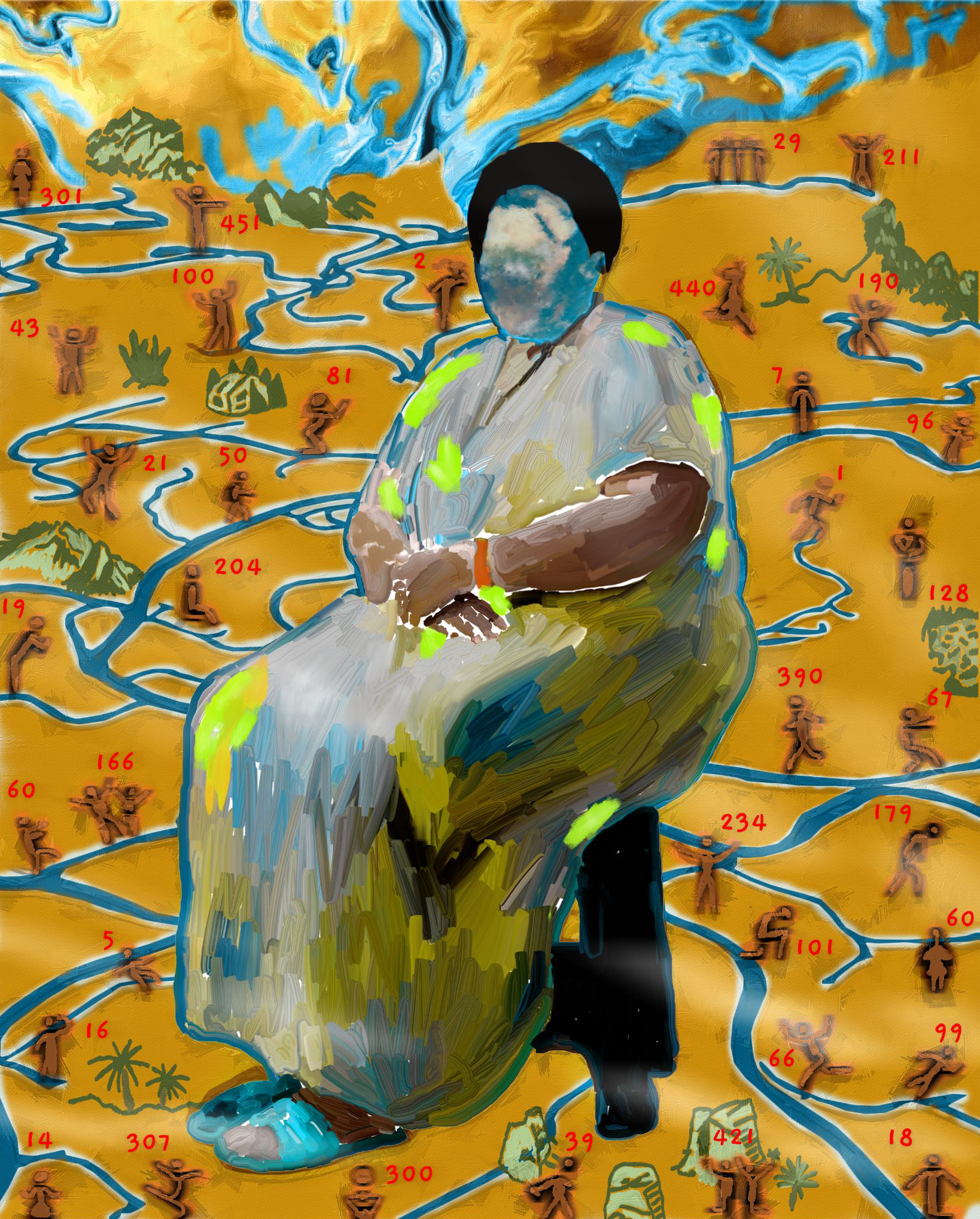
Community Mother
A story about a courageous mother and survivor, Mary.
There is something powerful about a mother's love. It doesn't always come from giving birth, sometimes it comes from surviving, from choosing to care even when you're broken. In many African communities, motherhood means sacrifice, protection, and strength. For women like Mary, it also means rising from pain to help others heal. After escaping abuse herself, she became what many now call a Community Mother, a woman who guides others through trauma, helps them find their way back home, and stands in the gap when no one else will. It's a love that costs her, but also slowly helps her heal.
***
Mary is a survivor of slavery and human trafficking. That alone would make her story worth telling. But what makes her unforgettable is what she did afterwards. When she escaped, word began to spread of a woman who helped others get away from what she herself had endured. Soon, people began calling her 'Mother Mary'. The name stuck, not just because it reflected her care, but because she had become a living symbol of refuge. Her most extensive work was in Jordan, where she helped over 450 people, mostly women from Kenya, Uganda, and Ghana, escape abuse in prison and return home.
For Mary, the idea of going home wasn't just a personal dream. It became a mission. While others focused on surviving, she focused on bringing others home.
"In a foreign land," she says, "it's not just about leaving. It's about finding your way back."
***
Mary's story begins in hardship. Her first job took her to South Africa, where she worked for a family that made her sleep in the same room as the dog. It was dehumanising but she endured it for five years.
South Africa was not the safe stopover Mary had imagined. Like many others who go there hoping for a better life, she found herself stuck in low-paying work, treated like an outsider in a place that should have felt closer to home. The xenophobia was heavy and constant; people like her were often blamed for problems they didn't cause. She felt isolated, invisible, and afraid. There were days she barely spoke to anyone. Nights felt longer. And even though she shared the same continent as her homeland, she felt further away than ever. In quiet moments, she dreamed of going back to Kenya, even if it meant facing the same poverty she had tried to escape.
One day, while walking the dogs, she saw a chance and ran. She escaped with nothing, no money, no documents, but a tiny bag and a silent prayer.
After years of suffering in South Africa, Mary thought she had finally found a way out. Someone promised to help her return home, to take her back to Kenya, where she could start over. But instead of freedom, she was tricked again. Smuggled out and arriving at night, she was rerouted to Jordan. There, she found herself in a tightly-controlled home, watched constantly, unable to leave. In the dark silence of those nights, she asked herself, "Why me?" She had left behind poverty only to fall deeper into pain. She wondered if God had forgotten her. Many times, she prayed, even bargained, promising that if she ever escaped, she would use her life to help others. That hope was all she had left.
She was locked indoors for nine months, forbidden to step outside. As she endured, her employer became sick and frail. One morning, when her employer returned from surgery and couldn't walk, Mary was given the door keys to let the guests out.
As she stood holding the key, she heard a whisper in her spirit.
"This is your chance."
When it was time for them to leave, she pretended to lock the door but didn't. She quietly returned the key and politely told her employer, "I'm leaving." The woman laughed and asked, "With what keys? Where are you going?" Mary said nothing.
She walked quickly to her room, picked up the small bag she had packed in advance, and ran down the stairs. She left through the still-open door before anyone else could arrive and stop her.
She ran. It was 10:30 am, the air frozen, the streets unfamiliar. She had no winter clothes, no sense of direction. She had been brought in the dark and didn't even know what neighbourhood she was in. At one point, she fell into a deep, icy hole filled with freezing water. Drenched and trembling, she clawed her way out. A few meters ahead, she saw a building with the words 'Mother Teresa' on it. Desperate, she banged on the door.
A shocked caretaker let her in. The Mother Superior, an Ethiopian woman, took her in, fed her, and gave her dry clothes. For the first time in years, Mary felt warm. Safe. Human. Even though it was not the kind of food that she was used to having back home, the warm soup and bread offered so unconditionally by nurturing hands filled not only her stomach but her heart.
Her healing began at that convent. She worked with the nuns at an old-age home and slowly rebuilt herself. But she never forgot her promise. She had once prayed, "God, if You ever help me escape, I will dedicate my life to saving others." And she did.
Her work began with prison visits. She learned that many women who escaped their employers were arrested, not for crimes, but because their documents had been confiscated, making them 'illegal'. She started visiting the prisons regularly, advocating for women held unlawfully. Many of them had been abused, sexually, physically, and emotionally. Some had been denied medical care even when they were seriously ill. Others had been forced to work 15 hours or more a day, often across multiple households, without food or pay.
"It wasn't just that they were being used," Mary says. "They were being forgotten."
She became the voice they didn't have.
At first, the women in prison looked at her with suspicion. Their eyes were tired, hollow, untrusting, used to broken promises and help that came with a price. Many of them didn't speak. Some flinched when she reached out. But Mary understood this silence. She recognised the quiet desperation in their eyes, the hunger that made their hands tremble, the way they held themselves like shadows trying not to be seen. In a foreign country where they had no one to call, no language to beg in, and no home to run to, even death in prison felt like a daily possibility. Mary knew that feeling of being locked in, forgotten, treated like less than human. Each time she walked into those cells, she relived her pain. Psychologists call it secondary trauma when caregivers absorb the wounds of those they help. But to Mary, it was just being human. She sat with them in their darkest hour, not as a saviour, but as someone who had also survived. And slowly, one by one, the women began to trust her, not because she had power, but because she had suffered too.
This work was dangerous. For a long time, Mary had no papers and was living in the country illegally. Every time she walked into a police station or a prison, she knew she too could be arrested. But her own safety had to take a back seat; helping others felt more urgent than protecting herself.
She remembers one case vividly: Wambui, a young mother imprisoned in Jordan, separated from her newborn. Mary worked to track down the father back in Kenya to prove legal parenthood and facilitate the reunion. Eventually, mother and child were flown home together. She was the first one to give 'Mother Mary' her moniker, which would stick as she continued to help others. The emotional and physical weight of carrying others burdens caused fatigue that was soul deep, but every day she woke up knowing that she had to keep going.
Her work wasn't always welcomed. Police officers often fought her efforts, but over time, they began calling her themselves when situations became volatile, like when imprisoned women went on hunger strikes or refused to wear uniforms in protest.
She became a bridge between survivors and officials, and even the Kenyan government recognised her efforts, awarding her organisation for its role in repatriation and reintegration.
***
She later returned to Kenya, continuing her work with the same intensity. Unlike others who came home and expected support from the community, she brought help. Recently, she helped sink a borehole to provide clean water to people who were drinking from polluted rivers; a project that received 9.8 million from a donor organisation. She began to see that rescuing didn't have to mean crossing borders; it could also include building infrastructure and creating hope at home.
In Jordan, they called her 'Mother Mary'. In Kenya, she's now known as 'Mother Water', a reflection of the life-giving, restorative presence she's become. A mother not by blood, but by action. Not through reproduction, but through rebirth.
***
Since her ordeal, she lost contact with the biological children she had to leave behind, but life has given her a new way to nurture. Her family today is made of survivors, prisoners, daughters, and strangers. Her revolution is quiet, but powerful. "They locked me in for almost six years," she says. "But now, I open the gates for others."





