
Leeds Beckett University - City Campus,
Woodhouse Lane,
LS1 3HE
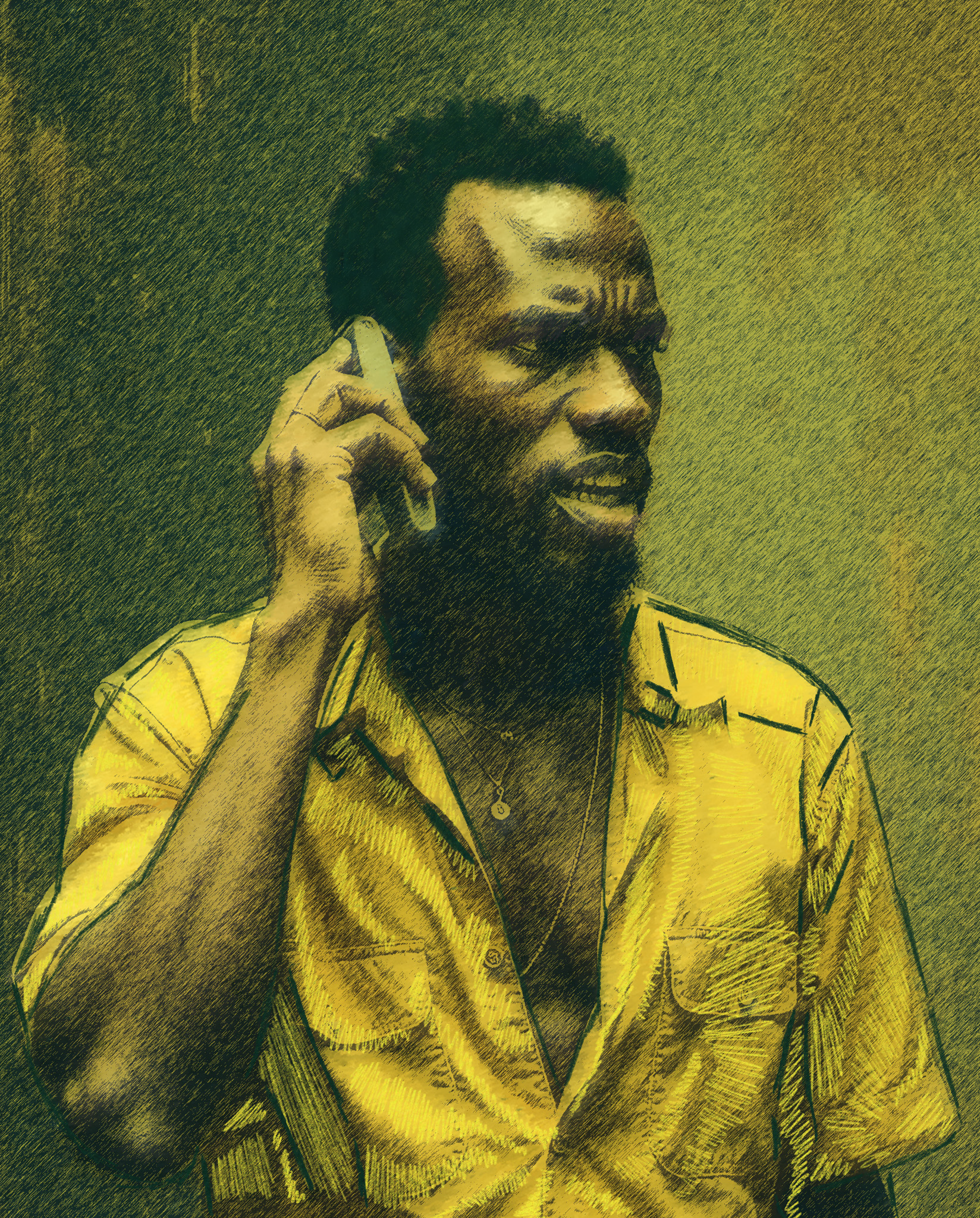
Hell
A story about how a opportunity for Ayub became torture.
Hell is often described in religion as a place of eternal punishment, but in human trafficking, hell is not metaphorical. It is a human-made environment built to erase autonomy, crush resistance, and exploit a victim's every breath. It is a system with its own rules, routines, and punishments. The air smells of fear; the floor feels sticky with unseen stains, and every command, every glance, tightens the cage around your mind. This is not an abstract idea but a functioning, oppressive reality designed with cruelty as its logic. Ayub would learn this harsh truth when he ventured overseas to try and earn a better living but instead suffering inexplicable torture.
***
Ayub grew up in Murang'a, in an industrious farming village that smelled of mangoes and fresh earth. Mornings were filled with the rhythm of daily chores, and everyone knew each other's names. He had loving parents and attended good schools, though money was sometimes tight. He remembers fondly how every morning after a quick breakfast of sweet potatoes and tea, he would run through the dewy fields, his father's voice ringing in his head, urging him to do well because this path to school was the hope for a better future. At twenty, Ayub left Murang'a for Nairobi, chasing opportunity. He hawked boiled eggs, toothpaste, and anything that would earn him a shilling. His uncle, a banker, pushed him toward business studies and helped him enroll at NIBS College, but money ran out after a year and a half. Heartbroken, because he thought education would be his way out of poverty, he felt every door was closing for him.
He joined a friend in Gikomba, learning furniture-making for two years before starting his own shop. His fingers remembered the scent of fresh timber and varnish, the satisfaction of shaping something useful. He expanded to Mwiki, Kasarani, where he also tried his hand at politics, running for a ward representative seat. This was his chance to give back to the community. He came third in the election but felt pride in having tried.
His furniture-making business thrived until COVID-19. Sales collapsed, salaries dried up, and rent loomed. While others returned home, Ayub moved his family to Naivasha. He tried to find a job that would allow him to provide for his family but had no luck. Even after two jobs in Qatar he still couldn't make enough. Back in Kenya, he restarted furniture-making, deciding he preferred doing what he could do well. He knew this trade and that made him confident. With the help of social media he grew a small client base but the bills started to pile up. His children's education and their family home were on the line. He needed more money.
When the opportunity to work in Thailand came up he jumped at it. The agents demanded KSh 300,000, far more than usual, but promised fast-track visas and a one-year contract earning $2,500 a month. "This would pay off everything in two months," he told himself. Without options he had to take it.
The journey was grueling. Kenya Airways was on strike, so flights were re-routed through Ethiopia and Hong Kong. The journey took 22 hours. Being the only Black passenger made his stomach twist with nervousness. He was subjected to extra security checks by Hong Kong authorities. They rifled through his belongings, accused him of drug trafficking, and interrogated him for almost an hour. When they finally let him go, he silenced his nagging doubt: "It's fine. I'm almost there. This is my chance."
Bangkok was dazzling. Police escorted him, and luxury cars waited. "How good is this job that they even hired security and vehicles for me?" he thought, reassured by smiles and smooth words. In the Aston Martin, he imagined a new life: "My problems are over" he thought. But something at the back of his mind whispered that this ride felt wrong. By the time they reached the hotel, he was exhausted.
The good times ended abruptly. Ayub was woken by armed men smashing into his room, kicking and hitting him. One showed a photo, shouting, "Is this you?" The butts of their guns rained down on him as they bundled his belongings. The cold, rough concrete he was pressed onto dug into his palms as he was shoved forward, every step scraping against raw skin. A metallic tang coated his tongue, and the sharp scent of ozone filled his nose whenever the metal sparked against him.
As he was dragged out, the streets were silent; locals did nothing. Later, he learned the men were Myanmar militia.
By the river, he saw others, Indians, Africans, handcuffed, beaten, and loaded onto boats. He knew survival depended on him doing as he was told. A soldier spoke English to them: "You have been sold. You move or we will show you what we do to those who don't." He was shoved into a boat. "Now you are in Burma, no longer Thailand," they said.
At the mainland camp, naked men convulsed under electric shocks. Others were whipped against trees. Ayub was shown his office and sleeping quarters, the horror sinking in. That night, he tried to escape, sneaking out in warm clothes. Spotted, he was dragged to a dark room, chained, and beaten with belts and water pipes until morning. Through the blur of pain, his eyes lingered on a single cracked tile in the corner, and for a fleeting second, the world felt almost still.
"Am I going to die here?" he whispered, numb.
Days blurred into ceaseless punishment. Buckets of cold water, slaps, whips, electric shocks, his body convulsed, but his mind clung to survival. He began to dissociate, replaying every choice that had brought him here. When he was later given a phone, he defied the warning not to alert anyone about what was happening. His first message to his wife was blunt: "I am in hell, do whatever you can to get me out."
For his defiance, he was repeatedly sent to the dark room.. He was able to befriend some guards, who arranged fake beatings to help protect him. Others were merciless. Every nerve screamed as the belt cracked across the skin. When it was not his turn, the acrid smoke of burning flesh curled into his nostrils. The heat of someone's final scream pressed against his ears, their wide, terrified eyes seared into his mind before they vanished. Something inside him snapped; he swore he would survive, no matter what. He lived through the horror of friends disappearing, being sold for minor infractions.
When he and others resisted by slowing work, they were beaten until they could barely walk, doused with scalding water, suffocated with plastic bags because obedience was survival. The guards struck without hesitation, ruthless and unflinching, but sometimes, Ayub felt a flicker of empathy. They, too, were captives in a sense, trapped in the same cycle, following orders they could not escape. He whispered his prayer again: 'The Lord will set the captives free,' letting the verse carry both his suffering and a quiet understanding of theirs.
Food was scarce, sleep was minimal, and malnutrition clawed at him. Each day was a calculation: endure, resist when possible, stay alive. The camp's horrors were endless, but Ayub's resilience became a quiet, defiant act of survival, one that would let him see freedom again.
Months passed. People were freed one by one, but some remained stubbornly trapped. Tempers flared over the mistreatment of the women. They packed their bags and camped at the gate, and by chance, a friendly army platoon arrived. The soldiers listened and took them to their base, where diplomatic talks began. The bureaucratic process dragged on.
Ayub refused to leave before the other Ethiopians, still stranded, were helped. Eventually, he was rescued and returned to Kenya, to the life he had left behind, but nothing was the same. Loans loomed, his wife had returned to her rural home sick and pregnant, and the house he had started building in Murang'a was unfinished. The walls staring at him like accusations, each brick a promise he couldn't yet keep.
Through counseling, he began to piece himself back together. Friends helped finish the house, on the condition of repayment over time. School fees were paid in small installments. He resorted to farming without tools or fertilizer just to feed his family. Losses were heavy: money gone, mental health shattered, his wife hospitalised in his absence, and debts mounting. Rumours about the rescued victims followed him making word hard to get.
He couldn't afford medicine for the long-term effects of abuse, yet he found solace in speaking to others, encouraging them to hold on. He reminded God daily of his need to raise his children in the church. Faith, he believes, was what kept him alive. Many had abandoned theirs, but he told them, "There's a reason we are still here."
***
Ayub, who is now a self appointed ambassador to stop human/organ trafficking cartels in Kenya, knows he is stronger than his struggles, resilient enough to face anything. Every day he wakes up is another to admire his wife. He feels not only his own strength but hers, the quiet power in how she had held the family together in his absence, fought for him, and carried them both through the worst. He dreams of a political career again, to grow his community and reduce the desperation that drives people abroad. He holds on to the belief that his suffering had purpose: he was there to help others get home, and he is proud to have played that role.





