
Leeds Beckett University - City Campus,
Woodhouse Lane,
LS1 3HE
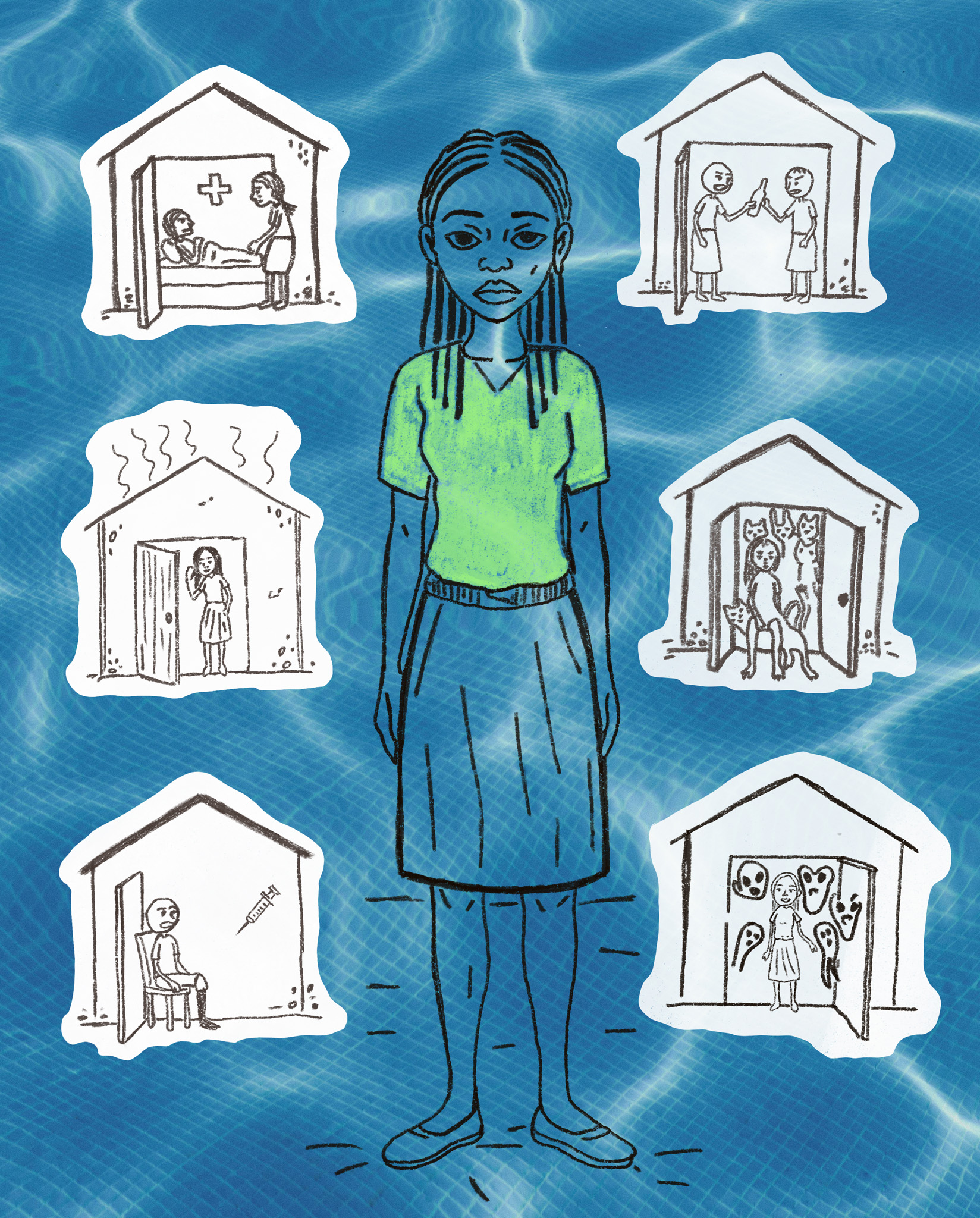
Humanity Denied and Reclaimed
A story about how Fridah was treated as a replacable tool rather than a person.
My name is Fridah Njoroge. I was born in Kenya to a single mother of six. Life was hard, and survival was all we knew. I remember the smell of smoke when we dried our clothes over the fire and the feel of the bare ground beneath our feet as we ran around all day, carefree and laughing . I left school in class eight. High school was just a dream. At fourteen, I went straight into housework in Naivasha. That same year, I got pregnant. By fifteen, I was already a mother.
***
When my baby was still small, a friend convinced me to go work at the EPZ in Mombasa and later Athi River, making textiles. The work was heavy, and I had to leave my child with my mother. As I walked away, the sound of my baby's cry followed me, each wail tearing through my chest, a reminder of the love I was leaving behind to try and keep us alive. Later, I got married out of necessity, just so someone would take care of me.
I stayed in that marriage for eight years and had two more children. But life there was unbearable. My in-laws hated me, and my husband never defended me. I tried to run a small posho mill on borrowed land, but it barely survived. Each morning, I told myself that maybe today he would change, that he'd finally see me and love me the way I'd always ached to be loved. My blood pressure rose dangerously high. When I finally left, my husband never looked back.
At home, my uncles urged me to find work abroad. We were desperate, and soon I was linked with an agent who processed my papers for Saudi Arabia. I told myself it was a chance at a better life, yet deep down, a quiet fear lingered, that in chasing survival, I might lose the last shred of home that still defined me. When I arrived, they took us to Medina. You had no choices; you were given a boss, and that was it. I was just grateful to find somewhere.
The first house was a nightmare. I slept on the floor without a mattress in unbearable heat. The food was scraps and bones. My body swelled, my head ached, and still I was forced to work. I begged them to lower the air conditioner that made me sick. They refused. I was shuffled between houses, never treated as human, always as property. Each night I whispered to myself that surviving another day was enough, fanning the small flame inside me that swore better would come.
In the next placement, I was assigned to the second floor, while two other women worked the rest of the house, each with their own tasks. Mine was to clean the rooms from top to bottom every day. I poured bucket after bucket of water across the floors and pushed it toward the toilet in the next room. The sting of detergent on my hands and the endless splash of water against tile became the soundtrack of my numbness.
The warning of the woman before me, that I would freeze, echoed in my head when, days later, my chest began to tighten. I could hardly breathe. The air conditioner was turned up so high it felt like living inside a freezer. I wondered if I would one day stop feeling altogether.
One day, I gathered the courage to ask her, politely, if she could let the AC run warmer while I worked and turn it up again once I was done. My hands trembled, my heart pounded so hard I could hear it, but still I forced the words out, each one a rebellion against the silence that had been beaten into me. She refused. She yelled that she liked her house filled with 'fresh air'. I had nowhere to run.
Rumours had reached me: women who returned to the agency office too many times were punished. Some were even beaten. So I resolved to endure whatever came. I learned that silence was safer than truth. To cope, I drank hot water again and again, trying to warm my insides, but the pain in my lungs only worsened. My nose stayed stuffed, and every breath felt like fire.
Soon however, the woman left for London for treatment, and I was returned to the agency like a defective appliance, sick and in pain. I realised they saw us not as people, but tools that could be replaced. They said my salary would pay for my treatment. I accepted, because what choice did I have?
The next family welcomed me warmly. For the first month, I thought I had found kindness. For a brief moment, I let myself believe I was safe at last, that maybe humanity had found me again in a world that had only been taken. Then they 'bought' me from the agency, and everything changed. The fridge was locked, food became a luxury, and my body broke down under long hours, headaches, bleeding, and dizziness. I begged for hospital care; they handed me pills in paper bags that did nothing for me. I learned to treat myself with salt water and prayer. They locked the door whenever they left, and I lived like a prisoner.
It was other women who saved me. In secret online groups, they told me about the dalala, Arabs who helped girls like us escape for a price. Each secret message felt like a heartbeat in the dark, a quiet reminder that I was still seen, still part of something human. I needed thirty-eight thousand shillings, but my employer had never paid me. The dalala refused to loan me, saying too many before me had failed to pay back.
The same women I had flown with, strangers turned sisters, pooled their money and sent it. For the first time in months, I felt seen. The dalala called a taxi. Cameras were everywhere; the driver could not wait long. I had to move like smoke in the night, silent, invisible. If one door creaked, if one person woke, I would be caught. But I slipped out. After eleven hours on the road, I reached the dalala.
I begged him for a week to reset. My body craved it, but my mind was restless. For a moment, as I sank onto the modest bedding, rest felt like freedom itself, a brief taste of safety before the world demanded I rise again. Voice notes from home haunted me, my mother saying the children had been sent home from school. I had not sent money in months. I could not tell her the truth. She was already battling diabetes and high blood pressure. If she knew, it could kill her. Who would care for my children then?
Each new posting brought a grim pattern: filthy homes, scarce or no food, children throwing knives, smoke choking my chest, and pay that was delayed, denied, or barely enough to survive, forcing me to escape again and again, shivering through nights near cold appliances, desperate for any help.
Then came work for tourists, where every movement was monitored by cameras, even how many spoonfuls of food went into a child's mouth. I was watched like an animal.
The next house broke me differently. The father and sons cornered me in kitchens and hallways, groping and harassing me. I lived in constant fear. There was nowhere left to hide inside myself. That was when I finally told my mother. She connected me to her brother, who promised salvation in business. I saved and trusted him.
This eventually gave me the hope I had been longing for and with the cash I was able to travel home even if some money was on loan from friends I'd have to pay back eventually. But the hope never materialised. Month after month, my uncle drained me with excuses. My sacrifice became his profit. Family, the last place I thought I was safe, betrayed me too. I thought home would heal me; instead, it devoured what was left.
I came back to Nairobi, holding onto my children and my stubborn hope. I tried to run a business. It failed. My eldest found small work in a hotel. I bought a food stall from a woman who was relocating. My little child's small hand felt like it was piecing my broken heart back together, and going home every day with the scent of chapati in my hair reminded me that we were alive and well . That was my new beginning.
Inside, I was broken. My mind would not quiet. I could not sleep. But a friend held my hand and led me to HAART Kenya. There, I began to speak. There, I began to heal. In my first session at HAART, I hesitated to speak, my voice barely a whisper, but the relief of being believed warmed me from the inside, a small step toward reclaiming my own voice.
Now, I must make my life work. Going back upcountry is not an option. Running a business and raising children is not easy, but I push forward. I have met other women who carry scars like mine, and together, we find strength in kinship. I measure success now in peace, not pay.
I worked in places where my life had no meaning, where my pain and even my death would not have mattered. Every locked fridge, every cold floor reminded me that in their eyes, I had no value. But I survived. I returned home to learn that even here, trust can be broken and people you count on can fail you.
***
I am building again, with what I have, where I am. I am a mother, a worker, a survivor. I am not the woman who left in silence; I am the woman who came back alive. I was broken, but I am not defeated. The girl who left home at fourteen now stands a seasoned warrior, her voice sharpened by survival.





