
Leeds Beckett University - City Campus,
Woodhouse Lane,
LS1 3HE
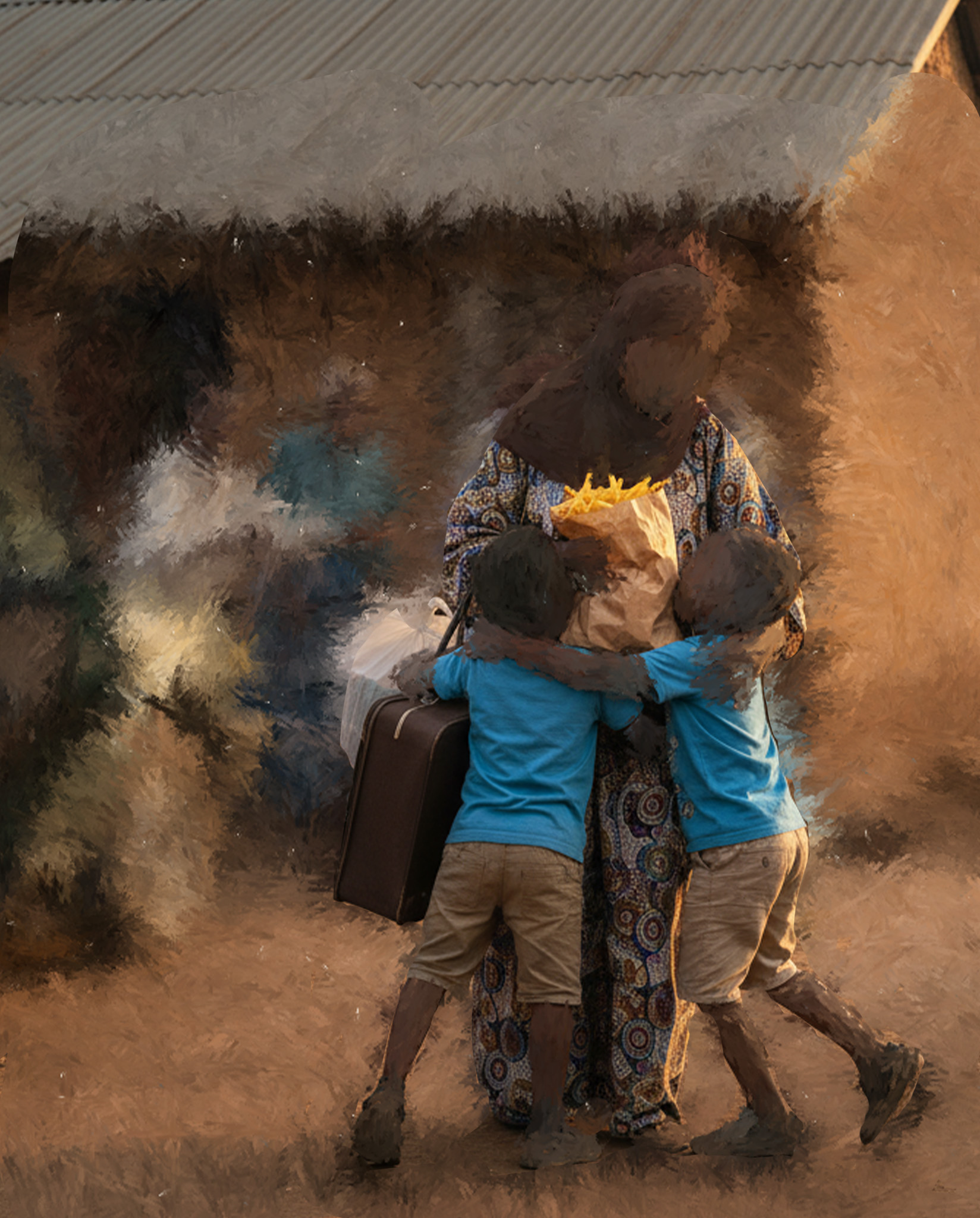
Promise of a Mother
A story about a mother’s unbreakable promise and the strength it takes to survive for love.
When you see me smile, play, or hug my children, you'd never guess what I've been through. My friends call me the smiling machine, but there were years when there was nothing to smile about. The only thing that kept me going was the promise I made to my children before they were even born; to love, protect, and provide for them, no matter what. That promise carried me through every storm. I learned to smile so my children wouldn't see my fear.
***
I was born in Oyugis and named Everlyn Adhiambo John. My five siblings and I were raised in a polygamous home where my mother was the youngest of six wives. When my father died, everything he left behind was taken, and we were left with nothing. I still remember my mother's calloused hands clasped tightly around our little ones, her voice steady even as the world around us fell apart, just as my own arms would one day lovingly endeavour to hold my own family together.
My mother, unable to feed us all, distributed her children among relatives. I can still hear it, the wail of my siblings and my mother's quiet sobs fading behind me, a sound too heavy for a child to carry alongside the weight of a family shattering irreconcilably. I was taken in by an uncle who was a teacher. He sent me to school, and though there was food, I was constantly reminded I didn't belong. My aunt's resentment made the house heavy, but I endured and poured all my hope into education.
I performed well in school, but after finishing high school, I was sent back home. I couldn't collect my certificate until my school fees were cleared, so my dreams stalled. I wondered if education and all its shiny promises as the key to a brighter future meant only for children who belonged. With no money and no one to help, I went to Nairobi and found work as a house help. It wasn't the life I wanted, but it was survival.
Then I met a kind young man who asked me to marry him. I wasn't ready, but I said yes, hoping for something better. I said yes, because after years of feeling unseen, the thought of being chosen, of finally belonging in a family again, felt like a kind of salvation. Soon, our first child was born. Life was tough, but we got by. I sold bhajia and washed clothes to keep food on the table.
When my husband left for South Sudan to find work, I was pregnant again, this time with twins. They died soon after birth because we couldn't afford treatment. Not long after, I had another daughter. Grieving while raising children broke me, but I kept moving. A mother's heart learns to hold pain and hope in the same breath. I buried my twins and my tears, but not my promise.
Years passed. My husband sent money when he could, but then war broke out in South Sudan, and he lost everything. Soon after his return, I was pregnant again and gave birth to another set of twins, through a caesarean section. I had to rest, but as soon as I healed, I went back to cleaning, washing, and selling vegetables. Some nights, after long days of work, I would hum softly as I mended their torn clothes by the dim light, each stitch a quiet act of love that kept me going.
***
When the twins were two months old, an agent promised to get me a job in Saudi Arabia. My heart ached at the thought of leaving them, but hunger was a greater pain. The agent later disappeared with my documents, and I thanked God because he had been a fraud.
Two years later, I tried again. My children were older, but our situation was worse. I borrowed money, took loans, begged; anything to get the process started. When the new agent said I had to raise more money, I nearly gave up. But by some miracle, the old agent who'd helped me before appeared and helped me process my passport. Each signature on the papers felt like signing away a piece of myself.
When the day came to leave, I didn't know what to do with my youngest children. My mother offered to care for them but demanded ten thousand shillings a month, an impossible amount. So I left them with their father. By the time I boarded that plane, there was only twenty shillings between them and starvation. I held them close, breathing in the scent of dust and soap in their hair, their tiny hands clinging to my dress as if they could hold me there forever.
I told myself I would work hard and come back quickly. I never imagined the nightmare waiting for me.
***
The moment I arrived in Saudi Arabia, I was taken straight to a house and ordered to start working before I even made it through the door. I didn't understand the language, but they barked orders anyway. I was told I would only eat after my first pay. Until then, I had to wait. For two months and two weeks, I wasn't paid, which meant I didn't eat. The only food I tasted were sweets dropped by the children. My SIM card was confiscated, so I couldn't call home. I thought I'd come to work, not to disappear.
I was beaten when I refused to make cheese, something I'd never done before. I endured it in silence, afraid to defend myself. I swallowed my screams so my children wouldn't hear them across the sea. Later, I begged to be taken to the embassy, but they demanded I pay back five hundred thousand shillings, the cost they claimed to have paid for me. I told them I had nothing, not even thirty shillings to my name.
The next day, as I took out the trash, my only chance to breathe fresh air, I ran. I didn't look back. All I had was a T-shirt with the agency's name. I walked aimlessly for hours, asking drivers if they knew it. The sand scorched my feet, sweat stung my eyes, and the sun glared so fiercely it felt like the whole world was watching me run for my life. The fifth driver I asked recognised the logo and dropped me at their offices.
But the agency was owned by the same family. I recognized the woman who had threatened me before. I refused to go back, so I stayed in their office. There was no food, no soap, and no pads or dignity. They threw me out into the desert many times, hoping I'd die. Every time, I found my way back. The memory of my children and my promise to bring them French fries kept me alive.
Eventually, someone took me to the Kenyan embassy, but instead of helping me return home, they arranged a new employer. My "transfer" meant someone else would repay the 500,000 shillings.
The new family seemed kind at first. The work was heavy but bearable, and they praised me for my dedication. Then the husband offered to send money to my children, I thought it was compassion. He had me sign some papers, which I later realized were false identification documents. I couldn't shake the disbelief that freedom could look so much like another cage.
When his wife went to visit relatives, the man locked the doors and tried to force himself on me. I resisted him for two weeks. One night, he said, "If you refuse again, I'll shoot you." I was trapped. The walls were high, and I had no phone. I told myself I had survived worse, but fear had a taste I couldn't swallow.
I convinced him to let me call my husband, pretending I missed my children. When my husband heard my voice, I broke down. He told me to stay strong, to look for any chance to escape.
That chance came when a pipe burst. Water was flooding the floor, and he tossed me the gate keys so I could sweep it out. Water poured like freedom itself, and I knew God had opened the door. I ran. I ran like a Kenyan athlete chasing life itself.
***
I returned to the agency office. Life there became even worse. It was during COVID when most workers were jobless, and food was scarce. The stench of sweat and rot clung to the air, and each bite of stale bread turned to dust in my mouth. I kept begging to be deported. One day, they got tired and poisoned my portion.
The next morning, embassy officials arrived for an inspection. The women there spoke up for me. One officer took me to the hospital and later became my protector, warning me of danger and promising to help. Their gentle voices were the first human thing I'd heard in months.
Eventually, I was taken to the Ministry of Labour, where I discovered that charges had been filed against the agency. I met other Kenyan women, survivors like me. At night, we compared our scars under the dim light, whispering prayers that stitched our pain together like quiet acts of rebellion. For the first time, I realized I wasn't alone. Still, I was terrified. Losing the case could mean fifteen years in prison in that foreign country.
The case dragged on for months. During that time, my family heard what was happening. One of my relatives, overcome with grief, fell ill and died. I saw his picture being wheeled into the morgue. I switched off my phone. I couldn't take it anymore.
When I turned it back on, there were messages from my mother asking when I'd come home. I told her, "Tomorrow." But tomorrow never came. She passed away shortly after. Before she died, she told me my husband had abandoned the children. I told her not to worry, that they would take care of each other. I broke, remembering my last words to her: "Mama, I'll come home soon."
After her death, my brother sent a cruel message, accusing me of forgetting my family and killing our mother. He demanded money for her burial. I had nothing; not money, not strength, not even a sense of who I was anymore. I had no breath left to defend myself.
Eventually, I was deported with nothing but my clothes. My brother-in-law, despite his cancer, had been caring for my children. When I came home, I moved in with them. When I finally saw my children again, I breathed in the familiar scent of home, dust, soap, and tears and knew that every struggle had led me back to this embrace. Slowly, through counseling and small acts of kindness, I began to rebuild.
***
Now I take life one day at a time. I only think about how to feed us for that day. I opened a small general shop that sustains me and my children. I no longer beg. My dignity is restored. My children have grown, and every day they remind me why I survived. My dreams are smaller now, but they are mine.
I am glad I kept my promise, to bring back the French fries and the new shoes. Five years later, after all the trauma they endured, they still make a point of telling everyone, "Mama ako nyumbani, mother is home." And every day that we are together is a blessed one. Every plate I share with them is a promise kept.





