
Leeds Beckett University - City Campus,
Woodhouse Lane,
LS1 3HE
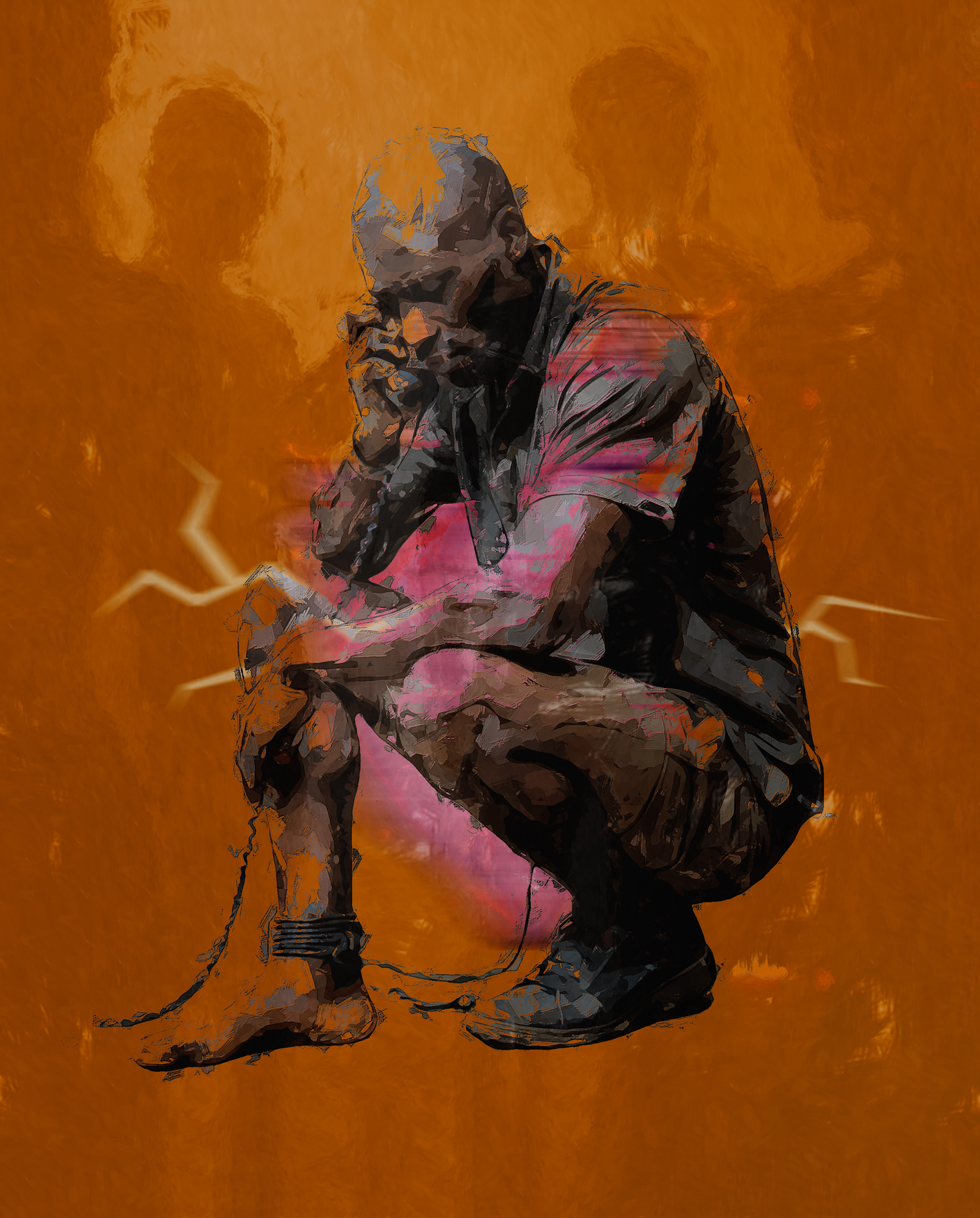
Trapped in a Scam
A story about how James was trafficked from a false job offer.
A sophisticated digital trafficking scam, masquerading as a teaching job in Thailand, lured James, a Kenyan father with a flair for English, into cyber slavery on Myanmar's lawless borders. This fraudulent job offer was a calculated entry point into a sprawling human trafficking network that exploited the digital economy, forcing victims into crypto, AI, and romance fraud operations for profit. Preying on his ambition, trust, and economic desperation, the scam hid a brutal operation that exploited dreams for profit, far from the promise of a better life he sought for his family.
***
In James' eyes, going abroad was a badge of success. He'd seen men who had gone abroad for work return with stories of prosperity, their remittances building homes, funding school fees for loved ones and lifting their families from poverty. As a fuel attendant, scraping by on wages barely covering rent and food, he dreamed of owning a home, quality education and security for his family. He wanted a life beyond the daily grind. In addition, the pressure to provide as a breadwinner, as engrained by societal norms, drove him forward. He had seen others come back with status and stability and he wanted that for his kids, to break free from the everyday struggle. When a neighbour, an agent, praising James' flair for English, offered him a teaching job in Thailand, it felt like a door was opening. He had been waiting for a chance like this. He had already acquired his passport in anticipation of a chance to work abroad and build a better life. Everything seemed organised. The agent promised to handle tickets, visas, and transport, and a childhood friend reiterated they had thrived in Thailand, so James felt assured he was embarking on a legitimate opportunity.
The day he left, James clung to his family, his voice breaking as he whispered goodbye. Leaving behind his expectant wife and child weighed heavily on him. He promised to call them as soon as he arrived. Meeting two other Kenyans that had signed up for the same opportunity in Thailand lifted his spirits. He was glad to have company as they boarded a bus to Uganda. Chaos at Nairobi's Jomo Kenyatta International Airport (JKIA), over a shady Adani deal, was given as the reason for taking a detour to Uganda. James had read the report online so didn't question the detour.
At the Kenya-Uganda border, an officer named Musa handed them cash and plane tickets to Thailand. That night, James took his first flight on Ethiopia Airlines, his heart racing with awe and excitement. From Ethiopia they took a connecting flight landing at Thailand airport. Three female immigration officers held photos of James and his companions, picking them up from the long queues. Having had their passports stamped they were processed quickly and found the driver, who stood holding a sign with their names on it. He didn't speak English, so they used gestures to communicate as he grabbed their bags and led them to a sleek black V8. They felt like they'd stepped into a new world. Happy with thoughts of good things to come.
After a gruelling nine-hour drive, James and his companions reached a plush hotel in Mae Sot. Exhausted yet hopeful, he yearned to call his wife, picturing her smile as he shared his new start. With no Wi-Fi or local SIM, he told himself he'd call her the following day. In the morning, a female driver picked them up to continue with the journey. After a short drive, they got to the edge of a riverbank where they were handed over to shirtless men with guns. Fear engulfed James. His instincts told him they were in trouble. The men shoved them onto a boat, paddling them across the river into Myanmar. James' heart was pounding hard. He was now trapped in a foreign country, not knowing where they were being taken. Panic rising he assessed his situation, screaming would risk a bullet, and jumping into the river meant drowning. They were then handed to soldiers and ordered into a car. He would later learn they were rebel fighters.
James felt desperate as the nightmare worsened. After three separate car journeys, gunshots echoing in the distance, his fear intensified. He thought about his family and wondered if he would ever see them again. They finally arrived at a fortified compound called 'The Park', with inescapable high perimeter walls and electric fences.
Before confiscating their passports, a boss man registered their details and assigned them to a company they would be working for. They were then taken to what James had hoped was the school where they would be teaching English. Instead it turned out to be a warehouse of rows of desks with computers and phones, filled with tense workers toiling in fraudulent schemes. There were no classrooms, no students; only the stark reality of a cyber scam operation.
A man of Asian origin, known only as J, ran the Park with an iron fist. He demanded they choose fake names; real ones were forbidden within the compound's walls. J promised them safety, but it came with a catch: work. Not the English teaching job James had signed up for, but a cold, calculated online scam. Each newcomer received a desk, a computer, and a script to memorize. They were trained to craft fake online personas, stealing photos from social media to build trust with clients who were mostly Europeans, luring them into cryptocurrency scams. The goal was to charm the client, gain their trust and then take their money. This weighed heavily on James's conscience. It went against all his Christian upbringing. Guilt led him to protest against the work asserting to J that if the job isn't teaching, then send him home. An angry J thrust receipts in James' face, claiming he'd "bought" them from their agent for $3,000 each. Failure to work meant they would each have to repay the money if they were to be released. The betrayal struck James like a blow to the face. His agent had sold him into this nightmare. He had no choice but to comply if he wanted to stay alive.
Confined to the compound, James and the others worked under the constant gaze of CCTV cameras and men, mostly Asians, who barked orders. Mistakes brought punishment; intimidation, standing in a bucket of worm-filled water for days without food or drink, or worse electric shocks. It was brutality beyond anything he had ever seen. The air reeked of despair. Meals consisted of rice and pork, whether it was breakfast or dinner. They were only allowed to sleep for two to three hours. James did the minimum to survive, his heart elsewhere, hoping for a miracle. But his half-hearted efforts weren't enough. The punishments came often, each electric shock a reminder that he could easily lose his life.
After two months, J, frustrated with James' defiance, declared he was being let go. He would be dropped in Mae Sot, near Bangkok, to find his way home. James signed the resignation letter, thinking only of reuniting with his family. The other captives' envious glances trailed him. But after a two-hour drive, he was delivered to another 'Park', registered under a new company, where control was maintained through a calculated system of psychological terror. Whispers of harsh punishments, like prolonged isolation in a cramped, unlit dark room, were deliberately spread to keep captives compliant. These threats, whether fully realized or not, created a pervasive atmosphere of dread, as effective as the physical punishments like electric shocks that reinforced the captors' dominance. The fear was so thick, it choked out hope. The compound's cruelty wasn't just physical; it was a psychological cage, erasing all memories of laughter with family back in Kenya.
The scam involved using fake personas, emotionally manipulating victims, and using AI for video calls to hook victims. People lost lots of money, yet the captives were not paid a penny. When the workers questioned this, J explained their agents had been paid, and that was the end of the story. These words caused physical pain, a stark reminder of their betrayal. Despite the relentless trauma, James refused to give up. His heart pounded with terror at the prospect of defiance, yet the thought of his family fuelled his resolve. James began forging quiet bonds with other captives, whispering ways to endure the despair. One soft-spoken lady revealed a hidden phone, a lifeline smuggled in at great risk. James' hands trembled as he held it, knowing discovery meant death. For weeks, they secretly captured photos and videos of the torture. Each snap of the camera felt like a gamble with his life. He sent the evidence to the Kenyan embassy in Thailand, praying it would lead to a rescue.
Back home in Nairobi, James' wife struggled to survive. With no money coming from James, she took on odd jobs, washing laundry for neighbours to make ends meet. When rent arrears mounted, eviction followed, forcing her, pregnant and desperate, to move in with James' sister. The news pierced James' heart. Regret and guilt consumed him. His dream of providing a better life had left his family destitute. This fuelled his resolve to find a way to get out, for the sake of his family. Risking death, he continued documenting the compound's horrors.
After months of waiting, a rescue finally came. James was among the 78 captives freed and sent home. As he stepped off the plane in Nairobi, he felt the warm air hit his face. He was home. The rush of freedom nearly buckled his knees. Despite returning with nothing except the clothes on his back, he was grateful to be alive and finally reunited with his family.
***
Since his return to Nairobi, James is slowly rebuilding his life, grounded by gratitude after surviving the horrors of a trafficking scam. The trauma lingers, surfacing in moments of hesitation when someone knocks at his door or in the struggle to share his story with strangers. Society's pressures weigh heavily, as does the responsibility to provide for his family. Yet, James finds solace in counselling sessions and a tight-knit community of survivors who share laughter and tears without judgment. Reflecting on his ordeal, he's learned that not all opportunities are what they seem, a hard-won lesson. His ambition to give his family a better life was twisted against him. Anyone can fall victim. Some promises are traps in disguise.
James explains that people often assume human trafficking only happens to women. As a man, admitting he was a victim, trapped, scammed, and abused was hard. But realizing silence protects the traffickers, he chooses to speak up because men suffer too. James, who now has two children, still aspires to have a stable job that allows him to provide his family with the life he's always wanted.





