
Leeds Beckett University - City Campus,
Woodhouse Lane,
LS1 3HE
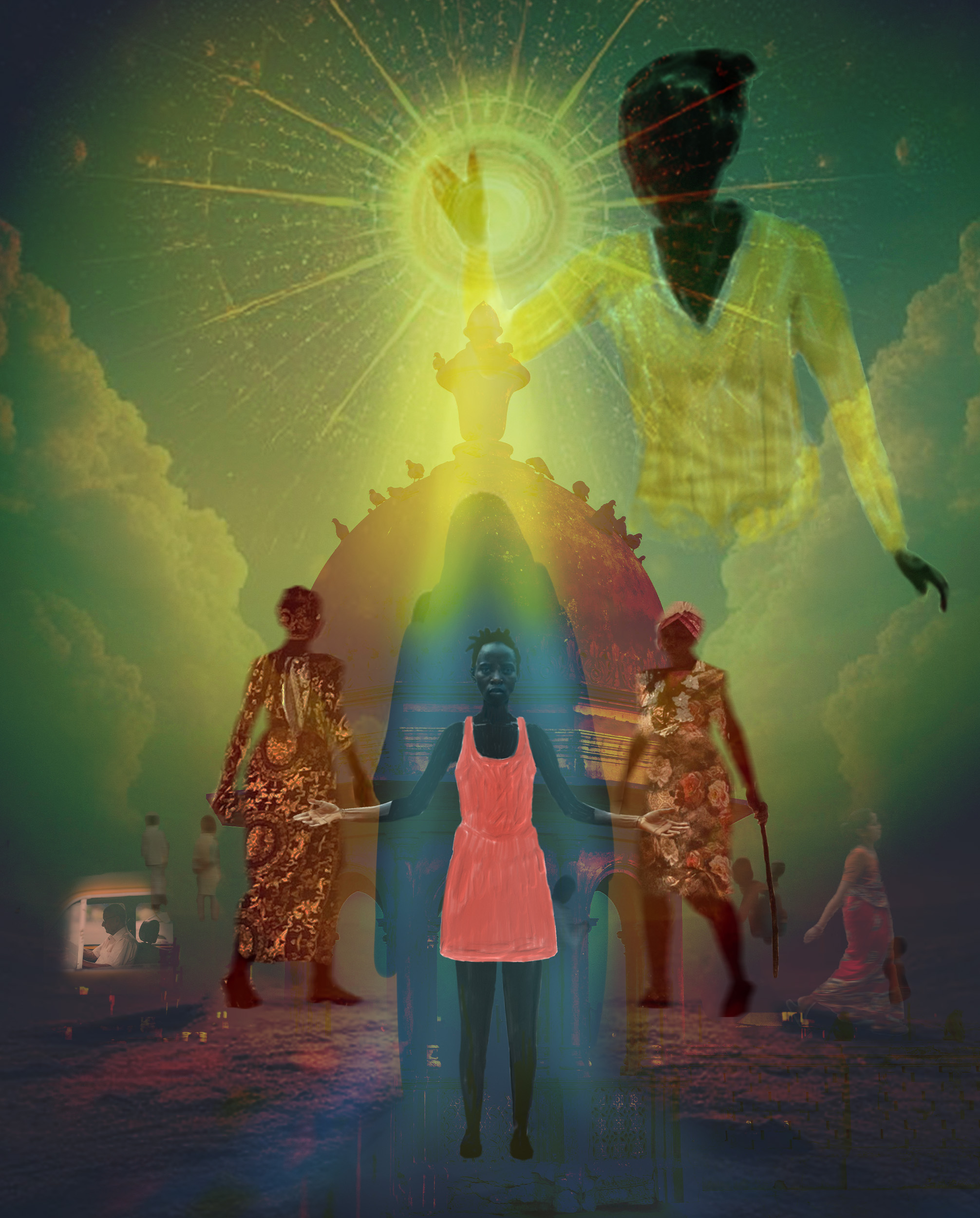
The Cousin
A story about how Mercy was betrayed by her family.
Blood family is the most sacred of institutions. As we grow up, we're taught to be loyal, care, and look out for the people we're related to. The closer they are to us, the more we should carry their burdens. We should trust them. However, there is a wise saying that has sadly proven true time and time again: kikulacho ki nguoni mwako, loosely translated, 'what eats you is in your clothes.' It means that sometimes, the greatest harm comes not from strangers, but from those closest to you.
In the African context, cousins can be even closer than siblings. Especially in places where cousins share the same name, the bond becomes even more special, evolving into nicknames born from mischief and memories made during misadventurous games. This is the kind of environment Mercy grew up in. A family rooted in strong family and Christian values.
***
Mercy had tried everything she could think of to keep her family afloat, odd jobs, small ventures, but nothing stuck. Nothing lasted. She was constantly behind on rent, struggling to provide even one solid meal a day, let alone consistent school fees. All she wanted was something simple but out of reach: a good roof over her daughters' heads, a hot meal every evening, and the kind of education that might give them more choices than she ever had. So when her cousin, someone she trusted like a sister, promised her a job, a real chance to change everything, she couldn't pass it up. It felt like a door had finally opened. She offered her a job in India at the same company where she was already working. The cousin would cover the travel and visa costs, and Mercy could pay her back once she settled in. It seemed like a lifeline.
Before Mercy knew it, everything was in place. The cousin wasn't just a distant relative; she was her first cousin, someone she had grown up with, someone old enough to guide and care for her in a motherly way. They had shared so much; surely, she could trust her?
The flight to Delhi was uneventful. From there, she was to catch a connecting flight to Bangalore. She looked around the airport, her cousin nowhere in sight. Hours passed. Her calls went unanswered. Doubt crept in, then panic.
"Lord, did I make a mistake? Was this not your will?" she whispered to herself, heart pounding.
The warmth of the promise faded into cold silence. Something was wrong. She felt it in her bones. Still, she held on to hope, maybe there had been a delay, a misunderstanding. She tried to silence the growing dread.
"I trusted her. I trusted you."
But hope quickly turned to fear. Then fear, to despair.
When her cousin finally picked up the phone, she was told that arrangements had been made for two other women to collect her. That should have been the first red flag. Psychologists say that betrayal by someone close is one of the most devastating forms of trauma. Family relationships are built on assumed trust and constant closeness. This makes it easier for abusers to gain access and harder for victims to recognise harm early or protect themselves. Many trafficking victims are lured by people they know. Her cousin didn't need to force her. She simply used the one thing Mercy gave freely: trust.
The two women picked her up and took her to their house. That night, sleeping on the floor of a stranger's flat, she began to realise she had been abandoned, not just by her cousin, but by a system that didn't care.
For days afterwards, Mercy tried to reach her cousin to understand what was going on. Finally, the women, who were of Tanzanian origin, broke the news to her:
"Tumeshakununua kutoka kwake. Pesa imeshalipwa." 'We bought you from her. She has already been paid'.
Mercy was in shock. She couldn't grasp how her life could be traded for 4,000 Indian Rupees. She couldn't breathe. Her mind raced. "What do you mean? I am not a thing. I am Mercy. A mother. A daughter. A human being."
Everything she had believed collapsed in an instant. The suitcase she'd packed with care now felt like a coffin. Rage. Shame. Confusion. They churned inside her like a storm. This was not how things were supposed to be. Sure, she'd expected a few hiccups, maybe some language barriers, cultural shocks, long work hours, but not this. She had imagined that working with her cousin in a foreign country would bring them even closer. Living together, sharing meals, maybe even praying together, just like old times. She had even dared to dream they might start a small Christian fellowship in a predominantly Muslim country. But now, all those castles she had built in the sky came crumbling down, swept away by the cold wind of reality.
"Father in heaven, is this what you brought me here for?" she sobbed silently.
But deep within, a flicker remained: "Even in the valley of the shadow of death... you are with me." It wasn't strength she felt. It was survival. And for now, that had to be enough.
***
To make matters worse, she was unwell. In her vulnerable state of illness and confusion, her travel documents were confiscated. She was outnumbered and helpless. She felt like a slave, bound to do whatever her new 'owners' willed, threatened constantly by the possibility of being beaten by their Nigerian henchmen if she were to show any resistance.
The job her cousin had mentioned, a cleaning job, had only been bait. In reality it was sex work. She was to be sold to whoever paid. Her soul was broken but she knew she would not give in.
In a small, always-locked room, Mercy started to devise a plan. She pretended to remain sick, which meant she had to be taken to the hospital occasionally. This gave her brief moments of freedom, and crucially, delayed her being forced into sex work. A small part of her, naively, kept hoping this was all a bad dream or some twisted prank. Maybe her cousin would still rescue her. She clung to that hope, however thin, because the alternative was too painful to accept. She refused to believe that someone who shared her blood could betray her so deeply.
One night, while her captors were drunk, they forgot to lock the door. Mercy saw her chance. With nothing but 500 rupees and the clothes on her back, she slipped out into the strange, unfamiliar streets.
***
When she felt she was far enough away, she approached the local authorities. By sheer luck or divine intervention, a senior official agreed to meet her and listen to her story. To her shock, he already knew about the operation. He explained that if she had gone to the police, they would likely have returned her to her captors. The traffickers paid kickbacks to operate under their protection. In his position, the most he could do was help her get her passport back.
He made a direct call to a man named Peter, the head of all the Kenyan workers in the region, most of them trafficked. A few hours later, Mercy was reunited with her travel documents.
But her troubles weren't over.
For nearly a week, she lived on the streets of Bangalore, cold, hungry, and in constant fear. Drawing on her childhood faith, she begged God to show up, to prove He still cared. In that raw, painful moment, she felt something shift. A weight lifted. Her prayers felt heard. And that was the beginning of the miracles. One by one, events began to align. By some grace, Mercy found her way back home to Kenya, reunited with the family she had left behind.
Only when Mercy landed did the true gravity of what had happened begin to hit her. She had been tricked by her own flesh and blood. She found out that her cousin was not working for any company as she had claimed. Her cousin was in the sex trade, even exploiting her own daughter. That's when Mercy realised just how different they were. Looking back, Mercy saw the signs. The vague company name. The urgency. Her cousin had never meant to help her. She had scouted her. She had been taken advantage of precisely because she was vulnerable. After all, Mercy was soft spoken by nature. She had never expected her cousin to exploit her, to sell her off like that. What hurt even more was realising that blood ties, which should have meant everything, had been reduced to nothing but a commodity exchange. To her cousin, Mercy was just another means to a payout. Mercy realised only too late that they weren't just different women. They were standing on opposite sides of a war, one that robbed women of their bodies, their choices, and their futures.
And it didn't stop there.
When she came back home and reported her ordeal, her mother dismissed her. "Your cousin has done so much for us. Why couldn't you do the same?" she asked.
Mercy stared at her, stunned. "Mama, I was trafficked. I nearly died."
Mercy couldn't believe it. The woman who had given her life, who had raised her, whom she had entrusted with her children, had not only refused to defend her but had turned her away. The betrayal wasn't just in her cousin's deception, it was in her mother's refusal to believe her, to protect her.
"I was not sent to be sold," she wanted to scream. "I am your daughter. Not your ticket out of poverty."
Homeless once more, she took her daughters to a friend's house for temporary refuge. All this while undergoing therapy through HAART Kenya, trying to rebuild her confidence, trying to remember how to live.
Slowly, she began to pick up the pieces. She prayed not for rescue, but for clarity.
"Lord, show me how to live in truth, even when I am unloved."
Eventually, she took back her children and began to rebuild her family, starting with enrolling her elder daughter back in school. Her job now, doing laundry for people, is unpredictable, but she makes the best of it. She has to. Survival is non-negotiable, and the debts she has to repay weigh heavily on her.
You see, part of the deal when she left for India was to send money back home, rent for her mother, food for the kids, and school fees for her daughter. But when the job didn't materialise, she reached out to friends back home, asking them to help support her mother as she sorted out her predicament. What she didn't know was that even that money, borrowed in good faith, was being squandered. Her daughter's school fees weren't being paid at all.
She's forever grateful that her friends didn't report her to the authorities for defaulting as she struggled to pay them back, especially in a society that assumes anyone who's been abroad must return with money. She returned with something else: strength.
***
Today, she is hopeful. She's determined to set up a better future for her daughters, one where their dreams can come true, and they never have to endure what she went through. She may still carry the weight of betrayal, of being sold out by blood, but as she heals and grows, she is rebuilding trust, not the kind you're born into, but the kind you choose. They say 'blood is thicker than water', but she's learned the fuller truth: 'The blood of the covenant is thicker than the water of the womb'. And in those bonds, born not of kinship but of kindness, Mercy is finding her strength.
If Mercy could speak to her cousin now, she would say: "I don't know what pain led you to become this person, but I wish you healing. As for me, I choose another path, one rooted in truth, dignity, and love. I carry no hate. Thank you, because in breaking me, you also built me."





