
Leeds Beckett University - City Campus,
Woodhouse Lane,
LS1 3HE
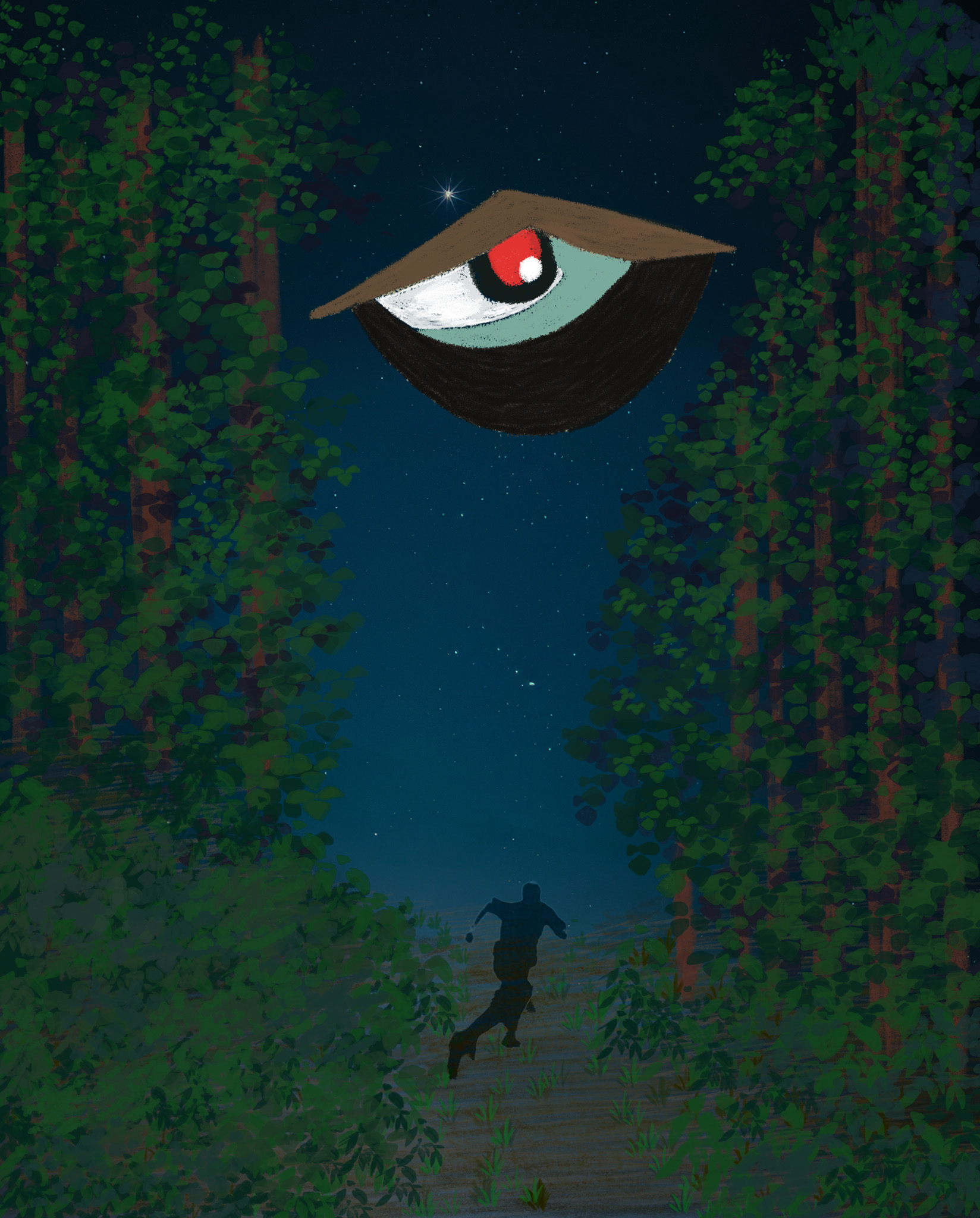
The Escape
A story about determination amongst multiple escape attempts.
From the moment I was first born in a large Luhya family, I knew responsibility would chase me. What I didn't know was how far I would have to run to escape it. After high school, I took whatever small jobs I could find until I decided to go abroad, pursuing the promise of better pay. Two years in Qatar taught me otherwise. The salary was never enough to care for my family. So when an agent promised me a better opportunity in Thailand, I clung to the hope.
***
We were three when we boarded the plane headed towards greener pastures: two men and one woman. We were coached how to lie at immigration, told to smile as 'tourists'. The reception was smooth because an officer ushered us through the airport. A luxury van carried us for hours, then a good hotel for the night. But soon the journey turned strange: livestock compounds, silent drivers who pretended not to know English, blood drawn without explanation. By the time we were given mattresses and shown to bare rooms, something in me knew there was something amiss about the promise we'd been sold.
First, I told myself the computers meant training, maybe some paperwork before the hotel job began. But when the man said we were not chefs, not staff, just scammers who had to memorise scripts, something inside me went still. My throat tightened. I tried to speak, but he lifted a taser. The hiss filled the air, sharp and mean. The others flinched. Their faces told me what I didn't yet know, that the sound alone could burn.
Still, I spoke up when after forty-three days there was no pay, not just for me, but for everyone counting on me back home. They called it punishment. I called it a lesson in pain. Six hours on metal spikes, a jerrican pressed to my chest until my arms trembled, skin splitting under the weight. Blood slid down my legs. The air reeked of sweat and rust. I wanted to faint, but something fierce inside kept me upright. In that blur of pain, a thought began to harden - if I lived through this, I would not stay. Escape wasn't courage anymore. It was survival.
They mocked us with their cruelty.
"Here you shower with hot water, you eat good meals, you sleep on a mattress. That is where your money goes," the Chinese boss said, his voice sharp, almost amused. My blood boiled. Was I supposed to clap for hot water while my children starved back home? Was I meant to thank them for a mattress while my wife's voice cracked with despair over the contraband phone I hid in the lining of my clothes? What I longed for was air that wasn't owned, freedom that didn't need permission, and the chance for my family to eat from my own hands again.
That night, lying on that 'good mattress', I made a silent vow. I would not rot in this compound. I would not die nameless in a no man's land. I desired the familiar faces and sounds of home, the kindness of family, the easy laughter of friends over food. My resolve spread like wildfire. It touched the Ethiopians first, then the Ghanaians, then men from India, Pakistan, the Philippines. Soon, whispers turned into plans, and plans turned into fragile hope.
Our first escape attempt was simple: the weak spot in the fence, a guard we thought we could shake up a little, then a sprint toward the Myanmar border, following the stream to freedom. At 2am, during the night break, we would vanish. But the night we were ready, the fence was already repaired, thick steel where weakness had been. Our dream was over before it began.
Still, hope refused to die. I could not forget my children's faces, my parents in the village, or the debts crushing me.
Through that secret line of communication that was my connection to sanity, I began to reach beyond the fence. My wife helped connect all the Kenyan families into a WhatsApp group. Together, they spread the word until, finally, a woman in Thailand reached out. She warned us, "You are trapped in a red zone. Even governments fear this place." Her words chilled me. She tried twice to rescue us, but both attempts failed.
I told her we could not wait anymore. If she could meet us by the river, fine. If not, we would still run. In this moment, I felt the weight of every life depending on my choices. Escape was no longer a dream whispered in the dark, but a demand louder than fear itself.
We pinned our hopes on Chinese New Year. Firecrackers, drums, the distraction of celebration, it felt like the perfect cover. That night, hope moved quietly among us, men whispering prayers, women braiding each other's hair, hearts steadying for freedom. But they were already ahead of us. Security doubled that night, eyes sharper than ever. Our second plan was strangled before it drew breath.
Still we regrouped. We chose our new date. Behind the sleeping quarters, the wall dipped low, shielded by thick forest. It was a narrow chance, but it was ours. One hundred and fifty souls, bound by desperation. We knew death was likely, but better to die running than live caged.
We organised in secret. I chose four men, one Pakistani, one Bengali, one Ghanaian, and one Filipino, as my inner circle. Each carried instructions back to their people in whispered meetings, under the cover of night. Devastatingly, someone gave us up. Betrayal cut deepest because it came from one of us, someone who had prayed, planned, and dreamt beside us, turning our hope into the very trap we feared.
On the very day of our escape, chaos tore through the compound. The Chinese bosses stormed in, searching, overturning mattresses, ripping floors apart. They found phones and laptops, evidence of our forbidden rebellion. We were dragged to the 'dark rooms'. The air inside was thick with screams. They whipped us, burned us, shocked us until our bodies convulsed. My skin blistered, my ribs screamed with every breath.
A pregnant Ugandan woman was among those caught. They forced the life from her womb, drugged her until her body went limp, and when paralysis set in, they dumped her in the forest to die. I will never forget her face. But she still had her phone. With the last strength in her trembling fingers, she called her boyfriend back at the camp and we then reached out to the woman who had promised help. By some miracle, border patrol connections pulled her out, rushed her to a hospital, and later a shelter.
Her survival gave us a flicker of proof: escape was possible. That message was like fire through dry grass; suddenly, whispers turned to plans, and the will to live became the will to run. Even if it meant blood, betrayal, or death, we knew we had to try again. We decided to try our luck once more four days later. The Thai female liaison was to meet us at the river on the border, ready to guide us across. We whispered in the dark, breath shallow, hearts pounding like drums in a buried war, small weapons sharpened, routes memorised, every creak in the night a question of whether we'd live to see dawn. Fear hollowed out many, and only sixty of us remained determined to try to escape.
2am. Cafeteria. Our time to eat. Time for the slip. Then the run.
We grabbed what we could, metal shards, forks, stones, anything to steel our courage. The guards hesitated; they knew spilling foreign blood meant trouble. For a heartbeat, we thought we might make it. Then reinforcements came.
We used their moment of hesitation to jump the fence. But beyond the wire was no freedom, only a steep hill that dropped into a dark valley and another hill to climb. The terrain worked against us. The guards knew it better; from the higher ground, they moved like hunters closing in. Suddenly, we were surrounded. Every man for himself.
I darted toward a banana plantation, sliding beneath brittle leaves. The ground smelled of rot and earth. My breath was shallow, sharp in my throat, my heart hammering so hard I feared it would echo louder than footsteps. A torchlight swept across the place where I lay, its heat kissed my cheek, but by some mercy they passed on, chasing the others deeper into the night.
When their sounds dulled, I crawled out and ran in the opposite direction, praying they had all gone forward. But twigs betrayed me. Leaves cracked underfoot, and suddenly beams of light carved me out of the dark. I was exposed, my outline glowing in their torches. By grace, I was far enough to flee.
The hills tore at me, thorns and twigs slicing my skin raw. I tumbled more than I ran, desperate to reach the river whose faint roar promised both hope and dread. They said it was deep, angry water, crocodile-filled. But between drowning and capture, I chose the water. I hurled myself in.
Cold swallowed me whole. My chest seized, lungs burning. For endless minutes, waves pulled me under, then spat me up, as if weighing my life. By instinct alone, I clawed through, and when I staggered to shore, I was shaking so violently my teeth rattled like stones in a tin. For a moment, I thought the river would finish what the guards had started.
Through a patch of forest, I stumbled onto a road. A truck crawled past, lights sweeping the night. It must be theirs, hunting me. My gut twisted, I ducked into a narrow, beaten path until the truck's engine faded. At the end of the path, a small building glowed with life, voices rising inside. My body wanted only one thing: water. I was too exhausted to think of anything else.
To the occupants I must have looked like some wild animal, soaked to the bone, dripping river water, mud streaked across my face, trembling, and above all, Black in a land where people like me were rare as comets. To them, I was not just a stranger but a phenomenon, and they recoiled. Fear twisted their eyes. They grabbed sticks, anything close at hand, and drove me out like an intruder.
Again I ran, heart hollow, stomach gnawing at itself, resolved that I would not dare enter another home or compound. If this was how one place received me, the rest would be no different. I feared being rearrested, so I fled. Better hungry on the road than fed in a cage. I walked, and walked, until the dark gave way to a pale morning. My legs carried me into a larger town. There, I saw an old man tugging up the shutters of his shop, yawning against the dawn. I stumbled to him, words tangled, but one thing tumbled out clearly, over and over, "Police, police, I need police." My voice was cracked, ragged, but urgent enough that he understood. He called someone, and minutes later a man arrived. He was not in uniform, which tightened fear in my chest; was he one of the bad ones, one of those who would drag me back into the nightmare I had just escaped? My intuition screamed caution, every nerve braced for betrayal. "Would this man save me or sell me back?"
But he did not harm me. Instead, he led me to a station where I could finally breathe and use a phone. My shaking hands dialed the number of the woman we had made our escape arrangements with. She and her people had been waiting but at a different stretch of the riverbank.
I waited for what felt like another eternity, an hour drawn out like a lifetime. Then at last, she came, my lifeline. It was she who took me in, who steadied me when my legs felt like collapsing, and who helped me press forward in the fight to free my friends still trapped. I had waited in cages, waited in dark rooms. This waiting was different. It carried hope.
I had managed to take some videos on my phone, images of bruised bodies, gaunt faces, and men and women breaking under the weight of captivity. They were painful to watch, but they became my weapon. For years there had only been rumors, whispers of people trapped, but no proof. With these videos, I reached parliamentary officials. Finally, there was evidence. They authorised raids, and through those raids the people I had left behind were rescued. They were taken to military camps, prepared to be sent back to their countries.
I escaped with nothing, no belongings, no official documents, not even shoes to cover my torn feet. The embassy had to issue me emergency travel papers. In the end, I joined a group of 23 Kenyans. We were taken to a safe house, given counselling and debriefing, and finally prepared for our return home. For the first time in months, I slept without fear of a guard's footsteps outside my door.
***
But the weight on my shoulders did not lift. The debts remained. The lost wages, the wasted months, the scars on my body and soul. I am still unemployed, still trying to stand again. What breaks me is knowing that the agents who sold us remain untouched, and there is no plan to compensate us for all that we lost. Even after we fled the camp, freedom felt borrowed. Our bodies were out, but our minds still shackled to the debt, the fear, the ghosts we carried.
Even so, I have not given up. If I must, I would go back to Qatar to work again. Something good has to come out of my struggle. I still believe it. Looking back, I know what carried me through was the picture of my children. I imagined them at home, waiting for food, waiting for shelter, waiting for me. That image never left me. If I gave in to the pain, they would pay the price. And as a leader, I could not break. In the camp, when grown men were beaten until they wept like children, they turned to me. "Amunga, how are the plans going?" they would whisper, their eyes searching for hope. Their trust forced me to stay strong, even when I was crumbling inside. Even in the forest, bleeding, crawling, pursued, I told myself the only thing worse than death was being dragged back to that camp. I would rather die running than live chained. And so I kept going, step after step, breath after breath.
I wanted to come back and see my children's faces again. That hope drove me forward. And in the end, not only did I win my freedom, everyone was freed.





