
Leeds Beckett University - City Campus,
Woodhouse Lane,
LS1 3HE
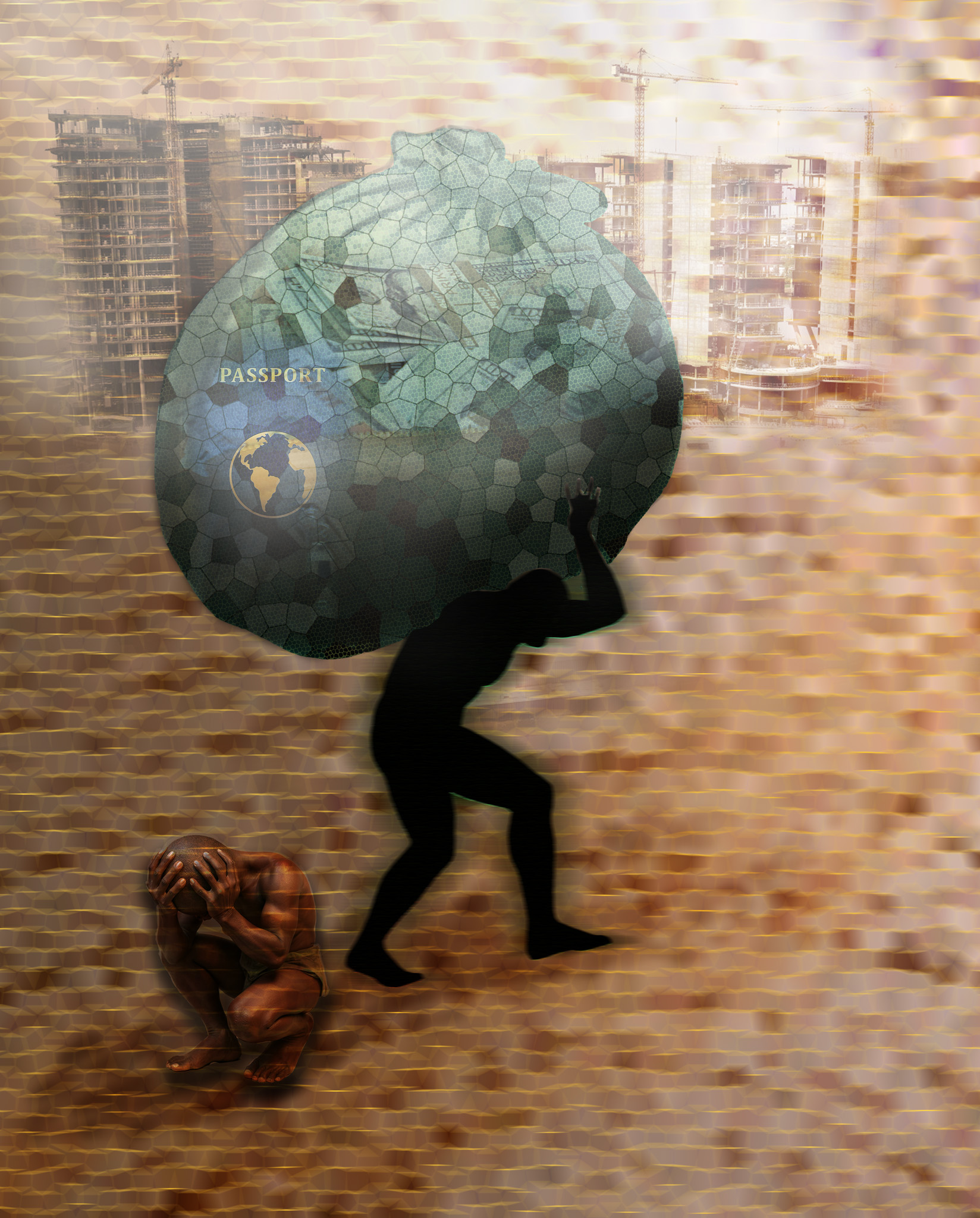
The Lowly
A story about how financial pressure led to Peter being trafficked.
In many places around the world, no matter how far we think humanity has come in terms of gender equality, the weight of providing still often rests squarely on a man's shoulders. From the time they are little boys are told that their value lies in what they can contribute, what they can build, what they can earn. To be a man is to provide. To dream big. To always have a plan. To never show weakness. Financial stability isn't just encouraged, it's demanded. And when a man can't meet that expectation, something inside him begins to crumble. The shame, the fear, the quiet desperation, it grows heavy. And under that pressure, many will do anything to preserve their dignity, even if it means stepping into the unknown, walking into danger, or carrying the burden alone.
***
For Peter, this wasn't just a societal script; it was the silent programming etched into him from boyhood. Providing wasn't optional; it was who he was supposed to be. The world rarely gives men room to fall apart, to say "I'm lost," without turning its back. This is a story of hope, misdirection, pain, and the long road back from a dream turned nightmare.
Peter was working at ADEC, an American company based in Kitengela, as a Business Process Associate. He enjoyed the job. It involved night shifts processing land documents for the U.S., and the schedule suited him. However, one night things took a bad turn when he unexpectedly lost his job.
Trying to piece his life back together, he moved to Eldoret to start a small business. Unfortunately, it didn't take off. With no other option, he humbly returned to his parents' home in Athi River. Back in his childhood room, Peter sat on the edge of the bed for hours, suitcase untouched. Unpacking felt like admitting he had failed, and failure wasn't something men like him were ever taught how to carry. However, in this moment, necessity bred an inspired thought, a way to get out of the rut he had found himself in. He proposed a plan: to travel to the Gulf countries, find work, and send money back home. He hoped to support his parents and siblings and repay the loan he'd take from them to finance the trip. They agreed. He needed about KSh 150,000.
He began the process, gathering a certificate of good conduct, medical clearance, and other documents. Then he approached Kanja Agencies in Kasarani, who promised to help him secure a job abroad. They asked for 50% of the commission upfront. Thereafter, he heard nothing from them. In a country where opaque processes are often the norm, Peter tried to reassure himself. Maybe this was just how the system worked, nothing to worry about... yet. When no job materialised for a few months, he began to suspect he had been conned.
Eventually, a job offer came through to be a waiter in Kuwait. An Indian man interviewed him via Skype, he received positive feedback, and was told to prepare for departure. Peter had dabbled in catering after high school, so he felt confident he could manage the job. After a month, his documents were processed, but the agency held onto his passport and visa.
That was the first red flag. But he was desperate, so he went along with it.
It was only at the airport that he was handed his passport and a stack of documents required for entry into Kuwait. He barely had time to read them. As the officer at the airport flipped through his documents, Peter's stomach churned. When his passport was finally handed back to him, it felt like both a ticket to freedom and the last piece of control he'd ever hold in his own hands.
He had a connecting flight through Saudi Arabia. Despite the strangeness, he was excited. He knew the Kuwaiti dinar was strong, and if things went well, he could quickly convert his efforts into tangible financial support for his family.
A connecting flight through Saudi Arabia brought him to Kuwait, where he was picked up late in the evening and driven far from the city to a compound crowded with workers from all over the world.
It was dusty, remote, and industrial. Trucks rolled in and out. On his first day, he was shown to a small room and told to rest after the long journey. He asked about the waiter's job.
"Relax," they said.
Despite growing suspicions, he waited.
He didn't know the visa had already classified him as a 'loader'. The next day, his nightmare began. At 5am, he was woken up and told to get to work. Expecting to go to a restaurant, he dressed neatly, ready to report for his role as a waiter. Instead, he was handed shoddy work clothes and told to start unloading heavy sacks from trucks.
There was no Wi-Fi, no way to communicate with the outside world. Only hard labour, dust, and silence. Few spoke English, and only a few broken words at a time. Around 7:30am, he had had enough, and he decided to approach a supervisor, who told him to wait for 'Mudhir', the Arab man who had brought him to Kuwait.
When Mudhir finally arrived, he crushed Peter's hope. In broken English, he told him: "You, me, work."
And just like that, Peter understood his fate was sealed.
For days he refused to work. But without working, there was no food, no water. Eventually, hunger broke him. He joined the others. Their days started at 4:00 a.m., trying to beat the blazing heat. At noon, the sun was too cruel for even forced labour, and they rested. On some days, they unloaded up to six trucks.
When he resisted work, he was beaten. His body bore the quiet marks of refusal. Every time he resisted, they reminded him, through force, that he was no longer his own person. The days blurred together under the weight of exhaustion, silence, and fear. The air was thick with dust, the mornings pierced with the sound of metal doors and shouted orders. The compound smelled of steel. Machinery groaned in the distance, and the men moved like shadows, heads low, shoulders hunched, as if trying to disappear, trapped in a job that stripped them of voice and dignity, each day bleeding into the next with mechanical precision. Even his hunger felt like an enemy, gnawing at his resolve when they withheld food and water as punishment. There was no language to cry out in, and no one to hear it if he did.
Then there was the sexual assault. They tried to force him into acts but he refused, saying it was against his spiritual beliefs. They did unspeakable things to others. He heard stories within the concrete walls, young men sodomised, enslaved, and starved.
He was living a nightmare, but even though they tried to strip him of his dignity, his will, and even his worth, something deep within held firm. He was more than the work they demanded, more than the body they tried to break. In the absence of choice, he clung to conviction, and that became its own kind of freedom.
For two months, Peter worked. He was promised 130 Kuwaiti dinars as a waiter. As a loader, the pay was 80 KD. In his first month, they gave him only 40 KD, but only after he lied that his wife was sick back home. He was underfed and constantly at risk of physical and sexual abuse. When he finally reached out to his family, they blamed him for his troubles. They couldn't grasp what he was enduring. They thought he had abandoned them.
He knew he couldn't go to the authorities. "Mudhir big," they warned. The man had influence, even in government.
Peter devised an escape. A rare opportunity came when he and others were sent to Salmiya to pick up rice and other food supplies. After loading sacks, he looked left and right, spotted a clearing, and ran. His captors chased him, but he didn't stop. He ran for almost 14 kilometres. As he darted through unfamiliar streets, Peter wasn't thinking; his body had taken over. Every step was a betrayal of the fear he'd learned to swallow, the pain he'd been taught to ignore, the silence he'd endured for months. His breath came sharp and shallow, heart hammering as if to remind him: you are still alive. He didn't know where his feet were taking him, only that they were finally moving him away.
When he finally reached Maaboula, he tried to find another African. Someone. Anyone. He knew he couldn't go to the police; they had no power against the cartels running this system.
There in the market, he saw a black man walking. He was on his way to work for a night shift. He begged for help. The man, James, pointed to a place to sleep that night, high up in a building where the wind howled and the fear of being blown away made sleep nearly impossible.
In the morning, James dropped by after work. He advised Peter to turn himself in to the police and request deportation. But Peter still clung to the hope of working and sending money home. James warned him: work was scarce, accommodation was expensive, and he was undocumented.
Peter eventually found kitchen work in exchange for food and a meagre wage. It was slightly better than the loading yard, but still exploitative. He tried odd jobs, like carpet washing, but the earnings were nothing close to what he needed to survive. He watched others, especially the women, survive through sex work, but he could not bring himself to do it. He had lost everything except his values and self-worth.
Finally, he reached out to his family again. At first, they could not understand what he was describing, the kind of life he was living. They were upset that they would lose their investment. Eventually, his mother relented. "Just come home," she said.
Heavy emotions accompanied his return. Back home, he found himself alienated from his family. Their investment had yielded only pain. No one received him. No great jubilation, no warm embrace, only the hollow silence that greets the defeated. He was isolated, alone.
Returning to Kenya, helped Peter realise he'd been a victim of trafficking. He sought redress, but the agency that sent him was unregistered and untraceable. It had closed its office and any attempts to report them to the police were met with demands for bribes.
***
Peter is still healing. Still rebuilding. He doesn't know if life will ever be the same. He watches friends who went through the same 'process' and succeeded. And he wonders why he was dealt such a cruel hand. They took out the same loan, went on to find jobs abroad, worked, even built families and managed to pay back the debts they took on. Why had it not worked for him?
He is wiser now. He warns others when he finds them in positions like his that landed him in trouble. He looks them in the eye and says, "I know you just want to make something of yourself. I know you think this is the only way. But not every open door leads to light. Ask questions. Keep your passport close. And remember, real success never demands your silence, your body, or your soul."





