
Leeds Beckett University - City Campus,
Woodhouse Lane,
LS1 3HE
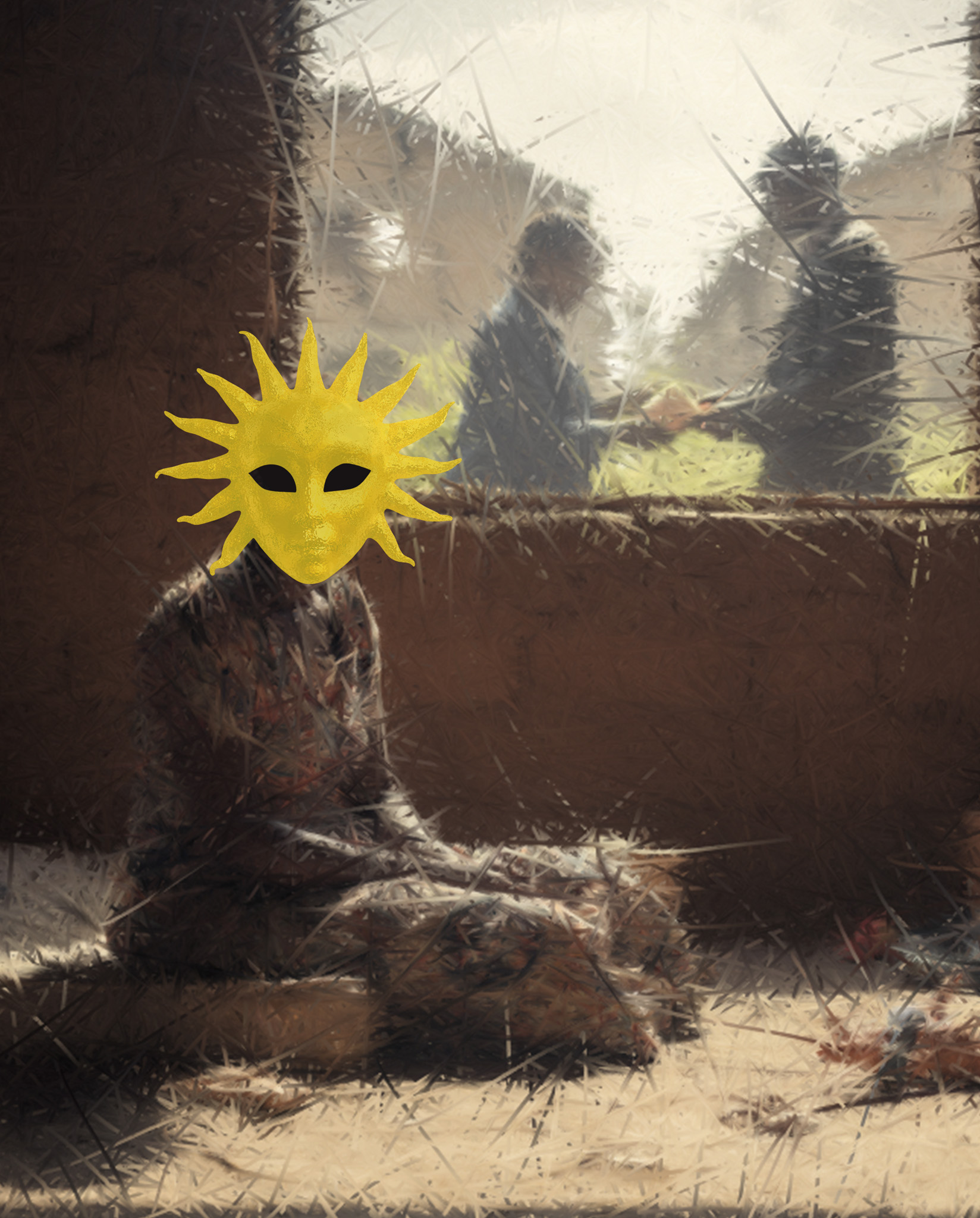
Trail of Betrayal
A story about how Helen was betrayed by her family.
I was born in the cold hills of Limuru, the sixth child in my family, and given the name Helen Njoroge. When I was barely a year old, my father died in a road accident. I never knew his voice, his smell, the warmth of his arms. All I had were pictures of him, still faces of a man I longed for but could never touch. Sometimes I stared at his image until my eyes blurred, trying to imagine the weight of his embrace, whether his hands would have been rough from work or steady with comfort. I liked to imagine the faint musk of sweat and soil on his coat, the scent of a man who worked hard and perhaps what his laughter would sound like.
***
When he was gone, life cracked open. My mother couldn't keep us together. We left Limuru for my father's small farm in Mayela, but even there survival was a struggle. My siblings and I were scattered among relatives like clothes flung in a storm. One by one, I watched them disappear through doorways, each goodbye carving a deeper wound. I dreaded the moment it would be my turn, terrified it might be the last time I ever saw their faces. Would we ever be able to call each other family again?
I was sent to Mombasa to live with my uncle and aunt. My uncle was a long-distance driver, always away, which left me in my aunt's hands. Her love was not the kind that fed or sheltered. My cheeks still sting with the memory of sudden slaps, my stomach still remembers the hollow growl of meals withheld. My small body learned too soon that pain could be daily language. I never dared to speak. Who would believe a child? At night I swallowed my cries into the pillow, silence becoming my only shield, though it carved me hollow inside. Was love supposed to hurt like this?
My eldest sister eventually intervened, negotiating my rescue. The new guardian who took me in was shocked when she saw the state of my underwear and immediately bought me new ones. It was such a small thing, yet it carried so much weight. Someone noticed. Someone cared. Slipping into the soft fabric, I felt relief that I was no longer invisible and grief for the girl who had been forced to live without dignity. The thrill of being made into a proper lady.
Not long after, I was bundled into a van, sent alone to Naivasha, told only that my uncle would find me. My small fingers clutched the torn seat as the van hummed through its journey every bump on the road reminding me how far from safety I already was. When he came, I didn't feel rescued. I felt like a parcel passed from hand to hand. All I wanted was one place to belong, one place where the floor wouldn't shift beneath my feet.
My mother lived in a small mabati house she'd built from my father's insurance. It wasn't much, but it was all she could manage. She chased small jobs in Mayela, gone for weeks, returning with food when she could. By Class Eight, my schooling ended. Poverty decided my future: house cleaning at thirteen. That was when I got pregnant. I still remember watching my classmates march to school in their crisp uniforms as I balanced a basket of vegetables on my head, heading to work.
I was still a child, but suddenly I was carrying one. The man, ten years older, promised forever. The moment I began to swell, he vanished. I hid my pregnancy beneath loose clothes, lowered eyes, trembling hands. Every task tugged at my back, every whispered glance in the market cut like a blade. At night, I pressed my hand to my stomach, begging the world not to see. Shame was heavy, but heavier still was secrecy. I feared my mother would be too ashamed to still call me hers.
When I finally gave birth, I was too broken to return home until my mother, hearing whispers, came to claim me and my child. For a year, I stayed with her, then left my daughter behind to search for work in Nairobi and Mombasa. Each goodbye felt like tearing skin.
In the early 2000s, I gathered my mother, my siblings, and my daughter into one cramped room in the city. We tried to build something like stability. Then the 2007 post-election violence tore it all apart. The gunshots splitting the night, smoke thick with burning rubber, and screams that tore through the air like the world itself was ending.
By 2009, my sister urged me to try Saudi Arabia. I scraped together every coin for documents and a ticket. At the airport, the president announced a sudden ban. Around me women wailed, debts crushing them. I felt relief, like God had tugged me back from a fire.
Back home, I tried tailoring, but it failed before it began. Some nights I dreamed of being rescued by love, by a man with money, strong enough to carry me and my family. But even that hope betrayed me. Maybe I kept going because some small, stubborn part of me still believed that just one stroke of luck down the line somewhere, could make all the suffering make sense.
I survived on one chapati a day, saving the rest for fare. When my uncles got me a job paying ten thousand, I thought it was my break. But transport swallowed it all. I quit, broke again.
Then came marriage. I let myself dream of home, love, stability. Instead, grief swallowed me when my sister died of spinal cancer. My in-laws stripped me of dignity, poisoned my husband's ears. Ulcers, blood pressure, silent crying nights. I knew if I stayed, I would die. My mother offered a lifeline: "I'll care for the children. Come home. Your success will be our success too." I placed my babies in her arms, carrying guilt and hope, and set my eyes on the Gulf.
Dubai was nothing like the dream. The first house denied me sleep, food, even a mattress. I stumbled through work, legs swelling, dizzy from heat. When they returned me to the agency, I thought maybe the second house would be better. It was worse. The old woman forbade me to sit, even when I needed the toilet. I froze under blasting air conditioning, scrubbed until my body screamed, and when she died, I was dumped back sick, wages stolen.
I tried to send money home anyway. Nine thousand shillings scraped from sweat. My mother's response: "Why not twelve?" She never asked how I was. That night I cried until my chest hurt so bad I thought I would die. In the middle of it all, I'd close my eyes and see their faces, hear their laughter and for a heartbeat, the pain dulled, because somewhere, my babies still needed me. I'd whisper their names like a mantra, each one pulling me back from the edge.
The third house lured me with kindness, Wi-Fi, and warmth. I signed a two-year contract, grateful. The very next day, kindness died. It happened so fast, yet for them it had been a slow, deliberate game, and when that charade was finally exposed, the sound of it broke my soul. A bottle was hurled at me. "Fill every bottle. Never let them run dry." From then, it was insults, exhaustion, bleeding for a month straight without hospital care, strange pills pushed into my hand. My salary vanished into debts and fees. No savings. No dignity.
I begged for help in WhatsApp groups. Strangers sent money to pay a driver to rescue me. My heart pounded as I slipped into a car, carried to another town. For the first time in months, I felt a faint pulse in my chest, the numb corners of my heart stirring with the reckless hope that maybe, just maybe, freedom had finally come. But the dalala who met me was no savior. He pushed me into more houses, each one a new hell, scratched by cats, scavenging leftovers, paid fractions of my wage, screamed at, threatened.
The worst was the house of the amputee man and his chain-smoking wife. Their filth became my prison. I slept on a pantry floor beside a freezer, lungs filled with smoke, hands bleeding from broken glass. The children hurled knives and insults. My pay was cut in half. When I begged the dalala, he threatened me: "If you don't work, how will you pay me back?"
By then, three months had passed. Not a coin home. My children had been removed from school. I broke down, called my mother. She told me, "Better to return with nothing than die in a foreign land." Nothing meant no savings, no strength, no sanity; just a body stripped of everything that once made me feel human, yet somehow still breathing, and even that was involuntary.
I drifted through short stints in hotel rooms and odd jobs scraping enough to open a bank account, saving back home so no one could touch it. Finally, I landed steady work and clawed toward a dream: 100,000 shillings to invest in farm chemicals like my uncle. By the time I hit 80,000, I borrowed the rest, desperate never to return to the Gulf.
But back home, betrayal waited. My uncle siphoned away my savings, whisper by whisper, excuse by excuse. By Easter I had only 68,000 left. Calls unanswered, stock rotting in my shop. Each spoiled sack of potatoes was a reminder that my dream had decayed. Their stench felt like the decay of trust itself, proof that even what seemed solid could quietly spoil and there was nothing I could do.
I borrowed again, this time from a loan shark, just to feed my children. Debt hangs over me like a knife. But still, I refuse to leave Kenya again. At least here, no one barks me awake over an intercom. At least here, my dignity is mine.
***
My children no longer ask for luxuries. They ask only that I stay. And though poverty claws at us, though betrayal has hollowed me out, I cling to one thing: the peace of being home, with my kids, in a place where no one can sell my worth again. Now my father's frayed photo sits beside my children's, the faces of past and present watching over me, proof that what was once lost has found its way home.





