

Leeds Beckett University - City Campus,
Woodhouse Lane,
LS1 3HE
Ashley Caruso
Lecturer
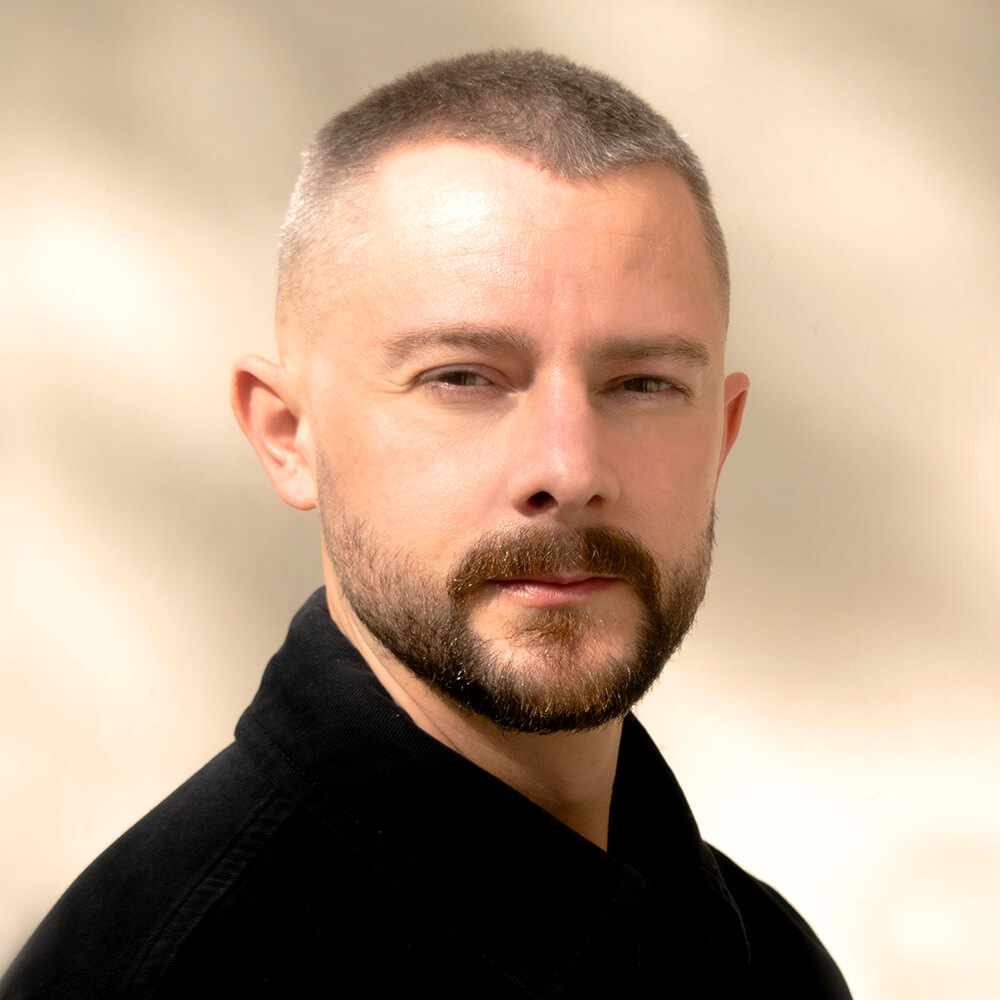
Ashley is a part time Lecturer in Architecture at Leeds Beckett University. He also runs London based design studio Store and Archive, working across disciplines such as architecture, image making and experimental fieldworks.
 0000-0002-4017-9207
About
Ashley is a part time Lecturer in Architecture at Leeds Beckett University. He also runs London based design studio Store and Archive, working across disciplines such as architecture, image making and experimental fieldworks.
Ashley is a part time Lecturer in Architecture at Leeds Beckett University. He also runs London based design studio Store and Archive, working across disciplines such as architecture, image making and experimental fieldworks.
Ashley's practice is process driven, often investigating site specific subject matter. He is currently redeveloping a small ruin in rural Portugal and working with local craftsmen to develop pigmented render using soil from the land.
Ashley has worked in architectural practice for Karakusevic Carson Architects and Cousins and Cousins, and has continued interest in exhibition design and curation.
Ashley leads a final year undergraduate design studio at Leeds School of Architecture. His teaching practice introduces students to cross disciplinary creative practice through both analogue and digital methods of experimental image production as a means to interrogate spatial concerns. Specific themes explore cultural vernacular, the ruin/ built heritage, locality of materials and local craftsmanship, the everyday, and sensitive redevelopment.
Related links
Research interests
Ashley's research is primarily practice based, exploring 'the ruin' through experimental image making and site specific intervention. He mediates between analogue and digital documentation to explore existing vernacular. A research based approach to built practice allows the reimagining and sensitive reinterpretation of existing ruins within all built projects.
Publications (3)
Sort By:
Featured First:
Search:
The Land In-Between Tides
 03 October 2025
Caruso A UK Ruin Press
03 October 2025
Caruso A UK Ruin Press
The Land In-Between Tides is not about producing the perfect photograph or carefully composed image. It is about recording, about what comes after the moment of capture - the post-image. A blurred, fuzzy, or overexposed frame still carries legitimacy, often holding more truth than the polished version. For most of human history, documenting the world in this way was impossible; photography itself remains a relatively new act of seeing. Here, the camera becomes less a tool for precision and more a companion for exploration, a way of walking, looking, and thinking. The process is casual, unforced. Sometimes a photograph is taken mid-conversation, at other times in silence and concentration. The images do not attempt to recreate something seen elsewhere, nor to satisfy an external expectation. Instead, they exist simply because they were taken. This reflects something of our wider culture - documenting without reason, without fixed intent, yet finding value in what is gathered. Importantly, the work does not shy away from the use of the camera phone. Normally dismissed for its ease and casualness - the act of documenting but not observing - it became, in this instance, a necessity, despite my own resistance to the medium. Carrying tripods and bulky film equipment across tidal silt, bracing against wind, or being blinded by the overhead summer sun made the iPhone a pragmatic tool. This echoes reflections in Fieldwork for Future Ecologies: Radical Practice for Art and Art-Based Research (Crone, Nightingale & Stanton 63), where the “physical awkwardness of lugging about sound or camera equipment in remote terrain” or dealing with exposure to the elements becomes a defining part of artistic field practice. The phone offered immediacy, accessibility, and lightness, while medium-format film - expired rolls and forgotten exposures - introduced slowness, unpredictability, and the possibility of failure. With the additional inclusion of drone footage to extend image production, the mediums form a hybrid approach - ease alongside resistance, immediacy alongside chance, precision alongside unpredictability. As Tim Ingold suggests, place is not pre-existing, waiting to be revealed, but formed through imagination and participation (Ingold 53). Walking, photographing, and recording in this way becomes a mode of inhabitation: not simply documenting a site but shaping and reshaping how it is perceived through process. The work unfolds as a living archive - a body of images not bound by rigid outcomes but shaped through layers, hybrids, and successive reworkings. Generation loss, where images degrade and transform with each reproduction, becomes part of the language of the project. The photographs may shift between formats: from phone snapshots to medium-format frames, from film to digital scans, from paper to screen. Each transition introduces loss but also possibility, revealing new forms in what could have been overlooked. It could be described as a kind of lo-fi photography - an approach that fascinates me. Normally, I try to work systematically, but the method often feels forced, even restrictive, and I find myself resisting it. In contrast, this casual mode of photography felt appropriate to the environment. It allowed me to test what happens when process is loosened, when images are taken without overthinking or staging. In this way, the act of photographing became less about control and more about attentiveness - catching what might otherwise be overlooked if scrutinised or questioned for too long. These images will not stay static for long; some will be reworked through other generative processes - printed, transferred, painted, projected - pushed beyond the confines of this publication. The ongoing life of the image resists finality, allowing each iteration to uncover new readings and altered meanings. The work becomes less about fixed outcomes and more about an evolving archive, where traces accumulate and shift over time. At the centre of this practice lies the Hilbre Archipelago: a site caught between sea and land, permanence and erosion. Here, man-made structures stand against shifting tides, their presence marked as much by decay as by construction. The work shifts between documenting natural forms and human interventions, tracing the duality between what is built and what is washed away. Remnants of natural and human traces formed the initial response to the fieldwork activities. During the initial artists’ site visit in April 2025, I resisted the urge to document, choosing instead to experience. The island unfolded through voices rather than images - listening to other artists speak of their approaches, their ways of sensing and responding. In casual conversations, fragments emerged: stories of Royal visits, of underground passageways, of hearsay and invention. Whether grounded in fact or imagination, these tales became my first encounter with the place - guided by people and by land. Some of these stories linger, embedded in the terrain like remnants of the past, while others are washed away - perhaps waiting to be rediscovered, or perhaps lost forever. And it is that very sentiment that I dedicate this work to - the traces which lingered but are now unseen. There is something poetic about the tidal path - sometime accessible, sometimes not. This slowness, dictated by waves, forces a sense of temporality and renewal, binding the experience to the passage of time. Drawing on the spirit of artists such as Daisuke Yokota and Jack Whitefield, The Land In-Between Tides resists discipline, precision, and control. It embraces experimentation as a way of observing and recording, where atmosphere and process outweigh technical perfection. In choosing the artist’s publication over exhibition, the project accepts its own level of permanence and impermanence: a poetic record that will continue to evolve, reflecting the shifting nature of both the islands and the images themselves.
Tracing Impermanence: Ruins as Sites of Exchange in Rural Portugal
Experimental Ruin Fieldwork: Exploring the Unseen, Casa de Campo, Portugal
13 August 2025
Dichotomy(28):15-43 (29 Pages) University of Detroit Mercy
 Authors: Caruso A, Editors: Reyes M, Puste M, Greer C, Hartsig I, Gladd B, Booth F, lhassoon H, Snauwaert S
Current teaching
BA (Hons) Architecture: 3rd year design





