

Leeds Beckett University - City Campus,
Woodhouse Lane,
LS1 3HE
Dr Ahmadreza Hakiminejad
Senior Lecturer
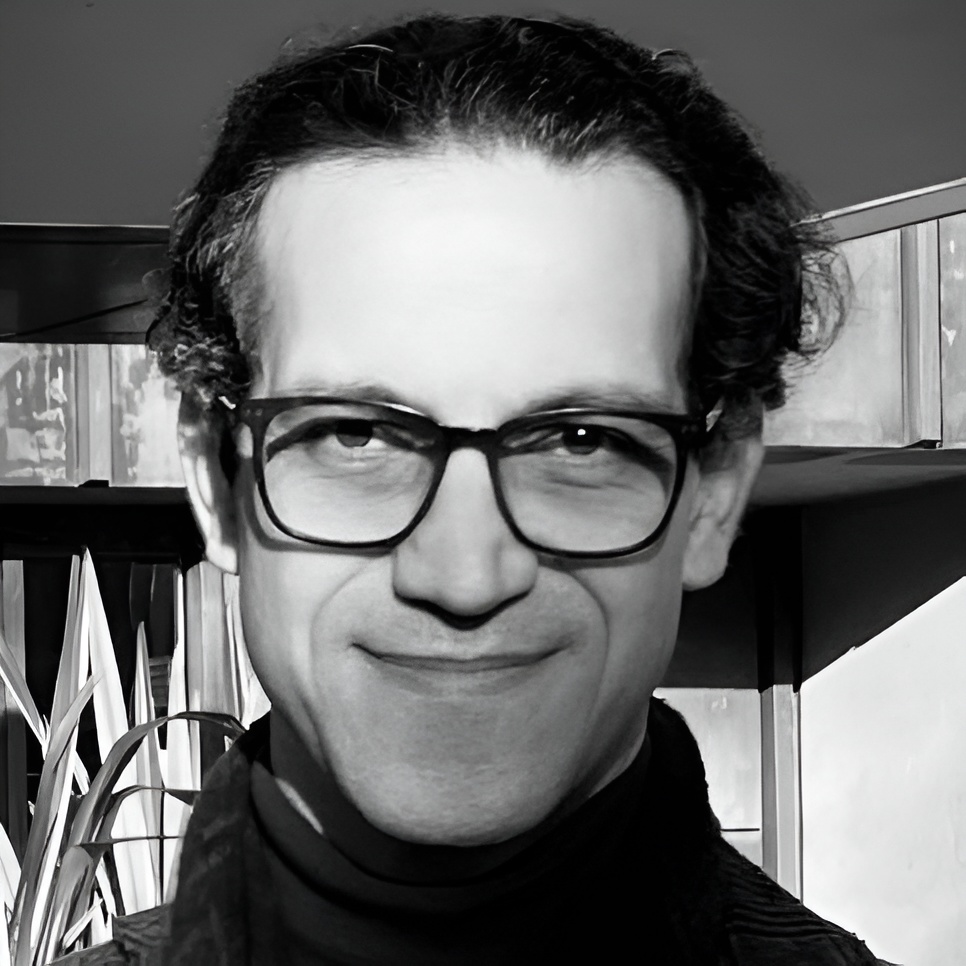
Ahmadreza is a trained architect, urbanist, researcher, experimental photographer, and Senior Lecturer in Architecture at the Leeds School of Arts, Leeds Beckett University.
 0000-0002-7176-2171
About
Ahmadreza is a trained architect, urbanist, researcher, experimental photographer, and Senior Lecturer in Architecture at the Leeds School of Arts, Leeds Beckett University.
Ahmadreza is a trained architect, urbanist, researcher, experimental photographer, and Senior Lecturer in Architecture at the Leeds School of Arts, Leeds Beckett University. A Fellow of the Higher Education Academy and member of the Society of Architectural Historians of Great Britain, he studied architecture, urban design and spatial planning in Iran and the UK, and previously worked in architectural practices in the Middle East. He also taught at Coventry University, and the University of West London, and has been invited as a guest critic and lecturer at the University of Westminster and The Bartlett, UCL. He is an international editor on the Editorial Team of City, Architecture and Society Journal, a participant of the ArtSpaceCity Research Group in the Centre for Postdigital Cultures at Coventry University and sits on the jury for the Tamayouz Excellence Award - an international award for architecture. He acts as a peer reviewer for: The Journal of Architecture, Journal of Planning Education and Research, Third World Quarterly, Journal of Architectural Education, and Review of Regional Research.
Ahmadreza's research interests revolve around critical urban theory, sociopolitics of placemaking, architecture and cities, architectural history and theory, and urban sociology. Through his investigations, he seeks to understand the intricate relationships between social, cultural, political, and economic forces that shape contemporary cities, particularly in the Global South. By employing critical frameworks, he tends to explore how these forces interact with and influence urban development, governance, and the lived experiences of individuals and communities within urban environments. He is particularly interested in critically examining cities governed by the ideological and authoritarian powers from a socio-political and historical perspective. He has contributed to the British, Iranian and American journals, papers and magazines as writer, editor, expert commentator, translator and photographer. He has published essays and articles, and presented works internationally in conferences and seminars in Iran, Europe and the United States, and his expert opinions have been featured in the international papers and magazines including The Guardian and The Architectural Review. His forthcoming co-edited book, City, Public Space, and Body: The Embodied Experience of Urban Life, will be published by Routledge in late 2025.
Research interests
Ahmadreza's research interests revolve around critical urban theory, sociopolitics of placemaking, architecture and cities, architectural history and theory, and urban sociology. Through his investigations, he seeks to understand the intricate relationships between social, cultural, political, and economic forces that shape contemporary cities, particularly in the Global South. By employing critical frameworks, he tends to explore how these forces interact with and influence urban development, governance, and the lived experiences of individuals and communities within urban environments. He is particularly interested in critically examining cities governed by the ideological and authoritarian powers from a socio-political and historical perspective.
Ahmadreza has contributed to the British, Iranian and American journals, papers and magazines as writer, editor, expert commentator, translator and photographer. He has published essays and articles, and presented works internationally in conferences and seminars in Iran, Europe and the United States, and his expert opinions have been featured in the international papers and magazines including The Guardian and The Architectural Review. He is currently co-editing a book for Routledge, entitled 'City, Public Space and Body: The Embodied Experience of Urban Life'.
Publications (44)
Sort By:
Featured First:
Search:
 Featured
Woman, Life, Freedom: The Sounds of A Revolution [Special Issue]
 21 June 2024
darkmatter Publication
21 June 2024
darkmatter Publication
 Authors: Alami Fariman M, Hakiminejad A, Editors: Alami Fariman M, Hakiminejad AFeatured
City, Public Space, and Body; The Embodied Experience of Urban Life
18 November 2025
Alami Fariman M, Lee C, Hakiminejad A, Mehan A1-190 Routledge
Authors: Fariman MA, Lee C, Hakiminejad A, Mehan A, Editors: Alami Fariman M, Lee C, Hakiminejad A, Mehan ACity, Public Space, and Body offers a timely and interdisciplinary examination of how bodies experience, shape, and are shaped by urban life, particularly in the wake of the COVID-19 pandemic. Bringing together contributions from scholars, artists, and practitioners across diverse geographies, the book explores the entangled relationships between urban space, embodiment, and publicness through a variety of methodological lenses including ethnography, visual and performative arts, and critical urban theory. The book highlights underexplored themes such as gendered vulnerability, spatial justice, post-pandemic public space, and marginalised urban bodies in both Global North and South contexts. By focusing on lived experience and embodied methodologies, the book challenges dominant urban narratives and contributes fresh perspectives on space, care, power, and resistance. It will benefit readers seeking to rethink cities not merely as physical or functional entities, but as affective and contested terrains of social life. Designed for researchers, students, and professionals in urban studies, sociology, planning, architecture, gender studies, and cultural geography, this collection foregrounds the bodily and sensory dimensions of urban encounters, spatial politics, and everyday life.
Featured
18 November 2025
City, Public Space, and Body: The Embodied Experience of Urban Life Routledge
Authors: Mehan A, Nawratek K, Hakiminejad A, Editors: Fariman MA, Lee C, Hakiminejad A, Mehan AThis chapter scrutinises the term 'public space' considering the COVID-19 pandemic's global impact, advocating for a more nuanced approach that encapsulates such spaces' diverse roles and functions. Drawing from the UN-Habitat Public Space Programme's 'City-wide Public Space Assessment', the study proposes four distinct categories for understanding urban 'non-private spaces'. It further introduces the term 'infrastructural spaces', emphasising inclusive mechanisms and challenging the conventional public/private binary. This research and call for action invite engagement with 'infrastructural spaces' to foster adaptable, inclusive, and sustainable urban environments aligned with the United Nations' Sustainable Development Goals (SDGs).
Featured
Woman, Life, Freedom: The Sounds of A Revolution
Featured
Behind the Veil. Interview by Alice Bucknell, The Architectural Review (Façade Issue), September 2017, p. 68-72. Available at: https://www.architectural-review.com/essays/behind-the-veil
Featured
14 August 2024
European Journal of Cultural Studies28(5):1-22 SAGE Publications
Alami Fariman M, Hakiminejad AThe death of 22-year-old Kurdish-Iranian woman, Jina (Mahsa) Amini, on 16 Spetember 2022 while in the custody of the Islamic Republic of Iran’s notorious ‘morality police’, led to nationwide mobilisations. Women were at the forefront of these protests, leading a movement that emphasised opposition to the production of space and place as gendered by the state apparatuses of the Islamic Republic. The state systematically and institutionally unmarks the female body in public space in order to make it as invisible as possible. In marking twenty years since the publication of Space Invaders by Nirmal Puwar, the concepts of invisibility, outsiderness, being ‘out of place’ and ‘space invaders’ are revisited in this article, within the political geographies of Iran. Furthering the concept, we also pair together space invaders/invading as political acts of intervention. Shedding light on the bodies ‘out of place’ within the Woman, Life, Freedom protests in Iran, we discuss how this mobilisation created a new generation of ‘space invaders’ who no longer negotiate with those in power, but exercise their right to choose what to wear when occupying public spaces. Through protest, activism, performances and other mundane acts of everyday resistance, space invaders negate the authority of the state apparatuses, defying conventions and boundaries and created new codes for a politically and culturally constructed version of 'woman' in Iran.
Featured
Academy, Art, and the Urban Question: Towards a More Equitable City
24 January 2025
XXXVIII International Colloquium and 3rd Megacities Forum: Urban Realities: Produced City, Inhabited City Museo de Arte Popular, Mexico City, Mexico
Jordan M, Alami Fariman M, Hakiminejad AThis panel is set to challenge the bureaucratic colonisation of the public sphere and privatisation of public spaces in the UK through the lens of art and urbanism. We believe that art and urban policy agendas in the UK cities turn towards hegemonic neoliberal governance and are often superficially labelled as inclusive and diverse as in practice, there are considerable gaps between state policy objectives and a) the commissioned artistic outcomes and b) grassroot urban interventions and strategies. Urban spaces are critical in our affirmation as they are means to protect a clear economic and political strategy of the state and the private sector. Together, we argue, they are often complicit in perpetuating the systems of oppression embedded in capitalist, hetero-patriarchal, and racist spatial structures. In this panel we take a closer look at the UK hegemonic artistic, cultural and urban policies in what Hewitt (2011) calls the ‘privatizing the public’ in art and culture sphere and what Scobar (2018) refers to as applied (market-driven) design in urbanisation. But our discussion goes beyond this to also provide a counter lens through which ‘transition design, design for transitions, and design for social innovation’ (Scobar, 2018) are practiced through partnership among practitioners, activists and academics within and beyond the UK context. Through this section we will reflect on our ASC (ArtSpaceCity) workshops and public engagement events, conducted between 2021 and 2023, in order to show our endeavour and determination in developing non-Eurocentric practices and social engagements. Our focus is on the potentials that allow and enhance the coexistence of heterogeneous trajectories and narratives, while being always in a state of becoming (Massey, 2005). In order to contextualise our discussion, we will delve especially into one of our workshops entitled ‘Co-making Futures: How Do Universities and Cultural Organisations Create Equitable Cities?’. This workshop— held at the Herbert Art Gallery and Museum in Coventry in July 2023— was formed as a critique of the approach undertaken for the redevelopment of the former IKEA building in Coventry hailed as the so-called City Centre Cultural Gateway, in which the Coventry University will “create a cultural hub” across two floors of the building, as part of which “the university’s state-of-the-art facilities will be open for public use” (quoted in Whitley, 2023); and also in the context of the launch of Coventry Culture Works, a new partnership between University of Warwick, Coventry University and Coventry City Council, formed to oversee the delivery of the city’s ten-year cultural strategy. As part of this panel, we also aim to present a selected screening of the works of some of our ASC workshop’s participants including ‘The Preston Model: Growth without Growth (Julian Manley); as well as ‘Art, Neighbourhood and Social Action’ by Ana Laura López de la Torre from the Faculty of Arts at the Universidad de la República in Montevideo, Uruguay, whose pedagogical practice operates through the framework of critical ‘extensión’.
Featured
Stuart Hall and the City: Exposing Racial Injustice through Creative Contestation
28 August 2025
Royal Geographical Society Annual International Conference University of Birmingham
Alami Fariman M, Hakiminejad A'Stuart Hall and the City: Exposing Racial Injustice through Creative Contestation', co-organised by Mahsa Alami Fariman and Ahmadreza Hakiminejad, and sponsored by the Political Geography Research Group, was part of the Royal Geographical Society Annual International Conference, hosted by the University of Birmingham from 26-29 August 2025. Speakers include Dr Sonali Dhanpal (Buell Research & Teaching Fellow, Columbia University), Professor John Clarke (Emeritus Professor of Social Policy, Open University), and Dr Nick Beech (Associate Professor and Co-Lead of the Stuart Hall Archive Project, University of Birmingham). Stuart Hall and the City: Exposing Racial Injustice through Creative Contestation Convenors: Mahsa Alami Fariman Ahmadreza Hakiminejad Date: 28 August 2025 Time: 16:50 - 18:30 BST Location: University of Birmingham | Arts Building (LR3) SYNOPSIS The aim of this panel is to bring together a diverse group of academics to examine Stuart Hall’s Policing the Crisis: Mugging, the State, and Law and Order in relation to the history of racial inequality in urban planning and policy in UK cities—both in the 1970s and 80s and in the present day. Our goal is to advance theoretical debates on racism in urban planning within postwar Britain’s so-called “race relations capitals” and “inner cities” (Connell, 2019) while employing creative methodologies to uncover the role of urban planning apparatuses at the local level during this period. Specifically, we explore how "mugging" became what Stuart Hall describes as a ‘conjunctural crisis’—a moment in which newspapers, the justice system, the police, and broader political and cultural ideologies converged to criminalise Black and Brown communities in the inner cities. To map the racial injustices of this urban moment, this panel engages with ‘Policing the Crisis’ alongside archival materials to address the following questions: - How did postwar urban planning systems and policies shape the spatial configuration of ‘coloured’ settlements and ‘inner cities’ in cities such as Birmingham and beyond? - In what ways did the emergence of the ‘inner city’ contribute to structured and hegemonic policing practices targeting Black and Brown communities in UK cities? - Why does the postwar territorialisation of the ‘inner city’ as a pathological space (Rhodes & Brown, 2019; Alexander, 2009; Dahya, 1974) remain relevant today, and how can anti-racist activism advance a counterhegemonic agenda within the UK cities? In this panel, we aim to read, decipher, and map ‘Policing the Crisis’ in relation to urban planning and policy, recognising the racism embedded in the UK's urban planning systems as part of the broader process of criminalising Black and Brown communities in the 1970s and 80s (Hall et al., 1978). By engaging with Stuart Hall’s theories and concepts as tools for challenging established knowledge in urban design, planning, and policy (Beebeejaun, 2022), we seek to foster an investigative and culturally situated production of knowledge. This approach counters the racist urban orders embedded in colonial and capitalist structures, which continue to exclude non-white bodies from the official narratives of urban environments (Miraftab, 2009).
Featured
A critical review of sustainable built environment development in Iran
01 September 2015
Proceedings of the Institution of Civil Engineers: Engineering Sustainability168(3):105-119 (15 Pages) ICE Publishing
Hakiminejad A, Fu C, Mohammadzadeh Titkanlou HPopulation explosion, irresponsible consumerism, environmental catastrophes, tremendous market-based urban development and the dedication of cities to cars and concrete rather than citizens and environment has put a big question mark over the future of the world’s developing countries. Urban sustainability has emerged as the only solution to the environmental, social and economic challenges facing our cities. In recent years in countries struggling with the concept of urban sustainability, such as Iran, academic circles and the state have had heated debates over sustainable development. The purpose of this paper is to examine the current situation of sustainable development of the built environment in Iran. The focus is on recognition of urban governance, policies and regulations. The paper examines the scope of sustainable technologies employed in Iran in terms of the development of energy efficiency and renewable energies. This is followed by an investigation of urban sustainability assessment methods through which the paper tackles policy, technology and assessment mechanism issues from a perspective of sustainable built environment development in both theoretical research and practical development in Iran.
Featured
Cultural Mega-Event, City Centre South and the Destruction of Coventry
01 July 2022
SPACEX Training Event: Arts and the Urban Commons: New Visions for the Phoenix City LTB Showrooms, Coventry, UK
“The English don’t do that, they apologise for it and say - okay it’s all rather shabby, let’s knock it down and build a new one.” - Jeremy and Caroline Gould, Coventry Telegraph, March 2016 In April 2021, only a month prior to the postponed launch of Coventry City of Culture, Coventry City Council gave green light to the City Centre South; a 15-acre (6.4 ha.) urban intervention in the heart of Coventry. Designed by Chapman Taylor architects for the Shearer Property Group; the £360m scheme was described as ‘a tragedy’, ‘total disgrace’, ‘absolute vandalism’ and ‘totally unacceptable’ by scholars and societies including The Coventry Society and The Twentieth Century Society. By virtue of the plan, Coventry will witness the demolition of some of its Modernist heritage including Bull Yard, Shelton Square, Market Way and City Arcade. The characterless, identikit scheme, as aptly put by the architectural historian Louis Campbell, ‘bears no relation to Coventry. It could be Milton Keynes, or Minneapolis, or Magnitogorsk.’ No doubt, the 15-acre site in questions is in desperate need for carefully crafted upgrades, additions and transformations. It is this selfish, top-down, carelessly dull, and purely market-driven, capitalist notion of so-called ‘urban regeneration’ that is problematic. There is a lack of imagination. This is a lack of vision. And yet, it is quite remarkable to see that a cultural mega-event dominating the city within the past year, has failed to address such colossal intervention scheme which tends to determine the fate of city’s future. I would argue that City of Culture, as a cultural instrument, should go beyond an unhealthy exercise of ‘artwashing’ which, as Oli Mould writes, is nothing but ‘the mobilisation of artistic creativity completely devoid of its subjective, complicated and politically-charged context.’ While ‘boosting participation, bolstering the ‘visitor economy’, improving artistic quality’ and simply putting the city on the map, ‘City of Culture’ also needs to critically engage with crucial matters related to the city (in this case creation of a new city centre) through providing platform for urban debates and intellectual discourse, as well as supporting artistic, social and political activism.
Featured
A Mysterious Approach: The Elements of Environmental Sustainability in Traditional Iranian Architecture and Urban Design
Featured
The Oil and the Brick; Tales of a Scotsman in Persia. Round City Magazine.
Featured
‘Errors of Scale’: The Story of Tehran’s Abbasabad Lands. Konesh Space.
Featured
Tehran’s ‘Stone Palace’: A House for a City (in Persian), Anthropology and Culture, Tehran, Iran.
Featured
The Historic Landmark in the City: Case of Moshir al-Mulk Caravanserai in Borazjan (in Persian), Anthropology and Culture, Tehran, Iran.
Featured
From Sheikh’s Dome to Sayyid’s Minaret (in Persian), Anthropology and Culture, Tehran, Iran.
Featured
A Land for the Square, A Space for the City(zen): the Potentiality of a Vacant Land in Transformation of a Significant Urban Node (in Persian). Shargh Daily. Tehran, Iran.
Featured
People; the Missing Link of Iranian Cities (in Persian). Shargh Daily. Tehran, Iran.
Featured
Why ‘Charkhab’ Is Important? A Note on the Historic Palace of Charkhab in South Iran (in Persian), Bamdad-e Jonoub Daily, Iran.
Featured
Borazjan: An Isolated City (in Persian). Ettehda-e Jonoub Weekly. Bushehr, Iran.
Woman, Life, Freedom: The Sounds of a Revolution
20 May 2023
Alami Fariman M, Hakiminejad AAction research project, funded by Sustainable Cities GRP Small Grants, University of Warwick. In collaboration with Centre for Feminist Research (Goldsmiths, University of London), Centre for the Study of Women and Gender (University of Warwick), and Centre for Interdisciplinary Methodologies (University of Warwick). Coventry Cathedral, UK, 20 May 2023.
Featured
Politics & Pakora: Imagining Futures for Coventry’s Cultural Infrastructures. (Acted as Organising Committee in collaboration with ArtSpaceCity Research Group, Centre for Postdigital Cultures, Coventry University). The Pod Café, Coventry, UK. 10 May 2023.
10 May 2023
Jordan M, Parry A, Treloar M, Rizzioli G, Alami Fariman M, Hakiminejad A, Ingram CAn event to discuss the future for Coventry's cultural infrastructures. 25 invited participants from cultural organisations will discuss 5 questions What can we learn from the experience of Coventry City of Culture, given the context that the Trust has gone into administration? How can sustainable arts economies be built? What would that look like? How can university assets support the production of culture across Coventry? Participants will be invited to participate in an artwork by our collaborator - artist-researcher Sadie Edginton who will document participants using visual codes (abstract shapes the artist has designed). These codes will signify whether the participant lives in Coventry, and what they see their role being (artist, academic, cultural worker, activist, member of public). This will be anonymous. Sadie Edginton will also lead an activity inviting participants to specify keywords that are relevant to the conversation.
Featured
Co-making Futures: How Do Universities, Publics and Cultural Organisations Create Equitable Cities? (Acted as Organising Committee in collaboration with ArtSpaceCity Research Group, Centre for Postdigital Cultures, Coventry University). Herbert Art Gallery & Museum, Coventry, UK. 03 July 2023. Available at: https://postdigitalcultures.org/co-making-futures/
Featured
The Wrong City in the Making; the Case of Tehran’s District 22
14 April 2019
Fourth Biennial Conference on Iranian Studies University of St Andrews, Scotland
On August 30th, 2000, Tehran gave birth to her last offspring, District 22. Spreading over northwest Tehran, it was largely a carte blanche, aimed to be an exemplary model for sustainable development; a beacon of urban planning for the capital. Two decades in the making, the urban scene of District 22 is, arguably, a failure of city design; a mishmash of fruitless, desolated, dispersed satellite towns, centered upon an ill-conceived artificial lake veneer. It is literally a reproduction of Pruitt–Igoe in a massive scale, half a century after its demolition. (Re)reading Peter Hall’s Cities of Tomorrow, and Henri Lefebvre’s The Right to the City, this work critically analyses the urban and architectural vocabulary of the District, revealing how and why a complex conglomeration of stakeholders has wasted a great opportunity to deliver a liveable urban environment. It will also discuss the potential strategies that may help to reduce the damage.
Featured
The House of Tyranny; Thoughts on Iran’s Pyramid of Power
19 February 2021
Parliament Buildings Conference The Bartlett School of Architecture, University College London
The nation state is not visible, it is … an ‘imagined community’ that must be rendered visible through an iconography of buildings, maps and monuments, often represented on money and stamps, that affirm the story of the nation, enabling citizens to imagine what they cannot see. Kim Dovey, 2018 Architecture is not politics, but it serves it unequivocally! It embraces power and the powerful. The states often employ architecture (of symbolism) to demonstrate strength and stability, as the word ‘state’ itself “shares the Greek root ‘sta’ with words like stand, stable, static, statue, statement, standard, stage, status and establish”. Hence, a building can simply be conceived as a means of political and ideological manifestation. With 114 years of history, the Iranian parliamentary establishment has been struggling to function as a democratic means of power to this day. Drawing upon a sociohistorical and political narrative, this piece aims to portray a critical reading of the Iranian power structure, providing a semantic analysis of the parliamentary buildings in Iran, with a particular focus on its most recent edifice accommodating the Islamic Consultative Assembly (Majles-e Shūrā-ye Eslāmī). Viewing the Islamic Consultative Assembly from Bahārestān Square, one sees a fortification, embodied in a solid, impenetrable pyramid of secrecy. The form of the building conveying a sense of closedness, and a lack of transparency, suits perfectly the Iran’s structure of power. The parliament fails to reflect the voice of the nation as it is the result a carefully-controlled electoral procedure under the authoritarian rule of the Supreme Leader. Through a theoretical approach to power I will discuss in the paper in details, why this is the case. It is intriguing in a way that the Iranian Parliament, with all its formal determinations to express power and stability, is the most fragile of all in Iran’s convoluted structure of power. It can be seen, in its entirety, as a political instrument at the service of rahbar (the Supreme Leader). As a potential candidate, it would be almost impossible to get into that House, if you simply fall out of favour with the Big Brother. The final say belongs to him; and this is not something personal; the Guardian Council (Shūrā-ye Negahbān) – under the utter influence and rule of the Supreme Leader – supervises elections, and all candidates standing for election must meet with its prior approval. The Council can even withdraw the elected MPs.
Featured
City as Stage: Performative Body and the Authoritarian City
11 November 2023
Authoritarian Urbanism: Global Manifestations, Knowledge Exchange and Contestation Bauhaus-Universität Weimar
Hakiminejad A, Alami Fariman MIn a cold day in December 2017, on the curbs of Enghelab Street in central Tehran, Iran, a defiant woman climbs a utility box, takes her hijab off, ties it to a stick and waves it to the crowd. Her eyes stared soulless towards her city, waving her white scarf in silence. The performer reclaimed the street to convert it into a theatrical stage with its astonished audience. This simple yet courageous bodily phenomenon tending to reclaim the city became a symbolic act of protest against the compulsory hijab. In light of the ongoing Woman, Life, Freedom movement in Iran – ignited by death in custody of Kurdish-Iranian woman Mahsa Jina Amini for ‘improper hijab’ in September 2022 — performance as act of resistance has become a semiotic way of protest in the face of the authoritarian city. Enacting the factual moments of oppression, suffering and even joy, Iranian urban women rebel against a city that tends to control the public body — and create a novel space of theatrical disobedience. In this paper, we aim to critically explore and theorise these moments of performative resistance in the public urban spaces through the lenses of feminist geographies, ‘the right to the city’ and politics of space. In this context, the authoritarian city is produced by a) entities associated with a politico-ideological power fuelled by religious fanaticism and b) autocratic urban forms.
Featured
18 February 2022
Cities in a Changing World: Questions of Culture, Climate and Design AMPS Proceedings Series Montgomery J New York City College of Technology, CUNY AMPS C.I.O.
Authors: Hakiminejad A, Editors: Montgomery J‘The right to the city is like a cry and a demand’, wrote Henri Lefebvre in his1968 book Le droit à la ville. In the noted urban scholar Peter Marcuse’s words, Lefebvre’s right is ‘a cry out of necessity and a demand for something more’. Despite rather astonishing efforts of former IRGC (Islamic Revolutionary Guard Corps) Commander turned mayor Mohammad Bagher Ghalibaf, to portray a deceptive picture of Tehran on a global stage – either by inviting world-renowned urban thinkers such as Setha Low, David Harvey and Saskia Sassen, or by being invited as a key-note speaker by world-renowned institutions such as LSE, the Iranian capital fails to respond to the fundamental demand; and the demand, as Marcuse once wrote: "comes from those directly in want, directly oppressed, those for whom even their most immediate needs are not fulfilled: the homeless, the hungry, the imprisoned, the prosecuted on gender, religious, racial [and political] grounds. It is a demand of […] those whose income is below subsistence, those excluded from the benefits of urban life. The aspiration comes rather from those superficially integrated into the system and sharing in its materials benefits, but constrained in their opportunities for creative activity, oppressed in their social relationships, guilty perhaps about an undeserved prosperity, unfulfilled in their lives’ hopes." In this paper, through a critical reading of Tehran, both as a physical, as well as a sociopolitical entity, I would argue that what we see today, is, indeed, a city of oppression, discrimination, hypocrisy and despair which predominantly failed to serve its citizenry. I would also argue that there is no such thing as citizen in the Iranian city while an institutionalised discriminatory system driven by a corrupt, dysfunctional theocratic sovereignty dominates not only the urban managerial structures, but also all aspects of city life.
Featured
The Rise and Fall of An Oil City: A Sociological (Hi)story of Abadan
17 May 2024
Petrocultures 2024: Oil Cities and Post-Oil Cities University of Southern California, Los Angeles
Hakiminejad A, Alami Fariman MIn 1909, the London-based Anglo-Persian Oil Company was born and by 1912, the liquid began to flow in the pipeline from the oil fields of Masjed Soleyman to what was yet to become the world’s largest oil refinery on the desert island of Abadan; putting a deprived Iranian village on the map. In this paper, we tend to depict a contested sociological portrayal of the oil city of Abadan, through literature, poetry, film, oral history and archival methods. This piece aims to tell a social (hi)story of ‘the oil town’ from its colonial past to its post-revolutionary present.
Featured
Digital Space and Feminist Politics in Iran: Archival Methodologies of Sound
03 July 2024
Gender in Crisis Workshop 2024 Utrecht University, Netherlands
Alami Fariman M, Hakiminejad AIn the light of the recent women-led mobilisations in Iran which have mushroomed after the state killing of a 22-year-old Kurdish-Iranian woman, Mahsa Jina Amini, we, the authors, in collaboration with British filmmaker and sound artist Duncan Whitley, have co-produced a multi-media sound work, entitled ‘Woman, Life, Freedom; The Sounds of A Revolution’, tries to depict the Iranian women’s struggle against the tyrannical establishment of the Iranian regime since the 1979 Islamic Revolution. In so doing, eleven sounds –which are part of a larger archive– have been extracted from the recordings of the 1979, 2009, 2021 and the 2022 protests, shared on social media from within Iran. Sounds are accompanied by texts which situates the sounds within their historic, geographic and political contexts. Through screening this work, and in reflecting on the interface between the digital and sonic geographies of the Woman, Life, Freedom mobilisations, we tend to answer the following questions: how did we approach the making of this sound-piece (feminist methodologies of care and resistance); what did our creative piece set out to explore (the sensory, digital and archival methodologies); what our findings were (production of a sensory-digital space from historic and contemporary witness recordings of the protests generated and shared via social media).
Featured
'Like LA with minarets': how concrete and cars came to rule Tehran. Interview by Oliver Wainwright, The Guardian, 9 January 2019. Available at: www.theguardian.com/cities/2019/jan/09/like-la-with-minarets-how-concrete-and-cars-came-to-rule-tehran
‘City, Public Space & Body’ International Conference (Acted as Organising Committee), Institute for Creative and Cultural Entrepreneurship, Goldsmiths University of London, 14-15 December 2021. Available at: www.citypublicspacebody.com/
Featured
‘City, Public Space & Body’ International Conference. Goldsmiths, University of London (Virtual)
Featured
Measuring cities: a study of the development of Iranian urban sustainability assessment mechanisms from a UK perspective
05 March 2018
According to the conceptual framework of this research, the emphasis of the study is on mechanisms and interrelationships that affect the process and product of urban sustainability assessment. Accordingly, this study has concentrated on the identification of the urban sustainability indicators, data sources and assessment methods and their strategies and interests within the environmental, socio-cultural and economic contexts in which they operated. To this end, the study has enjoyed the insights from 64 participants including experts, scholars, practitioners as well as high-ranking officials across the ministries, municipalities and local authorities, through carrying out a questionnaire survey and conducting a series of semi-structured interviews in Iran. Due to a lack of established and well-documented data, it was initially required to find out what kinds of sustainability assessment methods have officially been used in Iran. This led the researcher to conduct a survey of Iranian local authorities and government departments. The findings of this survey were reviewed, discussed and compared to the UK sustainability assessment methods. As a result, the study suggests a detailed proposal for developing an urban sustainability assessment model in Iran including a comprehensive urban sustainability indicator set. The research also concludes that there is an urgent need for establishing a bottom up organisational structure in Iran to pursue the concepts of sustainable development and sustainability assessment within the public and private sector. The unique contribution of this study is that it has done a systematic research on the principles and frameworks of developing an urban sustainability assessment mechanism in Iran based on the UK experience and achievement in this area. It has also explored various weaknesses and barriers in the current Iranian urban planning and development system. Examining these barriers and weaknesses may form the demand and objectives of reforms in the current Iranian planning and development systems. Furthermore, the findings of this study provide insights into the issues that policymakers and practitioners need to consider in developing programs and efforts dealing with the problems of urban sustainability assessment. It will enhance the theory and literature within the knowledge bases of evaluation of urban sustainability in Iran tackling the existing issues and making suggestions which will depict the most appropriate way for the development of Iranian urban sustainability assessment mechanisms considering the three substantial pillars of sustainability: environment; society; and economy.
Featured
Prioritizing Cars Over People in the Iranian Cities (in Persian)
Featured
In Search of A Ruined City; Revisiting Tehran’s Red-Light District
01 September 2022
13th Biennial Iranian Studies Conference University of Salamanca, Salamanca, Spain Association for Iranian Studies
“Suddenly I see the crowds and I’m getting very excited. Then I see a body; a burned body being carried out on [the] shoulders. I remember. It was so quick. I was on a platform. I raised my camera and it was a blank shot. I just took it there. Few shots, and the body goes away.” These are the words of the Iranian photographer, Abbas Attar, describing his extraordinarily haunting shot captured in central Tehran on 29 January 1979, only a few days before the fall of the Shah. Earlier that day, the fervent revolutionaries had burned down Tehran’s red-light district. The burned body floating over the shoulders, belonged to a prostitute who lived in there. The capture seems metaphorically surreal. A burned female body on top, a sea of ferocious male faces beneath celebrating their landmark triumph; the saint(s) and the whore in one remarkable frame! After the Islamic Revolution, the brothel was razed to the ground. Madams were executed and inhabitants were displaced. The city literally removed her notorious offspring wiping it off the map and subsequently built a park on its ruins. The district was called Shar-e No (New City). In the late Qajar era, it was an outer city housework district not too far from one of the city’s gates called Darvezeh Ghazvin. In the Pahlavi era, it was merged in, and became the most infamous part of the town; a neglected, run-down quarter depicting a sorrowful image the state didn’t want to be seen. Two months after the US-British-backed coup of 1953, Fazlollah Zahedi, the Shah’s prime minister ordered a wall to be built around the district. A walled city with an iron gate was born before the public eye. This essay is telling the story of this quarter. The piece, critically challenging the both pre- and post-revolutionary approaches toward the district, will uncover its historical, socio-political, as well as physical transformations through (re)visiting the few existing works of art and literature by those who dug the neighbourhood between 1950s and 70s; namely Zakaria Hashemi’s novel Tuti (1970), Mahmoud Zand Moghaddam’s narratives Shahr-e No (2013, first published in 1957); a 1969 report ‘on prostitution in the city of Tehran’ initiated by the Tehran’s School of Social Work; Kaveh Golestan’s Prostitute Series (1975-7) and a 1966 documentary, Women’s Quarter (Qaleh) by Kamran Shirdel.
Featured
Urban Air and Pollution (Panel Discussion)
19 January 2014
Iran’s Natural Heritage: A Catalyst for Measurable Change Asia House, London
Hakiminejad A, Curtis J, Borbor D, Hosseini VFeatured
Urban Sustainability Assessment Indicators: A Review
02 September 2015
Andisheh New Town Development Company, Tehran, Iran
Hakiminejad A, Mohammadzadeh Titkanlou HFeatured
Women vs Cities: The Masculinity of Urban Space in Traditional and Modern Iran
04 August 2016
Eleventh Biennial Iranian Studies Conference University of Vienna, Vienna, Austria Association for Iranian Studies
It is not long time ago since the introvert male-dominated society, kept its treasure; the goddess of Matbakh1 behind closed doors of Andarouni2. Despite some focal points of effective appearance of Iranian women in urban societies in the late 19th century (such as Tobacco Protest in 1891), until the early 20th century, the relations of Iranian woman and urban/public space was predominantly restricted to a veiled presence in the mosques, mourning rites and funeral ceremonies, depicting a sorrowful picture of her in the urban society. Rarely seen in the bazaar, possibly the public bath has been the only social platform, in which women could feel freer to interact, to talk and to meet within the only feminine public space in the city. The city was utterly exploited by men. The city was completely masculine and observably it remained masculine! Due to the socio-economic transformations in early 20th century leading to the Constitutional Revolution (1905-1911), the relationship between women and urban space began to change in Iranian cities. Politically speaking, from the forceful Removing of Hijab in 1934 by Reza Shah Pahlavi (which suddenly transformed the image of the veiled city to facing the women wearing miniskirts and high heels in downtown of the Iran’s capital) to the forceful covering of Hijab in Post-Islamic Revolution in 1979, Iranian women experienced a series of top-down political interventions reminding them they are painfully still the “second sex” in the contemporary Iran. The paper, firstly, discusses the historical transformation of women’s appearance in the urban spaces in sociological perspective in Iran; and secondly, it aims to explore how they- as the female “bodies of walkers” in the city- read this male-written rhetoric in modern urban society (as Michel De Certeau’s The Practice of Everyday Life gives a metaphorical expression of the city as ‘text’, while the walkers in the city are ‘readers’ of the “city-text”). Thus the socio-cultural nature of this research induces a series of semi-structured interviews with a group of Iranian women on their imaginations, experiences, stories and feelings of being/walking within the urban spaces in Iran’s modern cities. 1. Kitchen in traditional Iranian architecture. 2. Purdah; literally inner house where women cannot be seen by men.
Featured
The Interrelationship of Social Sustainability and Urban Form; the Case of Modern and Traditional Iranian Cities
22 January 2016
18th International Conference on Sustainable Urban Environment International Journal of Environmental and Ecological Engineering Paris, France World Academy of Science, Engineering and Technology
Hakiminejad A, Fu C, Mohammadzadeh Titkanlou HFor decades, sustainable development has been an imperative concern in the process of urban development of the world’s developed countries. Despite the fact that the concept of sustainability, primarily, emerged by virtue of warning over global environmental catastrophes, it subsequently led to the ongoing debates not only over environmental, but also economic and sociocultural issues involved. This study, particularly, discusses the constituents of social sustainability– as one of the three pillars of sustainable development– and its situation within an urban context. It tries to investigate the interrelationships between the elements of social sustainability and the quality of physical environment. The paper, firstly, depicts a theoretical overview of the notions of social sustainability and urban form. Secondly, it will discuss the interrelationship between the two. And lastly, it will investigate and analyse this interrelationship through the historical transformation of Iranian cities. The research aims to answer this very question that how the urban form within the context of the built environment can influence the social behaviors so as to achieve a more sustainable society. It is to examine how and why compact, high-density and mixed-use urban patterns are environmentally sound, efficient for transport, socially beneficial and economically viable. The methodology used in this paper is desk research. Thus, the documents from different urban related disciplines including urban planning, urban design, urban sociology and urban policy have been reviewed. The research has also applied a comparative approach to discuss and analyse the impacts of different urban forms on the elements of social sustainability within the context of modern and traditional Iranian cities. The paper concludes with an examination of possible future directions of Iranian cities with consideration to socio-cultural concepts and the challenges that will have to be overcome to make progress towards social sustainability.
Featured
Fluid Territories: On Spatial Relations and the Politics of Crossing in Nicosia, Cyprus
29 August 2025
The Royal Geographical Society Annual International Conference University of Birmingham
Alami Fariman M, Hakiminejad ALocated at the centre of the system rather than on the periphery and the margin, Nicosia’s buffer zone is a boundary where its ‘incapacity to habitat’ unfolds multiplicity of possibilities and stresses a distributed agency among bodies, things and spaces. Challenging the modern assumption of dual categories—such as the separation between us on one side and them on the other—some Cypriots use this in-between space as a dynamic sociopolitical construct to practice the multiplicity of forms of existence and to express otherwise ways of living that are intended to modify the political tensions and disturb hierarchies of the dominance. Drawing on a five-minute short film on the workshop Bridge and Door which was held inside the buffer zone in August 2024, this paper explores the fluidity of territories in the so-called no-man’s land, where the conditions of ‘becoming’ and ‘being’ separated are both contested and reformulated through spatial objects, practices, narratives, thoughts, and reflections. Emerging from complex political effects, these narratives reveal the otherwise ways of organising ‘being’ and ‘living’ within and beyond the buffer zone, challenging its existing social, political, and economic orders. Referring to Elizabeth Povinelli’s (2014) concept of “derangement of an arrangement of existence” and considering Nicosia’s urban condition and the pressure of inequality among different bodies, ideas, and identities, this paper discusses how both humans and non-humans in the buffer zone are oriented in attempt to stabilise, hold and make sense of their lives and to imagine a possible future that supports the emergence of new, affirmative forms of life.
[Un]Settled Edge (2025)
29 August 2025
Publisher
Alami Fariman M, Hakiminejad A, Whitley DThis experimental piece, produced through a collaboration between Mahsa Alami Fariman, Ahmadreza Hakiminejad, and Duncan Whitley, reflects on sensory encounters with the spatial dynamics of the buffer zone in Nicosia, Cyprus. Emerging from a 31-day secondment in the summer of 2024, supported by Spatial Practices in Art and Architecture for Empathetic Exchange (SpaceX-RISE), the work explores themes of liminality, urban interstices, and the tension between separation and connection. Funded by the Social Diversity in Planning Practice research cluster at the Bartlett Development Planning Unit (UCL), the piece negotiates the politics of in-between space in the divided city through a sequence of still images, tracing the poetic and affective spatial relations that emerge within the buffer zone and along its unsettled edges. Edit & Soundmix: Duncan Whitley Photography: Mahsa Alami Fariman, Ahmadreza Hakiminejad Additional Sound Recordings: Caleb Lopez, Nikos Demetriou This work was screened on 29 August 2025, at the Royal Geographical Society annual conference, as part of the panel Thriving on Ambiguity: Interstices as Urban Emergence, convened by Richard Muller and Varvara Karipidou of the University College London.
City, Public Space, and Body
Introduction
20 October 2025
City Public Space and Body the Embodied Experience of Urban Life1-8 Routledge
Fariman MA, Lee C, Hakiminejad A, Mehan AThis chapter sets the theoretical and political groundwork for the book by centring lived, embodied experience as a critical lens for understanding urban life. It critiques dominant technocratic planning systems for failing to engage with the affective, relational, and sensory dimensions of the city. The chapter advocates for experimental urban practices that resist corporate urbanism and reconfigure public space through gestures of care, memory, protest, and improvisation. Drawing on feminist, decolonial, and phenomenological approaches, it reimagines the city as a shifting field of bodily encounters and mediated politics. The chapter outlines a research ethic rooted in sensuous engagement and collective experimentation, calling on scholars and practitioners to expand the discursive and spatial possibilities of urban life. It also introduces the book's three thematic sections, positioning the body as a vital site of knowledge production, resistance, and transformation.
Featured
Shahrhaye Paydar Baraye Sayyare e Koochak (Persian edition of 'Cities for a Small Planet' by Richard Rogers). Translated by Khosrow Afzalian.
Activities (10)
Sort By:
Featured First:
Search:
Featured
MA Photography & Urban Cultures
Featured
MA Photography & Urban Cultures
Review of Regional Research
Journal of Architecture
Fellow of the Higher Education Academy
Third World Quarterly
Featured
Journal of Architectural Education
Featured
Journal of Planning Education and Research
Featured
The Architectural Review
Featured





