
Leeds Beckett University - City Campus,
Woodhouse Lane,
LS1 3HE
Dr Fraser Muggeridge
Professor
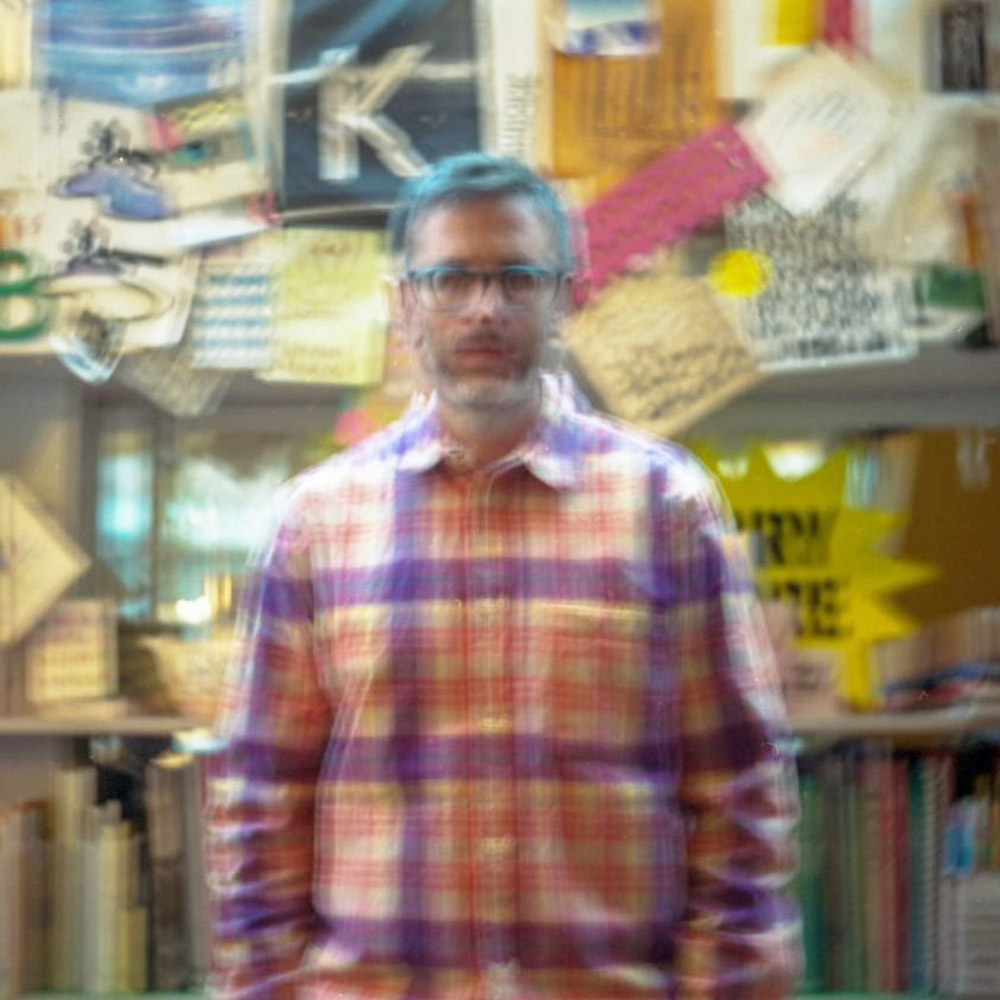
Fraser Muggeridge is Professor of Design at Leeds Beckett University. He also is the Director of Fraser Muggeridge studio and Founder of Typography Summer School.
 0009-0007-8303-3391
About
Fraser Muggeridge is Professor of Design at Leeds Beckett University. He also is the Director of Fraser Muggeridge studio and Founder of Typography Summer School.
Fraser Muggeridge is Professor of Design at Leeds Beckett University. He also is the Director of Fraser Muggeridge studio and Founder of Typography Summer School. Fraser's research focuses on the history of manual rotary offset printing, and designers who are using the print process as a creative process. He is also researching methods of typesestting to create an alternative history of typesetting, from history to theory and use in contemporary practice.
Concerned with the contextualisation of graphic design and its relation to history, theory and practice, he is establishing a outward looking pedagogic platform with the school for bridge academia and industry. He organises the annual Typography Theory Practice Conference held at Leeds Beckett Univeersity in 2024 and 2025. See www.typographytheorypractice.xyz
Research interests
- Typography theory practice
- Manual offset lithographic printing
- Dieter Roth graphic design
- Typographic standards
- Types of Typestting
- Independent publishing by designers
- Book spines (SPINORMA)
- The representation of books within books
Ask Me About
Publications (37)
Sort By:
Featured First:
Search:
Imposed Alphabet: Ghent
 09 May 2024
Imposed Alphabet consists of letters concealed on imposed printing sheets from various jobs designed by Fraser Muggeridge studio from 2018 to 2023. The shape, size, colour, and material of each letter refer to the design of the sheet that hosts it. Imposition is the process of arranging pages onto a printer’s sheet for maximum efficiency. Correct imposition minimises printing time, simplifies binding, and, by maximising the number of pages per impression, reduces paper waste.
Imposed Alphabet: Tasmania
16 August 2024
Imposed Alphabet consists of letters concealed on imposed printing sheets from various jobs designed by Fraser Muggeridge studio from 2018 to 2023. The shape, size, colour, and material of each letter refer to the design of the sheet that hosts it. Imposition is the process of arranging pages onto a printer’s sheet for maximum efficiency. Correct imposition minimises printing time, simplifies binding, and, by maximising the number of pages per impression, reduces paper waste.
Imposed Alphabet: Melbourne
06 June 2024
Imposed Alphabet consists of letters concealed on imposed printing sheets from various jobs designed by Fraser Muggeridge studio from 2018 to 2023. The shape, size, colour, and material of each letter refer to the design of the sheet that hosts it. Imposition is the process of arranging pages onto a printer’s sheet for maximum efficiency. Correct imposition minimises printing time, simplifies binding, and, by maximising the number of pages per impression, reduces paper waste.
Music for Dieter Roth Graphic Design
Dieter Roth: Graphic Design
Dieter Roth: Graphic Design
Holy, Holy, Holy
06 October 2021
 Muggeridge F, Journal I, Gurholt A
Holy, Holy, Holy: an exhibition of books with holes
A Knowing Wrongness
2022
Graphic Events: A Realist Account of Graphic Design Onomatopee
Professor Fraser Muggeridge was invited to contribute a chapter entitled ‘A Knowing Wrongness’, based on a paper presented at the three-day conference, 'Typography Day' in Mumbai, India in 2018. A process of investigation The book edited by Nick Deakin and James Dyer is a collection of essays that investigated the following questions. What happens to a design after it has entered the world? What new meanings are generated from it? What unintended consequences come from its distribution? What unusual juxtapositions develop in a new context? How is it received differently, on the street by a pedestrian? What does it make us feel when it is removed from the slick, credited, studio portfolio website? leading to new insights With designers using the same tools, visual references, and production techniques, how can new graphic designs have elements of bespokeness or feel uniquely creative? I posed the question of a “knowing wrongness” of typographic experiment and print processes could lead to new forms of typographic practice. It is clear to see that the advance of readily available technology and the general awareness of graphic design over recent years has enabled anyone with basic software knowledge and little training to be competent at making a piece of visual communication. Designers and non-designers throughout the world are all using the same easy-to-use software and have access to the same new fonts. This, in combination with work being lifted and regurgitated from the internet with little or no concern for context, can lead to a uniform blandness with everything looking the same after a while. Effectively shared The book was shared and disseminated through Onomatopee, Einhoven, The Netherlands, and reviewed by Jarrett Fuller in Eye Magazine, No. 104 who commented on Muggeridge’s exploration of chance and play into design processes.
The design of paragraphs: Contextual indent paragraph setting
08 July 2022
International Conference on Typography & Visual Communication Thessaloniki, Greece
Typography is ...
Workmanship of risk in (and as) the design process
13 September 2024
Hugarflug, The Tacit Knowledge, no Iceland University of the Arts, Reykjavík, Iceland
‘Workmanship of risk’, an idea formulated by David Pye in 1968, utilises any kind of technique or system ‘in which the quality of the result is not predetermined, but depends on the judgment, dexterity, and care which the maker exercises as he works’. This is in contrast to the workmanship of certainty found in mass production, where the quality of the product is always predetermined before anything is actually made. Workmanship – the degree of skill with which a product is made, or a job done – plays a key role in my graphic design practice, as I am making a product and responsible for its design, production and delivery. The term ‘graphic designer’ first coined by William Dwiggins in 1922 and the growth of education since the mid-20th century formalised and supported the notion that design for print was a separate profession to that of manual printing. It has now reached the point of the 21st century creative critical multi-disciplinary designer who has a vast cultural understanding of all reference points, but struggles to get anything made, or can take pride and give any value to the quality of making. Craft has become seperated from the process of design. It seems that all the focus within the discipline has shifted towards the development, discussion and validation of a concept. The expertise needed to carry out such tasks is craft knowledge. This is gained through making and can be split into explicit and tacit knowledge. Explicit knowledge can be readily articulated, codified, stored, accessed and shared. In my practice this is the understanding of the history of typography and graphic design, the history and recognition of typefaces, and how various print processes work. This is communicated to others as facts. Tacit knowledge is gained through experiences that can’t be easily articulated. It is the product of practice and the experience of repeating the same process again and again to build a complete understanding and mastery of one’s craft: material, tools and process. Richard Sennett has estimated that ten thousand hours is a common touchstone for how long it takes to become an expert, at forty hours per week, this amounts to five years. This is the time that complex skills become so engrained that they become subconsciously available as tacit knowledge and get played out in practice.
Monocle on Design Podcast
One Below Thirty, Pirated Radio Network Podcast
Imposed Alphabet: New York
27 April 2024
mposed Alphabet consists of letters concealed on imposed printing sheets from various jobs designed by Fraser Muggeridge studio from 2018 to 2023. The shape, size, colour, and material of each letter refer to the design of the sheet that hosts it. Imposition is the process of arranging pages onto a printer’s sheet for maximum efficiency. Correct imposition minimises printing time, simplifies binding, and, by maximising the number of pages per impression, reduces paper waste.
Spinorama: an exhibition of interesting spines
06 July 2024
Aslak G, Muggeridge FThe first exhibition of its kind dedicated to book spines, featuring over 100 spines from different genres of books: from children’s, graphic design to art books. The spine is the reader’s first encounter with a book when displayed on a bookshelf, usually with not much effort or imagination going into the design, using the standard sequence of author, title and publisher from top to bottom. This exhibition focuses on books that have considered the spine as part of the overall cover design or concept. Whether it’s the type of content, or how it is spatially arranged or bound together, these spines are the backbone to every book.
30 September 2023
Composite: Histories, techniques et technolgies do design graphique et de l’image
Imposed Alphabet
Imposed Alphabet
DIY Print Process
Imposed Alphabet: Montreal
28 November 2024
Imposed Alphabet consists of letters concealed on imposed printing sheets from various jobs designed by Fraser Muggeridge studio from 2018 to 2023. The shape, size, colour, and material of each letter refer to the design of the sheet that hosts it. Imposition is the process of arranging pages onto a printer’s sheet for maximum efficiency. Correct imposition minimises printing time, simplifies binding, and, by maximising the number of pages per impression, reduces paper waste.
A knowing Wrongness
11 May 2025
Design International UQAM, Université du Québec à Montréal, Montreal, Canada
Practice Talk based on Phd
Towards a history of Alternative Typesetting
19 May 2026
4th CBCP Postgraduate Symposium University of Reading
The majority of printed books use full text justification as the dominant typographic convention for the setting of continuous text. This method, which aligns text evenly along both the left and right margins, has been standard practice in Western typesetting for centuries. Full justification produces a uniform typographic “texture,” maximises the number of characters per line, and conforms to widely held cultural expectations of what a book page should look like. It is perceived as neutral, efficient, and visually authoritative. Alternative approaches to text composition have periodically emerged, challenging conventional assumptions about readability, hierarchy, and the relationship between aesthetic form and content. In experiments within early twentieth-century avant-garde literature, writers and artists explored unconventional typographic arrangements as integral components of meaning. Guillaume Apollinaire’s calligram “Pablo Picasso” arranges text in hollowed-out shapes (ranged left, justified, centred, and ranged right) that evoke the contours of objects associated with Picasso’s paintings. Text and typography become both the carrier of language and a visual and spatial composition. This research investigates alternative typesetting concepts that reconsider fundamental aspects of typography and page composition. It examines how designers and authors have questioned established norms regarding the indication of the start of paragraphs, line endings, text alignment systems, and the placement of paragraphs on the printed page. Rather than treating these elements as fixed technical conventions, this study approaches them as expressive variables capable of shaping interpretation. The presentation will discuss why these alternative ideas emerged, the cultural and technological conditions that enabled their development, and the logistical methods through which they were realised. Case studies will be drawn from a range of historical and contemporary practitioners, including Theodor De Vinne (1904), Jan Tschichold (1938), Dieter Roth (1957), Herbert Bayer (1967), Phil Baines (1996), Han Duong (1996), Jannuzzi Smith (2002), and Norm (2019). Together, these examples demonstrate that typography can operate not only as a system of neutral transmission but also as a critical, interpretive, and conceptual practice.
Imposed Alphabet Singapore
Imposed Alphabet Iceland
Justified and unjustified text at the same time
20 February 2025
Automatic Type Design ANRT Nancy, France
Justified and unjustified setting (at the same time) 'the graphic designer today seems to feel that the typographic means at his disposal have been exhausted. accelerated by the speed of our time, a wish for new excitement is in the air. “new styles” are hopefully expected to appear.’ Herbert Bayer, 1967. Visual Communication, Architecture, Painting written and designed by Herbert Bayer published in 1967 by Reinhold and Studio Vista, collated Bayer's reflections on all three subjects, brought together at the end of a long career as a descriptive review. Alongside its content, its design and typesetting is of particular interest as the main text is set justified and unjustified at the same time within the same paragraph. The text is set justified but if the last word of a line doesn’t fit on the same line, then it is taken over to the next line, with the line above remaining unjustified. Totally logical, but totally odd. This method would have been possible to specify by the designer and perform by the typesetter (in this case graphic arts typographers inc.) in the technology dominant at the time, setting in galleys either in letterpress or film setting, then pasted up to form the pages. It’s a novel form that I have never seen before or after, inefficient as any text corrections would throw everything out, so it becomes line specific. It’s truly experimental and truly Bayer. This paper discusses forms of typesetting from innovative, unconventional and inefficient, to accepted norms and conventions, to those specific to geographically defined dogmas, as well as the various graphical devices used to indicate the start of a paragraph and the end of a line. These are described in relation to when they were made, culture of place, typesetting equipment, efficiency of production and their relevance to the discourse today. As a typographer, the historical precedents, conventions and meanings have a bearing on the choice of setting. Since the demise of specifying type to a typesetter, the designer is in control and responsible for this, more creative options are possible. These decisions can be equally as important as all the other decisions a typographer makes when laying out text in any medium. Unjustified setting, where the space between each letter is consistent (as opposed to justified setting where word space is expanded or contracted to form an even right-hand edge) is a relatively new convention in the history of typography. Semi justified (therefore semi unjustified) was used by Eric Gill in his Essay on Typography, 1931. After the Second World a renewed optimism nurtured a modern vision of ‘form over function’, with unjustified growing in use, also with the rise of the typewriter for the preparation, and the printing of material. This method of typesetting is still rare in printed books and newspapers but accepted on screen devices.
Typography in Education since 1995
25 April 2025
AtypI Copenhagen Copenhagen
Paul Stuff wrote in 1996 that ‘Typographic knowledge is not formally stated, is given to aphoristic expression, and is in this sense relatively inarticulate. It is got through a form of apprenticeship and is passed on more or less intact from one generation of practitioners to the next.’ (1) A quarter of a century later, John-Patrick Hartnett put forward a different proposition. 'Art and design pedagogy is generally agreed today on the imperative for educators to facilitate independent learning instead of instructing students, but there remains wide debate about the most effective ways to achieve this goal. How best to impart knowledge without imposing a point of view?’ (2) This presentation will discuss the shift in typographic teaching since 1995, from a apprenticeship (tacit) learning model to independent learning. From the viewpoint of a typographer, teacher and employer (running my own studio since 2001) I will attempt to describe these changes, how, why and the consequences of these changes for graduating students. I will include case of recent graduates. I will make suggestions as to how does the teacher teach. How does the student learn? What are the assignments and how is typography taught through them? What is the criteria to evaluate the work produced? 1. Paul Stiff, “Instructing the printer: What specification tells about typographic designing,” Typography Papers 1 (1996): 29. 2. John-Patrick Hartnett, “Read and destroy: Review of A “New” Program for Graphic Design by David Reinsert, Eye no. 101 vol. 26, 2021. 113-4
A dialogue with the press
12 September 2025
Hugarflug Iceland University of the Arts, Reykjavík, Iceland
This presentation focuses on the development of analogue printing techniques, predominantly interfering with offset lithography and its unpredictability, as a creative process. The purpose for this is to find new combinations of design and production techniques that can visually inform graphic design from a knowingly wrong standpoint. The experimentation, refinement, and repetition of a particular technique is unique to me and my practice and separates my work from that of the rest of the field of contemporary design. This aligns with James O’Brien’s statement: ‘This drive for newness in technique, in shapes, in materials, is quite compatible with contemporary thinking.’ Image making through printmaking is created without pre-prepared artwork, but made through the printmaking process itself, refining a technique in production and repeating this sequence. It is a joining of the roles of the designer and printer, roles that have become separated in the past century. Designers are perceived as artistically orientated, while printers concentrate on technically orientated tasks. My contribution is to rejoin the two sets of thinking together through a set of decisions made via the print process. My move towards printmaking has happened through working for and with artists on prints and editions, and through creative opportunities arising from cultural institution commissions. As the production of print moves towards standardisation and automation, my physical re-engagement with print in both a graphic design and a printmaking context has formed a unique entanglement of the two disciplines. I am aiming to discover novel approaches and techniques, the results of which I can use in my commercial practice. As described by Tony White: ‘The process unfolds through a series of controlled experiments. This is our delight and our challenge. The final image is the visible consequence of all our decisions.’ Graphic design is the practice of planning and communicating ideas and concepts through visual form and tactile qualities. Traditionally print-based, it now encapsulates all types of media, from physical to virtual on any surface. I make many decisions in my practice, to enable the product I am designing to communicate a feeling, an ‘emotion’. Whether literal or abstract, designs portray a message through a visual language that is controlled. The designer is the transformer of the message in this process. Printing can be a creative process that has many common associations with graphic design. To borrow the American graphic designer and printer Philip Zimmermann’s phrase, ‘production not reproduction’ it often is thought of as process based, rather than ideas or concept based. Can a communicative concept be arrived at primarily through an investigation of a print process? Ink, colour, form, constraints and possibilities all contribute to the creation or the ‘design’ of an image or print. Graphic image making through a dialogue with the press is increasingly becoming an important aspect of my practice. This is produced through DIY print processes, unique print making techniques that I have developed, and interventions with rotary offset lithography. These prints or images certainly have an ‘emotion’ unique to this media. Can graphic design be thought of as print making, and can print making be thought of as graphic design? Certain elements can be borrowed from the process of print making to become useful tools for the graphic designer, and vice versa. . James Francis O’Brien, Design by Accident (New York: Dover Publications, 1968), 2. . Tony White, “From the Guest Editor,” The Journal of Artists’ Books 25 (2009): 63. . Production, Not Reproduction: Offset Printed Artist Books, (New York: The Center For Book Arts, 2007), 7.
Typography is
Imposed Alphabet Norway
Jan Tschichold Shaping Typography 1925 2025
Have you printed it out?
12 December 2025
1-244 (244 Pages) Fraser Muggeridge studio
Collection of print outs from 2017 -2025
Review of Keep Smiling! The Printed Universe of Pontus Hulten, Swedish Institute, Paris, 28 March to 21 September 2025
Daniel Buren: Pages in situ
11 June 2026
This exhibition, curated by graphic designer Fraser Muggeridge, charts Daniel Buren’s expanded use of the 8.7cm stripe over almost six decades, from the street to the gallery walls and from the canvas to the printed page. Exploring the legacy of the artist’s famous motif – through art works, archival objects and his prodigious publishing and printed matter output – the display attempts an entire history of the stripe as subversive interruption within books, magazines and publications. It begins with Buren’s anonymous contribution to the Prospect 68 catalogue at the Kunsthalle Düsseldorf – a double-page spread of green stripes – and ends with a new version of an off-site exhibition of vertically pasted stripes first staged on a billboard in central London in 1972. Bringing together more than 100 printed items, Pages in situ spans interventions in books, magazines and newspapers, often presented “without name or explanation”, alongside invitations, posters and group and solo exhibition catalogues, as well as dedicated artist books. Variations in colour, sequencing, cut-outs and format all play a role in shaping each item. Across these diverse formats, Buren’s consistent “visual tool” operates as a powerful graphic element, threading through each publication while continually shifting in form and intent. It also features numerous examples of printed material that adhere to the 8.7cm principle, without explicitly displaying stripes, using perhaps the same width for columns of printed text or for the dimensions of reproduced images. The exhibition also explores Buren’s notion of how he creates all of his works ‘in situ’ and includes examples from the series of six printed posters produced with the Antwerp gallery Wide White Space. These functioned simultaneously as announcement, invite, poster and art work (related to his Affichages Sauvages), being flyposted around and as part of five Buren exhibitions between 1969 and 1974. The artist is also recreating his 1972 billboard work on Shaftesbury Avenue, composed of 8.7 cm-wide white and purple striped paper, reimagining the work for 2026 in cyan for a new site located in nearby Camden at 70 Eversholt Street NW1 1DA, from 1-28 June. Buren’s expansion of painting into the real world also influenced the exploded and cut paintings shown in the upper gallery (some of which were also made into books afterwards). These fragmentary interventions are both striped installations in three parts, dating from 1968 and 1980, applied directly to the wall, extending to touch the extremities of the space they are being shown in. This exhibition reveals the conceptual and material breadth of Buren’s engagement with the stripe motif and with all things print, foregrounding both the medium and his specific visual vehicle. I gave a presentation of the concept to the exhibition at The Warburg Institute (as part of Biblioteka Art Book Fair), and 3 guided tours of the exhibition in situ.
Prentverk
30 September 2026
Developed during his time in Iceland, Prentverk (Icelandic for "printwork") explores printmaking as a direct method of image production. Instead of reproducing a pre-planned piece of artwork, the visual forms emerge organically during the printing process itself. The series uses a self-developed duotype, "Klecksographic" technique. Liquid pigment ink, color, pressure, and the mechanical behaviors of an etching press act as active components. The compression and movement of the ink create symmetrical, ambiguous shapes. The collection consists of 64 unique prints made using Akua ink on artboard (48 large-format prints measuring 100 x 70 cm, and 16 smaller prints measuring 70 x 50 cm)
Types of Typesetting
02 October 2026
AGI — Alliance Graphique Internationale NO Reykavik, Iceland
Types of Typesetting’ is a series of short symposia that will take place in different countries over the coming year, exploring the practice of typesetting in depth: how it is currently performed, how it might be performed differently, and the creative possibilities that emerge during this complex typographic operational process. The series aims to bring together practitioners in different parts of the world to present, share, and discuss their approaches to typesetting. While line endings shape the visual, rhythmic, and ideological character of text, approaches and experimentation within alignment remain largely untheorized. Methods are commonly transmitted as tacit professional knowledge, passed between designers and typesetters with minimal critical articulation. Rather than treating typesetting simply as a technical or functional process, ‘Types of Typesetting’ considers it as a creative and cultural practice shaped by history, typography, language, technology, context, and individual approaches to making. The first symposium #1 took place during the AGI Open in Reykjavík, Iceland, on 2 October (3 hours), with short presentations by myself, Dafi Kühne and Studio Studio and a discussion between speakers and attendees, foregrounding contrasting positions on justification, alignment, and typographic ethics. If you are a practitioner, or an AGI member, who will be in Iceland at this time and would like to contribute, participate, or simply be part of the discussion, please get in touch. I am particularly interested in discussions on how language – and languages – are treated, such as multilingual typographic contexts where several coexist on the same page. Also interested in experimental and novel approaches that operate at the boundary between legibility and illegibility, and in questioning where, and how, that boundary might be drawn.
Jan Tschichold Shaping Typography 1925 2025
DIY Print process workshop brief
07 May 2026
Ninety-Nine Graphic Design Workshops: the Way We Attend To Things Set Margins
Fraser MIn other words, how we experience the world depends on the ways we attend to it. The workshops in this book are practical challenges to the ways we think about the world we live in.
Professional activities
Fraser Muggeridge has been director of Fraser Muggeridge studio since 2001, a typographic design company based in London. Throughout a wide range of formats, from artists’ books and exhibition catalogues to posters, marketing material, exhibitions, websites, film titles and music, the studio prioritises artists’ and writers’ content over the imposition of a signature style. By allowing images and texts to sustain their own intent and impact, each project is approached with typographic form and letterform playing a key role in arriving at a sympathetic yet subtly alluring object.
He also has organised and curated exhibitions around the subject such as:
Jan Tschichold Shaping Typography 1925-2025
curated with Paul Barnes
Table Temple, London
December 2025
Spinorama: an exhibition of interesting spines
curated with Aslak Gurholt
London Centre for Book Arts: 6 July – 17 August 2024
Ghent Art Book Fair / Kunsthal Gent, Belgium: 2 – 4 May 2025 (visitors 1,000)
einBuch.haus, Berlin, Germany: 16 June – 5 July 2025
Vienna Art Book Fair, Austria: 17 – 19 October 2025
PrintRoom, Rotterdam, The Netherlands: 7 November – 20 December 2025
Grafill, Oslo, Norway: December 2025 – January 2026
Pages Book Fair, Geneva, Switzerland: 8 – 10 May 2026
Dieter Rot: Graphic Design
curated with Arnar Freyr Guðmundsson and Birna Geirfinnsdóttir
Museum of Design and Applied Art, Iceland
28 October – 30 December 2022
Willem Sandberg: from type to image
De La Warr Pavilion, Bexhill
in collaboration with Carolien Glazenburg, Stedelijk Museum, Amsterdam
30 April – 4 September 2016
Towards an alternative history of graphic design: Schmuck, POP, bRIAN, Assembling
De La Warr Pavilion, Bexhill
8 August – 4 October 2015
Activities (5)
Sort By:
Featured First:
Search:
Types of Typesetting
Typography Theory Practice
Typography Theory Practice
PHD
Graphic design
Current teaching
Fraser Muggeridge has taught at numerous art schools globally, from University of Reading, to Art Centre in Los Angeles, Yale in New Haven and many European Universities. He also is a visiting Professor at Iceland University of the Arts, Reykjavík. He founded Typography Summer School, a week-long programme of typographic study for recent graduates and professionals, held in London (since 2010) and New York (since 2013).
Teaching Activities (2)
Sort By:
Featured First:
Search:
Typographic detailing Typographic lyric videos
12 May 2025 - 17 May 2025
Modernist Legacies in Canadian Graphic Design
01 October 2025 - 30 September 2031
Lead supervisor





