

Leeds Beckett University - City Campus,
Woodhouse Lane,
LS1 3HE
Dr Jess Blaise Ward
Lecturer
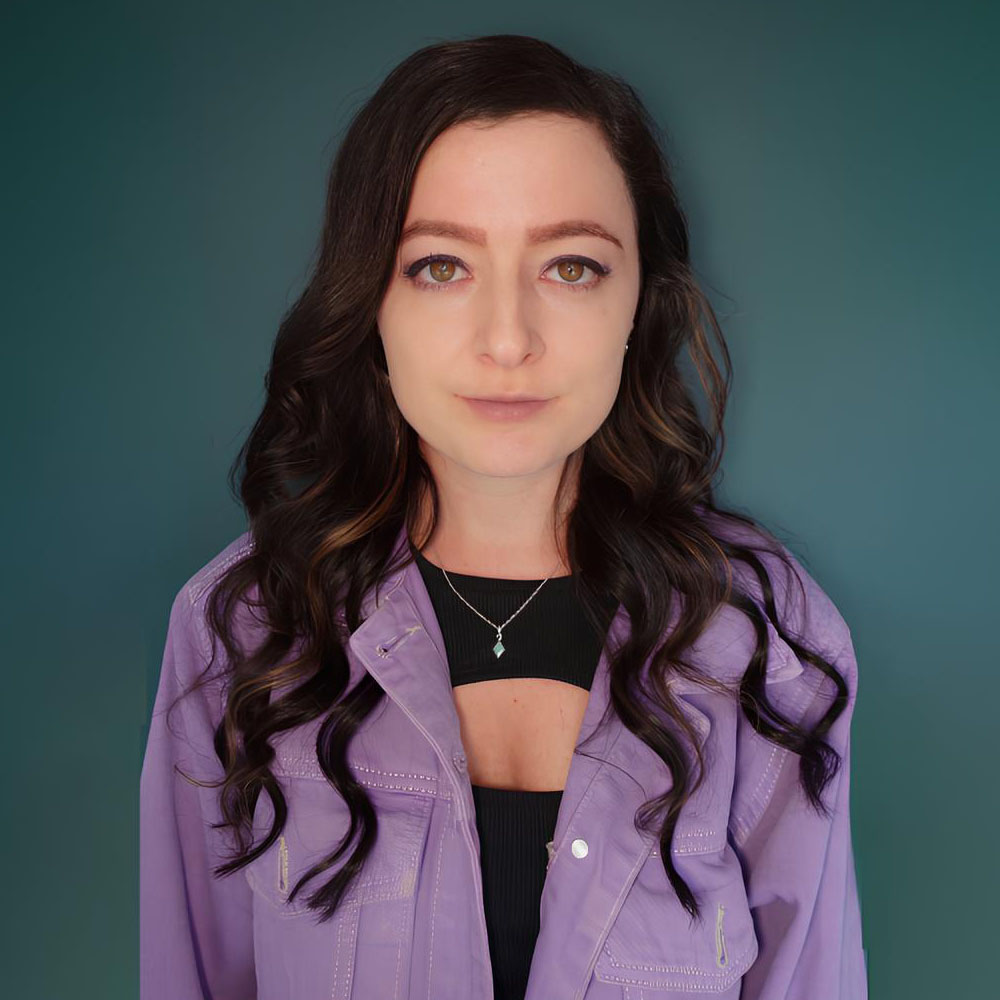
Jess is a songwriter, vocalist and synth player with interests in pop music of the 1980s and 1990s. Her research areas include genre formation, online music communities, subcultural theory and feminist scholarship.
 0000-0001-5268-9987
About
Jess is a songwriter, vocalist and synth player with interests in pop music of the 1980s and 1990s. Her research areas include genre formation, online music communities, subcultural theory and feminist scholarship.
Jess is a songwriter, vocalist and synth player with interests in pop music of the 1980s and 1990s. Her research areas include genre formation, online music communities, subcultural theory and feminist scholarship.
Jess' passion for songwriting has involved a diversity of projects. Her solo work ranges from cinematic to synthpop, while her collaboration projects include works in the pop and metal styles.
Jess regularly collaborates with singer-songwriter Tobias Joel Ward, former punk artist Bishmanrock, and Joe Leonard, lead guitarist of Manchester metal band 40,000 Leagues. She has also written music for synchronisation, including audiobook work, game music and soundtrack.
Jess is an associate for the Yorkshire Women Sound Network.
Academic positions
Senior Lecturer
Leeds Arts University, Bmus Popular Music Performance, Leeds, England | 01 September 2020 - presentLecturer
Leeds Beckett University, Leeds School of Arts, Leeds, United Kingdom | 02 September 2019 - present
Degrees
PhD An ethnographic study of the online synthwave community, a community of practice - by a composer and performer
Leeds Beckett University, Leeds, United Kingdom | 01 October 2018 - 05 June 2023MA Popular Music and Culture
Leeds Beckett University, Leeds, United Kingdom | 01 September 2017 - 01 September 2018PGCE Music Secondary
Leeds Trinity University, Leeds, England | 01 September 2015 - 30 June 2016BA Music Production
Leeds Beckett University, Leeds, England | 01 September 2011 - 01 July 2014
Postgraduate training
Fellowship (FHEA)
Advance HE, England
Research interests
Jess' research areas concern genre formation, the activities of online music communities, subcultural theory and feminist scholarship. Her PhD investigated the online music community of synthwave, a 1980s inspired genre which formed on the internet in the mid-2000s. Her thesis is titled, 'An ethnographic study of the online synthwave community, a community of practice - by a composer and performer' and incorporated her own work as a songwriter through autoethnography. She is the author of 'Making Synthwave: How an online music community invented a genre' - published by Routledge in 2025.
Previous publications by Jess include her study about the memory of post-punk women and her conference paper 'Metalheads in the Synthwave Community' at the 2022 Internet Musicking conference.
Publications (22)
Sort By:
Featured First:
Search:
 13 November 2023
Online music communities are a vital method of genre formation in the 21st century. In a Web 2.0 (or 3.0) virtual space which transcends geographical boundaries, a multitude of artists, audiences, musicians, producers and performers come together to negotiate subcultural capital in a collective capacity. With new subcultural styles, rituals, practices, and cultural disseminations, how can we assess the activities of an online community and their role in the formation of a genre? This 5-year and 6-month (2017-2023) ethnographic study examined the ecosystem of the online synthwave community, a 21st century style of music which both privileges and reimagines 1980s musical and cultural aesthetics. It includes autoethnographic work, with music composition, production and performance being key tenets of the author’s positionality. Paired with an emic viewpoint, this thesis makes visible tacit knowledge of the synthwave creative process, as well as providing rich and experiential subcultural detail about the online community. The research concluded that the synthwave community is an active community of practice with a defined set of musical, stylistic, technological and subcultural rules. By examining the tensions observable within the outputs, interactions, and discourses of this community of practice, as well as through the author’s participation as a creator, the research addresses how online music communities (including creators and audiences) construct and negotiate parameters of an emergent musical style. The research is (to date) the first ethnographic account of the online synthwave community and provides a first-hand telling of its ecosystem as a community of practice. Ultimately, this research traces the genre formation of an ‘internet-based creative practice’ (Born, 2018, p.606) known as synthwave. Key implications of the research findings implore the potential for making connections between communities of practice and genre formation in other areas of popular music, particularly of genres which exist primarily (or were formed initially) online.
Metalheads in the online synthwave community
20 May 2022
Internet Musicking: Popular Music and Online Cultures Hosted by the University College Cork, Ireland
A Hybrid Approach: Virtual Fieldwork and Composition as a Methodological Tool
06 May 2022
Artistic Research: Various Fields, Approaches, Experiences Riga, Latvia
The field of practice research is approximately 30 years old (Bulley & Sahin, 2021, p.14) and a ‘type of research where practice is the significant method conveyed in the research output’ (Bulley & Sahin, 2021, p.4). The approaches taken by practice researchers frequently draw on different disciplines, with the field being interdisciplinary by nature. This was the case with my PhD research, which combined practice research with ethnomusicological methods of virtual fieldwork, operating a type of hybrid approach. My primary aim was to investigate the online synthwave community, including its stylistic and cultural practices. I examined how what I term as ‘style parameters’ were negotiated when converged with affordances of 21st century Digital Audio Workstation technology and engagements by the online synthwave community. My research operated a cycle, which began with identifying synthwave style parameters through virtual fieldwork. I then tested style parameters through compositional experiments, to reveal how stylistic practices of synthwave are understood, communicated, realised, valued and privileged by the online synthwave community. Using composition as a methodological tool was vital to my findings, enabling me to examine the significance of each style parameter, as well as to test their limits. Virtual fieldwork allowed me to continually examine the community’s expectations of synthwave style parameters. Through my hybrid methodological approach, I was able to explore equally the musicological and cultural markers of synthwave.
Synthwave Identities: Tensions of gender and subgenre in the online synthwave community
12 January 2024
BFE/RMA Research Students’ Conference School of Music, Cardiff University Cardiff University
Online music communities are a vital method of genre formation in the 21st century. In a Web 2.0 (or 3.0) virtual space which transcends geographical boundaries, a multitude of artists, audiences, musicians, producers and performers come together to negotiate subcultural capital in a collective capacity. With new subcultural styles, rituals, practices, and cultural disseminations, how can issues of gender and subgenre be viewed within the context of an online music community? Darksynth, one of synthwave’s most popular subgenres, incorporates musical elements from horror film soundtracks and metal styles, and has often acted as an entryway from the metal community to synthwave. The subgenre has a dominant narrative of male artists, and I question to what extent this is being challenged by those who engage with it. By contrast, synthwave subgenre Popwave is uniquely represented by female and enby artists. Through their role as topliners and collaborators, paired with their skills in music performance and production, female and enby artists have made a significant contribution to synthwave with the popwave subgenre, and increased the general standing of female and enby artists within the online community more broadly as a result. Through virtual ethnography and musicological analysis, I illustrate musical and subcultural practices by the online synthwave community, who negotiate issues of gender representation alongside the formation of music subgenres.
Making synthwave: using virtual synths to reimagine sounds of the 1980s
12 September 2024
CHANGE AND CONTINUITY: TRADITIONS, TENSIONS AND TRANSFORMATIONS IN MUSIC PRODUCTION - SMPR CONFERENCE 2024
Synthwave is an online music community and community of practice, which celebrates and reimagines the sounds of the 1980s. Music producers and performers who make synthwave are brimming with creative energy and community spirit, and have an arsenal of knowledge about synthesizers and synthesis ranging from the Minimoog to the Korg M1. Veterans and newcomers alike can engage with creating synthwave through the supportive structures of the online community and its DIY ethos. With so many hardware synths now available in software or plugin form, new creative possibilities have allowed a younger generation of musicians to engage with the ubiquitous sounds of the 1970s, 1980s, and 1990s, and ultimately to support the formation of the synthwave genre. Through virtual ethnography and a ‘tech-processual’ (Sam Bennett, 2018) analysis, I demonstrate synthwave community practices which are enabling creators to deliver a hopeful hit of nostalgia, and transport listeners to the 1980s of an alternative universe.
Making synthwave: using virtual synths to reimagine sounds of the 1980s
11 October 2025
SyReN Symposium 2025 Leeds
Synthwave is an online music community and community of practice, which celebrates and reimagines the sounds of the 1980s. Music producers and performers who make synthwave are brimming with creative energy and community spirit, and have an arsenal of knowledge about synthesizers and synthesis ranging from the Minimoog to the Korg M1. Veterans and newcomers alike can engage with creating synthwave through the supportive structures of the online community and its DIY ethos. With so many hardware synths now available in software or plugin form, new creative possibilities have allowed a younger generation of musicians to engage with the ubiquitous sounds of the 1970s, 1980s, and 1990s, and ultimately to support the formation of the synthwave genre. Through virtual ethnography and a ‘tech-processual’ (Sam Bennett, 2018) analysis, I demonstrate synthwave community practices which are enabling creators to deliver a hopeful hit of nostalgia, and transport listeners to the 1980s of an alternative universe.
The Online Synthwave Community: A Community of Practice
29 November 2024
47TH NATIONAL CONFERENCE OF THE MUSICOLOGICAL SOCIETY OF AUSTRALIA 2024
Producers, musicians and fans make up just some of the internet users who have lent their musical and cultural creations to form a born-again 1980s musical style, which in reference to its love of synthesizers, is known as synthwave. Once a niche corner of dance music in the early 2000s, key soundtracks such as Drive (2011), Thor: Ragnorok (2017) and Stranger Things (2016-2023) and have seen the synthwave genre grow in recognition and popularity since its early days existing only on the internet. Music aside, what is so significant about synthwave is its online music community (#synthfam), which functions as an active community of practice. This type of community has three core components: the domain (a common ground with a sense of community identity), the community (a social structure of engaged members which facilitates learning) and the practice (the shared repertoire or knowledge maintained by the community) (Wenger et al, 2002). From its DIY practices in music-making (housed by Web 2.0 and 3.0 social medias), to the community’s values and social structure with negotiations of agency, the online community continually negotiates the meaning of synthwave as the genre’s lifespan progresses. This presentation reveals how synthwave operates as an active community of practice, which formulated its roots as a music genre exclusively online in the early 2000s.
The Online Synthwave Community: Vicarious Nostalgia for the 1980s and Beyond
Using Ethnographic Methods to Investigate Synthwave, an Online Community of Practice
20 October 2024
SEM 69th Annual Meeting Society of Ethnomusicology
Online music communities are a vital method of genre formation in the 21st century. In a Web 2.0 (or 3.0) virtual space which transcends geographical boundaries, a multitude of artists, audiences, musicians, producers and performers come together to negotiate subcultural capital in a collective capacity. With new subcultural styles, rituals, practices, and cultural disseminations, how can we assess the activities of an online community and their role in the formation of a genre? Synthwave, a 21st century style of music which both privileges and reimagines 1980s musical and cultural aesthetics, formed online in the early 2000s. Through a 5-year and 6-month (2017-2023) ethnographic study, this online music community’s ecosystem was examined. With an emic viewpoint, the research made visible tacit knowledge of the synthwave creative process, as well as providing rich and experiential subcultural detail about the online community. The research concluded that the synthwave community is an active community of practice with a defined set of musical, stylistic, technological and subcultural rules. By examining the tensions observable within the outputs, interactions, and discourses of this community of practice, as well as through the author’s participation as a creator, the research addresses how online music communities (including creators and audiences) construct and negotiate parameters of an emergent musical style. The research is (to date) the first ethnographic account of the online synthwave community and provides a first-hand telling of its ecosystem as a community of practice.
Making Synthwave
01 January 2025
1-276 Focal Press
 Blaise Ward J
Making Synthwave: How an Online Music Community Invented a Genre documents the journey of an online community in their formation of the synthwave genre. Taking an emic perspective that delivers a behind-the-scenes, access-all-areas telling of synthwave's story from the very beginning to the mid 2020s, this ethnographic account offers a full history and development of the online synthwave community. Through an insightful longitudinal virtual ethnography by a composer, producer and performer, the book observes how artists, audiences, musicians, producers and performers have come together to negotiate the musical and cultural boundaries of 1980s 'throwback' style synthwave. The book makes visible tacit knowledge of the synthwave creative process, as well as providing rich and experiential subcultural detail that situates synthwave as an active community of practice which formulated its roots as a music genre exclusively online in the mid to late 2000s. This book is essential reading for music makers in a variety of genres and scholars of popular music, cultural theory and music production, as well as those interested in the nuances of music-making on the internet, creative processes with synthesizers and the mechanics of genre theory and community music in the digital age.
Making Synthwave Music With Music Technology
Keeping Synthwave ‘Alive’
A Conclusion to Making Synthwave
From Synthetix.FM to Stranger Things (2016–2025) Making Synthwave Subcultural Capital
Making ‘Live’ Synthwave Performances – Tensions in Live Synthwave Practices
Metalheads in the Synthwave Community – Making Darksynth
An Introduction to Making Synthwave
Making Space for Vocals and Women
01 October 2019
Punk & Post Punk8(3):379-397 Intellect
Ward JBWho remembers post-punk? Its cultural and musical presence in the late 1970s and the early 1980s is often celebrated by many, despite the numerous hardships that British society faced. From industrial disputes and strikes to anti-Thatcherism and youth unemployment, it was a transitionary time in British history. How do we remember post-punk? Established since the 1940s, memory work and oral histories provide an opportunity for this, although they simultaneously raise a multitude of issues, not least from terminology. ‘Individual memory’ and ‘collective memory’ both allow for misrepresentations, although Sara Jones contends that the latter ‘requires actors, both individual and institutional, to construct, transmit, and support particular narratives of the past’. It is hence paramount to ask: who has been permitted to remember? When considering memory alongside gender identity and post-punk, one can observe some of the opportunities that it afforded women, and yet debate continues to contest their ‘empowerment’ and ‘increased’ representation in popular music. Historically much memory work has been conducted by women, whilst oral histories of punk and post-punk have predominantly been written by men. Ultimately, this article examines the memory and representation of women through semi-structured interviews, revealing anecdotal nostalgia of post-punk by members of what was termed Generation X (those born between 1955 and 1975).
The ‘Synthwave’ style and catalysts in the creative process: composition and the path to ‘creativity’
12 January 2019
BFE / RMA Research Students’ Conference University of Sheffield
Ward JWho remembers post-punk women?
16 December 2019
The Punk Scholars Network’s 6th International Conference and Postgraduate Symposium Newcastle University
Ward JWho remembers post-punk? Its cultural and musical presence in the late 1970s and the early 1980s is often celebrated by many, despite the numerous hardships that British society faced. From industrial disputes and strikes to anti-Thatcherism and youth unemployment, it was a transitionary time in British history. How do we remember post-punk? Established since the 1940s, memory work and oral histories provide an opportunity for this, although they simultaneously raise a multitude of issues, not least from terminology. ‘Individual memory’ and ‘collective memory’ both allow for misrepresentations, although Sara Jones contends that the latter ‘requires actors, both individual and institutional, to construct, transmit, and support particular narratives of the past’. It is hence paramount to ask: who has been permitted to remember? When considering memory alongside gender identity and post-punk, one can observe some of the opportunities that it afforded women, and yet debate continues to contest their ‘empowerment’ and ‘increased’ representation in popular music. Historically much memory work has been conducted by women, whilst oral histories of punk and post-punk have predominantly been written by men. This presentation displays the memory and representation of women through semi-structured interviews, revealing anecdotal nostalgia of post-punk by members of what was termed Generation X (those born between 1955 and 1975).
Style and digital music: Combining music style parameters with the 'paramusical'
10 January 2020
BFE/RMA Research Students’ Conference 2020 Milton Keynes
Ward JCurrent teaching
- BA (Hons) Music Business
- BA (Hons) Music Performance and Production
- BA (Hons) Music Production
- MA Popular Music and Culture





