

Leeds Beckett University - City Campus,
Woodhouse Lane,
LS1 3HE
Dr Lauren Smith
Senior Lecturer
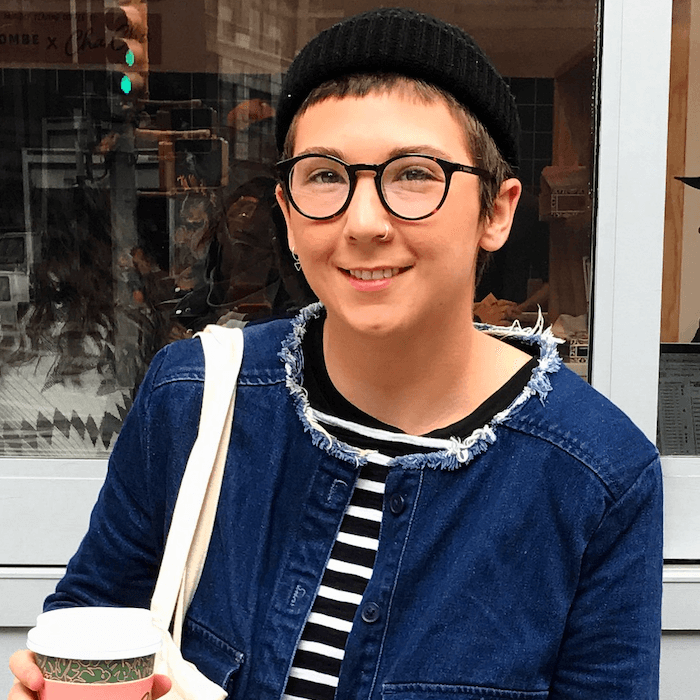
Lauren is a Senior Lecturer in Psychology with a strong commitment to creative and inclusive approaches in both teaching and research. Their work explores themes such as sex, gender, and sexuality in everyday contexts; social justice and power; and critical forensic psychology. Lauren is the co-lead of the QUALMS network and currently serves as Chair of Ethics in Psychology.
 0000-0003-1220-6543
About
Lauren is a Senior Lecturer in Psychology with a strong commitment to creative and inclusive approaches in both teaching and research. Their work explores themes such as sex, gender, and sexuality in everyday contexts; social justice and power; and critical forensic psychology. Lauren is the co-lead of the QUALMS network and currently serves as Chair of Ethics in Psychology.
I am a Senior Lecturer in Psychology. My overarching interest is in socially sensitive research and social justice. I am a mixed-methods researcher and have used various digital research methods, including digital ethnography and online surveys. I also have experience of conducting systematic reviews and using narrative research methods. I am the current Chair of Ethics in Psychology and the co-lead for the QUALitative Methods Support (QUALMS) network. I am also a member of the Genders and Sexualities Programme of the Centre for Psychological Research.
Previously, I worked as an Assistant Psychologist (developmental trauma) and as a Research Assistant at Leeds Beckett University, where I conducted research within prison settings. In addition, I have volunteered with Support After Rape and Sexual Violence Leeds (SARSVL) as an emotional support worker and hold a Level 3 qualification in Supporting Survivors of Sexual Violence
Research interests
My research interests include (but are not limited to): sexual consent; sexual violence; sexualised drug-taking; sexual and reproductive health; sex, gender and sexuality; mixed and creative methods. I am passionate about the use of novel and creative ways to acquire knowledge.
Publications (13)
Sort By:
Featured First:
Search:
Shame, stigma, sex and how we do research
What can't be spoken can sometimes be written: Using digital methods to study sexual harm
 29 June 2023
Society for Qualitative Methods in Psychology University of California: Santa Cruz
02 April 2023
Journal of Sex Research61(3):495-514 Taylor and Francis Group
29 June 2023
Society for Qualitative Methods in Psychology University of California: Santa Cruz
02 April 2023
Journal of Sex Research61(3):495-514 Taylor and Francis Group
Most research on capacity to consent to substance-involved sex has focused exclusively on the implications of alcohol with little attention given to other or additional psychoactive drugs. This study aimed to explore people’s understanding and experiences of the capacity to consent to alcohol- and/or drug-involved sexual activity. UK adults (N = 354) completed an online mixed-methods survey on sexual consent during sober, alcohol- and/or drug-involved sex. Qualitative data were analyzed using thematic analysis. Themes for capacity to consent were: (1) ‘There is no normative understanding of substance-involved sexual consent’, (2) ‘Moving beyond the binary of consciousness versus incapacitation’ and (3) ‘Substance-involved sexual decisions are viewed as irresponsible’. The findings illustrated that capacity to consent is nuanced and multidimensional, and that people’s understandings and experiences of capacity to consent to substance-involved sex are not solely individual, but rather, they are also shaped by their environment. We call for a multidimensional view of capacity to consent, where a standard of ‘unimpaired’, rather than sober, is used and modeled by academics, legislators, and educators.
04 January 2020
Journal of Sex Research58(4):469-487 Taylor & Francis (Routledge)
Sexual consent is a central component in the primary prevention of sexual violence. There is growing evidence of the impact that alcohol consumption has on sexual consent. However, there has been no review examining sexual consent in the context of other drug-taking. Published literature was sought using searches of: PsycINFO, PsycARTICLES, Scopus, Web of Science, CINAHL, MEDLINE and Open Dissertations. Unpublished literature, such as unpublished government or charity reports, were identified through Google search engine. All 21 eligible studies employed qualitative or mixed methods; therefore, a thematic synthesis was deemed an appropriate method of analysis. Three themes were constructed: “Drug-taking changes sexual norms”, “Drug-taking diminishes the capacity to make sexual decisions” and “Drug-taking reduces verbal and non-verbal ability to communicate consent”. The findings demonstrated that prevailing models of sexual consent may not account for circumstances relevant to drug-involved sex, such as how drug-taking impacts freedom and capacity to consent to sex. We propose the use of the medical model of capacity to consent as a broader framework through which capacity to consent to sex in drug-taking contexts can be assessed. The importance of both the social and situational context for sexual decision-making following drug-taking is discussed.
A Mixed-Methods Exploration of Women's Sexual Consent Practises: Sober, Alcohol and Drug-Involved Sexual Experiences.
24 May 2018
Drugs, Alcohol, Women and Families Manchester
Sexual consent is highly topical and currently sits at the forefront of media, educational and government campaigns; education regarding sexual consent communication is considered to be one of the key ways that we can reduce instances of sexual violence in the general population. Despite intoxication being one barrier to giving/ gaining sexual consent, there is a lack of research which examines how the voluntary use of drugs aside from alcohol affect sexual consent communication compared to when sober or when alcohol has been used (on its own). For example, how do individuals indicate to their sexual partner(s) that they are willing to have a sexual experience or how do they interpret the willingness of their sexual partner(s) after taking drugs? Additionally, there is a lack of information on how feelings of sexual wantedness (i.e. desire) and willingness are influenced by drug use. The findings could inform drug-users about how their substance use impacts their sexual experiences, notably, their ability to freely give (or not give) sexual consent. Preliminary data from an online cross-sectional survey of 18- to 40-year-old, sexually active, UK women’s and men’s sexual experiences when sober, under the influence of alcohol, drugs, or the combined effects of alcohol and drugs, will be presented. This poster explores how women’s sexual consent practises are different or similar across sober, alcohol-involved and drug-involved sexual experiences and feelings of sexual wantedness and willingness during sober, alcohol-involved and drug-involved sexual experiences. Implications for sexual consent policies and sexual violence prevention will be discussed.
Drug-Involved Sexual Assault: A Comparison of Heterosexual and Non-Heterosexual Populations.
13 July 2017
Public Health PhD Symposium 2017 Liverpool
Sexual violence is a significant public health problem. Approximately 473,000 individual’s experience sexual assault (SA) each year in England and Wales (Ministry of Justice, 2013). Although sexual orientation is often overlooked in population-based surveys, sexual minority groups reportedly experience greater levels of SA in comparison to heterosexual counterparts (Hequembourg, Parks & Hughes, 2015; Walters & Breiding, 2013). High levels of drug use are also observed within sexual minority groups; drugs such as gamma-hydroxybutyrate, ketamine and mephedrone are reported to be frequently used among gay and bisexual men (Bourne et al, 2014). The relationship between substance use and SA is well supported in the literature; evidence suggests the acute voluntary use of a psychoactive substance may heighten the risk for sexual assault (e.g. due to a perpetrators increased ability to exploit incapacitated individuals; Jessell, Mateu-Gelabert & Friedman, 2015). With reportedly high levels of both drug use and SA, sexual minority groups may be more likely to experience SA whilst under the influence of an illicit drug compared to heterosexual populations. To date, there is a lack of research which has examined this. This poster will present pilot study data from an online cross-sectional survey examining sexual experiences that took place when sober, under the influence of alcohol, drugs, or the combined effect of alcohol and drugs. Participants were sexually active, males and females, aged 18 – 40, residing in the North of England. Results are discussed with regards to sexual assault experiences, drug and alcohol use, gender and sexuality.
A Mixed-Methods Exploration of Sober, Alcohol and Drug-Involved Sexual Experiences: Wantedness, Willingness and Sexual Consent Practises
19 September 2018
NOTA International Conference, 2018 Glasgow
Despite a number of individuals engaging in sexual experiences following voluntary alcohol and/or drug use, there has been a lack of research examining how (if at all) getting/giving sexual consent is different or similar following the use of alcohol and/or other drugs in comparison to when sober. This presentation discusses preliminary data from an online research project of 18- to 40-year-old UK men and women’s sexual experiences when sober, after drinking alcohol and/or after using drugs. In particular, the impact of drug and alcohol use on sexual consent communication and feelings of sexual wantedness and willingness will be discussed, along with implications for sexual consent policies and sexual violence prevention.
Chemsex exemplifies much wider issues with drugs and sexual consent
05 January 2026
The Journal of Sex Researchahead-(ahead-):1-17 Informa UK Limited
There is limited research on how substance use impacts people’s freedom to negotiate sexual activity with others, particularly in distinguishing between alcohol and drug use. This study addressed that gap by exploring how substance use can both extend and constrain sexual negotiation. A mixed-methods online survey of 354 UK adults aged 18–40 examined sexual consent across sober, alcohol-, and drug-involved experiences. This paper focuses on the qualitative data for substance-involved sex only. Three themes were constructed from the data using Reflexive Thematic Analysis: (1) Substance use can facilitate sexual negotiation with others; (2) Substance use opens up new sexual opportunities; (3) Sexual refusal is constrained by relational and event-based influences. Participants described how drugs such as MDMA and cannabis enhanced mutuality and communication, sometimes disrupting traditional sexual scripts. However, gendered power dynamics, social pressures, and time and event-based constraints continued to limit sexual refusal, especially for women. These findings suggest that while drug use can involve ethical and consensual sexual experiences, it can also reinforce existing inequalities. Further research is needed to explore how different drugs, and social contexts, shape (un)ethical substance-involved sexual behavior.
Creating and maintaining norms and power relations on online sperm donation platforms: Preliminary findings from a digital ethnography
28 May 2024
Netnocon Milan
 Smith L, Krotoski A, Turner-Moore R, Taylor-Phillips F, Eldred L, Jones G, Pacey A, Frith L, Palmer T, Carless D
Online sperm donation (OSD) facilitates recipient-donor connections through websites, social media, or mobile application software with the aim of enabling recipients to conceive with donated sperm (Taylor et al., 2023). Online sperm donation can be distinguished from 'regulated' donor conception, which takes place via clinics and is governed by codes of practice and, in some countries, legal frameworks (e.g., the Human Fertilisation and Embryology Authority in the UK). OSD is rapidly expanding, with over 60 English-language platforms hosting 350,000+ participants. These platforms, primarily managed by donors, vary in payment structures from free to fee-based, providing economic accessibility compared to clinics, but with new dynamics of power in family-making (Taylor et al., 2023). In this presentation, we will share preliminary findings from a one-year digital ethnography of six OSD sites. This was conducted as part of a larger ESRC-funded multi-phase and multi-method study into online sperm donation (see: https://www.theosdproject.com/). Five primary OSD sites were identified and selected using Taylor et al.’s (forthcoming) environmental scan of OSD platforms. A secondary, sixth site was identified during the digital ethnography. Consent to join the sites was obtained from the site owners. The research questions addressed in this presentation are: 1. How do OSD site owners and members create and maintain subcultural norms? 2. How is power enacted, reinforced, and/or resisted on OSD platforms? The types of data collected were: 1. the policies/guidelines from each site; 2. synchronous virtual interviews with five site owners; 3. asynchronous instant messaging interviews with site members; 4. fieldnotes from participating in the sites and researcher reflections. Qualitative data analysis involved collating, coding, and combining text to interpret meaning (e.g., Braun & Clarke, 2021). In this presentation, we will argue that the digital facilitation of sperm donation is not inherently harmful. This perspective challenges prevailing narratives in the media and some academic discourse regarding OSD. For example, warning people of 'fraudulent' or unethical donors and the health risks associated with OSD (e.g., Jewers, 2023). However, we also acknowledge the potential individual and socio-cultural implications of participation in OSD platforms and their creation and management, which may have harmful effects. Digital spaces are not "normatively neutral" (Stanfill, 2014, p. 1016); rather creators actively shape values, such as through policies or rules on member conduct (e.g., expectations for donor-recipient interactions) and online safety (e.g., guidelines for reporting to site moderators). Consequently, these digital spaces can influence ideals and norms about what is un/acceptable behaviour (e.g., whether it is acceptable for site members to offer or express a preference for sexual intercourse to conceive, rather than via artificial insemination) and these norms can be reinforced, accepted, and enacted, or resisted by site members. The preliminary findings from this study advance knowledge of digital lives/spaces and online governance, privacy, and safety.
‘The Last Resort’ and ‘The First Choice’: donor, recipient and co-parent pathways to online sperm donation
12 September 2025
British Sociological Association Annual Medical Sociology Conference University of Northumbria britsoc.co.uk
Taylor-Phillips F, Carless D, Eldred L, Forshall G, Frith L, Jones G, Krotoski A, Pacey A, Palmer T, Smith L, Turner-Moore RIn recent years, people looking for sperm (‘recipients’) and people providing sperm (‘donors’) are increasingly connecting via informal online platforms, such as websites and social networking sites. This growing practice – Online Sperm Donation (OSD) – has been accompanied by a proliferation of media articles and television programmes, with titles such as: “Seedy underbelly: social media sperm donors exposed”, “The frightening world of unregulated internet sperm donation sites” and Channel 4’s “4 Men, 175 Babies”. Despite growing concerns about the health, safety and legal risks associated with OSD, little is known about why people undertake it, and how those involved narrate their experiences of arriving at this route to parenthood. To this end, we present and discuss findings from two qualitative longitudinal studies: Phase One of the Online Sperm Donation Project (a four-year multidisciplinary project, funded by the Economic and Social Research Council), comprising 35 donors, recipients, partners and co-parents; and data from the first author’s PhD research, comprising 11 recipients/recipient couples. Both studies employed creative and narrative methods to provide rich insights into the participants’ lives over the course of their OSD journeys. In this paper, we present and discuss two salient and opposing narratives that participants oscillated between when articulating their experiences of arriving at OSD: ‘The Last Resort’ and ‘The First Choice’. The findings demonstrate that the rise of OSD reflects the restrictive NHS funding context and the commercialisation and medicalisation of the regulated fertility sector, as well as social and cultural shifts in family-making and kinship practices.
‘The Last Resort’ and ‘The First Choice’: donor, recipient and co-parent pathways to online sperm donation
10 January 2026
Fertility 2026 Edinburgh International Conference Centre
Taylor-Phillips F, David C, Eldred L, Forshall G, Frith L, Jones G, Krotoski A, Pacey A, Palmer T, Smith L, Turner-Moore RBackground: In recent years, people looking for sperm (‘recipients’) and people providing sperm (‘donors’) are increasingly connecting via informal online platforms, such as websites, social networking sites and geolocation apps. This growing practice – Online Sperm Donation (OSD) – has been accompanied by a proliferation of media articles and television programmes which frame it as inherently risky, dangerous and ill-advised, and growing concerns from experts working in the fertility sector about the health, safety and legal risks involved. Objectives: In response, we sought to explore why people undertake OSD, and how donor, recipient and co-parent pathways to OSD are informed by dominant social, cultural and/or political narratives? Methods: We present and discuss findings from two qualitative longitudinal studies: Phase One of the Online Sperm Donation Project (a four-year multidisciplinary project, funded by the Economic and Social Research Council), comprising 35 donors, recipients, partners and co-parents; and data from the first author’s PhD research, comprising 11 recipients/recipient couples. Both studies employed creative and narrative methods to provide rich insights into the participants’ lives over the course of their OSD journeys, and both were guided by Public Involvement groups comprised of people involved in OSD (i.e. donors, recipients, site owners). Results and conclusions: Participants oscillated between two salient, but opposing narratives when articulating their pathways to OSD. ‘The Last Resort’ narrative frames OSD as an undesirable but necessary alternative, taken when clinical routes are inaccessible due to financial, medical, regulatory, or social barriers. By contrast, ‘The First Choice’ narrative reframes OSD as a preferred route to conception, valued for its potential to facilitate early disclosure to children about their donor, foster personal relationships and trust between parties, grant greater agency to donors, resist the perceived inaccessibility and commercialisation of fertility clinics, and enable a more intimate, less medicalised experience of conception.
31 December 2025
International Journal of Qualitative Methods24:1-10 SAGE Publications
Turner-Moore R, Smith LA, Taylor-Phillips F, Forshall G, Krotoski A, Carless D, Frith L, Palmer T, Pacey A, Jones GLPeople looking for sperm (‘recipients’) and people providing sperm (‘donors’) are increasingly connecting via informal online platforms, such as ‘connection websites’ and social networking sites. Typically, research has not focused on this route to conception. Little is known about how people involved in online sperm donation initiate, negotiate, sustain or end their relationships with each other, how power or influence operates within this context, or what the impacts of these influences might be. Previous research has suggested that abuses of power and morally challenging behaviour can occur. The first aim of this project is to explore the interpersonal relationships, power relations and potential abuses of power across the social ecology of online sperm donation. The second aim is to harness this new knowledge to explore the imagined ideal futures of those involved in online sperm donation and to work with them to start to realize these ideal futures. The project comprises three phases: (1) a two-year qualitative longitudinal study following the lives of prospective recipients, donors, and their partners via life story interviews, visual socio-ecological power narratives, and interaction logs; (2) a one-year digital ethnography of five online sperm donation sites; (3) action research workshops with recipients and their partners, donors and their partners, and platform owners, respectively. The multi-modal data will be analysed using narrative, discourse, and thematic analysis. The project will be carried out by a multi-disciplinary team, comprising academics and researchers with psychosocial, bioethical, medical, and legal expertise, and Public Involvement in Research members with lived experience of online sperm donation. The project will produce unique and holistic knowledge of online sperm donation and harness this knowledge to produce impacts across the social ecology that are identified by, and important to, those involved in online sperm donation.
Activities (5)
Sort By:
Featured First:
Search:
Archives of Sexual Behavior
Contemporary Drug Problems
Journal of Studies on Alcohol and Drugs
Frontiers in Global Women's Health
Netnocon 2026
Current teaching
I am passionate about using creative approaches in teaching and view education as a means of consciousness raising. This is reflected in the modules I co-lead, where both the content and assessments are designed to uncover topics often overlooked in psychology in ways that are engaging, imaginative, and participatory. I believe teaching and learning are most effective when they are inclusive, collaborative, and non-hierarchical. I am currently the co-lead on two modules on the BSc Psychology (hons) course:
- Psychology of Gender and Sexuality
- Critical approaches to Forensic Psychology
I am also an UG research dissertation supervisor. In this role, I support students undertaking primary research on socially sensitive and social justice related topics. I am currently supervising one doctoral research project on ;Sugar Dating; (undertaken by Felicity Woodhouse).
Grants (1)
Sort By:
Featured First:
Search:







