

Leeds Beckett University - City Campus,
Woodhouse Lane,
LS1 3HE
Dr Mathieu Copeland
Senior Lecturer
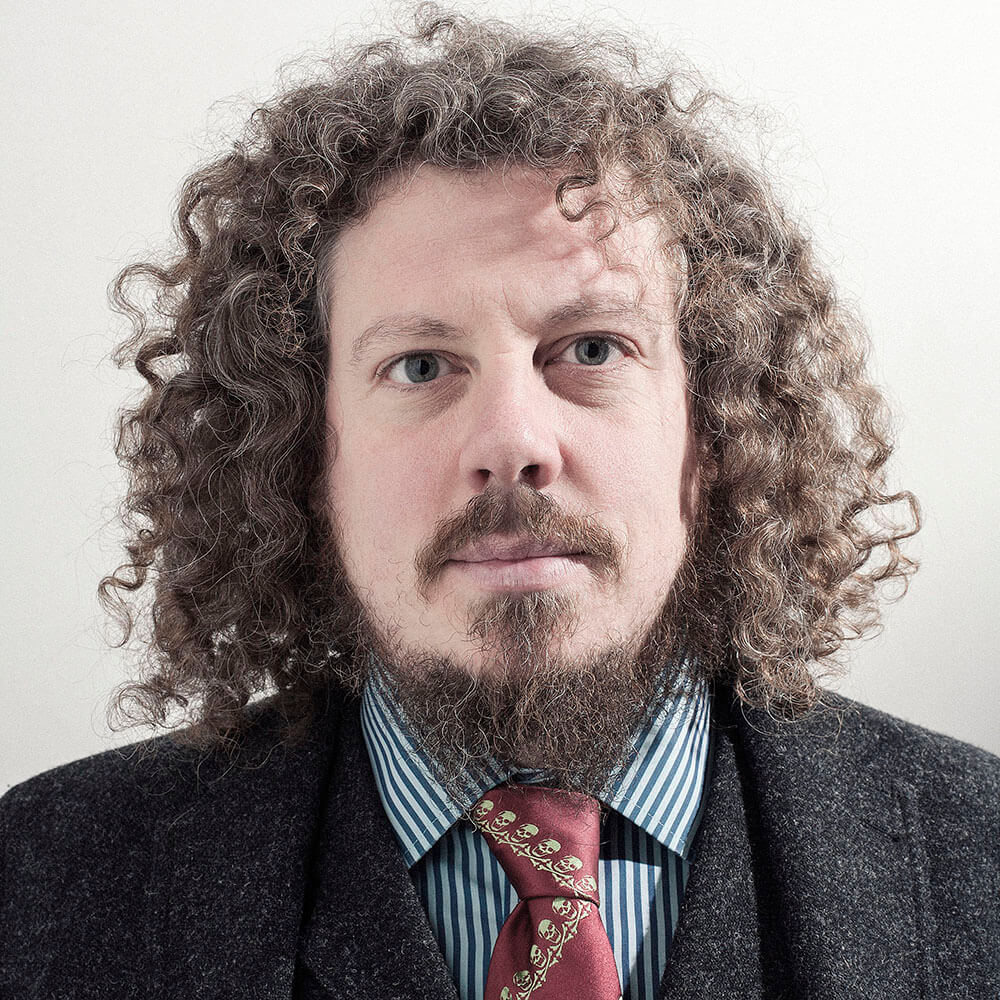
Mathieu Copeland has been developing a curatorial praxis that seeks to subvert the traditional role of art shows and renew our perception of them. Copeland is Senior Lecturer at in the Leeds School of Art at Leeds Beckett University, UK.
 0009-0008-8340-6298
About
Mathieu Copeland has been developing a curatorial praxis that seeks to subvert the traditional role of art shows and renew our perception of them. Copeland is Senior Lecturer at in the Leeds School of Art at Leeds Beckett University, UK.
A curator, lecturer and publisher, Mathieu Copeland develops a curatorial praxis that seeks to subvert the traditional role of exhibitions and renew our perceptions of them. He is Senior Lecturer at in the Leeds School of Art at Leeds Beckett University, UK.
Copeland co-curated the exhibition VOIDS. A Retrospective at the Centre Pompidou-Paris and the Kunsthalle-Bern (2009), and co-edited the celebrated anthology VOIDS. Among many others, he curated A Choreographed Exhibition at the Kunsthalle St Gallen (2007), Soundtrack for an Exhibition (2006), Alan Vega (2009) and Gustav Metzger (2013) at the Musee d'Art Contemporain-Lyon or again A Mental Mandala at MUAC-Mexico City (2013). He initiated and curated the series EAC (2004-06), A Spoken Word Exhibitions (2007-), Reprise (2011-) and the Exhibitions to Hear Read (2010-, presented in 2013 at MoMA-New York).
Recent exhibitions include A Retrospective of Closed Exhibitions at the Kunsthalle Fribourg (2016), The Exhibition of a Dream at the Gulbenkian Foundation (2017), A Staged Exhibition at La Ferme du Buisson (2021), Exhibition Cuttings at the Hermes Foundation in Tokyo (2021), the retrospectives Robert Barry: A Situation at Circuit-Contemporary Art Centre Lausanne (2022) and the Venet Foundation (2023), and Graciela Carnevale - Pieza Blanca, n.b.k., Berlin.
Curator-at-Large at the Rockbund Art Museum, Shanghai (2020-21), Copeland was guest curator for the 9th Biennale of Contemporary Art in Lyon (2007), invited guest Curator at the Musee du Jeu de Paume, Paris (2012-13), and together with artist Philippe Decrauzat, guest curator at Le Plateau, FRAC Ile-de-France Paris (2014-15).
Copeland was lecturer and researcher in the MA Fine Arts at Geneva's HEAD-University for the Arts (2010-18), lecturer in the Painting department HEAD's BA Fine Arts (2012-14), co-coordinator of the MA Fine Arts at HEAD (2014-15), and lecturer in the MA Fine Arts at Zurich's ZHDK-University of the Arts (2018-19). He has taught and lectured in over 40 universities and art schools internationally. He was conferred a PhD from Kingston University London.
Copeland directed in 2015 "The exhibition of a film" - an exhibition as a feature film for cinemas, and edited over 25 books including "Choreographing Exhibitions" (Les Presses du Reel, 2013), "The Anti-Museum" (Konig Books, 2017), and the anthology of Gustav Metzger's writings (JRP Editions, 2019). He lately edited "Philippe Decrauzat-Delay" (Verlag Konig, 2022), "Phill Niblock-Nothing but working" (Verlag Konig, 2023) and "Robert Barry - The Defining of It..." (Verlag Konig, 2025).
Current PhD Students:
- Tom Rogers - Without Pictures: Finding Personal Significance in Communities of Practice
- Stu Burke - Play Grounds: The Gallery and Beyond as a Site of Play
- Paul Tranter - J. M. W. Turner, Flâneur and Land Artist: Retracing the Sojourns Made by the Painter in Wharfedale and Washburndale
- Adam Chodzko - The Dreamshare Seer; A tool for visualising the dream ecologies of a community and its place, using AI and guided by Malaysian indigenous dreamwork
Degrees
PhD
Kingston University, London, United KingdomMA Creative Curating
Goldsmiths University of London, London, United KingdomBA Fine Art
Newcastle University, Newcastle upon Tyne, United Kingdom
Languages
English
Can read, write, speak, understand and peer reviewFrench
Can read, write, speak, understand and peer review
Research interests
Mathieu Copeland's work deconstructs the normative acceptations of what exhibitions, and catalogues, can be. In addressing their inherent materiality, he challenges the tacitly accepted theories of what 'to curate' is. A curator is in turn and simultaneously a playwright, a choreographer, a filmmaker, a writer, an historian, (...). A curator assumes their voice, as they build a repertoire.
Copeland's research encompasses curating, radical museology, experimental exhibitions, void(s), art and ecology, activism as art, performance in museums, sound art, choreographing exhibitions, and film(ed) exhibition.
Publications (34)
Sort By:
Featured First:
Search:
A STAGED EXHIBITION
 11 September 2021
A STAGED EXHIBITION with Art & Language, Fiona Banner aka The Vanity Press, Robert Barry, Luis Camnitzer, Braco Dimitrijević, Coco Fusco, Giovanna, Joseph Grigely, Swetlana Heger, Florence Jung, Ghislaine Leung, David Medalla, Michael Portnoy performer Jennifer Lacey composition and music Laetitia Sadier (assisted by Hannes Plattmeier) backdrop Gaylen Gerber An exhibition by Mathieu Copeland Pursuing his investigation into the nature of an exhibition, curator Mathieu Copeland transposes the exhibition to the stage for the duration of a show. Descriptions of dreamed, real, or vanished artworks written by a dozen artists for A Staged Exhibition are interpreted through gestures, words and music by choreographer and dancer Jennifer Lacey and composer and musician Laetitia Sadier against a backdrop by Gaylen Gerber. Following A Choreographed Exhibition, presented at the Contemporary Art Centre in 2008, and the book and the festival Choreographing Exhibitions in 2013, curator Mathieu Copeland returns to La Ferme du Buisson with A Staged Exhibition (Une exposition mise en scène). Working with the theatre's spatial and temporal parameters, Copeland experiments and collaborates with Lacey and Sadier to interrogate the way works are articulated from one to the other, confronted in their singularity and interpreted as a tableau vivant that transposes works by an international and intergenerational grouping of artists including Art & Language, Fiona Banner aka The Vanity Press, Robert Barry, Luis Camnitzer, Braco Dimitrijević, Coco Fusco, Giovanna, Joseph Grigely, Swetlana Heger, Florence Jung, Ghislaine Leung, David Medalla and Michael Portnoy. Jennifer Lacey pursues her investigation in breaking free from the spectacular to find a playful and inventive hermeneutics of the body as she performs written or described works commissioned specifically for A Staged Exhibition. Laetitia Sadier enters into resonance, or dissonance, with the exhibition taking place in parallel to offer a sound exhibition within a staged one. In a minimalist setting, American artist Gaylen Gerber creates–for the first time in his career–a work for a theatrical context. Invited to reinterpret what a theatrical backdrop can be, Gerber continues his decades-long exploration of Backdrops and how they draw attention to the works presented and to their presentation. Shedding the physical reality of the object, A Staged Exhibition focuses on the emotional experience of a work, lived in the present tense as an exhibition that exists solely through the prism of the lived actions. Fundamentally influenced by the art of Robert Barry – whose own oeuvre conveys the feeling of art without ever fully revealing it – A Staged Exhibition offers the mediation of works of art that occur only in their interpretation.
Robert Barry Une situation
23 September 2022
L’exposition propose un regard sur l’ensemble de l’œuvre de Robert Barry, de 1964 à nos jours. Étudiant de Robert Motherwell puis de Tony Smith, Barry débute sa carrière artistique avec l’exposition 8 Young American Artists organisée par Eugene Goosen au Hudson River Museum, 11 – 25 octobre 1964, exposition aujourd'hui considérée comme l’une des premières de l’art minimal. Par l’entremise de Tony Smith, Barry obtiendra cette même année sa première exposition personnelle à la Westerly Gallery. L’exposition à CIRCUIT débute chronologiquement avec le carton d’invitation, un imprimé réalisé par l’artiste et reprenant le motif d’une des toiles présentées à l’époque. Graduellement, Barry entame un processus de réduction minimale, passant du « spot » à la grille, puis à la ligne pour réduire son motif a une toile de lin pure aux bords peints. Il réalisera par la suite des séries de peintures monochromes qui définissent l’espace, par exemple 4 toiles placées aux quatre coins du mur. Barry abandonnera la peinture au profit de la sculpture, puis en suivant son procédé de réduction, réalisera des œuvres de fils — d’abord de couleurs, puis de nylon transparent — qui littéralement mettent l’espace sous tension. Un minimalisme formel qui se contracte graduellement pour révéler l’espace entre-deux, puis ne montrer rien d’autre que l’espace vide, et le temps. Ce principe de réduction se cristallise dans le mot. La phrase qui permet de décrire une œuvre apparemment absente (CARRIER WAVE PIECE, dites Radio Piece, et la série des gaz inertes, respectivement en janvier et mars 1969). Robert Barry passe ensuite à l’énoncé, en utilisant la galerie elle-même comme médium, et ses cartons d’invitation comme lieux de l’œuvre. Graduellement, les mots se libèrent. L’artiste cherche l’outil pour définir l’œuvre, à travers même le langage (THE DEFINING OF IT..., à partir de 1970). Une réflexion qui l’amène à se libérer de la phrase et à présenter le mot comme un objet autonome (WORD LIST PIECES, 1971-), et au final, fragmenté. Ces pièces peuvent être consultées à travers une recréation de la première exposition de l’artiste à la Galerie Leo Castelli en 1971, l’artiste présentait une documentation de ses œuvres textuelles dans six classeurs placés sur une table entourée de quatre chaises. À CIRCUIT, dans le premier espace, une évolution est visible chronologiquement par des peintures, dessins et documents provenant de prêts de collections privées, et des archives de l’artiste présentées pour la première fois au public. Ces documentations annoncent et complémentent les œuvres présentées dans le second espace. Le second espace de CIRCUIT s’articule en huit volets. Chaque semaine, nous sommes invités à faire l’expérience d’une œuvre différente. Tout d’abord, une œuvre issue de la série de pièces dites « monofilaments ». Disposés à l’exact milieu du volume du second espace, trois fils de nylon transparents tiennent une bague en or. Lors de la seconde semaine, des ondes radio FM et AM, des signaux sans contenu, et un ultrason, sont diffusés dans cet espace vide. Pour la troisième semaine, nous subissons des radiations, une pièce originellement présentée par Harald Szeemann pour Quand Les Attitudes Deviennent Formes à la Kunsthalle de Berne en mars 1969. Le second espace de CIRCUIT se trouve entièrement vide pendant la quatrième semaine, créant une situation où nous sommes « libre de penser à ce que nous ferons », une phrase essentielle du philosophe Herbert Marcuse. La cinquième semaine, en partenariat avec le LUFF, présente une rétrospective des œuvres sonores (SOUND WORDS) que l’artiste réalise à partir du milieu des années 70, des allitérations de mots et de silences. La sixième semaine plonge l’espace dans l'obscurité, et nous présente des œuvres de diapositives (SLIDE PIECES). L’artiste poursuit depuis 1971 dans les SLIDE PIECES des recherches sur la « définition de cela » et sur l’autonomie du mot et de sa forme. Durant la septième semaine de l’exposition, CIRCUIT Centre d’art contemporain sera fermée. Cette fermeture fait partie d’une série entamée depuis 1969 où la galerie devient le médium même de l’œuvre d’art. Enfin, la huitième semaine c’est l’expérience d’une nouvelle œuvre écrite par l’artiste pour CIRCUIT où « les murs seront peints d’une couleur vive. » Parallèlement à ces deux axes principaux sont proposés deux autres grands ensembles : une sélection rétrospective des œuvres vidéo réalisées par l’artiste entre 2004 et 2015, ainsi qu’une rétrospectives des œuvres murales en quatre pièces. Robert Barry y poursuit son étude du mot, et suivant le processus de « rematérialisation » mis en œuvre à la fin des années 60, se libère du support classique du papier ou de la toile pour considérer le mot à l’échelle du mur. Premièrement au travers du « wall drawing » réalisé lors de son exposition personnelle chez Leo Castelli en 1978, où le mur définit un espace, un carré représenté par des mots est repris ici pour la rétrospective. En face, l’œuvre YOUTO explose le mot à la taille du mur dont la hauteur donne au O son diamètre. Une pièce initialement réalisée pour son exposition personnelle à la Renaissance Society de Chicago en 1985. Suivant un processus de disposition éparse, le mot flotte sur la surface du mur, pour se couper et se fragmenter. Les deux commissions réalisées par l’artiste spécialement pour CIRCUIT prennent en compte la vitrine extérieure et le mur central. Des mots sont écrits en vinyle coloré semi-transparent sur le verre, projetant leurs reflets à l’intérieur de l’architecture du centre d’art. En face, la réflexion se poursuit avec des mots, en lettres inox découpées au laser. Reprenant cette phrase essentielle de Lawrence Weiner qui nous rappelait peu avant sa disparition que « Robert Barry a su faire d’une situation une réalité », ses huit volets sont autant d’invitations de faire l’expérience de huit « situations ». Des moments historiques, définitifs, et radicaux de ce qu’est l’Art, ou selon l’expression de l’artiste, « cette activité que l’on nomme Art ». Inscrivant dans le temps la lecture, ces œuvres de mots et l’ensemble de ces interventions architecturales sont réinterprétées en parallèle d’une recréation des actions iconiques de l’artiste. Parmi celles-ci, les pièces transmises télépathiquement (1969), ainsi que les gaz inertes libérés dans l’atmosphère, œuvre réalisée en Californie en mars 1969. Une pièce historique recréée le 14 mai dernier sur les rives du lac Léman où 30 litres d’argon ont été retournés à l’atmosphère, dont un poster documente l’action est affiché dans l’espace public lausannois (Éditions Circuit, 2022).
Robert Barry: A Situation
01 June 2023
Visitors to the Venet Foundation’s summer exhibition are invited to experience two large ensembles from the immense body of work produced by Robert Barry, one of the figurehead of minimal art and pioneer of Conceptual Art. One is a retro¬spective of Barry’s wall pieces, with seven murals from 1978 to 2023, while the second retrospective of the sound works the artist produced between 1976 and 2023. Following a process of “remate¬rialization” the artist initiated in the mid 1960s, Barry pursued his study of the word and freed it from the classical supports such as paper and canvas to consider it on the scale of the wall. The foundation’s exhibition begins with the UNTI¬TLED wall drawing the artist originally produced for his 1978 one man exhibition at the Leo Castelli Gallery in New York where within the wall a space is defined through a square made of words. This piece is followed by YOUTO, a work that explodes the word to the size of the wall, its height giving the diameter to the letter O. This wall piece was first realised in 1985 for the artist’s solo show at the Renaissance Soci¬ety, Chicago. Following a gradual deconstructing process, words first dismantle the square, then shape a circle before finally floating on the wall’s surface, cut up and fragmented by its edges. Barry further devel¬ops this approach in a piece specially commissioned for the Venet Foundation on the large exterior display window of the New Gallery and its immense parallel back wall. Words written in semi-transparent coloured vinyl on the glass appear as coloured projections over words laser-cut in reflective stainless steel. This all-encompassing exhibition also features a retrospective of the artist’s sound works realised between 1976 and 2023. These pieces are played in the spaces of the New Gallery, one after the other throughout the day. These pieces are also played outdoors amongst the trees in the adjacent sculpture park. Alliterations of words and silences in which the materiality of the human voice contrast with the monumental sculptures by Robert Morris, Frank Stella, James Turrell and others. Two sculptures articulate this thorough experience. The first is a new work installed in the sculpture park. The piece consists of eight words made of polished stainless steel that reflect their surroundings. The second piece is a new iteration of a 1967 minimalist sculpture in the New Gallery. It consists of four 30 cm plaster cubes that delineate a 6 meter square space, an essential piece which makes the link between minimal and conceptual art – Robert Barry’s very evolution. In Lawrence Weiner’s essential words, “Robert Barry made a situation into a reality.” This exhibition of works of words teaches us how to read art, and invites us to consider, in the artist’s own words, “this activity that we call Art”.
"As the context changes, you must also change", Graciela Carnevale in conversation with Mathieu Copeland
01 October 2020
Art & Energy MIT Press
Catastrophism, miniskirt, particle. This book arises from the activities of the MA Fine Arts program at the Zurich University of the Arts in 2019.
The Exhibition of a Film
2022
Zineb Sedira. Dreams Have No Titles. Ediz. Illustrata
Zineb Sedira is a London-based Franco-Algerian feminist photographer and video artist, best known for work exploring the human relationship to geography
BETWEEN POETRY AND SCULPTURE (AFTER DSH)
2023
From Concrete to Liquid to Spoken Worlds to the Word. Ediz. Illustrata
Even at such a remove, it felt important to retrace the fundamental stages of this event through critical essays, images of the works and installations, and the calendar of performances and poetry readings.
Allan Kaprow
2021
216
Un essai inédit de Mathieu Copeland sur la réinvention par Arnaud Labelle-Rojoux de l'environnement The Apple Shrine d'Allan Kaprow et, plus globalement, sur les thèmes de la réinvention dans l'art et des formes de l'exposition.
Manifest paper exhibitions : curating as a radical re-materialisation of forms
08 June 2021
 Authors: Copeland M, Editors: Horrocks C
Voids, Choreographing Exhibitions, the exhibition of a film, The Anti-Museum, and Gustav Metzger, Writings 1953 – 2016. It is through the prism of emptiness, choreography, cinema, dialectic antagonism and an artist’s corpus of writings that these experimental publications propose a redefinition of the semantics involved. They foster new theoretical and practical perspectives through the exploration of extreme philosophies and cultural practices. These publications deconstruct the normative acceptations of what exhibitions, and catalogues, can be. Advancing extreme forms for exhibitions, these manifest anthologies are calls for action. In addressing their inherent materialities, I challenge the tacitly accepted theories of what to curate is. A curator is in turn and simultaneously a playwright, a choreographer, a filmmaker, a writer, a historian, (…). A curator voices a voice, as s-he builds a repertoire. Considering exhibitions as materials, Voids and The Anti-Museum stem from a history of radical exhibitions. Both offer a re-appraisal of modern and contemporary art history seen through the prism of radical culture. Seizing the materiality of exhibitions, Choreographing Exhibitions recast exhibition-making in museum contexts, whilst the exhibition of a film challenges the museology of cinema and exhibitions made films. Gustav Metzger, Writings 1953 – 2016 offers a lasting testimony to a revolutionary artist, a radical theorist, and critic of our times. Metzger consciously produced sparingly. The accumulated wealth of his writing is akin to proposing a retrospective of his work in its original materiality, an art of propositions. The red thread that binds these publications together is a study in radicality. Uncompromising attitudes as forms, radical exhibitions as books and a complete re-materialisation of forms: all affirm a voice as a polyphony of voices. As Manifest Paper Exhibitions, these publications comprise a complex autonomous entity of manifest positions where the exhibition is the catalogue, and the catalogue is the exhibition.
L'exposition d'un film
01 December 2015
456
Copeland M, Gablier LL'ouvrage fait suite à une exposition éponyme réunissant quarante-six artistes internationaux autour d'une même interrogation : que serait une exposition qui, au lieu de prendre place dans un musée ou dans une galerie, prendrait place ...
Choreographing exhibitions
01 November 2013
424
Un panorama des relations entre chorégraphie et exposition, à travers les contributions d'une trentaine d'artistes, chorégraphes, musiciens, cinéastes, théoriciens et commissaires d'exposition internationaux (Kenneth Anger, Jérôme ...
Gustav Metzger Auto-creative art
2013
80
Publié à l'occasion de l'exposition de Gustav Metzger ± Supportive, 1966-2011 » au Musée d'art contemporain de Lyon, de février à avril 2013.00L'art auto-créatif est indissolublement lié à ce qui fut son corollaire, l'art auto ...
Voids A Retrospective
2009
536 Jrp Ringier
Edited by Matthieu Copeland, Clive Phillpot, John Armleder, Mai-Thu Perret.
Soundtrack for an Exhibition
The in-between Anna Sanders films
Philippe Decrauzat. Delay
29 December 2021
448
This book on Philippe Decrauzat is not an ordinary monograph publication but was thought of as a tool allowing both to apprehend the work of the Swiss artist, but also and above all, to deepen the research fields and themes that the artist ...
L’anti-musee des artistes – Vides, Une Rétrospective d’Exposition Fermées et The Anti-Museum
05 December 2024
Department of Art History, Faculty of Arts, University of Lausanne (UNIL)
“Exhibition’s Scores, Scores of Exhibitions”
19 November 2024
Instituto de Estudios Avanzados USACH, Universidad de Santiago de Chile
Conferencia “Exhibition’s Scores, Scores of Exhibitions” de Mathieu Copeland Instituto de Estudios Avanzados USACH Román Díaz 89, Providencia Esta actividad comenzará con una visita guiada a la exposición “Partituras inesperadas”, curada por La oficina de la nada, en la que se relacionan artistas visuales y músicos/as. Posteriormente, en su conferencia, Mathieu Copeland se referirá a su experiencia curatorial con partituras y música. ////////////////////// Mathieu Copeland es un curador, investigador y editor, cuya práctica busca subvertir el rol tradicional de las exposiciones y renovar nuestras percepciones sobre ellas. Dentro de sus proyectos destacan “A Choreographed Exhibition” (Kunsthalle, St Gallen (2007)), “VOIDS. A Retrospective” (Centre Pompidou, Paris y Kunsthalle, Bern (2009)) y “A Retrospective of Closed Exhibitions” (Kunsthalle, Fribourg (2016)), series como “A Spoken Word Exhibitions”, “Reprise” y “Exhibitions to Hear Read” y la película “The exhibition of a film” (2015). Ha publicado más de una veintena de catálogos y libros, y actualmente es Senior Lecturer del Leeds School of Art. Más información en http://www.mathieucopeland.net/ La visita de Mathieu Copeland a Chile corresponde a una invitación del Instituto de Estudios Avanzados de la Universidad de Santiago de Chile.
“When you ain't got nothing, you got nothing to lose (You're invisible now, you've got no secrets to conceal)”
22 November 2024
El próximo viernes 22 de noviembre, a las 18:30 horas, recibiremos en el Centro de Investigación y Documentación de Il Posto (José Miguel de la Barra 480, depto. 201) al curador Mathieu Copeland, quien dictará la conferencia titulada «When you ain’t got nothing, you got nothing to lose (You’re invisible now, you’ve got no secrets to conceal)” En esta charla, Copeland se referirá en particular a sus proyectos curatoriales y editoriales en torno a las exposiciones vacías y las exposiciones clausuradas. La actividad se enmarca en una visita del curador a Chile, realizada gracias a una invitación del Instituto de Estudios Avanzados de la Universidad de Santiago de Chile Mathieu Copeland es curador, investigador y editor, cuya práctica busca subvertir el rol tradicional de las exposiciones y renovar nuestras percepciones sobre ellas. Dentro de sus proyectos destacan “A Choreographed Exhibition” (Kunsthalle, St Gallen (2007)), “VOIDS. A Retrospective” (Centre Pompidou, Paris y Kunsthalle, Bern (2009)) y “A Retrospective of Closed Exhibitions” (Kunsthalle, Fribourg (2016)), series como “A Spoken Word Exhibitions”, “Reprise” y “Exhibitions to Hear Read” y la película “The exhibition of a film” (2015). Ha publicado más de una veintena de catálogos y libros, y actualmente es Senior Lecturer del Leeds School of Art.
Reprise #5: Museo de Copias, 1899/2024
20 November 2024
Reprise #5: Museo de Copias, 1899/2024 Una exposición de Mathieu Copeland y Felipe Cussen, siguiendo el principio de Reprise, una iniciativa de Mathieu Copeland. Realizado a partir de la conferencia “El origen del ‘Museo de Copias’” de Alberto Mackenna Subercaseaux en el Ateneo de Santiago el Lunes 22 de Mayo de 1899, reproducida en el libro Luchas por el arte (Santiago/Valparaíso: Sociedad Imprenta- Litografía Barcelona, 1915). Voz: Felipe Cussen, bisnieto de Alberto Mackenna Subercaseaux Grabación: Carlos Véliz Masterización: Ricardo Luna Traducción al inglés por Google Translate Producción: Campus Creativo UNAB / La oficina de la nada Agradecimientos: Francisco García, Instituto de Estudios Avanzados USACH, Leeds School of Arts - Leeds Beckett University Imagen de Alberto Mackenna Subercaseaux en 1899, fundida con imagen de Felipe Cussen en 2020, mediante el software de inteligencia artificial Dzine en 2024. Campus Creativo UNAB Purísima 225, Bellavista Miércoles 20 de noviembre de 2024, 18:00
Robert Barry in conversation with Mathieu Copeland, “Piece Radioactive (Radiation Piece), Central Park, Janvier 1969”
11 October 2024
L'âge atomique Les artistes à l'épreuve de l'histoire
The Atomic age, Artists put to the test of history The catalogue, which includes numerous essays by specialists – philosophers and historians of art, architecture and science, etc. – explores the subject from the three angles of art, science and politics. It also gives a voice to present-day artists and writers, and brings together documentation and images in many cases on public display for the first time. Last but not least, a comprehensive chronology shows the sequence of scientific, political, cultural and artistic events that have shaped our "Atomic Age". Artists: Kenneth Adam, Horst Ademeit, Ant Farm, Francis Bacon, Enrico Baj, Robert Barry, Hélène de Beauvoir, Charles Bittinger, Erik Boulatov, Chris Burden, Alberto Burri, Miriam Cahn, Valdis Celms, Julian Charrière, Bruce Conner, Gregory Corso, Salvador Dali, Gianni Dova, Marcel Duchamp, Friedrich Dürrenmatt, Jaan Elken, Bonita Ely, Lucio Fontana, Loïe Fuller, General Idea, Guy Debord, Vidya Gastaldon, Dominique Gonzalez-Foerster, Hans Grundig, Brion Gysin, Richard Hamilton, Isao Hashimoto, Raoul Hausmann, Shigeo Hayashi, Inārs Helmūts, Justino Herrera, Hessie, « Hibakusha » (atom bomb survivors), Hi-Red Center, Gary Hill, Jessie Homer French, Pierre Huyghe, Tatsuo Ikeda, Isidore Isou, Motoharu Jōnouchi, Asger Jorn, Jugnet + Clairet, Vassily Kandinsky, Kikuji Kawada, On Kawara, György Kemény, Kiyonori Kikutake, Yves Klein, Hilma af Klint, Susanne Kriemann, Barbara Kruger, Tetsumi Kudo, Yayoi Kusama, Wifredo Lam, Mikhaïl Larionov, Jean-Jacques Lebel, Le Corbusier, Francesco Lo Savio, Piero Manzoni, Yoshito Matsushige, Roberto Matta, Herbert Matter, Gustav Metzger, Boris Mikhaïlov, László Moholy-Nagy, Henry Moore, Minoru Nakahara, Natsuyuki Nakanishi, Jürgen Nefzger, Barnett Newman, Natacha Nisic, Isamu Noguchi, Yoko Ono, Kiyoji Otsuji, Wolfgang Paalen, Eduardo Paolozzi, Claude Parent, Gaetano Pesce, Raymond Pettibon, Otto Piene, Giuseppe Pinot Gallizio, Sigmar Polke, André et Jean Polak, Jackson Pollock, Richard Pousette-Dart, Grant Powers, Margaret Raspé, Nathalie Rebholz, Stefan Rinck, Thomas Schütte, Jim Shaw, Vladimir Shevchenko, Kazuo Shiraga, Amy Sillman, Mimi Smith Sisters Of Survival, Nancy Spero, Viatcheslav Syssoev, Atsuko Tanaka, Koichi Tateishi, Diana Thater, Shōmei Tōmatsu, Hiromi Tsuchida, Luc Tuymans, Peter Watkins, Ray Wisniewski, Wols, Yōsuke Yamahata, Vladimir Yankilevsky, Alexander Zhitomirsky, etc. Curators : Julia Garimorth, Head curator, Musée d’Art Moderne de Paris Maria Stavrinaki, professor of the history of contemporary art, University of Lausanne Specialist advisor : Kyveli Mavrokordopoulou, teacher researcher in modern and contemporary art and environmental studies, Free University of Amsterdam Assisted by : Sylvie Moreau-Soteras, research and documentation officer, Musée d’Art Moderne de Paris
Robert Barry - ‘The Real Thing…’
07 November 2024
Robert Barry presents ‘The Real Thing…’, a new work conceived especially for Parking. This exhibition has been curated by Mathieu Copeland, in anticipation of the launch of ‘Robert Barry, The Defining Of It…’, the first comprehensive monograph dedicated to the American artist, edited by Mathieu Copeland himself and to be published in 2025 by Buchhandlung Walther und Franz König incollaboration with the Leeds School of Art – Leeds Beckett University. Robert Barry (1936, United States) is one of the foremost figures of Minimalism and one of the pioneers of Conceptual Art. A graduate of Hunter College in New York, Barry is primarily known for his use of language in his works. From the beginning of his career he has been interested in physical phenomena such as electromagnetic fields or ultrasound frequencies, as well as intangible concepts such as emptiness or silence. It is the spectator and his or her reaction to the words suggested by Barry that completes and gives meaning to the work. Robert Barry’s works are part of the permanent collection of numerous museums around the world, including: MoMA, New York; Centre Georges Pompidou, Paris; Chicago Art Institute, Chicago; Hirshhorn Museum and Sculpture Garden – Smithsonian Institute; Washington D.C.; Musée d’Orsay, Paris; Solomon R. Guggenheim Museum, New York.
The Anti-Museum: An anti-documentary (L'anti-musée: un anti-documentaire)
18 October 2023
Still influenced by the reflections that emerged within the collaborative and transdisciplinary research laboratory Chercher l’ouverture (2020-2021), Galerie UQO continues its discussions with curator Mathieu Copeland on the subject of closed exhibitions. Closures, such as the one announced and claimed by Galerie UQO in 2020, are strong political gestures that lead to questions about the definition of work in the cultural sector and the vocation of the spaces in which works of art are usually presented. The pandemic has led to the closure of businesses, stores, cultural venues, putting millions of people out of work; in this, it has produced a new normalization of social distancing and virtual spaces. Narrated by musician Henry Rollins, the film The Anti-Museum: an Anti-Documentary is a reflection on the forced closure of museums and exhibitions. It considers alternative ways of producing and distributing contemporary art. Echoing the continuous film projection on a screen-tableau by the artist Philippe Decrauzat, Copeland proposes an (anti-)exhibition which, through new interventions by international artists Stefan Brüggemann, Graciela Carnevale, FM Einheit, Henry Flynt, Kenneth Goldsmith, Swetlana Heger, Liliane Lijn, Ben Morea and Ben Vautier, considers a sensitive approach to the proposition of the anti-museum. This exhibition is conceived as an anti-documentary, evoking, through the radical nature of the works, the feeling of what an anti-museum can be. A day of conversations and discussions will open the exhibition, bringing together artists from the exhibition, as well as researchers and exhibition curators, around the fundamental questions of the concepts of anti-art, anti-philosophy or anti-music to better highlight the founding concept of the artist and activist Gustav Metzger: the need for art to change the world.
Stefan Brüggemann. Dos Líneas (Fe)
12 September 2024
Two lines (faith) Stefan Brüggemann Stefan Brüggemann (Mexico City, 1975, lives and works in Mexico City, London, and Ibiza) presents with Two lines (faith) an exhibition that consists of an environmental installation of five monumental minimal punk canvases originally realised for the artist’s major exhibition at the Museo Nacional de Arte, Mexico City. All feature a unified backdrop of saturated gold leaves (and one silver), spray painted with a simple and minimal gesture of two lines crossing each other. As its centre piece, Two lines (Faith) (1821) features a spraypainted Saint Augustine quote in Latin that reads, “Faith is to believe what you do not see. The reward of this faith is to see what you believe.” Each painting specifies in their titles a year, 30, 1492, 1806, 1821, 1830, as silent markers to significant moments of historical, religious and cultural events. Reflected in a mirror ceiling, the paintings double up as two lines become four. Reminding us of the Crucifixion of Saint Peter who requested to be crucified upside down, as he felt unworthy to die in the same manner as the Christ, the mirror reflection gives us the sense of reality viewed upside down, yet still the right way up. As the artist explained, religious painting gave him faith in art, as the power of art is more sublime than any religion. The exhibition is introduced by one of the artist’s Hyper Poems, Online Disconnected. Written in his signature style of twenty centimetres tall letters written in Arial black, this piece relates to the new religion of our constant online presence and confronts us to a very contemporary existential problem. If you are online, you are missing the present. And if you are present, you are missing this other online word. The artist states that no matter what, we always feel offline. “A minimal statement need not be minimal in terms of subject matter.” Gregory Battock wrote these words in 1968 about Barnett Newman’s ‘The Stations of the Cross / Lema Sabachthani.’ Considered as Newman’s greatest achievement, this series of fourteen abstract expressionist paintings were created between 1958 (when Newman was recovering from a heart attack) and 1966 (realised just in time for his Guggenheim exhibition, Newman’s only museum exhibition in his lifetime), each is named after one of Jesus’s fourteen Stations, with the addition of a coda, an additional painting titled Be II. Brüggemann’s minimal gestures are saturated, over loaded, as the rational of both the gold and the cross carry the weight of art, history and art history. The symbol of Christianity in the shape of a cross where people were crucified, the cross is a study of twos–a written mark (X or +) formed by two lines going across each other. X either shows where something is, or is used to cancel something. One disconnected line reconnected, these paintings deconstruct Newman’s Be II: be two, two I’s, two lines. Be two I’s: Me. Myself. and I. The saint trinity. Mathieu Copeland
The Anti-Museum: an Anti-Documentary
23 April 2021
Forthbridge Films Publisher
Authors: Copeland M, Editors: Fitzmaurice CA global pandemic shuts down business, offices, shops, theatres, museums and galleries, putting millions out of work and creating a new normal of social distance and virtual spaces. Narrated by former Black Flag frontman Henry Rollins, ‘The Anti-Museum: an Anti-Documentary’ questions if the forced closure of museums and exhibitions means we can discover new ways to experience art. For decades artists have grappled with the concept of closure – as statements against political power, as an act against commerciality, on the power of labour, as a means of questioning what work means and even how we define the space where art takes place. These radical acts saw galleries shut on their day of opening in Japan while in Argentina, the imprisonment of visitors to an exhibition became a statement on the military coup d’etat. In Italy a gallery covered in striped paper challenged ideas of where art should hang while other artists mailed out their own exhibition closure in LA, Amsterdam and Turin. This rejection of where and how art is expressed is part of an anti-art movement that began in the 1960s. The heart of 'anti-art' was about pushing back against the objectification in established art, critiquing the commerciality of pop art and abstract expressionism, and denouncing the preservation of objects as a means of extracting value. In short, anti-art rejected the capitalist take-over of art as practice by making itself unpreservable, unmarketable, unattractive and unobjectifiable. Refusing to play the game exposes the limits of culture and becomes a revolutionary act in itself. But it also cracks open the possibility of redefining what art is, what the limits of art are and actively embraces a different concept - an anti-museum that encourages active oppositions to currently accepted norms.
Presenting Robert Barry - The Defining of It…
Robert BARRY in conversation with Mathieu COPELAND, Teaneck, New Jersey, 16th May 2023
15 June 2023
Publisher
Realised on the occasion of the exhibition: Robert Barry: A Situation An exhibition by Mathieu Copeland Presented in the New Gallery of the Venet Foundation in Le Muy, France from June 1st through to September 30th, 2023. Realised in collaboration with Bernar and Diane Venet, the Venet Foundation director Emmanuel Latreille, and the remarkable commitment of the Bernar Venet Studio team: Chanez Baali, Najeh Ben Aziza, Maxime Bruyelle, Jerome Cavaliere, Marine Charles, Hammadi Dardouri, Florian Derbuel, Boualem Mouza, Enguerran Orio, Olivier Philibert, Emmanuelle Six, Sébastien Six, and Jacki Mansfield. Filmed on Blackmagic System Cameras at Teaneck Sound, New Jersey Sound engineer: David Kowalski Editor: Tom Sefton, Pollen Studio
Exhibition History: Mathieu Copeland on Gustav Metzger's show “Decades: 1959–2009," at Serpentine Gallery 2009
The Time Travel of an Anti-Concept
July 2023
Wanda Czelkowska Skira
Authors: Copeland M, Editors: Taszycka MA tribute to Wanda Czelkowska, one of the leading artists of the Polish avant-garde. Wanda Czelkowska (1930-2021) was a key figure of the Polish avant-garde, whose oeuvre remained almost unnoticed by art historians until recently.
Phill Niblock. Nothing But Working A Retrospective
2023
0 Walther Konig Verlag
One of the great experimental composers of our time, Phill Niblock has during his sixty-year career produced minimalist music, structural cinema, dance performance, improvised theatre, systematic art, and ethnographic photography.Since 1985 ...
Mathieu Copeland, Marie-Hélène Leblanc, Jennifer Lacey, Lætitia Sadier
2021
42
Mathieu Copeland, commissaire d'exposition, questionne la signification de ce qu'il nomme « chorégraphier l'exposition » au fil de trois conversations avec Marie-Hélène Leblanc, commissaire, Jennifer Lacey, chorégraphe et Laetitia ...
Hyper-Palimpsest
2019
136
« Basée sur l'exposition des "Hyper-Poems" de Stefan Brüggemann, des déclarations nihilistes lues, chantées et hurlées par l'icône punk Iggy Pop, dont la voie emplissait les espaces d'une galerie en apparence vide, seulement ...
Alan Suicide Vega - Infinite mercy
2009
127
Lyon MDCD, Vega AA Personal Sonic Geology - Philippe Decrauzat, Mathieu Copeland
2017
Stenger SGustav Metzger: Writings
20 November 2018
576 Jrp Ringier
Metzger G"Bringing together more than 180 texts written between 1953 and 2016, this comprehensive volume establishes artist and activist Gustav Metzger (1926-2017) as a towering figure of the 20th century, a long-overdue recognition of the artist's ...
Current teaching
Mathieu Copeland teaches in the Fine Art Department at Leeds School of Arts for undergraduate, Masters and Doctoral students.





