

Leeds Beckett University - City Campus,
Woodhouse Lane,
LS1 3HE
 0000-0002-6859-9545
About
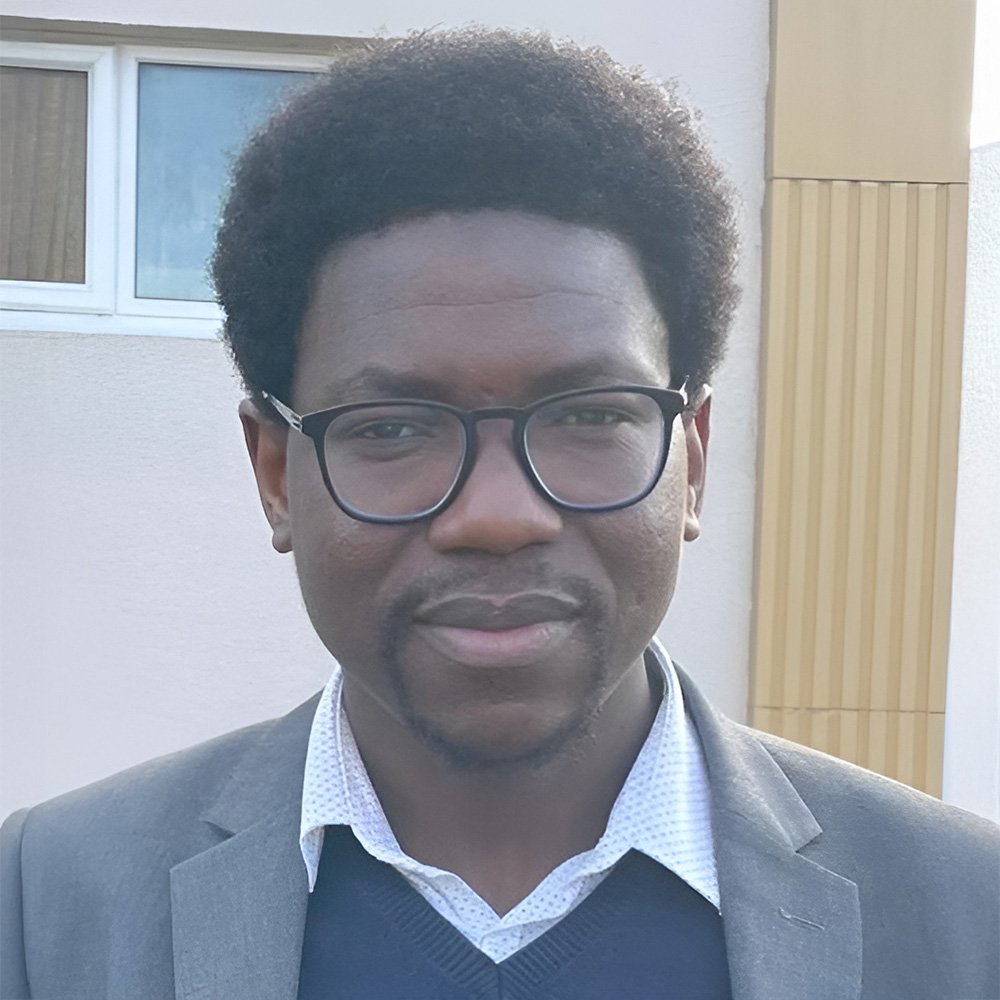
Dr Tahir Touray is a lecturer in the School of Health (Nursing and Healthcare). He qualified as a Registered Nurse in The Gambia in 2004 and worked in the country’s public healthcare system for almost two decades, including serving as a Departmental Matron at Edward Francis Small Teaching Hospital, the nation’s main teaching hospital. He has also worked as a Registered Nurse in the NHS. He holds both an MSc and PhD in Health Promotion from Leeds Beckett University. Before joining the Nursing and Healthcare team, he taught on the Public Health and Health Promotion course at Leeds Beckett and the Applied Public Health course at Cardiff Metropolitan University. He is a Fellow of the Higher Education Academy (FHEA).
Related links
Research interests
Tahir’s research examines lay meanings and lived experiences of health, health inequities, and how power relations shape health outcomes.
Publications (3)
Sort By:
Featured First:
Search:
Preparedness of Healthcare Workers towards Handling COVID-19 Outbreak in the Gambia
 27 April 2021
SciMedicine Journal3(0):36-42 Ital Publication
27 April 2021
SciMedicine Journal3(0):36-42 Ital Publication
 Jatta JW, Ouédraogo JCRP, Sanyang Y, Nebongo D, Touray TA, Sanyang D
Background: The novel Coronavirus (COVID-19) outbreak that began in Wuhan, China rapidly became a public health concern and a challenge for healthcare systems globally. In the wake of the first confirmed case in The Gambia, concerns were raised in some quarters about the health system's preparedness to handle the outbreak. Therefore, we aimed to assess health personnel's knowledge and preparedness in fighting the COVID-19 outbreak in The Gambia. Methods: A cross-sectional survey was conducted using self-administered questionnaires distributed online through social media. Descriptive, bivariate, and binary logistic analyses were done using SPSS Version 22. Results: We obtained 333 valid responses. Most participants reported that their health facility has some form of preparedness; however, only a small proportion reported enough PPEs in the health facility. About half (50.5%) showed good knowledge of COVID-19. There was a statistically significant difference among the professions regarding their reaction if they were found positive of COVID-19 (p=0.006). There was a significant association between health professions [other professions (Odds ratio [OR]=0.2, 95% Confidence interval [CI]:0.040 .9; p=0.038)] and overall knowledge of COVID-19. Conclusion: Our findings showed some form of preparedness towards COVID-19 among healthcare workers. However, many aspects, such as the availability of PPEs and their proper use and knowledge, need improvement. Thus, training and an adequate supply of equipment are required to better respond to upcoming COVID-19 waves and future outbreaks. Doi: 10.28991/SciMedJ-2021-03-SI-5 Full Text: PDF
28 February 2025
Social Science and Medicine367:1-9 Elsevier
Health, a universal human value and a fundamental human right, is a contested and elusive concept. Lay meanings of health are among the different dimensions of the understanding of health, and they have been of great interest to researchers because they help people to understand themselves and their world and influence their health choices and practices. They are subject to change with changing circumstances across the lifespan. The purpose of this study was the exploration of the meanings of health among individuals living with comorbid type 2 diabetes (T2DM) and hypertension (HTN) in The Gambia which, to our knowledge, was hitherto unexplored. The study design was interpretivist and data were collected through thirty-two qualitative interviews with eighteen participants, most of whom participated in two separate interviews, from November 2018 to July 2019. Data were analysed using Braun and Clarke’s reflexive thematic analysis. Three main themes were generated to capture the meanings of health: (1) health: embodiment of corporeal experiences; (2) health: freedom; and (3) health: reward for virtue. The findings highlight the complexity of lay meanings and underscore the need for their incorporation into health promotion policy and practice to promote equality, participation and empowerment and bring the public back into public health.
04 October 2023
Health Promotion International38(5):1-12 (12 Pages) Oxford University Press
The incidence and prevalence of type 2 diabetes mellitus (T2DM) and hypertension (and their comorbidity) have been increasing in sub-Saharan Africa, including The Gambia. Diet is a critical driver of these public health problems, and diet-related health education is a major strategy employed for their prevention and management. The aim of this paper is to explore the lived experiences of diet-related health education among individuals with comorbid type 2 diabetes and hypertension in Serrekunda, The Gambia, a subject hitherto unexplored in the country. The study employed a qualitative (interpretivist) methodology. Thirty-two interviews were conducted with 18 participants, with most participating in two interviews at separate time-points between November 2018 and July 2019. In addition to participant validation, the two points in time interviews elicited more depth and provided rich data. The data were analysed using Braun and Clarke’s six-phased approach to Thematic Analysis. Four main themes were generated in relation to the experiences: (i) one-off blanket dietary advice (ii) education in a vacuum (iii) diabetes-hypertension diet dichotomy and (iv) imbalanced power relationship. The study underscores the need for a reconfiguration of diet-related health education in The Gambia to include lived experiences as critical components of health promotion in tackling T2DM and hypertension. This requires an ecological approach, critical health education, regulations on unhealthy foods, and active participation of individuals as equal partners in health education.





