

Leeds Beckett University - City Campus,
Woodhouse Lane,
LS1 3HE
 0009-0001-3448-6593
About
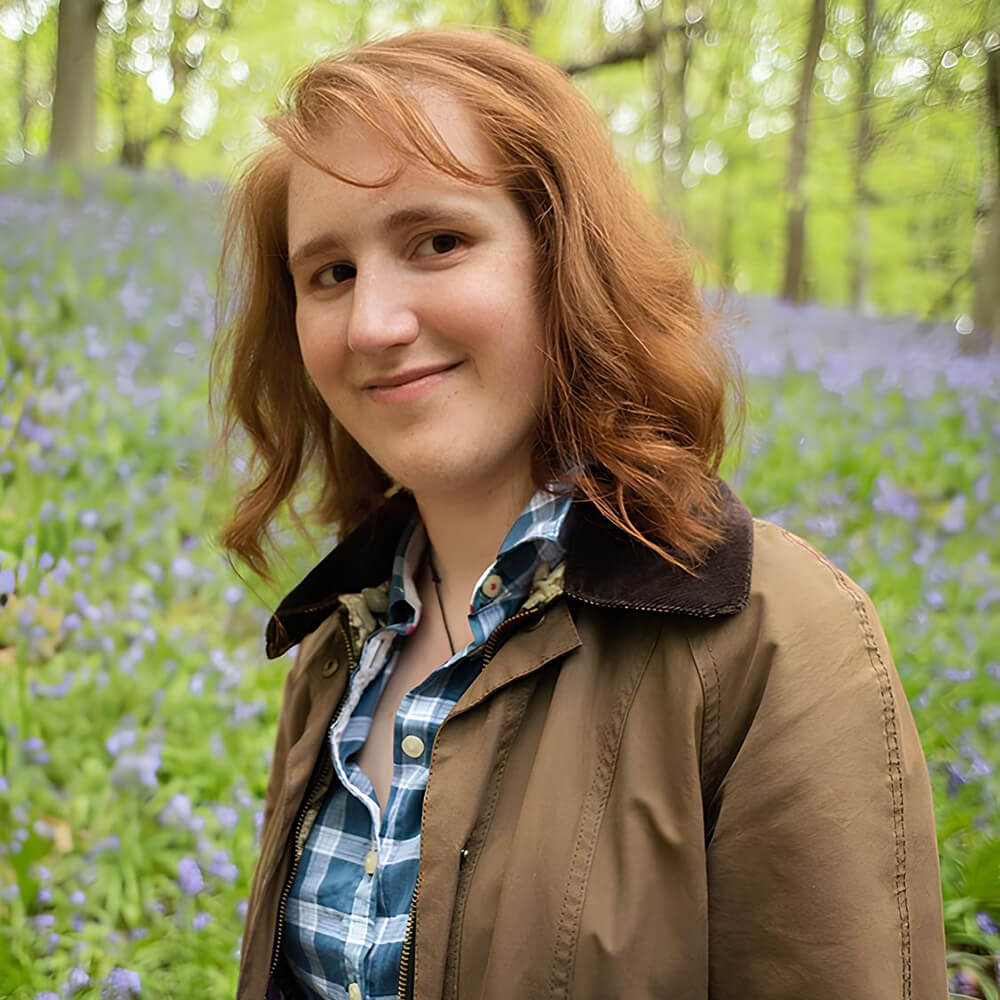
Liesl Rowe is the Copyright Librarian at Leeds Beckett University, with a prior background in acquisitions at other HE institutions. She is responsible for the Copyright Advice service, offering guidance to staff and students on any copyright queries which might arise. Liesl is an Advance HE Fellow and an Officer on the ALT-COOLSIG (Copyright and Online Learning Special Interest Group).
Academic positions
Copyright Librarian
Leeds Beckett University, United Kingdom | 02 March 2026 - presentSenior Digital Library Advisor
Leeds Beckett University, Library and Learning Services, Leeds, United Kingdom | 01 June 2023 - 27 February 2026Assistant Librarian (Acquisitions & Systems)
Arden University, Coventry, United Kingdom | 01 May 2021 - 01 June 2023Resources Assistant
University of West London, Library Services, London, United Kingdom | 01 November 2019 - 01 May 2021
Degrees
B.A (Hons)
University of Oxford, United Kingdom | 01 September 2011 - 01 June 2014MA
King's College London, London, United Kingdom | 01 September 2014 - 01 September 2015
Certifications
Fellow
Advance HE, York, United Kingdom | 01 April 2025 - presentAssociateship of King's College
King's College London, London, United Kingdom | 01 September 2014 - 01 September 2015
Related links
Publications (6)
Sort By:
Featured First:
Search:

 03 December 2025
UKSG Forum 2025 Brighton, UK
03 December 2025
UKSG Forum 2025 Brighton, UK
Systematic reviews are booming, especially in health and education, and they are putting real pressure on interlibrary loan services. These fast-moving projects generate hundreds of requests, raising questions around copyright, licensing, cost and capacity. At Leeds Beckett, we have joined the dots across interlibrary loans, copyright and academic teams to design better workflows and keep services legal, sustainable and researcher friendly. We have also spoken with the CLA to explore how current licences support this work, resulting in new copyright provision for collaborative projects. This session is for anyone involved in resource delivery, licensing, scholarly communication or digital services
15 April 2025
Leeds Beckett Repository
Open Access Alchemy is an interactive card game designed to help academics and research staff navigate the complexities of open-access publishing. Created by librarians at Leeds Beckett University in collaboration with licensing experts from Springer Nature, the game provides an engaging, hands-on approach to understanding different Open Access models, publishing choices, and real-world challenges researchers face in scholarly communication. In this game, players take on the role of wizards competing to publish their arcane research. Throughout a series of rounds, they must strategise, manage publishing costs, and decide where to submit their work while encountering real-world-inspired scenarios that impact their journey. The game encourages discussion, problem-solving, and reflection on the intricacies of publishing open-access, making it a valuable tool for training and workshops. This resource includes the full game pack, with printable cards, game rules, and a facilitator guide to support gameplay, allowing institutions worldwide to use it in their own Open Access training sessions. We would like to extend our thanks to our playtesters for their valuable feedback in shaping Open Access Alchemy: James Alderson; Emma Bates; Sam Breese; Amy Campbell; Liz Mann; Debbie Morris; Jamie Phillips; and the Leeds Beckett Library Advice team. We would also like to thank our reviewers for refining the finished game: Chris Knowles, Bavo Thuwis. Finally, a special thank you to Dextrous, the platform we used to prototype and design our card decks. Your tools were key to bringing the game to life.
12 June 2024
Academic Libraries North Conference 2024: Generative AI and Emerging Technologies St. George’s Centre, Leeds
Much of today's research on AI in Higher Education focuses on academic integrity, whereas we as a library team receive queries on the use of AI in research just as frequently (for example, academics using AI to conduct systematic reviews, storing data, and generating images to use in their research). Our work at Leeds Beckett will be used as a case study that we will talk through, highlighting some of the concerns relating to AI as they pertain to libraries, before running through our best practice guide for using AI. As an interactive element, we will begin our session by asking the audience to provide us with keywords in response to the question “what makes a good AI prompt?”. At the end of the session, once we've covered the topic of prompt engineering, we will return to these initial ideas, and see what users have learned and how their prompts can be improved. We will also cover the copyright implications of using generative AI, and the questions surrounding ownership of AI generated content. Our aim is for users to come away from this session feeling confident in their use of AI, whilst also being mindful of the ethical implications. At Leeds Beckett, our AI policies have been generated through collaboration with different teams across the library, and this toolkit is the culmination of our shared experience.
31 March 2025
Meeting New Challenges in Education Nottingham Trent University Publisher
Since 2022 and the launch of ChatGPT, Leeds Beckett Library have explored different ways to utilise the new technology. Consideration was needed in the face of new challenges brought by AI, necessitating clear guidance and training. Equally, AI presented opportunities to transform existing patterns of working. This paper discusses Leeds Beckett library’s approach through the lens of two projects: as an approach to addressing copyright and AI and in the creation and enhancement of our online content. Together they represent the cautiously optimistic approach towards AI which the library adopted as a whole.
Activities (2)
Sort By:
Featured First:
Search:





