

Leeds Beckett University - City Campus,
Woodhouse Lane,
LS1 3HE
Professor Renee Tobe
Professor
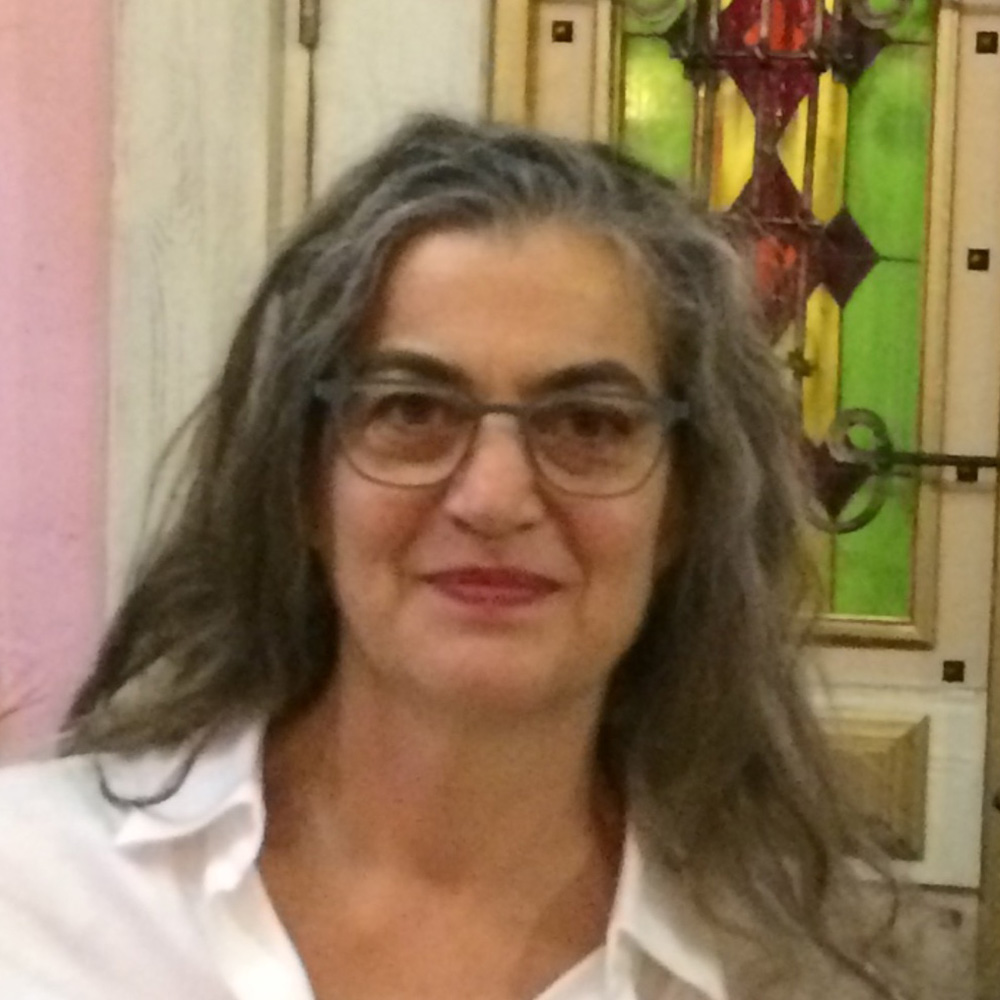
Renee Tobe is Professor of Architecture at the Leeds School of Arts, Leeds Beckett University. She is author of Film, Architecture and Spatial Imagination (Routledge, 2017); editor of Architecture and Justice (Ashgate, 2013) and Humanities in Architectural Design (Routledge 2010).
 0000-0003-2235-702X
About
Renee Tobe is Professor of Architecture at the Leeds School of Arts, Leeds Beckett University. She is author of Film, Architecture and Spatial Imagination (Routledge, 2017); editor of Architecture and Justice (Ashgate, 2013) and Humanities in Architectural Design (Routledge 2010).
Renee Tobe is Professor of Architecture at the Leeds School of Arts, Leeds Beckett University. She is author of Film, Architecture and Spatial Imagination (Routledge, 2017); editor of Architecture and Justice (Ashgate, 2013) and Humanities in Architectural Design (Routledge 2010).
Renee's current work investigates Western and non-Western expressions of architecture and film. She is currently writing Plato for Architects, for the Routledge Thinkers for Architects series to explicate and understand the basis of Western thinking. She is co-editor of Race and Space special edition of Charrette (2023), and Repurposing Places for Social and Environmental Resilience special edition for the Journal of Architecture (2025).
Renee has been invited to lecture in institutions across the UK, Europe, Russia, the USA, Poland, and contributed to conferences internationally. She is an invited speaker at the British Film Institute, the Architectural Association and the Paul Mellon Centre. Her published articles and book chapters include research on the cross-over between architecture and film looking specifically at the dialogue about Modernity and cultural expressions.
Research interests
Renee's research interests interconnect architecture and urban design with literature, film, gender and inclusivity in order to understand and enhance the worlds we build for ourselves whether in our imaginations, in film, as literature or in the built environment. Her publications include research into connections between television and tourism in David Lynch's Twin Peaks, postcolonial identity in the UK films that take place in London in the 1960s, gender in graphic novels, as well as temporal disparities in 20th century films.
Renee has connections in both practice and academia. She trained at the Architectural Association and read for her doctorate at Cambridge University. She received a research fellowship from the Institute for Advanced Studies in the Humanities at Edinburgh University, Paul Mellon Centre Award for Architecture at the British School at Rome. She is currently Research Director for Architecture at LBU. She has been External Examiner at the Canadian University in Cairo, the KTH in Stockholm and across the UK.
Ask Me About
Publications (23)
Sort By:
Featured First:
Search:
 01 March 2022
Charrette8(1):1-13 Association of Architectural Educators
01 March 2022
Charrette8(1):1-13 Association of Architectural Educators
Politike arete; or the Origins of Civic Justice
2013
Architecture and Justice Ashgate
In the dialogue of his name, Protagoras professes to teach arete and in particular politike arete. Plato's exposition of how a skill becomes an excellence through the giving of justice and good sense demonstrates the relation of politike and polis and the relation of justice to both.
The Underbelly of the Architect; Reproducing Classical Idioms of Power and Culture in Rome
01 November 2019
The Routledge Handbook on the Reception of Classical Architecture Routledge
 Authors: Tobe R, Winton TE, Editors: Temple N, Heredia J, Piotrowski A
The opening credits of British filmmaker Peter Greenaway’s 1987 film The Belly of an Architect linger meaningfully over the twin churches in Piazza del Popolo, the city of Rome’s historic vestibule (Figure 32.1). Ignoring other buildings on the piazza, the camera circles round to a large raised belvedere looking down to the space that Giuseppe Valadier completed in 1822. We see briefly the Chigi crest on the Porta Del Popolo, a gate in the Aurelian Wall that rings and defines the historic city. In 1475, Pope Sixtus IV built this gate on the site of the ancient Roman gate, Porta Flaminia, the culmination of the arterial Via Flaminia, bringing visitors from the north. The unfolding scene is the first visual impression of the great city. We see the Egyptian obelisk of Ramses II from Heliopolis that has centred the piazza since 1589, a pointer to the unseen, but more significant, pilgrimage church of Santa Maria del Popolo behind us by the gate; then, framed symmetrically, Santa Maria di Montesanto and Santa Maria dei Miracoli, and the camera stops. This still segment lasts about a minute, a long time in a film. A lengthy sequence lets us note numerous statues and human figures that populate the architecture. Greenaway establishes a visual emphasis on the dome as an analogy for the ‘Belly’ of the title, while introducing the leitmotif of representation. The formal framing opens the film as though the curtains have been parted. As viewers, or tourists, we have arrived. We have begun our exploration of the great landmarks of Rome, their imagined significance for visitors, and their living presence for those who inhabit the city. The film’s narrative captures the human impact in how politics and ethics relate
Film, Architecture and Spatial Imagination
25 August 2016
216 Taylor & Francis
Illustrated by a diverse range of films from different eras and cultures, this book investigates the reciprocity between film and architecture.
The Postcard Grand Tour; or The Self-importance of Being Eugenie Strong
14 April 2023
SAH Montréal 2023 Montréal, Canada
This paper examines a specific postcard collection from the 1910s and 1920s. Like a postcard itself, that arrives with no return address and only a cryptic comment, postmark and stamp to claim its origins, are the postcard collection of archaeologist and art historian Eugenie Strong. Currently uncategorized, the postcards are filed according to geographical location, a colonizer’s map. Some of the postcards are purchased as collections of a particular place, or by a certain artist, while others are individual cards she sent to, or received from correspondents, in the days when postcards were used to make polite requests, or as a thank you note. Often addressed to her at Chatsworth House, where she was resident librarian and curator prior to moving to Rome, the postcards depict the colonial British abroad, a grand tour in postcards, showing Egypt, India as well as France, Spain, and Italy. Her collection opens with Piranesi’s depictions of the monuments of Rome, and ends with the 1911 Ethnographic Exhibition to celebrate 50 years of Italy’s unification, that shows individual pavilions from different regions of Italy for the World’s Fair that took place in the Valle Giulia. These styles of Italian vernacular became blueprints for the new town of Garbatella, to which inhabitants uprooted by Benito Mussolini’s building projects were relocated. Not uncontroversial, Strong admired Mussolini’s desire for the archaeological ‘hygienic liberation’ of Rome’s imperial monuments as well as some of his politics. The British pavilion depicted in one postcard was designed by Edwin Lutyens and is currently the British School at Rome where she was assistant director. Strong’s postcard collection is seductive and entirely subjective, often blurs fact and fiction, and, to some extent transcends history as it colonises people and place, exemplifying the use of architecture as propaganda.
The Humanities in Architectural Design A Contemporary and Historical Perspective
25 February 2010
287 Routledge
Bandyopadhyay S, Lomholt J, Temple N, Tobe ROffering an in-depth consideration of the impact which humanities have had on the processes of architecture and design, this book asks how we can restore the traditional dialogue between intellectual enquiry in the humanities and design ...
Sex Happens; a Phenomenological Reading of the Casual Encounter
2011
Writing the Modern City; Perspectives on Literature and Architecture Endheiver
Authors: Tobe R, Editors: Charley J, Edwards SThis essay on the novels of Millet and Camus invites us to rethink everyday urban spaces as opportunities for casual sexual encounters.
Time and Narrative in Sequential Art; Frank Miller's Elektra: Assassin
01 December 2020
Contemporary Literary Criticism 276 Gale
Authors: Tobe R, Editors: Hunter JWhen we say we are “caught up” in a story or that we “get lost” in a novel, it doesn’t mean we have lost our orientation in traversing the terrain constructed by the writer. We really mean the opposite, that we are so fully and deeply oriented within that world that we have lost, for the moment, our connection with our own. This process is simple in that it takes place quickly, and without our realizing anything has transpired. Yet it is also complex, for if we try to examine the manner by which we accumulate a medley of coded information to follow the story and to position ourselves in a world of someone else’s creation we may easily become mired. In literature, as in architecture or urban situations when narratives or places flow smoothly from one location to the next, they create a seamless exploration of a particular world. Narrative breaks, temporal shifts, or gaps in circulation on the other hand, make us look up and take account of where we are going and where we might have arrived. We may find ourselves in an unusual space or situation, a place not yet encountered, that somehow seems strangely familiar and we “recognize” it. Somehow, no matter how strange, we “know” how to find our way. Elektra: Assassin, a graphic novel scripted by Frank Miller and illustrated by Bill Sienkiewicz provides an excellent example for exploration of these principles that apply not only to textual media in general and to sequential art in particular, but also architecture and the city (Miller, 1986).
Port Bou and Two Grains of Wheat: In Remembrance of Walter Benjamin
December 2009
Walter Benjamin and Architecture Routledge
Authors: Tobe R, Editors: Hartoonian GWalter Benjamin's description of fragments, not as objects but as vehicles that invite us to enter into a creative mode of imaginative participation, marks a path for discourse that lends to a phenomenological description of Dani Karavan's monument for Benjamin in Port Bou. This small town at the border of France and Spain, where Benjamin ended his life, is the selling for his memorial. Our journey touches on Benjamin's friendship and written correspondence with Gersham Scholem. as well as collecting and its relation to creation and creativity. At Port Bou we follow Benjamin's advice and ponder, linger, collecting information.
Where We Are Now
01 July 2006
Robert Maciejuk; Day for Night Zacheta Gallery
Authors: Tobe R, Editors: Switek GCritical review of Polish artist Robert Maciejuk
Both Frightening and Familiar; David Lynch's Twin Peaks and the North American Suburb
July 2003
Visual Culture and Tourism Berg
Authors: Tobe R, Editors: Lubbren N, Crouch DFrom postcards and paintings to photography and film, tourism and visual culture have a long-standing history of mutual entanglement. For centuries art has inspired many an intrepid traveller, and tourism provides an insatiable market for indigenous art, authentic or otherwise. This book explores the complex association between tourism and visual culture throughout history and across cultures. How has tourism been linked to images of colonial expansion? Why are we so intrigued by lost places, such as Tutankhamun's tomb or Machu Picchu, South Americas lost city of the Incas? What is the relationship between art, tourism and landscape preference? What role did commercial tourist photographers play in the imagination of Victorian Britain? Drawing upon examples from across the globe, this exciting new contribution to a popular subject illustrates how tourism and visual culture intersect with one another and in the process become contested ground.
The Inhuman One: the Mythology of Architect as Réalisateur
July 2007
Architecture and Authorship Black Dog Publishing
Authors: Tobe R, Editors: Grillner K, Anstey T, Hughes RInnovative in many ways, including its depiction of interactive electronic media transmission, L'Inhumaine, directed by Marcel L'Herbier and released in 1924, was the first film to display Modernist architecture through two sets designed by Robert Mallet Stevens. Although the narrative was taken from a novel written by the self-invented writer and sometime painter Pierre Mac Orlan, the real author is Modernism itself.
The Ladies Cabinet
1990
Disrupted Borders; an intervention in definition of boundaries Rivers Oram Press
Authors: Tobe R, Andersen E, Editors: Gupta S, Boffin TDisrupted Borders reflects 'otherness', and attempts to escape from the European rhetoric of modernism. It endorses the plurality of art-making practices and proposes a 'new internationalism'.
In Memory of Two Friends
1990
Ecstatic Antibodies; Resisting the AIDS Mythology Rivers Oram
Authors: Tobe R, Andersen E, Editors: Gupta S, Boffin TThis book and the exhibition launched with it represent a powerful exploration in both image and text of the impact of the AIDS crisis. Different voices reveal the profound inadequacies in our attitudes to disease. The contributors disrupt the politically-laden mythology of HIV and AIDS, and affirm the persistence of love and desire in the face of death. More than an interruption to personal life, AIDS has stimulated an eruption in creative life. By wresting control of the imagery of AIDS, Ecstatic Antibodies demystifies icons like the nation and the family and illuminates attitudes to gender, sexuality, radical and moral diversity.
Pleasure in Knowing; Pleasure in Not Knowing
September 2014
Architecture and Culture4(2):281-291 Taylor and Francis Group
This paper looks at Alain Resnais' Last Year in Marienbad (1961) and Chris Marker's La Jetée (1962). It rests on a premise of film as a constructed, ordered world that answers only to itself. Both films address particular questions about time. It adopts from Jean-Luc Nancy descriptions of how film touches us, and the careful orchestration of the pleasure that is jouissance in being within this moment, know knowing where we are going.
The Situation of Universities and Cities
April 2014
Architecture and Situation, Vol 6, Spring 2014
Universities are places of production - producing degrees, intelligence, and even good citizens in an increasingly business-oriented model. When Plato's Academy becomes a 'knowledge factory' that must turn a profit, architecture becomes a key component of design, in urbanicity building fabric, and internal layout. There is a tension between investigations of how architecture relates to learning and decisions made by which universities can generate incomes through productive spaces.
Ascendance and Descent: Making Order from Chaos at Port Bou
2007
MADE vol 4
This paper describes and discusses Dani Karavan's monument for writer and cultural critic Walter Benjamin at Port Bou; how it is made, and how the fabric and ideas relate to its experience.
Plato and Hegel stay home
March 2007
Architectural Research Quarterly11(1):53-62 Liverpool University Press
As we watch a film, we let filmmakers take us by the hand and tell us a story until they lead us into a world visually constructed to captivate us for a specific amount of time. The worst thing a filmmaker can do is not to terrify us, or fool us with special effects, but to rob us of our illusion that what we are seeing is ‘true’ even if just for now. Through the mimetic power of film, we, the viewer, picture the film set as if it is real architecture, and assemble the walls and floors we see into an architectural whole. This paper focuses on what we see ‘behind’ the screen rather than the cinematic experience itself. The premise is that by examining the nature of filmic ‘reality’ we will be helped to understand architectural form and order.
Modernist Noir
December 2007
Perspectives (Ontario Association of Architects)
Why do villains in films from Dr Mabuse and Fritz Lang, to John Lautner, often get the best designed modernist lair complete with up to date technology?
Architectural Grounding in Miller’s Elektra: Temporality and Spatiality in the Graphic Novel
May 2021
ImageTexT : Interdisciplinary Comics Studies vol 3 issue 1 University of Florida
When we say we are “caught up” in a story or that we “get lost” in a novel, it doesn’t mean we have lost our orientation in traversing the terrain constructed by the writer. We really mean the opposite, that we are so fully and deeply oriented within that world that we have lost, for the moment, our connection with our own. This process is simple in that it takes place quickly, and without our realizing anything has transpired. Yet it is also complex, for if we try to examine the manner by which we accumulate a medley of coded information to follow the story and to position ourselves in a world of someone else’s creation we may easily become mired.
Port Bou and Two Grains of Wheat:
April 2005
Architectural Theory Review10(1):125-135 Informa UK Limited
Walter Benjamin's description of fragments, not as objects but as vehicles that invite us to enter into a creative mode of imaginative participation, marks a path for discourse that lends to a phenomenological description of Dani Karavan's monument for Benjamin in Port Bou. This small town at the border of France and Spain, where Benjamin ended his life, is the selling for his memorial. Our journey touches on Benjamin's friendship and written correspondence with Gersham Scholem. as well as collecting and its relation to creation and creativity. At Port Bou we follow Benjamin's advice and ponder, linger, collecting information.
Architecture and Justice Judicial Meanings in the Public Realm
15 April 2016
316 Routledge
Simon JBringing together leading scholars in the fields of criminology, international law, philosophy and architectural history and theory, this book examines the interrelationships between architecture and justice, highlighting the provocative ...
Conversations on type, architecture and urbanism
17 November 2018
The Journal of Architecture23(7-8):1301-1315 Informa UK Limited
Borsi K, Finney T, Philippou PProfessional activities
Renée is a member of the RIBA and the Society for Architectural Historians as well as DOCOMOMO. She is an active member of the Neoplatonism Seminars at the Warburg Institute.
Activities (7)
Sort By:
Featured First:
Search:
Aesthetica Short Film Festival
Meet the Producers; Making Ideas a Reality A behind the scenes look at how vision becomes reality. Industry profesionals include: Nick BRown (Neal Street Productions); Joy Gharoro-Akpojotor (Joi Productions) and Cassandra Sisgaard (Jeva Films)
BBC London Radio
Who Owns History
Charrette Journal of Architectural Education
Journal of Architecture; Repurposing Places for Social and Environmental Resilience
Creating an Urban Pattern From Opposites, Recollection, Similarity, Harmony, and Composites
Current teaching
Renée's teaching focuses on Social Justice; Architecture Mediated Through Film; Architecture's Representational Capacity and Global Histories.
Current PhDs she is supervising include: Queer Architecture; Social Justice and Cities; Action Based Learning in Refugee Camps.
Past PhDs supervised include: Design for Dementia; Acute Care Urban Hospital Design; Sustainable Architecture in Yazd, Iran
She currently welcomes PhDs that question global histories through social justice expressed in the built environment; or examine architecture in film as philosophical myth expressing cultural norms whether in Hollywood films of from the Global South.
Grants (8)
Sort By:
Featured First:
Search:
AHRC UKRI PhD Consortia Block Grant
Cambridge Commonwealth Grant for PhD
Underbelly of an Architect: Peter Greenaway in Rome
Film Architecture and Spatial Imagination
Speeding into the unfixed and moveable future in neo‐Tokyo
Brayford Pool Enabling Project
PhD Doctoral Research Funding
Research Fellowship, IASH
News & Blog Posts
Welcome to our new Professor of Architecture





