

Leeds Beckett University - City Campus,
Woodhouse Lane,
LS1 3HE
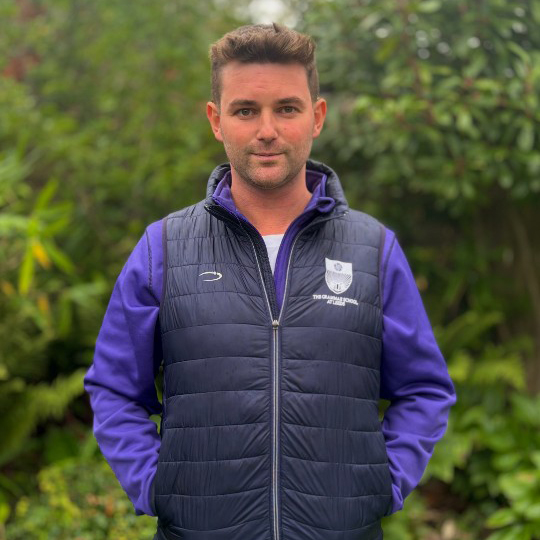
Thomas Hawkins
KTP Associate - Physical Literacy Lead
Thomas Hawkins is a doctoral researcher at Leeds Beckett University, specialising in motor learning and its application within physical education. His research focuses on enhancing pedagogical practice to improve students’ movement competence and wellbeing, bridging the gap between theory and real-world teaching.
Thomas is currently leading a Knowledge Transfer Partnership (KTP) between Leeds Beckett University and The Grammar School at Leeds (GSAL). In collaboration with the Centre for Child and Adolescent Physical Literacy (CAPL), the project is developing and delivering a research-informed physical literacy programme designed to embed movement into everyday school life—helping pupils build the confidence, competence, and motivation to be active for life.
He has contributed several peer-reviewed articles in the fields of motor learning, skill acquisition, and coaching behaviours, with a focus on how instructional strategies such as attentional focus can influence movement organisation and performance. His Masters by Research, also completed at Leeds Beckett University, included a comprehensive systematic review on the influence of attentional focus across varied skills, sports, and movement contexts.
 0009-0008-6480-1196
About
Thomas Hawkins is a doctoral researcher at Leeds Beckett University, specialising in motor learning and its application within physical education. His research focuses on enhancing pedagogical practice to improve students’ movement competence and wellbeing, bridging the gap between theory and real-world teaching.
Thomas is currently leading a Knowledge Transfer Partnership (KTP) between Leeds Beckett University and The Grammar School at Leeds (GSAL). In collaboration with the Centre for Child and Adolescent Physical Literacy (CAPL), the project is developing and delivering a research-informed physical literacy programme designed to embed movement into everyday school life—helping pupils build the confidence, competence, and motivation to be active for life.
He has contributed several peer-reviewed articles in the fields of motor learning, skill acquisition, and coaching behaviours, with a focus on how instructional strategies such as attentional focus can influence movement organisation and performance. His Masters by Research, also completed at Leeds Beckett University, included a comprehensive systematic review on the influence of attentional focus across varied skills, sports, and movement contexts.
Thomas Hawkins is a doctoral researcher at Leeds Beckett University, specialising in motor learning and its application within physical education. His research focuses on enhancing pedagogical practice to improve students’ movement competence and wellbeing, bridging the gap between theory and real-world teaching.
Thomas is currently leading a Knowledge Transfer Partnership (KTP)—funded by UK Research and Innovation (UKRI)—between Leeds Beckett University and The Grammar School at Leeds (GSAL). In collaboration with the Centre for Child and Adolescent Physical Literacy (CAPL), the project is developing and delivering a research-informed physical literacy programme designed to embed movement into everyday school life—helping pupils build the confidence, competence, and motivation to be active for life.
He has contributed several peer-reviewed articles in the fields of motor learning, skill acquisition, and coaching behaviours, with a focus on how instructional strategies—such as attentional focus—can influence movement organisation and performance. His Masters by Research, also completed at Leeds Beckett, included a comprehensive systematic review on the influence of attentional focus across varied skills, sports, and movement contexts.
Thomas also holds a First Class Honours degree in Sport Coaching from Leeds Beckett University, where he was awarded the Dean’s Prize for Outstanding Academic Achievement.
In addition to his research, Thomas has taught on undergraduate modules in pedagogic coaching practice and the sport curriculum, supporting the development of future educators and coaches through evidence-based and applied approaches.
He is passionate about shaping research that delivers real-world impact. Through close collaboration with educators, students, and parents, he aims to support the development of inclusive, movement-rich learning environments that promote both physical and mental wellbeing—giving young people a lasting passport for life.
Academic positions
Researcher
Leeds Beckett University, Carnegie School of Sport, Leeds, United Kingdom | 04 August 2025 - presentPart-Time Lecturer
Leeds Beckett University, Carnegie School of Sport, Leeds, United Kingdom | 02 September 2019 - 06 September 2021
Degrees
PhD Skill Acquistion
Leeds Beckett University, Leeds, United Kingdom | 01 September 2022 - presentMasters by Research Skill Acquisition and Motor Learning
Leeds Beckett University, Leeds, United Kingdom | 03 September 2018 - 01 September 2020BSc (Hons) Sport Coaching
Leeds Beckett University, Leeds, United Kingdom | 01 September 2015 - 03 September 2018
Related links
Research interests
Thomas’s research interests lie at the intersection of motor learning, skill acquisition, and physical literacy, with a particular focus on how pedagogical practice in physical education can be optimised to enhance both movement competence and pupil wellbeing.
He is especially interested in how instructional strategies, such as attentional focus and coaching behaviours, influence the organisation of movement and skill development across a range of physical and sporting contexts.
Thomas is also passionate about bridging the gap between theory and practice, ensuring that research evidence informs the design and delivery of inclusive, effective, and meaningful learning experiences in PE, coaching, and wider educational settings.
His current work explores the development and implementation of whole-school physical literacy interventions, and their potential to support lifelong engagement in physical activity, academic performance, and youth mental health.
Publications (5)
Sort By:
Featured First:
Search:
Optimising Physical Education: The Application of OPTIMAL Theory in Practice
 20 May 2025
International Journal of Sport Psychology
20 May 2025
International Journal of Sport Psychology
 Hawkins T, Simpson T, Singh H, Marchant D
The development of motor competence is critical for a child’s holistic development and engagement in physical activity across the lifespan. As physical education becomes more marginalised in school settings, efforts are needed to enhance the quality of movement skill learning environments. One such approach is through the optimisation of task design, instruction and feedback which engages learners in key attentional (external focus of attention) and motivational (enhanced expectancies and autonomy support) processes. This paper aims to provide practical examples of how these key attentional and motivational factors can be applied by teachers in physical education lessons to optimise the learning of motor skills and motivation to create a physically literate learner.
20 May 2025
International Journal of Sport Psychology1-30 Edizioni Luigi Pozzi srl
Simpson T, Hawkins T, Singh H, Marchant DThe development of motor competence is critical for a child’s holistic development and engagement in physical activity across the lifespan. As physical education becomes more marginalised in school settings, efforts are needed to enhance the quality of movement skill learning environments. One such approach is through the optimisation of task design, instruction and feedback which engages learners in key attentional (external focus of attention) and motivational (enhanced expectancies and autonomy support) processes. This paper aims to provide practical examples of how these key attentional and motivational factors can be applied by teachers in physical education lessons to optimise the learning of motor skills and motivation to create a physically literate learner.
20 May 2025
International Journal of Sport Psychology Edizioni Luigi Pozzi srl
Simpson T, Hawkins T, Singh H, Marchant DThe development of motor competence is critical for a child’s holistic development and engagement in physical activity across the lifespan. As physical education becomes more marginalised in school settings, efforts are needed to enhance the quality of movement skill learning environments. One such approach is through the optimisation of task design, instruction and feedback which engages learners in key attentional (external focus of attention) and motivational (enhanced expectancies and autonomy support) processes. This paper aims to provide practical examples of how these key attentional and motivational factors can be applied by teachers in physical education lessons to optimise the learning of motor skills and motivation to create a physically literate learner.
31 December 2021
International Journal of Sports Science and Coaching16(6):1387-1389 SAGE Publications
The stimulus article, “Golf swing technician Jim Christine: Bridging the gap between the science of the golf swing and the art of golf coaching”, and the accompanying commentaries present some key issues in golf coaching, especially coach development, technology, coaching methods, and critical thinking. The first two commentaries provide insight about Jim Christine’s development as a coach. International golf coach Peter Green discusses the legendary John Jacobs, who Jim accepted an invitation from to shadow him at one of his golf schools; and John Stirling, who Jim had coaching from on his own golf game. PGA Master Professional Luther Blacklock discusses Alex Hay, who also coached Jim. Both Stirling and Hay were pioneers in the training programme of the Professional Golfers’ Association (PGA) of Great Britain and Ireland in which Jim became highly influential as an author of training resources and as a tutor. There are commentaries from three distinguished members of the PGA of America, the world’s largest working sports organisation: David Wright, John Callahan and Eric Alpenfels. John Callahan shares how he took up opportunities to shadow leading golf coaches such as TJ Tomasi, Craig Shankland and Paul Runyan during his PGA apprenticeship under Frank Cardi. Callahan advocates the use of launch monitors as a technological aid, more staunchly so than Jim Christine who is aware of the limitations in the algorithms involved in providing the output from a radar device like TrackMan for measuring impact factors. Chris Bertram refers to his own empirical research on the use of another technological aid, video feedback, to indicate that “just because technical information is readily available, it does not mean that more information is necessarily serving the interests of the student” (p. 37). Drawing on his doctoral research on operant conditioning, David Wright discusses backward chaining, which is one of the coaching methods used by Jim Christine. Eric Alpenfels discusses Jim’s use of coaching methods in terms of “focus of attention – internal/external swing cues” (p. 33). Researchers Thomas Hawkins et al., suggest that “[the clock analogy], one of Christine’s favoured coaching tools may result in performance and learning benefits [through external focus of attention] because it allows the body to organise movement better than it would if conscious control was either requested or triggered by an internally focused coaching instruction” (p. 35). In a similar vein, Nicky Lumb, a PGA coach “who specialises in golf practice management, skill development and peak performance” (p. 40), indicates that several of Jim’s coaching tools give the golfer an external focus of attention. There is overlap in what Nicky does with Edward Coughlan, a sports scientist whose “main job for players involves asking questions about how they practice, what they practice and inevitably, whether their practice transfers to the competition arena” (p. 42). While two PGA of Great Britain and Ireland professionals, Will Shaw and Gordon Morrison discuss some of Jim’s coaching methods from an Information-Processing perspective, a third one – Noel Rousseau – advocates an Ecological Dynamics/Constraints-led Approach. Rousseau presents the case that “Jim’s coaching methods are staunchly embedded in the Information Processing camp yet he simultaneously highlights some of the shortcoming of coaching this way” (p. 50), especially on the matter of sloping lies (p. 51). Jim describes himself as a “swing technician” (p. 17). Researchers Liam Thomas et al. discuss the notion of a ‘model golf swing’ or ‘technical blue print’ and highlight the challenge of distinguishing between ‘technical faults’ and “the inherent variability both within and between individuals in response to changes in constraints” (p. 54). Tour pro coach, Hugh Marr argues, “Every coach has a picture in their head of what a great swing looks like. It’s not the model that makes coaches great, it’s the understanding of what George Gankas calls ‘match-ups’ – if a player displays one particular swing characteristic, they need to match it with another swing characteristic that complements it” (p. 57). The final two commentaries, by research professor David Grecic and performance coach Jon Roy, both emphasize the development of critical thinking in coaches, with the latter arguing that “Jim’s critical faculties comprise dialectics, scepticism, and innovation” (p. 63).
30 April 2025
Journal of Motor Learning and Development13(2):1-27 Human Kinetics
The relationship between focus of attention instructions and motor performance is a topic of significant research interest. It is widely accepted that attending to the mechanics of the movement when performing a motor task (internal focus) yields poorer performance and less effective movement organisation than attending to the movement outcome (external focus). Specifically, an external focus is suspected to promote more flexibility in the motor system, inducing more effective muscular activity and movement kinematics, which are mechanisms directly responsible for organisation of the resulting movements. However, no review has systematically assessed the influence focus of attention instructions have on muscular activity and movement kinematics. The purpose of this systematic review was to examine evidence on the effect that focus of attention instructions have on the underpinning mechanisms of movement organisation. Adhering to the Preferred Reporting Items for Systematic Reviews and Meta-Analysis (PRISMA) guidelines, a comprehensive electronic literature search yielded 36 research studies. Using a narrative methodological approach, the findings were thematically analysed and synthesised. Generally, external focus of attention instructions resulted in muscular activity and movement kinematic profiles that reflect more effective movement organisation than those resulting from the provision of internal focus instructions; thus, supporting a central tenet of the constrained action hypothesis.
Current teaching
Thomas has contributed to undergraduate teaching within the Sport Coaching programme at Leeds Beckett University, with a focus on pedagogic coaching practice and the sport curriculum. His teaching approach emphasises the practical application of research-informed pedagogy, aiming to support students in developing effective, inclusive, and reflective coaching practices.
In addition to his teaching, Thomas has played a key role in mentoring over 80 second- and third-year Sport Coaching students as they delivered physical education programmes across more than 25 primary and secondary schools in the Leeds area. As part of this role, he worked closely with both students and local school partners to ensure high-quality learning experiences for pupils and meaningful professional development for aspiring coaches.
A core aspect of his mentoring involved observing student coaching sessions, offering constructive, evidence-based feedback on their delivery, and supporting their understanding and application of pedagogic theory in real-world contexts. This work reflects Thomas’s commitment to preparing the next generation of educators and practitioners through both academic support and hands-on professional guidance.
Impact
Thomas’s research and applied work are grounded in improving real-world outcomes in education, with a particular focus on physical literacy, pedagogical practice, and youth wellbeing. Through his role in the Knowledge Transfer Partnership (KTP) with The Grammar School at Leeds, he is co-developing and delivering a whole-school, research-informed physical literacy programme designed to enhance pupils’ physical competence, confidence, and mental wellbeing.
This programme is being implemented collaboratively with school staff, students, and parents, embedding physical literacy into the curriculum in a sustainable and measurable way. The work is already generating positive changes within GSAL and has been designed to serve as a scalable model for regional and national reform in physical literacy.
A key aim of the KTP is to extend the impact of this work beyond a single institution, contributing to wider conversations around curriculum reform and the commercialisation of effective physical literacy practices that can be adopted by other schools and educational organisations across the UK.
Beyond the immediate project, Thomas engages actively with the local education community, mentoring over 80 undergraduate Sport Coaching students delivering PE-based curricula in 25+ primary and secondary schools across Leeds. This work supports both student development and community-level improvements in PE delivery and children’s physical activity experiences.
Thomas’s work exemplifies research-led, practitioner-informed innovation that delivers tangible benefits to education, health, and community wellbeing, while also contributing to national conversations around educational policy and practice.





