
Leeds Beckett University - City Campus,
Woodhouse Lane,
LS1 3HE

Welcome to our new Director of Research for Law
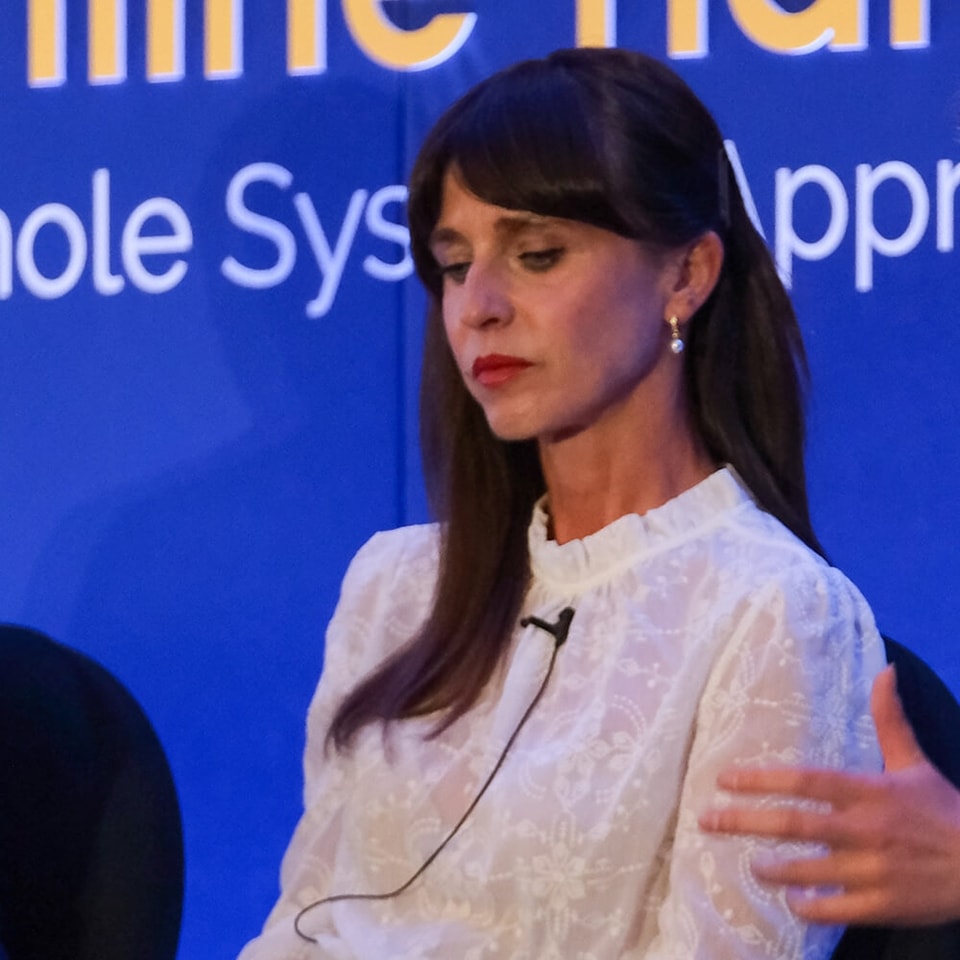
In January 2025, we welcomed Rachel Armitage as our new Professor of Law and Social Justice and Director of Research in Leeds Law School. We met up with Professor Armitage to find out all about her research understanding burglars’ decision-making and how the design of the built environment can affect this; and working with MPs and national agencies, lobbying to improve support for the children and families of people under investigation or convicted for technology-assisted child sexual abuse – and her aspirations for growing our research culture here at LBU.

Welcome Rachel, Can you tell us about your career journey to date and what attracted you to LBU and the Leeds Law School?
My career journey has been very much research focused. I began working in academia as a Research Assistant (in 1998), and with the exception of a three-year break working for the charity Nacro, I have progressed as a Research Fellow, Senior Research Fellow, Reader and then Professor (in 2014). Research is my passion, in particular, utilising research to lobby for change - be that in policy or practice, to improve people’s lives. Moving to LBU really appealed to this passion; the focus on making a difference to communities, people and organisations and the engagement with the local community really appeals to me. Leeds Law School has a wonderful community of scholars, conducting impactful research, and I am really looking forward to helping to build the research culture within the School.
As our new Director of Research for Law, what do you see as our biggest challenges and opportunities in this field, and what are your priorities for your first year in the role?
I feel extremely lucky to be working with such a passionate and talented team of scholars. There are huge opportunities to build research capacity within the Law School, to create space for research and to foster a community where research is a key part of everyone’s role. I am building on a strong research culture, so the challenge is more about consolidating, nurturing and maximising opportunities, and ensuring that we co-create a vision for research that everybody is excited to be part of.
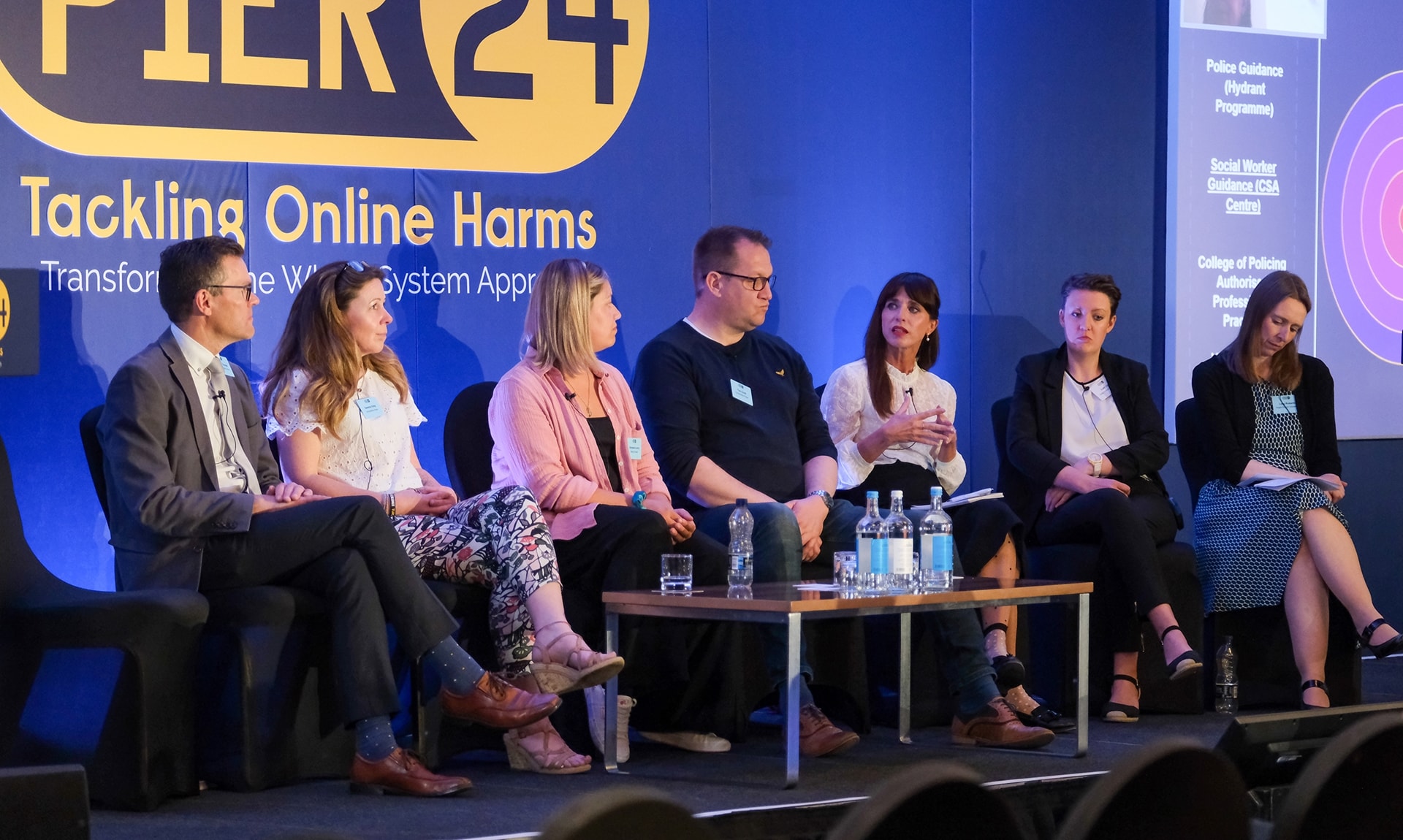
Professor Armitage speaking at the 2024 PIER conference on tackling online harms
Can you tell us about the focus of your own research, and one/some of your current projects?
My own research falls largely into two areas. The first focuses on the role of design in influencing crime and how places and spaces can be designed to minimise opportunities for crime and anti-social behaviour and facilitate and encourage pro-social behaviour.
I am currently working on two projects within this sphere. The first, with West Yorkshire Police, utilises gaming to understand offender decision making when considering properties to target for acquisitive crime (burglary, vehicle crime). We are building on the innovative work conducted by Prof. Claire Nee and colleagues, by engaging prolific offenders within three prison settings in virtual reality-based think aloud methods to elicit information on what attracts and deters them within the built environment.
Also focused on the built environment, I am in the dissemination phase of a national project to evaluate the impact of Sanctuary housing schemes. Sanctuary schemes aim to offer victims of domestic violence/abuse, the opportunity, where it is suitable and appropriate, to remain in their own home. This evaluation has collected data from over 70 individuals at a policy and practice level, as a means of ascertaining how the schemes are being delivered and where improvements need to be made. The Domestic Abuse Act 2021 places a duty on local authorities to provide accommodation-based support to victims and their children. Sanctuary is one option to provide secure accommodation while maintaining stability within their community.
I am also working on a national evaluation of the impact of project CARA (Cautioning and Relationship Abuse) on domestic violence and abuse offending. This is an early intervention that offers a conditional caution to first time, low risk offenders. The project is funded by the National Institute for Health and Care Research (NIHR) and will conclude in September this year. This is a collaborative project with the Hampton Trust and led by the University of Southampton.
I am also finalising a project for the Nuffield Foundation (RDAC – Re-thinking Domestic Abuse and Child Protection) that has investigated the nature of domestic abuse and violence in Child Protection contexts, supporting the development of effective new responses. This project includes partners from Research in Practice and Safe Lives and is led by the University of Sheffield.
What are your ambitions for your research - and for Law research at LBU - over the next 5 years?
My research plans at LBU include continuing to push for change in supporting secondary victims of technology-assisted child sexual abuse. My research has identified the harms (psychological, social, financial and physical) experienced by families when someone is suspected/convicted of these offences. There are currently around 1000 arrests a month in England and Wales for Child Sexual Abuse Material (CSAM) offences – approximately 35% of these warrants have children living at home at the time of the warrant. This amounts to 10 families a day that will experience the warrant and what families describe as decades long ‘aftershocks’.
The next phase of the research is to build an evidence base to extend the definition of ‘victim status’ to these children. This will allow greater communication on the investigation and criminal justice outcomes, access to therapeutic support and trauma informed educational support. I am working with Sarah Champion MP as well as key agencies such as National Police Chief’s Council, Operation Hydrant, the Centre for Expertise in Child Sexual Abuse, and many frontline charities, to lobby to improve provision for these children. Colleagues within the Law School are already helping to support this.
I am looking forward to building links with other academics across the University, particularly those working within criminology, psychology and the built environment.

What has been your proudest moment of your career so far?
My proudest moment has been founding the Leeds-based charity Talking Forward, which supports families when someone is under investigation for/convicted of technology-assisted child sexual abuse. Having watched families turned away by ‘victim-based’ charities because they are not technically victims of the offence, but seeing how every part of their life has been impacted, we decided to establish a peer-support charity to ensure that families are never alone in this trauma.
We currently support over 300 individuals and run four groups per month. In calling for children of child sexual abuse offenders to be recognised as direct victims, (as an extension of the definition of victim status in the Victim and Prisoners Bill), Sarah Champion MP spoke of the work we are doing to support families and called for a recognition of the harms experienced by these children.
What inspired you to pursue a career in Law - and in particular your research around crime prevention and domestic violence?
My research has always been inspired by a passion to make changes on the ground. One area of my research – the role that the design of the built environment can play in influencing criminal, and pro-social behaviour, came from an early experience of being burgled and wondering what influenced the offender to pick my house.
When I started my research career, I was drawn to finding out what aspects of design attract and deter criminals, and more importantly, how we can influence those planning, designing, building and maintaining the built environment, to listen to (and learn from) those who commit these crimes.
My second area of research interest has also been influenced by my passion for change, and to improve the lives of those experiencing the secondary impacts of technology assisted child sexual abuse. As a Trustee for the Marie Collins Foundation charity that supports the children (and their families) who have been the direct victims of online child sexual abuse, I was approached by a woman whose husband, and father of her children, had been arrested for accessing child abuse images. She wanted psychological support and advice on how to support her children.
Knowing that we only supported the ‘direct victims’, I looked for other charities and support services and found nothing. Following that call, I applied for some funding to establish the extent to which families of those suspected/convicted of online child sexual abuse offending were impacted – socially, financially, psychologically and physically.
The research highlighted how 70% of the family members we surveyed reported symptoms that were indicative of a diagnosis of post-traumatic stress; 65% reporting symptom levels that are sufficient to suppress their immune system function.
For me, it is not enough to know how much this experience is impacting families, we have to continue to pursue change in policy and practice. We are making great progress in seeing these changes, but we have a lot more to do!
And can you tell us something about yourself that we may not know?
I have a 400 day streak on Duo Lingo! Trying (and mostly failing) to learn Spanish.

Professor Rachel Armitage
Rachel's research is inter-disciplinary in nature, be that the interface between design and offender decision making; or the multi-agency approaches to reducing the impacts of online child sexual abuse and the devastation this brings to the families of those involved.





