

Conference
Leeds Beckett University - City Campus,
Woodhouse Lane,
LS1 3HE

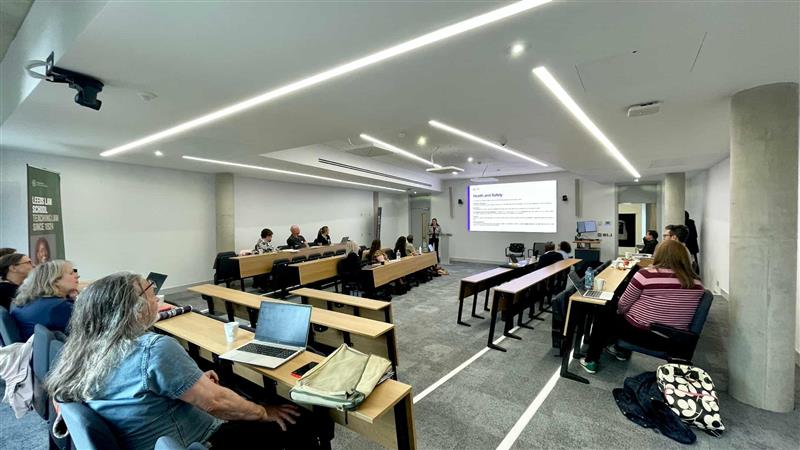
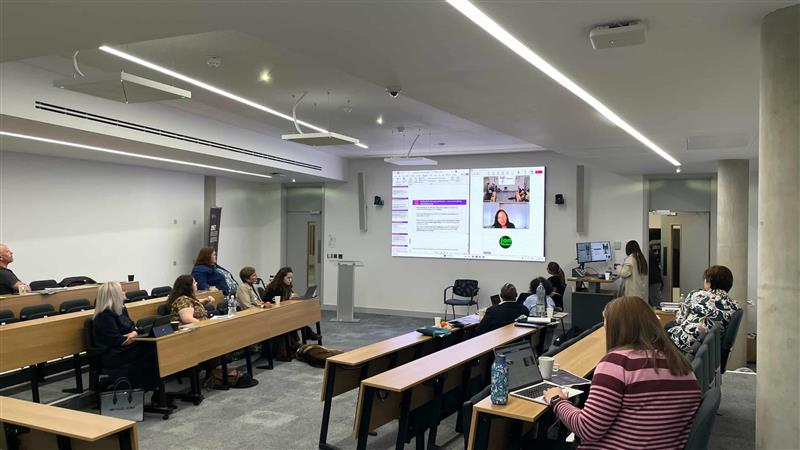
This conference aims to pave to breakthrough research on how to advance ‘inclusive legal education’ by examining what should be envisaged towards increasing the inclusion of disabled students into law schools.
The conference concerns the achievement of 'inclusive legal education' for disabled students. It addresses the following questions, amongst others:
- What distinct features do law schools possess that may hinder the participation of disabled students in the learning process?
- What are the narratives and assumptions underlying the definition of skills required to succeed in the legal profession?
- How is the issue of disability represented in the various modules and how to develop a view that is rooted in the social model of disability?
- How can the provision of legal education cater better to the wider range of human differences?
- How to transform the law schools into more inclusive, equitable educational environments?
- How to provide disabled students in due course with gateways to the legal profession?
This event will cover three distinct yet interrelated themes.
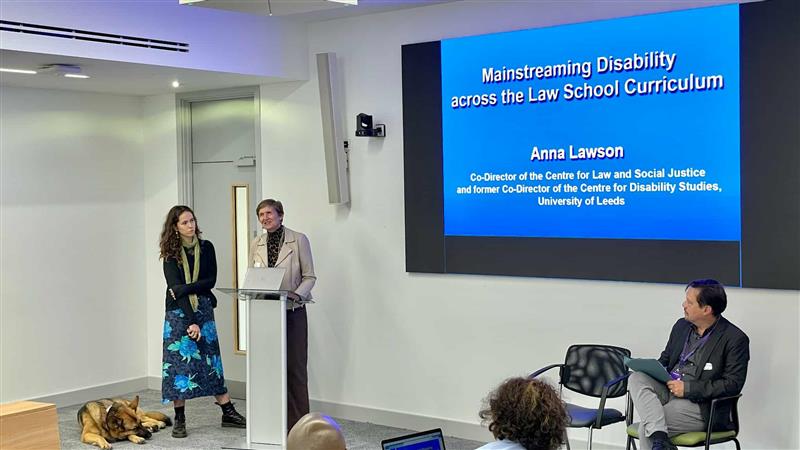
The first theme relates to how the issue of disability is presented across the various modules. It considers the approach to disability taken by the Convention on the Rights of Persons with Disabilities (CRPD) and its benefit for other modules when questions relating to disability surface.
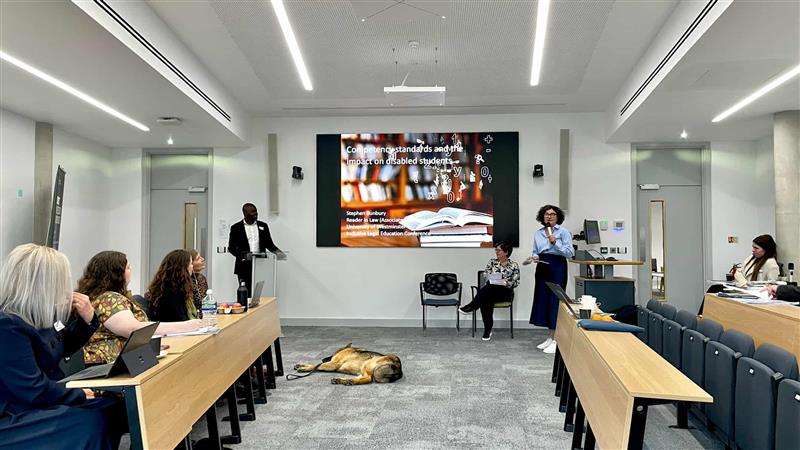
The second theme explores the kind of institutional practices that are susceptible to create hurdles for disabled students. It considers the constraints imposed that might not necessarily be an integral part of the competency standards paying particular attention to the Solicitors Qualifying Examination (SQE).
The third theme concerns ways to streamline the transition of disabled students to employment. It looks at action to be taken so that these students do not feel to ‘fall off the cliff’ when they enter the legal profession.
This conference has been organised by Gauthier de Beco Professor of Law on behalf of the Leeds Law School and funded by the Modern Law Review (MLR) Seminar Funding.



Speakers
The conference will consist of presentations on the three afore-mentioned themes by the following three speakers who have offered scholarships on the subject:
- Anna Lawson, Professor of Law at the University of Leeds
- Stephen Bunbury, Associate Professor at the University of Westminster
- Debbie Foster, Professor of Law at the University of Cardiff
Each presentation will have a respondent followed by time for questions and answers:
- Gauthier de Beco, Professor of Law at Leeds Beckett University
- Elisabeth Griffiths, Associate Professor at Northumbria University
- Lizzie Hardy, Associate at Eversheds Sutherland
The closing remarks for this event will be from Svetlana Kotova
Anna Lawson if Professor of Law at the University of Leeds. As somebody who is blind, her academic interest in disability and law is rooted in her experience of life as a disabled person. Anna holds membership, trustee and advisory positions in a range of local, national and international disabled people’s organisations. She also regularly advises policy-makers, governments and intergovernmental organisations and is a long-standing advisor to the Equality and Human Rights Commission.
Anna was awarded an honorary doctorate by the University of Louvain, the 2016 Bob Hepple Memorial Prize for contributions to equality (awarded by the Equal Rights Trust and the Industrial Law Society) and an honorary Master of the Bench at Middle Temple. She is patron of the National Association of Disabled Staff Networks.
Anna’s current research projects include: Inclusive Public Space (IPS) European Research Council Advanced Grant (project co-ordinator and principal investigator); University of Leeds East Asia Disability Forum (ULEAD) (project co-ordinator and principal investigator); European Disability Expertise (EDE) funded by the European Commission and; Disability Advocacy Research in Europe (DARE) - a Marie-Curie Initial Training Network.
For the last 20 years Svetlana has campaigned for disability justice as a disabled activist and a legal and policy professional. She was involved in developing the UN Convention on the Rights of Persons with Disabilities and led campaigns to educate the disability community about human rights and the development of innovative models to enable disabled people to use the law. She has a varied experience from providing individual legal advice and representation to influencing national policy and using legal action to advance positive change. As a Director of Campaigns and Justice at Inclusion London - a leading Deaf and Disabled people's organisations - she coordinates campaigns on independent living, accessible housing, tackling disability poverty and advancing disabled people’s rights at London, national and international level.
Svetlana holds LLM in Human Rights from the London School of Economics and Political Science. She also sits on the Mayor of London Equality, Diversity and Inclusion Advisory Board.
Stephen Bunbury (LLB (University of Westminster); LLM (Kingston University); LLM Legal Practice Bar Course (BPP University); MA Higher Education (University of Westminster); PGCert Higher Education (University of Westminster); LPC (BPP University)) is Reader in Law at the University of Westminster, based in Westminster Law School. Stephen was called to the Bar at Lincoln’s Inn in 2024.
His research interests are disability law, inclusion, equality law, legal education, contract law and academic integrity. Stephen has held several leadership roles at Westminster Law School, including strategic lead for Equality, Diversity and Inclusion (EDI). He is also the Co-Chair for Inclusion London and a founding member of the Association for Rental Living Equality, Diversity and Inclusion Committee of the Intersectional DPO Forum for Disability Rights UK. He was a recipient of a Westminster Learning and Teaching Excellence Team Award (WLTEA) for his contribution and leadership to innovation in teaching and learning on the My Graduate Journey module.
Debbie Foster is a Professor of Employment Relations and Diversity at Cardiff Business School and Co-Chair of the Welsh Government’s Disability Rights Taskforce. With a disciplinary background in Sociology (BA, Lancaster, PhD Bath), Debbie’s research interests lie within the sociology of work and employment and disability adjustments in the UK workplace. Recent research has concentrated on the lived experiences of disabled people in the labour market, revealing how the negotiation of workplace adjustments is a significant employment relations process. Debbie works with disabled people and disabled people’s organisations.
Since 2018, she has coproduced research findings, recommendations and impact with the Law Society of England and Wales, through a project called ‘Legally Disabled? The Career Experiences of Disabled People Working in the Legal Profession’ funded by a consortium of Disabled People’s Organisations named DRILL (Disability Research for Independent Living and Learning). She also gained ESRC funding to develop a significant range of engagement and impact activities. A follow-up research project was also conducted with The Law Society to evaluate the effects of COVID 19 on working practices of disabled people in law.
Gauthier de Beco (JD, University of Leuven; LLM University of Nottingham; PhD in Law, University of Louvain) is Professor of Law at Leeds Beckett University, and previously worked at the KU Leuven, University College London and the University of Leeds and the University of Huddersfield, where he was Subject Group Leader (SGL).
Gauthier expertise’s lies in the topic of human rights and disability with a special focus on inclusive education. Gauthier has widely published in the field of human rights and disability. He has worked as an expert to several international organisations, including the Office of the UN High Commissioner for Human Rights (OHCHR) as well as disabled people’s organisations. He has been a member of the Academic Network of European Disability experts (ANED) and of the Task Team of the UN Flagship Report on Disability. He has been involved in a number of research projects related to disability funded by the Nuffield Foundation and the European Commission, amongst others.
Dr Elisabeth Griffiths is an Associate Professor at Northumbria Law School and a qualified Solicitor (non-practising). Elisabeth’s research interests are equality law and disability discrimination in the workplace, in legal education and as a lived experience. She has co-edited a collection on the gender pay gap, published research on religious discrimination in the workplace, ableism in higher education, the gendered nature of promotion criteria and fairness barriers to entry into the legal profession for law students from widening participation backgrounds. She was awarded her Professional Doctorate in Law in 2021 with her thesis entitled ‘The lived experience of disability in law school: present realities and possible futures’.
Elisabeth has taught employment law on a range of undergraduate and postgraduate programmes and has supervised projects at all levels from undergraduate to PhD. She has held several leadership roles at Northumbria School including Head of Subject and Director of Equality Diversity and Inclusion. She is a member of the Law Society’s Disabled Solicitors Network and leads the Students and Training Sub-Group. She is a Trustee of the Socio-Legal Studies Association and sits on their EDI Sub-Committee leading the mentoring scheme for Early Career Scholars. She was previously Chair of the EDI Sub-Committee for the Society of Legal Scholars.”r professional lives as lawyers. It focused on employability and inclusive education.
Lizzie Hardy is an Associate in the Employment, Labour and Pensions Group. She advises on both contentious and noncontentious employment and labour matters and specializes in diversity and inclusion issues (particularly regarding policy and best practice). Before working at Eversheds Sutherland, Lizzie trained at a large law firm in London. She was seconded to a charity where she worked in-house and gained sector-specific commercial experience. She has continued to work with charitable organizations both through pro bono initiatives and clients.
Lizzie also spends a lot of her time advising on Employment Tribunal claims and employee relations issues in addition to ad hoc advisory work, such as the current concerns over COVID-19 vaccinations and testing in the workforce. In addition, Lizzie leads an initiative at The Law Society called Project Rise, which seeks to introduce part-time training as standard across the legal industry.





