

Leeds Beckett University - City Campus,
Woodhouse Lane,
LS1 3HE
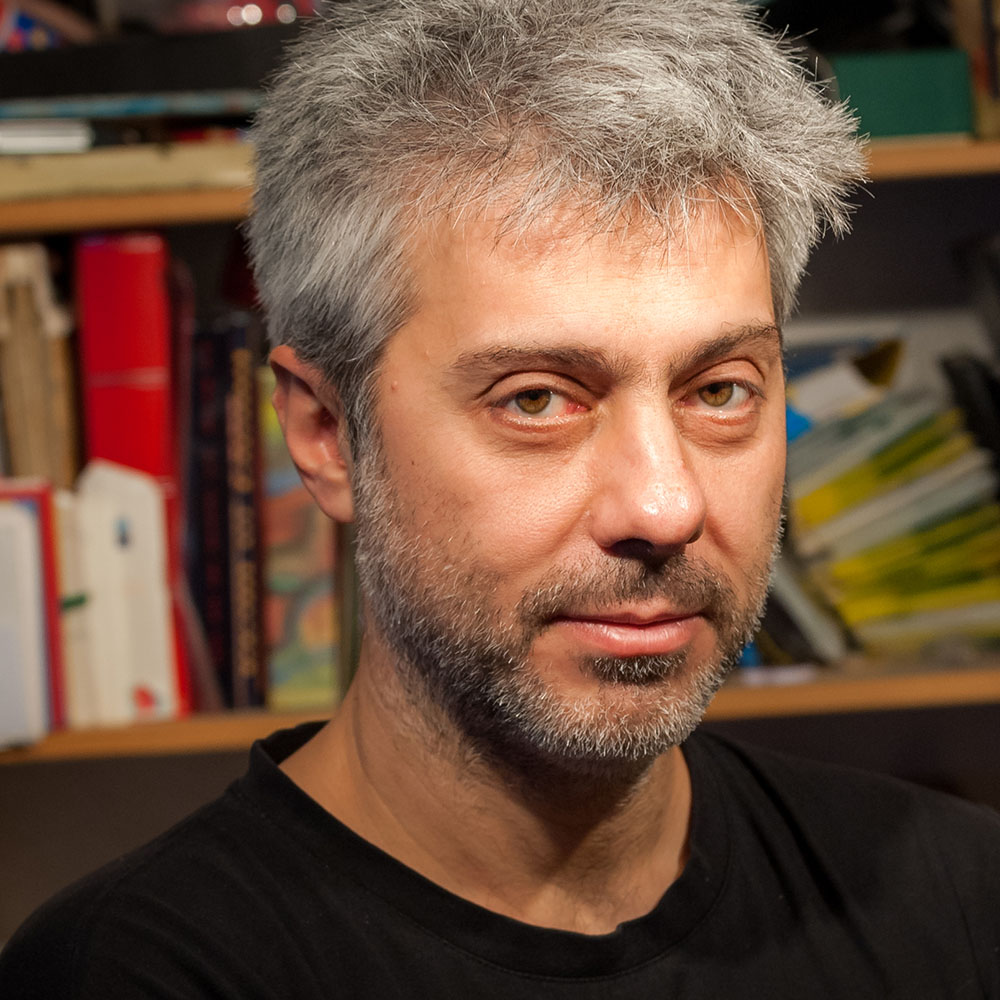
Dr Aris Lanaridis
Senior Lecturer
Aris is a film and media composer, sound designer and music producer. With studies in performance and composition for film and TV, strong passion and professionalism, he creates sonic environments that explore and empower the storytelling of visuals.
 0000-0001-6513-8711
About
Aris is a film and media composer, sound designer and music producer. With studies in performance and composition for film and TV, strong passion and professionalism, he creates sonic environments that explore and empower the storytelling of visuals.
Aris is a film and media composer, sound designer and music producer. With studies in performance and composition for film and TV, strong passion and professionalism, he creates sonic environments that explore and empower the storytelling of visuals.
Aris currently lives in London and works as a freelance film an media composer. He is also a senior lecturer in film composition at Leeds Beckett University. His work includes short films, documentaries, promo videos, videogames, theatre, digital theatre, dance theatre, slideshows, audiobooks and installations.
Aris believes that music is a storyteller and he creates music that tells stories to match the stories that movies tell. He is the inventor of the "Perform the Story" approach that connects music composition and interpretation to storytelling.
Non-academic positions
Film & Media Composer
Self employed | 01 September 2002 - presentMusic Producer
Self employed | 01 January 2019 - presentGuitar Tutor
Self employed | 20 September 1989 - present
Degrees
PhD
Leeds Beckett University, Leeds, United KingdomMA
Kingston University, Kingston, United Kingdom
Languages
English
Can peer reviewGreek, Modern (1453-)
Can peer reviewSpanish - Latin American
Can read, write, speak and understandGerman
Can read, write, speak and understand
Related links
LBU strategic research themes
United Nations sustainable development goals


Research interests
Aris completed his PhD on Communicating emotion through music: developing a model for exploring and testing emotional sharing between postgraduate student composers at Leeds Beckett University in 2022.
Aris' research interests are inspired by music composition as well as his performing practice. His research focuses on the transmission of narrative qualities and musical meaning from the composer and performer to the audience, and on social and psychological factors that may influence this transmission.
In his research, Aris investigates this topic from a scientific perspective and is currently exploring theories of psychology such as Social Identity Theory, Social Representation Theory and Dialogical Self Theory to empirically research social and psychological aspects in identity and in musical appreciation and understanding and their effects on meaning transmission. Dialogical Self Theory, in particular, is a fairly new framework that has not been applied to music before, and because of his research, Aris was invited many times to International Dialogical Self Theory conferences to present workshops that links the Dialogical Self Theory to music. Aris is currently working on practical applications of his research through the ethical use of Artificial Intelligence.
Ask Me About
Publications (8)
Sort By:
Featured First:
Search:
Work/Life
Voices of Coal
 20 December 2025
Publisher
20 December 2025
Publisher
 Authors: Lanaridis A, Editors: Harman D
This work contributes to Debbie Harman’s immersive film installation Voices of Coal (VoC). By translating field recordings into a narrative-driven soundscapes, the composition uses raw seismometer and other location-related recordings to drive the structure of the score. Working together with composer and sound artist Yonni Collier, we turn emotionally significant field recordings into an original sonic view filtered by the artist’s personal narrative. Our composition becomes integral part of VoC bridging Debbie Harman’s subjective emotional resonance with the audience. Fieldwork was conducted between the artist and the Geosolutions Leeds geomechanics lab with the support of XR Stories technology lab. The methodology moved through the following phases: first, capture of seismic resonances to establish a foundational frequency palette; second, motion-captured recordings to inform the nuanced layers of the composition; third, synthesis of these recordings into a score to closely express the artist’s personal narrative. Fine-tuning of the composition was accomplished through meetings between the composers and the artist. This ensured that the composed music was not merely data-informed but that it organically reshaped sonic material from a historical site to accurately represent foundational values in Debbie Harman’s project. The work was exhibited at the National Coal Mining Museum for England (2025-2026), reaching an audience from both academic and general public. Through high-level sound research within a national heritage site (Kellingley Colliery mine), the project achieved significant public engagement by combining geological and audiovisual concepts into an artefact that made the artist’s personal story uniquely accessible to audiences. The collaboration with University of Leeds provided an art-and-science model that has been highlighted by Geosolutions Leeds as a primary example of interdisciplinary innovation. The project’s impact is further confirmed by its role in preserving the heritage of the mining community through innovative digital storytelling.
White Rabbit
30 May 2026
Goethe Volume in Advances in Subjectivity and Development Information Age Publishing
Authors: Lanaridis A, Editors: Boulanger D, von Fircks E October 2017
International Journal for Dialogical Science10(2):139-152
The ability of music to transmit emotional intention is a widely acknowledged phenomenon across a range of musicological, psychological and semiological research disciplines. Much of this research has focused on the description of the narrative qualities of music within the communication process. However, there is still insufficient explanation of the underlying reasons for the ability to transmit emotional ideas, and little empirical research has been undertaken on the extent and accuracy of the narrative functionality of music. This article considers the reasons, level and extent of the narrative capacity of music in the context of a contemporary society. For this, it looks at the Self from an angle of internal dialogical activity, in order to investigate the subconscious interaction between individual and society. The article also considers the factors that may influence the shaping of musical taste and that may be responsible of setting the mode through which listeners perceive and filter music in the contemporary culture. Specific emphasis is given to the role of the media not only as an important source of information but also as a mechanism for influencing our perception of societal reality. Keywords: plurality of cultural voices/personas, plurality of promoter positions, intersubjectivity, social identity, dialogical self, social representations
Memory, emotional narrative and music: a game of experiential learning
02 November 2019
Music and Lifetime Memories: An Interdisciplinary Conference/Durham Durham/UK
How can the same music make one person sad and another person happy? From infancy and onwards, moments of social and cultural interaction shape identity, contain emotional value and hold a strong potential to connect with music. Such emotionally charged moments of meaning-acquisition are evaluated by the brain and selectively stored in memory (Van den Tol & Ritchie, 2014). This store of lifetime memories, or in other words, our own personal experiences, is what we draw from when we want to assess and deal with a new situation, both rationally and emotionally. The most important theories on identity, emotion and music look into evolutionary/cultural/social learning to explain their findings (Meyer, 1956; Tajfel, 1981; Tarrant, North & Hargreaves, 2002; Huron, 2006; Juslin & Västfjäll, 2008). All these theories have contributed volumes towards our understanding of the interplay between emotional arousal and music. What is, however, still missing from all this in depth exploration is a clearer understanding of the way this interplay conditions the emotional message a composer intends to communicate to their audience. Cultural and social learning happens through the interaction with other people and entails personal stories that can be seen as an important part of this learning (Schiff, 2012). This learning leaves a strong imprint in memory, rich in meaning and emotional value. Music has demonstrated notable power to recall such memories and their emotional manifestation (Van den Tol & Ritchie, 2014). This presentation introduces a critical approach in an attempt to contribute valuable insight in the way music communicates emotion. It suggests that the relationship between music, emotion and narrative should be looked at and examined holistically and as part of our experiential learning that the brain holds as lifetime memories (Lanaridis, 2017). In extension, emotional communication should be perceived as emotional sharing and should be examined in relation to the overlap of the listeners’ experiential learning.
Communicating emotion through music: developing a model for exploring and testing emotional sharing between postgraduate student composers
10 August 2022
Authors: Lanaridis A, Editors: Davis R, Miller SThe ability of music to generate emotional responses is a multifaceted phenomenon and its manifestations have been at the centre of multidisciplinary attention at least since the 1950s. Existing research has mainly explored psychological and physiological manifestations of emotional arousal when listening to music. There is still insufficient explanation of the underlying reasons for music's ability to facilitate the sharing of emotional ideas. This thesis investigates the processes involved when a composer creates emotional connection with an audience. This communication process is understood as a dynamic mechanism that utilises learned experience and is activated through the agency of the subconscious upon the experience of listening to music. This mechanism informs the structure of a model of emotionally shared experience through music and puts specific focus on this between the composer and their audience. A model was created to explore this process and data was collected from reception tests administered to a group of post-graduate student composers. The model was constructed around the key ideas of meaning, emotion, and narrative. Detailed analysis using coding through Interpretative Phenomenological Analysis indicate that the emotional interaction music creates between composer and listener is not a linear, unidirectional chain of communication but a shared experience that both the composer and the listener respond to through a common aesthetical understanding. Responses are administered by dialectical processes which are responsible for the sharing of emotional meaning through music. From this perspective, the subconscious is considered to be a powerful agent that regulates our responses in all decision-making moments in musical communication and should be considered as an important element in the communication process.
Communicating the emotional narrative though music: a game of the subconscious mind
26 October 2019
Psychology and Music - Interdisciplinary Encounters Belgrade/Serbia
Lanaridis A, Davis RBackground Our responses to music are varied, dynamic and frequently create a strong emotional charge which is often categorised through the use of metaphorical descriptors which map the underlying dimensions of the experience. Our understanding of these emotional responses has been investigated through a range of disciplinary and interdisciplinary approaches that have explored how music and emotion connect. Interest in music and emotion has developed into a distinct field of study through the work of Sloboda (2005), Thompson (2009), Juslin and Sloboda (2010) and expanded our understanding of the relationship between music and emotional responses. Many of these studies focus on identifying change (emotional, physiological, behavioural) within a controlled laboratory environment verifying a connection between music and an emotional episode which registers as a cause and effect transformation. As our capacity to explore the workings of our brain increases, we may deepen our understanding of the way music evokes emotions. Aims We are now at a stage where we might include other factors beyond current studies and our attention here is to consider the way that our lived experience impacts on our ability to respond to music at an emotional level. We present a multi-layered theoretical model to explore this ongoing relationship between experiential learning and music. Firstly, we consider how existing theories of meaning, identity and emotion converge into an individual’s life-learning, which holds a strong potential to be linked to music and be retained in memory (Meyer, 1956; Tajfel, 1981; Tarrant, North & Hargreaves, 2002; Huron, 2006; Van den Tol & Ritchie, 2014). Secondly, we consider how the emotional meaning of music is acquired through the interaction with other people, which entails personal narrative that can be seen as an important part of cultural and social learning (Schiff, 2012). Finally, we propose that the emotional communication is necessarily an automatic one because the way the individual interacts with the culture and society in their conscious mind finds a perfectly functioning duplicate in their subconscious (Lanaridis, 2017). Method This perspective draws on theories that introduce, develop and support the multi-voiced, dialogical capacity of the brain which generates triggers in the decision-making game (Hermans & Hermans-Konopka, 2010). To do this we use narrative as a way of exploring the way that these automatic processes emerge in the thoughts as an emotional narrative. Results We present a theoretical and empirical approach of emotional communication through music based on meaning, emotion and narrative. Rather than consider emotion as a 'snapshot' or in binary terms such as 'sad' or 'happy' our initial studies demonstrate that a much richer emotional narrative emerges that suggests that further study into narrative as a way of exploring the subconscious decisions that give rise to what we have termed the emotional charge of music. Conclusions Our approach looks at composers and their audience as listeners and suggests that emotional communication is a simultaneous interpretative process that is heavily influenced by individuals and groups of significance and that becomes part of the automatic processes of the subconscious. By considering the meaning of music as an emotional narrative we look beyond the meaning itself and to the process of making emotional meaning and to further understand how we as individuals make the decisions we do.
Activities (2)
Sort By:
Featured First:
Search:
Digital Storytelling and Innovation Network Conference 2025
The invisible storytelling companion: the narrative functions of music
Current teaching
- MA Music for the Moving Image - Composition for the Moving Image
- MA Music for the Moving Image - Analysis of Music for the Moving Image
- MA Music for the Moving Image - Orchestration, Arrangement and Programming
- MA Music for the Moving Image - Negotiated Skills Development
- MA Music for the Moving Image - Research Practice
- MA Music for the Moving Image - Final Individual Project
- MA Music for the Moving Image - Music for Video Games
- BA Music Performance and Production - Music for Film and Television
Teaching Activities (11)
Sort By:
Featured First:
Search:
Composition
23 September 2025
Music for Video Games
29 January 2025
Composition and Arranging
30 January 2020
Analysis of Music for the Moving Image
28 September 2020
Final Individual Project
28 May 2020
Research Practice
24 September 2020
Negotiated Skills Development
30 January 2020
Music for Film & TV
29 September 2022
Orchestration, Arrangement and Programming
24 January 2021
Composition for the Moving Image
02 October 2019
Live Music Performance
02 October 2019





