

Leeds Beckett University - City Campus,
Woodhouse Lane,
LS1 3HE
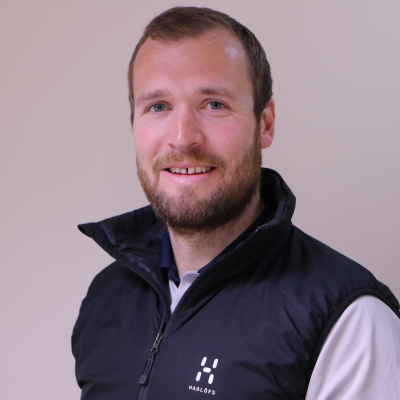
Dr David Cooke
Course Director
Lecturer in Physical Education. Key research interests include PE pedagogies and social class.
About
Lecturer in Physical Education. Key research interests include PE pedagogies and social class.
David Graduated from Leeds Beckett University in 2010 with a first class honors degree in Sport and Exercise Science. In the following years David began teaching and coaching in independent schools and subsequently achieved Qualified Teacher Status (QTS) after following the Graduate Teacher Programme (GTP) at Sheffield Hallam University. David then went on to progress his teaching career in Secondary schools across England, ranging from inner city academies to independent boarding schools, eventually becoming Head of Department. In 2014 David returned to Leeds Beckett to teach undergraduate students and begin a funded PhD entitled Poor kids need rich teaching: PE, pedagogies and social class. In 2017 David started a full time teaching role as a lecturer, whilst continuing to complete his PhD.
Research interests
David's research is based primarily on his PhD which aims to explore if secondary school physical education reflects (re)produces or challenges social class inequalities.
Publications (2)
Sort By:
Featured First:
Search:
Exploring Primary Physical Education Subject Leaders’ Professional Development Needs: A Group Concept Mapping Approach
 14 May 2024
2024 AIESEP International Conference Book of abstracts: The 2024 AIESEP International Conference “Past meets the Future” Jyväskylä, Finland University of Jyväskylä
14 May 2024
2024 AIESEP International Conference Book of abstracts: The 2024 AIESEP International Conference “Past meets the Future” Jyväskylä, Finland University of Jyväskylä
 Cooke D, Morley D, Jones R, Donaldson A, Gregory S, Powell D
This unique study explored the professional development needs of Primary Physical Education Subject Leaders (PPESL’s) in England to inform changes to continuing professional development (CPD). The most recent All Party Parliamentary Group (APPG) for a fit and healthy childhood identified inadequacies in primary teacher training and CPD as a barrier to positive experiences for young people. Funding initiatives have sought to address this issue by identifying and supporting teachers to act as PPESL’s. Group concept mapping (GCM) was used to collect data from 54 PPESL’s in one city in Northern England. The PPESL’s: (i) brainstormed what they wanted to know in relation to the prompt: ‘What knowledge, skills, and experiences do you need to perform your role, as a PPESL, better?; (ii) grouped the brainstormed ideas around perceived similarity of meaning; and (iii) rated each statement by importance, and feasibility. A multidimensional scaling and hierarchical cluster analysis was conducted using the Concept Systems GroupWisdomTM platform. 54 PPESL’s brainstormed 52 statements (after data cleansing). A 9-cluster map best represented the data with the following themes: finance and funding, assessing and monitoring learning, partnerships and networking, working school-wide, working with/supporting others, planning, integrating physical activity, topic specific support, and inclusive teaching. PPESL’s placed the lowest importance on topic specific support (e.g. Dance, Gymnastics). Such findings contrast with traditional CPD offers and the standards and guidance for teachers’ CPD, which suggest that subject knowledge development should be prioritised. PPESL’s considered adapting teaching to the needs of all pupils, and planning/designing high quality PE curricula as high importance and high feasibility. In effect, participants suggested these areas are potential ‘quick wins’ for schools and CPD providers. The high importance/low feasibility data is dominated by statements relating to working with and influencing others. Examples of key statements include working with senior leaders; communicating the value of PESS; supporting and inspiring less engaged staff; and creating an environment where PE is a priority for all staff. These findings suggest leadership skills that allow PPESL’s to communicate both up and down the school hierarchy are vital to them improving the experiences of all young people. Previous evidence has shown the importance of understanding the micropolitics of schooling for secondary Heads of PE. Similarly, our analysis suggests PPESL’s view influencing others (senior school leaders and fellow teachers) as their greatest challenge, but PPESL’s also see the importance of addressing such gaps in their skills, knowledge, and experience. To conclude, this novel GCM approach provided the evidence for the process of co-constructing a city-wide Primary PE CPD offer.
Physical Education is for Life (Part 1): Redefining School Physical Education for the 21st Century.
Activities (1)
Sort By:
Featured First:
Search:
European Physical Education Review
Current teaching
David teaches across a range of modules and levels including: Critical Issues, Critical Pedagogy, Teaching and Learning, Special Educational Needs and Disability, and Work Based Learning. David also supervises undergraduate dissertations and is a personal tutor to at levels four, five and six.





