

Leeds Beckett University - City Campus,
Woodhouse Lane,
LS1 3HE
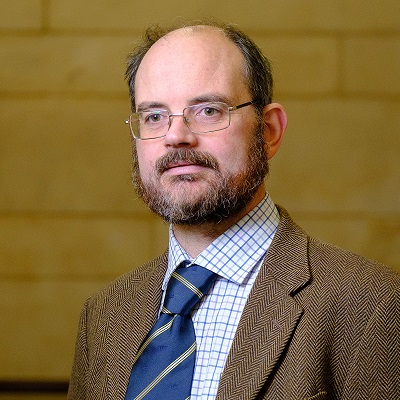
Dr David Love
Senior Lecturer
David's background is in high-integrity systems, first in the minerals handling industry then in aerospace. He was drawn into software engineering during his PhD and is committed to enhancing our understanding of how to treat software-based systems as engineered systems.
 0009-0007-5593-9794
About
David's background is in high-integrity systems, first in the minerals handling industry then in aerospace. He was drawn into software engineering during his PhD and is committed to enhancing our understanding of how to treat software-based systems as engineered systems.
David's background is in high-integrity systems, first in the minerals handling industry then in aerospace. He was drawn into software engineering during his PhD, and he is committed to enhancing our understanding of how to treat software-based systems as 'proper' engineered systems.
Related links
Publications (7)
Sort By:
Featured First:
Search:
 05 September 2025
International Sustainable Ecological Engineering Design for Society (SEEDS) Conference 2025 Loughborough
05 September 2025
International Sustainable Ecological Engineering Design for Society (SEEDS) Conference 2025 Loughborough
 Love D, Buheji S, Alsisi S
Water in the Kingdom of Bahrain is a constrained resource, with a majority supplied though energy-intensive desalination. The Electricity and Water Authority (EWA) in Bahrain manages the conservation and supply, using radio-capable supply meters to monitor and bill consumption in real-time. However, radio shadows in the local geography (especially in dense urban areas) means that some meters only return partial data, and meters return no data at all. Currently the EWA manages the data holes though the carbon intensive, manual reading of meters, requiring employees to drive to individual meters to return data. Nonetheless, whilst a regular schedule ensures reasonable accuracy for billing purposes, the capability of the sensor network is not being fully exploited. Comprehensive, accurate, monitoring would better enable real-time management of supply and demand, conserving energy and water resources within the Kingdom. This project demonstrates a prototype drone system, using off-the-shelf technology to cheaply monitor water supply meters in a large geographic area, at with lower carbon life-cycle costs. By reusing the existing capability developed by the Electricity and Water Authority, the project enables the rapid roll-out of a secondary data return system. Both allowing EWA to read ‘unserviceable’ meters automatically, and validating supply data through existing channels. The use of standardised radio technology is increasingly common for resource management, and radio shadows are an inherent limitation. Concluding, commercial drones provides a alternative to manual meter reading for EWA, and show a reduction in overall carbon costs. The modular nature of the platform developed also offers a starting point for other projects using common radio technologies for sensor networks.
A Philosophy of Maintenance? Engaging with the Concept of Software
June 2007
Philosophy of Management6(2):27-30 Springer Science and Business Media LLC
Although reducing the costs of software maintenance has long been held as an important goal, few researchers have studied software maintenance — except in the context of software design. However, thinking in software design is itself muddled by the frequent confusion over the term ‘software’ and ‘programs’. In this paper we argue for a re-examination of the underlying philosophical foundations of programs, in order to establish software as a phenomenon in its own right. Once we understand the basic structure of software theories, we will be in a better position to understand how theories of software relate to theories of programs. This might finally provide the insight needed to achieve the long awaited reduction in the cost of software maintenance.
Rigorous, and Informal?
2011
Lecture Notes in Computer Science Springer Berlin Heidelberg
Most debates on conceptual structures have focused on (Hilbert) formal theories, due to the absence of stronger theoretical frameworks (despite nearly 80 years of searching). In this paper we look for new conceptual structures by looking for weaker theories. We contend both that weaker theories are possible, and that they offer useful alternatives to the better known formal theories.
06 April 2015
ITiCSE 2015 Proceedings of the 2015 ACM Conference on Innovation and Technology in Computer Science Education Vilnius, Lithuania ACM
Love DJO, Adshead D, Boisvert C, Spencer PSince 2012 the United Kingdom has fundamentally reformed its computing teaching: the subject matter, the reliance on university specialists, even the subject name has changed. We describe the response at Sheffield Hallam University, which has been to involve academic staff from both the De- partment of Education and the Department of Computing, forming the Centre for Computing Education. The aim of our integrated approach is to help support the transformation from ‘ict’ to ‘Computing’. Through the Cen- tre’s work, a new generation of young teachers and trainees are being supported to embrace the cultural change. The growing use of tools and resources we provide, the visits, events, and teacher support network is strengthening the curricular shift in many schools. However, the challenge remains to reach schools who, so far, struggle to engage with the depth of change in the cur- riculum. Whilst still young, we believe that our integrated approach can continue to make a strong contribution to the teaching of computing at K-12 level in the uk.
05 September 2025
International Sustainable Ecological Engineering Design for Society (SEEDS) Conference 2025 Loughborough
Thompson-Mountford C, Pritchard M, Wyatt-Millington RLegionnaire’s disease presents a significant public health risk, yet current monitoring methods remain reactive. Traditional methods involve engineers conducting monthly site visits to collect temperature data from sentinel outlets. While effective, this approach has significant environmental and financial costs due to frequent travel. The rise of Internet of Things (IoT) technology has enabled remote monitoring across various industries, including water management. By transitioning to remote monitoring, this reduces annual site visits from twelve to one, which significantly cuts carbon emissions, water wastage, time and hence costs. This study presents the findings of two independent case studies assessing the environmental and operational impacts of implementing IoT-enabled remote monitoring. The first case study evaluates five sites (A to E). For instance, results from Site A indicating that replacing on-site monitoring with remote systems can reduce CO₂ emissions by 1,993 kg annually—a 96% decrease—alongside fuel cost savings of approximately £1,020. When extrapolated across all Aquatrust monitoring sites, requiring extensive travel, potential annual savings reach 49 tonnes of CO₂ and £24,500. The second case study, based on four representative outlet locations typical to these sites, shows a 90% reduction in water wastage, saving approximately 9,843 litres per year. Together, the findings highlight the significant sustainability and efficiency benefits of remote monitoring, including reduced manual intervention, improved regulatory compliance, and enhanced predictive maintenance enabled by continuous data collection. Additionally, IoT-driven systems improve efficiency by reducing manual testing and maintenance costs while ensuring compliance with water safety regulations. Furthermore, continuous data feeds enable trend analysis, allowing for predictive maintenance and early intervention. However, despite the clear benefits, challenges such as initial implementation costs, data security concerns, and industry resistance must be addressed. Nevertheless, pilot studies and regulatory incentives can facilitate a broader adoption. This approach represents a transformative step in Legionella risk management, offering scalable solutions for both industrial and domestic applications. Future research should focus on optimising deployment strategies and addressing industry-specific challenges, ensuring technology and sustainability continue to drive advancements in water hygiene management.
Notions of Equivalence in Software Design
16 June 2004
Author
King D, Kimble CDesign methods in information systems frequently create software descriptions using formal languages. Nonetheless, most software designers prefer to describe software using natural languages. This distinction is not simply a matter of convenience. Natural languages are not the same as formal languages; in particular, natural languages do not follow the notions of equivalence used by formal languages. In this paper, we show both the existence and coexistence of different notions of equivalence by extending the no-tion of oracles used in formal languages. This allows distinctions to be made between the trustworthy oracles assumed by formal languages and the untrust-worthy oracles used by natural languages. By examin-ing the notion of equivalence, we hope to encourage designers of software to rethink the place of ambiguity in software design.
Philosophical Smoke Signals: Theory and Practice in Information Systems Design
17 April 2008
Author
King D, Kimble CAlthough the gulf between the theory and practice in Information Systems is much lamented, few researchers have offered a way forward except through a number of (failed) attempts to develop a single systematic theory for Information Systems. In this paper, we encourage researchers to re-examine the practical consequences of their theoretical arguments. By examining these arguments we may be able to form a number of more rigorous theories of Information Systems, allowing us to draw theory and practice together without undertaking yet another attempt at the holy grail of a single unified systematic theory of Information Systems.
Activities (1)
Sort By:
Featured First:
Search:
Academic Accreditation Committee
Grants (5)
Sort By:
Featured First:
Search:





