

Leeds Beckett University - City Campus,
Woodhouse Lane,
LS1 3HE
 0000-0001-5555-5466
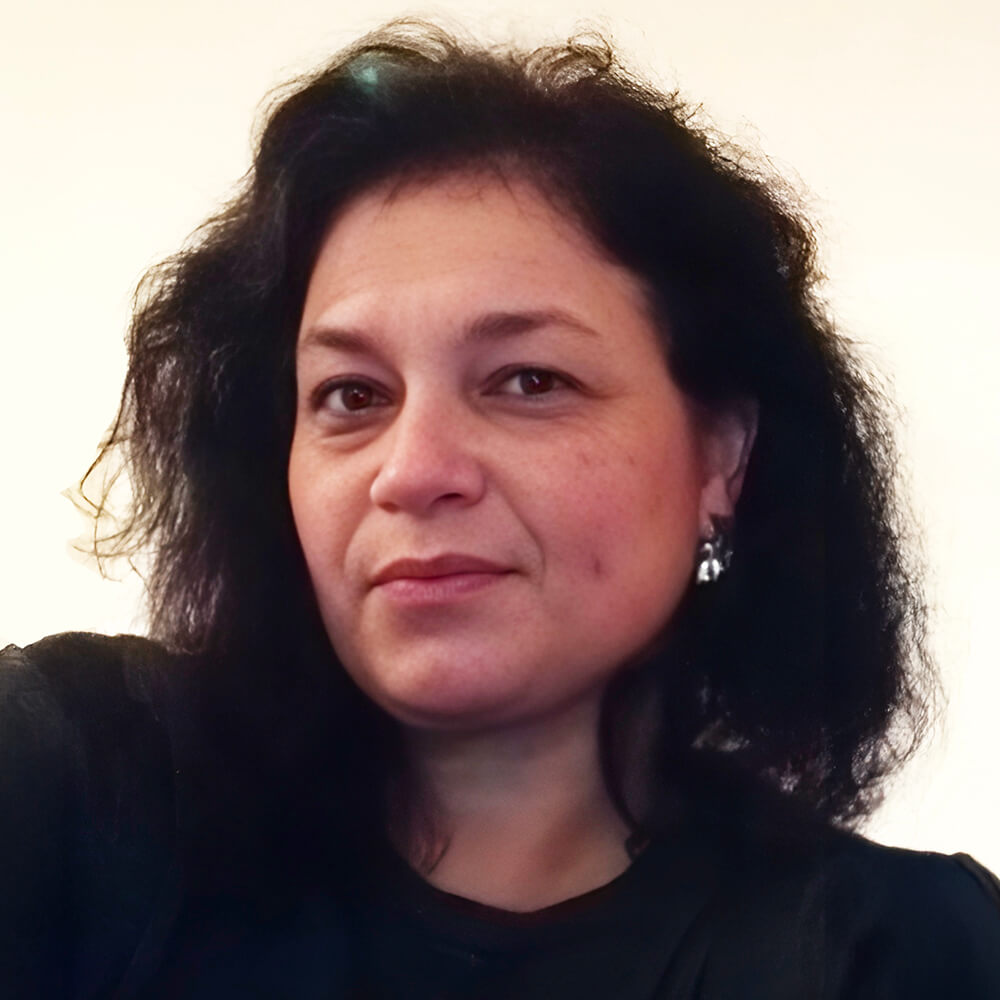
Dr Elisa Oliver
Senior Lecturer
About
Elisa has previously worked as a curator and public programmer for Tate, FACT and New Art Gallery Walsall, she has published in a range of journals such as Corridor 8 and organised major conferences such as Repeat Repeat for Chester University 2007. More recently as part of FEAST she has been working with the International Anthony Burgess Foundation in Manchester and the James Joyce Centre in Dublin on the curation of meals in the exploration of writing, region and identity as accessed through food and dining.
Research interests
Dr Elisa Oliver's research is interdisciplinary and addresses issues of class, masculinity and labour particularly in relation to Britain in the 1970s and 80s as part of a nexus of changing work and production conditions in the period. An interest in exploring the negotiations of these shifts through the utilisation of popular culture in the 1970s/80s in the work of artists Paul Housley, Paul Rooney and George Shaw formed the basis of her PhD research completed at Central St Martins, University of the Arts London.
These concerns are also expressed in her work as Co-Director of FEAST www.feastjournal.co.uk a peer reviewed online journal that explores the function and resonance of food in our everyday and provides an important critical space for the reflection, writing and commissioning of new work in the growing arena of food and art related discourses.
Publications (18)
Sort By:
Featured First:
Search:
A Reverse Journey
 27 September 2024
Romney Marsh, Kent Jarman Now
27 September 2024
Romney Marsh, Kent Jarman Now
A psychographic journey from Derek Jarman’s Grave in Romney Marsh to his last home, Prospect Cottage, Dungeness, with Iain Sinclair, Andrew Kotting and Fine Art Students at University of the Arts, Canterbury. Conceived by Elisa Oliver for Jarman Now (@jarman_now).
The Recipe as Narrative and Text
29 October 2016
Women in Print
Paper, ‘The Recipe as Narrative and Text’, organized by, Women in Print, day symposium on women, food and writing, Oriel Wescam, Wrexham, October 29th 2016, www.womeninprintnetwork.wordpress.com
FEAST (The Devil’s Supper) Exhibition
23 March 2016
The Devil’s Supper Exhibition (Wednesday 23rd March 2016). I am sometimes mentally and physically ill for Lancashire food — hot pot, lobscowse and so on — and I have to have these things. Anthony Burgess interviewed in Paris Review, Spring 1973. Born and raised in Lancashire Burgess wrote passionately about the traditional cuisine of his youth. Traveling extensively in his adult life he often wrote about a longing for the ‘hot pot and tay’ of his home county. The exhibition brings together writings, recipes, and interviews from the Foundation’s archive with a selection of cookery books and serving ware from Special Collections Manchester Metropolitan University. Working with both collections FEAST presents an exhibition of historical material that celebrates the food of Burgess’s north: the rich brown of strong tay, hot pot, and HP sauce. The exhibition continued until the 30th of May.
Tasting Joyce
02 November 2017
Tasting Joyce (Thursday 2nd November 2017). A journey through the tastes and smells of Joyce’s Dublin at the James Joyce Centre. Accessing Joyce’s writing through the food and scents that frame them, an 8 course ‘tasting’ menu will provide a range of food encounters that will reflect and unravel ideas in Joyce’s work. The evening will include readings, artworks by Nuala Clooney and Kaye Winwood and a miscellany of key foods and ingredients referenced by Joyce.
21 December 2018
FORUM: University of Edinburgh Postgraduate Journal of Culture & the Arts Edinburgh University Library
This paper explores the gaze as witness in George Shaw’s painting of Tile Hill. Considering Shaw’s process of making in the series ‘Scenes of the Passion’ (1990-2017) the paper addresses the relationship of site, memory and gaze in a negotiation of masculinity and loss in these images.
FEAST & Tasting Joyce
2016
Tasting Joyce is a collection of essays and art works developing Oliver’s curated meal Tasting Joyce-an eight-course tasting menu interpreting James Joyce’s writing and exploring taste as a mode of meaning and interpretation. Tasting Joyce builds on Oliver’s broader exploration of the cultural resonance of food within our everyday through her co-editorship of the peer-reviewed journal Feast. As co-editor Oliver developed four issues on the theme of ‘Setting the Table’ comprising, Cutlery, Decoration, The Meal and Spaces for Eating. Feast established a reflective voice in an area reaching critical mass output but struggling to establish its identity. From Charles Spence’s Crossmodalists, to food designers Blanch and Shock, the diversity of this practice demanded a consolidation to harness its creative inter-disciplinarity. Feast gathered writers, artists and academics across Fine Art, Cuisine, Literature and Performance to productively interrogate work at the crossroads of these boundaries. Feast initiated new discourse defining this practice bringing many practitioners together for the first time. Through curated events Oliver extended the exploration of the journal’s themes in response to collections, The Home Studies Collection, Special Collections MMU, curated meals interpreting place and identity, The Devils’ Supper, 2016, International Anthony Burgess Foundation and Tasting Joyce, 2017, The James Joyce Centre. Each activity used food as a lens to provide new routes of access into established work, Joyce’s Ulysses, for example, was given a female slant with its emphasis on all things ‘milky’, magician Augusto Corrieri linked magic’s use of the table to the performance of the dining table and Susannah Worth addressed the cookbook as creative text and memory tool. Tasting Joyce united a diverse range of experts establishing alternative interpretations for Joyce’s work and has shaped a subsequent exhibition Oliver is curating at the James Joyce Centre Dublin titled ‘Finding Molly’. Realizing work in a range of contexts, the dinner table, the archive, the museum, Feast extended the fields audience and defined its nature becoming a key reference for the emergence of new work in this area.
Memories of Adolescence-Technology, Subjectivity, Masculinity and its Losses in Artist Paul Housley’s Paintings 1998-2004
29 April 2021
Performing Memories: Media, Creation, Anthropology, and Remembrance Cambridge Scholars Publishing
 Authors: Oliver E, Editors: Biotti G
Jarman Now
FEAST (The Devil’s Supper)
11 March 2016
Manchester
The Devil's Supper — Anthony Burgess, autobiography and food (Friday 11th March 2016). In collaboration with acclaimed Manchester chef Mary-Ellen McTague and the International Anthony Burgess Foundation FEAST curated an evening meal exploring the making and eating of food in the life and work of Anthony Burgess. The artist Marie Toseland was commissioned to produce a new film work for the evening and a series of readings of recipes from Burgess's works were performed by Dr. Sam Ilingworth, Dr. Angelica Michelis and Susannah Worth alongside musical performances by the tenor Timothy Langston.
Identity and Place
FEAST (Review: Decoration, Diabolical Roses).
14 February 2016
FEAST Review: ‘Decoration’, Diabolical Roses. Kaye Winwood, Sarah Baker Hamilton, Chris Hughes, immersive dinning event, Feb 14th, Vivid Project Space, Birmingham
‘The Past Dreams the Future Present: Dream as Political, Visual Historiography in the work of Artist and Film Maker Derek Jarman
01 June 2022
IDEA: Interdisciplinary Discourses, Education and Analysis Journal(2):72-88 (16 Pages) London Centre for Interdisciplinary Research
Oliver E, Whitehall JTitle: ‘The Future Dreams the Past Present” Dream as Political Visual Historiography in the work of Artist and Film Maker Derek Jarman Key words: Dream, Political, Resistant, Re-imagining, Psychoanalysis Working across the disciplines of painting, film, theatre and gardening a recurring concern of Derek Jarman’s work is temporality. This concern initiates a unique visual historiography positioning remembering as a creative and resistant activity. A key methodology in this historiography is the act of dreaming, which functions variously across Jarman’s practice, but central to this paper is its role in enabling a re-encounter with the past that disrupts and reconfigures history. Drawing on Renaissance models of the dream as prophecy and wish fulfilment, seen in the ‘The Last of England’ where entry to the film is via Jarman sleeping, to ‘Jubilee’ where a juxtaposition of images allows the past to intrude and have dialogue with the present, we are encouraged to see, as occultist John Dee states in the film’s opening sequence how, “ the past dreams the future present”. The use of dream therefore in Jarman’s work, rather than suggesting a turn away from the political, into escapist reverie instead points to something more in line with psychoanalytic understandings of fantasy with the power to disrupt the formation of a dominant realpolitik, not by being its opposite, but being that of which it is constituted. Pursuing the dream as political this paper will focus on films ‘The Last of England’, 1987,’The Tempest ‘, 1979 and ‘Jubilee’ 1978. Applying the psychoanalytical writings of Freud and Jung on dreams and the writings of Walter Benjamin and Mark Fisher around capital realism we will consider the ways that Jarman’s visual aesthetics of juxtaposition, ambiguity and anachronism, engage the viewer to confront an ostensible realism with the power to disrupt the ideological construction of accepted histories. In this, we argue, are present the tools for change, resonant not only with the moment of making, but also with a ‘future dream’ of Jarman now.
Feast (Issue 4, Spaces for Eating): Tasting Joyce – a reflection on taste as a potential space of curation and interpretation.
2018
FEAST
Spaces for Eating marks the final edition in a series of online publications exploring the larger framework of Setting the Table. The edition investigates the architecture, environments and landscapes in which food is prepared, purchased, shared and consumed. Exploring the spaces designed or designated for eating, the contributing authors pursue places of consumption as expressions of cultural value, tradition, and changing fashions reflecting our ongoing construction of ‘Spaces for Eating’ and our continually changing relationship to their differing forms.
The Politics of the Dinner Table in James Joyce’s A Portrait of the Artist as a Young Man (1916)
June 2017
FEAST
Issue three of FEAST online explores the cultural contexts, architectures and performative rituals surrounding the meal. Whether dining with friends, strangers or alone, the act of eating constitutes a marker of individually or collectively performed identities. Throughout the edition a focus on the meal as a cornerstone of communal relations is explored in contributions by Jo Pike, Sarah Hunter and Caitriona Devery. Whilst artists Melanie Jackson, Amanda Couch and Benjamin Orlow reflect upon the unusual forms meals can take, exploring the status of the meal as a technique for the re-performance of our sense of self and community, as well as foregrounding its important structural role in the partitioning and ritualization of everyday life. Contribution: Staging the Meal: A Review of the Work of Blanch and Shock.
FEAST (Issue 2 on Decoration).
2016
Issue two of Feast online explores the role of ‘Decoration’ in the preparation, display, serving and consumption of food. As the second installment of a series of editions on the theme of ‘Setting the Table’ Decoration investigates the cultural resonance of food and its associated rituals. The thread of decoration weaves through contributions on the presentation of dishes from high-end restaurants, to the packaging of daily food stuffs, as well as the gifting of particular foods and specific dishes. Throughout the edition contributions veer between personal anecdote, social analysis and critical commentary, reflecting on the shifting cultural traditions and tastes of decoration. The issue includes an interview with Michelin star Chef JP McMahon, artworks by Sonja Alhäuser, Tereza Buskova and Leo Fitzmaurice, contributions from artists Heather and Ivan Morrison and Jonathan Trayte, as well as writers Mariana Menese Romero, Niamh Riordan and Georgia Wall. To support this publication, Issue 2 of FEAST on Decoration was launched at the Tetley, Leeds, along side a curated meal responding to the Jonathan Trayte exhibition.
Feast (Issue 3, The Meal): The Politics of the Dinner Table in James Joyce’s A Portrait of the Artist as a Young Man (1916)
2017
FEAST FEAST
Issue three of FEAST online explores the cultural contexts, architectures and performative rituals surrounding the meal. Whether dining with friends, strangers or alone, the act of eating constitutes a marker of individually or collectively performed identities. Throughout the edition a focus on the meal as a cornerstone of communal relations is explored in contributions by Jo Pike, Sarah Hunter and Caitriona Devery. Whilst artists Melanie Jackson, Amanda Couch and Benjamin Orlow reflect upon the unusual forms meals can take, exploring the status of the meal as a technique for the re-performance of our sense of self and community, as well as foregrounding its important structural role in the partitioning and ritualization of everyday life.
Setting The Table - The Home Studies Collection
04 May 2017
Manchester Metropolitan University
Setting The Table - The Home Studies Collection (Thursday 4th May 2017). A talk by historian Rachel Rich and artist Catherine Bertola on their current collaborative project at Leeds Beckett University. The talk marked the launch of the publication Setting the Table - The Home Studies Collection documenting a series of responses to the Home Studies Collection, held at Manchester Metropolitan University Library, commissioned by FEAST.
FEAST
January 2016
Establishment of FEAST an online peer reviewed Journal. (funding CCA Leeds Beckett).
Current teaching
Dr Oliver has key responsibility for critical studies, in particular the delivery and management of the third year extended essay module, including essay supervision and the attendant learning support programme, with further contribution to year two courses. She also works with studio delivery in year one, managing a tutor group and acting as a personal tutor.





