

Leeds Beckett University - City Campus,
Woodhouse Lane,
LS1 3HE
Dr Gareth Jones
Course Director and Reader
Dr Gareth Jones is a Course Director and is admissions tutor for MSc Sports and Exercise Therapy programmes within the School of Health.
 0000-0002-0313-0092
About
Dr Gareth Jones is a Course Director and is admissions tutor for MSc Sports and Exercise Therapy programmes within the School of Health.
Dr Gareth Jones is the Course Director for the MSc Sport and Exercise Medicine and MSc Sports and Exercise Therapy programs within the School of Health.
Gareth is a Physiotherapist and researcher, specialising in musculoskeletal injury management for sporting and non-sporting populations. He is a member of the Scientific committee for the International Rock Climbing Research Association. Gareth Is also a core member of the Musculoskeletal Health Research Group and the Centre for Pain Research within the School.
Academic positions
Course Director
Leeds Beckett University, School of Health, Leeds, United Kingdom | 01 May 2017 - presentReader
Leeds Beckett University, School of Health, Leeds, United Kingdom | 01 September 2023 - present
Degrees
PhD
Leeds Beckett University, Leeds, United Kingdom
Research interests
Gareth research is focused on the epidemiology of injury in rock climbing and the development of preventative injury strategies and evaluation of load. Recently Gareth has collaborated with Professor Volker Schoffl and Professor Mark Johnson in the development of a new diagnostic and therapeutic algorithm for climbing-related finger injuries.
Gareth has recently presented his latest research findings at the 4th Congress of the International Rock Climbing Research Association in Chamonix, France July 2018 and the British Mountaineering Council Injury Symposium in Birmingham in November.
Publications (100)
Sort By:
Featured First:
Search:
The epidemiology of rock-climbing injuries
 2008
British Journal of Sports Medicine42(9):773-778 BMJ
2008
British Journal of Sports Medicine42(9):773-778 BMJ
 Jones G, Asghar A, Llewellyn DJ
Climbing and mountaineering sports are gaining more and more public interest. This chapter reviews scientific studies on injuries and accidents in climbing and mountaineering sports to evaluate the danger of these sports and their specific injuries and preventive measures. An initial PubMed query was performed using the key words 'rock climbing', 'sport climbing', 'mountaineering', 'alpine injuries' and 'climbing injuries'. More than 500 extracted papers were analyzed which gave information on injury, mortality/fatality, prevention and risk factors. Cross-references were also scanned according to the above given criteria. Also the data sources of the UIAA and IFSC Medical Commissions were analyzed. Overall, alpine (traditional) climbing has a higher injury risk than sport climbing, especially indoor climbing. Alpine and ice climbing have more objective dangers which can affect climber safety. Overall injury rates are low, nevertheless fatalities do occur in all climbing disciplines. Altitude-related illnesses/injuries also occur in mountaineering. Most injuries in sport climbing are overstrain injuries of the upper extremity. In alpine climbing, injuries mostly occur through falls which affect the lower extremity. Objective reporting of the injury site and severity varied in most studies according to the injury definition and methodology used. This creates differences in the injury and fatality results and conclusions, which in turn makes inter-study comparisons difficult. In future studies, the UIAA MedCom score for mountain injuries should be used to guarantee inter-study comparability. Evidence in preventive measures is low and further studies must be performed in this field.
Fingers & fears: injury & the role of self-efficacy in performance rock climbing
2010
International Sports Medicine, Science & Performance Conference 2010 Leeds Metropolitan University
Chapter 15: Psychological Processes in the Sport of Climbing
01 August 2016
The Science of Climbing and Mountaineering Routledge
Authors: Jones G, Sanchez X, Editors: Seifert L, Wolf P, Schweizer AThis is the first book to explore in depth the science and medicine of climbing and mountaineering.
Efficacy of pre-ascent climbing route visual inspection in indoor sport climbing
February 2012
Scandinavian Journal of Medicine and Science in Sports22(1):67-72 Wiley
Sanchez X, Lambert P, Jones G, Llewellyn DJPre-ascent climbing route visual inspection (route preview) has been suggested as a key climbing performance parameter although its role has never been verified experimentally. We examined the efficacy of this perceptual-cognitive skill on indoor sport climbing performance. Twenty-nine male climbers, divided into intermediate, advanced and expert climbing level groups, climbed two indoor sport routes matching their climbing level and, where applicable, routes below their climbing level. At each level, one route was climbed with a preview, where participants benefited from a 3-min pre-ascent climbing route visual inspection. Performance was assessed in terms of output (route completion) and form (number and duration of moves and stops). Route preview did not influence the output performance. Climbers using visual inspection were no more likely to finish the ascent than those without the option of using visual inspection. Conversely, route preview did influence form performance; climbers made fewer, and shorter stops during their ascent following a preview of the route. Form performances differences remained when baseline ability levels were taken into account, although for shorter duration of stops only with expert climbers benefiting most from route preview. The ability to visually inspect a climb before its ascent may represent an essential component of performance optimization.
02 June 2007
Physiotherapy Elsevier BV
Jones G, Llewellyn DJ, Asghar MPURPOSE:Rock climbing is becoming increasingly popular despite the risk of serious injury. Previous research has established that elite indoor climbers are susceptible to overuse injuries of the hand and fingers. However, the present study examines the prevalence of climbing injuries in a more diverse group. In addition, self-efficacy is investigated as a potential risk factor.RELEVANCE:Information about the aetiology of climbing injuries should form the basis of communication strategies and educational interventions designed to prevent injury, and inform rehabilitation. PARTICIPANTS:Of 205 active British rock climbers, 201 (98%) agreed to participate voluntarily and yielded useable results. The 163 male climbers (Mage = 35.2 years,SD= 11.8) and 38 female climbers (Mage =35.1 years,SD= 10.7) did not differ significantly in age (p>0.05).METHODS:Climbers approached in their naturalistic environment were asked to complete items relating to their climbing behaviours,injuries, and self-efficacy. Climbing items included number of years experience, and the frequency and technical difficulty of routes or problems accomplished in different styles (soloing, traditional leading,sport leading and bouldering) in the last 12 months. Injury items included days unable to climb due to climbing injuries, anatomic allocation of injuries incurred (related to falling, overuse, and strenuous moves), and sources of treatment or advice sought. Self-efficacy was measured using the 10-item Climbing Self-efficacy Questionnaire(CSQ; developed following an initial pilot study), in which climbers rate their confidence to accomplish domain specific tasks on a scale of 0-100.ANALYSIS:Statistical analysis included uni-variate statistics, logistic regression and t-tests.RESULTS:Twenty-one climbers (10%) had been injured as the result of a fall, with 4 reporting upper or lower limb fractures. Sixty-seven (33%) had incurred overuse injuries, including 35 finger injuries. Fifty-seven(28%) had suffered injuries from strenuous climbing moves, including 31 finger injuries. The most common sources of advice or treatment were physiotherapists, other climbers, and physicians. Fall-related injuries could not be predicted by any of the independent variables.The probability of sustaining an overuse injury was higher for climbers who completed difficult climbs whilst soloing or traditional leading(odds ratio (OR) 1.23; 95% confidence interval (CI) 1.06 to 1.42), sport leading (OR 1.40; CI 1.18 to 1.66), and bouldering (OR 1.40; CI 1.17 to 1.68). Overuse injuries were more likely for climbers soloing and traditional leading (OR 1.12; CI 1.01 to 1.24), sport leading (OR 1.12; CI 1.023 to 1.22), and bouldering (OR 1.24; CI 1.08 to 1.43)more frequently. Bouldering difficulty also predicted injuries incurred from strenuous moves (OR 1.24; CI 1.04 to 1.49).CONCLUSIONS:Climbing injuries are relatively common, and medical professionals provide key sources of advice and treatment. Climbers with the most ability and dedication are most at risk of injury, particularly finger overuse. Fall-related injuries are comparatively infrequent, though all climbers may incur them. Self-efficacy does not appear to predictclimbing injuries.IMPLICATIONS:Climbers should be aware of the risk factors for injury, warm up progressively, incorporate rest periods,and recognise injury symptoms when they occur.KEYWORDS:Exercise, Climbing, Injury.FUNDING ACKNOWLEDGEMENTS: The second author was supported by The British Academy grant SG-39588. ETHICS COMMITTEE:Leeds Metropolitan University, School of Allied Health Professions, Ethics Committee
Epidemiology of Injury in Ironman Triathletes
12 October 2017
British Association of Sports & Exercise Medicine, 2017 Bath
Moor H, Jones GBackground Despite participation in Ironman distance triathlon increasing; there is limited information in regard of injury epidemiology in this area.1,2 Epidemiological comparison is confounded by variability in definition of injury and the categorisation of injury between studies.1-3 Previous research has found overuse injuries of the lower limb to be the most prevalent.1-3 The majority of studies focused on shorter Olympic distance triathlon. Ironman distance events consist of a 3.8km swim, 180km cycle and 42.2km run. Ironman triathletes have been show to be at increased risk of exercise addiction.4 Previous studies have focused on injuries occurring within a single Ironman event. To date no study has focused on training modifications in response to injury. Aims To estimate the incidence of injuries in a representative sample of Ironman triathletes. To review demographic characteristics of Ironman triathletes. To report common sites of injury and training modifications. Design Retrospective cross-sectional design. On-line survey of Ironman triathletes. Data was gathered in regard of training exposure, injury mechanism and site of injury. Participants 308 Ironman triathletes (men n=196, mean ±SD, age=43 ±8.7 years; women n=112, mean ±SD age=41 ±8.9 years). Completed an Ironman distance event in previous 12 months. Assessment of Risk Factors Epidemiological incidence proportion (IP) and mechanism of injury, clinical incidence. Main Outcome Measurements Total number of injuries defined as pain, ache, stiffness or instability which affected your ability to train at your full potential or causing an alteration to your planned training schedule. Injuries categorised as acute traumatic, acute non-traumatic and chronic overuse. Treatments sought following injury. Results 308 questionnaires were completed. The IP was 0.82 (95% CI:0.8-0.84). Thus the average probability of sustaining at least one injury was 82% (95% CI:80-84%). Total number of injuries in the sample was 956 with clinical incidence being 3.1 injuries per respondent. The most common mechanism of injury was acute non-traumatic (460/956, 48%); followed by chronic overuse (370/956, 39%) and acute traumatic (126/956, 13%) The most common site of injury was the lower limb (819/956, 86%). 84% of respondents modified their training due to injury; 32.5% increased training in other areas/disciplines. The most common treatment sought was Physiotherapy (60/308,19.2%) followed by massage therapy (53/308, 17.2%) or self-medication (45/308,14.6%). 67% of participants experienced symptoms that could be attributable to overtraining. We report a high incidence of injury during training for Ironman triathlon. The most common mechanism acute non-traumatic to the lower limb. We demonstrate a changing demographic, showing an increase in average age of participants and a larger percentage of females competing in Ironman triathlon compared to previously studies. Larger prospective studies are needed to establish the extent of injury burden in Ironman triathlon and provide appropriate training advise for competitors.
18 June 2007
Annual conference of the british association of sport and exercise sciences 11 – 13 September University of Wolverhampton, Walsall Campus, Journal of Sports Sciences Taylor & Francis
Llewellyn D, Jones G, Colby S 31 May 2019
Frontiers in Psychology10:1294 Frontiers Media
Sanchez X, Torregrossa M, Woodman T, Jones G, Llewellyn DJIn recent years, extreme sport-related pursuits including climbing have emerged not only as recreational activities but as competitive sports. Today, sport climbing is a rapidly developing, competitive sport included in the 2020 Olympic Games official program. Given recent developments, the understanding of which factors may influence actual climbing performance becomes critical. The present study aimed at identifying key performance parameters as perceived by experts in predicting actual lead sport climbing performance. Ten male (Mage = 28, SD = 6.6 years) expert climbers (7a+ to 8b on-sight French Rating Scale of Difficulty), who were also registered as climbing coaches, participated in semi-structured interviews.
Does Hypermobility increase the incidence of injury in professional football players
22 March 2014
International Conference on Sports Rehabilitation and Traumatology: Football Medicine Strategies for Player Care. Bologna, Italy 2011.
Konopinski M, Bell J, Jones G 30 June 2023
Orthopädie52(6):504-508 Springer Science and Business Media LLC
Jasina A, Enz A, Knoop A, Jones G, Ellenrieder M, Mittelmeier W, Lutter CBackground The history of total hip arthroplasty dates back to the first half of the twentieth century. Data on hip endoprostheses implanted during the 1960s and 1970s suggest widely varying survival rates of the prosthesis. Case A case of a patient who underwent total hip arthroplasty in 1972 using a Sivash prosthesis, developed in 1956 in the former Soviet Union, is presented in this article. The prosthesis has remained unrevised in the patient’s body for 50 years and he continues to be widely free of implant-related symptoms. Despite the constrained metal-on-metal design of the implant, which can lead to adverse reactions to metal debris, no elevated systemic metal ion levels were detected. Conclusion The likelihood of encountering patients with prosthesis survival beyond 50 years is still rare. Nevertheless, changing demographics and the steadily improving designs and materials of hip endoprostheses may likely result in such cases.
31 January 2024
Journal of Experimental Orthopaedics11(1):1-9 SpringerOpen
Lutter C, Hillier N, Sass J-O, Hembus J, Jones G, Vogel D, Groß J, Bader R, Tischer TPurpose Refixation of acute anterior cruciate ligament (ACL) tears represents an increasingly popular treatment option. Systematic evaluations of various suture technique parameters are still pending. We therefore aimed to evaluate the mechanical pull-out outcomes of various suture methods for optimization of ACL refixation. Methods Sixty fresh knees from mature domestic pigs were dissected and the femoral attachment of the ACL was peeled off. The 60 knees were divided in 10 groups and sutured as follows: (A) one suture (1, 2, 4 and 6 passes), (B) two sutures (2, 4 and 6 passes each; sutures knotted together as a loop) and (C) two sutures (2, 4 and 6 passes each, sutures knotted separately). The pull-out test was conducted using a validated electrodynamic testing machine. First occurrence of failure, maximum pull-out load and stiffness were measured. Suture failure was defined as pull-out of the ACL. Results Two-point fixation, using two sutures, with at least two passes, showed the most favourable biomechanical stability. The maximum pull-out load was significantly higher with two sutures (529.5 N) used compared to one (310.4 N), p < 0.001. No significant differences were found for maximum pull-out loads between two-point fixation versus one-point fixation but stiffness was significantly higher with two-point fixation (107.4 N/mm vs. 79.4 N/mm, p < 0.001). More passes resulted in higher maximum pull-out loads. Conclusion The results suggest using two independent sutures, refixed separately and at least two suture passes, is appropriate for ACL refixation. More suture passes provide additional strength but are technically challenging to achieve during surgery. Level of Evidence Level IV.
25 February 2021
Health Promotion & Physical Activity14(1):1-8 Elsevier
Schöffl I, Wustenfeld J, Jones G, Dittrich S, Lutter C, Schöffl VIntroduction: All the research investigating the cardiopulmonary capacity in climbers is focused on predictors for climbing performance. The effects of climbing on the cardiovascular system in adolescents climbing at an elite level (national team) have not been evaluated. Material and methods: Retrospective analysis of the cardiopulmonary exercise test (CPET) performed on a cycle ergometer during the annual medical examination of the entire German Junior National climbing team on one occasion and for a selected subgroup on two occasions spaced two years apart. The data from the subgroup was compared to an age- and gen der-matched control of Nordic skiers from the German Junior National Nordic skiing team. Results: 47 climbers (20 girls, 27 boys) were examined once. The VO2peak achieved by the athletes was 41.3 mL kg−1 min−1 (boys) and 39.8 mL kg−1 min−1 (girls). 8 boys and 6 girls were tested twice over a period of 27.5 months. The parameters of the exercise test measured on both occasions were significantly lower than those of the 8 male and 6 female Nordic skiers. There was no change with respect to any variables (e.g. VO2peak, peak work load, peak heart rate, peak lactate or O2 pulse) over the examined period. Conclusions: The elite climbers investigated in this study showed comparable VO2peak values to athletes from team and combat sports. The Nordic skiers to which they were compared showed significantly higher values consistent with the fact that this is an endurance sport. Even though the cardiopulmonary measurements of the Nordic skiers still improved after two years of training, no adaptations could be observed in the elite climbers
30 June 2022
GOTS Kongress Sports Orthopaedics and Traumatology Berlin, Germany Elsevier BV
Gräber S, Lutter C, Jones G, Groß J, Tadda L, Tischer TFragestellung: Unterwasser-Rugby (UWR) ist ein anspruchsvoller Mannschaftssport; Athleten benötigen dabei ein hohes Maß an Kraft, Ausdauer, Schnelligkeit und Koordination. Intensive Zweikämpfe sind ein wesentlicher Bestandteil des Sports und können zu Verletzungen führen. Derzeit gibt es nur wenig Daten bzgl. des Auftretens von Verletzungen im UWR-Sport. Ziel der vorliegenden Studie war es daher, die Art und Häufigkeit von Verletzungen im UWR-Sport zu untersuchen. Methodik: Zwischen 11/2020 und 03/2021 wurden UWR-Athleten mittels Online-Fragebogen (SurveyMonkey) zu Trainingsgewohnheiten, Verletzungen und chronischen Beschwerden befragt. Der Fragebogen (n = 32 bis 111 Fragen, abhängig von der Anzahl zurückliegender Verletzungen) umfasste: allgemeine und gesundheitsbezogene Daten (n = 10 Fragen), Trainingsgewohnheiten (n = 15 Fragen), Informationen über chronische Beschwerden (n = 9 Fragen) und akute Verletzungen (n = 21 bis 77 Fragen). Zur Bewertung chronischer Überlastungsschäden wurde der Oslo Sports Trauma Research Centre (OSTRC) Score verwendet. Ergebnisse und Schlussfolgerung: Insgesamt wurden 161 aktive Sportler (Ø 36,1 Jahre; Ø180,7 cm, 82,7 kg; männlich: 119, weiblich 39) in die Studie aufgenommen. Das Leistungsniveau war: 1. deutsche Bundesliga: 73x, 2. Bundesliga: 46x, Landesliga: 17x, Bezirksliga: 1x, keine Liga: 24x. Das sportartspezifische Trainingspensum betrug Ø 5,6 Stunden pro Woche, darunter UWR-Training, zusätzliches Schwimmtraining (n = 71), Krafttraining (n = 70) oder Ausdauertraining (n = 102). Zurückliegende akute Verletzungen mit einer Trainingspause und/oder einem Arztbesuch wurden bei 78,8% der Athleten festgestellt. Es handelte sich dabei um Hand/Finger- (42,2%), Hand/Ohr- (Gehirnerschütterung, gerissenes Trommelfell; 18,1%), Handgelenk- (5,5%) oder Halswirbelsäulenverletzungen (5,0%). Chronische Beschwerden wurden von 42,8% der Teilnehmer angegeben, vor allem an Hand/Finger (18,8%), Schulter/Schlüsselbein (14,1%), Halswirbelsäule und Handgelenk (je 10,7%), Kopf/Gesicht (8,7%), Sprunggelenk und Knie (je 6,7%). Die vorliegende Studie an Athleten unterschiedlicher Leistungsstufen analysiert die Verteilung von Verletzungen bei UWR. Führende Verletzungsregionen sind Hand-/Fingerverletzungen, Kopf-/Ohrverletzungen, Handgelenk- und Halswirbelsäulenverletzungen. Die gewonnenen Erkenntnisse können als Grundlage für Präventionskonzepte dienen.
Acute Hamstring Muscle Tears in Climbers—Current Rehabilitation Concepts
11 November 2020
Wilderness & Environmental Medicine31(4):441-453 Elsevier BV
Ehiogu UD, Stephens G, Jones G, Schöffl VAcute hamstring injuries are often caused by the heel hook technique. This technique is unique to climbing and causes injury to muscular and inert tissues of the posterior thigh. The heel hook is used by climbers during strenuous ascent on overhanging walls and when crossing difficult terrain. The technique reduces the amount of upper body strength required during strenuous climbing because the climber’s center of mass is retained within the base of support. The heel hook is stressful collectively for the hamstring muscle group and musculotendinous junction. Depending on injury severity, both conservative and surgical methods exist for the management of hamstring injuries. Contemporary approaches to rehabilitation primarily advocate the use of eccentric muscle strengthening strategies because of high rates of elongation stress associated with sprinting and team sports. However, there is reason to doubt whether this alone is sufficient to rehabilitate the climbing athlete in light of the high degree of concentric muscle strength required in the heel hook maneuver. This review examines the contemporary rehabilitation and strength and conditioning literature in relation to the management of acute hamstring musculotendinous injuries for the climbing athlete. The review provides a comprehensive approach for the rehabilitation and athletic preparation of the climbing athlete from the initial injury to full return to sports participation.
01 January 2020
Physical Therapy in Sport41:29-33 Elsevier BV
Finlay C, Dobbin N, Jones GOBJECTIVES: To investigate the prevalence, nature and factors associated with injury among adult amateur rowers. DESIGN: Retrospective cross-sectional study. SETTING: UK-based amateur rowing clubs. PARTICIPANTS: 160 amateur rowers. MAIN OUTCOME MEASURES: Frequency, type, location, severity and rowing-related factors associated with injury. RESULTS: Injury rate was 5.7 per 1000 sessions, with no effect of sex (χ2 = 0.195, P = 0.659) or weight class (χ2 = 0.800, P = 0.371). The lower-back demonstrated an epidemiological incidence proportion (IP) of 0.39 (95%CI = 0.33 to 0.46). The IP for water- and land-based training was 0.39 (95%CI = 0.31 to 0.47) and 0.57 (95%CI = 0.49 to 0.65), respectively. IP was highest between January and March (0.13-0.15), whilst time loss was 0.49 (95%CI = 0.42-0.57). The IP for 'overuse' and 'traumatic' injuries was 0.71 (95%CI = 0.65 to 0.78) and 0.22 (95%CI = 0.16 to 0.27), respectively. Training volume was positively associated with injury rate (r = 0.418, P < 0.001). CONCLUSIONS: Injury rates appear higher among amateur rowers with the most common injury site being the lower-back. Our results suggest several contextual factors influence injury risk including seasonal phase, training type and training volume.
Athlete’s Heart in Elite Sport Climbers: Cardiac Adaptations Determined Using ECG and Echocardiography Data
12 November 2020
Wilderness & Environmental Medicine31(4):418-425 Elsevier BV
Schöffl I, Wüstenfeld J, Jones G, Dittrich S, Lutter C, Schöffl VIntroduction Sudden cardiac death in a young athlete is the leading cause of mortality in athletes during sport. Specific knowledge about cardiac adaptations are necessary for a better understanding of the underlying causes of such events. Methods A retrospective analysis of the electrocardiogram and echocardiographic data obtained during the yearly medical examination of the entire German junior national climbing team was undertaken. First, data from 1 examination were used. In a second step, data from 2 examinations spaced 2 y apart were analyzed for a selected subgroup to gain more knowledge about adaptations to climbing. The data from the subgroup were compared to an age- and sex-matched control group of Nordic skiers from the German junior national Nordic skiing team. Results Forty-seven young climbers (20 girls, 27 boys) were examined once. There were no pathological findings in the electrocardiogram or echocardiography. The left ventricular (LV) measurements fell between those for athletes and nonathletes. Eight boys and 6 girls from this group were tested twice over a timeframe of 27.5 mo. All LV measurements increased over time. After 2 y, the measurements from the climbers were comparable to those of the Nordic skiers. Conclusions Hypertrophic cardiomyopathy (hypertrophy of the LV) is the leading cause of sudden cardiac death in athletes. An increase in LV dimensions was observed in the young climbers in this study. LV dimensions being comparable to high-level Nordic skiers after 2 y in the national team imply structural changes over time in this cohort.
Faculty of Pre-Hospital Care: consensus statement on the prehospital management of exertional heat illness
June 2025
Emergency Medicine Journal42(6):390-395 BMJ
Hemingway R, Stourton F, Leckie T, Fitzpatrick D, Jones G, Wood F, Boalch A, McNulty-Ackroyd J, Thurgood A, Boulter M, Hartle A, Walter E, Pynn HJ, Kipps C, Stacey MJExertional heat illness (EHI) is an increasing cause of morbidity and mortality where physical activity is conducted, particularly in hot conditions. Prompt recognition and treatment of EHI have the potential to significantly alter the patient’s outcome, and so adequate prehospital management is vital. This consensus statement provides evidence-based guidance and expert recommendations on the recognition, diagnosis and immediate management of EHI in the prehospital environment.
Feasibility of a 1-day course to teach cold water immersion to medical practitioners
April 2026
BMJ Military Health172(2):188-189 BMJ
Wood F, Gimson P, Leckie T, Jones G, Hemingway R, Hartle A, Kipps C, Stacey MJRehabilitation of Annular Pulley Injuries of the Fingers in Climbers: A Clinical Commentary
01 October 2023
Current Sports Medicine Reports22(10):345-352 Ovid Technologies (Wolters Kluwer Health)
Ehiogu UD, Schöffl V, Jones GThe annular pulley ligaments of the fingers are one of the most injured anatomical structures in those who participate in climbing. Despite this, there is a paucity of guidance clearly describing the rehabilitation and physical preparation parameters to return to sport following such injuries. The foundation of effective rehabilitation is the judicious application of progressive loading to increase the morphological and material properties of the damaged tissues. We maintain the optimal management of the climbing athlete after a traumatic annular flexor pulley system rupture should be grounded in the principles of strength and conditioning.
Developing consensus for upper limb rehabilitation, physical preparation and return to climbing in adults: protocol for an international e-Delphi study
April 2025
BMJ Open Sport & Exercise Medicine11(2):e002584 BMJ
Ehiogu U, Schöffl VR, Jones G, Buckthorpe M, Patterson SClimbing has grown into a grassroots participation sport and Olympic discipline. The high loads expressed through the upper limb may increase the risk of injury in this population. This may also affect rehabilitation and return to sport (RTS) considerations after injury. Treatment, management, rehabilitation and RTS parameters after injury are poorly documented. The aim of this study is to reach international expert consensus on the postinjury and surgical rehabilitation, physical preparation and RTS strategies in a range of climbers. This will provide a framework for the safe RTS of climbers. The study will be reported in accordance with guidance on conducting and reporting Delphi Studies guidelines. Panel members will be recruited with expertise in either the delivery of healthcare and/or physical preparation of climbers. The electronic Delphi is anticipated to consist of three irritative rounds. Round 1 will consist of open and closed questions to generate a broad range of statements on the rehabilitation, RTS and outcome measures used after climbing injury. In round 2, all participants will be provided with a summary of the current literature of the rehabilitation and RTS strategies for upper limb sports injuries. Rounds 2 and 3 will consist of a summary of the results from the previous round including any dissonance. Participants will be asked to anonymously rate responses on a 5-point Likert scale. The study steering group and patient public involvement representatives will be involved from conceptualisation until final dissemination.
22 February 2025
BMJ Open Sport & Exercise Medicine11(1):1-11 BMJ
Schöffl VR, Schöffl I, Jones G, Klinder A, Küpper T, Gunselmann L, Simon M, Moser O, Bayer T, Lutter CObjective This study aims to prospectively analyse current demographics, distribution and severity of climbing injuries in adolescents. We hypothesised that the injury distribution of adolescent climbers would differ from adults, as presented in the literature and that primary periphyseal stress injuries of the finger (PPSI) will be very common and correlate with training hours and climbing level. Methods We performed a prospective single-centre injury surveillance of all adolescent (<18 years of age) climbers who presented between 2017 and 2020. A standard questionnaire, including questions for medical history, injury and training data and an examination protocol, was conducted in all patients. Injuries were graded, and risk factors, anthropometric specifics and stages of development were analysed. Injury epidemiology of adolescents was then compared with adults as presented in the literature. Results 137 independent climbing-related injuries were found in 95 patients. Injury onset was acute in 67 (48.9%) and chronic in 70 (51.8%). Forty-one injuries (29.9%) occurred during bouldering, 18 (13.1%) during lead climbing, 2 (1.5%) in speed climbing and 1 (0.7%) while training on the campus board. Average International Climbing and Mountaineering Federation injury score was 1.5±0.5 (range 0–3). Females had more training hours (p=0.004), more campus board use (p=0.004) and more acute injuries than males (p<0.001). 82% of the injuries affected the upper extremity and the most frequent injury was PPSI (45.3% of all injuries). Finger injuries were significantly more common in males than in females (p<0.05). The injury distribution in adolescent climbers differed significantly from adults (p<0.001). Conclusions Injured adolescent climbers had mostly chronic injuries affecting the upper extremity, with almost half of the injuries being PPSIs of the fingers. Further preventive measures targeting this type of injury need to be identified. Reducing the use of the finger crimp grip, monitoring the load, ensuring adequate recovery and targeted education appear to be crucial.
Cooling in context: consensus statement on the prehospital management of exertional heat illness for the UK Faculty of Pre-Hospital Care
Operationalising prehospital management of exertional heat illness in athletes and team sports
01 January 2025
BMJ Military Healthmilitary-2025-003116 BMJ
Leckie T, Stourton F, Fitzpatrick D, Hemingway R, Kipps C, Stacey MJ, Wood F, Hartle A, Boalch A, Pynn H, Jones GReturn to climbing after musculoskeletal injury: a scoping review protocol of rehabilitation content, outcome measures and return to sport criteria in climbers
January 2026
BMJ Open Sport & Exercise Medicine12(1):e003156 BMJ
Ehiogu U, Wells G, Jones G, Buckthorpe M, Patterson SClimbing is an Olympic sport featuring three disciplines: lead climbing, speed climbing and bouldering. The injury burden associated with climbing has been well documented. However, the content of rehabilitation programmes, the outcome measures and the return-to-sport (RTS) criteria after injury are sparse. This review will map the content of rehabilitation programmes, examine outcome measures to inform rehabilitation and RTS using a COSMIN-aligned approach, and identify objective and subjective criteria used for return to climbing after musculoskeletal injury (MSKI). The methodological framework of Arksey and O’Malley will be applied for this scoping review. A systematic review of four online databases and a manual search of reference lists of identified articles will be used to identify relevant papers. Given the limited empirical literature on this topic, both peer-reviewed and non-peer-reviewed sources written in English will be used. Sources reporting rehabilitation, recovery, outcome measures in injured and uninjured climbers and RTS/return to climbing criteria after MSKI will be included. All climbers (elite, professional and/or recreational) of any age and sex will be included. Statistical analysis of agreement between reviewers at each stage of the review will be undertaken. This review will inform future research on the rehabilitation content after MSKI. It will also aid in designing sports-specific testing batteries and in return-to-climbing decision-making criteria. The result of this review will be relevant to clinicians, performance staff and researchers and will be disseminated through publications and presentations.
Self-efficacy, risk taking and performance in rock climbing
2008
Personality and Individual Differences45(1):75-81 Elsevier BV
Llewellyn DJ, Sanchez X, Asghar A, Jones GSelf-efficacy may be associated with high risk behaviors in climbers operating at outdoor venues, though little is known about climbers recruited at indoor venues or less risky forms of rock climbing. Two-hundred and one active rock climbers (163 male) aged 16–62 years were recruited at five outdoor and six indoor climbing venues in Britain in a retrospective study. The relationship of self-efficacy to the frequency and difficulty of high and medium risk rock climbing behaviors was modelled using linear regression. Climbers high in self-efficacy engaged in both high and medium risk forms of rock climbing more frequently (β ⩾ 0.18, 95% confidence interval [CI] 0.04–0.32) and at a higher level of difficulty (β ⩾ 0.20, 95% CI 0.04–0.36). These associations were attenuated slightly with adjustment for covariates, though all remained significant. The same pattern of associations was observed for climbers recruited at indoor and outdoor venues, and for male and female climbers. Rock climbers may therefore participate more frequently, take calculated additional risks and attempt harder climbs when they feel confident in their abilities and are high in self-efficacy. Researchers should not assume psychological or behavioral homogeneity within risk taking populations.
30 September 2025
Interest in barefoot running has grown, driven by suggestions of injury reduction and strength improvements. This PhD project investigated the epidemiology of running-related injuries and neuromuscular adaptations to extended periods of barefoot running on grass. A rapid review of the literature (Chapter 2) revealed limited evidence of strength improvements, though some studies suggested increased cross-sectional area and volume of foot intrinsic and anterior leg muscles with prolonged barefoot running. However, no studies had specifically examined muscular adaptation to grass-based barefoot running. A retrospective injury survey (Chapter 3) captured self-reported data on injury location and prevalence among barefoot and shod runners. Injury prevalence did not significantly differ between groups (p = 0.112), though a near-significant increase in Achilles and shin injuries was found in barefoot runners (p = 0.06). Barefoot running did not significantly alter the odds of injury (OR = 0.886, 95% CI [0.749–1.048]). A pilot study (Chapter 4) evaluated muscle contractile properties using tensiomyography following a six-week treadmill running intervention. No consistent changes were detected across participants, regardless of footwear, indicating that tensiomyography was unsuitable for assessing neuromuscular adaptation. Electromyography was selected for the grass-based study to allow real-time measurement of muscle activity during running. A grass-based study (Chapter 5) examined differences in muscle activity using electromyography between barefoot and shod runners following a six-week grass running intervention and also explored participant experiences via semi-structured interviews. A two-way mixed ANOVA showed no significant interaction effects on rectus femoris (p = 0.125), biceps femoris (p = 0.980), or gastrocnemius medialis (p = 0.619). The relatively low training volume, combined with participants’ ongoing running routines, may have reduced the likelihood of observing meaningful neuromuscular adaptations. However, individual variability in muscle activation, particularly in rectus femoris and biceps femoris, highlights the importance of examining personalised responses to surface-based interventions. Interviews revealed that participants enjoyed the novelty of barefoot running on grass but noted barriers such as environmental conditions, surface safety, and temperature challenges. In conclusion, while the study aimed to explore neuromuscular adaptations to barefoot running on grass, changes in muscle activity were observed in some individuals across both barefoot and shod groups, suggesting that surface compliance may influence adaptation alongside footwear. These highly individual responses may have been shaped by prior experience, biomechanical variations and transition duration. The absence of clear group-level trends may reflect limited training volume or study power, underscoring the need for larger trials. A key takeaway from this research is the importance of recognising and interpreting individual responses, rather than relying solely on group averages.
17 July 2023
Journal of Elite Sport Performance3(1):1-8 Pro Performance Training LTD
Background There is a paucity of longitudinal epidemiological injury data in football players competing in the English Football League (EFL). The aim of this study was to report the incidence, site and nature of injury in professional male football players over 11 seasons. Study Design Retrospective case series. Methods Three-hundred and sixty-three professional football players from four squads competing in the EFL. Data collection procedures followed the guidelines set out in the Union of European Football Associations (UEFA) consensus for all 11 seasons. Injury incidence per 1000 hours was estimated from match and training exposure. Results Overall injury incidence was 6.5/1000 hours (95% CI 5.6-7.5). Incidence of injury in match play was significantly higher than training (58/1000 hours, 95% CI 38.4-83.8 v 2.8/1000 hours, 95% CI 1.8-5.2, P<0.001). Re-injuries constituted 6.1% (55/907) of all injuries and caused longer absences than initial injury (15 vs 9). A total of 907 injuries were recorded. No significant differences were found between overall (P=0.935), training (P=0.752) and match (P=0.882) incidence and muscle (P=0.728) and ligament (P=0.991) injuries between seasons. There was a significant increase in the number of hamstring injuries occurring during match play across seasons (R2=0.450, b=0.575, 95% CI 0.1 to 1.1, P=0.024). Moderate severity injuries accounted for 32.6% of all injuries (21-45.5%, 296/907), with a mean (SD) time loss of 18 (33) days per injury. Conclusions Whilst overall incidence rates remain stable; the incidence of hamstring injuries remains high and re-injuries had a higher severity than initial injuries. Moderate injuries were the most frequent and on average you can expect injury burden of 18 days per injury per season.
02 July 2025
Journal of Experimental Orthopaedics12(3):1-10 Wiley
Purpose The aim of the study was to investigate the incidence, nature and burden of injury in a cohort of male ice hockey players competing in the National Ice Hockey League (NIHL) over two seasons. Methods A prospective single‐site cohort study was conducted on 50 players (age: 22.3 ± 3.7) competing over the 2022–2023 and 2023–2024 seasons. All injuries (medical attention and time loss) and illnesses were recorded. Match and training exposure were also recorded. Injury incidence was expressed as injuries per 1000 h of exposure while burden was the number of time loss days per 1000 h of exposure. Prevalence was reported as percentages for: body area, injury type, diagnosis, mechanism, mode of onset and injury episode. One‐variable chi‐squared tests were used to determine if observed values were as expected for each prevalence subcategory. Results One hundred and eighty‐two injuries were recorded, of which 26 injuries (26/182) led to time‐loss. Seven illnesses were reported. The injury incidence rate for all injuries was 54.18 (95% confidence interval [CI]: 7.87–62.0)/1000 h, while the time‐loss was 7.74 (95% CI: 2.97–10.71)/1000 h. More injuries were recorded during matches than in training (35.63 [95% CI: 13.81–48.34]/1000 h vs. 0.75 [95% CI: –1.04 to 1.79]/1000 h). Injuries to the head occurred most often (17.6%), although the shoulder was the most burdensome (16.3 severity score). Bone contusions were the most frequent diagnosis (19.8%), although the most days were lost per injury were following muscle contusion injuries (18.3 severity score). Most injuries occurred from (direct and indirect) contact (70.8%) mechanisms, were acute in nature (77.5%) and were classed as first occurrences (86.8%). Conclusion The overall incidence of injury was 54.18/1000 h, yet time‐loss injury incidence was much lower at 7.74/1000 h. The most injured body area was the head, and the most injured tissue type was muscle and tendon. Bone contusions were the most common pathology recorded. Level of Evidence Level II.
01 September 2016
Physical Therapy in Sport21:7-13 Elsevier
Konopinski M, Graham I, Johnson MI, Jones GBackground: A recent study demonstrated joint hypermobility increased the incidence of injury in an elite football team utilising a univariate statistical model. Objectives: To compare injury incidence between hypermobile and non-hypermobile elite football players incorporating a multi-site design and multivariate inferential statistics. Methods: 80 players comprising 3 English Championship football teams were followed prospectively during the 2012-2013 season. Joint hypermobility was assessed according to the 9-point Beighton Criteria at the start of the study period. A cut-off score of ≥4 categorised a participant as hypermobile. Player exposure and time-loss injuries were recorded throughout. Results: Mean ± standard deviation incidence of injuries was 9.2 ± 10.8 injuries/1000h. The prevalence of hypermobility was 8.8%. Hypermobiles had a tendency for higher injury incidence (mean [95% confidence interval] difference, 5.2 [0.9-2.7] injuries/1000 h; p = 0.06). Cox regression analyses found training exposure to be highly significant in terms of injury risk (p < 0.001) for all participants. Non-hypermobiles had a lower injury risk (p = 0.11), according to the Cox model, which is suggestive but not conclusive that hypermobility predisposes injury risk. Conclusions Hypermobility showed a trend towards increased risk of injury. Training exposure is a significant injury risk factor in elite football.
June 2014
Pain and Rehabilitation: Journal of Physiotherapy Pain Association37:24-34
Transcutaneous electrical nerve stimulation (TENS) for has been used to manage pain for decades yet uncertainty remains about its effectiveness. This narrative review discusses the physiological rationale underpinning the use of TENS and how this relates to clinical technique. It then reviews clinical research evidence demonstrating that studies using appropriate TENS technique and dosage are more likely to demonstrate effectiveness.
01 January 2017
Pain Management7(1):1-4 Future Medicine
01 November 2016
Current Sports Medicine Reports15(6):400-409 Lippincott, Williams & Wilkins
Rock climbing is a popular sporting activity and indoor sport climbing has been shortlisted for inclusion in the 2020 Olympic Games. The aim of this article is to critically review research on the incidence and risk factors associated with injuries during rock climbing. A semi-systematic approach in reviewing literature on incidence and prevalence was applied. Articles were identified following searches of the following electronic databases: Discover, Academic Search Complete (EBSCO), PubMed, Embase, SPORTDiscus, and ScienceDirect. Despite methodological shortcomings of the studies contained within the review the frequency of climbing-related injuries is high and can be challenging to diagnose. The fingers are the most common site of injury with previous injury a significant risk factor for reinjury. The annular pulleys of the fingers is the most commonly injured structured and evidence suggests epiphyseal fractures in adolescent sport climbers is increasing. A diagnostic and therapeutic algorithm for climbing-related finger injuries is proposed.
The effect of Hypermobility on the incidence of injury in professional soccer: a multi sit cohort study.
01 February 2017
International Olympic Committee Conference on Injury & Illness in Sport Monaco British Journal of Sports Medicine BMJ Publishing Group
Background Climbing is an increasingly popular sport worldwide. However relatively little is known about the mechanisms of injury sustained by climbers. Objective To investigate mechanisms of injury in a representative sample of British climbers. Design Retrospective cross-sectional study. Setting Online survey of active climbers. Patients (or Participants) 369 active climbers (men n=307, mean±SD, age=37.66 ±14.38 years; Women n=62, mean ±SD, age=34.63 ±12.19 years). Interventions (or Assessment of Risk Factors) Epidemiological incidence proportion (IP) and mechanism of injury. Main Outcome Measurements Injuries that resulted in medical intervention and/or withdrawal from participation for ≥1 day. Results Of 369 climbers surveyed, 299 sustained at least 1 injury in the last 12 months resulting from climbing. The IP was 0.810 (95% CI: 0.770–0.850). Thus the average probability of sustaining at least one injury was 81% (95% CI: 77–85). The total number of injuries sustained was 1088 providing a clinical incidence of 2.95 injuries per climber. 94 climbers sustained an acute injury as a result of impact with the climbing surface and/or ground, 212 climbers sustained an injury resulting from chronic overuse and 166 climbers sustained injuries resulting from a non-impact acute trauma. The average probabilities of sustaining injury per mechanism were: impact injury 25.5% (95% CI: 23.2–27.8); acute non-impact injury 45.1% (95% CI: 42.5–47.7) and chronic overuse injury 57.5% (95% CI: 54.9–60.1). Injury from chronic overuse was positively associated with indoor lead operating standard (P=0.007), bouldering operating standard (P< 0.001) and bouldering frequency (P< 0.001). The most common injury site was the fingers with 180 participants (60%) sustaining at least one finger injury. 85 participants sustained at least 1 chronic overuse reinjury. Conclusions The most commonly reported injury mechanism was chronic overuse. The most common site was the fingers. Chronic overuse injuries due to repetitive loading may have been historically preceded by a non-impact acute trauma.
A Critical Review of the Diagnosis and Management of Annular Pulley Injuries in Climbers
04 October 2018
British Association of Sport & Exercise Medicine The Royal Armouries, Leeds
Aims Sport climbing and bouldering will debut at the 2020 Olympic Games in Tokyo. Climbing is associated with injuries to the annular pulley system of the fingers (1). The aim of this article is to critically review the diagnosis and management of annular pulley injuries in climbers and present a diagnostic and therapeutic algorithm. Methods A semi-systematic approach to reviewing literature was conducted with searches of the following electronic databases: Discover, Academic Search Complete (EBSCO), PubMed, Embase, SPORTDiscus, and ScienceDirect. Results Patients with pulley injuries present with pain, tenderness and swelling on the palmer aspect of the finger at the site of the A2, A3 or A4. An audible ‘pop’ may be reported. In acute trauma, partial or complete rupture of single or multiple pulleys may occur. A high-grade injury should be suspected in cases of discreet bowstringing of the flexor tendon. Ultrasound confirms diagnosis of A2 and A4 lesions when dehiscence between tendon and bone is greater than 2mm (2). Anatomical variation of the A3 pulley means a threshold dehiscence greater than 0.9mm between volar plate and tendon is predictive of A3 pulley rupture (2). Climbers with chronic degenerative change may have dehiscence greater than 2mm and absence of pulley rupture. MRI may be considered if a high-grade injury is suspected and/or when ultrasound is inconclusive. The preferred method of surgical repair is the loop and a half technique with an auto graft of palmaris longus (3). Conservative management using thermoplastic rings has also produced positive results. Treatment using thermoplastic rings requires confirmation of reduced tendon bone distance by ultrasound, and for best results should commence immediately following diagnosis. A diagnostic and therapeutic algorithm is presented (fig.1) Conclusions Damage to the annular pulley system in climbers is common but challenging to diagnose. Surgical and conservative treatment interventions have demonstrated good results. References 1. Jones G, Johnson MI. A Critical Review of the Incidence and Risk Factors for Finger Injuries in Rock Climbing. Current sports medicine reports. 2016;15(6):400-9. 2. Schöffl I, Deeg J, Lutter C, Bayer T, Schöffl V. Diagnosis of the A3 pulley injury using ultrasound. Sportverl Sportschad (in Press). 3. Schöffl V H, WinkelmannHP,StreckerW. Pulley injuries in rock climbers. Wilderness EnvironMed. 2003;14:94-100.
The Effect of Football Heading on Neurophysiological Function: an experimental design
04 October 2018
British Association of Sport & Exercise Medicine/ Faculty of Sport & Exercise Medicine The Royal Armouries Museum, Leeds
Aim Recent evidence suggests that football heading may have negative immediate and long-term consequences on neurophysiological function (1, 2). The aim of this study were to investigate the immediate effects of football heading on saccadic eye movements, balance, ocular near point convergence (NPC) and ocular accommodation. Methods Seventeen healthy adults with previous heading experience (mean+SD; age 29±4 years, weight 79.8±10kg, height 177.9±6.1cm) attended our laboratory to take part in one experiment. Data was collected before heading a football (baseline); immediately after 20 headers of a lightweight foam football delivered (thrown) by hand at 30 second intervals; and immediately after 20 headers of a typical football (70cm circumference; 410g weight; 0.6atm pressure) fired at 30 second intervals from a delivery machine (JUGS sports, Tualatin, USA) at 38kph (2). Data consisted of an iPad-based King-Devick test (KDT), ocular accommodation and NPC using a Royal Airforce ruler, and automated Balance Error Scoring System (BESS) test on a Tekscan MobileMat. Data were analysed using a one-way repeated measures ANOVA under the three conditions (baseline, post-foam football heading, post-typical football heading). Results There was a statistically significant difference between measurements for NPC (F(1.15,18.4) = 25.4, p<0.001), binocular accommodation (F(1.28, 20.5)=20.0, p<0.001) and monocular accommodation (Right: F(1.46, 23.4)=11.9, p=0.001; Left: F(1.47,23.5)=13.4, p<0.001). Post-hoc pairwise tests revealed deterioration in NPC (9.44±1.6cm vs. 7.8±1.8cm, p<0.001), binocular accommodation (12.3±3.0cm vs. 10.8±2.1cm, p=0.002), and monocular accommodation (Right: 13.8±3.7cm vs 12.4±2.7cm, p=0.007; Left: 13.8±3.5cm vs 12.6±2.8cm, p=0.008) after heading standard footballs compared with foam footballs. There were no statistically significant differences in BESS test (F(2,32)=0.48, p=0.62) and KDT (F(2,32)=2.1, p=0.138) between conditions. Conclusion Repetitive football heading was associated with immediate deterioration in NPC and accommodation suggesting the susceptibility of the ocular-motor system to subconcussive blows. Further research needs to define the role of these measurements in subconcussive and concussive impacts. (1) Rodrigues, A.C., Lasmar, R.P. and Caramelli, P., 2016. Effects of soccer heading on brain structure and function. Frontiers in neurology, 7, p.38. (2) Di Virgilio TG, Hunter A, Wilson L, Stewart W, Goodall S, Howatson G, Donaldson DI, Ietswaart M. Evidence for acute electrophysiological and cognitive changes following routine soccer heading. EBioMedicine. 2016 Nov 1;13:66-71.
13 July 2018
4th Congress International Rock Climbing Research Association Chamonix
We report the case of a female Field Guide based at the British Antarctic Survey’s Rothera Science Research Station on Adelaide Island, Antarctica who independently contacted a physiotherapist specialising in climbing related injuries (GJ) located in the U.K. for a second opinion. The Field Guide was experiencing significant work difficulties due to shoulder pain and subsequent loss of function particularly in overhead activities. The case raises important issues about the medical management of Field Guides operating in extreme environments and remote locations.
01 November 2018
Current Sports Medicine Reports17(11):396-401 Lippincott, Williams & Wilkins
Competition climbing as an Olympic sport will debut at the 2020 summer games in Tokyo. The aims of this article are to critically review the incidence of injury in sport climbing and bouldering; the pathophysiology and presentation of finger and shoulder injuries; and the diagnostic and therapeutic algorithm for finger injuries. A semisystematic approach in reviewing literature on incidence was applied. Articles were identified after searches of the following electronic databases: Discover, Academic Search Complete (EBSCO), PubMed, Embase, SPORTDiscus, and ScienceDirect. Despite methodological shortcomings of the included studies, we estimated the mean + standard deviation of the incidence rate of injury in sport climbing and bouldering from the eight studies to be 2.71 ± 4.49/1000hrs. Differential diagnosis and the clinical management of finger and shoulder injuries in climbers is challenging. An updated diagnostic and therapeutic algorithm for finger injuries is presented.
04 July 2017
Australasian Medical Journal10(6):474-477 The Australasian Medical Journal pty ltd.
© 2017, Australasian Medical Journal Pty Ltd. All rights reserved. We report the case of a female Field Guide based at the British Antarctic Survey’s Rothera Science Research Station on Adelaide Island, Antarctica who independently contacted a physiotherapist specialising in climbing related injuries (GJ) located in the UK. For a second opinion. The Field Guide was experiencing significant work difficulties due to shoulder pain and subsequent loss of function particularly in overhead activities. The case raises important issues about the medical management of Field Guides operating in extreme environments and remote locations..
14 August 2017
Journal of Sports Medicine and Therapy
Jones G, Grancharska K, Johnson MIBackground: Experimentally-induced delayed-onset muscle soreness of large muscle groups is frequently used in as an injurious model of muscle pain. We wanted to develop an experimental model of DOMS to mimic overuse injuries from sports where repeated finger flexion activity is vital such as rock climbing. The aim of this pilot study was to evaluate the utility of a ‘finger trigger device’ to induce DOMS in the fingers, hands, wrists and lower arms. Methods: A convenient sample of six participants completed an experiment in which they undertook finger exercises to exhaustion after which measurements of pain, skin sensitivity to fi ne touch, forearm circumference and grip strength in the hand, wrist and forearm were taken from the experimental and contralateral none-exercised (control) arms. Results: Pain intensity was greater in the experimental arm at rest and on movement when compared with the control arm up to 24 hours after exercise, although the location of pain varied between participants. Pressure pain threshold was significantly lower in the experimental arm compared with the control arm immediately after exercises locations close to the medial epicondyle but not at other locations. There were no statistical significant differences between affected and non-affected limbs for mechanical detection threshold, forearm circumference or grip strength. Conclusion: Repetitive finger flexion exercises of the index finger by pulling a trigger against a resistance can induced DOMS. We are currently undertaking a more detailed characterization of sensory and motor changes following repetitive finger flexion activity using a larger sample.
02 November 2015
BMJ Open Sport & Exercise Medicine1(1):bmjsem-2015-000031 BMJ
Jones G, Llewellyn D, Johnson MIBackground The aim of this article is to report the findings of a secondary analysis of a previous injury study to consider previous injury as a risk factor for reinjury in rock climbing. Methods We completed a secondary analysis of 201 questionnaires that were gathered as part of a retrospective cross-sectional cohort survey that investigated the epidemiology of injuries in a representative sample of British rock climbers. Participants had actively engaged in rock climbing over the previous 12-month period and were recruited from six indoor climbing centres and five outdoor climbing venues (men n=163, mean±SD, age=35.2±11.8 years, participating in rock climbing=13.88+11.77 years; women n=38, mean±SD, age=35.1±10.7 years, participating in rock climbing=11.62+9.19 years). Results Of the 101 participants who sustained a previous injury, 36 were found to have sustained at least one reinjury. The total number of reinjuries was 82, with the average probability of sustaining at least one reinjury being 35.6% (95% CI 34.71% to 36.8%; p<0.001, McNemar's χ2 test) with the relative risk of reinjury being 1.55 (95% CI 1.34 to 1.80). The fingers were the most common site of reinjury (12 participants, 26%; χ2=43.12, df=5, p<0.001). Conclusions Previous injury was found to be a significant risk factor for reinjury, particularly at the site of the fingers. Technical difficulty in bouldering and sport climbing behaviours were significantly associated with repetitive overuse reinjury. As participatory figures increase, so does the likelihood that a high proportion of climbers may sustain a reinjury of the upper extremity.
The effect of hypermobility on the incidence of injuries in elite-level professional soccer players: A cohort study
2012
American Journal of Sports Medicine40(4):763-769 SAGE Publications
Konopinski MD, Jones GJ, Johnson MIBACKGROUND: A recent meta-analysis found that generalized joint hypermobility is a risk factor for knee injuries during contact sports. The effect of hypermobility on the incidence of injuries in elite-level professional soccer players is not known. PURPOSE:To compare the incidence of injury between hypermobile and nonhypermobile elite-level male professional soccer players. STUDY DESIGN: Cohort study; Level of evidence, 2. METHODS: Fifty-four players from an English Premier League soccer club were assessed for hypermobility, using the 9-point Beighton scale (threshold, 4 points or above), at the start of the 2009-2010 season. Time-loss injuries and individual exposure times were recorded during all club training sessions and matches throughout the entire season. RESULTS: Mean ± standard deviation incidence of injuries was 11.52 ± 11.39 injuries/1000 h, and the prevalence of hypermobility was 33.3% (18 of 54 players). There were 133 injuries during 13 897.5 hours of exposure. During the season, hypermobile participants had a higher incidence of injuries (mean [95% confidence interval] difference, 15.65 [9.18-22.13] injuries/1000 h; P = .001) and were more likely to experience at least 1 injury, a reinjury, and a severe injury compared with nonhypermobile participants. There were 9 severe knee injuries in hypermobile participants, of which 6 were cartilage injuries. CONCLUSION: There was an increased incidence of injury in hypermobile elite-level professional soccer players from an English Premier League club, resulting in more missed days from training and match play. These findings suggest a need for routine screening for hypermobility in professional soccer.
Transcutaneous Electrical Nerve Stimulation (TENS) for Musculoskeletal Pain
01 September 2015
Musculoskeletal Pain
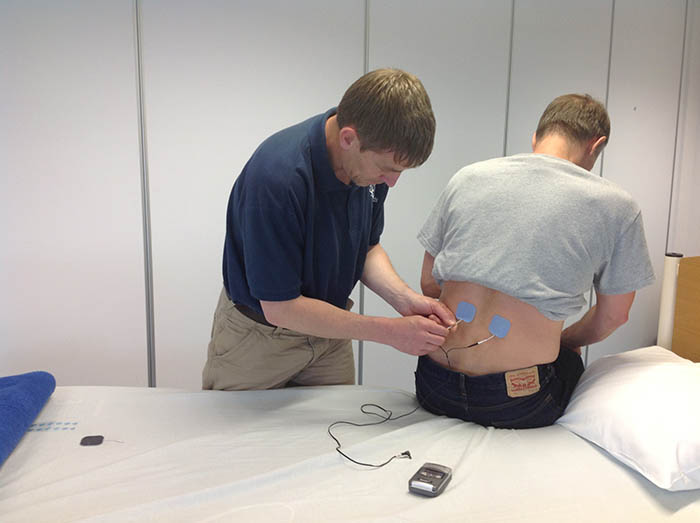
Transcutaneous electrical nerve stimulation is the delivery of pulsed electrical currents across the intact surface of the skin to stimulate peripheral nerves (Figure 1). TENS provides symptomatic relief from various types of pain and may be used as an adjunct or as a stand-alone intervention for acute and chronic pain conditions, including musculoskeletal pain (Table 1). TENS is safe, inexpensive and can be self-administered without fear of overdose or drug interactions (Table 2). The purpose of this chapter is to overview therapeutic technique, clinical efficacy and the mechanism of action of TENS for musculoskeletal pain
22 July 2021
PLoS One16(7):e0254800 Public Library of Science
Authors: Kingston T, Tiller NB, Partington E, Ahmed M, Jones G, Johnson MI, Callender NA, Editors: Menezes RGObjectives Compliant surfaces beneath a casualty diminish the quality of cardiopulmonary resuscitation (CPR) in clinical environments. To examine this issue in a sporting environment, we assessed chest compression quality and rescuer exertion upon compliant sports safety matting. Methods Twenty-seven advanced life support providers volunteered (13 male/14 female; mass = 79.0 ± 12.5 kg; stature = 1.77 ± 0.09 m). Participants performed 5 × 2 min, randomized bouts of continuous chest compressions on a mannequin, upon five surfaces: solid floor; low-compliance matting; low-compliance matting with a backboard; high-compliance matting; high-compliance matting with a backboard. Measures included chest compression depth and rate, percentage of adequate compressions, and rescuer heart rate and perceived exertion. Results Chest compression depth and rate were significantly lower upon high-compliance matting relative to other surfaces (p<0.05). The percentage of adequate compressions (depth ≥50 mm) was lowest upon high-compliance matting (40 ± 39%) versus low-compliance matting (60 ± 36%) and low-compliance matting with a backboard (59 ± 39%). Perceived exertion was significantly greater upon high-compliance matting versus floor, low-compliance matting, and low-compliance matting with a backboard (p<0.05). Conclusion Providers of CPR should be alerted to the detrimental effects of compliant safety matting in a sporting environment and prepare to alter the targeted compression depth and rescuer rotation intervals accordingly.
The epidemiology of injury in english professional women’s football: a prospective cohort study
23 November 2021
IOC World Conference on Prevention of Injury & Illness in Sport 2021 Poster Presentations Monaco BMJ Publishing Group Ltd and British Association of Sport and Exercise Medicine
Background Despite the professionalization of women’s football the incidence and prevalence of injuries occurring within England is currently unknown. Objective To estimate the incidence, prevalence and nature of injury in a single professional Women’s football squad over one season (2018/2019) Design Prospective single site cohort study. Setting Professional women’s football squad competing in the English Women’s Championship. Patients (or Participants) 25 players with a professional contract. Ethical approval was obtained from Leeds Beckett University. Interventions (or Assessment of Risk Factors) Data collection procedures followed the UEFA consensus guidelines. Player exposures were recorded via GPS for all football related activity Main Outcome Measurements Incidence of injury per 1000h of exposure, prevalence and severity of injury per anatomical site, epidemiologic incidence proportion and clinical incidence to provide measures of injury burden and resource management. Results The incidence of injury was 8.04/1000 h (95% CI 4.32–11.77), 30.68/1000 h (95% CI 14.61–47.75) during match play and 2.24/1000 h (95% CI: 0.25–4.66) during training. A total of 18 injuries including re-injuries were sustained providing a clinical incidence of 0.72 (95% CI 0.54–0.89) injuries per player. The most common sites of injury were the knee (5/18, 27%) and anterior thigh (3/18, 17%). There was 1 non time loss injury, 3 minimal injuries (16.6%; 1–3 days), 4 mild (22.2%; 4- 7 days), 6 moderate (33,3%; 8 – 28 days) and 4 severe injuries (22.2%; > 28 days). Of the 5 knee injuries, 2 were ruptures of the anterior cruciate ligament via a non-contact mechanism. Epidemiological incidence proportion was 0.44 (95% CI: 0.24–0.74) thus the average probability that any player would sustain at least one injury was 44% (95% CI: 25%-63%). Conclusions This is the first prospective investigation capturing injury incidence from a cohort of English players. The relatively high proportion of ACL injuries imposes a significant burden on a squad of this size. Multi-site prospective investigations of injury are required
Injury trends in men’s english professional football: an 11 year case series
23 November 2021
IOC World Conference on Prevention of Injury & Illness in Sport 2021 Poster Presentations Monaco BMJ Publishing Group Ltd and British Association of Sport and Exercise Medicine
Background: In a recent single season audit of men’s English professional football, the incidence of injury was reported as 9.11 injuries/1000 h (Jones et al., 2019). Whilst this provides an up to date estimate of a single season, there is a paucity of research examining the incidence of injury over multiple seasons in English football. Objective: The aim of this study was to examine the injury trends in English professional football over 11 seasons (2007/8–2013/14 and 2015/16–2018/19). Design: Retrospective case series. Setting: Professional football players competing in the English Football League. Participants: 363 players from four squads. Main outcome: Data collection procedures followed the guidelines set out in the Union of European Football Associations (UEFA) consensus for all 11 seasons. Injury incidence per 1000 h was estimated from match and training exposure. Results: There were 907 injuries recorded over 11 years. The overall incidence rate was 6.5/1000 h (95% CI). The incidence rate in match play was significantly higher than training (58 vs 2.8/1000 h, P<0.001, 95% CI). Incidence rates remained stable over 11 years and there was no significant difference for muscle and ligament incidence rates between seasons (<0.05). The most common site of injury was the thigh, (27%, 242/907). Muscle strains accounted for 49% (445/907) of all injuries. The hamstrings were the most frequently injured muscle group, accounting for 17% (150/907) of all injuries and 34% (150/445) of muscle injuries. There was a significant increase in the number of hamstring injuries occurring during match play across seasons (P=0.024, 95% CI). Re-injuries constituted 6% (55/907) of all injuries and caused longer absences than initial injury (14.7 vs 8.5, P<0.001, 95% CI). Conclusions: Whilst overall incidence rates remain stable, the incidence of hamstring injuries remains high and re-injuries had a higher severity than initial injuries.
12 December 2019
Current Sports Medicine Reports18(12):431-433 Ovid Technologies (Wolters Kluwer Health)
Halsey T, Johnson MI, Jones GInjury Prevention
2022
Climbing Medicine Springer International Publishing
Jones G, Ehiogu UD, Johnson MIThe cause of injury is often multifactorial and rarely the preserve of one independent factor. Inconsistency in the use of injury terminology, data collection procedures, calculation of exposure, and operational measures of performance by researchers exist. Standardising the criteria used to attribute injury and climbing activity, coupled with more accurate methods of calculating exposure, will overcome such limitations. Injury prevention in sport should therefore be governed by logical principles that provide the athlete, healthcare professional and coaching team with direction. In the sport of climbing, athletes need to be physically prepared to fully meet the demands imposed upon them. Athletic development and physical preparation strategies are a cornerstone of climbing performance and injury prevention. The ability of musculoskeletal tissues to adapt its material, morphological and physiological properties provide a performance advantage. Although there is a paucity of empirical research evidence in climbing populations, the use of injury surveillance, work load monitoring protocols, and physical preparation strategies may facilitate better future injury prevention planning.
Climbing Injury Rehabilitation
2022
Climbing Medicine Springer International Publishing
Ehiogu UD, Jones G, Johnson MIThe aim of sports injury rehabilitation is to restore an individual’s athletic function and performance to preinjury levels and to minimise the risk of reinjury. To effectively manage this process, clinicians require a comprehensive knowledge of the generic and specific injuries that climbers may sustain, an understanding of the principles of rehabilitation and an ability to adapt management plans specifically to the needs of the individual. Rehabilitation and physical preparation necessitate the development of systems thinking utilising evidence from published literature, the clinicians experience and shared decision-making with the patient. The central tenet of rehabilitation is the optimal application of mechanical load to stimulate electrochemical activity at cellular level, termed mechanotransduction.
Running Injury According To Training And Performance Related Data
July 2020
Medicine & Science in Sports & Exercise52(7S):1052 Ovid Technologies (Wolters Kluwer Health)
Oddy C, Johnson MI, Jones G, Francis P003 Growth plate fractures in adolescent climbers: a critical review
01 March 2020
British Journal of Sports Medicine54(Suppl 1):a2
Sport Climbing debuts at the 2020 Olympic Games in Tokyo. The average age of elite competition climbers has decreased significantly, and adolescent climbers sustain a unique type of climbing-related injury. To critically review the prevalence, identification and management strategies of physeal fractures of the phalanges in the hands of adolescent climbers. Semi-systematic literature review was conducted, searching the following electronic databases: Discover, Academic Search Complete (EBSCO), PubMed, Embase, SPORTDiscus, and ScienceDirect. Studies that reported injuries of the physis in adolescent climbers. Competitive and/or recreartional adolescent climbers Fifty percent of reported adolescent climbing injuries were fractures of the physis. High, repetitive training load during the peak height velocity growth phase was frequently described. A higher proportion of fractures was reported in male athletes, where the middle finger was the most commonly affected digit. Examination usually revealed pain on the dorsal aspect of the PIP joint of the middle or ring finger and occasionally localised swelling. A Salter-Harris type III fracture was the most common presentation. Confirmation of fracture using plain radiographs and/or magnetic resonance imaging (MRI). Early fracture identification reduces the risk of premature closure of the physis and asymmetrical deformity of the finger. MRI using a wrist coil to confirm diagnosis in cases where plain radiographs are inconclusive is recommended. For non-displaced fractures, initial cessation of climbing activity, a resting splint 3–4 weeks (daily removal/tendon gliding exercises) followed by a gradual return to activity with load modification produced favourable results. Epiphysiodesis may be considered in cases where abnormal differential bone growth exists. A diagnostic and therapeutic algorithm was formulated. Fractures of the physis in adolescent climbers are common. Early diagnosis and non-surgical management demonstrate good results. The routine monitoring of training load is advised.
276 The characterisation of dupuytrens disease in climbers
01 March 2020
British Journal of Sports Medicine54(Suppl 1):a114
The risk of developing Dupuytrens disease—a benign chronic fibro-proliferative condition of the palmer fascia—has been associated with chronic heavy manual labour. The fingers and hands of climbers are routinely subjected to high load forces which may predispose individuals to disease development. The prevalence within the general population is unknown throughout the lifespan but has been found to increase with age and is estimated to be 12% at 55 yrs and 29% at 75 yrs. There is a paucity of information in regard of this condition in climbers. To characterise Dupuytren’s disease in a large sample of active climbers. Retrospective cross-sectional online survey utilising operational measures of disease, climbing behaviour and injury. Participants recruited via The Climber’s Club of Great Britain and UKClimbing.com 369 active climbers (307 male, 62 female) aged 14–80 Climbing behaviours and key demographics. Prevalence of Dupuytren’s, injuries requiring medical assistance or withdrawal from participation for ≥1 day. The prevalence of Dupuytren’s was 17.6% (65/369). Of the 65 climbers (mean age 51.28 SD ± 13.77), 59 climbers were male (mean age 51.25 SD ±14.01) and 6 climbers were female (mean age 51.50 SD ± 12.37). Dupuytren’s was present in 40 climbers bilaterally and 25 climbers unilaterally. The fourth and fifth fingers were the most commonly affected digits. The youngest climber diagnosed was 23 yrs and 38 climbers were diagnosed ≤ 55 yrs of age. Twenty-one climbers underwent surgery. Of these 19 had successful outcomes and 2 climbers had a recurrence. No climbers reported percutaneous needle fasciotomy or injection of collagenase as a clinical intervention. There was no increased risk of finger injury in Dupuytren’s participants (RR 0.62 (95% CI, 0.43–0.89); OR 0.44 (95% CI, 0.25–0.77)). Dupuytren’s does not appear to increase the risk of finger injury in climbers. A prospective study to investigate disease onset and progression in climbers is warranted.
Acute compartment syndrome after minor trauma in a patient with undiagnosed mild haemophilia B
07 July 2018
The 23rd Annual Congress of the European College of Sports Science European College of Sport Science: sport science at the cutting edge, July 4-7, 2018, Dublin Dublin
Introduction: The epidemiology of injury in male professional football has been well documented (Ekstrand, Hägglund, & Waldén, 2011) and used as a basis to understand injury trends for a number of years. The prevalence and incidence of injuries occurring in women’s super league football is unknown. The aim of this study is to estimate the prevalence and incidence of injury in an English Super League Women’s Football squad. Methods: Following ethical approval from Leeds Beckett University, players (n = 25) signed to a Women’s Super League Football club provided written informed consent to complete a self-administered injury survey. Measures of exposure, injury and performance over a 12-month period was gathered.
01 June 2019
American College of Sports Medicine Medicine and Science in Sports and Exercise Orlando, Florida, USA Lippincott, Williams & Wilkins
The epidemiology of injury in male professional football is well documented and has been used as a basis to monitor injury trends and implement injury prevention strategies. There are no systematic reviews that have investigated injury incidence in women’s professional football. Therefore, the extent of injury burden in women’s professional football remains unknown. PURPOSE: The primary aim of this study was to calculate an overall incidence rate of injury in senior female professional soccer. The secondary aims were to provide an incidence rate for training and match play. METHODS: PubMed, Discover, EBSCO, Embase and ScienceDirect electronic databases were searched from inception to September 2018. Two reviewers independently assessed study quality using the Strengthening the Reporting of Observational Studies in Epidemiology statement using a 22-item STROBE checklist. Seven prospective studies (n=1137 professional players) were combined in a pooled analysis of injury incidence using a mixed effects model. Heterogeneity was evaluated using the Cochrane Q statistic and I2. RESULTS: The epidemiological incidence proportion over one season was 0.62 (95% CI 0.59 - 0.64). Mean total incidence of injury was 3.15 (95% CI 1.54 - 4.75) injuries per 1000 hours. The mean incidence of injury during match play was 10.72 (95% CI 9.11 - 12.33) and during training was 2.21 (95% CI 0.96 - 3.45). Data analysis found a significant level of heterogeneity (total Incidence, X2 = 16.57 P < 0.05; I2 = 63.8%) and during subsequent sub group analyses in those studies reviewed (match incidence, X2 = 76.4 (d.f. = 7), P <0.05; I2 = 90.8%, training incidence, X2 = 16.97 (d.f. = 7), P < 0.05; I2 = 58.8%). Appraisal of the study methodologies revealed inconsistency in the use of injury terminology, data collection procedures and calculation of exposure by researchers. Such inconsistencies likely contribute to the large variance in the incidence and prevalence of injury reported. CONCLUSIONS: The estimated risk of sustaining at least one injury over one football season is 62%. Continued reporting of heterogeneous results in population samples limits meaningful comparison of studies. Standardising the criteria used to attribute injury and activity coupled with more accurate methods of calculating exposure will overcome such limitations.
07 July 2018
23rd Annual Congress, European College of Sport Science EUROPEAN COLLEGE OF SPORT SCIENCE Dublin, Ireland ISBN 978-3-9818414-1-1
INTRODUCTION: The epidemiology of injury in male professional football has been well documented (Ekstrand, Hägglund, & Waldén, 2011) and used as a basis to understand injury trends for a number of years. The prevalence and incidence of injuries occurring in womens super league football is unknown. The aim of this study is to estimate the prevalence and incidence of injury in an English Super League Women’s Football squad. METHODS: Following ethical approval from Leeds Beckett University, players (n = 25) signed to a Women’s Super League Football club provided written informed consent to complete a self-administered injury survey. Measures of exposure, injury and performance over a 12-month period was gathered. Participants were classified as injured if they reported a football injury that required medical attention or withdrawal from participation for one day or more. Injuries were categorised as either traumatic or overuse and whether the injury was a new injury and/or re-injury of the same anatomical site RESULTS: 43 injuries, including re-injury were reported by the 25 participants providing a clinical incidence of 1.72 injuries per player. Total incidence of injury was 10.8/1000 h (95% CI: 7.5 to 14.03). Participants were at higher risk of injury during a match compared with training (32.4 (95% CI: 15.6 to 48.4) vs 8.0 (95% CI: 5.0 to 10.85)/1000 hours, p<0.05). The most common sites of injury was the anterior thigh (13/43, 30.2%) and knee (11/43, 25%). There were eleven (25.6%) discrete quadricep muscle injuries (4 traumatic 36.4%; 7 overuse 63.6%) and eight (18.6%) discrete ligament injuries (8 traumatic 100.0%). There were two minimal injuries (4.7%; 1-3 days), twenty-five mild (58.1%; 4- 7 days), twelve moderate (27.9%; 8 – 28 days) and four severe injuries (9.3%; > 28 days) of which there were three non-contact anterior cruciate ligament (ACL) injuries. The epidemiological incidence proportion was 0.80 (95% CI: 0.64 to 0.95) and the average probability that any player on this team will sustain at least one injury was 80.0% (95% CI: 64.3% to 95.6%) CONCLUSION: This is the first report capturing exposure and injury incidence by anatomical site from a cohort of English players and is comparable to that found in Europe (6.3/1000 h (95% CI 5.4 to 7.36) Larruskain et al 2017). The number of ACL injuries highlights a potential injury burden for a squad of this size. Multi-site prospective investigations into the incidence and prevalence of injury in women’s football are required
09 October 2017
BMJ Open Sport and Exercise Medicine3(1):e000220 BMJ
Objectives Football has the highest sports participation (10.6%) in Ireland ahead of its Gaelic counterpart (3.9%). Research into injury incidence and patterns in Irish football is non-existent. The aim of this study was to conduct a prospective injury audit of league of Ireland (semi-professional) footballers during the 2014 season (8 months; 28 games). Methods A total of 140 semi-professional league of Ireland footballers were prospectively followed between March and November 2014. Data was collected in accordance with the international consensus on football injury epidemiology. Results The injury rate was 9.2/1000 h exposure to football (95% CI 6.2 to 12.9, P<0.05). Players were at a higher risk of injury during a match compared with training (23.1 (95% CI 15.2 to 31.3) vs. 4.8 (95% CI 2.2 to 7.7)/1000 h, P<0.05). Injuries were most common during non-contact activity (54.6%), mainly running (30.9%) and occurred almost 3 times more often in the second half (56% vs. 21%, P<05). Strains (50.1%) and sprains (20.3%) were the most common injury type and the thigh region was injured most often (28.3%). Conclusions The prevalence of injury in league of Ireland football is similar to that of European professional football although the incidence of injury is higher. The incidence of injury is in line with that of Dutch amateur football.
01 January 2017
BMJ Open Sport & Exercise Medicine2(1):e000177 BMJ Group Ltd
Oddy C, Johnson MI, Jones GBackground/Aim: Rugby league is a collision sport where musculoskeletal injuries are common. There has been little research on generalised joint hypermobility (GJH) as a risk factor for injury in rugby league. The aim of this study was to investigate the role of GJH on the incidence of injuries in first and second team rugby league players from one British university. Methods: We conducted a prospective cohort study of 45 student players from one British university first and second team rugby league squads (Mean age20.93 ± 1.57). At the beginning of the season, generalised joint hypermobility was determined using a 9 point Beighton scale, injury and exposure data was collected on a weekly basis throughout the 2013-2014 season. Results: The prevalence of GJH was 20%. There was no statistically significant difference in the frequency of injuries between GJH and non-GJH participants (P=0.938, Mann-Whitney U test). There was no tendency to experience injury for participants categorised as having GJH (P = 0.722, Fisher exact test) and no tendency to demonstrate a higher risk of injury for participants categorised as GJH (odds ratio = 0.64, 95% CI, 0.15-2.78; relative risk = 1.188, 95% CI, 0.537-2.625). The most common site of injury was the ankle but this was not statistically significant (odds ratio= 0.152, 95% CI, 0.008-2.876; relative risk= 0.195, 0.012-3.066). Conclusion: British university rugby league players with GJH did not demonstrate a greater risk of injury than those without GJH.
07 February 2018
Journal of Physical Medicine http://www.scholarlypages.org/Articles/physical-medicine/jpm-1-001.php?jid=physical-medicine
Objective This study compared the effect of exercise during full, partial (intermittent) and no BFR on pain and muscular endurance. Design Within-subject repeated measures cross-over study comparing full BFR (200 mmHg), partial BFR (100 mmHg) and no (control) BFR during hand-grip exercises of a bulb dynamometer (60 per minute) at 30% of their one-repetition maximum of grip strength. Setting Laboratory. Participants 20 student volunteers (male = 14, age = 22-29 years). Main outcome measures Time to exhaustion and pain perception at minute intervals during handgrip exercises. Results There were fewer (77.0 ± 34.7) handgrip exercise repetitions during full BFR compared with partial BFR (125.1 ± 37.7, p < 0.001) and fewer repetitions for partial BFR compared with no BFR (147.6 ± 11.3 repetitions, p = 0.026). Pain intensity was higher for full BFR compared with partial BFR (p = 0.045) and higher for partial BFR compared with no BFR (p < 0.001). Participants selected more total, sensory and affective pain descriptors of the Short-Form McGill Pain Questionnaire during full BFR compared with partial BFR and no BFR. Conclusion Full BFR produced severe exercise-induced pain so partial BFR may be a more acceptable training and rehabilitation aid.
Transcutaneous electrical nerve stimulation (TENS) for fibromyalgia in adults
09 October 2017
Cochrane Database of Systematic Reviews2017(10):CD012172 Wiley
Johnson MI, Claydon LS, Herbison GP, Jones G, Paley CA© 2017 The Cochrane Collaboration. Published by John Wiley & Sons, Ltd. Background: Fibromyalgia is characterised by persistent, widespread pain; sleep problems; and fatigue. Transcutaneous electrical nerve stimulation (TENS) is the delivery of pulsed electrical currents across the intact surface of the skin to stimulate peripheral nerves and is used extensively to manage painful conditions. TENS is inexpensive, safe, and can be self-administered. TENS reduces pain during movement in some people so it may be a useful adjunct to assist participation in exercise and activities of daily living. To date, there has been only one systematic review in 2012 which included TENS, amongst other treatments, for fibromyalgia, and the authors concluded that TENS was not effective. Objectives: To assess the analgesic efficacy and adverse events of TENS alone or added to usual care (including exercise) compared with placebo (sham) TENS; no treatment; exercise alone; or other treatment including medication, electroacupuncture, warmth therapy, or hydrotherapy for fibromyalgia in adults. Search methods: We searched the following electronic databases up to 18 January 2017: CENTRAL (CRSO); MEDLINE (Ovid); Embase (Ovid); CINAHL (EBSCO); PsycINFO (Ovid); LILACS; PEDRO; Web of Science (ISI); AMED (Ovid); and SPORTDiscus (EBSCO). We also searched three trial registries. There were no language restrictions. Selection criteria: We included randomised controlled trials (RCTs) or quasi-randomised trials of TENS treatment for pain associated with fibromyalgia in adults. We included cross-over and parallel-group trial designs. We included studies that evaluated TENS administered using non-invasive techniques at intensities that produced perceptible TENS sensations during stimulation at either the site of pain or over nerve bundles proximal (or near) to the site of pain. We included TENS administered as a sole treatment or TENS in combination with other treatments, and TENS given as a single treatment or as a course of treatments. Data collection and analysis: Two review authors independently determined study eligibility by assessing each record and reaching agreement by discussion. A third review author acted as arbiter. We did not anonymise the records of studies before assessment. Two review authors independently extracted data and assessed risk of bias of included studies before entering information into a 'Characteristics of included studies' table. Primary outcomes were participant-reported pain relief from baseline of 30% or greater or 50% or greater, and Patient Global Impression of Change (PGIC). We assessed the evidence using GRADE and added 'Summary of findings' tables. Main results: We included eight studies (seven RCTs, one quasi-RCT, 315 adults (299 women), aged 18 to 75 years): six used a parallel-group design and two used a cross-over design. Sample sizes of intervention arms were five to 43 participants. Two studies, one of which was a cross-over design, compared TENS with placebo TENS (82 participants), one study compared TENS with no treatment (43 participants), and four studies compared TENS with other treatments (medication (two studies, 74 participants), electroacupuncture (one study, 44 participants), superficial warmth (one cross-over study, 32 participants), and hydrotherapy (one study, 10 participants)). Two studies compared TENS plus exercise with exercise alone (98 participants, 49 per treatment arm). None of the studies measured participant-reported pain relief of 50% or greater or PGIC. Overall, the studies were at unclear or high risk of bias, and in particular all were at high risk of bias for sample size. Only one study (14 participants) measured the primary outcome participant-reported pain relief of 30% or greater. Thirty percent achieved 30% or greater reduction in pain with TENS and exercise compared with 13% with exercise alone. One study found 10/28 participants reported pain relief of 25% or greater with TENS compared with 10/24 participants using superficial warmth (42 °C). We judged that statistical pooling was not possible because there were insufficient data and outcomes were not homogeneous. There were no data for the primary outcomes participant-reported pain relief from baseline of 50% or greater and PGIC. There was a paucity of data for secondary outcomes. One pilot cross-over study of 43 participants found that the mean (95% confidence intervals (CI)) decrease in pain intensity on movement (100-mm visual analogue scale (VAS)) during one 30-minute treatment was 11.1 mm (95% CI 5.9 to 16.3) for TENS and 2.3 mm (95% CI 2.4 to 7.7) for placebo TENS. There were no significant differences between TENS and placebo for pain at rest. One parallel group study of 39 participants found that mean ± standard deviation (SD) pain intensity (100-mm VAS) decreased from 85 ± 20 mm at baseline to 43 ± 20 mm after one week of dual-site TENS; decreased from 85 ± 10 mm at baseline to 60 ± 10 mm after single-site TENS; and decreased from 82 ± 20 mm at baseline to 80 ± 20 mm after one week of placebo TENS. The authors of seven studies concluded that TENS relieved pain but the findings of single small studies are unlikely to be correct. One study found clinically important improvements in Fibromyalgia Impact Questionnaire (FIQ) subscales for work performance, fatigue, stiffness, anxiety, and depression for TENS with exercise compared with exercise alone. One study found no additional improvements in FIQ scores when TENS was added to the first three weeks of a 12-week supervised exercise programme. No serious adverse events were reported in any of the studies although there were reports of TENS causing minor discomfort in a total of 3 participants. The quality of evidence was very low. We downgraded the GRADE rating mostly due to a lack of data; therefore, we have little confidence in the effect estimates where available. Authors' conclusions: There was insufficient high-quality evidence to support or refute the use of TENS for fibromyalgia. We found a small number of inadequately powered studies with incomplete reporting of methodologies and treatment interventions.
06 July 2016
Journal of Sports Medicine and Physical Fitness57(6):811-815 Edizioni Minerva Medica
Francis P, Mc Cormack W, Caseley A, Copeman J, Jones GSwimming, running and cycling are among the most popular and fastest growing sports in the world. Inherent in these sports is a desire to favourably alter body composition. Here we report a ~5.4kg and ~5.3kg fat tissue mass (FTM) loss in two separate interventions (12 – 16 weeks), in the same athlete, separated by 5 years. Whole body composition was assessed using dual x-ray absorptiometry (DXA). Dietary analysis for intervention 2 was completed using Mc Cance and Widdowson’s composition of foods. In 2010, the male athlete (23 yrs, 85kg, 195cm, 18.1% body fat (BF)) had a reduction of ~5.4kg of FTM (15.4kg vs. 10.0kg) and an increase of ~5.1kg of lean tissue mass (LTM) following 16 weeks of moderate intensity running (213 (53) min/week) and circuit training (64 (46) min/week). In 2015, the same athlete (28 yrs, 90.6kg, 195cm; 18.2%) had a ~5.3kg loss of FTM and a ~0.8kg increase in LTM after 12 weeks, predominately (75%) non-weight bearing exercise (49% Cycling, 215 (88) min/week; 25% Running 110 (47) min/week; 19% Swimming, 83 (27) min/week; 7% Rowing Machine, 29 (26) min/week). Weekday and weekend dietary intake during intervention 2 were estimated as 2,560 kcal and 3,240 kcal per day respectively. This report provides support for the hypothesis that an extended period of energy deficit is required to reduce body fat levels in amateur athletes independent of the mode of exercise.
28 April 2016
Cochrane Database of Systematic Reviews Cochrane Collaboration
Authors: Johnson MI, Claydon LS, Herbison GP, Paley CA, Jones G, Editors: Johnson MIThis is the protocol for a review and there is no abstract. The objectives are as follows: To assess the analgesic efficacy and adverse events of TENS for fibromyalgia in adults. We will assess TENS on its own or added to usual care in comparisons with placebo (sham) TENS, usual care, or no treatment.
04 October 2021
Medicina57(10):1060 MDPI
Paley CA, Wittkopf PG, Jones G, Johnson MIBackground and Objectives: Uncertainty about the clinical efficacy of transcutaneous electric nerve stimulation (TENS) to alleviate pain spans half a century. There has been no attempt to synthesise the entire body of systematic review evidence. The aim of this comprehensive review was to critically appraise the characteristics and outcomes of systematic reviews evaluating the clinical efficacy of TENS for any type of acute and chronic pain in adults. Materials and Methods: We searched electronic databases for full reports of systematic reviews of studies, overviews of systematic reviews, and hybrid reviews that evaluated the efficacy of TENS for any type of clinical pain in adults. We screened reports against eligibility criteria and extracted data related to the characteristics and outcomes of the review, including effect size estimates. We conducted a descriptive analysis of extracted data. Results: We included 169 reviews consisting of eight overviews, seven hybrid reviews and 154 systematic reviews with 49 meta-analyses. A tally of authors' conclusions found a tendency toward benefits from TENS in 69/169 reviews, no benefits in 13/169 reviews, and inconclusive evidence in 87/169 reviews. Only three meta-analyses pooled sufficient data to have confidence in the effect size estimate (i.e., pooled analysis of >500 events). Lower pain intensity was found during TENS compared with control for chronic musculoskeletal pain and labour pain, and lower analgesic consumption was found post-surgery during TENS. The appraisal revealed repeated shortcomings in RCTs that have hindered confident judgements about efficacy, resulting in stagnation of evidence. Conclusions: Our appraisal reveals examples of meta-analyses with 'sufficient data' demonstrating benefit. There were no examples of meta-analyses with 'sufficient data' demonstrating no benefit. Therefore, we recommend that TENS should be considered as a treatment option. The considerable quantity of reviews with 'insufficient data' and meaningless findings have clouded the issue of efficacy. We offer solutions to these issues going forward.
14 June 2022
Medicina (Kaunas)58(6):803 MDPI
Johnson MI, Paley CA, Wittkopf PG, Mulvey MR, Jones GBackground and Objectives: Characterising the features of methodologies, clinical attributes and intervention protocols, of studies is valuable to advise directions for research and practice. This article reports the findings of a secondary analysis of the features from studies screened as part of a large systematic review of TENS (the meta-TENS study). Materials and Methods: A descriptive analysis was performed on information associated with methodology, sample populations and intervention protocols from 381 randomised controlled trials (24,532 participants) evaluating TENS delivered at a strong comfortable intensity at the painful site in adults with pain, irrespective of diagnosis. Results: Studies were conducted in 43 countries commonly using parallel group design (n = 334) and one comparator group (n = 231). Mean ± standard deviation (SD) study sample size (64.05 ± 58.29 participants) and TENS group size (27.67 ± 21.90 participants) were small, with only 13 of 381 studies having 100 participants or more in the TENS group. Most TENS interventions were 'high frequency' (>10 pps, n = 276) and using 100 Hz (109/353 reports that stated a pulse frequency value). Of 476 comparator groups, 54.2% were active treatments (i.e., analgesic medication(s), exercise, manual therapies and electrophysical agents). Of 202 placebo comparator groups, 155 used a TENS device that did not deliver currents. At least 216 of 383 study groups were able to access other treatments whilst receiving TENS. Only 136 out of 381 reports included a statement about adverse events. Conclusions: Clinical studies on TENS are dominated by small parallel group evaluations of high frequency TENS that are often contaminated by concurrent treatment(s). Study reports tended focus on physiological and clinical implications rather than the veracity of methodology and findings. Previously published criteria for designing and reporting TENS studies were neglected and this should be corrected in future research using insights gleaned from this analysis.
CLINICAL EFFICACY OF TRANSCUTANEOUS ELECTRICAL NERVE STIMULATION (TENS) FOR THE RELIEF OF PAIN: A SYSTEMATIC REVIEW (SR) AND META-ANALYSIS (MA) OF RANDOMISED CONTROLLED TRIALS (RCTS)
04 September 2019
11th Congress of the European Pain Federation 2019 Valencia, Spain
Background and aims: The clinical efficacy of TENS for pain relief is long debated. Most SRs and MAs have proved inconclusive; however, many focus on specific types of pain, reducing the sample size. The two MAs with participant numbers approaching the threshold of acceptability recommended by the Cochrane Collaboration both report superiority of TENS vs placebo. There is no convincing evidence that a specific diagnosis predicts response to TENS. Therefore, using a larger pool of data than previous studies, this SR and MA aims to assess the clinical efficacy of TENS for reducing acute and chronic pain in adults, regardless of pain condition. It will also analyse the relationship of TENS settings (e.g. frequency, duration, intensity) to efficacy. Methods: Cross-over and parallel-group RCTs will be identified by searching published SRs on the use of TENS for pain relief, as well as for additional relevant RCTs published in subsequent years. RCTs will be included if they employ TENS to deliver treatment via surface electrodes to adults with any type of acute or chronic pain. Data extraction and analyses will mirror Cochrane processes. The main MA will compare TENS vs placebo TENS, standard-of-care, and other treatments, and include a variety of subgroup analyses (e.g., optimal vs suboptimal TENS, acute vs chronic pain, pain conditions). If possible, a network MA will evaluate TENS against multiple comparison treatments. The primary endpoints will be the percentage of patients with ≥30% pain relief and reduction in pain intensity. Results and conclusion: pending study completion
Has long-standing uncertainty about the clinical efficacy of TENS finally been resolved?
27 April 2023
Pain Management13(4):201-204 (4 Pages) Future Medicine Ltd
Johnson MI, Paley CA, Jones G 09 July 2018
Sports Therapy and Rehabilitation Conference Graduate Journal of Sport, Exercise & Physical Education Research Plymouth Graduate Journal of Sport, Exercise & Physical Education Research
Indoor sport climbing will debut as a new Olympic discipline at the 2020 summer games in Tokyo. The annular pulleys of the fingers are the most commonly reported injured structure in climbing. There are five annular pulleys within each finger and referred to as the A1, A2, A3, A4 and A5. The A2 and A4 structurally maintain the integrity of the flexor tendon system due to their direct attachment to the underlying bone. The A2 is the largest pulley and capable of withstanding up to 400 newton of force. Anecdotal evidence suggests some climbers apply athletic tape to the fingers both as a prophylactic measure to prevent annular pulley injury and to increase their grip strength capability. Grip refers to the method by which the climber holds the climbing surface to facilitate movement. The type of grip the climber uses largely depends on the size and shape of the available hand-holds, the climber’s body orientation in relation to the climbing surface and the strength of the climber. A common type of grip used in climbing is the closed crimp position. In this position the proximal interphalangeal joint is flexed at approximately 100° and the distal interphalangeal joint is hyperextended at approximately 210°. The distal palmer surface of the index, middle and ring fingers are normally in contact with the surface and the thumb often placed over the dorsal surface of the index finger to generate more force. The aim of the study was to investigate if taping the fingers increased crimp grip strength in uninjured climbers. Following ethical approval by the Leeds Beckett University research ethics committee, 50 active climbers (25 male, 25 female) were recruited. Using a within subject repeated measures design, a Jamar plus digital dynamometer was used to measure crimp grip strength (3 trial mean, dominant and non-dominant hand, tape and no-tape). The order of conditions was randomised and each participant performed each grip. The tape condition involved applying a 10cm piece of 1” Lewis-Plast zinc oxide tape to the proximal interphalangeal joint of the index, middle and ring fingers using the H-tape method. There was no statistically significant difference (p = 0.922, paired t-test) in crimp grip strength between tape (24.03 ± 6.9kg) and no tape (23.99 ± 7.2kg) conditions. Taping the annular pulleys did not increase crimp grip strength as measured using hand held dynamometry in uninjured climbers.
Efficacy and Safety of Transcutaneous Electrical Nerve Stimulation (TENS) for Acute and Chronic Pain: A Systematic Review and Meta-Analysis (Meta-TENS)
01 January 2020
SSRN Electronic Journal Publisher
Johnson MI, Paley CA, Jones G, Mulvey MR, Wittkopf PGBackground: Uncertainty about the benefit of transcutaneous electrical nerve stimulation (TENS) to relieve pain is long-standing. We systematically reviewed the efficacy and safety of TENS for acute and chronic pain. Methods: We searched 10 databases from inception for randomised controlled trials (RCTs) that evaluated TENS administered using pulsed currents above sensory detection threshold at or close to the site of pain versus placebo and other treatments in adults. We meta-analysed mean pain intensity during or immediately after TENS and proportions of participants achieving > 30% or > 50% relief of pain (PROSPERO - CRD42019125054). Findings: We included 381 RCTs with 24532 participants. TENS reduced pain intensity compared with placebo [91 RCTs, 92 samples, n = 4841, standardised mean difference (SMD) = -0·96 [95% CI, -1·14, -0·78], I² = 88%], and compared with various treatments used in standard of care [61 RCTs, 61 samples, n = 3155, SMD = -0·72 [95% CI, -0·95, -0·50], I² = 88%]. Methodological and clinical characteristics did not modify the effect. Levels of evidence were downgraded because of a considerable number of small sized trials contributing to imprecision in magnitude estimates. Data was limited for other outcomes. Adverse events were mild and not different to comparators [18 RCTs, n = 805, 63/95 events, risk ratio, irrespective of severity, = 0·73 [95% CI, 0·36, 1·48], I² = 66%).Interpretation: There is moderate-certainty evidence that TENS reduces pain intensity during and immediately after stimulation compared with placebo. There were no serious adverse events.Funding Statement: The review was funded by an Investigator Sponsored Study grant from GlaxoSmithKline. The funder had no role in study design, data collection, data analysis, data interpretation, or writing of the report.Declaration of Interests: Prof. Mark I. Johnson (taken from ICMJE form): Dr. Johnson reports grants from GlaxoSmithKline, during the conduct of the study; other from GlaxoSmithKline, other from TENSCare, other from Actegy Ltd , personal fees from Oxford University Press, other from LifeCare Ltd, other from GlaxoSmithKline, other from Eurocept Pharmaceuticals, outside the submitted work; and I was involved in conducting studies [see manuscript] that were considered for inclusion in the work submitted for publication.We declare no competing interests: Dr Carole Paley, Dr Gareth Jones, Dr Mathew R. Mulvey, and Dr Priscilla Wittkopf.
Corrigendum to’ Epidemiology of injury in English professional football players: A cohort study’ [Physical Therapy in Sport 35C (2018)18–22]
July 2021
Physical Therapy in Sport50:138 Elsevier BV
The authors regret to inform that during recent additional analysis of the data included in this manuscript, a slight error in the reported exposure hours was detected. Whilst this does not change the overall conclusions and clinical implications of the study, the error does change the overall, match and training injury incidence figures reported in the study. The amended figures for exposure, overall injury incidence, match injury incidence and training injury incidence can be found below. In total, 52180 hours of exposure (42498 of training and 9682 of match play) were recorded across the season. The total incidence of injury was 9.06 injuries/1000h of exposure (95% CI [4.69 to 17.24]). Participants sustained a higher incidence of injury in match play (25.30 injuries/1000h, 95% CI [17.22 to 37.17]) than during training related activities (5.36 injuries/1000h, 95% CI [2.30 to 12.46]) with a mean difference of 19.44 injuries/1000h (95% CI [12.51 to 30.19]). The authors would like to apologise for any inconvenience caused.
Comment on: “Injury Profile in Women’s Football: A Systematic Review and Meta‑analysis”
27 August 2021
Sports Medicine51(51):2665-2666 Springer Science and Business Media LLC
2022
Journal of Elite Sport Performance2(1):1-10 (10 Pages) Pro Performance Training LTD
Mayhew L, Johnson MI, Lutter C, Jones GBackground The epidemiology of injury at club level in the English Women’s Domestic Club Football League is unknown. The aim of this study was to estimate the incidence, prevalence, and nature of injury in a single women’s football squad over the course of one season. Study Design Prospective single site cohort study Methods Twenty-five female footballers competing in the English Women’s Championship were observed. Data collection procedures followed the UEFA consensus guidelines (2006). Individual player exposure was recorded for all football related activity and incidence of injury per 1000h was estimated for total, match, and training activity. Prevalence, site, and type of injury was recorded. Epidemiologic incidence proportions, clinical incidence and severity was calculated to provide measures of injury burden and resource management statistics. Results A total of 18 injuries including re-injuries were sustained in 11 players providing a clinical incidence of 0.72 injuries per player. Epidemiological incidence proportion was 0.44 (95% CI: 0.24 – 0.74), thus the average probability that any player would sustain at least one injury was 44% (95% CI: 25% to 63%). The total incidence of injury was 8.0/1000h, 30.6/1000h during match play and 2.2/1000h during training. The most common sites of injury were the knee (5/18, 28%) and thigh (4/18, 22%). There was two (11%) non-time loss and 16 (89%) time-loss injuries recorded. Of the 16 time loss injuries, there were three (19%) severe, five (31%) moderate and six (37%) minor severity injuries. Of the five knee injuries, two (13%) were major severity ruptures of the anterior cruciate ligament. Injury burden was estimated to be 468 days lost/1000h. Conclusions This is the first prospective investigation capturing women’s injury incidence data from a cohort of English domestic club players. Total, match, and training incidence rate estimates are comparable to rates of single site cohort studies in Europe. The days lost from knee injuries imposes an increased burden on a squad of this size. Multi-site prospective investigations of injury are required.
A preliminary investigation into the diagnostic accuracy of clinical neurological examination in patients with lumbar radiating leg pain
21 March 2014
Pain and Rehabilitation36:14-18
Thompson K, Tashani O, Jones GObjectives The purpose of this preliminary study was to investigate the feasibility of carrying out research to determine the diagnostic accuracy of routine clinical neurological examination in patients with lumbar radiating leg pain. Design: A preliminary investigation Setting: Primary Care NHS Leeds spinal injection clinic. Participants: Fifteen patients were contacted. Ten patients attended spinal injection clinic, six of which consented to take part in the study. Interventions: Participants agreed to a clinical neurological examination consisting of dermatome, myotome and reflex testing by a Physiotherapist (Rater 1). The physiotherapist made a diagnosis whether lumbar radiating leg pain was radicular in nature based on the clinical examination. Prior to attending clinic all patients received a lumbar MRI. A musculoskeletal physician (Rater 2) reported whether there was radiological evidence of radicular symptoms. Rater 1 and Rater 2 were blind to each other's findings. Results: The level of agreement on the existence of radicular symptoms was calculated to be 100% between Rater 1 and Rater 2. When results were analysed for agreement on exactly which spinal level was affected agreement was calculated to be 66%. Conclusions: Initial results indicate that a composite clinical neurological examination is promising in its diagnostic ability in patients with radiating leg pain. Limitations are discussed and proposals for further research highlighted.
Characterisation of delayed onset of muscle soreness (DOMS) in the hand, wrist and forearm using a finger dynamometer: A Pilot Study
01 April 2014
Annual Scientific Conference of the British Pain Society Journal of Sports Medicine and Therapy Manchester Heighten Science Publications Corporation
Johnson MI, Grancharska K, Jones G, Tashani OABackground: Experimentally-induced delayed-onset muscle soreness of large muscle groups is frequently used in as an injurious model of muscle pain. We wanted to develop an experimental model of DOMS to to mimic overuse injuries from sports where repeated finger flexion activity is vital such as rock climbing. The aim of this pilot study was to evaluate the utility of a ‘finger trigger device’ to induce DOMS in the fingers, hands, wrists and lower arms. Methods: A convenient sample of six participants completed an experiment in which they undertook finger exercises to exhaustion after which measurements of pain, skin sensitivity to fine touch, forearm circumference and grip strength in the hand, wrist and forearm were taken from the experimental and contralateral non-exercised (control) arms. Results: Pain intensity was greater in the experimental arm at rest and on movement when compared with the control arm up to 24 hours after exercise, although the location of pain varied between participants. Pressure pain threshold was significantly lower in the experimental arm compared with the control arm immediately after exercises locations close to the medial epicondyle but not at other locations. There were no statistical significant differences between affected and non-affected limbs for mechanical detection threshold, forearm circumference or grip strength. Conclusion: Repetitive finger flexion exercises of the index finger by pulling a trigger against a resistance can induced DOMS. We are currently undertaking a more detailed characterization of sensory and motor changes following repetitive finger flexion activity using a larger sample.
01 February 2017
IOC WORLD CONFERENCE PREVENTION OF INJURY & ILLNESS IN SPORT British Journal of Sports Medicine Monaco BMJ Publishing Group
Background: Climbing is an increasingly popular sport worldwide. However relatively little is known about the mechanisms of injury sustained by climbers. Objective: To investigate mechanisms of injury in a representative sample of British climbers Design: Retrospective cross-sectional study Setting: Online survey of active climbers Patients (or Participants): 369 active climbers (men n=307, mean±SD, age=37.66 ±14.38 years; Women n=62, mean ±SD, age=34.63 ±12.19 years) Interventions (or Assessment of Risk Factors): Epidemiological incidence proportion (IP) and mechanism of injury Main Outcome Measurements: Injuries that resulted in medical intervention and/or withdrawal from participation for ≥1 day Results:Of 369 climbers surveyed, 299 sustained at least 1 injury in the last 12 months resulting from climbing. The IP was 0.810 (95% CI: 0.770-0.850). Thus the average probability of sustaining at least one injury was 81% (95% CI: 77-85). The total number of injuries sustained was 1088 providing a clinical incidence of 2.95 injuries per climber. 94 climbers sustained an acute injury as a result of impact with the climbing surface and/or ground, 212 climbers sustained an injury resulting from chronic overuse and 166 climbers sustained injuries resulting from a non-impact acute trauma. The average probabilities of sustaining injury per mechanism were: impact injury 25.5% (95% CI: 23.2-27.8); acute non-impact injury 45.1% (95% CI: 42.5-47.7) and chronic overuse injury 57.5% (95% CI: 54.9-60.1). Injury from chronic overuse was positively associated with indoor lead operating standard (P=0.007), bouldering operating standard (P< 0.001) and bouldering frequency (P< 0.001). The most common injury site was the fingers with 180 participants (60%) sustaining at least one finger injury. 85 participants sustained at least 1 chronic overuse reinjury. Conclusions: The most commonly reported injury mechanism was chronic overuse. The most common site was the fingers. Chronic overuse injuries due to repetitive loading may have been historically preceded by a non-impact acute trauma.
10 July 2018
4th Congress International Rock Climbing Research Association Chamonix
Rock climbing is an increasingly popular physical activity with indoor competition climbing accepted for inclusion at the summer 2020 Olympic Games in Tokyo. The International Olympic Committee consensus statement recommends the accurate monitoring of training load to reduce injury risk in athletes (Soligard, et al., 2016). Differences in acute/chronic training loads have been found to be predictive of injury occurrence (Gabbett, 2016). In published climbing literature to date, differences in injury terminology, data collection procedures, calculation of exposure and operational measures of performance used by authorship teams impedes comparison. At present, there is no consensus on design characteristics for use in epidemiological cohort studies in rock climbing. The aim of this article is to report a critical appraisal of methodologies used to estimate load and recommends an amendment to the IRCRA comparative grading scale to include British adjectival grade and design characteristics for future studies.
19 September 2018
Frontiers in Psychology9(SEP):1642 Frontiers Media
Roberts L, Jones G, Brooks RMountain biking is an increasingly popular outdoor activity on the extreme sport continuum. Extreme and high-risk sports have been investigated using a variety of motivational theories with sensation seeking a dominant theme; however, behavioral and motivational homogeneity within these types of populations should not be assumed. Recent studies have highlighted the therapeutic potential of extreme sports and similar outdoor activities
An investigation into the effect of blood flow restriction on pain response and muscular endurance in healthy humans
An investigation into the effect of blood flow restriction on pain response and muscular endurance in healthy humans
01 May 2016
Annual Scientific Conference of the British Pain Society Harrogate
Johnson MI, Burnham V, Tashani OA, Jones G 13 July 2018
4th Congress International Rock Climbing Research Association Chamonix, France
The identification of psychosocial determinants of injury in sport has become synonymous with the multi-component theoretical stress and injury model proposed by Williams and Anderson (1998). Williams and Andersen (1998) suggest that predisposing and environmental factors contribute to an adverse stress reaction that detrimentally impacts on neuromuscular functioning and increases the likelihood of injury. Climbing is considered to be a high-risk sport which requires individuals to routinely manage increased levels of stress and anxiety. A synthesis of the findings from the critical review suggests self-efficacy may have a duplicitous role in the antecedents of climbing related injury. Firstly, high levels of self-efficacy developed through repeated mastery experience create a robust confidence frame capable of ‘buffering’ the adverse effects of stress and therefore reduce the likelihood of acute injury in climbing. Contrastingly the reciprocal relationship of successful performance and repeated exposure may result in the manifestation of chronic overuse injuries when training loads are not adequately managed. Key Words: self-efficacy; stress, injury, antecedents
Comment on: “Application of ultrasound for muscle assessment in sarcopenia: towards standardized measurements” and “Application of ultrasound for muscle assessment in sarcopenia: 2020 SARCUS update”
23 November 2021
European Geriatric Medicine13(1):305-306 Springer
Jacob I, Francis P, Jones G, Johnson MI 01 December 2022
Current Sports Medicine Reports21(12):436-442 Lippincott, Williams & Wilkins
Jones G, Johnson R, Schöffl V, Schöffl I, Lutter C, Johnson MI, Halsey TThe worldwide rise in popularity of climbing and development of climbing as a competitive sport is reflected by its debut at the 2021 Summer Olympic Games in Tokyo. Digital primary periphyseal stress injuries in adolescent climbers may pose a significant risk to long-term skeletal health. The aim of this article is to critically review research on the diagnosis and management of primary periphyseal stress injuries of the fingers in adolescent climbers. We adopted a systematic approach to searching for relevant literature. Articles were identified after searches of the following electronic databases: Discover, Academic Search Complete, PubMed, Embase, SPORTDiscus, and ScienceDirect. Conclusive evidence suggests digital primary periphyseal stress injuries are a consequence of repetitive microtrauma. Pain reported by adolescent climbers on the dorsal aspect of the proximal interphalangeal joint should be investigated promptly to avoid serious negative consequences. Clinicians should be aware of the efficacy of imaging techniques to inform a clinical diagnosis. A conservative management approach is preferred but in rare cases surgical intervention may be necessary. A diagnostic and therapeutic algorithm for digital primary periphyseal stress injuries is presented.
09 September 2025
Sport Sciences for Health21(4):1-11 Springer
Purpose Primary aims of the study were to (i) assess the current equipment usage amongst American football (AF) players in the UK, (ii) evaluate the knowledge, adherence and practise to correct helmet fit guidelines, and (iii) explore AF player attitudes towards the use of protective safety equipment for injury prevention. Methods Cross-sectional study design. One hundred and sixty-eight British AF athletes participated in the online survey. Data were collected on current equipment usage, including practise related to reconditioning of equipment. Questions to assess knowledge, behaviour and perception of importance were designed using the 13-criteria checklist used for helmet fit assessment. Questions related to safety of helmet use and attitude towards equipment were asked on a 5-point scale. Results Knowledge of safe helmet fit was generally good. The most common knowledge question correctly identified by all participants was ‘The helmet should fit the head snugly on all sides’; however, attitude to use of equipment and long-term health was not reflective of this knowledge. Nineteen percent of athletes reported that wearing equipment allowed them to play, whilst injured and 31% of players felt fearless when wearing full AF equipment. Conclusion Despite good knowledge related to helmet safety, attitude to equipment and long-term health was poor. Research shows that the wearing of and choice of equipment is of upmost importance; however, our findings suggest that players attitude to its use could impact its effectiveness. The authors recommend that the national governing body seeks to educate players on equipment use and conditioning to ensure safe play.
Improving the Management Pathways for Patients Access to Care in Their Anterior Cruciate Ligament (ACL) injury - IMPACT ACL
26 January 2017
Science and Medicine in Football1(2):139-144 Informa UK Limited
Mayhew L, Johnson MI, Francis P, Snowdon N, Jones GInjury rates between elite female and male players are comparable, although female players are more likely to sustain an anterior cruciate ligament (ACL) injury. The common mechanism of ACL injury is non-contact trauma sustained when landing from a jump. The Tuck Jump Assessment (TJA) is commonly used in football to assess jump landing technique. The aims of this study were to determine inter-rater agreement and internal consistency of the TJA and to identify commonly occurring technique flaws. Sixty elite female football players (mean (SD): age = 20.27 ± 3.44yrs) were video recorded whilst undertaking the TJA and independently assessed by four raters. Clinically acceptable levels of agreement were reached for ‘Lower extremity valgus at landing’ k = .83 (95% CI, .72 – .93); ‘Thighs do not reach parallel’ k = .84 (95% CI, .74 - .94); ‘Thighs not equal side to side’ k = .86 (95% CI, .75 - .96). The level of agreement for the composite score of all 10 criteria ranged from kw = .62 (95% CI, .48 – .76) to kw = .80 (95% CI, .70 – .90) suggesting a ‘fair-to-very good’ level of inter-rater agreement. The most common technique flaws were found for criterion 2 ‘Thighs do not reach parallel’ (N=147/665) and criterion 1 ‘Knee valgus on landing’ (N=80/665). However, internal consistency results suggest that the TJA is not unidimensional. We suggest ‘Knee valgus on landing’ may have clinical utility although further research is needed.
15 November 2016
British Association of Sport Science Journal of Sports Sciences England Taylor & Francis
Although injury rates between elite female and male players are comparable, female players are more likely to sustain an anterior cruciate ligament (ACL) (Walden et al., 2011, Knee Surgery, Sports Traumatology, Arthroscopy, 19, 11–19). A common mechanism of ACL injury is non-contact trauma sustained when landing from a jump. The Tuck Jump Assessment (TJA) uses 10 criteria to identify technique flaws when jumping and landing (Myer et al., et al., 2008, Athletic Therapy Today, 13, 39–44) although interrater reliability has been challenged (Dudley et al., 2016, Journal of Strength and Conditioning Research, 30, 1510–1516). The aim of this study was to identify commonly occurring technique JOURNAL OF SPORTS SCIENCES s37 flaws during the TJA and to determine inter-rater agreement for each criterion and the composite score. Following institutional ethical approval, 60 female soccer players were recruited from one international squad (mean (SD): age = 20.27 ± 3.44 years; height = 168.02 ± 5.26 cm; mass = 62.54 ± 6.33 kg). Video recordings (sagittal and coronal plane) of each player undertaking the TJA on an artificial 4G playing surface were taken. Four raters (2 physiotherapists and 2 strength and conditioning coaches) independently assessed each TJA criterion post hoc (flaw present = 1 point, flaw absent = 0 points) and the composite score calculated for each player. There were 665 technique flaws. Criterion 2 “Thighs do not reach parallel” was most common (N = 147/665), followed by criterion 1 “Knee valgus on landing” (N = 80/665). Criterion 9 “Pause between jumps” was least common (N = 23/665).The most common fault category was “Knee and thigh motion” (N = 234/720, 32.5% composite of 3 criteria weighted for maximum possible faults). There were clinically acceptable levels of agreement between raters for “Lower extremity valgus at landing”, k = .83 (95% CI, .72–.93); “Thighs do not reach parallel (peak of jump)”, k = .84 (95% CI, .74–.94); “Thighs not equal side to side”, k = .86 (95% CI, .75–.96). The level of agreement for the composite score of all 10 criteria ranged from kw = .62 (95% CI, .48–.76) to kw = .80 (95% CI, .70–.90) suggesting a “fair-to-very good” level of inter-rater agreement. The “knee and thigh” motion category of the TJA may provide the most useful information for knee mechanics and potential risk factors for knee injury. We recommend its use for screening elite female soccer players.
16 July 2021
BMJ Open Sport Exerc Med7(3):e001094 BMJ
Mayhew L, Johnson MI, Francis P, Lutter C, Alali A, Jones GAim: To estimate the incidence of injury in adult elite women's football and to characterise the nature and anatomical location of injuries. Design: Systematic review and meta-analysis. Data sources: Combinations of the key terms were entered into the following electronic databases (PubMed, SPORTDiscus, Science Direct and Discover) from inception to May 2021. Eligibility criteria for selecting studies: (1) Used a prospective cohort design; (2) captured data on elite adult women players; (3) reported injury incidence by anatomical site; (4) captured data of at least one season or national team tournament; (5) included a definition of injury; and (6) written in English. Results: The search identified 1378 records. Twelve studies published between 1991 and 2018 were included in our review and sampled 129 teams. In domestic club football, injury incidence rate was estimated to be 5.7/1000 hours (total), 19.5/1000 hours (match) and 3.1/1000 hours (training). In tournament, football match incidence was estimated to be 55.7/1000 hours. The knee (22.8%; 368/1822) was the most common site of injury in domestic club football. The ankle (23.7%, 105/443) was the most common site of injury in tournament football. Ligament sprains were the most common type of injury (27.8%), followed by muscle strains (19.1%). Severn studies (58%) had a high risk of bias associated with exposure definition and measurement and considerable heterogeneity exists between the included studies (I2=49.7%-95%). Summary/conclusion: Ligament sprains occur more frequently in adult elite women football players. We advise caution in interpretating point estimates of the incidence of injury due to high statistical heterogeneity. Standardising injury reporting and the accurate recording of match and training exposure will overcome such limitations. PROSPERO registration number: CRD42019130407.su.
12 October 2017
British Association of Sports and Exercise Medicine Conference University of Bath
15 April 2025
BMC Musculoskeletal Disorders26(363):1-14 BMC
Maher N, Brogden C, Redmond A, Heidi S, Jones G, Damian B, Steven B, Gareth L, Justin M, Conor T, Lunn DBackground Effective management of anterior cruciate ligament (ACL) injuries requires a comprehensive approach, from initial assessment, through treatment, rehabilitation, and discharge, however no gold standard care pathway exists to help guide clinicians. This case series provides an overview of current ACL injury management processes in six National Health Service (NHS) Trusts. Methods This study utilised a retrospective case series design within six NHS Trusts in the Yorkshire region of the United Kingdom. Using a standard operating procedure, each Trust selected ten consecutive ACL injured patients (≥ 16 years), managed either surgically or non-surgically. Data relating to the patient injury journey, patient and injury characteristics, key pathway events, rehabilitation management, outcome measures, and discharge, were collected. Data was anonymised and analysed using descriptive statistics. Results Reviews covered 55 patients, median age 25.5 years, (41 males, 14 females). Median time to specialist assessment from injury was 12 days (Interquartile Range [IQR] 6 to 20 days), with 43 patients managed operatively, and 12 non operatively. The median number of physiotherapy sessions was 21 (IQR 9 to 29.5), with outcome measures being variably used across Trusts. Trusts using patient reported outcome measures (PROMS) consistently with their patients provided more physiotherapy appointments (34.5 and 27) and achieved higher return to sport (RTS) rates. Time from injury to discharge varied with a median of 421 (IQR 249 to 546) days. Discharge criteria were applied inconsistently across Trusts, with 31% of cases not using specific criteria. However, Trusts using standardised discharge criteria showed better RTS outcomes, with 27 (61%) patients successfully returning to sport. Conclusions This case series review highlighted some good practice in initial ACL management across six NHS Trusts in the Yorkshire region. However, from time to MRI diagnosis to discharge, substantial variation in care is observed. Whether treated operatively or non-operatively, for patients aiming to RTS, this was achieved with greater consistency when more physiotherapy appointments were undertaken, outcome measures and PROMs were used, and specific discharge criteria was utilised. Future larger pathway investigation studies incorporating causative and predictive analysis studies on a national scale are required to determine whether similar trends are observed in a wider ACL injured population, which could help to improve national pathways for patients and clinicians working towards ensuring more positive and standardised patient-related ACL injury outcomes.
01 January 2017
International Journal of Sport and Exercise Psychology15(1):25-40 Taylor & Francis
Jones G, Milligan J, Llewellyn D, Gledhill A, Johnson MIObjectives: High risk sports participants have typically been viewed as a homogenous group despite variability in performance characteristics and the level of risk undertaken. Prolonged engagement high risk sports such as winter climbing are relatively underserved within current literature. Elite winter climbers attempt climbs that are outside the scope of the current ‘known’ i.e. unclimbed routes. The majority of the current understanding of motivation in high risk sports is based on quantitative research and the methodologies and instruments used. The purpose of this study was to explore the experiences of elite winter climbers and gain a richer understanding of their motivational orientation and risk taking behaviour. Design: Qualitative – inductive. Method: Four elite male winter climbers (aged 42-49 years old) took part in semi-structured interviews and explore their motivational orientation and risk taking behaviour. A thematic analysis was used. Results: Two super-ordinate themes of enactive mastery and engendered disinhibition emerged from the data. Enactive mastery was interpreted as a composite of two higher order themes; task mastery and self-mastery. Engendered disinhibition was interpreted as a composite of two higher order themes; social cognitive appraisal and self-perception. Conclusion: Enactive mastery and engendered disinhibition emerged as key behavioural and psychological determinants that influenced individuals to attempt more difficult and riskier forms of winter climbing. Goal achievement was their primary motive which was set within a confidence frame encapsulated within these super-ordinate themes.
28 October 2019
BMJ Open9(10):e029999 BMJ
Johnson MI, Jones G, Paley CA, Wittkopf PGIntroduction The aim of this systematic review with meta-analysis is to evaluate the clinical efficacy of transcutaneous electrical nerve stimulation (TENS) for any type of acute and chronic pain in adults. Methods and analysis We intend to search electronic databases (Cochrane Library, MEDLINE, Embase, CINAHL, PsycINFO, LILACS, PEDRO, Web of Science, AMED and SPORTDiscus) from inception to the present day to identify all randomised controlled trials (RCT) on the use of TENS in adults for any type of pain including acute pain, chronic pain and cancer-related pain. We will screen the RCTs against eligibility criteria for inclusion in our review. Two reviewers will independently undertake RCT selection, data extraction and risk of bias assessment. Primary outcomes will be: (i) participant-reported pain relief of ≥30% expressed as frequency (dichotomous) data; and (ii) participant-reported pain intensity expressed as mean (continuous) data. We will conduct meta-analyses to determine risk ratio for dichotomous data, and mean difference (MD) or standardised MD for continuous data for TENS versus placebo TENS, no treatment or waiting list control, standard of care, and other treatments. Subgroup analyses will include different pain conditions (eg, acute vs chronic), TENS intensity, during versus after TENS, TENS as a sole treatment versus TENS in combination with other treatments and TENS administered as a single dose versus repetitive dose. Ethics and dissemination This systematic review will not use data from individual participants, and the results will be disseminated in a peer-reviewed publication and presented at a conference. PROSPERO registration number CRD42019125054.
21 July 2021
Translational Sports Medicine4(6):697-705 Wiley
Jacob I, Jones G, Francis P, Johnson MIIt is not known whether different leg positions influence measurements of muscle thickness, pennation angle, and fascicle length. The primary aim of this study was to determine whether extension or flexion of the leg affected measurements of muscle morphology in the vastus lateralis. Thirty-two male professional football players participated in the study. B mode ultrasound (LOGIQ e, GE Healthcare, United States) was used to capture images of the vastus lateralis from the dominant leg of each participant when their leg was (a) extended at the knee and (b) flexed at the knee by 90 degrees. Data were analyzed using paired t tests. Muscle thickness and pennation angle were greater when the leg was extended (2.43 ± 0.18cm vs 2.36 ± 0.17 cm; t(31) = 2.76, P < .010; 18.47 ± 1.18° vs 16.87 ± 1.14°; t(31) = 7.59, P < .001, respectively). Fascicle length was greater when the leg was in flexion (9.87 ± 0.53 cm, flexion vs 9.04 ± 0.92 cm; t(31) = −7.652, P < .001). The intra-rater reliability of the investigator was assessed using a 2-way mixed-effects model. In conclusion, leg position affects measurements of muscle morphology in vastus lateralis; this should be considered when comparing findings between studies.
30 September 2024
Archives of Gerontology and Geriatrics Plus1(3):1-7 Elsevier BV
Jacob I, Jones G, Francis P, Johnson MIBackground The purpose of this review was to synthesise and determine the age-related change per annum in muscle thickness of the anterior thigh across the adult lifespan. Methods Electronic databases (PubMed, SPORTDiscus and MEDLINE) were searched for primary studies that were screened for eligibility. Results Following screening against eligibility criteria, 27 studies were included in the quantitative analysis. Linear regression revealed a 0.02 cm (95% CI: - .01, -.03, p<0.05) decline in mean muscle thickness per annum from 18-80 years of age, a 0.03cm (95% CI: -.01 to -.05) decline per annum between 20 to 49 years of age and a 0.05cm (95% CI: -.03, - .07) decline per annum between 50 to 80 years of age. There was a 1.5cm (t (25) = 6.12, p<0.05; 95% CI= .98- 1.97cm) mean difference in muscle thickness between the youngest (18-29yrs: 5.13cm ± 0.38) and oldest adults (70-80yrs) 3.63cm ± 0.63). There was no difference in the rate of decline of mean muscle thickness between males (-0.05cm/annum, 95% CI= -.08, -.02) and females (-0.04cm/annum, 95% CI= -.07, -.02). There was a larger difference in anterior thigh muscle thickness between the youngest and oldest in females (4.98cm vs. 3.34cm, 33%, p < 0.05) compared with males (5.23cm vs. 3.98cm, 24%, p <0.05). Conclusion Mean anterior thigh thickness was estimated to decrease at a rate of 0.02cm per annum and this rate of decrease was greater after 50 years of age. Females were more susceptible to age-related reductions in anterior thigh muscle thickness than males.
10 February 2022
BMJ Open12(2):e051073 BMJ
Johnson MI, Paley CA, Jones G, Mulvey MR, Wittkopf PGOBJECTIVE: To investigate the efficacy and safety of transcutaneous electrical nerve stimulation (TENS) for relief of pain in adults. DESIGN: Systematic review and meta-analysis. DATA SOURCES: Medline, Cochrane Central, Embase (and others) from inception to July 2019 and updated on 17 May 2020. ELIGIBILITY CRITERIA FOR STUDY SELECTION: Randomised controlled trials (RCTs) comparing strong non-painful TENS at or close to the site of pain versus placebo or other treatments in adults with pain, irrespective of diagnosis. DATA EXTRACTION AND SYNTHESIS: Reviewers independently screened, extracted data and assessed risk of bias (RoB, Cochrane tool) and certainty of evidence (Grading and Recommendations, Assessment, Development and Evaluation). Mean pain intensity and proportions of participants achieving reductions of pain intensity (≥30% or >50%) during or immediately after TENS. Random effect models were used to calculate standardised mean differences (SMD) and risk ratios. Subgroup analyses were related to trial methodology and characteristics of pain. RESULTS: The review included 381 RCTs (24 532 participants). Pain intensity was lower during or immediately after TENS compared with placebo (91 RCTs, 92 samples, n=4841, SMD=-0·96 (95% CI -1·14 to -0·78), moderate-certainty evidence). Methodological (eg, RoB, sample size) and pain characteristics (eg, acute vs chronic, diagnosis) did not modify the effect. Pain intensity was lower during or immediately after TENS compared with pharmacological and non-pharmacological treatments used as part of standard of care (61 RCTs, 61 samples, n=3155, SMD = -0·72 (95% CI -0·95 to -0·50], low-certainty evidence). Levels of evidence were downgraded because of small-sized trials contributing to imprecision in magnitude estimates. Data were limited for other outcomes including adverse events which were poorly reported, generally mild and not different to comparators. CONCLUSION: There was moderate-certainty evidence that pain intensity is lower during or immediately after TENS compared with placebo and without serious adverse events. PROSPERO REGISTRATION NUMBER: CRD42019125054.
Common technique flaws identified by the tuck jump assessment in elite female soccer players
31 October 2016
British Assocaition of Sport and Exercise Sciences Journal of Sports Sciences Nottingham Taylor & Francis
Although injury rates between elite female and male players are comparable, female players are more likely to sustain an anterior cruciate ligament (ACL) (2011, Walden et al., Knee surgery, sports traumatology, arthroscopy, 19, 11-19). A common mechanism of ACL injury is non-contact trauma sustained when landing from a jump. The Tuck Jump Assessment (TJA) uses 10 criteria to identify technique flaws when jumping and landing (2008, Myer et al., Athletic Therapy Today, 13, 39-44) although inter-rater reliability has been challenged (2016, Dudley et al., Journal of Strength and Conditioning Research, 30, 1510-1516). The aim of this study was to identify commonly occurring technique flaws during the TJA and to determine inter-rater agreement for each criterion and the composite score. Following institutional ethical approval sixty female soccer players were recruited from one international squad (mean (SD): age = 20.27 ± 3.44yrs; height = 168.02 ± 5.26cm; mass = 62.54 ± 6.33kg). Video recordings (sagittal and coronal plane) of each player undertaking the TJA on an artificial 4G playing surface were taken. Four raters (2 physiotherapists and 2 strength and conditioning coaches) independently assessed each TJA criterion post hoc (flaw present = 1 point, flaw absent = 0 points) and the composite score calculated for each player. There were 665 technique flaws. Criterion 2 ‘Thighs do not reach parallel’ was most common (N=147/665), followed by criterion 1 ‘Knee valgus on landing’ (N=80/665). Criterion 9 ‘Pause between jumps’ was least common (N=23/665).The most common fault category was ‘Knee and thigh motion’ (N=234/720, 32.5% composite of 3 criteria weighted for maximum possible faults). There were clinically acceptable levels of agreement between raters for ‘Lower extremity valgus at landing’ k = .83 (95% CI, .72 – .93); ‘Thighs do not reach parallel (peak of jump)’ k = .84 (95% CI, .74 - .94); ‘Thighs not equal side to side’ k = .86 (95% CI, .75 - .96). The level of agreement for the composite score of all 10 criteria ranged from kw = .62 (95% CI, .48 – .76) to kw = .80 (95% CI, .70 – .90) suggesting a ‘fair-to-very good’ level of inter-rater agreement. The ‘knee and thigh’ motion category of the TJA may provide the most useful information for knee mechanics and potential risk factors for knee injury. We recommend its use for screening elite female soccer players. Common technique flaws identified by the tuck jump assessment in elite female soccer players. Available from: https://www.researchgate.net/publication/312055033_Common_technique_flaws_identified_by_the_tuck_jump_assessment_in_elite_female_soccer_players [accessed Sep 22, 2017].
29 June 2022
BMC Geriatrics22(1):538 Springer Science and Business Media LLC
Jacob I, Johnson MI, Jones G, Jones A, Francis PBackground There is a lack of of cross-sectional research that has investigated muscle morphology, function, and functional capability in all age-bands of healthy adults. The primary aim of this study was to evaluate age-related differences in indices of vastus lateralis (VL) muscle morphology, function and functional capability in a sample of healthy males and females aged 18-70yrs. Secondary aims were to evaluate relationships between age and VL muscle morphology and function and functional capability. Methods B mode Ultrasonography and Tensiomyography were used to measure VL muscle thickness, pennation angle, fascicle length, and contractile properties in 274 healthy adults aged 18-70yrs. Measurements of grip strength and functional capability (1-min chair rise test) were also taken. Data analysis included descriptive statistics, correlations, one-way ANOVAs, and multiple regressions. Results Negative correlations were found between age and muscle thickness (rs = -.56), pennation angle (rs = -.50), fascicle length (rs = -.30), maximal displacement (rs = -.24), grip strength (rs = -.27) and the 1-min chair rise test (rs = -.32). Positive correlations were observed between age and the echo intensity of the muscle (rs = .40) and total contraction time (rs = .20). Differences in the indices of muscle health were noticeable between the 18–29 age band and the 50–59 and 60–70 age bands (p < 0.05). The interaction of age and level of physical activity predicted changes in the variables (r2 = .04—.32). Conclusion Age-related differences in muscle health are noticeable at 50 years of age, and age-related differences are larger in females compared to males. It was suggested that the thickness of the VL changed the most with age across the adult lifespan and that physical activity likely acts to abate detrimental change.
31 October 2025
The American Journal of Sports Medicine53(12):2915-2923 SAGE Publications
Johnson R, Cooke C, Jones G, Isern-Kebschull J, Schilders EBackground: Adductor avulsions are complex injuries often involving multiple structures, as indicated by several magnetic resonance imaging (MRI) studies. However, no studies have compared MRI assessments using a dedicated groin protocol with surgical findings. Hypothesis: It was hypothesized that MRI assessments using a dedicated groin protocol would correlate closely with surgical findings, applicable to both experienced and novice users of the pyramidalis–anterior pubic ligament–adductor longus complex (PLAC) classification. Study Design: Case series; Level of evidence, 4. Methods: This retrospective study analyzed 161 athletes who underwent MRI using a dedicated groin protocol, followed by surgical repair of the PLAC. Two musculoskeletal radiologists—1 experienced (rater A) and 1 inexperienced (rater B) in the use of the PLAC classification—independently assessed the MRI scans twice, 6 weeks apart, using a structured 3-step protocol to evaluate (1) adductor longus fibrocartilage (intact, partially avulsed, or completely avulsed), (2) pyramidalis separation from adductor longus (intact, partially separated, or completely separated), and (3) pectineus status (intact or partially avulsed). Agreement between MRI and surgical findings was evaluated using a PLAC injury classification (types 1-5), with intra- and interobserver reliability measured by Cohen kappa. Results: Among the 161 athletes, 93 played soccer, of whom 69 were professional. All athletes exhibited complete fibrocartilage avulsion, with 83 athletes (52%) showing adductor longus separation from the pyramidalis. Isolated adductor longus avulsions (PLAC type 1) were observed in only 36 athletes (22%). The interobserver kappa score between MRI assessments and surgical findings was 0.942 for rater A and 0.858 for rater B. Intraobserver ratings were 0.967 for rater A and 0.875 for rater B. Both inter- and intraobserver scores indicated almost perfect agreement. In combination, these statistical findings support the validity, reliability, and applicability of the MRI protocol using the PLAC classification system for 2 users with varying levels of experience. Conclusion: Adductor avulsions were rarely isolated, typically involving multiple muscles. The PLAC classification effectively captured the complexity of these injuries. When used in conjunction with a dedicated MRI protocol, the PLAC classification demonstrated almost perfect agreement and concordance with surgical findings. Together, the PLAC classification and MRI protocol offered a more comprehensive and accurate representation of patients’ clinical and radiological features and provided valuable guidance for surgical planning.
28 February 2023
Journal of Elite Sport Performance3(1):1-12 Pro Performance Training LTD
Jones A, Jones G, Johnson MI, Hind K, Jacob I, Francis PThis study aimed to characterise selected lower-limb muscle contractile properties in a sample of male professional soccer players, and to investigate if muscle contractile properties differed according to playing position or limb dominance. One hundred and ninety-three male professional soccer players (mean ± SD: age=21.6yrs±4.4; height=181.1cm±10.0; body mass=77.4kg±8.5) had bilateral measurements of muscle contractile properties taken during the pre-season period (June-July) of the 2016-17, 2017-18 and 2018-19 seasons using Tensiomyography. The following muscles were measured: Adductor Magnus (AM), Bicep Femoris (BF), Gastrocnemius Lateralis (GL), Gastrocnemius Medialis (GM), Gluteus Maximus (GT) and Rectus Femoris (RF). Participants were sub-categorised by playing position and limb dominance. Data were analysed using Kruskal Wallis H tests or Mann-Whitney U tests. The left GM muscle produced the shortest delay time (Td) (19.5 ms ± 1.9) and contraction time (Tc) (21.3 ms±14.3) whilst the right BF had the longest sustain time (Ts) (196.9ms±83.9). Relaxation time (Tr) was shortest in the right GL (39.3ms±22.7) and the right GT the largest maximal displacement (Dm) value (10.2mm±3.6). Small differences were present between the left AM Td in Forwards (p=0.005, η2=0.05) and Midfielders and in the left GM Ts between Forwards and Goalkeepers (p=0.04, η2=0.02). The right RF Tc measurement was lower in the right dominant participants (p=0.04, η2=0.35). No other differences were detected between playing positions or limb dominance (p>0.05). The findings from this study provide a profile of lower limb muscle contractile properties in a sample of male professional soccer players. The lack of consistent differences reported between sub-categories suggest that soccer players are homogeneous, regardless of playing position or limb dominance. The data generated from this study may be used to monitor soccer players following periods of inactivity, fixture congestion, long-term injury or acute changes in professional status.
Epidemiology of Injury in English Professional Football Players: a cohort study
January 2019
Physical Therapy in Sport35:18-22 Elsevier
Objective To estimate the current incidence and location of injury in English professional football. Design Prospective cohort study conducted over one competitive season (2015/16). Setting Professional football players competing in the English Football League and National Conference. Participants 243 players from 10 squads (24.3 ± 4.21 per squad). Main outcome measure Injury incidence, training and match exposure were collected in accordance with the international consensus statement on football injury epidemiology. Results 473 injuries were reported. The estimated incidence of injury was, 9.11 injuries/1000 h of football related activity. There was a higher incidence of injury during match play (24.29/1000 h) compared to training (6.84/1000 h). The thigh was the most common site of injury (31.7%), muscle strains accounted for 41.2% of all injuries. The hamstrings were the most frequently strained muscle group, accounting for 39.5% of all muscle strains and 16.3% of all injuries. Moderate severity injuries (8–28 days) were the most common (44.2%). Conclusions Incidence of injury has increased over the last 16 years with muscle strains remaining the most prevalent injury. The hamstrings remain the most commonly injured muscle group.
Body Composition Characteristics of Senior Male Players in the English Premier and Football Leagues: Insights from Dual-Energy X-ray Absorptiometry
01 November 2025
Springer Science and Business Media LLC Publisher
Costello N, Owen C, Jenkinson A, Samuels B, Barlow M, Hind K, Francis P, Alexander M, Emmonds S, Bower P, Arrieta-Aspilcueta A, Johnson MI, Jones G, Morton JP, Entwistle I, Jones AAbstract
Body composition assessments in professional male football often lack sport-specific evidence, risking mismanagement of player health and performance. This study described dual-energy X-ray absorptiometry (DXA)-derived values by playing position, ethnicity, competition level, and seasonal timepoints. A total of 343 players (mean ± SD: age = 22.6 ± 4.6 years; stature = 182.0 ± 6.9 cm; body mass = 79.1 ± 8.6 kg) from the English Premier League (n = 76) and English Football League (n = 267) completed 939 scans over a 10-year period (2014–2024) using DXA (Lunar iDXA, GE Healthcare), with repeat measurements taken across the season. Players were sub-classified as Goalkeepers (n = 32), Central Defenders (n = 55), Wide Defenders (n = 64), Central Midfielders (n = 73), Wide Midfielders (n = 62), and Forwards (n = 57). Body composition ranges specific to position were identified for bone mass (3.5–4.2 kg), lean mass (61.2–69.6 kg), fat mass (9.1–13.5 kg), and percentage body fat (11.6–15.4%). Significant differences in bone, lean, and fat mass were observed between playing positions, ethnicity, and league level ( p < 0.050). Across a single season, fat-free mass increased significantly, while fat mass decreased (both: p < 0.001), indicating positive physiological adaptations from moderate body mass increases rather than performance concerns. These findings indicate that body fat values above the commonly cited < 10% threshold are regularly observed in elite male footballers, suggesting the need for more individualised targets over generic team-wide standards. Providing the largest criterion-measured dataset for professional male footballers, this study supports athlete-centred, position-specific decision-making to optimise player health and performance.
Current teaching
- Research
- Injury Epidemiology and Sports Trauma Management
- Physiology
- Musculoskeletal Physiotherapy





