

Leeds Beckett University - City Campus,
Woodhouse Lane,
LS1 3HE
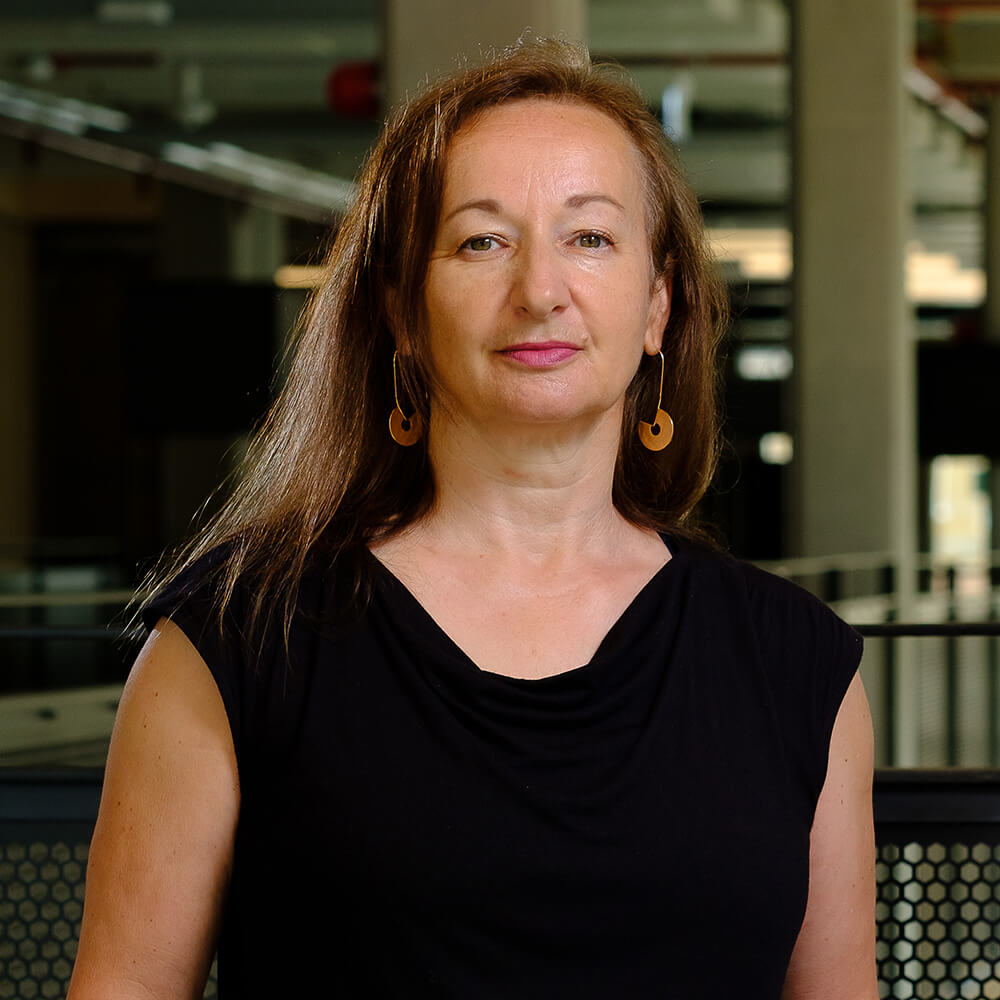
Dr Gillian Dyson
Senior Lecturer
Dr Gillian Dyson is Senior Lecturer in Performance. Her work has been exhibited and published internationally, including with Konsthalle Gothenberg Sweden; Baltic Gateshead; Latitude 53 Gallery Edmonton Canada; National Review of Live Art, Glasgow and Asiatopia Festival Bankok Thailand.
 0000-0003-1186-2709
About
Dr Gillian Dyson is Senior Lecturer in Performance. Her work has been exhibited and published internationally, including with Konsthalle Gothenberg Sweden; Baltic Gateshead; Latitude 53 Gallery Edmonton Canada; National Review of Live Art, Glasgow and Asiatopia Festival Bankok Thailand.
Dr Gillian Dyson is Senior Lecturer in Performance. Her work has been exhibited and published internationally, including with Konsthalle Gothenberg Sweden; Baltic Gateshead; Latitude 53 Gallery Edmonton Canada; National Review of Live Art, Glasgow and Asiatopia Festival Bankok Thailand.
Gillian has been delivering teaching and learning with Leeds Beckett University since 2009. She was Course Leader of BA Performance 2012 to 2016, and previously the Course Leader MA Creative Enterprise, and Course Leader for BA Contemporary Performance Practices top up course. Previous to working with LBU, she was Head of Learning with Arc Architecture Centre Hull.
Gillian was previously a lecturer with Hull School of Art and Design, University of Lincoln and has been a visiting lecturer at a number of other higher education institutions including Nottingham Trent University, Manchester Metropolitan University and Dartington College of Art.
Gillian co-curated the ReROOTed programme for Humber Street Gallery, Hull 2017 UK City of Culture. She was on the Management Group for New Work Yorkshire and on the Board of Trustees for New Work Network London, and is currently the Acting Chair for Centre for Live Art Yorkshire (CLAY). Gillian has also mentored other artist professionals including Vanessa Grasse for the 4Dance Commission 2013.
Academic positions
PT Senior Lecturer in Fine Art Time Based Media
Hull School of Art, University of Lincoln, Art & Design, Hull, United Kingdom | 1996 - 2004
Non-academic positions
Trustee
Centre for Live Art (CLAY), Leeds, United Kingdom | 2020 - presentHead of Learning
arc architecture centre, Hull, United Kingdom | 2004 - 2009Project Coordinator
Hull Time Based Arts, Hull, United Kingdom | 1995 - 2001
Degrees
PhD
University of Glasgow, Glasgow, United Kingdom | 2014 - 2020Post Graduate Higher Diploma (MA) Fine Art
Slade School of Fine Art, University College London, London, United Kingdom | 1990 - 1992BA
School of Art & Design, Sunderland Polytechnic, Sunderland, United Kingdom | 1986 - 1989
Certifications
HEA Senior Fellow in Teaching and Learning
Higher Education Academy, United Kingdom | 28 March 2018 - present
In recognition of attainment against the UK Professional Standards Framework for teaching and learnign support in higher education.
Postgraduate training
Phd
University of Glasgow, Department of Theatre Studies, Glasgow, United Kingdom
Research interests
Gillian's research interests include 'the domestic', the uncanny in contemporary performance art, and issues relating to feminist art practices. Her live work is informed by continental philosophy and feminist theory. This practice-based research is concerned with understanding the relationship between the body and ordinary, mundane objects, and the spaces and places we inhabit.
Publications (44)
Sort By:
Featured First:
Search:
Dressing the Bare Bones in Fragments
 04 November 2023
Climate Change: Implications for Dress and the Body: Dress & Body Association annual conference Online
04 November 2023
Climate Change: Implications for Dress and the Body: Dress & Body Association annual conference Online
This paper analyses implications for body and attire in creating clothing for performance art which challenges normalcy of the feminine. Jackson and Dyson will discuss their interdisciplinary research collaboration in designing garments for Dyson’s performance artwork Bare Bones. The research considers cultural standards for and expectations of the feminine. Through experimentation of material construction with movement and voicing, they ask: Why does somatic interaction with this clothing contribute to deconstructing our understanding of functional and aesthetic garments, thus troubling the activity and ‘beauty’ of the body? Dyson’s practice-based-research is of conditions of menopause, building on concerns with the uncanny feminine, performing with inanimate objects to establish unnerving familiar and unfamiliar conditions. Jackson’s garments are assembled through a Responsive Making method, responding intuitively to Dyson’s work, with respect for the will of materials. This method is underpinned by post-human theory of intra-action (Barad 2007): experiential, haptic, tacit knowledge as key to the process (Bugg 2006). Repurposed waste garments reveal softness, slackness, fold, and flow, whilst presenting supportive yet constraining property. Materials prompt or lead the performer, generating sculptural and sound content, thus contributing to construction of meaning in relationship to the female body. Paradoxically, research led to reconsideration of the naked female body. Cutting into garments revealed sections of flesh. Thus garments ‘fail’; societal assumptions about gendered body ideals are questioned (Svendsen & Irons, 2006; Butler, 2006). ‘Clothes rewrite the body, give it [different shape and expression]. This applies not only to the clothed body but also to the unclothed; or, more precisely, the unclothed body is always also clothed’ (Svendsen & Irons, 2006:77). Jackson and Dyson argue this ‘partial garment’ foregrounds ‘aesthetics of ugly’ (2005: 130). Intersecting with the body boundaries, the body is masked but remains integral to understanding the garment: one cannot exist without the other (Negrin, 2016).
Answer the Question
March 2013
Theatre, Dance and Performance Training JournalVol 4(Issue 1):p122 (1 Pages) Taylor & Francis
Dormant
Performance Research: Epistemologies of Action’.
02 December 2020
Nexus#1: in/Action meeting of the Contemporary Performance in Higher Education Network, Royal Conservatoire of Scotland on line
 Dyson-Moss G, Griffiths L
Discussing the pedegogy of performance practice with undergraduate students.
Table
17 November 2016
Where from Here: 21 years of Third Angel Leeds Beckett University - Compass Live Art Festival
Table responds to the Symposium context of practice in dialogue with the everyday, intimacy and place. It recalls my historic works and notably discussions with Third Angel arising from the experience of exhibiting alongside the company in Hull, 1997. This practice-based research performance examines the object / performer context in relation to stillness, repetition and shadow as primary research drivers that are prompted by phrases gleaned from initial reading of Sigmund Freud’s essay The Uncanny/Das Unheimliche, and encounters with Martin Heidegger’s exploration of Thing theory. My current research interests emerge from concerns with the use of objects in performance, particularly those things that come from or reference the domestic, the house or home. In the process of this research performance I wish to consider what the relocating of the domestic object from house to studio does to our understanding of that object, in particular in relation to the feminine.
Re Rooted
24 March 2017
Dyson-Moss GE, Stubb MCo-curation of an exhibition of live and new media art for Hull 2017 City of Culture, to celebrate the history and influence of Hull Time Based Arts organisation. March 24-26 2017
Sine
June 2013
Gaslighting CMR Gallery, Cornwal Publisher
Screening of video work originally commissioned by Film and Video Umbrella.
Lécher la Cuillère - Licking the Spoon
16 March 2016
Leeds City Library/ Art Gallery F=equals, Leeds Beckett University
The performance involves whittling and paring a wooden spoon(s). The artist performs this action seated on a wooden chair. As she carves into the wood of the spoon with a knife, shavings of wood fall around her. It is a ‘real time’ action that should last approximately 45 minutes. She attempts to reduce the spoon to ‘nothing’.
Genius Loci
Interactions. Conversations on socially engaged performance practice.
08 October 2014
Interactions. Conversations on socially engaged performance practice. http://interactionsperformance.wordpress.com Mini-Symposium #2. Yorkshire Dance, Leeds.
Live Art Space
1 November 2014
Ferens Art Gallery, Hull, UK Compass Live Art Author
Performance presentation for Compass Live Art.
Interactions
19 September 2014
Interactions. Conversations on socially engaged performance practice. http://interactionsperformance.wordpress.com Mini- Symposium #1. The Bluecoat, Liverpool.
Conversations on socially engaged performance practice.
Shelf Life
12 April 2014
Union 105 Gallery Leeds East Street Arts
Exhibition Performance and Community Engagement project for residents of Chapel Town Leeds.
Ostinato
Mattress
20 March 2015
Baltic 39, Baltic Newcastle
Devised and performed for Drafting Performance. Baltic 39. Newcastle. March 2015.
We are all in this together
1 January 2012
Leeds New Work Yorkshire
Performance commissioned for New Work Yorkshire
Around and About
Ostinato
01 January 2023
Kritika Kultura0(40):121-129 (9 Pages) Ateneo de Manila University
My provocation is to suggest that movement of the feminine body alongside seemingly familiar objects provokes especially uncanny conditions where both material subjects become unfamiliar and politically charged. I argue that this uncanny relationship offers the performer agency to trouble and deconstruct sites of gender-normativity. I discuss my methods for exploring this destabilizing strategy through a reflective narrative of my artwork Seven Tables (2016-19). I address the physical and conceptual space of the feminine homely and unhomely whilst seeking to further understand the potentiality for the aging female performer to challenge gender constructs. Concerns with overlapping public and private space seem more relevant since the outbreak of COVID-19. And perhaps these concerns are accompanied by an uncomfortable realization that the home persists as a site of gendered roles and expectations. Through working with tables, I ask how the (un)familiar object provokes an embodied somatic response, experienced through and as the phenomenological consideration of my moving body. Prompted by Freud’s The Uncanny, my research is informed by post-structural feminist theorists, particularly Sara Ahmed who draws attention to the significance of the table in constructing gender identities. My work is an improvised choreography of encounters with the everyday. Through a corporality of rhythms and task repetitions of the body, my work celebrates the familiar feminine whilst troubling persistent constructs. Thus, this article provokes a re-assessment of notions of boundaried femininity. This writing reflects thirty years of performance art practice and emerges from my practice-based PhD research at the University of Glasgow in 2020.
Behind the Houses
04 April 2014
Ludus University of Leeds
A discussion of performance and liminal space, focusing upon the 'ten-foot' back ally architecture and sense of place in Kingston Upon Hull.
‘Domestic Spaces: Art Making in the Pandemic’
Coming Home
Cleaning Steps
09 July 2020
Home|work Leeds Beckett University
a critical refelction on the practice research performance work 'cleaning steps' - cleaning the front door steps of strangers' houses, in teh context of the Covid-19 lock down. considering the relationship between women, dirt and notions of the clean and dirty.
A Response: Victoria Firth's 'Butter Piece'
Eating the plate, an analysis of the uncanny performance of mouth, plate, dirt.
Unhomely: Deconstructing the homely through an uncanny feminist performance practice.
Seven Tables
30 April 2017
Baltic Gatesehead International Festival of Theatre Publisher
Solo performance work based on current practice-based research concerns with the feminine uncanny.
Reading the Residential.
15 April 2016
Feminist Readings 2:Theory, practice and politics of reading today http://www.fine-art.leeds.ac.uk/news/feminist-readings-2-theory-practice-and-politics-of-reading-today/ Leeds University
How does a feminine uncanny appear through an interplay of interior/ exterior; private / public, self / other? My paper discusses why performance research in the home as a site might produce a reading (or re-reading) of what is familiar (the home), and evoke or reveal the unfamiliar (the unhomely or uncanny). I describe recent practice research (made to-camera) in relation to notions of the uncanny and intimate. I consider performative process as reading, a scrutiny and comprehension, of the domestic. According to Sigmund Freud the uncanny exists as a frightening manifestation of what has long been familiar. I apply Freud’s theory of the Uncanny (Das Unheimliche (The Uncanny) 1919) to consider the familiar and unfamiliar image of/ in the home, and the creation of uncanniness through the interaction of body, object and site. I reflect on Hélène Cixous’ investigation into the Freud text to highlight the elusive uncertainty in Freud’s attempt to define the uncanny, and to ask how an understanding of the uncanny is formed through the reality of live performance (lived gesture) rather than fiction? I draw upon Julia Kristeva’s vocabulary of the abject to further consider what marks the uncanny in relation the home as threshold of the intimate and public and reflect on the implications of this for a feminist practice.
Seen Created
11 April 2014
Terry O’Toole Theatre, Lincoln Beacon Art Project, and National Centre for Craft & Design, Sleaford Publisher
Solo performance commissioned by Beacon Art Project for 'Creating a Scene’ - National Centre for Craft & Design, Sleaford
Same Difference
22 September 2016
York Bbeyond Belfast
Dyson-Moss GE, Walker N, Gray VCollaborative performance with VIctoria Gray and Nathan Walker in response to an international commission of global simultanious performance.
Not Here
15 May 2015
Memory/Sentiment/Body/Space/Object: Dialogues across and between dance and art School of Art & Design at Coventry University
A discussion of the performance work of Gillian Dyson, and of Robbie Synge, through an understanding of Freud's Uncanny.
Desire Path - Revisited
18 October 2014
Konstahalle, Gothenburg,Sweden Konstahalle, Gothenburg,Sweden Publisher
Solo Performance
Dirty Plate: An Analysis of the Findings of the Practice-Based Research Performance ‘Biting the Plate’ Paper
30 October 2020
Let’s Talk “Dirty” Symposium Loughborough University
a reflection on the abject relationship of dirt and the feminine body.
Not At Home
4 August 2016
Whitworth Gallery Manchester Precarious Assembly. Publisher
3 hour solo performance work exploring notions of the domestic uncanny.
ReROOTed
17 March 2017
REROOTed Hull
Dyson-Moss G, Mike SCuration of live and media art programme with FACT, and development of symposium programme for Hull 2017 UK City of Culture, Humber Street Gallery. March 2017.
19 May 2023
Performance Research28(4):5-6 Informa UK Limited
Dela Cruz EV, Dyson G, Gaspar R, Goudouna S, Haines T, Laine E, Larson B, McKenzie V, Ortúzar J, Ranwalage S, Tzakou A, Wan ENerve in the Bone.
30 September 2023
Contact Theatre, Manchester UK Emergency/ Word of Warning Publisher
The performance endeavours to communicate the real felt tensions of feminine aging. Working on a floor of broken crockery, Dyson's performance brings together slow Butoh dance movement with approaches in body-based performance art. Wordless vocalisation and the construction of an audio track explore ambient and body sound further examine concerns with agency and ‘voicelessness’. The performer’s clothing examines compression and constraint, exposing breasts and belly in a dialogue of gender signification.
Bare Bones/ Whale Bones
10 March 2023
Centre for Social Justice in Sport & Society (The CSJ) and the University’s Gender Forum, International Women's Day Symposium Leeds Beckett University
Why theatrical, artistic exploration of one’s own body movement and voice in relation to material objects and space, bring into question and develop understanding of the aging, feminine body? A brief intro’ to my emerging practice-based research – a reflection on menopause using Butoh dance theatre, strength training and vocal work as mediums. Considering the menopausal whale as metaphor or model for a different kind of embodied experience of aging.
Nerve in the Bone
Untitled
Performance Research: Epistemologies of Action’.
02 December 2020
Nexus#1: in/Action meeting of the Contemporary Performance in Higher Education Network, Royal Conservatoire of Scotland Royal Conservatoire of Scotland (online)
Dyson-Moss G, Griffiths LWise Women
25 January 2023
Leeds Beckett University Leeds, UK Wise Women Manifesto
Leah J, Coombes L, Schiffer A, Dyson GActivities (1)
Sort By:
Featured First:
Search:
Board of Truestees: Centre for Live Art Yorkshire (CLAY)
Current teaching
BA Performing Arts, BA Theatre and Performance, BA Acting:
- Thinking Bodies
- Performance, Politics and Protest
- Lift Off - final major project
- Publishing Project 1: Conference
- Publishing Project 2: Document/ Dissertation
- Design in/for Performance
- Ensemble
- Self
- Creative Arts Infrastructures
- Design In and For Performance
MA Performance, MA Choreography:
- Artist Project Minor
- Artist Mentor
- Conference
Teaching Activities (2)
Sort By:
Featured First:
Search:
How can photography as social practice and process empower individuals and communities and communicate beyond the artefact and the image saturated world?
31 July 2023 - 31 December 2026
Joint supervisor
Cultures of Welcome: Facilitating Socially Responsible Theatre-making with Sanctuary Seekers
31 July 2020 - 31 December 2026
Joint supervisor
Grants (2)
Sort By:
Featured First:
Search:





