

Leeds Beckett University - City Campus,
Woodhouse Lane,
LS1 3HE
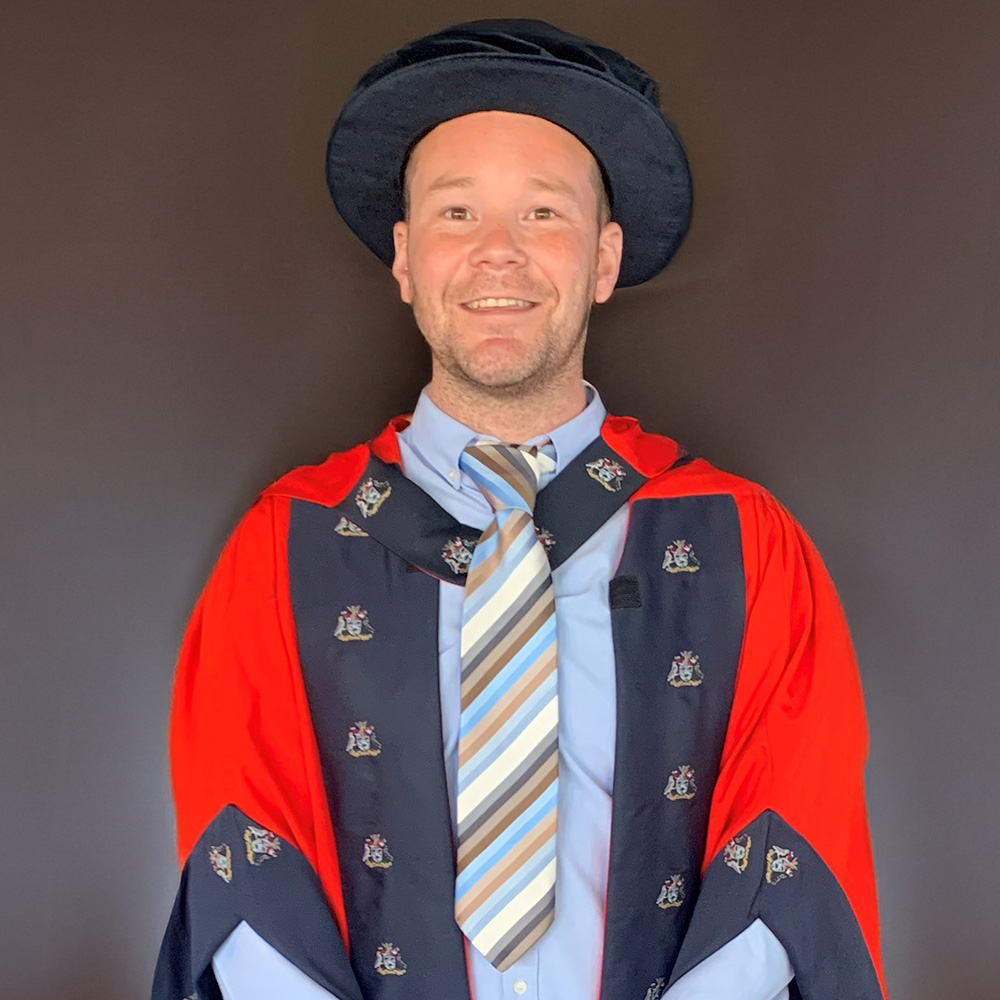
Dr Ieuan Cranswick
Senior Lecturer
Ieuan is a Senior Lecturer in Sport and Exercise Therapy and Sport and Exercise Medicine within the School of Health. He teaches on the BSc and MSc Sport and Exercise programmes as well as the MSc Sport and Exercise Medicine.
 0000-0002-1221-356X
About
Ieuan is a Senior Lecturer in Sport and Exercise Therapy and Sport and Exercise Medicine within the School of Health. He teaches on the BSc and MSc Sport and Exercise programmes as well as the MSc Sport and Exercise Medicine.
Ieuan is a Senior Lecturer in Sport and Exercise Therapy and Sport and Exercise Medicine within the School of Health. He teaches on the BSc and MSc Sport and Exercise programmes as well as the MSc Sport and Exercise Medicine.
Ieuan has a background in Sport and Exercise Science and completed his MSc in Sports Therapy, graduating from Leeds Metropolitan University in 2013, and is a full member of the Society of Sports Therapists. He also completed his PhD in 2019 titled Beyond the Muscles: Exploring the Meaning and Role of Muscularity in Identity.
Ieuan has worked at Leeds Beckett as a part-time lecturer since 2016, before securing his Senior Lecturer post in 2019. Whilst teaching predominantly in Sports and Exercise Therapy and Sport and Exercise Medicine, he has also taught on modules within the Nutrition and Dietetics and Occupational Therapy programmes.
Research interests
- Muscle-Oriented Body Image
- Muscle Dysmorphia
- Image and Performance Enhancing Drug Use
- Sport and Injury Psychology
Publications (8)
Sort By:
Featured First:
Search:
Muscle dysmorphia: current insights
 03 August 2016
Psychology Research and Behavior ManagementVolume 9(0):179-188 Informa UK Limited
03 August 2016
Psychology Research and Behavior ManagementVolume 9(0):179-188 Informa UK Limited
 Tod D, Edwards C, Cranswick I
Since 1997, there has been increasing research focusing on muscle dysmorphia, a condition underpinned by people’s beliefs that they have insufficient muscularity, in both the Western and non-Western medical and scientific communities. Much of this empirical interest has surveyed nonclinical samples, and there is limited understanding of people with the condition beyond knowledge about their characteristics. Much of the existing knowledge about people with the condition is unsurprising and inherent in the definition of the disorder, such as dissatisfaction with muscularity and adherence to muscle-building activities. Only recently have investigators started to explore questions beyond these limited tautological findings that may give rise to substantial knowledge advances, such as the examination of masculine and feminine norms. There is limited understanding of additional topics such as etiology, prevalence, nosology, prognosis, and treatment. Further, the evidence is largely based on a small number of unstandardized case reports and descriptive studies (involving small samples), which are largely confined to Western (North American, British, and Australian) males. Although much research has been undertaken since the term “muscle dysmorphia” entered the psychiatric lexicon in 1997, there remains tremendous scope for knowledge advancement. A primary task in the short term is for investigators to examine the extent to which the condition exists among well-defined populations to help determine the justification for research funding relative to other public health issues. A greater variety of research questions and designs may contribute to a broader and more robust knowledge base than currently exists. Future work will help clinicians assist a group of people whose quality of life and health are placed at risk by their muscular preoccupation.
14 September 2020
Performance Enhancement and Health8(2-3):100176 Elsevier
Cranswick I, Richardson D, Littlewood M, Tod DThe current study explored the life-histories of 10 weight training men and aimed to understand the role muscularity played in their masculine identities. Additionally, the study sought to gain insight into the men’s responses to experiences (e.g., injury) that threaten their muscular masculinity. Semi-structured interviews and life-history timelines allowed interviewees reflect on their muscular desires, their injury responses, and the influential experiences, people, and events that shaped their perceptions and identities. The current findings demonstrated how men’s muscular desires were part of a socially shaped overarching masculine performance narrative, whereby muscularity played a central role as a form of aesthetic and instrumental bodily capital. The overarching narrative were blueprints for the men’s identities, and at times of threat the men constructed different realignment narratives to help maintain and restore their masculine identities and performances. The current study demonstrated the influence social observations and interactions over the life course had on narrative and identity construction and the meanings attributed to muscularity. The findings inform research of the need to embrace multiple masculine narratives to understand the potentially diverse meanings muscularity holds for men in different social contexts.
31 May 2025
Health & Place93:1-13 Elsevier BV
Saville CWN, Cranswick I, Tod D, Acreman D, Hogan L, Thomas DRBACKGROUND: Growing male anabolic steroid use is often framed as symptomatic of a post-industrial masculinity crisis, but little quantitative evidence exists for this account. We examine whether steroid use is associated with geographic exposure to industrial decline, namely historical coal mining, and whether any association is mediated by masculine norms. METHODS: We fielded a quota-sampled survey of 18-49 year-old men in Wales (N = 1425). Data were geo-linked to the extent of historic coal mining locally to respondents. Generalised linear mixed models were fitted to test our hypotheses. RESULTS: Steroid use (odds ratio = 1.99, 1.10-3.60), but not body image (B = 1.06, -2.02-4.13), was positively associated with mining extent. However, this was not mediated by conformity to masculine norms. DISCUSSION: While use of steroids is more common in former mining areas, this is not due to more prevalent body image issues nor mediated by masculine norms. Thus, accounts of a post-industrial 'thwarted masculinity' do not fit the data. Steroid use in post-industrial areas is an issue for public health and these communities may benefit from targeted interventions to reduce risk of harms.
22 October 2024
European Journal for Sport and Society22(2):1-23 Taylor and Francis Group
Cranswick I, Richardson D, Littlewood M, Tod DThe current study explored muscularity and weight training’s role as capital in people’s identities across various contexts. Eleven weight trainers from two gyms were interviewed (3 females, 8 males) about their desires for muscularity and the role it played in their lives. Thematic narrative analysis identified narratives that framed the individuals’ muscular desires, behaviours, and importance. Muscularity formed a versatile resource - identity capital – that was a key part of the individuals’ body projects. These body projects and identity capital facilitated the individuals’ identity performances in a range of contexts (e.g., occupation, gender). Three narratives emerged (individualist, illusionist, and promoter) that highlighted the intertwined tangible (e.g., leanness and strength) and intangible (e.g., control and self-empowerment) attributes associated with muscularity and weight training that facilitated successful identity performances. These narratives achieved goals of self-empowerment (Individualist), self-protection (Illusionist), or self-advertisement (Promoter) which enabled successful identity performances. The current findings advance existing literature by suggesting muscularity is a versatile form of identity capital that can facilitate multiple identities (e.g., occupation, gender) and contexts. The potential benefit to an individuals’ sense of self also highlights the positive effect of muscularity weight training as a tool for self-promotion and personal growth.
Examining the Relationship Between Identity and Injury Fear Avoidance: The Influence of Masculine and Athletic Identities
12 February 2021
IOC Conference on Prevention of Illness and Injury in Sport Monaco
Cranswick I, Jones A, Clarke P, Tod DBackground: Sport, and specifically football, can foster increased masculine and athletic identities, which could potentially influence athletes’ injury and rehabilitation-related attitudes. Objective: To examine the relationships between masculinity, athletic identity, and athlete fear avoidance attitudes. Design: An observational, cross-sectional, study design was used. Correlational analyses examined the relationships between identity and fear avoidance variables. Setting: Male English professional football. Patients (or Participants): 72 academy players from northern professional football clubs within ~1hour of the University completed a battery of identity and fear avoidance questionnaires. Interventions (or Assessment of Risk Factors): All players completed a gender role conflict scale (GCRS), athletic identity measurement scale (AIMS), and an athlete fear avoidance questionnaire (AFAQ) during either a lab visit or as part of their training sessions. Main Outcome Measurements: Masculine role-related attitudes and conflicts were measured by the GRCS. Athletic identity was measured via the AIMS and the athlete’s injury-related fear avoidance was record via the AFAQ. Results: Age was negatively correlated with total GRCS (r = .24, p=.04), expressing emotion and affection with other men (r=-.28, p=.02), and work, life, & family interferences (r=-.24, p=.04). Athletic identity was associated with an increased fear of others’ perceptions about an athlete’s ability post-injury (r=.31, p=0.007) and higher male affection concerns (r=.28, p=.03) and drives for male success, power, and competition (r=.25, p=.03). Conclusions: Younger footballers and those with higher athletic identities may be more susceptible to masculine role conflicts. Strongly identifying as an athlete and perceiving more work, life, and family conflicts can influence a fear of others' perceptions about the athlete’s sporting abilities post-injury. Therapists may consider monitoring younger athletes’ masculine and athletic identities. Identifying the potential gender-related conflicts or high levels of athletic identity could inform practitioners' approaches to rehabilitation to minimise a potential lack of disclosure or engagement regarding injury and rehabilitation respectively.
18 June 2023
Science and Medicine in Football8(3):1-9 Taylor and Francis Group
Cranswick I, Tod D, Clarke P, Jones ASport and football encourage a commitment to the athletic role and masculine socialization. When athletes get injured the ability to fulfil an athletic and masculine identity is threatened and they may experience injury-related fear-avoidance behaviours as part of a negative injury appraisal. The aim of the study was to explore whether higher athletic identity was associated with higher gender role conflict and injury fear-avoidance. Seventy-two professional English footballers completed an Athletic Identity Measurement Scale (AIMS), Gender Role Conflict Scale (GRCS), and Athlete Fear Avoidance Questionnaire (AFAQ) based on historical injuries. Correlational analyses were conducted for all variables and a one-way ANOVA was used to compare high, moderate, and low athletic identity. Results showed that AIMS was positive correlated with two GRCS subscales (success, power, and competition, and restricted affectionate behaviour between men). Additionally, the current study showed that high and moderate levels of athletic identity had significantly higher levels of total GRCS than those with low athletic identity. No significant results were found for AIMS and AFAQ. Results suggest that academy footballers with higher athletic identities may be more susceptible to masculine role conflicts, specifically, success, power, and competition, and restrictive affectionate behaviour between men. The current study informs sport and health professionals of the need to monitor athletic identity and masculine conformity in their academy level footballers to minimise gender-role conflict and potential maladaptive rehabilitation responses when their identities are threatened.
18 August 2025
Research in Sports Medicine34(2):1-29 Informa UK Limited
Cranswick I, Jones A, Brogden C, Mayhew L, Minshull CMusculoskeletal injuries are common in both general and sporting populations and contribute to significant healthcare costs, lost workdays and compromised performance of daily activity and sport. Despite various rehabilitation models being available to health and rehabilitation practitioners, there are some inconsistencies in structure, terminology and specificity across these. The current narrative review critically evaluates existing rehabilitation models, frameworks and phased approaches, identifying limitations related to structure, content and specificity. Additionally, a novel multicomponent exercise rehabilitation model is proposed which adopts a non-linear, concurrent approach to attribute development and integration of progression guidance. Using a multicomponent approach, a structured yet adaptable progression framework is provided that could help optimize rehabilitation outcomes, minimize detraining and enhance individuals’ readiness for return to sport or daily activity.
Current teaching
- BSc Sport and Exercise Therapy
- MSc Sport and Exercise Therapy
- MSc Sport and Exercise Medicine
Teaching Activities (3)
Sort By:
Featured First:
Search:
Sports and Exercise Therapy
26 September 2016
Sport and Exercise Therapy
26 September 2016
Sport and Exercise Therapy
26 September 2016
Grants (1)
Sort By:
Featured First:
Search:








