

Leeds Beckett University - City Campus,
Woodhouse Lane,
LS1 3HE
Dr Lewis Paul
Senior Lecturer
Lewis produces films, photographic work and sculptural objects that consider a broad historical relationship between class (working men), family and forms of representation, LGBQT+, resulting in work that has been exhibited both in the UK and internationally.
 0000-0003-4868-1717
About
Lewis produces films, photographic work and sculptural objects that consider a broad historical relationship between class (working men), family and forms of representation, LGBQT+, resulting in work that has been exhibited both in the UK and internationally.
Lewis Paul produces films, photographic work and sculptural objects that consider a broad historical relationship between class (working men), family and forms of representation, LGBQT+, resulting in work that has been exhibited both in the UK and internationally.
Lewis joined the Northern Film School in 2000. Lewis led the development of the Filmmaking BA and contributes to the continuing development of practice research PhD's in the Leeds School of Arts.
Lewis is Co-Director of the Professional Doctorate in Creative Arts in the wider LSA. On the BA Filmmaking Lewis leads Experimental Film and the specialist Filmmaking Dissertation. His Doctoral research was completed in 2014 with the conclusion of a Professional Doctorate in Fine Art at the University of East London. Lewis produces films, photographic work and sculptural objects that consider a broad historical relationship between class (working men), family and forms of representation, LGBQT+, resulting in work that has been exhibited both in the UK and internationally.
Lewis is interested in the ways we gather, reflect, develop and tell stories, creative narrative intersections and illusions and treasure material objects as contributors to social and subjective memory. His skills encompass, editing and compositing, camera, sound recording, tailoring and sewing, costume and making fabric objects.
Lewis is interested in the ways we gather, reflect, develop and tell stories, creative narrative intersections and illusions and treasure material objects as contributors to social and subjective memory. His skills encompass, editing and compositing, camera, sound recording, tailoring and sewing, costume and making fabric objects.
Prior to joining the Northern Film School Lewis completed the influential 'Electronic Imaging' Postgraduate Programme at Duncan of Jordanstone College of Art and Design, University of Dundee, in 1999 and a BA (hons) Mixed Media Art at The University of Westminster in 1996. Lewis is also a qualified aeronautical engineer.
As assistant Director of the Professional Doctorate in Creative Arts (DCA) and as Director of studies for Arts based PhD's both written and practice based, Lewis is supervising a range of Doctorate projects across Film, Image History and creative audio Fine Art. Lewis has been an examiner for a range of creative Doctorate projects both PhD and Arts based Professional Doctorates and continues to support and nurture this important contribution to the wider field of arts practice.
Selected examples of exhibitions, commissions and symposiums:
- Backgrounds and Backdrops, mixed media (2022)
- Little Pink Bush, film (2017)
- 25 Westminster, film: Dirty Bottom, (2015)
- One Way or Another II, Aberdeen, Scotland, (2013)
- Directional Forces, Artoll, Germany (2012)
- Concretum, Dilston Grove, London (2011)
- Sensory Urbanism Conference, University of Strathclyde, Glasgow, (2007)
- Open 24hours, DNerve lab, Museum Night, Amsterdam (2003)
- European media art festival Osnabruck (film work) Selected program (2000)
- Millennial Minutes, Miniature Film and video. (Film work) touring show, Scotland and UK (2000)
- Documentary Evidence, (we are not your audience), Babel digital arts project, commissioned by Lighthouse Brighton, and Southeast Arts. 35mm film portraits, screened before main features on four screens at the Odeon Hastings July to August 2002. (2001-2002)
Degrees
Professional doctorate in Fine Art
University of East London, London, United Kingdom
Research interests
Lewis Paul's Doctoral research was completed in 2014 with the conclusion of a Professional Doctorate in Fine Art at the University of East London. The practice based thesis was titled Story, Narrative, Material. This practice based research explores the interaction between story, narrative, material and related concepts, investigation the position of lyrical discourse as an artist's strategy in considering autobiographical identity as a reclaimed space, the boundaries of which are adoption and LGBQT+ identity.
Conceptually, Lewis' research is informed by a matrix of boundary points, for example: masculine identity and gender politics, (concepts that relate to the working man such as class, craft skill, visual identity, sartorial codes and conventions) and on an experiential level, genetic and learned behaviour as considered through the nature and nurture debates concerning adoption. Lewis is interested in the ways we gather, reflect, develop and tell stories, creative narrative intersections and illusions and treasure material objects as contributors to social and subjective memory.
Lewis' research is situated in film and art-based practice. It is informed by historical notions of visual narrative, cinematic form and visual perception. Over-arching themes relate to possible functions of synchronic and diachronic narrative structures and their potential relationships to the study of representation, perception and concepts of pathos.
Publications (23)
Sort By:
Featured First:
Search:
 2015
2015
Dirty Bottom Paul, Lewis, (2015 – 2019). [Output Type: Q Digital or Visual media] Research Cluster: Image [Film/Show/Exhibition] Output Cluster Abstract The output is a short film about gender and embodied practice. This practice research project seeks to investigate how concepts of embodiment might be engaged as a creative strategy in the development and realisation of queer artist filmmaking. Research Process: The aims of the research sets out to investigate how embodiment as a methodology may be utilised in artist practice within filmmaking. The project investigates how embodiment in relation to queer cinema might lead to new aesthetic variations in films that have a queer notion, yet visually remove fictional or documentary dramatic structures and representational queer codes and conventions. The method centred on producing a film that explores the hidden world of the underside of a Series 3 Landrover in the city of London. This unsafe space is reclaimed through the introduction of framing devices such as beauty mirrors to explore the aesthetic complexity of abject concepts. By placing the filmmaker into the frame concepts of embodied space, queer space and gender expectations might be contextually re-evaluated, queering traditionally considered macho spaces. Research Insights: The film generates new insights and contexts around perceptions of queer cinema and theoretical contexts of gender, contributing to the discourse of queer film outside of dramatic narratives and same sex character plot driven cinema. The research frames aesthetic hierarchies between aesthetic values and traditional codes and conventions of queer sexualised viewing within the evolution of gendered notions of an embodied approach. Dissemination: The film has been disseminated in the UK: 25, London Gallery West, London. 12 October – 31 October 2015; RE// Bermondsey Artists’ Group Exhibition, London, 2019. 'Embodied Methodologies’ 2016: The fourth annual Practice-based Research Conference, hosted by Royal Holloway, University of London. 4th to 5th December 2016.
Southwark Park Galleries Open 2024, S.P.G,
02 November 2024
Specific submission: Livestock, Live, is a digital film transfer from super 8 film originated during the landmark Live Stock Market FN day, Shoreditch, London 1997. With contributors such as Tracey Emin, Peter Doig and Chris Ofili - cocktail bar, Catherine Yass -portrait enclosure, Jake and Dinos Chapman-snuff stall, Sue Webster and Tim Noble, Richard Long, Sarah Lucas, this summer art event covered a triangle of streets around Rivington Street and Charlotte Road EC2. London, UK. The Live Stock Market ran it’s own “independent state currency” had art stalls, livestock, live bands and was “more sophisticated and more demanding” according to the now rare Live Stock Market day guide. The film Livestock Live reveals the Live Stock Market event from a 28 year vantage. This previously archived and publicly unseen material is exhibited for the first time (2024). The film shot in camera on a single reel during the event, has a limited duration of a single super 8 film cartridge, yet the film pays homage to and is an evocation of the extraordinary feeling and spirit of the event. As archive material, the film Livestock, Live engages through a silent filmic revery. The film aims to contribute to the extant materials available as record of this significant location and time period within the UK arts. Livestock Market followed the influential summer art events situated in this burgeoning art-geolocation established by Joshua Compston (1970 – 1996) with the initial The Fete Worse than Death (1993 & 1994) establishing alternative dialogues and art perspectives during the 1990’s in the UK art scene. The third summer event preceding Live Stock Market was The Hanging Picnic. The Southwark Park Gallery and the Bermondsey Artists’ group organisation support arts access historically with their unique open exhibition format pointing historically to an inclusivity and cultural aspiration not unlike the spirit of the Live Stock Market event.
Southwark Park Galleries Open 2023, S.P.G,
11 November 2023
 Paul L, Taylor S
The Annual Open exists to encourage artists at all stages of their career from across the UK to submit their work as part of a large-scale annual salon show. Since the gallery opened in 1984, the Annual Open has been a highlight of Southwark Park Galleries’ calendar. Specific submissions Ghost Grey: Inspired by domestic paint charts and the Contemporary Colour Guide, How controlled colour contributes to modern living (1947), Ghost Grey, pays homage to the colour consultancy work of Elizabeth Burris-Meyer. Her books of the 1930’s – 1940’s, are now rare. In the surviving examples, closed tight for decades, painted colour samples pressed against opposite pages of her often lyrical text have left ghostly imprints. This ghosting nods to the history of gendered design process, and hierarchical systems of value. Domestic visual histories usually kept distinctly apart by gendered boundaries and hierarches, are re-articulated through a material ghost story. In literary history one reading of the ghost story is as a sophisticated tool of gender expression, especially in the context of the haunted house. The haunted house becomes the site of gender expression, an articulation of the unspeakable. Ghost Grey grasps this history of literary fiction and makes it material. The material tools of the painted domestic interior and the history of painting the ‘image’ of the domestic interior, combine in spectral collision. These two opposing points of reference are often difficult bedfellows. Like these spectral imprints in Burris-Meyer’s books, this film work combines two images, one above the other, neither landscape nor portrait, a short visual call and response; a version of ‘is there anyone there?’ a staple of the séance and ghostly apparition. In Ghost Grey, the historic haunted house is dissolved to its component parts. It is staged in the non-space, the corridor, the route from one domestic laboured task to another, a passageway that is made like the female laboured staff as invisible as possible. By rethreading these material elements this ghost story articulates the importance of material expression as a form of aspirational beauty. L’Amour, Pouf du vent: This practice research is situated at the intersection of fine art painting, film and psychogeography. Filmed across three countries, UK, France and Italy, L’Amour, Pouf du vent investigates how colour and geographical locations important in establishing the canon of European painting history might be resituated within concepts of contemporary gendered viewing and hierarchies of aesthetic value. The output, is a digital film produced in a collaboration between artist filmmaker Dr Lewis Paul, NFS and artist painter Dr Sarah Taylor at Leeds Arts University. The methodology centered transdisciplinary aesthetic practice research. The research method concentrated on a deep viewing of domestic colour experienced at sites across Europe relating to patriarchal art historical concerns of painting history; Paris, South of France, Northern Italy. The aims and purpose of the research set out to investigate possible aesthetic intersections between film, fine art, painting histories and processes. The film generates new insights and contexts around historically gendered hierarchies and theoretical contexts of colour in art and design. Artist quality oil paints, domestic DIY power tools and custom-made colour sample boards are utilised as dynamic points of engagement. L’Amour, Pouf du vent re-articulates through a psychogeography approach European sites of painting history.
06 October 2019
Artist’s film: Dirty Bottom 2015-2016 Dirty Bottom explores the hidden world of the underside of a Series 3 Landrover in the city of London. The film is filthy. It is. The filthy underside however has its appeal. Both dirty and shiny it is a place of contradiction. Everyone expects a man in overalls to be greasy don't they ? especially when stopping to ‘fix’ a problem along the way. The thing is, the problem is not what it seems. The film takes beauty-mirrors and the world of the clean, down-under, so to speak, in order to rethink the beauty in the abject. Exploring concepts of embodied space, queer space and gender expectation, Dirty Bottom is part formal, part playful and part performative. Things are not quite what they seem.
24 September 2021
View More Info
Paul L, Taylor SL’Amour, Pouf du vent is a collaborative artist’s film. This practice research is situated at the intersection of fine art painting, film and psychogeography. Filmed across three countries, UK, France and Italy, L’Amour, Pouf du vent investigates how colour and geographical locations important in establishing the canon of European painting history might be resituated within concepts of contemporary gendered viewing.
15 May 2019
Paul L, Taylor S, Modino D, Coster NJLittle Pink Bush, Drive Through Movie is a collaboration between UK artists Lewis Paul, Sarah Taylor, and American artists Deen Modino and Nicholas J Coster
05 July 2017
LARC Leeds Art Research Centre Conference Leeds Beckett University
The Importance of personal narratives in making research, was a visual presentation that charted the importance of Art Practice Making as a research activity. The talk centered on trans-disciplinary practice that explored the concept of 'The 'being' in -between' in relation to lyrical form as an artist's strategy across film and sculpture. In particular in relation to queer, gender and adoption studies.
24 February 2022
The exhibition displayed two Film works and 4 object assemblages. The two films, L’amour Pouf Du Vent, and Ghost Grey are new collaborations. The interdisciplinary practice - painting, photography, objects, forms a visual narrative thread, that both responds to and links the two films both physically and conceptually. Research insights: Backgrounds and Backdrops considers how a curated space might continue the debate around a post studio practice, the concept of working together in a shared practice, in person or remotely, and the engagement that a curated site can offer as a situation of extending practice in a transdisciplinary way. Transdisciplinary in this context considers both the expectations of medium specific engagement such as film or painting and blends, morphs and identifies new threads made good for contemporary politicised consideration in relation to class, gender and hierarchies of value.
21 May 2018
Paul L, Taylor SOUTPOST- beyond the usual exhibition site or observed site. Spanning photography, painting, sculpture, drawing, film and performance, Outpost brings together 29 artists from the Bermondsey Artists’ Group, BAG, at Shortwave. Outpost is an open call to showcase the diverse range of practices that exist amongst local artists. Different discourses are revealed and some unexpected shared concerns emerge against the backdrop of the social space at Shortwave. Outpost can be seen as a snapshot of what is going on in the BAG artists’ studios at the moment. It is informal and not staged around a thematic exhibition. Outpost reveals a community of artists willing to share their creative outputs with their peers and the public alike and the start of a dialogue across boundaries, be those creative, social, political, or other. Outpost is an invitation for the local community to come together socially and meet one another at Shortwave. Public engagement and social gatherings and events are seen as an integral part of this BAG show. There will be performance and interactive events on the private view evening and during the exhibition.
15 November 2017
n/a
Authors: Paul L, Taylor S, Editors: Paul LLittle Pink Bush is a short artist film made in collaboration with head of Painting at Leeds Arts University, Dr Sarah Taylor in connecticut USA. It considers the work of color theorist Elizabeth Burris-Meyer.
24 September 2021
Paul L, Taylor SGhost Grey Inspired by domestic paint charts and the Contemporary Colour Guide, How controlled colour contributes to modern living (1947), Ghost Grey, pays homage to the colour consultancy work of Elizabeth Burris-Meyer. Her books of the 1930’s – 1940’s, are now rare. In the surviving examples, closed tight for decades, painted colour samples pressed against opposite pages of her often lyrical text have left ghostly imprints. This ghosting nods to the history of gendered design process, and hierarchical systems of value. Using an electric drill, 3 mm wooden ply sample boards & artists quality oil paint, Ghost Grey records the process of the transformation of these material components against the backdrop of domestic interiors as sites of gender inequality. Thus, domestic visual histories usually kept distinctly apart by gendered boundaries and hierarches, are re-articulated through a material ghost story. In literary history one reading of the ghost story is as a sophisticated tool of gender expression, especially in the context of the haunted house. The haunted house becomes the site of gender expression, an articulation of the unspeakable. Ghost Grey grasps this history of literary fiction and makes it material. The material tools of the painted domestic interior and the history of painting the ‘image’ of the domestic interior, combine in spectral collision. These two opposing points of reference are often difficult bedfellows. Like these spectral imprints in Burris-Meyer’s books, this film work combines two images, one above the other, neither landscape nor portrait. This levelling transforms the usual viewing window of film, and stacks two worlds, in a short visual call and response; a version of ‘is there anyone there?’ a staple of the séance and ghostly apparition. In Ghost Grey, the historic haunted house is dissolved to its component parts. It is staged in the non-space, the corridor, the route from one domestic laboured task to another, a passage way that is made like the female laboured staff as invisible as possible. By rethreading these material elements this ghost story articulates the importance of material expression, as a form of aspirational beauty.
26 October 2017
Paul L, Taylor SThe output is a short film about gender, colour and place. Dr Lewis Paul, collaborated with fellow artist, Dr Sarah Taylor. In addition to the conception of the film, Dr Paul contributed to the process of visual reframing & staging Burris-Meyer’s charts and subsequent filmic montage. The film charts the lost world of Elizabeth Burris-Meyer, the American colour theorist, who has been written out of the colour history of Art & Art and design. Research Process: The aims of the research set out to investigate possible narrative intersections between film, fine art and painting histories and processes. The project investigates how extant historical colour samples, charts and concepts developed in the 1940s by American colour theorist Elizabeth Burris-Meyer might be contextually re-evaluated. The method included collating Burris’ rare surviving colour books and returning them to where Burris lived and worked. Taylor and Paul took Burris books with them on a journey back to the light of Connecticut, USA to explore the complexity of her colour fields. The film gathers the remnants of Burris-Meyer’s surviving work and reveals how wondrous this colour work is. Research Insights: The film generates new insights and contexts around historical gendered art and design references, and hierarchies of theoretical contexts of colour, celebrating the importance of female colourists against the canon of male dominance in painting. The research frames aesthetic hierarchies between concepts of art and concepts of domestic design within the evolution of gendered notions of colour. Work shown: Little Pink Bush - Digital Film
18 November 2017
Paul L, Taylor SLittle Pink Bush is a short artist film made in collaboration with head of Painting at Leeds Arts University, Dr Sarah Taylor in Connecticut USA. It charts the lost world of Elizabeth Burris-Meyer the American colour theorist who has been written out of the colour history of Art, and Art and design.
14 October 2015
Westminster Alumni Art Exhibition '25'
Professional Doctorate showcase: Exhibition
18 November 2015
Images produced in response to the Catalytic Commoning exhibition, in collaboration with Dr Sarah Taylor, Leeds College of Art This exhibition explores relationships between film, architecture and the city. The installations weave together film, scenographics, architectural interventions and issues of public space.
04 November 2016
Embodied Methodologies: The fourth annual Practice-based Research Conference, hosted by Royal Holloway, University of London. Royal Holloway, University of London, Bedford SqUARE, London
Embodied space, A very Queer boy: Adoption and Gay identity as politicised motivators in the role of the grown-up artist
08 July 2015
THE BURIED PRESENCE OF THE SOUTHWARK PARK LIDO (1923-1986) MIRRORS RECENT TRANSFORMATIONS OF NORTH BERMONDSEY/SURREY QUAYS (NÉE DOCKS); A GHOSTLY TRACE MARKED BY THE DECOMMISSIONED FOUNTAIN AND THE PRESENCE OF THE ORIGINAL LIDO CAFÉ (TRANSFORMED INTO A GALLERY BY THE BERMONDSEY ARTISTS’ GROUP IN 1984 TO BECOME WHAT WE NOW KNOW AS CAFE GALLERY). THE EXTRAORDINARY HISTORY OF THE POOL OF LONDON AND THE GROWTH OF INDUSTRY IT SUPPORTED HAS BEEN SLOWLY ERASED, TO BE RE-BUILT IN ANOTHER FORM. NEVERTHELESS, THE TRACES AND SCARS OF THIS STORY REMAIN TO BE REVISITED, RETOLD AND REMADE. POOL REFERS TO THIS EXCHANGE AND TRANSFORMATION; HOW THE INTERSECTIONS AND COLLABORATIONS BETWEEN ARTISTS BOTH DESCRIBE AND RESIST THE STORY OF THIS TRANSFORMATION. THE POOLED ACTIVITY OF ARTISTS CAN SOMETIMES OFFER OTHER POTENTIAL HISTORIES HIDDEN BENEATH THE SURFACE: THE WATERY WORLD OF ANTHIAS (SISTERS FROM ANOTHER MISTER) SUGGESTS ANOTHER WORLD WHERE THE LIDO SWIMMER PLUNGES UNDERWATER AND BEGINS TO DREAM; THREADS PULL APART JUST AS THEY SEEM TO POOL TOGETHER, ECHOING THE CONTESTED ARTISTIC HISTORIES AND IDEAS THAT HAVE BEEN BORN OUT OF THIRTY YEARS OF WORKING WITH AND WITHIN SOUTHWARK, ILLUSTRATED BY MALCOLM JONES’ LOCAL MURAL STUDY FOR A PAINTING COMMISSION THAT IS NOW ERASED (WATER TABLE/ESTUARY, 1985). OTHER WORKS ALLUDE SPECIFICALLY TO THESE MARKS OF CHANGE AND SOCIO-ECONOMIC TRANSFORMATIONS SUCH AS CARLA WRIGHT’S BANNERS; KARIN WACH’S RESERVOIR WHICH TRACES NOW DEMOLISHED BUILDINGS AND ANNE ROBINSON’S THRASHING IN THE STATIC WHICH EXPLORES PSYCHIC TIME TRAVEL AND DISORIENTEERING THE THAMES. POOL OFFERS INSIGHT INTO HOW CONVERSATION CAN CLUSTER IDEAS THAT CAN BE BOTH NOURISHING BUT ALSO RESISTANT, CREATING DIALOGUE AMONGST WORKS THAT RE-PRESENT THE WORLD BACK TO ITSELF, CREATING ALLUSIONS AND IDEAS THAT RIPPLE FROM THE CENTRE AND BOUNCE BACK. LOOKING DOWN INTO THE MIRRORED SURFACE OF A POOL WE BEGIN TO SEE OTHER POSSIBLE WORLDS BENEATH THE SURFACE.
17 April 2015
Research in Film Schools - GEECT EFSN International Workshop Research in Film Schools La Fémis, Paris, April 16-17, 2015 La FEMIS, Paris, FRANCE CILECT online CILECT
04 May 2013
SMART Consultants invited London based artist – Lesley Logue to curate an exhibition that looked at how artists develop ideas and images. This exhibition examines and shows the work in progress of the selected four artists, exposing and opening a dialogue about possible outcomes of what art is, what art can be and when the work should be shown, emphasizing that the works on display could develop one way or another. All four artists are in the process of completing or have completed their Post Doctorate and it is through this process of research and visual development that we see them come together to exhibit works that act as a catalyst for this research period. To the artists the journey of thinking and making often serves to bring the idea on to the next stage leading to a stabilization or final outcome. The stages in between are rarely presented as artworks in themselves because the idea shifts or the idea is completely abandoned.
LIFF ScreenDance Competition Selection Panel 2017
10 November 2016
LIFF
LIFF LIFF ScreenDance Competition Selection Panel member 2017
Classification
15 July 2013
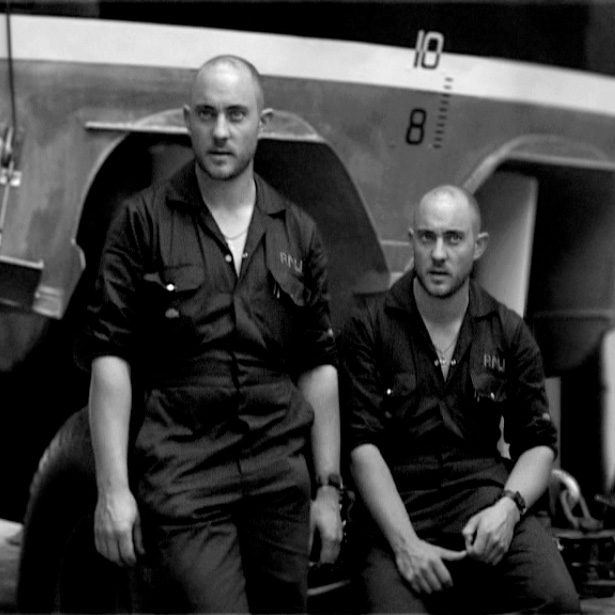
Dr Sarah Taylor Symposium and exhibition surround debates on class, art and gender. Lewis Paul produces films and sculptural objects considering relationships between identity, story, narrative and material. Lewis’s current work considers masculine modes of dress, costume and the system of fashion as outward symbols of male class identity. In this current exhibition Lewis is showing a film work Documentary Evidence (we are not your audience) made in 2001. This older film work remains influential to Lewis’ current practice. Documentary Evidence (we are not your audience)(2001) is a highly crafted 35mm film work, commissioned by Southeast Arts, UK. These film portraits were originally screened on 4 screens at the Odeon Hastings, UK July to August 2002. (2001-2002). Each portrait considers men working with machines in Hastings on the South coast of the UK. Each portrait considers reclaiming the importance of haptic skills and craft based endeavor within the frame of cinematic representation. These short interludes were shown between the adverts and the features, bringing the skills of local craft and making to the big screen. Made ‘double’ each sitter was asked to imagine a scenario where being the double of themselves would be wonderful, for example handing oneself a spanner at the exact moment it was required, riding as pillion on a motor bike they were riding (and had built). The resulting portraits transcend the limits of ordinariness by make the ordinary, extra-ordinary. Lewis has shown nationally and internationally with film and video work showing across Europe. Recent exhibitions within the UK include soft sculptural objects for example One Way or Another 2, Smart Gallery, Aberdeen.
Art history for filmmakers
10 March 2016
Bloomsbury
McIver GSince cinema's earliest days, literary adaptation has provided the movies with stories; and so we use literary terms like metaphor, metonymy and synedoche to describe visual things. But there is another way of looking at film, and that is through its relationship with the visual arts – mainly painting, the oldest of the art forms. Art History for Filmmakers is an inspiring guide to how images from art can be used by filmmakers to establish period detail, and to teach composition, color theory and lighting. The book looks at the key moments in the development of the Western painting, and how these became part of the Western visual culture from which cinema emerges, before exploring how paintings can be representative of different genres, such as horror, sex, violence, realism and fantasy, and how the images in these paintings connect with cinema.
Current teaching
- Professional Doctorate in Creative Arts
- PhD Director or studies
- BA Filmmaking Experimental Film
- BA Filmmaking Dissertation





