Leeds Beckett University - City Campus,
Woodhouse Lane,
LS1 3HE
Dr Milka Ivanova
Course Director
Dr Milka Ivanova is a Course Director in the School of Sports, in the Events, Tourism, and Hospitality subject area. Milka's research focuses on the Cold War heritage and Communist heritage in eastern Europe and their intersection with tourism.
 0000-0002-4252-190X
About
Dr Milka Ivanova is a Course Director in the School of Sports, in the Events, Tourism, and Hospitality subject area. Milka's research focuses on the Cold War heritage and Communist heritage in eastern Europe and their intersection with tourism.
Dr Milka Ivanova is a Course Director for the Postgraduate provision in Events and Hospitality Management at Leeds Beckett University. Her research is interdisciplinary and post-disciplinary with background in history, and culture studies as well as tourism, hospitality and events management.
Dr Ivanova has experience in teaching modules on sustainable development, current issues, culture and tourism, introduction to hospitality, destinations management, crisis management, introduction to management as well as research methods.
Dr Ivanova is a qualitative researcher and her work focuses on creative and innovative / disruptive methodologies, authenticity, and visitor experiences at communist heritage sites in eastern and central Europe as well as Cold War tourism visitor experiences in the UK.
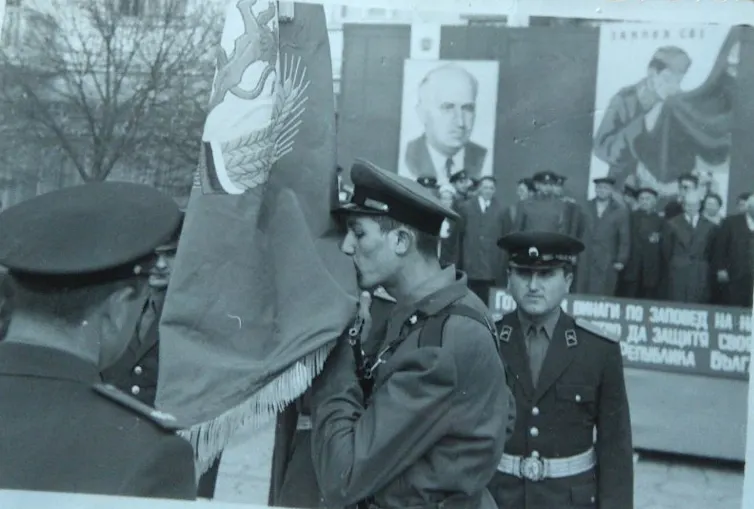
Dr Ivanova's research predominantly explores the relationship between tradition and modernity, particularly within the emerging identity of 'New Europe' countries. She examines how heritage, particularly dissonant and difficult heritage is represented and negotiated through tourism, focusing on the dynamics of traditionality versus transitionality. Her work has provided significant insights into how post-communist countries, such as Bulgaria, are portrayed in the tourism industry and the evolving role of cultural heritage in this process. Her current work focuses on Cold War heritage in the UK to deconstruct visitor experiences at Cold War sites via memory and nostalgia. Her most recent publications focus on the inclusion of communist heritage in the emerging representation of Eastern Europe through tourism and the rethinking of communist heritage tourism via the concept of the rhizome.
Degrees
PhD in Tourism Studies
University of Bedfordshire, Luton, United KingdomMA In Intercultural Communications
University of Bedfordshire, Luton, United KingdomBA (Hons) in History
Sofia University, Sofia, Bulgaria
Research interests
Dr Ivanova is a qualitative researcher and her work focuses on creative and innovative / disruptive methodologies, authenticity, and visitor experiences at communist heritage sites in eastern and central Europe as well as Cold War tourism visitor experiences in the UK.
Milka's research interests centre on the challenges and opportunities associated with preserving, curating, and interpreting Cold War heritage, particularly in the UK and Europe. Her work examines how heritage sites, such as military bunkers and nuclear facilities, address issues of authenticity, funding, and visitor engagement. A key focus is the tension between accurately representing the socio-political complexities of the Cold War and the practical limitations of curatorial practices, including limited archival resources, insufficient funding, and fluctuating public interest.
Milka's research explores the transformation of these sites from secretive military installations into accessible public spaces, emphasizing the curatorial approaches needed to attract and retain visitors. Her research further investigates the role of memory, nostalgia, and collective identity in shaping visitor experiences, while highlighting how these elements intersect with broader cultural and political narratives.
By addressing both the tangible and intangible dimensions of Cold War heritage, their work contributes to sustainable heritage management practices and promotes a more nuanced understanding of this historical period. This includes tackling the challenges of engaging diverse audiences, preserving difficult histories, and interpreting the evolving significance of Cold War sites and communist heritage sites and experinces within contemporary cultural and geopolitical contexts.
Publications (17)
Sort By:
Featured First:
Search:
Public good
 2016
Encyclopedia of Tourism Springer International Publishing
01 January 2015
Tourism, Culture and Communication15(3):169-171 Cognizant Communication Corporation
2016
Encyclopedia of Tourism Springer International Publishing
01 January 2015
Tourism, Culture and Communication15(3):169-171 Cognizant Communication Corporation
 Ali N, Ivanova M
Qualitative Methodologies in Tourism Studies Disrupting and Co-creating Critical Research
05 September 2022
394 Taylor & Francis
Ivanova M, Buda D-M, Burrai EDisruptive and creative research methodologies proposed in this book are designed to dismantle neoliberal narratives deployed in tourism studies and wider social sciences.
20 July 2020
Annals of Tourism Research84:103000 Elsevier BV
Ivanova M, Buda D-MCommunist heritage tourism in central-eastern Europe is part of a stale process of decades-long transition from centrally-planned to market-oriented societies. We deploy Deleuze and Guattari's concept of the ‘rhizome’ to disrupt understandings of static hierarchies between post/communist histories, places and peoples. Experiences and memories of communism between 1944 and 1991 together with current touring performances of communist remnants are heterogeneously connected in a multidirectional network. Via the rhizome we explore this network as shifting connectivity rather than a confined and permanent construct. Thus, locals' post/communist experiences are roots and shoots which associate with other elements of the past, and with tourists' heterogeneous performances of communist places. We, therefore, explain ambivalences towards communist heritage and simultaneous dis/inheritance through tourism in these places.
The Routledge Handbook of Cultural Tourism
01 January 2013
Routledge Handbook of Cultural Tourism Routledge
Authors: Hollinshead K, Ivanova M, Editors: Smith M, Richards GIn recent decades, an increasing number of social scientists have simply expressed the view that a large range of major social, cultural, economic, political and other problematics - such as poverty reduction, migration/immigration, environmental care, ecological stewardship, neo-colonialism/neo-imperialism and terrorism - are not really, or easily, understood and dealt with via the outlook of any single discipline (Becher 1989). At the same time, universities are condemned en masse for almost always and inevitably being uni-disciplinary institutions that promote education and understanding of singular academic domains rather than being pluri-disciplinary institutes that decidedly promote education and understanding via the cultivation of different and differing multiple mixes of disciplinary approaches andcollaborative structures of learning and knowing across academic domains (Moran 2002: 74). Over three decades, various protagonists have stepped forward to demand (variously) new organised styles of interdisciplinary, multidisciplinary, transdisciplinary and crossdisciplinaryinquiry and education (Repko 2008), and even of pluridisciplinary styles where that beyond-the-discipline co-operation is not so much organised and scafolded to deal with an emergent problem or issue, but it is associational, occurring almost naturally because of the felt compatibility in approach (of say physics, chemistry and geology, or of history, sociology and language - see Max-Neef 2005). According to most of these beyond-the-discipline advocates, the organisation (or rather, the pre-organisation!) of the academy into faculties (within universities) and into strong publication fields (built around prestigious disciplinary journals) holds back the expansion of knowledge into new territories of understanding. While hard scientists increasingly specialise within their own domains and have increasing dificulty communicating to others outside of them, soft scientists increasingly reveal exactly the same sectorial narrowness of vision. Understanding has become over-rationalised within discrete blocks of logic, and specialist scientists of many sorts find it most dificult to build feeling or imagination, for instance, into their ordinary approaches, or otherwise build intuition and ‘contemplative looking’ (Anschauung) into their study regimes (Naydler 2000).
01 March 2017
Tourism, Culture and Communication17(1):31-46 Cognizant, LLC
© 2017 Cognizant, LLC. After the fall of the Iron Curtain and the end of the communist/socialist regimes many Eastern European countries sought to establish new separate, unique identities as part of the Western World and the European political and economic organizations. The old totalitarian identities, histories, and heritages have mostly been excluded from the desired and preferred representations about and of these countries and in many instances even silenced and suppressed. Tourism as major creator and mediator of knowledges and images about places, peoples, and pasts is an important factor in these processes of identity making, inclusion, and exclusion. In the case of Bulgaria, the communist/socialist heritage has been marginalized and silenced in the past 20 years as the country's new European identity has been made, established, mediated, and announced. However, in the past 5 or so years with the hardships of the transitional period still continuing and with an emerging sense of nostalgia towards the socialist/communist period, the totalitarian heritage has slowly started to become visible in the public discourse. Moreover, there has been registered desire by authoritative agents in the country to revisit that part of the Bulgarian history and include it through heritage sites in the exhibited and represented images of Bulgaria including through/in tourism. The proposed article offers an examination of these slow and contested processes of inclusion of the communist/socialist heritage and how this inclusion (or continued exclusion) is the interplay of power, identity, and tourism. These issues are examined within the context of a qualitative critical interpretive study of Bulgaria. Copyright
01 January 2015
Tourism, Culture and Communication15(3):183-193 Cognizant, LLC
Ivanova M, Hollinshead K© 2015 Cognizant, LLC. This companion article by Ivanova and Hollinshead seeks to show how "the changing same of the diasporic imaginal" (after Leroi Jones, via Gilroy) often conceivably constitutes "a wicked problem" (after Brown, Harris, and Russell) that is often so complex in its characteristics that hard and fast definitions about it (and solutions for its problematics) are not easy to conjure up. Thus, in order to monitor how ethnic, cultural, and historic codes are switched and hybridized in and through the inconstant identifications of diasporic senses of inheritance and aspiration, this article endeavors to show how transdisciplinary lines of inspection may prove useful. Taken in tandem with the previous article by Hollinshead, the two dovetailed articles thereby comprise no tributary celebration of the purity of ethnic or national culture, but one that indeed demands a high degree of open interpretive imagination if such matters of ambivalence and ambiguity are to be gradually and meaningfully deciphered.
Public Good
07 April 2016
Encyclopedia of Tourism Springer
All actors in this field will find reliable and up to date definitions and explanations of the key terms of tourism in this reference work. Tourism is the largest industry worldwide and is the main source of income for many countries.
Representation of Bulgaria in and through Tourism: The Dynamics of Traditionality vis-a-vis Transitionality
2011
Sustainability of Tourism Cultural and Environmental Perspectives Cambridge Scholars Pub
Thus, this book examines policies and practices associated with the introduction of various methods in order to maintain sustainable tourism development.
Creating shared value in destination management organisations: The case of Turisme de Barcelona
29 June 2016
Journal of Destination Marketing and Management6(4):385-395 Elsevier BV
Serra J, Font X, Ivanova M© 2016 Elsevier Ltd. Creating shared value (CSV) involves connecting company success with social progress. This shared element of CSV resonates with the mandate of destination management organisations to be accountable to all stakeholders for the progress of the destination. This study tests the feasibility of a destination's stakeholders adopting a CSV approach and by doing so, to take responsibility for that destination's future. Semi-structured interviews gathered opinions from 16 members of the General Council, the Executive Committee, and the Steering Committee of the highly acclaimed Turisme de Barcelona (TdB), the official organisation for the promotion of tourism in Barcelona, Spain. The results show that the complexities of changing the organisation's mandate, in a public-private partnership where consensus is needed, would be extremely difficult to navigate. Even if possible, the outcomes would likely step on the toes of other institutions. The feasibility of integrating CSV into the mandate, in order to move destination . marketing organisations towards destination . management organisations is problematised as a 'wicked' problem using Foucault's notion of power in stakeholder relationships. The results show the inherent difficulties of introducing sustainability values into a multi-stakeholder, public-private partnership, and allow lessons to be drawn about how realistic CSV may be as a guiding philosophy.
22 July 2025
Authors: Samaradheera A, Editors: Ivanova M, Cooper CThis study explores the impact of inter-organizational knowledge transfer (IOKT) on the sustainable development of the coastal tourism industry in Sri Lanka, an area that is critical yet under-researched. Grounded in the Quintuple Helix Model (QHM), which combines academia, industry, government, civil society, and the environment, this research critically evaluates the model's applicability in the context of Sri Lanka, a developing country. Using a qualitative methodology, the researcher interviews 25 participants from academia, government, industry, and coastal communities through purposive and snowball sampling. Reflexive thematic analysis is employed to identify key patterns in knowledge transfer processes. The results confirm that IOKT significantly contributes to the sustainable development of the coastal tourism industry. However, the factors influencing the stability and weakening of the IOKT are not adequately addressed in the original QHM. Therefore, this research refines the original QHM to better reflect the complex realities of IOKT in developing country contexts, particularly in socio-ecologically sensitive sectors such as coastal tourism. This macro-level traditional QHM often overlooks critical structural, relational, and contextual factors, including institutional thickness or thinness, centre-local power dynamics, and the role of informal economies, which significantly influence the effectiveness of knowledge transfer in countries like Sri Lanka. To address these limitations, the refined model integrates key elements such as inter- and intra-organizational knowledge flows, formal and informal knowledge exchange processes, tacit and explicit knowledge, and factors influencing knowledge transfer. This approach enhances the model’s ability to strengthen central-local relationships, reduce power asymmetries, support participatory governance, and foster institutional robustness. By incorporating these dimensions, the model becomes more adaptable to diverse global contexts, particularly those characterized by decentralization and informal governance. The refined framework offers a comprehensive and context-sensitive understanding of how knowledge is created, shared, and applied within complex socio-ecological systems. Practically, the refined model serves as a roadmap for policymakers, practitioners, and researchers, guiding them in developing inclusive, resilient, and effective knowledge systems, thereby demonstrating its practical applicability in real-world settings.
27 June 2020
Tourism Geographies23(1-2):1-10 Informa UK Limited
© 2020, © 2020 Informa UK Limited, trading as Taylor & Francis Group. Disruption and creativity are the two ideas around which we challenge and contribute to dismantling white, ‘western’, neoliberal hegemonic social narratives and ideologies in qualitative tourism methodologies. In tourism studies in general, and tourism geography in particular, the last decade has witnessed an emphasis on qualitative methodological research, both in terms of the topics addressed and the types of methodological tools. In many ways, this legitimisation of qualitative work mirrors developments in other areas such as human geography, sociology and anthropology. Explorations in this Special Issue contribute critical understandings of the responsibility of tourism research to be disruptive first before it can engender progress and transformation within and outside of our field. Authors debate in more depth how tourism studies can offer multidimensional, multilogical and multiemotional, methodological approaches to tourism research. This Special Issue contributors tackle the ways in which research methodologies can be creative and disruptive to the seemingly prevalent narratives within tourism studies. To further expand tourism methodologies, authors have engaged in debates about deep reflexivity, subjectivities, and dreams; messy emotions in auto-ethnographic accounts of fieldwork; ‘motherhood capital’ accessing Inuit communities; collective memory work in tourism research and pedagogy; ethnodrama and creative non-fiction; linguistic narrative analysis, and serious gaming, amongst others.
27 November 2024
Cold War Museology Routledge
Authors: Robinson P, Ivanova M, Editors: Douthwaite J, Nehring H, Alberti SThis chapter explores the challenges for materialising, remembering and exhibiting the Cold War, comparing approaches to preserving, valuing and opening such sites and museums to the public in Eastern and Western Europe. The Cold War is still within living memory and is also moving into history; at the same time, the Cold War is often described as an “imaginary war” that presents unique challenges for materialising it. This chapter frames the research in a way that reflects the role of museums and heritage sites as active agents in the construction of political, public and academic knowledge. They hold the power to shape cultural memory by legitimising interpretations through their authority and influencing societal and individuals coming to terms with the past.
14 August 2015
Transformational Tourism Host Perspectives CABI
Hollinshead K, Ivanova M, Caton KThe book focuses on human development in a world dominated by post-9/11 security and political challenges, economic and financial collapses, as well as environmental threats; it identifies various types of tourism that can transform human ...
Tourism studies and the imperative for postdisciplinary knowing.
2013
The Routledge Handbook of Cultural Tourism Routledge
Hollinshead K, Ivanova MActivities (1)
Sort By:
Featured First:
Search:
Integrating Military Heritage into Tourism and History Education
Current teaching
- MSc International Hospitality Management
- BA (Hons) International Tourism Management
Grants (1)
Sort By:
Featured First:
Search: