

Leeds Beckett University - City Campus,
Woodhouse Lane,
LS1 3HE
 0009-0002-7983-7657
Dr Sean Ashton
Senior Lecturer
About
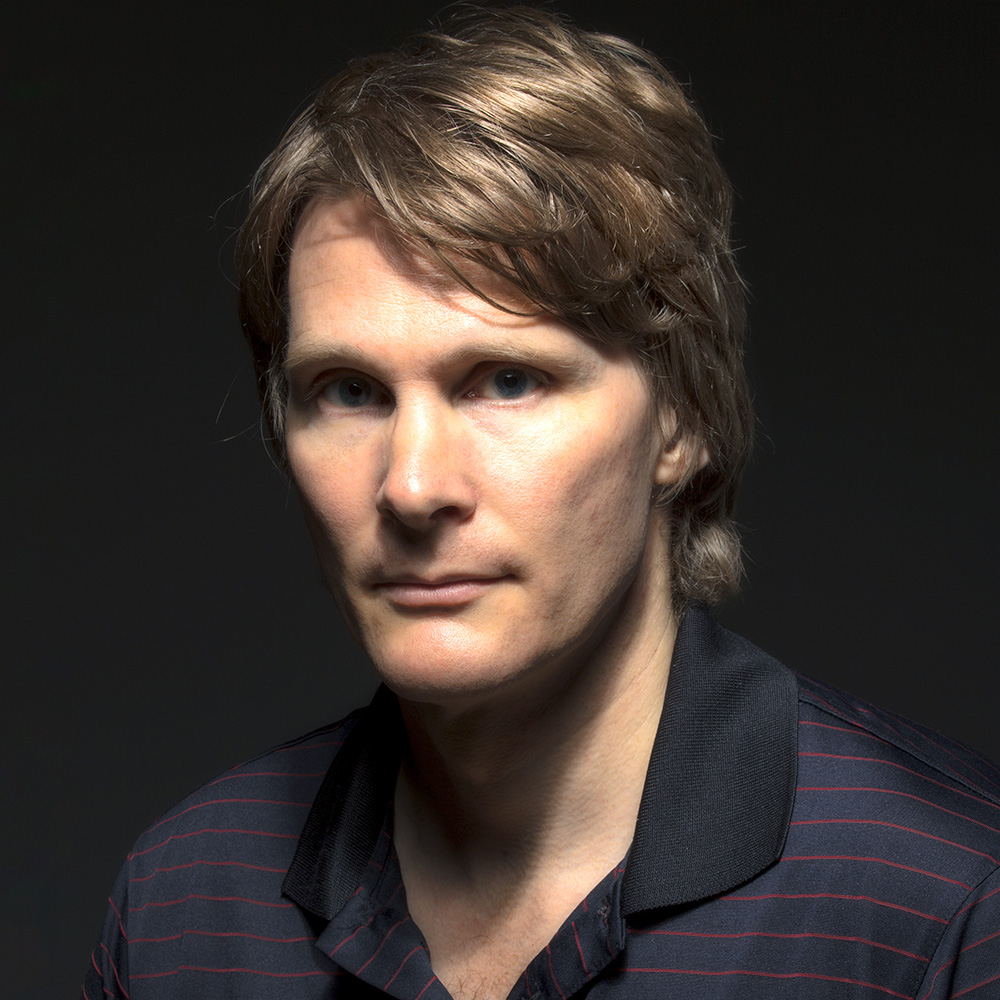
Sean Ashton studied sculpture at the Royal College of Art (1995-97) and Fine Art at Goldsmiths (2000-04), where he completed a Ph.D focusing mainly on the readymade. He writes fiction, criticism and poetry. From 2007-2011, he was associate editor of MAPMagazine, and since 2012 has written for Art Review. 2017 sees the publication of his first novel, Living in a Land (EROS Press), a memoir written from the perspective of someone who can only construct sentences in the negative. In 2007 he published a volume of short stories, Sunsets and Dogshits (Alma Books), a collection of reviews of imaginary artworks and books. Sean Ashton has no consistently recurring 'research interests', other than the desire to work under certain constraints. This is evinced, not just by the aforementioned novel, but by several short stories that have appeared in various publications: 'Mr Heggarty Goes Down', Collapse Vol VIII, ed. Robin Mackay (Falmouth: Urbanomic, 2014) 'Panpoons', Artenol, ed. Zinovy Zinik (New York: 2015); 'The Picture of Cary Grant', Suspicion (London: Jerwood Foundation, 2016); 'Passenger Cranford', Tegel: Speculations and Propositions (Berlin: The Green Box, 2013); and 'The Second Room', Thirteen Blackbirds Look at a Man (Cardiff: Chapter Gallery, 2015). Protagonists include a professional air passenger paid to remain airborne ('Passenger Cranford'), and a group of men paid to stare continuously at an object to verify its existence, in a parody of Idealist philosophy ('The Second Room'). His second novel, The Way to Work, features a protagonist trapped on a train of infinite length, on which he can only travel forward, the story being an account of a 'journey within a journey'. More recently, Ashton has published poems in Poetry London, Magma, Artenol and Poetry Salzburg Review. As a poet, he adopts lyric personae rather than converting his own 'true' experiences into verse. He is interested in how the formal nature of composition produces an alternate rather than authentic self, while still insisting on the egotism that inheres in the term 'poet'. This bio has been written by Sean Ashton and made to sound like it's been written by someone else.
Publications (26)
Sort By:
Featured First:
Search:
To the Son of the Father
 29 September 2017
19
29 September 2017
19
‘To the Son of the Father’, a prose poem commissioned for the book An Account of Frederick McKenzie Playing Johnny Cash Covers at Strangeways Prison, Manchester, 1973 (Nottingham: TG, 2017), p.19. ISBN 978-0-9930536-2-7, published as part of artist Stuart McKenzie’s exhibition Sesame Street, TG Gallery, Nottingham, September 29 - November 18, 2017.
Kairos
1 January 2017
Victoria & Albert Museum, London Stanley Picker Gallery Publisher
Kairos, Victoria & Albert Museum, London, 2017. Commissioned by the Stanley Picker Gallery, the opera Kairos was conceived, written and performed by Anat Ben David. Ashton wrote part of the libretto, the song ‘Better Scenery’. It was performed as part of the REVEAL festival, for the opening of the V&A’s new wing in July 2017.
Grebennikov, Pataphysics and the Poetry of Astonishment
Living & Growing
Doing the Skylark: Marcus Coates’s Practical Guide to Unconscious Reasoning
2014
‘Doing the Skylark: Marcus Coates’s Practical Guide to Unconscious Reasoning’, http://threeletterwords.org/doing-the-skylark-marcus-coatess-a-practical-guide-to-unconscious-reasoning-sean-ashton/. An extended review of Marcus Coates’s self-help manual, in which he develops techniques used in his performance work as an artist into methods for solving psychological problems. The piece addresses, amongst other things, the issue of whether the term ‘unconscious reasoning’ might be a (productive) oxymoron.
The Way to Work
02 June 2023
Hamilton-Emery C1-313 (313 Pages) Cromer, Norfolk Salt
 Authors: Ashton S, Editors: Hamilton-Emery C
In Ashton’s novel The Way to Work, a man boards his 8:08 train only to find it redirected to Purgatory. Of apparently infinite length, the train is a self-contained, hermetically sealed cosmos that presents the idea of a life lived in a completely transitional, liminal environment. The method is realist, but the terrain is supernatural: the train is sentient, able to prevent passengers from going backwards when the sliding doors close behind them. They may only go forwards, but the further they go the more memory they lose. The novel’s narrator is largely immune from this amnesia and thus able to recount his experience, which culminates in him becoming a chief member of the 8:08’s staff. The train is like a metallic version of the river in Joseph Conrad’s Heart of Darkness: it changes your character the further you progress. Announced in January 2023 on industry publication Bookseller, The Way to Work was published in April 2023 and launched at No Show space in London, June 2023. Further readings include The Jobs Market, Camden Arts Centre, July 8 and Alterities: New Voices in Contemporary British Fiction, 27 September (Salt Publishing). Ashton was interviewed on Radio Cambridge, April 29, and Talk Radio Europe, The Book Show, with Hannah Murray Lopez, May 4. Two articles by Ashton showcased the novel: ‘A novel isn’t just a narrative, it’s an environment’ (Irish Times, May 23) and ‘On the ideal novel’, Best American Poetry, June, 2023. Invoking authors such as Conrad and Ballard, these explored how fictional topography shapes character rather than just telling a story, and also posited the idea that, latent in any novel is a series of many possible alternatives. The purpose of the novel is to hint at that multiplicity rather than insisting on the present account as the sovereign one.
Edward Lear’s Safeword & Beyond Retro
2016
Magma. Magma Publisher
‘Edward Lear’s Safeword’ and ‘Beyond Retro’ in Magma, Issue 64, ‘Risk’, 2016, eds. Dom Bury and John Stone (pp.8-9). Two poems, the first reimagining Edward Lear’s tendency for nonsense within a sado-masochistic scenario; the second calling for a moratorium on nostalgia and retro culture through the violent treatment of Bagpuss and his friends. It’s nothing personal – I remain an ardent fan of Oliver Postgate.
Living in a Land (Second edition)
2017
Ma Bibliotheque
Living in a Land is a novel written almost entirely in the negative, consisting mainly of things the narrator has never done, no longer does or will never do. Given that what he has not done is more diverse than what he has, there is much ground to cover, and he approaches the task with arguably greater zeal than a conventional diarist. A study of the conceivable versus the actual, the personal versus the universal, idiocy versus logic, black versus white, circles versus squares, renting versus buying, Living in a Land is a chronicle of a mind fighting its own oppositional nature, a portrait of a hypothetical man.
No Art Art
2016
Artenol Artenol Publisher
‘No Art Art’, Artenol, Issue 4, Spring 2016, eds Zinovy Zinik, David Dann, Alexander Melamid (pp.53-58). This is a short story. Its subject is art that takes the form of a proposal. It is written from the perspective of a ‘rogue’ Arts Council employee, Neil Goodwyn, who sends counter-proposals to artists in response to what he sees as their grandiose vanity projects, offering them remuneration in exchange for not producing any art. It’s original and proper title is ‘Eternity and all its Sequels’. The editors of Artenol decided to call it ‘No Art Art’ instead. I don’t wholly understand what that means, but I’m guessing it means art that’s too conscious of its status as art, which does accurately convey the story’s content.
Natural Selection
January 2018
‘Natural Selection’ is Ashton's review of Andy Holden and Peter Holden’s Artangel commission Natural Selection at the Former Newington Library, London 10 Sept – 5 Nov, 2017. This article won joint second prize (3500 Euros) from the International Awards for Art Criticism, 2017. The show was about ornithology and egg-collecting. Ashton's article focuses on the ethics of the latter, and on the relationship of the Holdens’ two video installations to such things as television, pedagogy-as-art and structuralist film-making. Published: IAAC website in Jan 2018.
Hello-Goodbye in Gethsemane
2015
Poetry London http://poetrylondon.co.uk/product/autumn-2015-issue-82/
‘Hello-Goodbye in Gethsemane’, Poetry London, Issue 82, Autumn, 2015, ed. Ahren Warner. This poem is a villanelle about a tryst between two orthodox Jewish men in the garden of Gethsemane. It is a play on the theme of betrayal (i.e., The Betrayal), interweaving biblical and secular themes, using the repetitious style of the villanelle form (as evinced by Dylan Thomas’s ‘Do Not Go Gently…’) to posit two separate voices that speak to one another in a somewhat Socratic tone. Poetry London is an internationally recognised journal. This issue also includes work by David Harsent, Ian Duhig, Clare Pollard and Sean O’Brien.
Hometime
Harry Meadley’s Disappearing Monochromes
To John Cage
2015
Poetry Salzberg Review Publisher
‘To John Cage’, Poetry Salzburg Review, Issue 28, Autumn, 2015. A poem written in continuous haikus about Cage’s 4’33” – the form is chosen in deference to Cage’s own interest in set forms. The issue includes work by Rae Armantrout, Graham Allison and David Sergeant.
Ian Beale in Tahiti
Avant-garde and Post-Avant-garde Provocation in Visual Art
The Harry Meadley Show
2017
Jerwood Foundation Publisher
‘The Harry Meadley Show’ is an article commissioned by the Jerwood Foundation on the artist Harry Meadley’s performance video The Harry Meadley Show’. Meadley’s video takes the form of an artist’s talk done as a chat show. Ashton's piece puts the work in a wider cultural context, looking at films such as Sydney Lumet’s Network of 1976.
Panpoons
2015
‘Panpoons’, Artenol, Issue 3, Winter, 2015-16, eds. Zinovy Zinik, David Dann, Alexander Melamid. A short story that began as an imitation of Saki’s ‘Tobermory’, this tale recounts the adventures of a cat that is taught how to speak by a ventriloquist named Cornelius Applebaum. The cat, named Panpoons, is invited to address a salon of artworld people, where he offends everyone with his political incorrectness and fascist posturing. Artenol was recently launched by the artist Alexander Melamid, and its British editor is the Russian writer Zinovy Zinik, author of the BBC-adapted novel The Mushroom Picker and regular contributor to the TLS. With a bias towards visual art, its remit is mainly satirical/provocative, but with a mainstream audience in mind. Recent contributors include Ian Frazier and Art Spiegelman, both regulars for The New Yorker. Work by Lawrence Krauser, Walker Mimms and Sally O’Reilly appears alongside my story in the forthcoming issue.
From Physical Object to Literary Text
Living in a Land
2016
EROS Press
Living in a Land, EROS Press (2016) ISBN 978-0-9934268-5-8. Publisher’s summary: ‘Living in a Land is a novel written almost entirely in the negative, consisting mainly of things the narrator has never done, no longer does or will never do. Given that what he has not done is more diverse than what he has, there is much ground to cover, and he approaches the task with arguably greater zeal than a conventional diarist. A study of the conceivable versus the actual, the personal versus the universal, idiocy versus logic, black versus white, circles versus squares, renting versus buying, Living in a Land is a chronicle of a mind fighting its own oppositional nature, a portrait of a hypothetical man.’
11 November 2020
94 Scarborough Valley Press
Sampler presents a selection of entries from an encyclopaedia written entirely by poets. The material, assembled by Sean Ashton into categories such as Fruit & Vegetables, Birdsong and Musical Instruments, offers insights into a range of themes: the precise timbre of a lapwing’s call, the heroic modesty of the double bass, the correct way to eat a peach. There are also answers to pertinent questions. What is it that makes hairdressers so special? Why is neon the noblest of gases? Could rugby be improved with the addition of a harpsichord? In his capacity as chief editor, Ashton deploys poetry as an applied art, abandoning the lyric voice for a collective register. Somewhere between the private fancy of the individual and the strictures of the social is a forest of stranger truths. Few are stranger or more truthful than Sampler.
Marcel Duchamp: Symptoms of Loss & The Avant-garde
The Second Room
2015
‘The Second Room’, Thirteen Blackbirds Look at a Man (Cardiff: Chapter, 2015), pages unnumbered. Chapter gallery in a Cardiff commissioned me to write a short story for the exhibition Thirteen Blackbirds Look at a Man, which featured sculpture and video work by Cathie Pilkington, Annie Whiles and Fiona MacDonald. It’s a tale about a sect of men who uphold an odd existential tradition, paid as they are to stare an object for eight hours a day. Derived from Bishop Berkeley’s maxim ‘to be is to be perceived’, the story provides a fictional backdrop to the artists’ concern with myth, ritual. Basically, an alternative to a more conventional exhibition text.
Point to Point: a Circular Walk through Bloomsbury, Incorporating Mecklenburgh Square
2017
London Camberwell Press
‘Point to Point: a Circular Walk through Bloomsbury, Incorporating Mecklenburgh Square’, in Walking Cities ed. Jaspar Joseph Lester (London: Camberwell Press, 2017). Publications includes contributions from: Richard Wentworth, Peter St John (St John & Caruso), Rut Blees-Luxemburg, Douglas Murphy, Sharon Kivland, Steve Pile, Laura Oldfield Ford, John Troyer and Sean Patterson, Amy Blier-Carruthers, Juan Luc Nancy, Sean Ashton, Jo Stockham, Adam Kaasa, Ahuvia Kahane, Peter Sheppard Skӕrved. Ashton's contribution is a short story written in the form of a Time Out-style country walk, ‘Point to Point’ covers a very short distance, limiting itself to the spiral staircase of Russell Square tube station and nearby Mecklenburgh Square. As part of the project, Ashton gave a reading of the work at the Showroom gallery in London at the launch on 15th March 2017.The book was reviewed in Art Monthly, 408 (2017 Jul-Aug), p.41.
Mr Heggarty Goes Down
2014
Urbanmic
‘Mr Heggarty Goes Down’, Collapse Vol VIII, ed. Robin Mackay (Falmouth: Urbanomic, 2014), pp. 849-879. A short story illustrated by the painter Nigel Cooke. Taking Hume’s scepticism of causal necessity as its main theme, it charts the misfortunes of a renegade scholar who places his body in the service of those ideas in a series of highly embarrassing ‘performative gestures’ that eventually get him fired. It follows Quentin Meillasoux’s text ‘The Materialist Divination of the Hypothesis’, which looks at the poet as a ‘chance’ agency. The whole volume is on the theme of chance and contingency, including contributions from Suhail Malik, Nick Land, Jaspar Joseph-Lester and Nick Srnicek and Alex Williams. Though its championing of Speculative Realism has sometimes met with scepticism, Collapse remains an important journal, spanning the fields of philosophy, visual art, fiction and cultural theory. https://www.urbanomic.com/chapter/collapse-viii-sean-ashtonnigel-cooke-mr-heggarty-goes-down/
Hard Engineering: Propositions for Future Ruins
29 September 2017
Ashton SHard Engineering: Propositions for Future Ruins, a group show. Date: 29 September – 5th November 2017. Venue: The National Museum of Natural History and Science, Lisbon, Portugal. Curated by Jaspar Joseph Lester, Susanne Prinz and Julie Westerman, this show consists of ‘six visual and text guides to Lisbon that are the result of new collaborations across a broad range of disciplines (Art, Architecture, CMc Engineering, Physical and Human Geography and Social Anthropology). The guides set out to re-imagine the contemporary urban environment by exploring overlooked livelihoods, traces of profound social mutation, and the scars of past natural disasters (earthquakes, dimate change), economic crisis (industrial decline, poverty) and human conflict (the aftermath of war, migration).’ Ashton's contribution to this show was an audio piece, a reading of the story ‘Passenger Cranford’, which relates the adventures of Cranford, a professional airline passenger who spends all his time airborne. It was initially commissioned for the book Tegel: Speculations and Propositions, eds. Jaspar Joseph Lester, Susanne Prinz and Julie Westerman (Berlin, Green Box 2013). Information from press release below: ‘Included in the exhibition are a series of readings fromthe publication TEGEL: Speculations and Propositions. In 2012, Tegel airport in Berlin became the point of speculation for a group twenty-six artists and writers, who were invited to consider the geometry of Meinhard von Gerkan's 1964 design, reflect on the history of the building and imagine its future following its proposed decommissioning after the construction of nearby Brandenburg International Airport. The seven readings explore the material, political and imaginary future of the airport through short stories, Infrastructural critique and Sci-Fi narratives - a future further complicated by the fact that Tegel continues to operate long after the construction of Brandenburg, originally intended to replace it.’ As part of this project, Ashton also edited the guides.
Teaching Activities (2)
Sort By:
Featured First:
Search:
The Art of Skating Institutions: Incidental Positionality as an Artistic Strategy in Reappropriating Civic Space
01 October 2021 - 11 July 2025
Lead supervisor
From Publication to Publishing: An investigation into the fluidity of artist publishing activities and spaces.
01 October 2021
Lead supervisor
News & Blog Posts
Carolyn Thompson’s ‘Post Moderns’ art exhibition





