

Leeds Beckett University - City Campus,
Woodhouse Lane,
LS1 3HE
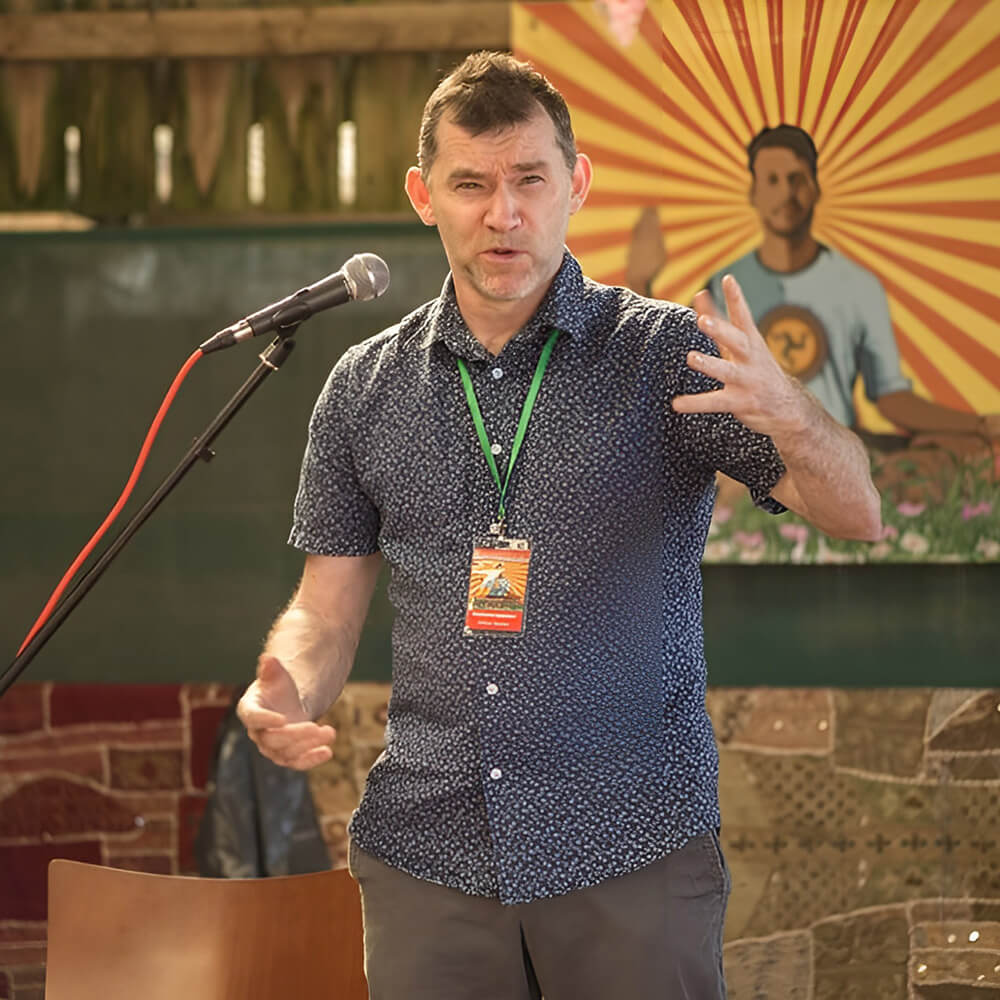
Dr Steve Taylor
Senior Lecturer
Dr. Steve Taylor teaches on the Social Psychology BA and Interdisciplinary Psychology MA. His interests include Consciousness Studies, Spirituality, Positive Psychology and Transpersonal Psychology. He is the author of many best-selling books on psychology and spirituality.
 0000-0002-2955-677X
About
Dr. Steve Taylor teaches on the Social Psychology BA and Interdisciplinary Psychology MA. His interests include Consciousness Studies, Spirituality, Positive Psychology and Transpersonal Psychology. He is the author of many best-selling books on psychology and spirituality.
Dr. Steve Taylor teaches on the Social Psychology BA and Interdisciplinary Psychology MA. His interests include Consciousness Studies, Spirituality, Positive Psychology and Transpersonal Psychology. He is the author of many best-selling books on psychology and spirituality.
Steve's background is in Transpersonal Psychology and Positive Psychology. He has published 14 books, including Waking From Sleep, The Leap and Extraordinary Awakenings.
Steve's journal articles have been published in many academic journals, magazines and newspapers, including The Journal of Humanistic Psychology, The Journal of Consciousness Studies and The Journal of Transpersonal Psychology. His work has been featured widely in the media in the UK, including The Daily Mail, The Daily Express, on BBC Breakfast, BBC World TV, Radio 4 and 5, and in The Guardian and The Independent. He is a member of the British Psychological Society and past chair of its Transpersonal Psychology section.
Degrees
Ba(hons) in English and American Literature
University of Warwick, Coventry, United KingdomPGCE (adult education)
University of Bolton, Bolton, United KingdomMSc (with distinction) in Consciousness Studies and Transpersonal Psychology
Liverpool John Moores University, Liverpool, United Kingdom | 24 September 2007 - 30 June 2008PhD in Psychology
Liverpool John Moores University, Liverpool, United Kingdom | 22 September 2008 - 27 July 2012
Languages
German
Can read, speak and understand
Related links
United Nations sustainable development goals

Research interests
In recent years, Steve's research has focused on 'transformation through turmoil,' as discussed in his 2021 book Extraordinary Awakenings. This deals with the transformational effects of intensely stressful and challenging experiences, such as bereavement, serious illness and addiction. This may create a shift in identity which is equivalent to a spiritual awakening.
Steve is also researching 'awakening experiences,' when people experience a temporary expansion and intensification of awareness. In addition, he has a longstanding research interest in 'time expansion experiences,' when time seems to slow down drastically or even disappear (such as in accident situations.)
Steve is also interested in parapsychology, including topics such as near-death experiences and precognition.
Publications (91)
Sort By:
Featured First:
Search:
The Moral Maze (BBC Radio 4)
Sunday Morning (BBC Radio 4)
An Introduction to Transpersonal Psychology: Research perspectives on transcendent human experiences
 08 September 2018
Annual Conference of the Consciousness and Experiential Section of the British Psychological Society Regents University, London
08 September 2018
Annual Conference of the Consciousness and Experiential Section of the British Psychological Society Regents University, London
The theme of this symposium is to introduce the area of transpersonal psychology, while sharing three research perspectives related to transcendent human experiences.
26 September 2020
Zygon: journal of religion and science55(4):898-923 Wiley
© 2020 The Authors. Zygon® published by Wiley Periodicals LLC on behalf of Joint Publication Board of Zygon This article is an introduction to a philosophical approach termed “panspiritism.” The fundamental principles of this approach are summarized, with discussion of how it links to earlier (mainly Eastern) philosophical perspectives, how it differs from panpsychism and its relationship to idealism and theism. Issues such as the relationship between mind and matter, the relationship between the mind and the brain, and the emergence of mind are discussed from a “panspiritist” perspective. There is a discussion of how panspiritism relates to mystical experiences. The article concludes by suggesting that this approach can help to elucidate a wide range of phenomena that appear anomalous or problematic from a materialist point of view.
23 March 2020
The Humanistic Psychologist49(3):381-399 Taylor & Francis (Routledge)
The cases of 16 individuals (12 women and 4 men) who reported powerful transformational experiences following bereavement were examined, using a mixed methods approach, including a qualitative thematic analysis of interviews and 2 psychometric scales. Both approaches found significant evidence of positive personal change. Prevalent themes included a sense of permanent transformation, a less materialistic attitude, a different attitude to death, and a sense of inner well-being. The changes were reported as stable and permanent, over long periods of time (a mean of over 13 years since the original bereavement experiences). Two psychometric measures showed statistically significant results. The term “posttraumatic transformation” is used to describe the experience of most of the participants.Parallels are identified between the transformation experienced by the participants and Maslow’s descriptions of “self-actualizers” and the states of optimum human development (or “wakefulness”) described by spiritual traditions. I suggest reasons for the relationship between psychological turmoil and personal transformation.
01 October 2019
Paradigm Explorer
Reasons why Neo-Darwinism is no longer viable as an explanation of evolution are explored, with arguments and evidence from contemporary theorists and scientists. An alternative view of evolution is suggested , based on a 'post-materialist' worldview.
01 September 2018
International Journal of Transpersonal Studies37(2):131-143 International Journal of Transpersonal Studies
A typology of experiences of sudden spiritual awakening is suggested, proposing that they may occur in two major forms, or modes. In a study of 19 cases of self-reported sudden spiritual awakening (within a larger sample that included cases of wholly gradual spiritual awakening), it was found that 13 cases could be interpreted in terms of either (a) a sudden collapse of the ego or self-system (ego-dissolution) or (b) a kundalini-like explosive release of energy. Both these types of spiritual awakening appeared to be most frequently induced by intense forms of psychological turmoil, such as bereavement, depression, addiction, and intense stress. An attempt is made to explain both modes of sudden awakening in terms of the release of energy that is normally monopolized by two different functions. Ego-dissolution awakenings are related to energy associated with the ego, while explosive energetic awakenings are related to energy normally associated with sexuality. The former type of awakening can be characterized as essentially structural in nature while the latter can be characterized as essentially energetic.
September 2019
Explore: The Journal of Science and Healing15(5):371-375 Elsevier
There are sound evolutionary and philosophical reasons for believing that human beings have a powerful innate disposition towards pure altruism—an altruism that is not a form of disguised selfishness, a survival strategy, or limited to those with whom we are closely genetically related. An overview of archaeological and anthropologic evidence suggests that the so-called 'environment of evolutionary adaptedness' was very different to the brutal, competitive struggle typically depicted by evolutionary psychologists. It is false to assume that competitiveness and selfishness are inevitable and fundamental human traits. An alternative view that altruism and co-operation are fundamental traits could more justifiably be drawn from archaeological and anthropological evidence. The philosophy of ‘panspiritism’ suggests that pure altruism is the result of the human capacity for empathy, which itself is the result of our fundamental interconnectedness.
2016
Mindfulness in Positive Psychology Taylor & Francis
 Authors: Taylor SM, Editors: Ivtzan I, Lomas T
Intense encounters with mortality - such as a diagnosis of a terminal illness or a sudden brush with mortality due to an accident or injury - can have positive transformational effects, leading to what positive psychology refers to as ‘flourishing.’ In particular, intense encounters with mortality may generate a heightened sense of appreciation for life, more authentic relationships and lifestyles, and an increased ability to be “mindful”, in the sense of becoming more focused upon the present, and more vividly aware of one’s surroundings. (This is termed ‘externally-oriented mindfulness’.).This can be seen as a form of ‘spontaneous mindfulness’ caused by a re-orienting of attention, away from the future and the past, and into the present. Examples of this shift are given, and other reasons for its emergence are suggested. The positive effects of encountering mortality are contrasted with the findings of Terror Management Theory. The intensity and directness of the individual’s encounter with mortality may be a significant factor in whether it has negative or positive effects. It is suggested that increasing our awareness of mortality - such as by making a conscious effort to contemplate death - can help us to gain some of the positive transformational effects of an intense encounter with mortality (or IEM)
Spiritual Science: Why Science Needs Spirituality to Make Sense of the World
The Leap: The Psychology of Spiritual Awakening
The Calm Center
05 September 2018
The Psychologist31:42-47 British Psychological Society
For more than two decades now, positive psychology has brought an emphasis on positive human experiences. But is there one type – perhaps the most positive of all – that has not been adequately investigated? Welcome to the ‘awakening experience’.
The Peak at the Nadir: When psychological turmoil gives rise to personal transformation
08 June 2017
Leeds Beckett University’s 9th Annual Conference for Psychological Therapies and Mental Health Leeds Beckett University
Exploring Awakening Experiences
14 September 2019
Society for Psychical Research Annual Conference Leicester
Dr. Steve Taylor will summarise his research into 'awakening experiences' in which awareness expands and intensifies and we seem to gain insights into the nature of reality. Drawing on his books Waking From Sleep and The Leap: The Psychology of Spiritual Awakening, Steve will discuss the triggers, characteristics and after-effects of the experiences. He will also suggest that it is possible to shift into a 'wakeful' state on a permanent basis. A shift into 'permanent wakefulness' occurs most frequently in the midst of intense psychological turmoil, but can also occur gradually, as a result of following spiritual practices and paths. Some people may also be naturally 'awakened' to some degree. Steve will also suggest that there is an evolutionary aspect to awakening experiences. In terms of its internal aspect, evolution can be seen as a process by which consciousness (as it expresses itself in living beings) becomes more intense and expansive - which is exactly what happens in awakening experiences. Steve will also refer to the ideas of his new book Spiritual Science, in which he suggests that awakening experiences are a glimpse of a 'fundamental consciousness' which expresses itself in all living beings and objects.
Consciousness Unbound and the Question of Metaphysics in Transpersonal Psychology
30 January 2022
Journal of Transpersonal Psychology Journal of Transpersonal Psychology
Many readers of this journal will be familiar with Irreducible Mind (2007), a book that has already attained the status of a classic in the mould of William James’s seminal writings on philosophy, psychology and mysticism. Consciousness Unbound is a sequel to Irreducible Mind – in fact, a second sequel, following 2015’s Beyond Physicalism. In this essay, I relate the essay to the issue of metaphysics in transpersonal psychology. It is impossible to separate metaphysics from any field, and , I believe that there is no reason why transpersonal psychologists should try to avoid metaphysics. In fact, on the contrary, we should accept and embrace metaphysics. I believe that there is no reason why transpersonal psychologists should try to avoid metaphysics. In fact, on the contrary, we should accept and embrace metaphysics.
05 January 2022
Transpersonal Psychology Review The British Psychological Society
Michael Daniels’s book Shadow, Self, Spirit is an essential book for students of transpersonal psychology – perhaps the clearest, most wide-ranging and well-written overview of the topic that has yet been written. However, this article suggests some problematic areas with Daniels’s approach, such as his criticism of transpersonal psychology’s focus on states of consciousness, and (in particular) his sceptical attitude to metaphysics. I suggest that it is impossible for transpersonal psychology to avoid metaphysics, and that the best approach is to be explicit and rigorous about our metaphysical orientation. I discuss different types of “bad” metaphysics, with Ferrer’s concept of “the mystery” as an example. I offer a defence of my “soft perennialist” model against Daniels’s criticisms. There are four main reasons why transpersonal psychology should embrace a post-materialist outlook: (1) it is impossible to avoid some form of metaphysical orientation; (2) the field has traditionally been associated with such a metaphysical orientation; (3) the evidence for some form of post-materialism is compelling; (4) by committing to a post-materialist orientation, the field can contribute to a cultural shift away from materialism and its destructive effects. Since there are such a broad variety of post-materialist perspectives, this would not involve abandoning a pluralistic approach.
The Varieties of Temporal Experience: Time Perception in Altered States of Consciousness
2021
Coming to Terms with Timelessness : Daoist Time in Comparative Perspective Three Pines Press
Authors: Taylor S, Editors: Kohn L"Time, and in particular timelessness, plays a key role in Daoism, both in its more speculative and practical dimensions. This book explores different aspects of its vision in close comparison with other thinkers, religions, and cultures.
Beyond Separation: Transpersonal and Spiritual Approaches to Well-Being
2022
Mental Health, Spirituality and Well-Being: A Practical Handbook for Those Providing and Using Health, Social Care, Education and Allied Support Pavilion
Aris S, Garraway H, Gilbert H, Taylor SThis ground-breaking handbook explores the nature of spirituality and its relevance to the mental health and well-being of people coming into contact with health, social care, education and allied support services.
Extraordinary Awakenings When Trauma Leads to Transformation
07 September 2021
264 New World Library
In Extraordinary Awakenings, readers will find not only riveting stories of transformation that show the amazing resilience of the human spirit, but also hope and guidance to call on during their own struggles, together with inspiration and ...
01 November 2021
The Psychologist34:40-45 British Psychological Society
Do psychologists have a responsibility to help prevent ruthless, amoral people attaining positions of power?
24 June 2021
Journal of Humanistic Psychology63(4):002216782110253 SAGE Publications
The essence of any psychologically healthy society—and the basis of the utopian or eupsychian society envisaged by Abraham Maslow—is an individual state of empathic connection that gives rise to qualities such as compassion, responsibility, justice, fairness, and equality. Opposed to this, is a psychological state of hyperindividuation and psychological disconnection, that generates traits of selfishness and a lack of empathy, compassion, and conscience. In turn, such traits give rise to social injustice, inequality, brutality, and oppression. In its most extreme form, hyperindividuation is associated with “disorders of disconnection” such as psychopathy and narcissistic personality disorder. I discuss the concept of “pathocracy,” which explains why individuals with personality disorders are likely to rise into positions of power, both in politics and in business. Any attempt to develop a eupsychian society has to deal with the issue of pathocracy, including possible measures to prevent individuals with personality disorders from attaining power, and other measures to encourage empathic and conscientious individuals to take up leadership roles. This would help realize Maslow’s concept of enlightened management. At the same time, as Maslow emphasized, we need to take account of the social and institutional structures and circumstances that encourage authoritarianism and pathocracy.
April 2021
The Psychologist34:32-34 British Psychological Society
Steve Taylor seeks to make sense of time expansion experiences
01 March 2021
Metal Music Studies7(1):85-102 Intellect
Although they superficially belong to different genres of music, Black Sabbath and Joy Division share a fundamental commonality in that their music was shaped by – and powerfully depicted – bleak urban industrial environments. This article highlights a number of specific ways in which both bands’ music depicted (and was influenced by) this environment, including an unusually bass-heavy sound, the repetitive and continuous quality of their music, an austerity of sound, the rigid structure of songs and performances and lyrical content. Both bands attained such a high – or pure – degree of environmental expression because they were examples of the phenomenon of ‘group flow’. I examine the aspects of group flow identified by psychologists and show how both bands exhibited these, including a highly cooperative creative process, a lack of conscious deliberation and a prolific and spontaneous output. It was their group flow that enabled the two bands to ‘channel’ their environment directly and powerfully.
The Clear Light Spiritual Reflections and Meditations
29 September 2020
136 New World Library
Reading this book is a transformational spiritual experience in itself.
Moving Beyond Materialism - How Transpersonal Psychology Can Contribute to Cultural Transformation?
15 September 2018
Transpersonal Psychology Section of the British Psychological Society University of South Waleas
The issue of whether it is possible to separate science and metaphysics is discussed, with reference to William James and the writings of quantum physicists. The metaphysical framework of scientific materialism is analysed and some of its key assumptions are identified. It is suggested that these assumptions are becoming increasingly untenable, as is evident by the advocacy of post-materialist science by some contemporary scientists. The main appeal of transpersonal psychology to students and practitioners is arguably its lack of allegiance to a materialist metaphysics. Rather than allying itself to the metaphysical paradigm of naturalistic science or attempting to bracket out metaphysics, transpersonal psychology should operate openly within the framework of post-materialistic science. Rather than distancing itself from areas such as near-death studies and parapsychology, it should embrace and cooperate with them, sharing the same post-materialist perspective. Transpersonal psychology should not attempt to reduce itself to fit into mainstream psychology but to try expand mainstream psychology to include its concerns and principles. In a laudable attempt to pursue a more scientific approach, some transpersonal theorists have arguably swung too extremely away from essentialism/perennialism and metaphysics. It is hoped that a more balanced approach may be found, incorporating more nuanced and phenomenological forms of perennialism, and more cautious metaphysical claims.
15 May 2020
Journal of Humanistic Psychology62(2):208-232 SAGE Publications
Time Expansion Experiences (TEEs) occur when a person’s normal experience of time slows down or expands significantly. Previous research has associated them mainly with accidents, but also altered states of consciousness such as mystical experiences, psychedelic experiences and near-death experi-ences. This paper describes a qualitative study of 74 reports of ‘Time Expansion Experiences’ (also a pilot study of 22 reports) which investigated the phenomenology of such experiences, using thematic analysis to highlight the main themes. The most common triggers of TEEs in the study were accidents (40 of 74) followed by spiritual states (12) and then psychedelic experiences and sports and games (both 7). Many participants commented on the dramatic nature of their TEEs, with themes of positive affective states (most notably calmness), alertness, the opportunity to take preventative action (related to very rapid cognition) and quietness. Interpretations of TEEs are discussed, arguing against the theo-ry that they are an illusion created by recollection. TEEs are seen as a characteristic of altered states of consciousness, which occur when the normal self-system dissolves in exceptional circumstances. Human beings’ normal experience of time is a psychological construct, produced by the psychological structures and processes of the normal self-system.
Spontaneous Awakening Experiences: Exploring the Phenomenon Beyond Religion and Spirituality
2012
The Journal of Transpersonal Psychology44(1):73-91 (19 Pages) assocation of transpersonal psychology
Out of the Darkness
The Meaning
Waking from Sleep: Why Awakening Experiences Occur and How to Make them Permanent
The Fall: The Insanity of the Ego in Human History
Making Time
2007
272 London Icon Books
In this eye-opening book, personal development tutor Steve Taylor gives an astounding insight into why our perception of time changes-and how we can take charge of it in our own lives.
Agony to Ecstasy: The Positive After-Effects of Turmoil and Trauma
2012
Psychology of Trauma Nova Science Publishers
Authors: Taylor SM, Editors: Van Leeuwen T, Brouwer MWhy are turmoil and trauma so strongly associated with positive states? This article summarises two separate studies undertaken by the author. The first showed that intense turmoil and trauma could lead to a permanent positive psychological transformation, including characteristics such as enhanced well-being, intensified perception, a sense of connection, improved relationships, and a less materialistic and more altruistic attitude. The second study found that turmoil and trauma are powerful triggers of temporary =awakening experiences.' Examples are given of =turmoil-induced' awakening experiences. These experiences cannot be explained away as self-delusion or a psychological defense mechanism. They are best understood in terms of a dissolution of the psychological attachments - such as ambitions, hopes, beliefs, sense of status and achievement, attachment to possessions, other human beings or social roles - which help to create the individual's normal sense of self. The dissolution of psychological attachments often creates a painful sense of loss, but can also generate a sense of liberation and well-being. Acceptance is an important factor in =unlocking' the potentially positive aspects of turmoil and trauma. © 2013 by Nova Science Publishers, Inc. All rights reserved.
Transformation through suffering: A study of individuals who have experienced positive psychological transformation following periods of intense turmoil
2012
Journal of Humanistic Psychology52(1):30-52 SAGE Publications
This article summarizes a study of 32 individuals who experienced psychological transformation following periods of intense turmoil and trauma in their lives. Several individuals reported temporary spiritual experiences following turmoil, but the majority underwent a permanent psychological transformation. These experiences are termed suffering-induced transformational experiences (SITEs). The types of trauma that featured included intense stress and upheaval, depression, bereavement, serious illness, becoming disabled, alcoholism, and encounters with death (through medical conditions or accidents). The individuals were interviewed, and the most prevalent characteristics of their new state of being were identified, including increased well-being, intensified perception, a sense of connection, improved relationships, a less materialistic and more altruistic attitude, decreased cognitive activity, and reduced fear of death. Reasons for the transformation are suggested, the most important being the dissolution of psychological attachments, followed by acceptance.
The Outsider: From Existentialism to Enlightenment
2011
Around the outsider: Essays Presented to Colin Wilson on the Occasion of His 80th Birthday O Books
Authors: Taylor SM, Editors: Stanley C 13 March 2018
The International Journal of Transpersonal Studies36(2):147-159 California Institute of Integral Studies
The issue of whether it is possible to separate science and metaphysics is discussed, with reference to William James and the writings of quantum physicists. The metaphysical framework of scientific materialism is analysed and some of its key assumptions are identified. It is suggested that these assumptions are becoming increasingly untenable, as is evident by the advocacy of post-materialist science by some contemporary scientists. The main appeal of transpersonal psychology to students and practitioners is arguably its lack of allegiance to a materialist metaphysics. Rather than allying itself to the metaphysical paradigm of naturalistic science or attempting to bracket out metaphysics, transpersonal psychology should operate openly within the framework of post-materialistic science. Rather than distancing itself from areas such as near-death studies and parapsychology, it should embrace and cooperate with them, sharing the same post-materialist perspective. Transpersonal psychology should not attempt to reduce itself to fit into mainstream psychology but to try expand mainstream psychology to include its concerns and principles. In a laudable attempt to pursue a more scientific approach, some transpersonal theorists have arguably swung too extremely away from essentialism/perennialism and metaphysics. It is hoped that a more balanced approach may be found, incorporating more nuanced and phenomenological forms of perennialism, and more cautious metaphysical claims.
12 June 2018
The International Journal of Transpersonal Studies36(2):111-120 California Institute of Itegral Studies
In response to Hartelius (2017), I suggest that the evidence for perennialism or essentialism can be tested, and is publicly accessible, through engagement with the spiritual practices that have given rise to cross-cultural mystical experiences with common characteristics. Tis suggests that essentialism could be included in transpersonal psychology (and psychology in general). I suggest that there is no reason why transpersonal psychology should exclude metaphysical claims, as long as they are inferred or implied by research and evidence, explicitly stated and viewed as secondary. It is impossible to avoid metaphysics, and it is important for transpersonal psychologists (and all psychologists and scientists in general) to be explicit about their metaphysical assumptions.
13 June 2018
The International journal of transpersonal studies36(2):75-92 California Institute of Integral Studies
In reply to Hartelius’s (2016) response to my paper “From Philosophy to Phenomenology: The Argument for a ‘Soft’ Perennialism” (Taylor, 2016a), I provide arguments in support of my model from contemporary scholars of mysticism, who advocate a move from a philosophically-based perennialism to a phenomenologically-based essentialism. This discussion illustrates that perennialist perspectives are far from outmoded.
12 December 2017
The Journal of Transpersonal Psychology The Association for Transpersonal Psychology (ATP)
Taylor SM, Egeto-Szabo, K. KAwakening experiences are temporary experiences of an intensification and expansion of awareness, with characteristics such as intensified perception, a sense of connection and well-being. Ninety awakening experiences were collected and thematically analysed to identify their triggers and characteristics, and also their duration and after-effects. Four main triggers of awakening experiences were found: psychological turmoil, contact with nature, spiritual practice and engagement with spiritual literature (or audio or video materials). Characteristics were found to be positive affective states, intensified perception, love and compassion, a transcendence of separateness, a sense of revelation and inner quietness. The duration of the majority of experiences was from a few minutes to a few hours. The most prevalent after-effects were a desire to recapture the experience and a shift in perspectives and values. The study confirms the importance of psychological turmoil in generating awakening experiences, and that most awakening experiences occur spontaneously, outside the context of spiritual practices and traditions
The Sources of Higher States of Consciousness
2005
The International Journal of Transpersonal Studies24:48-60
In this paper it is argued that “higher states of consciousness”–or mystical experiences–have two main sources: they can be caused by a disruption of the normal homeostasis of the human organism and also by an intensification of the “consciousness-energy” that constitutes our being. (These are termed HD and ICE states). The author investigates examples of both types of experience, and compares and contrasts them. It is concluded that the second type of experience is the only one which is truly positive and which can become a fully integrated and permanent higher state of consciousness.
Letting Go of Life: The Well-Being of the Old
14 February 2017
International Journal of Transpersonal Studies35(2):17-41 Floraglades Foundation
This paper argues for a soft perennialism, distinct from the hard perennialism which suggests that spiritual and religious traditions are expressions of the same underlying spiritual realities. There are two reasons why it is necessary to think in terms of a soft perennial model: firstly, because of a number of important common themes or trends across spiritual traditions; and secondly (and most importantly) because when the process of expansion of being or awakening occurs outside the context of spiritual traditions, broadly the same themes and tendencies appear, suggesting that there is a common landscape of experience which precedes interpretation and conceptualization by spiritual traditions. This applies to the perception of an all-pervading spiritual energy or force which may—in some traditions—become conceptualized as an allegedly ultimate reality but is not necessarily seen in those terms. It is suggested that transpersonal psychology would benefit from loosening its association with spiritual traditions and focusing more on studying expansive states of being in a nontraditional, secular context.
Temporary and Permanent Awakening: The Primary and Secondary Shift
10 October 2013
The Journal of Transpersonal Research, Vol. 5 (2), 41-48
This paper explores the distinction between temporary ‘awakening experiences’ and permanent transformational experiences, leading to an ongoing and stable state of ‘awakening.’ It is suggested that, in permanent transformational experiences, a new, stable and permanent ‘self-system’ is established, whereas in temporary awakening experiences the normal ‘self-system’ remains intact, even if temporarily disabled. Two types of transformational experiences are identified: a ‘secondary shift’, in which a person’s values and perspective are transformed, and a ‘primary shift’, in which a person’s whole ‘self-system’ is replaced, leading to a sense of new identity (and which includes the characteristics of the ‘secondary shift’ too, since the new identity brings new values and perspectives). The first is associated with temporary awakening experiences, the second with permanent awakening. This distinction may contribute to the debate on whether psychedelic drugs can contribute to spiritual awakening. It is suggested that they may produce a ‘secondary shift’, although not a primary shift. The concept of a latent ‘higher-functioning self-system’ may help to distinguish states of ‘spiritual crisis’ from states of psychosis.
Energy and Awakening: A Psycho-Sexual Interpretation of Kundalini Awakening
01 March 2016
The Journal of Transpersonal Psychology
In the Hindu Yoga and Tantric traditions, Kundalini is seen as a “coiled energy” at the base of the spine. Its release (which can be sudden or gradual) results in sudden spiritual awakening, sometimes with disruptive psychological and physical effects. In this paper, cases of “kundalini-like” experiences from my research are discussed, highlighting ways in which they seem to differ from kundalini as normally conceived. Here the experiences are interpreted in terms of an “energetic” theory of “awakening experiences.” It is suggested that kundalini-like experiences are related to a sudden release of energy normally expressed as sexual energy, or libido. In other cases, spiritual awakening may be related to a dissolution of the normal self-system. or ego. The concept of kundalini arousal may have been developed as a way of describing the transformational experience of a sudden release of concentrated sexual energy.
Beyond the Pre/Trans Fallacy: the Validity of Pre-egoic Experience
2009
The Journal of Transpersonal Psychology41(1):22-43
This paper questions the validity of the pre/trans fallacy in relation to childhood spirituality. It suggests that 'pre-egoic' spirituality is as valid as 'trans-egoic', and stems from the same source, although it is different in some important respects. The sources of spiritual experience in general are examined, and it is suggested that childhood as a state of being has ready access to these, although mainly to lower intensity spiritual states. It is suggested that the infant state is innately more 'spiritual' than the adult in two senses: firstly, children have fundamentally 'spiritual' characteristics as a stable structure of being, and secondly, they appear to have easy access to higher intensity spiritual experiences (that is, higher than their normal stable structure of being). Based on the 'ISLE' theory I have developed elsewhere, a framework of spiritual experiences and spiritual development is suggested, which includes the possibility of childhood spirituality. In this case at least, the pre/trans fallacy does not apply. However, it is also suggested that mature spirituality means integrating the natural spirituality of childhood with the great intellectual and practical benefits conferred by the adult ego.
The Peak at the Nadir: Psychological Turmoil as the Trigger for Awakening Experiences
01 July 2013
International Journal of Transpersonal Studies32(2):1-12 International Journal of Transpersonal Studies
A study of 161 temporary awakening experiences showed that over 23% were triggered by, or associated with, intense turmoil and distress (Taylor, 2012b). Examples of some of these turmoil-induced awakening experiences are given, illustrating the wide variety of traumatic experiences involved. (The type of trauma was found to be less important than its intensity.) These temporary awakening experiences are contrasted with permanent suffering-induced transformational experiences (SITEs). A distinction is made between a primary shift, involving the establishment of a new self-system (which occurs in SITEs), and the secondary shift which may occur after temporary awakening experiences, when the individual's self-system remains fundamentally intact, but she or he experiences a shift in perspective and values. Possible reasons for the connection between psychological turmoil and awakening experiences are discussed, arguing that the experiences cannot simply be explained away as self-delusion or a psychological defense mechanism. It is suggested that there is a connection between turmoil-induced awakening experiences and the dissolution of psychological attachments, together with an intensification of energy.
Back to Sanity: Healing the Madness of Our Minds
Primal Spirituality and the Onto/Phylo Fallacy: A Critique of the Claim That Primal Peoples Were/Are Less Spiritually and Socially Developed Than Modern Humans
2003
The International Journal of Transpersonal Studies22(1):61-76 (16 Pages) Saybrook Institute
Many theorists—including Freud, Habermas and Wilber—have suggested that there are strong parallels between ontogeny and phylogeny, and that the development of the human species has followed the same basic pattern as the development of the individual from birth to adulthood. I discuss this view in relation to archaeological and anthropological knowledge of the world’s “primal peoples.” I look at the spiritual, moral, and social development of primal peoples and find that, in almost every instance, they are more advanced than these theorists suggest, possessing characteristics which only occur—ontogenetically—at the higher “fulcrums” of development. I argue that Wilber’s spectrum model cannot be applied to species development and suggest the basis of a new (non-ontogenetic) model of phylogeny.
Transformation through Turmoil: Psychological Crises and Spiritual Awakening.
05 September 2015
ALUBRAT Brazilian and Portuguese Association of Transpersonal Psychology, Bi-Annual International Conference International Conference of Transpersonal Psychology, Salvador, Brazil.
A summary of my recent research into the link between intense psychological turmoil and transformational experiences. These experiences are termed suffering-induced transformational experiences (SITEs). The types of trauma that featured included intense stress and upheaval, depression, bereavement, serious illness, becoming disabled, alcoholism, and encounters with death (through medical conditions or accidents). The individuals were interviewed, and the most prevalent characteristics of their new state of being were identified, including increased well-being, intensified perception, a sense of connection, improved relationships, a less materialistic and more altruistic attitude, decreased cognitive activity, and reduced fear of death. Reasons for the transformation are suggested, the most important being the dissolution of psychological attachments, followed by acceptance.
Mortality and Mindfulness: How Intense Encounters with Death Can Generate Personal Transformation
27 April 2016
British Psychological Society, Annual Conference Nottingham University
: Intense encounters with mortality - such as a diagnosis of a terminal illness or a sudden brush with mortality due to an accident or injury - can have positive transformational effects, leading to what positive psychology refers to as ‘flourishing.’ In particular, intense encounters with mortality may generate a heightened sense of appreciation for life, more authentic relationships and lifestyles, and an increased ability to be “mindful”, in the sense of becoming more focussed upon the present, and more vividly aware of one’s surroundings. (This is termed ‘externally-oriented mindfulness’.).This can be seen as a form of ‘spontaneous mindfulness’ caused by a re-orienting of attention, away from the future and the past, and into the present. Examples of this shift are given, and other reasons for its emergence are suggested. The positive effects of encountering mortality are contrasted with the findings of Terror Management Theory. The intensity and directness of the individual’s encounter with mortality may be a significant factor in whether it has negative or positive effects. It is suggested that increasing our awareness of mortality - such as by making a conscious effort to contemplate death - can help us to gain some of the positive transformational effects of an intense encounter with mortality (or IEM)
Towards a Post-Materialist Science
28 September 2019
Eurotas (European Transpersonal Association) Annual Conferece Paris, France
The issue of whether it is possible to separate science and metaphysics is discussed, with reference to William James and the writings of quantum physicists. The metaphysical framework of scientific materialism is analysed and some of its key assumptions are identified. It is suggested that these assumptions are becoming increasingly untenable, as is evident by the advocacy of post-materialist science by some contemporary scientists. The main appeal of transpersonal psychology to students and practitioners is arguably its lack of allegiance to a materialist metaphysics. Rather than allying itself to the metaphysical paradigm of naturalistic science or attempting to bracket out metaphysics, transpersonal psychology should operate openly within the framework of post-materialistic science. Rather than distancing itself from areas such as near-death studies and parapsychology, it should embrace and cooperate with them, sharing the same post-materialist perspective. Transpersonal psychology should not attempt to reduce itself to fit into mainstream psychology but to try expand mainstream psychology to include its concerns and principles. In a laudable attempt to pursue a more scientific approach, some transpersonal theorists have arguably swung too extremely away from essentialism/perennialism and metaphysics. It is hoped that a more balanced approach may be found, incorporating more nuanced and phenomenological forms of perennialism, and more cautious metaphysical claims.
The Varieties of Awakening Experiences
Why do human beings keep fighting wars?
Is Britain sliding into a pathocracy under Boris Johnson?
The Coronavirus and Post-Traumatic Growth
How a Flawed Experiment “Proved” That Free Will Doesn’t Exist
Why we're all slightly mad
Why we need a world without borders
Less hours for work, more time on Earth: Why a four-day working week is good for you
TED Talk - The Power of Purpose
Transformation through Suffering
17 September 2011
BPS Transpersonal Psychology Section Scarborough, UK
This presentation summarises a study of 32 individuals who experienced psychological transformation following periods of intense turmoil and trauma in their lives. Several individuals reported temporary spiritual experiences following turmoil, but the majority underwent a permanent psychological transformation. These experiences are termed suffering-induced transformational experiences (SITEs). The types of trauma that featured included intense stress and upheaval, depression, bereavement, serious illness, becoming disabled, alcoholism, and encounters with death (through medical conditions or accidents). The individuals were interviewed, and the most prevalent characteristics of their new state of being were identified, including increased well-being, intensified perception, a sense of connection, improved relationships, a less materialistic and more altruistic attitude, decreased cognitive activity, and reduced fear of death. Reasons for the transformation are suggested, the most important being the dissolution of psychological attachments, followed by acceptance
A Psycho-Spiritual Interpretation of Kundalini Awakening
20 March 2016
Transpersonal Psychology Review18(1):12-25 The British Psychological Society
Although previous research has shown a strong association between a sense of purpose and well-being, this research has tended to treat purpose as one conceptual entity, without investigating different types and levels of purpose. After summarising some of the previous research on purpose, and suggesting reasons why it is associated with well-being, this paper presents a model of different varieties of purpose, including ‘survival’, ‘self-accumulative,’ ‘altruistic/idealistic’, ‘self-expansive’ and ‘transpersonal’ purposes. Transpersonal purpose can be sub-divided further into three different aspects: spiritual development, creativity and altruism/idealism. Examples of these different aspects are given. Preliminary questionnaire-based research based on this model of varieties of purpose is summarised, suggesting that it is valid to highlight these different varieties, and that they are associated with different levels of self-reported happiness.
19 October 2023
Sophia63(4):1-23 (23 Pages) Springer Science and Business Media LLC
This paper argues for a ‘perennial phenomenology’ (or ‘soft’ perennialism) varying from the traditionalist notion of a ‘perennial philosophy.’ Perennial phenomenology offers a more nuanced form of perennialism that focuses on spiritual/mystical experiences rather than the teachings and beliefs of different religions. While teachings and beliefs vary greatly, the mystical experiences associated with different mystical traditions have striking commonalities. I suggest four experiential aspects that support a perennial phenomenology. These aspects also necessitate a reconsideration of the debate between perennialism and constructivism. Significantly, these experiential elements are present when mystical experiences occur outside the context of spiritual traditions, to people who know little or nothing about spirituality and consider themselves non-religious. Treating mystical experiences exclusively in the context or religion and spiritual traditions has been a major failing in debates between constructivists (or contextualists) and perennialists. There is a common landscape of mystical experience that precedes interpretation and conceptualization by spiritual traditions. This paper contributes to a reopening of discussion about perennialism that has been underway in recent years.
The Adventure A Practical Guide to Spiritual Awakening
23 January 2024
234 New World Library
The Adventure outlines how to: • recognize and cultivate the eight defining characteristics of wakefulness, including presence, acceptance, gratitude, and disidentification from the ego • expand awareness and quiet the mind through ...
From Philosophy to Phenomenology – The Argument for a ‘Soft’ Perennialism
02 October 2022
Converging Wisdom? Questioning the Continued Relevance of the Perennial Philosophy University of Notre-Dame, Indiana, United States
This presentation argues for a soft perennialism, which focuses on spiritual/mystical experiences rather than the teachings and beliefs of different religions. In other words, soft perennialism is phenomenological rather than philosophical, and focuses on contemplative mystical traditions rather than religions. While teachings and beliefs vary, the mystical experiences associated with different mystical traditions have striking commonalities. Attempts to explain these commonalities through radical diffusionism, contextualism, or neuroscientific reductionism are inadequate. This also applies to the paths of self-development advocated by different spiritual traditions, which share a number of common themes. Most importantly, these themes and elements of experiences are also present when spiritual experiences occur outside the context of spiritual traditions, even in people who know little or nothing about spirituality and consider themselves irreligious. This suggests that there is a common landscape of experience which precedes interpretation and conceptualization by spiritual traditions. This applies to the perception of an all-pervading spiritual energy or force which may—in some traditions—become conceptualized as an allegedly ultimate reality but is not necessarily seen in those terms. I suggest that spiritual/mystical experiences and long term spiritual development are essentially psychological phenomena, which take place inside and outside spiritual traditions and religions.
Awakening and Evolution
07 October 2017
International Congress of the Portuguese and Brazilian Association for Transpersonal Psychology Tomar, Portugal
Steve will discuss the phenomenon of “awakening” in both its temporary and ongoing forms. He will share some of his recent research study of 90 awakening experiences, which clarifies the characteristics of the experiences, the contexts in which they occur and their after-effects. He will also describe his research into permanent wakefulness, which suggests that it can occur in three different forms: natural wakefulness, gradual wakefulness and sudden/dramatic awakening. Both temporary and ongoing wakefulness can be seen as bringing an intensification and expansion of awareness. They can be seen in terms of four different forms of awareness: perceptual awareness, subjective awareness, intersubjective awareness and conceptual awareness. Evolution can be seen in similar terms. Although materialistic science conceives of evolution purely in physical terms, there is an inner, subjective aspect to evolution too. As living beings become more physically complex and more intricately organised, they also gain more awareness, in perceptual, subjective, intersubjective and conceptual terms. Present day human beings have some degree of awareness across all of these areas, but awakening experiences illustrate that our present level of development is incomplete. It is possible for us to become more aware in all of these areas - and in awakening experiences, we do this. Awakening experiences are therefore a glimpse of a future level of evolutionary development. This is also illustrated in the phenomenon of “transformation through suffering,” when individuals undergo a sudden shift into a new higher-functioning identity in the midst of intense psychological turmoil, such as serious illness, bereavement, depression or addiction. In these moments, it is almost as if a latent higher self is emerging in people. In conclusion, Steve will suggest that the increasing frequency of both temporary awakening experiences and “transformation through suffering” may indicate that an evolutionary change is occurring now.
Towards an Open-Minded Science
24 June 2022
Society for Scientific Exploration/ Parapsychology Association Online
Surveys show that the majority of the general public believe in the existence of psi phenomena such as telepathy and precognition. Around two thirds of people believe that they have personally experienced such phenomena. The evidence for psi is compelling, and has been striking consistent and significant over decades of research. However, amongst academics there is a high level of skepticism towards the phenomena, with many vociferous critics claiming that psi is pseudo-science. The phenomena cannot possibly exist because they supposedly contravene the basic laws of science. This presentation explores the reasons why such skeptics continue to dismiss – and even refuse to examine – the existence for psi. I suggest that materialism (or physicalism) is a belief system. It is similar to a religion in that it is based on a number of basic assumptions (or tenets), many of which are lacking in evidence. I explore the psychological reasons why belief systems have such a powerful hold – they bring a sense of control, certainty and security. They provide a sense of identity, which is threatened when a belief system is undermined. When a belief system is threatened, a person’s world is thrown into disarray, bringing a loss of control and certainty. As a result, materialists (like fundamentalist Christians or Muslims) defend their belief system against any contrary evidence. They also aggressively attack people who put forward contrary beliefs, and feel a powerful missionary zeal to spread their beliefs to others. This presentation examines the belief system of materialism in detail, and shows that it is completely inadequate as a model of reality. It illustrates this with the example of altruism, which can only be explained in non-physicalist terms. I briefly outline my own metaphysical model of ‘panspiritism,’ which has a great deal more explanatory power and cohesion than physicalism. I also offer some optimistic signs that there is a movement beyond materialiasm, as exemplified by the ‘third way in evolution’ movement.
Spiritual Science: How a ‘Panspiritist’ Perspective Can Help Make Sense of the World
03 November 2019
University College London
Steve will introduce his philosophy of 'panspiritism,' as described in his recent book Spiritual Science. The standard materialist model of science has had little success in explaining such areas as human consciousness, the connection between the mind and the body, altruism, evolution and ‘anomalous’ phenomena such as near-death experiences, psi phenomena and spiritual experiences. It has also led to a widespread sense of nihilism. Steve will describe how a ‘panspiritist’ perspective (which assumes that the essential quality of the universe is fundamental consciousness, or spirit) can make sense of these phenomena, and provide a much more coherent understanding of reality and human behaviour. It is vitally important that, as a culture, we move beyond materialism and adopt a 'post-materialist' perspective such as panspiritism.
Prayer for the Day (six episodes, BBC Radio 4)
Feel like time is flying? Here's how to slow it down
Spiritual Science - How a perspective on consciousness can help us understand ourselves
DisConnected: The Roots of Human Cruelty and How Connection Can Heal the World
Narcissist, fantasist or… psychopath? The Darkness of Boris Johnson
Psychedelic drugs can be almost as life altering as near-death experiences
‘My life flashed before my eyes’: a psychologist’s take on what might be happening
It’s still not fully understood how placebos work – but an alternative theory of consciousness could hold some clues
The Curse of the Ego
The darkness of Boris Johnson: a psychologist on the prime minister’s unpalatable personality traits
Trauma and transformation – a psychologist on why difficult experiences can radically change us
A Process of Uncovering
30 June 2022
Spiritual Awakenings Scientists and Academics Describe Their Experiences The Academy for the Advancement of Postmaterialist Sciences
Leading scientists and academics from around the world describe in their own words how their interest in research on the nature of consciousness began and shaped their careers
Time Expansion Experiences The Psychology of Time Perception and the Illusion of Linear Time
12 November 2024
0 Watkins Media Limited
Psychologist Dr Steve Taylor calls these Time Expansion Experiences, and in this book he shares his years of research into this life-changing phenomenon.
13 August 2024
Journal of Humanistic Psychology1-5 SAGE Publications
The reason why fear of loneliness is not ubiquitous is because loneliness is essentially an experience of “ego-separation.” Ego-separation exists on a continuum. While it may be extreme in some people, some people may experience little or no ego-separation, and so be less prone to loneliness. On the contrary, such people embrace and relish solitude and inactivity, with no distressing effects. I refer to Maslow’s concept of self-actualization and my own research on the state of “wakefulness.” I conclude that positive psychological development should involve a healthy relationship to solitude and inactivity.
01 October 2024
Encyclopedia of Heroism Studies Springer
Authors: Taylor S, Editors: Allison S, Beggan J, Goethals GThis article describes how many of the most selfless, daring, and heroic actions occur in response to terrorist attacks and emergencies.
11 May 2024
The Neurophysiology of Silence (C): Creativity, Aesthetic Experience and Time Elsevier
Authors: Flatten C, Gutierrez DL, Kubel S, Taylor S, Wittman M, Editors: Ben-Soussan TD, Glicksohn J, Srinivasan NIntroduction: We tested and validated the German version of a new instrument for measuring “wakefulness,” defined as “an expansive, higher-functioning, and stable state of being in which a person's vision of and relationship to the world are transformed, along with their subjective experience, their sense of identity and their conceptual outlook” (Taylor, 2017, p. 22). Methods: In order to test the construct validity of the new instrument (Inventory of Secular/Spiritual Wakefulness; WAKE-16), we performed a parametric comparison between a group of expert meditators (n = 36) with a history of predominantly meditating in silence and demographically matched non-meditators (n = 36) for the WAKE-16 and two conceptually related questionnaires of mindfulness and emotion regulation. Results: Significantly higher scores for the meditators on the WAKE-16 indicate construct validity of the new instrument. Meditators scored higher on the two mindfulness subscales “presence” and “acceptance,” as well as on the SEE subscales of emotion regulation and body-related symbolization of emotions. Within the group of meditators, there were significant correlations between wakefulness and mindfulness, accepting one's own emotions, and experiencing overwhelming emotions. The only significant correlation in non-meditators was found between wakefulness and accepting one's own emotions. Discussion: The new instrument shows construct validity by discriminating between the two groups. Correlations between wakefulness and related psychological constructs indicate convergent validity. Future studies could attempt to increase discriminatory accuracy of the definition of wakefulness, as well as finding objective methods of measuring.
21 August 2023
Journal of Humanistic Psychology1-32 SAGE Publications
Kilrea KA, Taylor S, Bilodeau C, Wittmann M, Linares Gutiérrez D, Kübel SLObjectives: This study aimed to develop and validate a questionnaire assessing an ongoing state of wakefulness, a psychological state occurring in secular and spiritual contexts. Wakefulness is an expansive, self-transcendent, relatively stable state of being in which a person’s perception of and relationship to the world are transformed. No such questionnaire with this specific aim and scope exists. Methods: Characteristics of wakefulness from prior research were transformed into statements and refined based on expert feedback and two pilot studies. In a first study, exploratory factor analyses (EFAs) were conducted with n = 278 English-speaking participants. Matched participants of this sample were compared with a group of awakened participants ( n = 24). In a second study, EFAs on the German-translated questionnaire were computed and correlated with other established measures ( n = 366 participants). Results: A unidimensional structure was found for the 19-item English Wakefulness Inventory, WAKE-19 and for the 16-item German WAKE-16. The scale is reliable with a significant difference between the general population and the group of awakened participants. Correlations with other measures indicate construct validity. Conclusions: This study provides further evidence for the existence of wakefulness as a state of being, distinct from the usual or ordinary state of adult waking consciousness and a valid and reliable instrument for future research.
Measuring “Enlightenment”: The Development of an Inventory of Secular/Spiritual Wakefulness
03 August 2023
65th Annual Convention of the Parapsychological Association Oslo
This presentation describes the construction of an inventory - by a team of six British, Canadian and German researchers, including the presenter - that operationalises the state of ‘wakefulness’ in a secular context. Wakefulness is defined as an expansive, self-transcendent, stable state of being in which a person’s vision and relationship to the world are transformed.” The inventory was created using the results of pre-existing qualitative research studies on awakening from which a number of characteristics were identified. Statements reflecting each characteristic were developed and assessed by expert judges. Two pilot studies were carried out to test the statements prior to the full validation of the measure. The scale was then rigorously tested with exploratory factor analyses with a sample of 278 English-speaking participants. A group study was conducted between different samples. The questionnaire was translated into German, and the German scale was compared to other established measures, to look for correlations. Analysis resulted in a 19-item English scale (WAKE-19) with good internal reliability. Scores on the WAKE-19 were considerably higher in an ‘awakened’ group than in the matched comparison sample. The German version was reliable and showed correlations with the Freiburg Mindfulness Inventory, and negative correlations with the Big-Five neuroticism subscale. The study suggests that wakefulness is a particular state of being, distinct from the usual or ordinary state of adult waking consciousness. The study provides a valid and reliable instrument that can be used in future research, a comprehensive measure to assess a stable state of wakefulness in secular contexts, both in English and German language.
MEASURING AN ONGOING STATE OF WAKEFULNESS: THE DEVELOPMENT AND VALIDATION OF THE INVENTORY OF SECULAR/SPIRITUAL WAKEFULNESS
02 September 2023
Annual conference of the BPS Transpersonal Psychology Section Scarborough, Yorkshire
This presentation describes the construction of an inventory - by a team of six British, Canadian and German researchers, including the presenter - that operationalises the state of ‘wakefulness’ in a secular context. Wakefulness is defined as an expansive, self-transcendent, stable state of being in which a person’s vision and relationship to the world are transformed.” The inventory was created using the results of pre-existing qualitative research studies on awakening from which a number of characteristics were identified. Statements reflecting each characteristic were developed and assessed by expert judges. Two pilot studies were carried out to test the statements prior to the full validation of the measure. The scale was then rigorously tested with exploratory factor analyses with a sample of 278 English-speaking participants. A group study was conducted between different samples. The questionnaire was translated into German, and the German scale was compared to other established measures, to look for correlations. Analysis resulted in a 19-item English scale (WAKE-19) with good internal reliability. Scores on the WAKE-19 were considerably higher in an ‘awakened’ group than in the matched comparison sample. The German version was reliable and showed correlations with the Freiburg Mindfulness Inventory, and negative correlations with the Big-Five neuroticism subscale. The study suggests that wakefulness is a particular state of being, distinct from the usual or ordinary state of adult waking consciousness. The study provides a valid and reliable instrument that can be used in future research, a comprehensive measure to assess a stable state of wakefulness in secular contexts, both in English and German language.
19 March 2020
Traumatology30(1):103-112 American Psychological Association
The experiences of a group of twelve asylum-seekers and refugees based in the United Kingdom (UK) were investigated using Interpretative Phenomenological Analysis (IPA) to examine the nature of the trauma experienced by the participants, including the possibility of resilience and posttraumatic growth (PTG). Participants undertook a two-stage interview process - an introductory interview focused around significant artefacts chosen by participants, then a second interview engaging in a more general exploration of their experiences of trauma. Four superordinate themes were extracted from the interview data: (1) loss (2) struggle (3) memory and (4) helping coping strategies. The experience of trauma was characterized by symptoms of suicidal ideation, sleeping problems, flashbacks and high levels of anxiety. A lack of social support and the protracted nature of the asylum-seeking process were particularly problematic. However, characteristics relating to resilience and PTG were also reported, including increased gratitude and a desire to be of service. Religion was reported as a significant source of psychological support.
Inventory of Spiritual/Secular Wakefulness: Validation Study.
23 September 2017
British Psychological Society, Transpersonal Psychology Section, Annual Conference Section conference Northampton. UK
Kilrea KAn inventory was developed to measure the characteristics of spiritual/secular 'wakefulness' and its validity tested. The inventory was developed from the findings of two independently conducted studies of reported cases of awakening or wakefulness. The purpose of this research was to propose an inventory of the characteristics of this state, together with a questionnaire which can be used to ascertain whether individuals have undergone a profound spiritual/secular awakening. Awakening is defined as an ongoing higher-functioning expansive state of being, synonymous with terms such as non-dual realization, spiritual enlightenment, and persistent non-symbolic awareness in the literature. It refers to an ongoing state of consciousness that typically occurs following a profound, radical, and seemingly permanent shift in one’s state consciousness. This paper summarizes the methodology and results of the two original studies (phenomenological and heuristic), and describes how their findings coalesce and affirm each other. Additionally, the procedures used to develop and test this instrument (including thematic analysis, expert raters, and pre-tests for construct validity), as well as the preliminary results of the full validation study (in progress) are also discussed. This is the first inventory of its kind, specifically developed to measure awakening. It will be of interest to researchers working in the fields of well-being, development, and human potential, as well as to clinicians and practitioners working in spiritual guidance and mental health professions
Activities (30)
Sort By:
Featured First:
Search:
The Washington Post
The TImes
The Guardian
The Psychologist
British Psychological Society, Transpersonal Psychology Section
Transpersonal Psychology Review
Journal for the Study of Spirituality
British Psychological Society Transpersonal Psychology Section
Transpersonal Psychology Section of the British Psychological Society
The Continuum of Connection Bridging Psychopathology and Spiritual Awakening through Empathy and Altruism
Transpersonal Psychology Review
Consciousness, Spirituality and Transpersonal Psychology
From Oneness to Goodness: The Continuum of Connection
Awakening and the Future of Evolution
An Introduction to Panspiritism
The Psychology of Spiritual Awakening
The Daily Star
The Daily Mail
From Philosophy to Phenomenology – The Argument for a ‘Soft’ Perennialism
Towards an Open-Minded Science
Exploring Awakening Experiences
Awakening and Evolution
Transformation through Turmoil: Psychological Crises and Spiritual Awakening.
The Guardian
The Peak at the Nadir: When psychological turmoil gives rise to personal transformation
Moving Beyond Materialism - How Transpersonal Psychology Can Contribute to Cultural Transformation?
The Psychology of Spiritual Awakening
Pakistan Observer
Philippine Daily Inquirer
Die Welt (German Newspaper)
Current teaching
- Social Psychology (BA)
- Interdisciplinary Psychology (MA)
Modules:
- Positive Psychology
- Consciousness Studies
- Peace Psychology
- Transpersonal Psychology



How the ‘hypnagogic state’ of drowsiness could enhance your creativity

Como “estados elevados” de consciência podem mudar para sempre a percepção da realidade

How higher states of consciousness can forever change your perception of reality

Research suggests rich people tend to be more selfish – but why is that?

Racism isn’t innate – here are five psychological stages that may lead to it

From Messi to Mika Häkkinen, how top athletes can ‘slow down time’

A curiosa psicologia do comportamento humano nos aeroportos

La extraña psicología de los aeropuertos

The weird psychology of airports

Por que o tempo parece passar mais devagar em estados alterados de consciência

Time expansion experiences: why time slows down in altered states of consciousness

How the altruistic response to far right riots reveals the innate goodness in human beings
How classic psychology warped our view of human nature as cruel and selfish - but new research is more hopeful

How the ancient Greeks kept ruthless narcissists from capturing their democracy – and what modern politics could learn from them
How the Manchester Arena attack showed that altruism is human instinct

‘It’s like you’re a criminal, but I am not a criminal.’ First-hand accounts of the trauma of being stuck in the UK asylum system

Psychedelic drugs can be almost as life altering as near-death experiences

¿Por qué Boris Johnson nunca se disculpa ni admite errores?

The darkness of Boris Johnson: a psychologist on the prime minister’s unpalatable personality traits

Trauma and transformation – a psychologist on why difficult experiences can radically change us
It’s still not fully understood how placebos work – but an alternative theory of consciousness could hold some clues

‘My life flashed before my eyes’: a psychologist’s take on what might be happening

Comment empêcher les psychopathes et les narcissiques d’accéder aux postes de pouvoir ?

How to stop psychopaths and narcissists from winning positions of power

What if the world was one country? A psychologist on why we need to think beyond borders





