

Leeds Beckett University - City Campus,
Woodhouse Lane,
LS1 3HE
 0000-0002-6570-1065
 Scopus ID: 38961486200
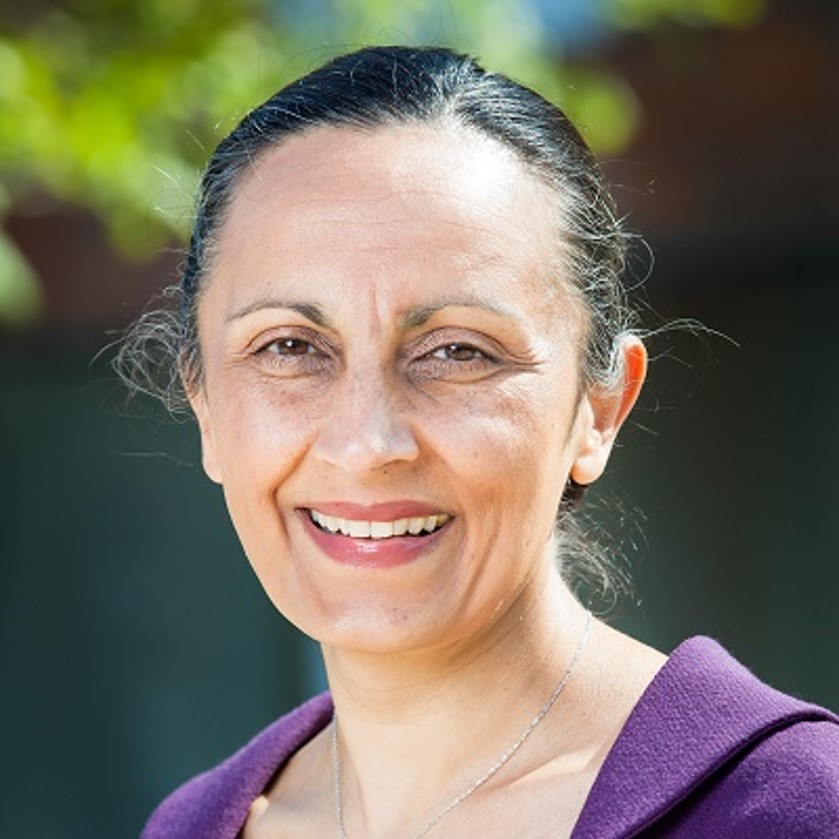
Professor Arvinder Lander
Emeritus
About
Vini’s research focuses on race, ethnicity and education. She uses critical race theory as a theoretical framework to examine ‘race’ inequalities in education, specifically in teacher education. The persistence of educational inequality from early years to higher education has spurred Vini to educate teachers to think beyond the status quo, which may perpetuate these inequalities. Teachers make a valuable contribution and deserve better preparation to teach in a diverse society. This has led to her inspirational teaching. Vini challenges students to think differently, supporting them to find ways to act to make a difference. Charley, who is now a teacher, said: “Sadly, it is very easy to brush diversity under the carpet by buying ‘welcome mats’ in 40 different languages. Your teaching taught me we need to do more than this ...race equality has to be an attitude embedded into teaching not a tick list.” Vini Lander’s research on how well teachers are prepared to understand the salience of race when they engage with children and young people has contributed to pre- and in-service teachers' understanding of the importance race and ethnicity in education as she encourages them to engage with culturally relevant pedagogies.
Vini is leading research on the policy to promote fundamental British values in English schools and initial teacher education. Her work on the impact of the mandate to promote fundamental British values in schools extends her research within the field of ‘race’ and education. She has worked with a number of schools in the North West to investigate young people’s conceptions of Britishness and their sense of belonging through the use of participatory research methods.
Vini is a Senior Fellow and National Teaching Fellow of the Higher Education Academy. She is a member of the British Educational Research Association (BERA) and co-convened the Race, Ethnicity and Education Special Interest group. She is an invited member of the steering group for the Centre for Literacy in Primary Education, Reflecting Realities Project which examines the representation of BAME characters in children’s literature. Vini is a member of the advisory board of the Centre for Innovation in teacher Education and Development (CITED) a joint initiate between King’s College, London and Teachers College, Columbia University. Vini was invited to be a Commissioner on the National Education Union's Independent Assessment Commission. She is also a member of the AQA Exam Board EDI Advisory Committee. In addition she is a member of Member of the UCET (Universities Council for the Education of Teachers) Executive Committee, member of the UCET Research and International Committee. She chairs the UCET Equalities sub-group. She is an invited member of the Leeds Learning Alliance Equality, Diversity and Inclusion Committee.
In 2014, in recognition of her excellent teaching, the Higher Education Academy awarded her a National Teaching Fellowship. The British Educational Research Association (BERA) acknowledged her research through the Meeting of Minds award for the best upcoming research.
As a result of her research, teaching and writing Vini has been invited to give keynote lectures and research seminars in Berlin, Hamburg, Glasgow, Munich, Norway and Bremen. She has delivered commissioned staff development for universities in England and schools in Sweden. Vini has delivered a very successful annual lecture on race, ethnicity and education for Postgraduate Secondary student teachers at the University of Oxford for the past three years. She was a member of the ESRC funded Diverse Teachers for Diverse Learners an international network of teacher educators working with collaborators in Norway, Canada and the UK.
Previously Vini was Head of Research at two universities. Before developing her research career Vini was Head of Primary Education at the University of Chichester with responsibility for primary initial teacher education as well as being the research co-ordinator for the Education department.
Vini worked in mainstream schools teaching science for a number of years. She also worked as a Section 11 Schools Liaison teacher and was teacher in charge of pupils with English as an Additional Language (EAL). Vini has been an Ofsted inspector for primary schools and initial teacher training. From 2004-2010 she was appointed Deputy Director of Multiverse, a Training and Development Agency (TDA) funded national professional resource network on achievement and diversity which had a significant impact on teacher education provision with respect to equality and diversity.
Academic positions
Professor of Race and Teacher Education
University of Roehampton, London, United Kingdom | 01 September 2017 - 10 November 2019Professor of Education
Edgehill University, Ormskirk, United Kingdom | 01 July 2014 - 31 August 2017Principal Lecturer Head of Primary Education
University of Chichester, United Kingdom | 01 September 2000 - 30 June 2014Principal Lectuer Head of Primary Science
Chichester Institute of Higher Education, United Kingdom | 01 September 1997 - 31 August 2000Senior Lecturer Primary Education
La Sainte Union College of Higher Education, United Kingdom | 01 September 1992 - 31 August 1997
Degrees
EdD
Institute of Education, University College London, United Kingdom | 02 October 2006 - 18 February 2011
Languages
Panjabi; Punjabi
Can speak and understand
Publications (52)
Sort By:
Featured First:
Search:
Initial Teacher Education: The Practice of Whiteness
 2014
Advancing Race and Ethnicity in Education Palgrave Macmillan
2014
Advancing Race and Ethnicity in Education Palgrave Macmillan
This book aims to promote and advocate a range of contemporary issues related to race, ethnicity and inclusion in relation to pedagogy, teaching and learning.
Covid-19 and Racism: Counter-Stories of Colliding Pandemics
12 May 2023
Lander A, Kay K, Holloman T1:1-238 (238 Pages) England Bristol University Press and Policy Press
This book addresses the prejudices that emerged out of the collision of two pandemics: COVID-19 and racism. Offering a snapshot of experiences through counter storytelling and micro narratives, this collection assesses the racialised responses to the pandemic and investigates acts of discrimination that have occurred within social, political and historical contexts. Capturing the divisive discourses which have dominated this contemporary moment, this is a unique and creative resource that shows how structural racism continues to operate insidiously, offering invaluable insights for policy, practice and critical race and ethnic studies.This book addresses the prejudices that emerged out of the collision of two pandemics: COVID-19 and racism. Offering a snapshot of experiences through counter storytelling and micro narratives, this collection assesses the racialised responses to the pandemic and investigates acts of discrimination that have occurred within social, political and historical contexts. Capturing the divisive discourses which have dominated this contemporary moment, this is a unique and creative resource that shows how structural racism continues to operate insidiously, offering invaluable insights for policy, practice and critical race and ethnic studies.
12 May 2023
COVID-19 and Racism: Counter-Stories of Colliding Pandemics Bristol University Press
This book seeks to examine the complexity of the collision of the pandemics of COVID-19 and racism that become evident when examining the intersection between race, health, public policy and culture. The contributions in this edited collection are an important intervention in speaking back to dominant discourses and the 13 chapters that make up this collection cover a range of facets that have been organised according to key themes that are outlined in this chapter.
To promote, or not to promote Fundamental British values? Teachers' Standards, diversity and teacher education.
03 February 2017
British Educational Research Journal43(1):29-48 Wiley
 Elton-Chalcraft S, Lander V, Revell L, Warner D, Whitworth L
In this article we seek to problematize the presence of the requirement within the Teachers' Standards (DfE 2012), that they 'should not undermine fundamental British values' in the context of initial teacher education in England. The inclusion of this statement within the Teachers' code of conduct has made its way from the counter-terrorism strategy, Prevent and raises questions about Britishness, values and the relationship between the State and the profession more generally. We argue that the inclusion of the phrase within a statutory document that regulates the profession is de facto a politicization of the profession by the State thereby instilling the expectation that teachers are State instruments of surveillance. The absence of any wider debate around the inclusion of the statement is also problematic as is the lack of training for pre-service and inservice teachers since it means this concept of fundamental British values is unchallenged and its insidious racialising implications are unrecognized by most teachers.© 2016, British Educational Research Association. The attached document (embargoed until 03/11/2018) is an author produced version of a paper published in the British Education Research Journal uploaded in accordance with the publisher’s self- archiving policy. The final published version (version of record) is available online at the link below. Some minor differences between this version and the final published version may remain. We suggest you refer to the final published version should you wish to cite from it.
22 August 2025
Educational Reviewahead-of-print(ahead-of-print):1-22 Informa UK Limited
Lander V, Ludhra GIn this paper, we revisit Puwar’s concept of “space invader” as two (b)older South Asian female academics at a later stage in their professional lives. Drawing on Critical Race Theory and a counter-storytelling approach, we reflexively narrate our analysis of a series of research conversations through the catalyst of “space invader”, and how this led us to explore stages of voice across space and time. Including conversational metaphors in places, we proudly centre our mother tongue languages (Hindi and Panjabi) as we reflect through the scents of our storied memories. We discuss how our professional and community-based equity roles and experiences entwine as an embodiment of driving racial justice. We use metaphoric hooks to chart our herstories of hope as we navigate White fragility and often hostile spaces, seeking refuge in “safe” and supportive spaces as a form of collective healing through speaking, listening and simply being “ourselves”. Through our research conversations, we analyse the traumas, isolation and contentment of working at the margins of decision-making spaces, and the challenges of “trespassing” across boundaries towards the centre, where we have never really belonged, yet courageously taken the journey. “Space Invaders” revisited has required us both to analyse the painful racialised memories of our bodies, minds and souls, the visceral violence of racism, the silencing (and confident roars) of our voices, and racial battle fatigue.
“We’re not British values teachers are we?”: Muslim teachers’ subjectivity and the governmentality of unease
2019
Educational Review71(4):466-482 Informa UK Limited
Farrell F, Lander VThis paper is a critical investigation of a group of 8 Muslim religious education (RE) teachers’ views of the promotion of fundamental British values (FBV). Drawing from Foucault’s analysis of power this paper conceptualizes FBV as a biopolitical technology operating to protect dominant interests through the construction of docile teacher bodies as the instruments and subjects of its disciplinary discourse. In this analysis the bio-politics of securitism replace multicultural pluralism as the neoliberal state reconfigures its role through the domestic ‘war on terror’ in education. Findings demonstrate that the teachers experience dissonance between the contradictory demands of FBV and their role as teachers of pluralistic RE, but are able to resist and reclaim professional agency through their problematization of FBV and the alternative discourse of RE which exceeds the normative boundaries of FBV.© 2018, Taylor & Francis. The attached document (embargoed until 23/08/2019) is an author produced version of a paper published in Educational Review uploaded in accordance with the publisher’s self- archiving policy. The final published version (version of record) is available online at the link below. Some minor differences between this version and the final published version may remain. We suggest you refer to the final published version should you wish to cite from it.
Creating the Anti-racism Framework to Transform the Curriculum for Student Teachers in England
04 November 2024
The BERA Guide to Decolonising the Curriculum: Equity and Inclusion in Educational Research and Practice Emerald Publishing Limited
Smith HJ, Lander VThis chapter presents findings from a global literature review (LR) into anti-racism in initial teacher education/training and a national survey for England which was constructed following the review to gain a contemporaneous picture of anti-racism work in initial teacher education/training (ITE/T) in England. Both the LR and survey revealed a pressing need for student teachers to become racially literate and for guidance for ITE/T providers in teaching student teachers about race, racism, and anti-racism. The findings from the LR and survey were then utilised to construct the anti-racism framework (ARF) for ITE/T for England, which was written to provide such guidance within a policy landscape which is argued as de-racialised. The chapter concludes with an imagined case study demonstrating how the framework could be used to support critical and informed reflections on the content of the current ITE/T curriculum to avoid damaging deficit assumptions about Black and global majority (BGM) pupils and their schooling.
Invisible and hypervisible academics: the experiences of Black and minority ethnic teacher educators
07 June 2017
Teaching in Higher Education22(8):1008-1021 Informa UK Limited
Lander V, Santoro NThis qualitative study investigated the experiences of Black and Minority Ethnic (BME) teacher educators in England and Australia working within the predominantly white space of the academy. Data analysis was informed by a multidimensional theoretical framework drawing on Critical Race Theory, whiteness and Puwar’s concept of the Space Invader. Findings suggest the participants in both national contexts felt marginalised, and encountered subtle everyday racism manifested as microaggressions that contributed to the academics’ simultaneous construction as hypervisible and invisible, and as outsiders to the academy. Vulnerability, insecurity and precariousness was generated through the participants’ positioning as space invaders within the university and borne from surveillance by students and managers. The paper argues that despite long-standing Equal Opportunity policies tenacious racism in the academy must be disrupted through structured career support and mentoring for BME staff and wider staff development on implicit bias and everyday racism.© 2017, Taylor & Francis. The attached document (embargoed until 07/12/2018) is an author produced version of a paper published in Teaching in Higher Education uploaded in accordance with the publisher’s self- archiving policy. The final published version (version of record) is available online at the link below. Some minor differences between this version and the final published version may remain. We suggest you refer to the final published version should you wish to cite from it.
21 September 2020
Educational Review74(4):862-881 Taylor & Francis (Routledge)
Nicholson L, Lander VStrong evidence has emerged that teacher educators (TEs) should be directly and actively engaged in the research process. Despite this, relatively low levels of research activity have been observed. In 2014, the British Educational Research Association (BERA) called for a national strategy to embed research-informed practice into teacher education. Previous research has revealed that TEs encounter several barriers to engaging in research. This study aimed to provide a current and detailed account of perceptions of control and ability to engage in research in a sample of TEs based at a new university in England, using the framework of the theory of planned behaviour. Semi-structured interviews were conducted with 16 TEs to elicit control beliefs underlying research engagement. Beliefs mentioned by at least 25% of the sample were defined as accessible beliefs and were retained for further qualitative analysis. Interpretative phenomenological analysis revealed seven higher-order control factors that influenced the motivation to engage in research. Specifically, these comprised a lack of time, insufficient mentoring, limited opportunities for collaboration, the nature of initial teacher education, changes in the faculty, various feelings (mostly negative) and inflexible research procedures. These accessible beliefs can be targeted by faculties of education to increase research engagement. In future research we will collect quantitative data about these beliefs from a larger sample of TEs. Empirical relationships between the control beliefs and intention to engage in research and actual research engagement will be investigated, which will allow evidence-based interventions, rooted in the qualitative data, to be developed.
Hopeful or Hopeless? Teacher Education in Turbulent Times
2021
Regimes of Belonging – Schools – Migrations Springer Fachmedien Wiesbaden
Education policies and schooling in England continue to sustain if not exacerbate the simultaneous notions of assimilation into the mainstream whilst maintaining the discourse of the "Other" within. Teacher education continues to be part of an education system designed to assimilate Black, Asian and minority-ethnic school students be they newly arrived children of migrant families or born in England. The increasingly diverse pupil population is contrasted with a predominantly White teacher workforce which is mandated to promote fundamental British values, to act as state instruments of surveillance and to advance Eurocentric curricula to perpetuate the dominant discourse of whiteness. So, amidst this turbulent social and political milieu, how can teacher education be cultivated as a place for hope and change? This chapter shows how the whiteness of teacher education can be disrupted to advance student teachers' understanding of race and racism, and how they can become catalysts for hope and change.
14 May 2024
International Journal of Qualitative Studies in Education38(1):1-16 Taylor and Francis Group
Belkin L, Lander A, McCormack MThis qualitative study explores how Black and Global Majority faculty at an English university with an ethnically diverse student population perceive race and racism on campus. Informed by a theoretical framework drawing on Critical Race theory (CRT), CRT methodology and critical whiteness studies, this study adopts counter-narrative story telling as a method of analysis. This research foregrounds BGM faculty’s everyday experiences of racism in their professional lives and the “normalization” of racism in this setting. Through the construction of composite counter-stories (CCS) the experiences convey how BGM staff are simultaneously “othered” and “unseen”. This complex duality of hypervisibility and invisibility reveals subtle and insidious undercurrents of racism that frame the participants’ lived realities and ways everyday racism is enacted at institutional and individual levels. Participants experience both being expected to talk knowledgeably about race and how to confront racism in particular venues, while finding the possibility of such discussion circumscribed or silenced in others. Although instances of “overt” racism are rare, these counter-narratives highlight ways institutional racism is perpetuated through white supremacist social and bureaucratic norms.
One Step Forward, Two Steps Back: The Continuing Saga of Black and Minority Ethnic Teacher Recruitment and Retention in England
2016
Diversifying the Teaching Force in Transnational Contexts: Critical Perspectives Sense Publishers
Lander V, Zaheerali ASThis chapter examines factors related to the lack of representation and recruitment of teachers from Black and minority ethnic (BME) backgrounds within the teaching profession in England. It considers policy initiatives and research related to BME teacher recruitment and retention to identify the barriers which inhibit BME people entering the profession; and how current changes in teacher training in England may lead to an even less ethnically diverse teacher workforce in the future.
Collision or Collusion: effects of teacher ethnicity in the teaching of whiteness
2012
RACE ETHNICITY AND EDUCATION15(3):331-351 Informa UK Limited
Smith H, Lander VEducational inequities persist in England today. Initial teacher educators are therefore charged with facilitating student teachers? understanding of the issues pertaining to such inequities so they may work to disrupt them. Two lecturers at opposite ends of England, both with overwhelmingly White student cohorts, have approached this undertaking through the teaching of critical whiteness studies. This article exposes and explains the very different reactions of White student teachers to this approach given that one of the lecturers is Black and the other White. Explanations are viewed through a sociological framework which seeks to deconstruct normalized practices; in tandem with understandings of how whiteness operates to reinforce such normalization in order that inequitable power relations are reified. This revealed that student reactions were underpinned by racialised assumptions of teacher ability and motives, leading to collusion in whiteness for the White teacher and, for the Black teacher, a collision between her teaching and student perceptions of her role and values.
¿Están Preparados los futuros docentes de educación primaria para trabajar en contextos multiculturales?.
2019
El valor de la educación en una sociedad culturalmente diversa Universidad de Almería
Goenechea C, Flores G, Lander VWhy Do The Mirrors Lie?
01 October 2015
Race Equality Teaching33(2):33-42 Institute of Education Press
Willis G, Lander VThis article discusses background literature related to racism, outlines the research undertaken in one primary school and presents findings and their implications.
11 March 2019
Widening Participation and Lifelong Learning
Thomas L, Duckworth V, Lander V, Allen D, Rodríguez Cuadrado S, Heaslip V, Board MAs nursing continues to advance health care in the 21st century, the present change in demographics, tied with the ongoing disparities in health care and health outcomes, will warrant our enduring attention and action. This paper argues that increasing the diversity of the workforce in professional healthcare roles is necessary to meet the demand for nurses, midwives and other health professionals. This drive includes recruiting and retaining a culturally diverse workforce that mirrors the United Kingdom’s change in demographics and to reduce health disparities. Our qualitative study in England recruited, trained and supported ten student-peer-researchers, who explored the experiences of 70 ‘non-traditional’ students and recent graduates in National Health Service (NHS)-funded higher education programmes. A key theme of the majority of participants was a powerful persistent passion to be healthcare professionals, which offered them resilience in addressing and overcoming the entry hurdles, sustained them through the many barriers and challenges they experienced on their journey to becoming qualified, and ultimately delivered diversity to the NHS. This is in contrast to the way in which widening participation in healthcare education is discussed in the literature, where the focus is on what students’ lack (awareness, information and academic credentials); the dominant discourse is of student deficit, rather than strength. This paper explores how students’ ‘powerful persistent passion’ can be recognised, validated and nurtured – rather than ignored, exploited and eroded – to facilitate widening access and improving retention and success in higher education, by higher education and healthcare providers working closely together.
Introduction to fundamental British values
25 May 2016
Journal of Education for Teaching42(3):274-279 Informa UK Limited
The introduction to this special issue outlines the current context related to the imperative within the Teachers' Standards (2012) in England 'not to undermine fundamental British values' (FBV). The introduction problematises the imposition of this standard in terms of teacher identity and the invasion of professional and pedagogic spaces by the securitisation agenda. The introduction also highlights the contributions of each paper in this special issue to the academic debate on the teaching of fundamental British values in schools and within teacher education.
'Racism it's part of my everyday life': Black and minority ethnic pupils' experiences in a predominantly white school
01 August 2015
Runnymede School Report32-35
The words in the title were spoken by a Black female student in a predominantly White school in southern England. This article is based on a school-initiated enquiry which I was invited to undertake by the headteacher who was shocked by the number of racist incidents in the school within a three-month period. Researchers (Gillborn, 2005; Mirza, 2005) have reported that in the last thirty years the gains made in education related to ethnic diversity in our society appear to have been lost and old-fashioned racism has appeared again.
Journal of Education for Teaching: International research and pedagogy. Special Issue: Fundamental British Values
01 May 2016
Journal of Education for Teaching42(3):273-368
Lander V, Elton-Chalcraft S, Revell LThis issue examines the imposition of Fundamental British Values on teachers in schools.
'Race', culture and all that: An exploration of the perspectives of White secondary student teachers about race equality issues in their initial teacher education (ITE)?.
2011
RACE ETHNICITY AND EDUCATION14(3):351-364 Informa UK Limited
This research explores the racialised perceptions of White students teachers who are preparing to teach in secondary schools in a diverse society. Student teachers? views about Black and minority ethnic (BME) pupils are often cast in the language of otherness. This research was conducted in a post-1992 university in the south of England where the majority of students on initial teacher education (ITE) programmes are White, which reflects the ethnicity of serving teachers in England (95.5% of whom are White). In England all student teachers are required to fulfil the Professional Standards for Qualified Teacher Status 2007 which incorporates statements on the understanding of cultural and linguistic issues. It could be argued that the inclusion of such standards would result in student teachers who are competent in these aspects. But this is not borne out in the annual survey of newly qualified teachers. This research draws on critical race theory as a theoretical framework to analyse how the students' ethnicity influenced their initial perceptions and how notions of White privilege might inform their positions and responses to race-related issues in school. The interviews with student teachers revealed the inadequacy of their initial preparation to deal with the 'scary' situations associated with race issues in school. There are implications for ITE policy, the curriculum and practice with particular reference to the institutional and school-based interface of ITE programmes.
08 September 2020
Mentoring in Higher Education: Case Studies of Peer Learning and Pedagogical Development. Palgrave Macmillan
Authors: Lander V, Nicholson LJ, Editors: Woolhouse C, Nicholson LJTeacher educators are a diverse and essential part of the university workforce particularly in post-1992 universities in England. The majority of teacher educators have enjoyed successful careers as teachers and senior leaders in schools. However, their transition from school to university is fraught with difficulties. Inadequate induction to academia, particularly to academic research, coupled with their lack of experience of conducting research, renders them vulnerable within the performative culture of universities (Ellis, McNicholl, Blake, & McNally, 2014). The research landscape within higher education in England is competitive between and within universities. Research is a key element of teacher education (e.g., Burn & Mutton, 2013) and so it is vital that teacher educators engage with and become research active to advance knowledge of all aspects of education. However, new teacher educators are insufficiently supported to start their research journeys within higher education, leaving them on the margins of academe. This chapter reveals the findings of in-depth qualitative semi-structured interviews conducted in one university in North-West England illustrating the dilemma of teacher educators in higher education. The participants in the study explicate the ways in which their presence could be legitimated, for example, through the support of a mentor to lift their status to become research active academics and gain recognition and legitimation in academe.
14 November 2025
Journal of Childhood, Education & Society6(3):403-423 Journal of Childhood, Education and Society
Fairchild N, Lander V, Sultana AThere is a plethora of research evidence that good ECEC is critical for young children to thrive and to have positive long-term outcomes. This is of particular importance for young children in the UK from racially minoritised communities who tend to have poorer educational outcomes with disadvantage magnified into adulthood. Against this backdrop, we wanted to develop a better understanding of the amount of UK academic literature that focussed on racially minoritised young children, their families, and practitioners. To do this we undertook a PRISMA scoping review to develop a systematic list of articles, books, and reports published up to 1.11.2024 on the following databases - JSTOR, Web of Science, and SCOPUS. Using key search terms we sourced 1,387 items. The first review reduced this to 55 items and further investigations resulted in exclusion of those items that did not meet our key search terms; this left 24 books, articles, and reports. These were categorised thematically as: anti racist practice, children’s experience, culture, de/colonial play, Fundamental British Values, identity, inclusion, inequality, racism, and workforce. We took a storytelling approach to tell four stories: racism and inequality, policy and practice, children’s experiences and children’s rights. Our analysis and discussion employed Critical Race Theory to understand how racism impacted the research in the articles, and what the literature reveals about ECEC pedagogy and practice. We make suggestions for future researchers, providing encouragement to expand the canon of literature and develop research and outputs that addresses, dismantles, and challenges systemic racism in ECEC.
Tolerating the Intolerable
11 July 2025
Education Policy in England 2010–2024 Routledge
Yıldız ÜK, Lander VThe 11 September 2001 attacks in the USA and the 7 July 2005 bombings in London changed the internal and external politics of the UK. One impact was the development of the UK's first comprehensive counter terrorism strategy, CONTEST, in 2003. This strategy contains four key areas: Pursue, Prevent, Protect, Prepare (Home Office, 2011). The Prevent aspect of the strategy stated that fundamental British values (FBVs) are ‘democracy, the rule of law, individual liberty and mutual respect and tolerance of different faiths and beliefs’ (Home Office, 2011, p. 107). These values were subsequently integrated into the Teachers’ Standards in 2012 without any substantial consultation with key stakeholders. This chapter critically examines FBVs (Lander, 2016; Yildiz, 2021) through an anti-racist and anti-imperialist lens. The authors explore the ontology of FBVs and highlight the problematic aspects of the concept. They argue that FBVs have been employed to marginalise and criminalise young people, particularly those from minority and Muslim backgrounds, and they call for educators to collectively resist the promotion of these values.
26 September 2022
Curriculum Journal34(1):22-42 British Curriculum Forum
Smith H, Lander VMany institutions have found the strength to name racism and seek space for curriculum and other systemic changes. We argue this is happening against a backdrop of curriculum, regulatory and policy changes in education, and particularly initial teacher education and training (ITE/T), which are de‐racialised. We propose that a ‘pocket of possibility’ lies within such divergences, and present research leading to the creation of an anti‐racism framework for ITE/T to support action against this emergent landscape. The paper documents each aspect of the research and snapshots of the findings of a global literature review of anti‐racism in initial teacher education, which demonstrated the need for an embedded approach to anti‐racism, informed by critical understandings of whiteness and racism. We share some of the complexities, obstacles, and effective anti‐racism practices revealed in the review. The findings of the review led to the creation and analysis of a survey for ITE/T providers in England, which provided encouraging evidence of useful practice alongside needs of the profession. We conclude with a statement of intent and hope to maximise of the minimum entitlement of the Core Content Framework (CCF) by a purposeful undoing of the perpetual de‐racialisation of education.
Boys, Girls, Gender Issues and Achievement
2011
Diversity, Equality and Achievement in Education SAGE Publications Ltd
Coming from a Traveller Background: Gypsy, Roma and Traveller Children – Living on the Margins
2011
Diversity, Equality and Achievement in Education SAGE Publications Ltd
Ethnicity, Whiteness and Identity
2011
Diversity, Equality and Achievement in Education SAGE Publications Ltd
Refugee and Asylum Seeker Children
2011
Diversity, Equality and Achievement in Education SAGE Publications Ltd
Diversity, Equality and Achievement in Education
2011
1-173 SAGE Publications
Knowles G, Lander VMost classrooms contain children from a variety of backgrounds, where home culture, religious beliefs and the family's economic situation all impact on achievement. This needs to be recognised by teachers in order to establish fair, respectful, trusting and constructive relationships with children and their families, which will allow every child to reach their full potential.This book looks at real issues that affect teachers in the classroom, and examines a variety of influences affecting child development. It provides you with the theoretical and practical information you need to ensure you understand the complex factors which affect the children in your care, and it encourages good, thoughtful teaching. Dealing with some of the less widely addressed aspects of diversity and inclusion, the book considers:- children who are asylum seekers- the notion of 'pupil voice'- what diversity and equality mean in practice- gender and achievement- looked-after children- social class- disability- ethnicity and whitenessThis book is essential reading for any education student looking at diversity and inclusion, and for teachers in role looking for advice on how to meet the professional standards.
Race Ethnicity and Education Special Issue: Initial Teacher Education: Developments, Dilemmas and Challenges
01 November 2013
RACE ETHNICITY AND EDUCATION17(3):299-470 Informa UK Limited
Special Issue Introduction
Institutional inertia as a tool of institutional racism: Understanding impediments to social change at an English university
01 September 2024
RESEARCH HANDBOOK ON ACADEMIC LABOUR MARKETS Edward Elgar Publishing Ltd
Authors: Lander V, McCormack M, Belkin L, Lander A, Editors: Strachan GHigher Education (HE) in the UK has recently been forced to confront the issue of systemic racism. Black and Global Majority (BGM) students and staff report experiences of overt and implicit racism. Gaps in achievement, employment and pay between White and BGM students and staff also remain persistent problems. In this qualitative study of an ethnically diverse university in England, we draw on focus groups with White and BGM staff to document the challenges experienced in discussing race and racism. We argue that institutional inertia is a manifestation of institutional racism that influences how BGM staff experience the institution. We examine a critical incident where institutional inertia was made visible to White staff and argue this resulted in racialised emotional labour as White staff grapple with directly experiencing institutional inertia as it relates to race. We consider how institutional inertia prevents the transformational change required for institutions to be anti-racist.
28 October 2021
Regimes of Belonging, Schools and Migrations: Teaching in (Trans)National Constellations Springer
Authors: Lander V, Editors: Heidrich L, Mecheril P, Karakaşoğlu Y, Shure SEducation policies and schooling in England continue to sustain if not exacerbate the simultaneous notions of assimilation into the mainstream whilst maintaining the discourse of the “Other” within. Teacher education continues to be part of an education system designed to assimilate Black, Asian and minority-ethnic school students be they newly arrived children of migrant families or born in England. The increasingly diverse pupil population is contrasted with a predominantly White teacher workforce which is mandated to promote fundamental British values, to act as state instruments of surveillance and to advance Eurocentric curricula to perpetuate the dominant discourse of whiteness. So, amidst this turbulent social and political milieu, how can teacher education be cultivated as a place for hope and change? This chapter shows how the whiteness of teacher education can be disrupted to advance student teachers’ understanding of race and racism, and how they can become catalysts for hope and change.
Lehrer und Referendare auf ihre Tätigkeit in multikulturellen Klassen vorbereiten Vini Lander, University of Chichester, England
2011
Schule mit Migrationshintergrund Waxmann
German translation of preparing teachers to teach in a culturally diverse society.
'Race', Ethnicity and Equality
2006
Supporting Inclusive Practice Fulton
Authors: Lander V, Editors: Knowles GSupporting Inclusive Practice encourages the ongoing practice of inclusion with discussions, guidance and advice on how to build an inclusive environment.
“I was born here, so I’m British” – What do fundamental British values mean to teachers of RE and Year 11 RE students?
Introduction to Fundamental British Values
Reflecting Realities in children's literature: my reality and fictional reality
'Race' and Ethnicity
2010
Equality and Diversity in Social Work Practice Learning Matters
Authors: Lander V, Editors: Gaine CAdvancing race and ethnicity in education
19 May 2014
1-252
Race R, Lander VThis timely collection focuses on domestic and international education research on race and ethnicity. As co-conveners of the British Education Research Associations (BERA) Special Education Group on Race and Ethnicity (2010-2013), Race and Lander are advocates for the promotion of race and ethnicity within education. With its unique structure and organisation of empirical material, this volume collates contributions from global specialists and fresh new voices to bring cutting-edge research and findings to a multi-disciplinary marker which includes education, sociology and political studies. The aim of this book is to promote and advocate a range of contemporary issues related to race, ethnicity and inclusion in relation to pedagogy, teaching and learning.
Preparing Teachers to teach in a culturally diverse society.
2011
Schule Mit Migrationshintergrund Waxmann
English translation of preparing teachers to teach in a culturally diverse society.
28 December 2023
Journal of Education for Teaching50(3):1-15 Taylor & Francis (Routledge)
Lander A, Nicholson LJ, Goenechea Permisan CDespite the increasing racial diversity within British and Spanish societies, teacher education and school curricula continue to be Eurocentric and taught by predominantly White teachers. This quantitative research sought to explore the perceptions of student teachers in relation to their attitudes and preparedness to teach in ethnically diverse school contexts. Data were gathered at two universities, one in Southern Spain and the other in Northwest England. The article employs critical race theory and critical whiteness studies as frames to understand outcomes of an online questionnaire. The majority White student teacher sample across both countries register an acceptance of racial diversity and report the need for better preservice teacher education in this respect. Despite preservice teachers’ positive responses to racial diversity, teacher education in both countries fails to equip them for increasingly diverse classrooms. This failure serves to replicate the enactment of whiteness and, does not develop student teachers’ stated commitment to racial diversity.
‘I love a curry’: student-teacher discourse around ‘race’ and ethnicity at a UK university
10 January 2018
Journal of Education for Teaching44(2):162-174 Informa UK Limited
This paper presents aspects of a small-scale study that considered student teachers’ language and discourse around race and ethnicity at a university in the northwest of England. The first part of the paper critiques current education-related policy, context and practice to situate the research and then draws upon aspects of critical race theory and whiteness theory as frames of reference. In the research, 250 student-teachers completed questionnaires that invited responses to statements about race and ethnicity and this was followed by two semi-structured group interviews. A discourse analysis approach was taken to analyse the language used in the questionnaire responses and, in particular, the group interviews. Recurrent discursive configurations were characterised by language that signified othering, correct knowledge, personalisation and discomfort. Hesitations and silences during group discussions perhaps intimated thinking time and also maybe a reluctance to talk about aspects of race and ethnicity, and what was not said remains significant. It is suggested that a reconstruction of a teacher/educator subjectivity that fosters self-reflection on values and racial positioning, is needed in teacher education, alongside critical examination of the silences and discomfort surrounding race and ethnicity. © 2018, Informa UK Limited, trading as Taylor & Francis Group. The attached document (embargoed until 10/07/2019) is an author produced version of a paper published in JOURNAL OF EDUCATION FOR TEACHING uploaded in accordance with the publisher’s self- archiving policy. The final published version (version of record) is available online at the link below. Some minor differences between this version and the final published version may remain. We suggest you refer to the final published version should you wish to cite from it.
Race Equality Foundation Collaboratives on addressing racial inequity in covid recovery briefing paper Education
30 June 2021
Race Equality Foundation London Race Equality Foundation Collaboratives on addressing racial inequity in covid recovery briefing paper Education Publisher
The impact of Covid-19 on Black, Asian and minority ethnic (BAME) students has accentuated longstanding disparities in education. These structural inequalities are well documented in terms of educational outcomes and transitions between sectors. • The intersectional ways in which these disparities occur mean that BAME students and their communities are affected indirectly via the economic and employment impacts of the pandemic, but also directly through increased health inequalities • Socio-spatial circumstances (e.g. housing and ʻspaceʼ to study; supporting other family members) impact disproportionately on families experiencing poverty. Structural inequalities and their tendency to intersect with race mean that many BAME children and young people are more likely to experience these barriers to learning. These barriers project into the future and impact significantly on children and young people ʻcatching upʼ. • Despite recent claims of no evidence for institutional racism in the UK, accumulation of evidence over several decades runs counter to this assertion and has significant implications for the ways in which BAME children and young peopleʼs educational outcomes are assessed. The pandemic has highlighted the important role of teachers in student assessment, particularly teacher-based assessments. Past research suggests teachers will require greater support in addressing the possibility of unconscious bias within the processes of assessment. This will be an important consideration in relation to teaching, learning and assessment in the post-COVID recovery period and beyond.
It’s Not Just Cricket: (Green) Parks and Recreation in COVID Times
12 May 2023
COVID-19 and Racism Counter-Stories of Colliding Pandemics Bristol University Press
Authors: Raghunandan K, Editors: Lander V, Kay KThis book addresses the prejudices that emerged out of the collision of the two pandemics of 2020: COVID-19 and racism.
02 December 2022
Curriculum Journal34(1):1-18 Wiley
Stewart-Hall C, Rabiger P, Lander V, Grant V, Lander AMany Senior Leadership Teams (SLTs) are engaging in professional development to nurture explicitly anti-racist practice. Teachers' knowledge gaps about racism, its traumatic, lasting impact and how racism is generated through schooling persist within a cloak of silence. This small-scale study explores interview data from senior leaders in English schools, questioning legacies of colour-evasion and breaking silences to understand the role ‘race’ plays in their schools, appearing exigent due to Black Lives Matter (BLM) movements and the inescapable reality of racism seen in George Floyd's horrific murder. Using Critical Race Theory (CRT) and Critical Whiteness Studies (CWS) as theoretical tools, we explore negotiations and challenges of leading anti-racist work in systems favouring whiteness as the norm. Findings show senior leaders undertaking the Anti-Racist School Award (ARSA) and/or Race, Identity and School Leadership (RISL) programme are novice ‘race’ practitioners, despite their seniority, wrestling to recognise whiteness and to connect their own ‘race’(d) identities to role-enactment and policy. They must negotiate and make the case for anti-racist leadership to colleagues trained not to notice, and mitigate wider external systems operationalising whiteness, blocking the development of anti-racist practice. We examine resistances to anti-racist work in English school systems that (re)centre whiteness.
Keeping Them Out: How Whiteness Functions Through Majoritised White Senior Leadership in Schools in Bristol, England.
30 June 2024
Authors: Stewart-Hall C, Editors: Lander A, Kilvington DIn Bristol only 6% of teachers are from the global majority when almost 1 in 5 people and 38% of its student population are from global majority backgrounds (Census 2021; Bristol City Council, 2022b; DfE 2023c). With even fewer people represented in school leadership, this thesis explores the role ‘race’ and whiteness play and examines the impact of whiteness on policy interpretation and enactment. Workforce data, interviews and archival material are thematically linked to interrogate relationships between whiteness, White people and policy interpretation presenting a study to understand better how whiteness is shaped by and in relation to the majoritised White leadership of Bristol’s schools. Critical Whiteness Studies (CWS) and Critical Race Theory (CRT) are used as theoretical lenses and, specifically, the tools of whiteness and emotionality are used to interrogate how whiteness influences school contexts through its leadership (Picower, 2009; Ahmed, 2014; Matias and Zembylas, 2014). Data from interviews with 31 school leaders are analysed alongside archival material and workforce data to examine wider influences of whiteness in policy interpretation and enactment. Findings suggests educational leadership in Bristol is shaped by legacies of colour evasion influenced by combinations of racism (re)assembled through whiteness as philanthropy and neo-liberal policy that decontextualises schools from the communities they serve. The thesis explores how whiteness maintains majoritised White leadership teams providing deeper and more meaningful ownership and responsibility for White supremacy, as primarily generated from policy and group orientations of White people. It makes a unique contribution to the importance of understanding racism in context and how Bristol’s past conditions the present day. It amplifies Bristol’s social and cultural history using the interest convergence and counter testimonies and offers a critically reflexive approach from a former insider.
Thinking Through Ethics and Values in Primary Education
2012
Knowles G, Lander V Learning Matters
Editors: Knowles G, Lander VThinking Through Ethics and Values in Primary Education is an accessible text that encourages readers to explore deeply the ethics and values surrounding primary education. The text helps the reader to critically reflect on the principles that underpin education. Specifically written for education students in the later years of their course, the text draws on research and practice to explore the challenges and opportunities involved, while helping to develop the reader's own critical thinking skills.The book begins by asking 'what are ethics and values?' and goes on to explore social diversity and society and education. It considers ethics and values and the curriculum, school organisation and the classroom. A chapter on ethics, values and the teacher encourages the reader to examine their own thoughts about education. Throughout, practical guidance runs alongside structured critical thinking exercises to help the reader and reflect on both theory and practice.
Editorial
26 May 2016
Journal of Education for Teaching42(3):273 Informa UK Limited
Gilroy PPale and Stale: decolonising the pharmacy degree
15 November 2021
PJ Pod Publisher
Authors: Lander V, Editors: Robinson JOver the past few years, pharmacy student Adanna Anthony-Okeke has been leading a project to "decolonise" the curriculum at the University of Nottingham’s school of pharmacy. In this episode, we speak to her and MPharm course leader Helen Boardman about how this work has led to significant and ongoing change to the syllabus. Clinical and science editor, Julia Robinson, also investigates the progress being made in universities across the UK to make the pharmacy degree more inclusive. Robinson also speaks to Vini Lander, director of the centre for race education and decoloniality at Leeds Beckett University, to find out what decolonisation means within the context of the healthcare sciences and where this movement might be heading in the future. Here are links to the learning resources supporting skin equality referred to in the podcast: Recognising common skin conditions in people of colour and Common dermatological conditions in skin of colour. This episode was produced by Geoff Marsh and supported by Reckitt. The Pharmaceutical Journal retained editorial responsibility at all times.
Grants (1)
Sort By:
Featured First:
Search:





