
Leeds Beckett University - City Campus,
Woodhouse Lane,
LS1 3HE
Phil Legard
Senior Lecturer
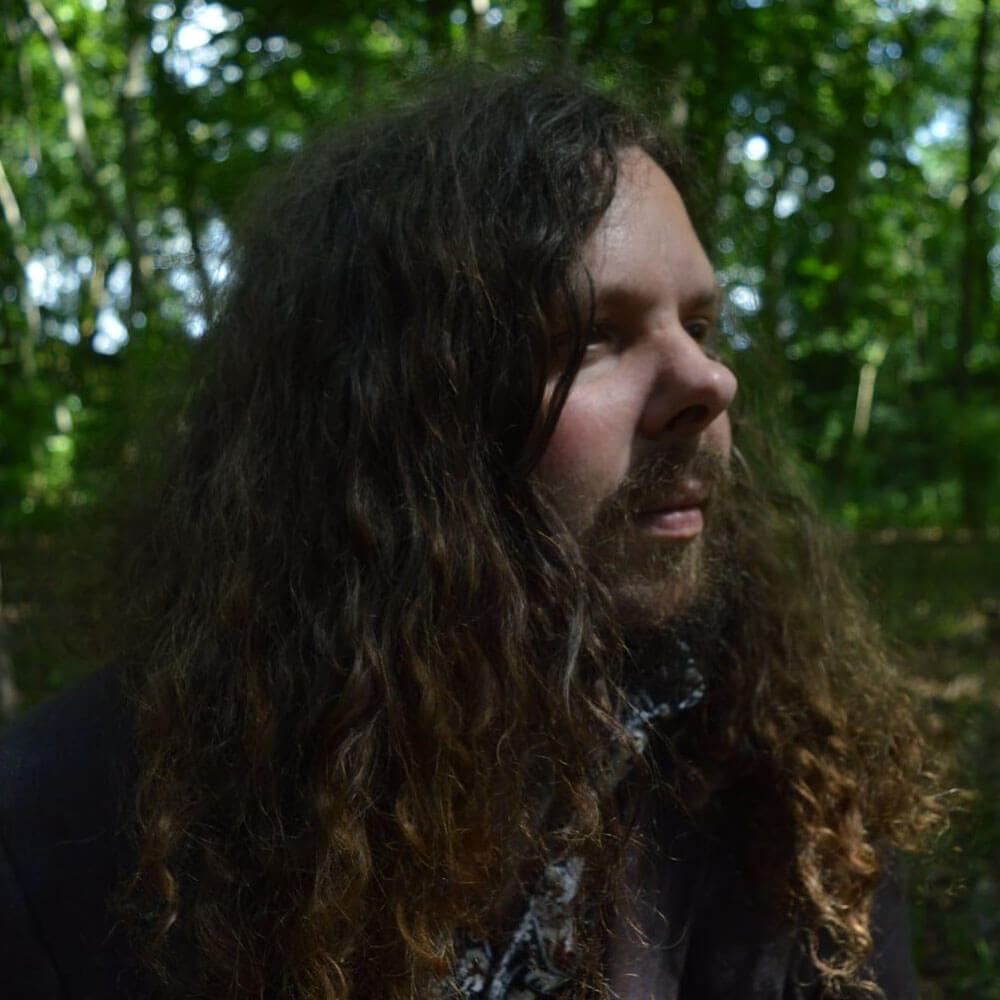
Phil Legard is a musician and producer whose work spans classical, folk, electronic, and experimental music. As an academic, Phil studies the relationship between contemporary music and esotericism.
 0000-0002-5208-4838
About
Phil Legard is a musician and producer whose work spans classical, folk, electronic, and experimental music. As an academic, Phil studies the relationship between contemporary music and esotericism.
Phil Legard is a musician and producer whose work spans classical, folk, electronic, and experimental music. As an academic, Phil studies the relationship between contemporary music and esotericism.
Phil's background is in experimental music, particularly in the fields of generative and algorithmic composition. As an editor, producer and technologist in the field of contemporary classical music Phil Legard worked for ten years with Nigel Morgan and Tonality Systems Press, the publishing and public-engagement partner to Tonality Systems, developers of the music programming language Symbolic Composer.
His interests in the generative processes underlying both composition and improvisation embrace a wider awareness of the compositional and performative act of music and its relation to our own environment. This has led to a number of solo and collaborative multi-disciplinary works involving sonic art, oral history, folklore and research into the implications of ontology and phenomenology on both place perception and artistic curation.
As a musician, Phil is currently working with his wife, Layla, as the experimental electronic duo Hawthonn. His current academic work and PhD studies concentrate on the relationship between music-making and esoteric thought, looking at how 'occulture' shapes the experiences, interpretations, and compositions of contemporary composers and performers.
Research interests
Phil's current research explores at the intersection of musicianship and 'occulture' through the use of autobiography and analytic autoethnography. It proposes new methodologies for the study of contemporary esotericism, as well as exploring musical creativity in the contexts of the sociological study of religion, discourses of religious experience, and subcultural milieu studies.
Recently Phil has contributed articles on music and musicians to the Brill Dictionary of Contemporary Esotericism (forthcoming, edited by Egil Asprem).
Place, folklore, phenomenology and magic are all elements of Phil's practice and research, which includes contributions to the Alchemical Landscapes symposia hosted by Cambridge University Counterculture Research Group, Interference Journal, and public multi-media projects such as Almias (Harrogate International Festival, 2010).
Publications (22)
Sort By:
Featured First:
Search:
 2016
Association for the Study of Literature and the Environment, UK and Ireland (ASLE-UKI) biennial conference 2015 Interference: A Journal of Audio Cultures Murray Edwards College, University of Cambridge Trinity College Dublin & The University of Ulster's Arts and Humanities Research Institute
2016
Association for the Study of Literature and the Environment, UK and Ireland (ASLE-UKI) biennial conference 2015 Interference: A Journal of Audio Cultures Murray Edwards College, University of Cambridge Trinity College Dublin & The University of Ulster's Arts and Humanities Research Institute
This paper responds to a recent article by American sound artist Kim Cascone in which he asserts that the presentation of environmental recordings as ‘sonic art’ is often crucially lacking in some form of ‘soul’ or vitality. Cascone suggests that it is the responsibility of an artist working with real-world sounds to enter a more imaginative engagement than precedents within the field (and within the wider field of sonic arts in general) have historically presented. The paper briefly explores historical impulse to deprecate the importance of imagination, along with the imaginative implications of discourse around what Katharine Norman (1996) calls ‘real-world music’. From here, we explore the relationship between imagination and sound in two pieces of sonic art and argue that one response to Cascone’s call for an imaginative turn can be found within the idea of the ‘symbol’ as codified in Romantic poetic discourse (after Kathleen Raine’s reading of Coleridge). The paper explores the way in which a cultivation of an ‘imaginative perception’ can be used to elucidate such symbols in a compositional context and relates the creative and interpretive use of ‘sound-symbols’ to both Voss’ methodology of the imagination (2009) and Thomas’ multidimensional spectrum of imagination (2014).
16 January 2025
Esotericism in Practice Brill
 Authors: Legard P, Editors: Cejvan O, Hedenborg-White M, Cantu K
This chapter outlines a theoretical model of ‘Creative Seekership’ derived from the study of occulturally-situated music-makers. Here, occulture is considered a highly mediated cultural sphere, providing music-makers with resources which may leveraged as part of an ongoing process of seeking spiritual truths and creative inspiration. Within the context of the Creative Seekership model, the chapter also outlines three forms of practice often employed by such music-makers, which connect creative absorption to the sense of a porous self-world boundary between the practitioner and the transpersonal forces which direct their work. The chapter concludes with some suggestions for applying these concepts to other areas of occulturally-embedded creativity beyond music.
The Many-Coloued Earth: Visionary Creativity, Imaginal Landscapes and the Hermeneutic Imagination
23 March 2015
The Alchemical Landscape Corpus Christi College, Cambridge
This paper seeks to explore the visions of AE in order to frame contemporary creative practices that actively seek numinous experience as part of a creative continuum. Of import are the diversity of AE’s visions: they span an introvertive-extrovertive spectrum (Marshall 2005), and occur both in the natural scene (for example, his ‘awakening’ as one of the ‘heavenly household’ in the Irish countryside) and in more prosaic surroundings (often through meditation, but at times unheralded such as his vision of ‘earth breath’ while working as a city clerk: ‘an exile from living nature but she yet visited me’.) Coupled with Voss’ hermeneutic approach to creativity and imagination (2009), such visions may be related to a series of creative approaches that strive toward the ‘participatory turn’ in which empirical modes of interpretation necessarily yield to the alternative, intuitive and visionary approaches, before being re-integrated as part of a working process within an ‘awakened’ or ‘initiated’ landscape. Grounded in the archetypal/imaginal concepts of Corbin, Voss’ approach to the methodology of imagination is a natural complement to the poetic essentialism implied by AE’s vision and the wider mystical backdrop of his work. Furthermore. the author’s own work since 2001 with music and text are analysed to elucidate the process of working within an ‘initiated’ landscape in a contemporary context. Works such as Abital (2007) and Almias (with Simon Bradley and Layla Legard, 2010) encounter participatory turns within the physical environment, while Angelystor (2013) and Hawthonn (with Layla Legard, 2014) explore reflexive interior landscapes through visionary practice.
Re-conceptualizing Performance with 'Active' Notation
Stop, Look, Listen & Think: Embodied Sound and Our Environment
An Archaeology of the Voice: Location and Audition
07 July 2012
Sonic Arts Forum Leeds University
Legard P, Bradley SOverview of current research and practice regarding extended post-documentary interview techniques and locative augmented aurality applications.
Located Memory and the Realisation of Place
23 May 2012
Spaces of (Dis)Location Glasgow University
Legard P, Bradley SSimon Bradley and Phil Legard discuss their continuing work on location-based public events chiefly concerned with personal responses to place. They explore how their methods enable the development of public events that allow for a distributed construction of meaning that is shared between artist and attendee. Arising from these concerns Simon and Phil’s current work considers strategies involving fragmented narratives, embodied narratives, sonic art and locative media for the creative delivery of oral history within a philosophy that assumes the codependence of memory and place.
Enter the Chaochamber: The Soundscapes of Chaos Magick
12 November 2024
Folk, Myth & Magick: Airedale Valley Moot
Sound and music have always played a profound role in ritual - especially in those of the magical variety. Whether consciously performing a ritual or going about more mundane business, we immerse ourselves in sound and music daily - it often provides us with an emotional and aesthetic baseline, and it becomes profoundly embedded in our sense of our sense of self identity. This talk explores how music was used by the milieus associated with chaos magick in the 80s and 90s. It is a journey not only through industrial music, neofolk and electronica, but through the instrumentalisation of music toward magical ends - particularly in the form of auditory sigils and pathworkings.
The Shadow over Ilkley
03 October 2024
Clarke Foley Community Centre, Ilkley Author
A public talk based on a section of my PhD Thesis. The talk has been delivered at several venues (Folklore Centre, Todmorden; Viktor Wynd Museum, London; Clarke Foley Community Centre, Ilkley, etc): “All those dark Victorian cellars and storm-blasted moors seemed to create a hotspot for UK magick at that time…” – Peter Carroll The moors of West Yorkshire have plenty of antique folklore: giants, fairies, apparitions, and hermits have been enduring fascinations, particularly since health-tourism sprung up around towns such as Ilkley, enchanting the minds of those who came seeking novel therapies like hydropathy.However, in this talk Phil Legard turns from the myriad tomes on local folklore and their well-inscribed tropes, towards more contemporary manifestations of the weird on the moors: to UFOs, the Great Old Ones, cloaked spectres, entheogenic witches sabbats, serpentine goddesses, and the adventures of chaos magicians, psychic questers, pagans, and neo-antiquarians amidst the gorse and standing stones. Phil’s account of Rombald’s Moor in contemporary occulture draws extensively on the zines and small press publications of the 80s and 90s to vividly describe a landscape of contemporary enchantment in the heart of Yorkshire.
Singing Messengers: Re-considering the Role of 'Poetic Imagination’ in the Creative Process
16 June 2016
Creativity: A Multidimensional Approach Leeds Beckett University
For the poets and painters in what Kathleen Raine - drawing on the influence of Coleridge and Guenon - identified as the ‘traditional’ school of artistry, the imagination was considered as the prime organ of cognition. It was not the domain of ‘fancy’, nor was it simply a faculty ’that which allows us to visualise and solve problems’, rather it possessed the ability to apprehend a ‘symbolic’ reality: here, images of real things, also convey deeper spiritual or ‘poetic’ truths, which become the foundation of creative discourse. This paper outlines a history of the poetic imagination, from the ‘cognitive theology’ of Augustine, to Cecil Collins’ ‘theatre of imagination’, and considers how insights from a number of disciplines, including the cognitive science of religion (CSR), may help us explore the continuing significance of the ‘symbolic event’ in contemporary creative practice.
Hawthonn - Red Goddess (of this men shall know nothing)
31 January 2018
Album to be released on vinyl, CD and digital formats on Brooklyn-based label Ba Da Bing Records. Uses techniques written about in my academic work, e.g. confluence of 'romantic' imagination and creativity, spectral processing, algorithmic composition.
25 July 2016
Interference: A Journal of Audio Cultures Trinity College Dublin & The University of Ulster's Arts and Humanities Research Institute
Authors: Legard PI, Editors: O'Dwyer RThis paper responds to a recent article by American sound artist Kim Cascone in which he asserts that the presentation of environmental recordings as ‘sonic art’ is often crucially lacking in some form of ‘soul’ or vitality. Cascone suggests that it is the responsibility of an artist working with real-world sounds to enter a more imaginative engagement than precedents within the field (and within the wider field of sonic arts in general) have historically presented. The paper briefly explores historical impulse to deprecate the importance of imagination, along with the imaginative implications of discourse around what Katharine Norman (1996) calls ‘real-world music’. From here, we explore the relationship between imagination and sound in two pieces of sonic art and argue that one response to Cascone’s call for an imaginative turn can be found within the idea of the ‘symbol’ as codified in Romantic poetic discourse (after Kathleen Raine’s reading of Coleridge). The paper explores the way in which a cultivation of an ‘imaginative perception’ can be used to elucidate such symbols in a compositional context and relates the creative and interpretive use of ‘sound-symbols’ to both Voss’ methodology of the imagination (2009) and Thomas’ multidimensional spectrum of imagination (2014).
“Good Books to Call By”: Speech and Materiality in the Necromantic Workings of Humphrey Gilbert and John Davis
06 December 2015
Exploring the Extraordinary 7 Marriott Hotel, York
This aim of this paper is to tentatively explore a framework for approaching the phenomenology of historical ritual magic with particular attention to the performative nature of ritual speech. A discussion of the circumstances relating to Humphrey Gilbert and John Davis' experiments in 1567 with a crystal 'stone' is followed by an exploration of their extant ritual techniques in terms of Stausberg and Otto's patterns of magicity (2014) and the building-block approach suggested by Asprem and Taves (2015). Particular attention is paid to the affective and subjective implications of the core action of ritual speech, as well as its material analogue in the form of 'good books to call by'. Although the scope of the paper does not allow detailed analysis of the visions recorded by Gilbert and Davis, it is hoped that this work may go some way to prompting further consideration of where practice-based (e.g. performative) and experiential modes of research might also fit within 'verticalised' explorations of magical history, practice and consciousness.
27 June 2023
ESSWE9: The 9th Biennial Conference of the European Society for the Study of Western Esotericism Malmö University, Sweden
This paper presents findings from my PhD studies on esoteric musicianship. In methodological terms, my research draws from the ethnographic, sociological, and cognitive turns within contemporary esoteric studies, to develop an inter-disciplinary approach to analytic autoethnography. The focus of this autoethnographic study was my own work between 2001-2013 as Xenis Emputae Travelling Band: a project which sought to evoke the genii locorum (“spirits of place”) of the Yorkshire landscape through musical practices deemed esoteric or mediumistic: particularly the employment of imaginative listening during the devising and production processes, and the discursive situation of improvisation as a form of “channelling.” One consequence of this study is a proposed model for esoteric creativity which describes the relationship between the appraisal of experiential and affective states, and their subsequent development into musical “paths of practice.” An analysis of the creative processes involved in elaborating experiential knowledge into paths of practice also suggests a number of domains in which the boundaries for the study of musical esotericism may be expanded. While the musical structure of a work should be considered alongside historic, cultural, biographical, and discursive contexts, it is also useful to examine whatever subjective domains we may be able to access. Partridge has emphasised the importance of developing an awareness of affective space in the study of religious/esoteric music, which my work complements through an application of Weinel’s representational-affective framework. This approach is particularly suited to describing the phenomenological process of creating music in a contemporary production setting – that is, one dependent on the use of recording technology and audio workstations, rather than through notated composition. The findings from this research suggest further approaches to studying the significance of representational-affective domains within the creative processes and reception of other musical forms associated with esotericism, such as ritual ambient and black metal.
01 September 2021
Brill Dictionary of Contemporary Esotericism Brill
Authors: Legard P, Editors: Asprem EDolente ... Dolore: The Inferno of Malcolm Lowry
17 July 2017
View More Info
Legard PI, Ronan BCommissioned for 'The Lighthouse Invites the Storm: Malcolm Lowry's Wirral', a project co-ordinated by Alan Dunn, Martin Heslop & Jeff Young in collaboration with Mariners' Park Care Home. Realised from field recordings of the Mexican day of the dead, made by Balam Ronan.
Zoa Pastorale
28 February 2018
Composition realised in Ableton Live with Max. This composition will be featured on an album released on vinyl in 2018 by a US label. (Since the label has not announced this release yet, details have been omitted - more info available on request)
01 June 2017
Sustain/Decay Void Front Press
Authors: Legard PI, Editors: Coggins O, Harris JDrone music invariably attracts mystically-loaded hyperboles such as ‘transcendent’, ‘ecstatic’ – and even ‘tantric’. But, moving beyond journalistic cliché, how might the process of creating and listening to such music be said to constitute a genuinely esoteric artistic practice? To explore this question, we will further develop the concept of hieroeideticacy, in order to isolate particular ‘building-blocks’ by ‘reverse engineering’ one of Versluis’ historical case studies, the painter Cecil Collins. We will then explore the work of sound artist Kim Cascone through a hieroeidetic lens, with particular attention to his concepts of auditory ‘grain’ and ‘subtle listening’. From here, we will take a reflexive turn, to explore how an initiation into Cascone’s work has affected my own recent collaborative musical work. Finally, we will discuss the implications of musical hieroeideticacy, with particular regard to notions of authenticity, experience and the formulation of ‘ritual drone’.
31 March 2024
Authors: Legard P, Editors: Spracklen K, Russell CThis thesis explores the theme of ‘creative seekership’ within contemporary esotericism. Creative seekership, as presented here, deals with the ways in which artistic practices are employed in the pursuit of esoteric knowledge and experience. Such practices are often attributed magical or esoteric significance by artists, ritualising their cultural productions, and emphasising the already-blurred boundaries between art and magic. The concept of creative seekership is developed over the course of this research to construct a holistic theoretical model that demonstrates the embedding of creative practices in the subjectivities of experience, the interpretive and discursive frameworks of knowledge, and the broader horizon of ‘occulture’ and its cultural milieus. This work is unusual in that creative seekership is studied through the application of autoethnographic research methods. This autoethnographic research concentrates on examining creative seekership through accounts of my own music-making from the late 1990s to early 2000s. While scholars engaged in ethnographic work in contemporary esotericism studies have become increasingly visible in their own research, the implications of ‘insider scholar’ or ‘complete member researcher’ identities in autoethnographic research have been under-explored – primarily as a consequence of the academic boundary work with which the field was engaged until the 2010s. This thesis, therefore, takes the opportunity to explore the possibilities of developing a form of ‘analytic autoethnography’ in accord with the scholarly and interdisciplinary perspectives that have been established in esotericism studies over the last three decades. Here, the practice of autobiographical writing is approached from a ‘grounded’ perspective, allowing theoretical models to emerge from hybrid compositional and analytical processes. The outcome of this process presents scholars not only with a theoretical framework for analysing creative seekership in contemporary esotericism, but also demonstrates how autoethnography may contribute to the field of esotericism studies as a plausible methodology for future researchers.
01 September 2023
Popular Music in Leeds: Histories, Heritage, People and Places Intellect Books
Authors: Legard P, Proctor D, Gowans T, Editors: Lashua B, Spracklen K, Ross K, Thompson PThis chapter presents two practitioner accounts by co-authors Theo Gowans and Dave Procter concerning place - real and virtual - and the contemporary Leeds noise scene. These accounts are prefaced by an analysis of the present scene’s heritage from The Termite Club: particular attention is paid to how discourses around the ethos of noise in Leeds have shifted since the Termite Club ceased its activities, primarily as a consequence of the venues in which these performances now take place.
Agnostic Gnostics: Negotiating Rationalities in Autoethnographic Research
27 September 2025
European Society for the Study of Western Esotericism 10th Conference Vilnius University, Vilnius
At ESSWE9, Bernd Christian-Otto launched the RENSEP initiative by asking what methodologies might enable contemporary scholars to re-negotiate the traditionally perceived boundary between academics and practitioners. One question asked was whether autoethnography could be such a viable approach. There are certainly a growing number of scholars, such as Olivia Cejvan (2021, 2023), Cavan McLaughlin (forthcoming), and myself (2024) who have begun to explore how autoethnography might be integrated into their research. This contribution will examine the breadth of autoethnographic approaches that have recently been applied in esotericism studies, paying particular attention to how discourses on rationality are negotiated by scholars, practitioners, and scholar-practitioners. The study of discourses around rationality have profoundly shaped esotericism studies, yielding influential ideas such as esotericism being the Enlightenment’s ‘waste-basket category’. A similar dialectic of rationality versus irrationality has also played out in esotericism studies itself since the 1990s. For example, Hanegraaff’s formulation of ‘Western Esotericism 2.0’ addressed the ‘religionist’ perspectives of earlier scholars, superseding them with an empirical and historiographic project founded upon a neutral ‘methodological agnosticism’. When Hanegraaff subsequently proposed ‘Western Esotericism 3.0’ – an open and interdisciplinary phase of the esotericism studies programme – he further cautioned against the potential of ‘esoteric (or krypto-esoteric [sic])’ agendas re-entering scholarship. In this respect, scholar-practitioners – particularly those pursuing autoethnography – may feel they are treading a discursive tightrope: how do they negotiate their status as dual-identity researchers? How do they integrate their experiences in ways befitting the empirical standards of scholarship and what tensions exist there? Beyond these fundamental methodological concerns are also subtle factors which may deeply affect their identity, such as how to navigate the potentially disenchanting effects of prolonged work in scholarly paradigms. This contribution intends to open up discussion on these themes, as well as providing tentative suggestions for developing autoethnographic practice in esotericism studies.
Creative Seekership: Occultural Autoethnography in Theory and Practice
10 September 2026
Occulture as Method Symposium Manchester Metropolitan University
This paper presents an overview of how autoethnography can be applied to the study of creative practices embedded within contemporary occulture. Building on Nina Kokkinen’s art-historical approach to 19th-century artists as seekers who contribute to and draw from their contemporary occultural domain (2013), the work presented here explores how the practice of analytic autoethnography (Anderson 2006) can be used to develop a structured, multi-disciplinary framework for contemporary scholar-practitioners who primarily use their creative work as a mode of occult seekership. I will outline some methods and analytical tools which might assist those interested in this form of self-study: these range from the practicalities of discursive and thematic analysis through coding and ‘grounded’ approaches (Pace 2012), to the application of concepts from Ann Taves’ cognitive and attributive theories of religion to experiential narratives (Taves 2009, 2016). I will also address some of the criticisms brought against the ‘pernicious’ practice of autoethnography (Delamont 2006), and how these might be resolved by researchers – as well as a caveat on the implications of such work for practitioners themselves via the potentially disenchanting effect that constant ontological and epistemological repositioning may have on their outlooks. My PhD work (Legard 2024) examined my magical-musical practices between 2001 to 2013, culminating in the development of two theoretical contributions to be presented here. The first is a model for ‘Creative Seekership’ detailing how practitioners draw from – and contribute to – occulture in a variety of domains: from identity construction, to narratives of experience, and the relationship between experiences, their appraisals, and the development of ‘paths of practice’. The second is a typology of forms of esoteric musical creativity, with implications for other creative arts, too. In both cases, a commitment to informants beyond the researcher’s self are used to refine these conclusions through supporting case-studies.
Current teaching
- Contemporary Music-Making
- Music in Context
- Creative Audio Technologies
- Spatial Audio
- Music Production Project
- Electroacoustic Composition
- Audio-Visual Practice (MA)
Teaching Activities (1)
Sort By:
Featured First:
Search:
Composition Techniques
01 February 2016
News & Blog Posts
Kim Cascone: Subtle Listening & Dark Stations Concert at Leeds Met





