

Leeds Beckett University - City Campus,
Woodhouse Lane,
LS1 3HE
Rebecca O'Keefe
Senior Lecturer
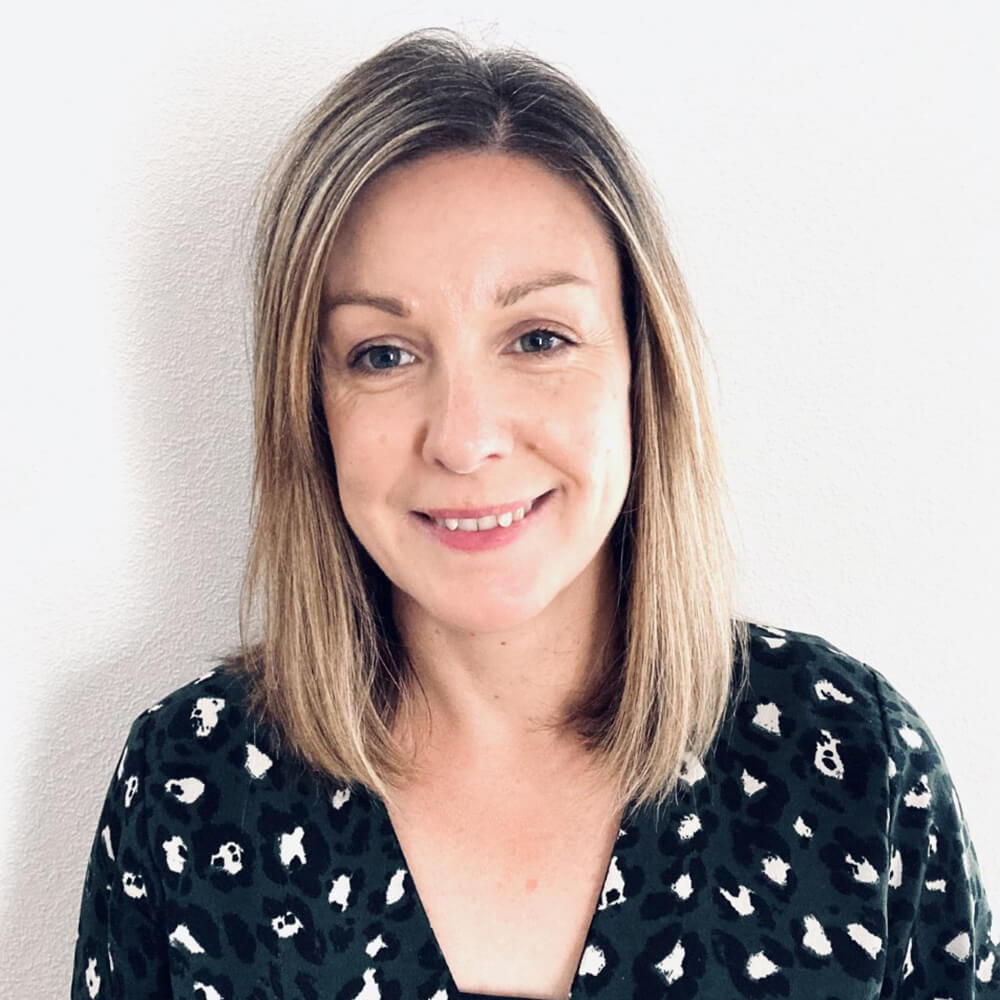
Rebecca O'Keefe is a senior lecturer and social worker degree apprenticeship lead.
 0009-0002-3361-6074
About
Rebecca O'Keefe is a senior lecturer and social worker degree apprenticeship lead.
Rebecca is a qualified and registered social worker, with social work experience in child safeguarding and child protection work within statutory settings from 2004. Her roles include social worker, team manager, advanced practitioner and child protection conference chairperson. She has supported numerous student social workers whilst in practice as a level 2 practice educator and has delivered a range of training for professionals working with children across the area. She has worked with children with disabilities, adults with mental health issues and older people, in voluntary sector organisations before embarking on her social work career.
Rebecca joined Leeds Beckett University in 2021. She is practice lead for social work degree apprenticeships and teaches on a range of modules within the school of health, including safeguarding adults and children; critical thinking; and preparation for practice. She is module leader for the social work with children and young people course and delivers continuing professional development (CPD) training for qualified social workers.
Related links
Research interests
Rebecca's research interests relate to high quality social work practice with children and families, including case recording and child-centred practice. She has written and published in these areas.
Ask Me About
Publications (9)
Sort By:
Featured First:
Search:
 31 July 2024
Child Abuse Review33(4):1-6 Wiley
31 July 2024
Child Abuse Review33(4):1-6 Wiley
There is a statutory duty for all practitioners to record information in child protection work in England. Case recording is a daily task for practitioners, yet an under‐researched area of practice. This continuing professional development (CPD) paper will consider the context in which case recording takes place and highlight messages from child protection reviews and enquiries before exploring learning from contemporary research. The complexities of case recording will be considered and how practitioners can reflect upon and improve their daily case recording skills. Practitioners are encouraged to keep the child's views and experiences central and consider the long‐term impact of case recording on adults who have experienced abuse and neglect in childhood.
CASE RECORDING IN SOCIAL WORK WITH CHILDREN AND FAMILIES A Straightforward and Practical Guide
Evaluation of the Early Help Services provided as part of the Cluster Collaborative in Leeds
28 March 2023
What Works for Children’s Social Care Publisher
This pilot study aimed to evaluate the services provided by one “Cluster” service offering early help to families in need of support in a deprived area of Leeds. The city of Leeds is divided into 23 “Clusters” or groups of schools and key partners based in small geographical areas, who have pooled funding to provide holistic early help services to children and families. Clusters are staffed by multi-agency teams of professionals and the Cluster Collaborative model operates under the Council’s “Right Conversations, Right People, Right Time” strategy for the delivery of early help services (Leeds City Council, 2020). This project has developed an understanding of how the services provided by the Cluster being studied (henceforth referred to as “the Cluster”) were being implemented in practice, contributing to knowledge as to “what works” in the delivery of Cluster services from both families who had received help and the staff involved in supporting them. The evaluation sought to explore the mechanisms for change, contextual factors and potential unintended consequences associated with receipt of Cluster support and ran from September 2021 to December 2022.
05 March 2025
Child and Family Social Work31(1):1-11 Wiley
Maintaining case records is an essential and necessary component of children’s social work practice. Research and child abuse inquiries internationally have highlighted the need for child-centred and participatory approaches to case recording, yet consistently highlight significant deficiencies in child-centred case recording. This paper presents findings from a mixed-method study that sought to explore practitioners’ experiences of child-centred case recording and identify new and innovative solutions to enabling this. Data were collected through focus groups and surveys with social work practitioners who worked in child protection and child looked after (CLA) contexts in two Local Authorities (LAs) in the North of England. The findings suggest practitioners have developed creative ways to help achieve child-centred recording in challenging circumstances, which could be built upon and more consistently applied across organisations, based on the foundations of relationship-based, ethical and humane practice.
12 November 2024
International Journal of Missing Persons2(1):1-28 San Jose State University
 Bennett K, Salisbury P, O'Keefe R, Vincent S, McCarthy B
Repeat missing children pose a significant financial burden onto services, including the police, social services, and health providers. Recognising that 37 to 65 percent of missing child reports each year are repeats, efforts have been made by academics and practitioners to understand this societal problem. Research has identified the risks causing children to go missing and the harms that they experience, but these focus primarily on children missing from residential care only. This PRISMA (2020) scoping review of 76 studies explores strategies implemented to prevent repeat missing episodes, and the role/influence of the home environment (e.g., with parents/guardians, and foster or kinship care). Children go missing for different reasons and some of these are specific to the home environment: including a lack of freedom, and a desire to see family and friends. It remains unclear whether some risks and harms experienced are different considering the child’s residence. Different mechanisms seek to discover this information through direct liaison with the child via the police (safe and well checks) or with social services (Return Home Interviews). Both processes have inherent challenges that prevent them from being effective in reducing repeat episodes, through either failing to obtain the necessary information or sufficiently identifying risks and harms. Other examples of multi-agency interventions focus on only one police force area within England and Wales, and so they are not widely used or examined for their efficacy. This study recognises that children who go missing repeatedly, and do not live in residential care, are significantly overlooked in policy, practice, and research and so their needs and required support to prevent future occurrences are unknown.
23 September 2025
Social Work Educationahead-of-print(ahead-of-print):1-19 Taylor and Francis Group
Maintaining records about children and families who are the subject of social work intervention is a routinized aspect of everyday practice and has been recognized as vital in protecting children from harm and promoting their wellbeing. There is evidence that the fast-paced nature of statutory social work, as well as bureau cratic demands and difficulties with writing, can inhibit workers’ capacity to keep child-centered records, with inadequate record keeping having serious implications for protecting children from harm in the present and meeting their potential memory and identity needs in the future. This paper presents evidence from social work educators, as well as undergraduate, postgraduate, and apprentice social work students about their experiences of teaching and learning skills for child-centered case recording while at university and on placement. We highlight the interaction of university and practice learning, identifying key barriers to the complex task of maintaining child-centered records and outlining evidence from learners that there is a case for the prioritization of teaching skills for writing for practice within the university environment. We conclude by making recommendations as to how skills for child-centered recordkeeping could be more effectively taught, assessed, and embedded in pre-qualifying social work education.
Child-centred practice: a handbook for social work
29 May 2017
London Palgrave
Race TJ, O’Keefe R 15 March 2026
Journal of Teaching in Social Work46(2):126-133 Informa UK Limited
Beesley P, O’Keefe RThis case study reflects on the integration of creative and inclusive methods of teaching to develop undergraduate social work (BSW) students’ critical thinking skills and the introduction of an audio and visual recorded presentation to assess transferability of learning in a final year module at an English university. It highlights that creative teaching engages students and develops their critical thinking. It concludes by presenting a recorded presentation that facilitates inclusive assessment and enhances academic outcomes.
Current teaching
- Social work with children and young people
- Safeguarding adults and children
- Critical thinking for social workers
- Preparation for practice
Grants (1)
Sort By:
Featured First:
Search:





