

Leeds Beckett University - City Campus,
Woodhouse Lane,
LS1 3HE
Active Learning
Active learning is an approach that encourages learners to engage with content through meaningful activities, rather than passively receiving information through traditional methods such as lectures or pre-recorded content. This page is designed to inspire you to explore new and interactive activities in your teaching and learning.
Active learning activities
Discover ideas for more active teaching by exploring the tabs below. Don’t forget to check back regularly for new resources.
Have an idea of your own? Use the MS Form to share active learning activities you’ve tried or would like to try. We’d love to include them!
Description
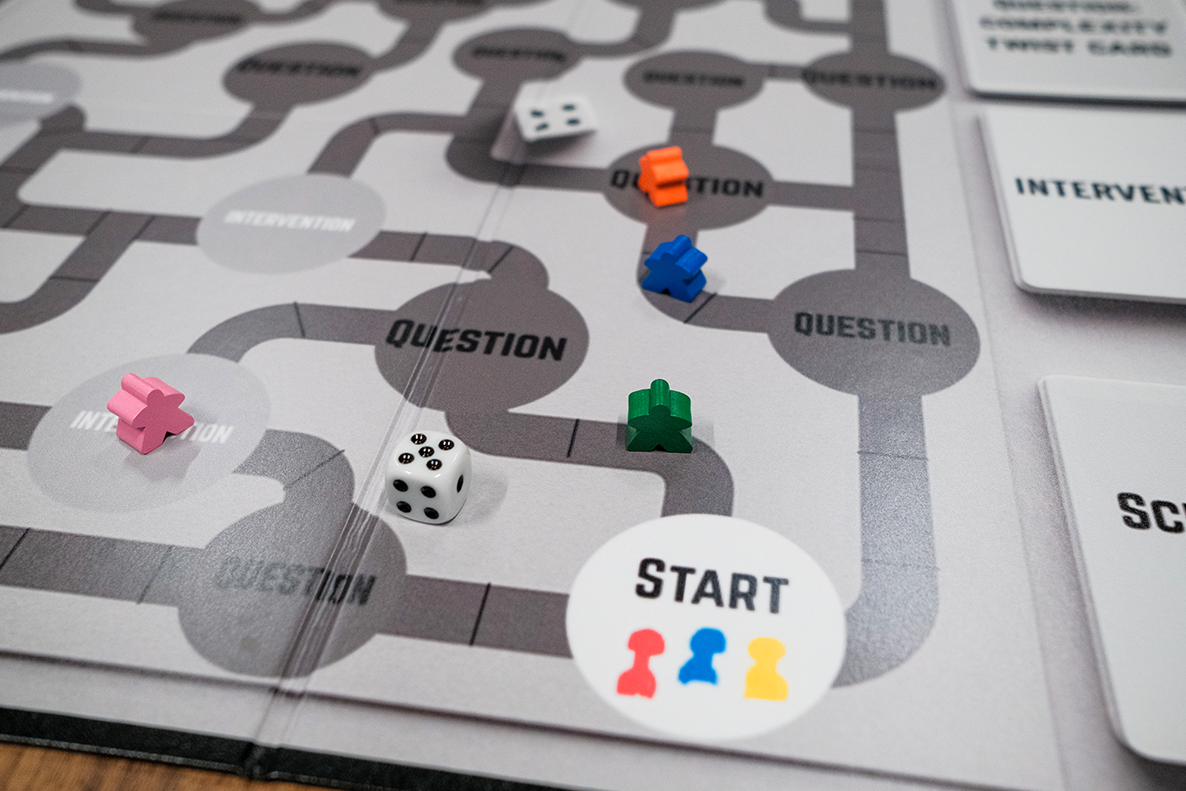
Board games can be a powerful tool for active learning, turning theoretical knowledge into interactive, practical experiences. By engaging students in game-based learning, you can help them apply complex concepts in a tangible way, while also fostering collaboration, creativity, and problem-solving skills.
One example comes from a co-creation project in a Victimology module at Leeds Beckett, where students worked alongside Dr Sarah Waite to design a board game focused on child criminal exploitation. The goal was to create a training tool for victim support, bridging the gap between classroom learning and real-world applications. Through this process, students not only deepened their understanding of the topic but also gained hands-on experience in collaborative project work.
Approximate time needed
- Full class/session (or multiple sessions)
Session size
- Medium
Format
- In-person
- Hybrid
- Online (synchronous) with digital equivalents or collaborative tools
Materials or tools needed (if any)
- Cardboard or printed board templates
- Cards, dice, counters, or other game components
- Access to research materials
- Optional: digital design tools for prototyping
- Space for group collaboration and discussion
- Free Canva printable board game maker
Tips for getting started with students
- Start by selecting a topic that students are familiar with or have studied, ensuring they have the background knowledge to contribute meaningfully
- Treat the game design as a co-creation process: students should help decide the theme, rules, and content
- Consider accessibility and logistics, especially if students are commuting or studying part-time; online workshops and flexible schedules can help
- Use reflective activities, like photo voice or discussion prompts, to capture student experiences and learning outcomes
- Explore templates for board game creation on platforms like Canva to simplify the design process and get students engaged quickly
Case study
In this first video, Dr Sarah Waite reflects on her experience co-producing a board game activity with LLB (Hons) Law with Criminology students.
This video focuses on LLB (Hons) Law with Criminology students and their experience collaborating on the creation of a board game.
Description
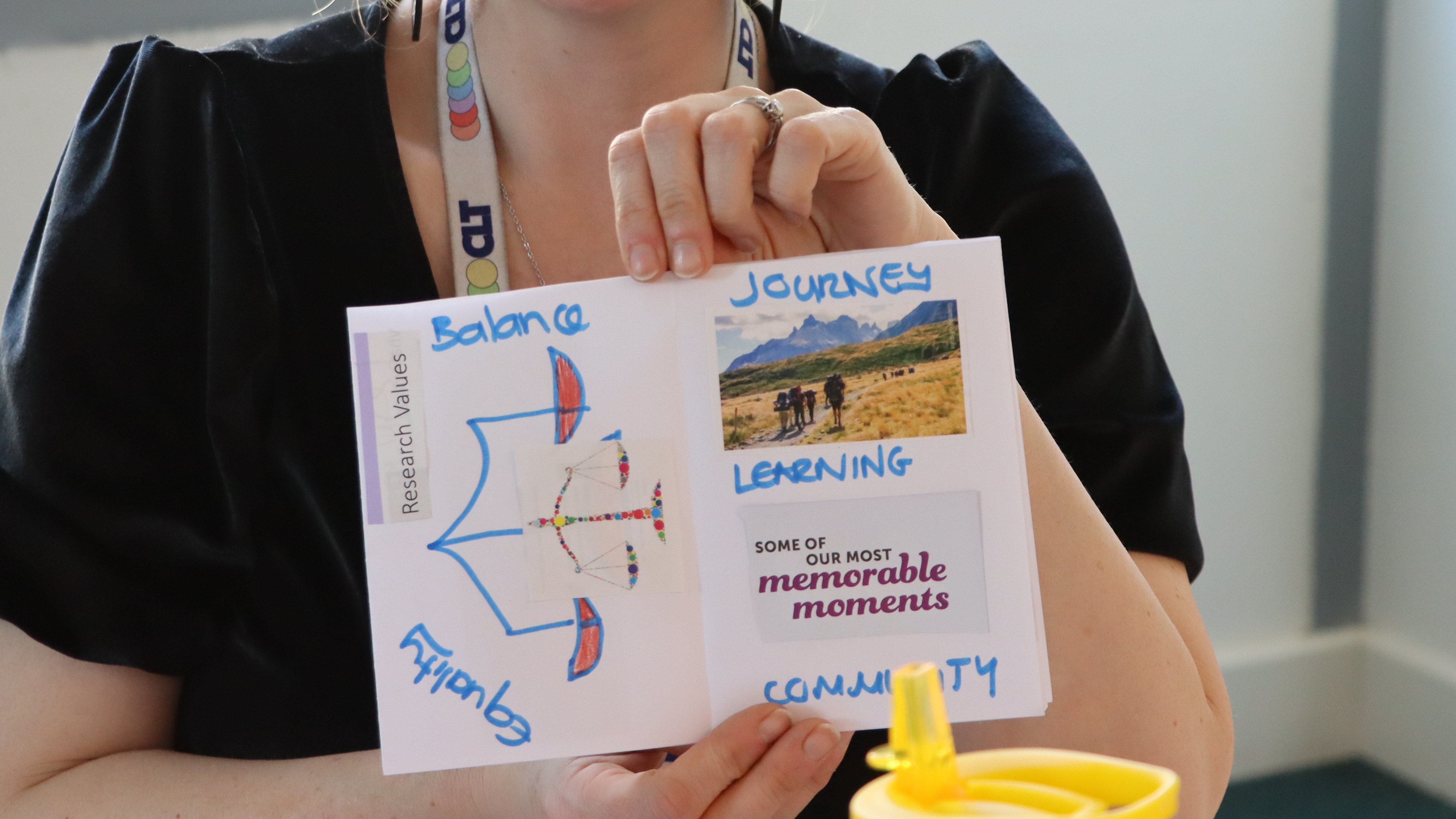
Zines are small DIY booklets that can be made about almost anything. Zine-making is a fun and engaging activity that works well across a wide range of subject areas. It encourages students and staff to engage creatively, critically, and reflectively with ideas. Whether used in teaching, research, or professional development, zines create space for personal expression and collaboration.
If you’d like to try zine-making in a session with your students or colleagues, we’ve developed a handy zine making guide with everything you need to get started. This resource is based on a DEAP Forum workshop delivered by Dr Sarah Waite and draws on her experience and research using zines as a reflective and critical tool in higher education. Click the button below to learn more.
In terms of using [zines] as a research generation tool or a reflection tool, it's been the process and the conversations with other people at the table while you're creating the zine that have been the most powerful method of generating information and reflection.
Dr Sarah Waite, Senior Lecturer
Inspired by a CLT session with Sarah Waite, I introduced a creative zine-making activity to teach reflective practice. It made the topic more engaging for students, who gave great feedback and used their work directly in assessments.
Approximate time needed
- 20–40 minutes (can be extended into a longer session or multi-stage activity)
Session size
- Works at any size (participants can work individually or in small groups)
Format
- In-person
- Online (synchronous)
- Hybrid
Materials or tools needed (if any)
- Paper (A4 or A3 for folding)
- Pens, markers, scissors, and glue
- Magazines or printed images (optional)
- Digital tools for online delivery
- Zine-making guide or template
Description
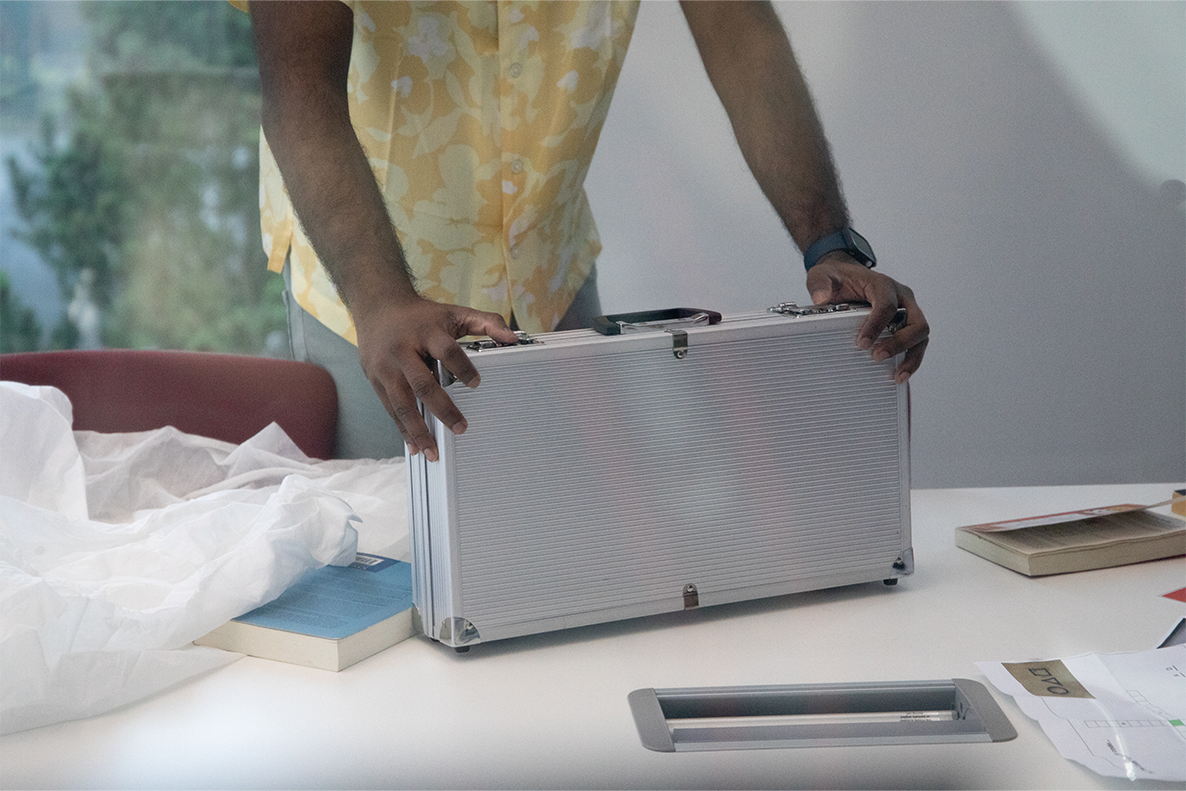
An escape room learning activity provides students with an immersive, interactive way to engage with course content through problem-solving and teamwork. The basic concept involves presenting students with a series of challenges, puzzles, or scenarios that they must solve in order to "escape" or reach a final goal within a set time limit. These puzzles can be themed around key topics from the course and can take various forms, such as riddles, matching exercises, coded messages, case studies, or even simple logic problems.
The activity can be run using physical materials (such as envelopes with clues, locks, and props) or digitally (using online tools, QR codes, or virtual breakout rooms), depending on resources and space. The emphasis is not on creating a complex or elaborate setup but rather on encouraging students to apply their knowledge in a fun, collaborative environment that stimulates critical thinking, reinforces learning, and fosters peer interaction. Facilitators can tailor the difficulty, themes, and format to suit the learning objectives while leaving room for creativity and student engagement.
Approximate time needed
- 20–40 minutes
Session size
- Small to medium groups (larger cohorts can be divided into multiple teams)
Format
- In-person
- Online (synchronous)
- Hybrid
Materials or tools needed (if any)
- Printed clues, envelopes, or puzzle sheets
- Locks, boxes, or physical props (optional)
- Digital tools such as slides, forms, or learning platforms
- QR codes or breakout rooms for online delivery
- Timer or countdown clock
Further resources
Dr Andrew Manley shares his experience using an escape room activity to help students identify their strengths and weaknesses while promoting teamwork.
As an online alternative, Educational Developer Andy Bedford talks your through the creation of an escape room activity using Microsoft OneNote.
Description
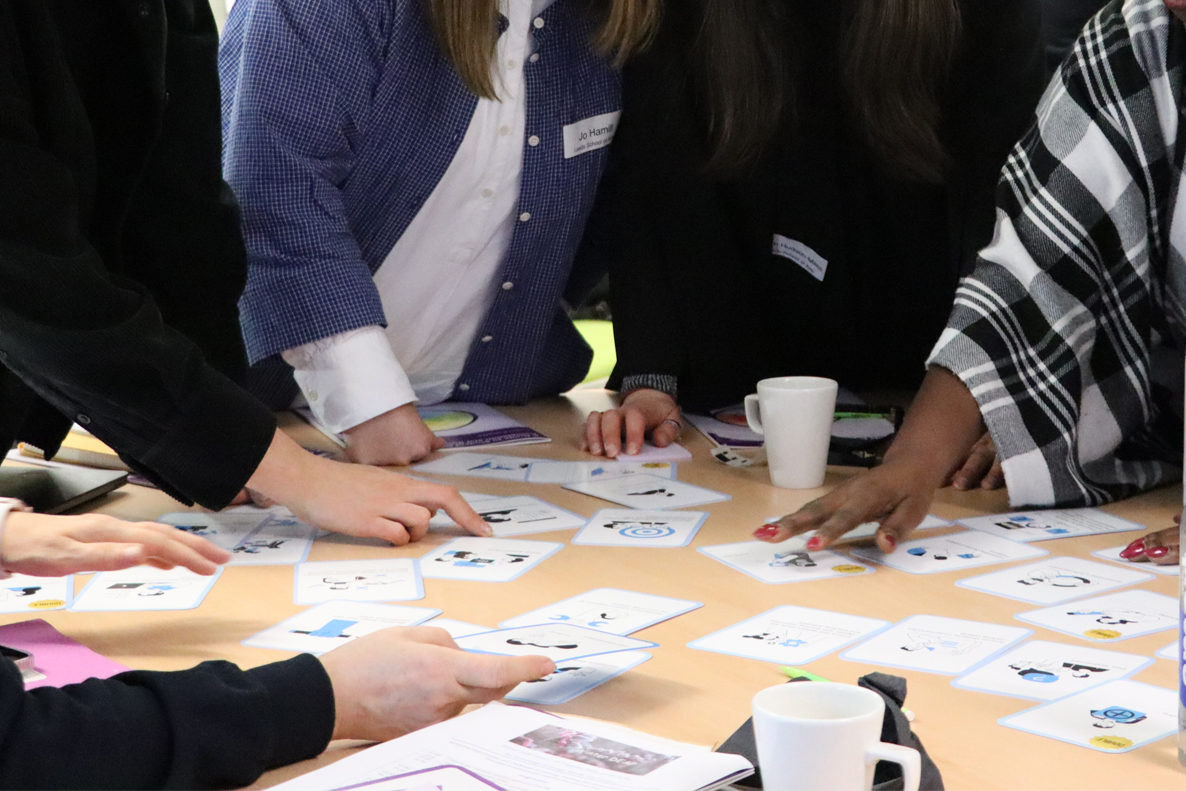
Participants work in small table groups, each supported by a facilitator (could be another student) who acts as a “card dealer.” Each group is given a set of answer cards related to whatever subject you choose; some of which may be correct, others less so.
Facilitators pose five questions, one at a time, related to your chosen subject. For each question, participants have two minutes to:
- Review the cards in front of them
- Choose the single most appropriate answer
- (Optionally) add justification or notes using sticky notes
At the end of each round, the card is handed back to the facilitator, and the next question begins. Some cards are worth double or triple points, but only if used correctly.
Below is a link to a free Canva resource that makes it easy to create your own printable flashcards. Alternatively, you can make your cards DIY-style using Microsoft Word or PowerPoint.
Approximate time needed
15–30 minutes (depending on the number of questions and participants)
Session size
Small to medium groups (4–6 participants per table recommended, scalable with multiple facilitators)
Format
- In-person
- Hybrid (can use printed cards at a distance or digital versions via shared slides)
Materials or tools needed (if any)
- Printed answer cards (DIY or Canva template)
- Sticky notes and pens for optional notes
- Timer or stopwatch
- Table space for groups
- Facilitator guide or instructions
Further resources
Watch Educational Developer Andy Bedford introduce the icebreaker, providing inspiration for how you might include this activity in your own session
Description
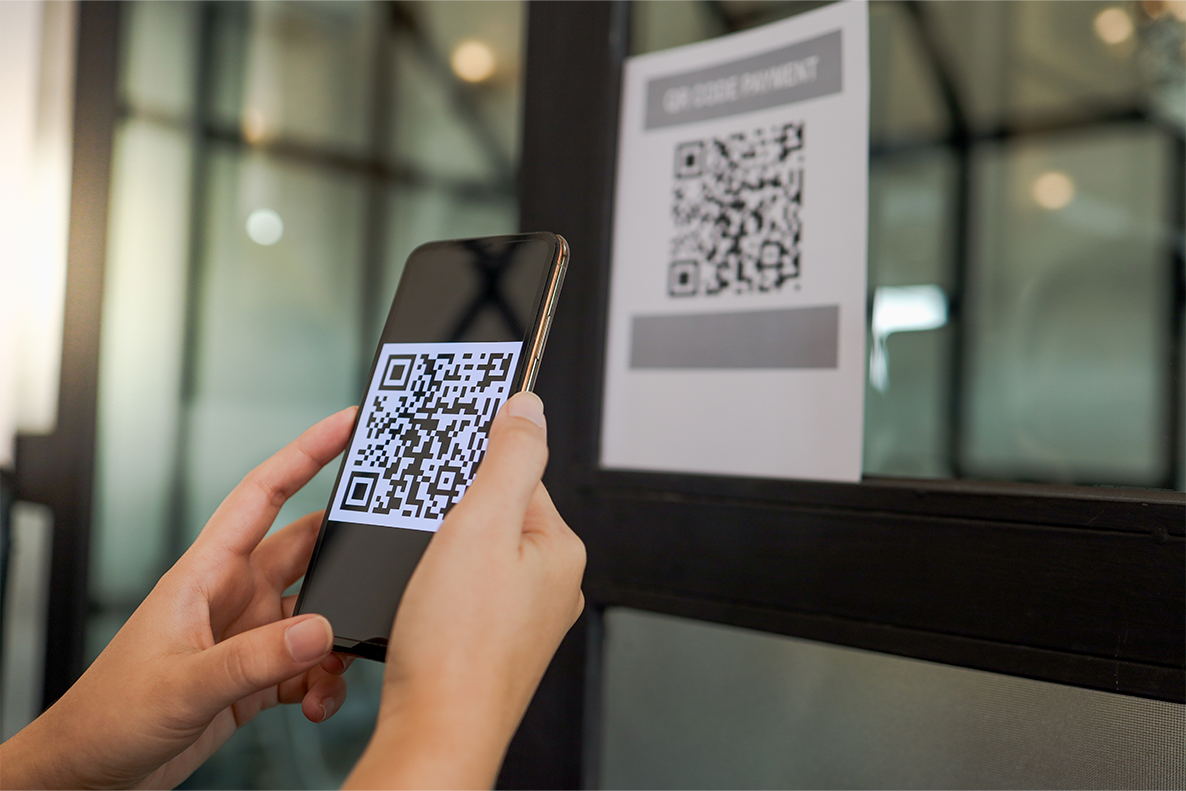
Turn everyday technology into an engaging learning experience by using QR codes to create interactive, location-based activities. This digital treasure hunt approach encourages students to move, explore, and actively engage with course content in a playful and memorable way.
Staff create a series of QR codes, each linking to a clue, riddle, task, or piece of content (such as a short reading, image, video, or quiz). Students scan each code to reveal the next step, guiding them through a trail of discovery related to module themes, campus landmarks, or subject-specific spaces.
QR codes are easy to generate and scan using mobile phones or tablets. Some codes can even link to editable content, allowing staff to refresh tasks daily without changing the codes themselves. This flexibility makes the activity reusable and adaptable for multiple cohorts.
Approximate time needed
- 20–40 minutes (can be adjusted by changing the number of codes or tasks)
Session size
- Small to medium groups (larger cohorts can be split into teams)
Format
- In-person
- Hybrid
Materials or tools needed (if any)
- QR code generator
- Mobile phones or tablets with camera access
- Printed or digitally displayed QR codes
- Online content such as web pages, forms, or quizzes
Further resources
Learn more about using QR codes as a learning tool in the video below, featuring Educational Developer Andy Bedford.
Description
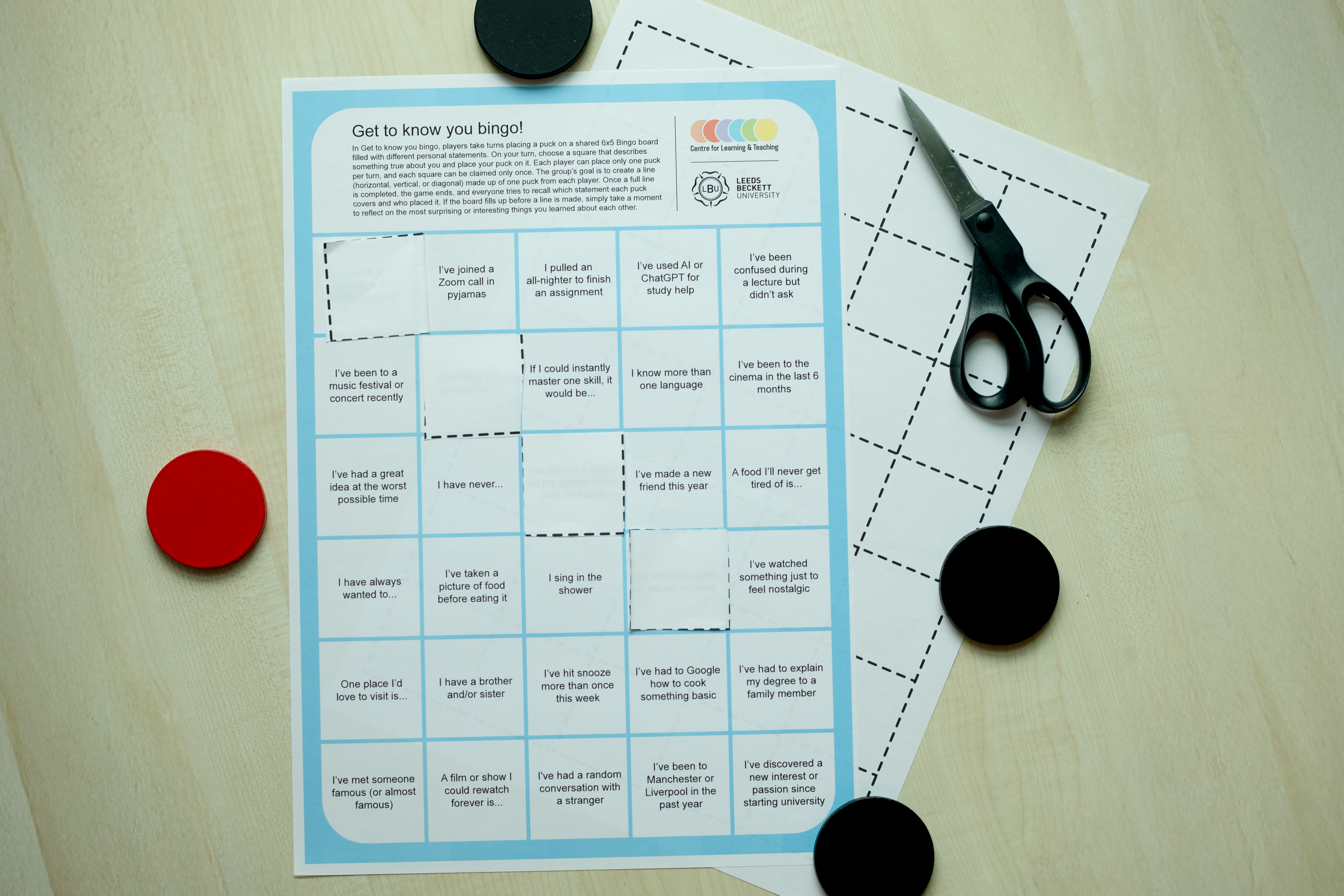
In Get to know you bingo, players take turns placing a puck on a shared 6x5 Bingo board filled with different personal statements, such as “I have ridden a motorbike". On your turn, choose a square that describes something true about you and place your puck on it.
Each player can place only one puck per turn, and each square can be claimed only once. The group’s goal is to create a line (horizontal, vertical, or diagonal) made up of one puck from each player. Once a full line is completed, the game ends, and everyone tries to recall which statement each puck covers and who placed it. If the board fills up before a line is made, simply take a moment to reflect on the most surprising or interesting things you learned about each other.
We’ve created a ready-to-go version of the game for you to try. Custom versions can be made using PowerPoint or even Canva. We recommend printing them at A3 size or larger.
Approximate time needed
- 10–20 minutes
Session size
- Small to medium groups (can be adapted for larger cohorts using multiple boards)
Format
- In-person
- Hybrid (with shared digital board)
- Online (synchronous)
Materials or tools needed (if any)
- Printed bingo board (recommended A3 or larger)
- Pucks, markers, or tokens
- Prepared set of personal statements
- Optional digital version created in PowerPoint or Canva
Description
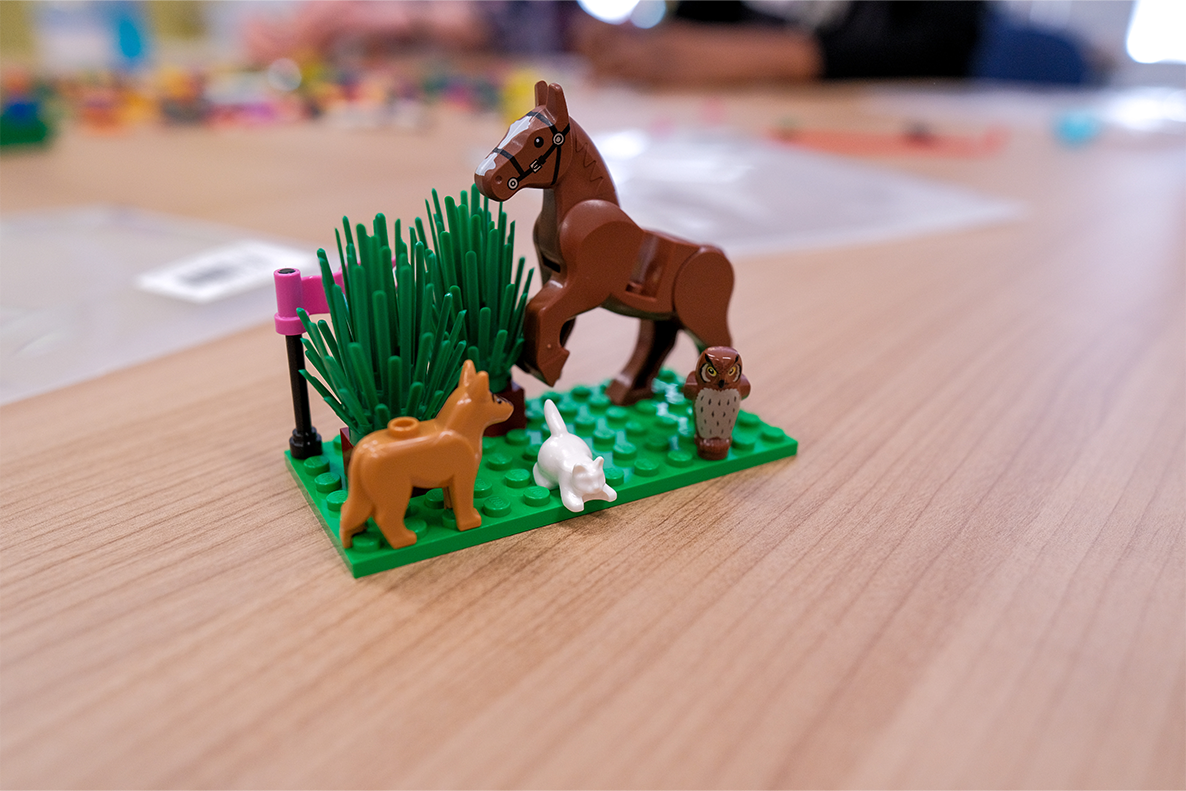
LEGO can be a valuable tool for helping learners find creative ways to tackle complex problems.
The LEGO® SERIOUS PLAY® method is a facilitated technique used to support meetings, communication, and group problem-solving. Participants are guided through a series of increasingly deep questions. Each participant builds their own three-dimensional LEGO model in response to the facilitator’s prompts, using specially selected LEGO bricks.
These 3D models become the basis for group discussion, knowledge sharing, problem-solving, and decision-making.
If you’re a member of staff at Leeds Beckett and would like to learn more about LEGO SERIOUS PLAY, or explore other creative ways of using LEGO in your teaching and learning, why not visit our Special Interest Networks page on Learning Through Games and Play? Click the button below to learn more.
If you're looking for an experience that talks about creativity, collaboration, design thinking... Lego Serious Play is a good way to start.
If you're looking for an experience that talks about creativity, collaboration, design thinking... Lego Serious Play is a good way to start.
Approximate time needed
- 30–60 minutes (depending on the depth of questions and discussion)
Session size
- Small to medium groups (can be scaled with multiple facilitators)
Format
- In-person
- Hybrid (with physical kits and online discussion)
Materials or tools needed (if any)
- LEGO® SERIOUS PLAY® kits or selected LEGO bricks
- A trained or experienced facilitator
- Structured prompts or guiding questions
- Table space for building and sharing models
Case study
Listen to Senior Lecturer Lucile Allen-Paisant share her experience with LEGO Serious Play.
Tell us how we can improve this page
Your feedback will help us improve our content so it’s clearer, easier to use, and better aligned with your needs.





