
Leeds Beckett University - City Campus,
Woodhouse Lane,
LS1 3HE

From inspiration to research: Heather Paul’s work at Leeds Beckett continues her mother’s legacy
Heather Paul’s journey at Leeds Beckett University is deeply rooted in the legacy of her mother, Gertrude Paul - a pioneering educator and activist. Now a Senior Lecturer in the Carnegie School of Education, Heather is not only shaping future educators but also dedicating her PhD research to exploring her mother’s lasting impact on race, education, and community activism in the UK.
This commitment to honouring her mother’s influence was recently reflected in a historic moment for the city, as the names of six inspirational women who shaped Leeds’ history were permanently added to the prestigious council chamber of Leeds Civic Hall.


Gertrude Paul’s enduring impact on education and activism
For the first time since Leeds Civic Hall opened in 1933, women’s names now stand alongside the men already honoured. Chosen through public consultation and approved by the council, the plaques include Gertrude Paul - Leeds’ first Black headteacher and a founder of the Leeds West Indian Carnival, The United Caribbean Association, Leeds International Women’s Group, the Afro-Asian Organisation, founder and first chairperson for 7 years of the Leeds West Indian Centre.
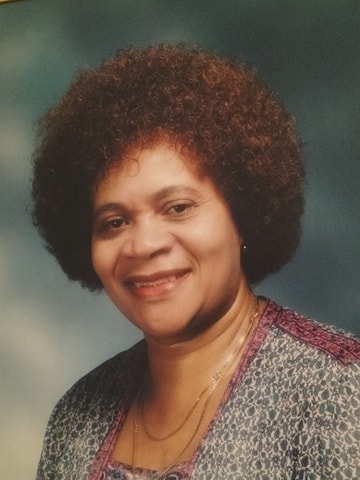
Attending the unveiling ceremony was Heather Paul, daughter of Gertrude Paul and Senior Lecturer in the Carnegie School of Education. Heather shares her thoughts on what it means for her mother’s name to be added to the council chamber:
“The event was filled with many awesome moments. It was a great day honouring all the women whose plaques have been cemented high into the wall of the Civic Hall council chamber.
“My amazing mother’s plaque is a celebration of everyone who worked with her in education and beyond the school gates, in communities, and for those whom she supported. She was a woman who believed in collective action, galvanising young and old people alike to promote equity not only in education but across all public services. Her strong vision for reform meant she was strategically excellent in creating a lasting impact through sustainable projects. She worked tirelessly with voluntary organisations and volunteers, both locally and nationally, to ensure that anti-racist activism influenced institutional processes and practices throughout her career as a teacher, a headteacher, and a Commissioner for the Commission for Racial Equality (CRE). Both her parents and her grandmother outlived her”.
“Proud of her identity as a Black woman of African-Caribbean heritage, she arrived as a young, qualified teacher from the island of St. Kitts. However, she had to retake her teacher training upon arriving in Leeds at the James Graham Teacher Training College in 1962. This requirement posed significant challenges for many qualified teachers from Commonwealth countries, they had been encouraged to come to the UK but had not anticipated the discrimination they would face, which created financial and logistical barriers.
“My mother never gave up on her goal of returning to teaching and making a difference. From the moment she arrived, she was always willing to share her exceptional talents, her concept of hope, and her belief in optimism with her community and with anyone who experienced discrimination based on skin colour, disabilities, class, gender, or perceived differences throughout their lives.
“She was also my best teacher and an incredible educator for many others, as countless testimonies have shown over the years. She was particularly influential in raising student attainment in Chapeltown and South Leeds and was a strong advocate for community supplementary education and learning outside of traditional school settings. Her impact was made possible through the support she had from Chapeltown communities, Leeds wider communities, community activists in Bradford and Huddersfield, and many other national and international organisations.
“For her name to be added to the council chamber is an acknowledgement of the hard work of all those who stood alongside supporting her. She led collectively, passing on the baton of hope, optimism, and equity—an effort that has empowered many to become leaders in making generational change.
“Being recognised with these extraordinary, inspirational women in the history of Leeds brings great pride and honour Gertrude Paul’s legacy. She will never be forgotten by Leeds, as a woman of many talents who generously shared her knowledge with young and old alike. A past pupil once said, ‘She always found different methods to help individuals understand algebra and teach them to read music.’
“I extend my heartfelt thanks to Leeds City Council and the people of West Yorkshire for this accolade. This plaque joins a long list of honours recognising the impact and leadership of Gertrude Paul, including a block of flats named after her by Unity Housing and Enterprise.”

Heather Paul’s research and role at Leeds Beckett
Heather is currently researching her PhD on The Legacy of Gertrude Paul. Her research is highly relevant to the north of England and the wider UK, as Gertrude Paul was a first-generation Black feminist, anti-racist educational activist, and one of the first Black women headteachers in the UK. She was also a Commissioner for Racial Equality, a founder of the Leeds West Indian Carnival, and a key leading figure behind the United Caribbean Association (UCA ), Supplementary School and other initiatives.
Heather added: “I am an alumni of the University of Warwick, however, I chose Leeds Beckett to lecture and pursue my PhD because of my mother’s history with James Graham Teacher Training College. Coming here was a great opportunity to work with the Carnegie School of Education’s undergraduate and postgraduate programmes and to contribute to the incredible work of CRED (the Centre for Race, Education, and Decoloniality), initially led by world-renowned Professor Shirley Anne Tate and recently our esteemed Professor Vini Lander. I have had the privilege of working alongside them and benefiting from their leadership in CRED. Their expertise has been fundamental to the theoretical framing of my work, helping us and our students to connect with everyday racism and intersectionality.
“My work at Leeds Beckett in the Carnegie School of Education is deeply rewarding. The university is committed to achieving and sustaining both the Race Equality Charter (REC) and Athena SWAN. The underlying principle is that everyone employed at the university, in their specific roles, understands what it means to demonstrate commitment to equity. Best practices, action, and visible impact across schools will continue to be shared, ensuring progress for all. This work underscores the university’s dedication to addressing inequalities with the support of staff at every level.
“During my time at the Carnegie School of Education, I have been invited to speak at school assemblies, encouraging young people to build confidence in their aspirations. I hope to instil in them the belief that whoever they are, they are valuable and capable of achieving their goals. This is a privilege I am always humbled and honoured to undertake, and it also creates additional placement opportunities for our students.
“At the Carnegie School of Education, we play a vital civic role by supporting community projects such as the Young Black Achievers Awards in Leeds, attended by hundreds of local people from across West Yorkshire. This month, Professor Peter Slee reiterated our university’s ‘civic’ role as a priority - improving outcomes for disadvantaged students and raising teaching standards. These priorities align with both my mother’s and my personal principles, which is why I am proud to be here.
“I will continue to honour the legacy of those whose shoulders I stand on - Gertrude Paul and all the women and men of her generation and the next generation, who have ensured that social justice and equity remain central to the work we do in education and beyond institutional gates.
The plaque should read that Gertrude Paul was the first Black Headteacher, as in 1956, Mrs Agnes Diminga Adina Banjoko Labor became the first Black teacher in Leeds and returned to Sierra Leone (at the time a British colony), in 1959. Mrs Labor became the Headmistress of Roosevelt Preparatory School in Freetown, Sierra Leone, then in 1978, the first female Member of Sierra Leone’s Parliament and later served as a government minister in Sierra Leone.
“I hope everyone who reads about this is inspired to be optimistic, particularly in the face of ongoing challenges. We must continue to find the energy to help others achieve their best.
“Thank you to Leeds Beckett University and our Dean, Rachel C Boyle, at the Carnegie School of Education for supporting the work we all do.”

Heather Paul
Heather Paul is a lecturer, contributing to both undergraduate and post graduate programmes on Teaching and Education within Leeds Beckett University, Carnegie School of Education. She is passionate ultimately at making an impact for all communities to develop and thrive.





