Leeds Beckett University - City Campus,
Woodhouse Lane,
LS1 3HE

Supporting businesses for long-term sustainable growth
Leeds Business School is actively contributing to the United Nations’ Sustainable Development Goals (SDGs) by sharing knowledge to help businesses and communities grow, innovate and diversify, and supporting policymakers to respond to the most pressing issues in society. Find out all about the School's approach in this post by Professor George Lodorfos, Dean of Leeds Business School.


Our approach to research and knowledge exchange is rooted in people and communities. Our programmes – from Knowledge Transfer Partnerships (KTPs) to Help to Grow, and the Business Productivity Service – take a business-first approach, building long-term relationships with the businesses we work with, learning from them as much as they learn from us.
This work, which often spans multiple other schools and disciplines across the university, supports not only SDG 8: Decent Work and Economic Growth, but also many others including No Poverty, Good Health and Wellbeing, Gender Equality, Industry, Innovation and Infrastructure, Sustainable Cities and Communities, and Reduced Inequalities.
Sustainability is not treated as a standalone topic within Leeds Business School, but as a thread running through both the curriculum and everyday practice as a defining principle of what we do. The School approaches sustainability through all three dimensions: environmental, social and economic, with all three consistently shaping our teaching, knowledge exchange, and external engagement. We embed these principles in our curriculum through activities including live project case-based learning, participation in regional conferences, and executive education.
Regional impact as an anchor institution
LBU is proud to be part of the Leeds Anchors Network. As an anchor institution, we are committed to investing our knowledge, research, and student and graduate talent, to benefit the Leeds economy. Our local and regional impact directly underpins our sustainability efforts, whether through our support for small and medium-sized enterprises (SMEs), our regional productivity programmes and our community-focused partnerships.
Examples of some of our initiatives which support our commitment to the sustainable economic development of the region include our Knowledge Transfer Partnerships (KTPs), Help to Grow: Management, Business Productivity Service, and our Sustainable Business Research Institute.
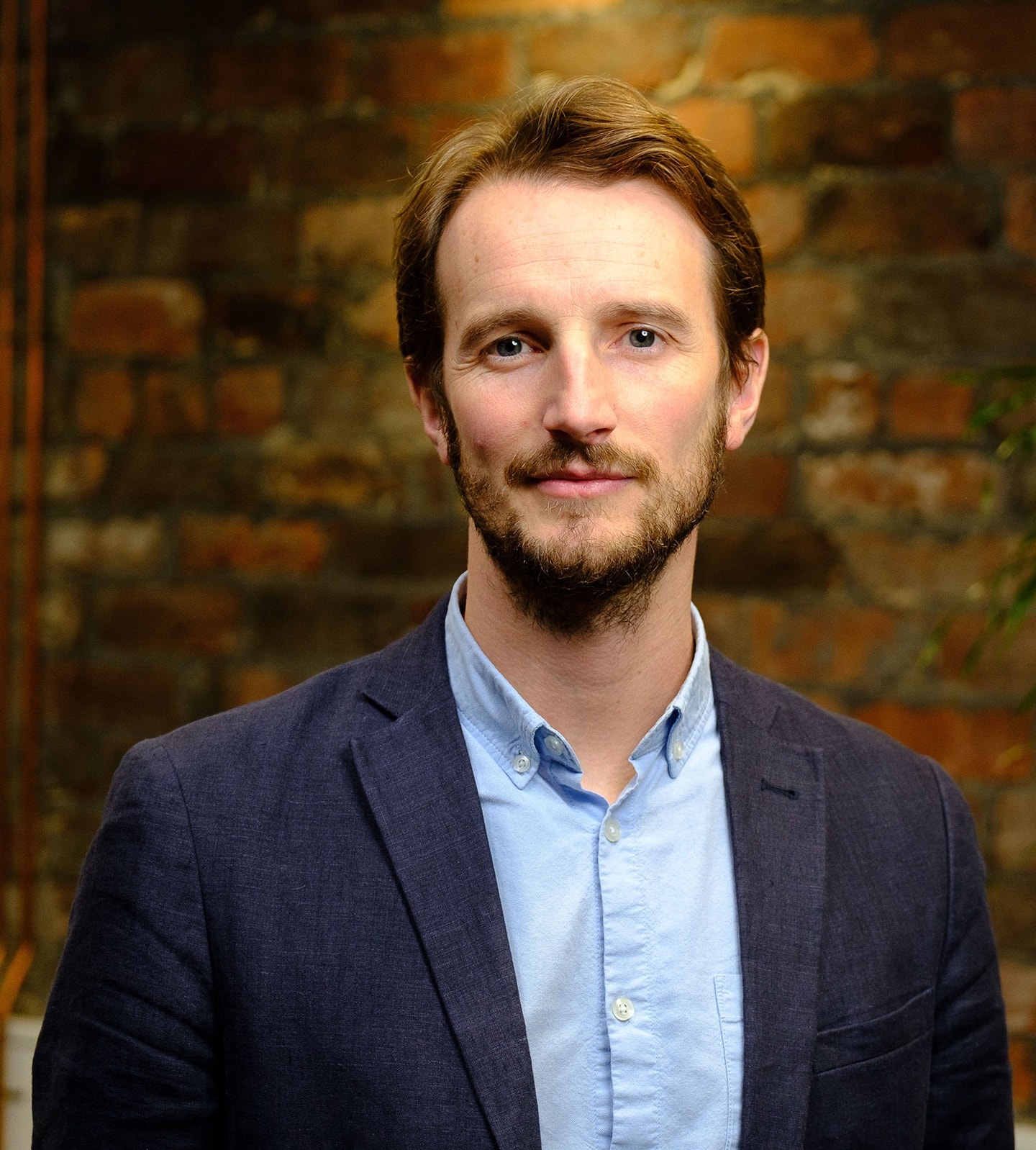
Professor George Lodorfos
Knowledge Transfer Partnerships
Our Knowledge Transfer Partnerships (KTPs) bring together academic teams and businesses of all sizes, with a skilled graduate KTP Associate, to bring innovation and expertise to tackle a transformative project, embedding long-term, sustainable growth within the businesses we work with.
Our KTP with York-based Ardent Limited has transformed the leadership, management and culture across the business. KTP Associate Stephanie Leung has been permanently employed by Ardent as International Marketing Lead following the success of the KTP, and our Leeds Business School students have supported the company on several live projects.
KTPs such as our partnership with QBOL and Q Medical are great examples of how Leeds Business School experts are working with colleagues across LBU to achieve a shared goal, whilst supporting SDG 12 – Responsible Production and Consumption.
The QBOL partnership is led by Dr Alfred Chinta, Supply Chain Management Course Director, with colleagues in LBS and Computing, with the aim of reducing the company’s carbon footprint through its supply chain and delivery methods. QBOL have additionally taken part in our Business Boost support programme, and shared their experiences through our networking events in The Knowledge Exchange.
Dr Chinta is also contributing his supply chain expertise on the Q Medical KTP, led by the School of Built Environment, Engineering and Computing. LBU engineering experts are helping to develop and commercialise innovative new products repurposing healthcare waste. Dr Chinta is leading on the strategic support of the project, embedding the innovation and product development systems into the business.
Help to Grow
We have been delivering the Help to Grow: Management programme at LBU for four years, supporting a total of 180 SME business leaders so far. By the end of this programme, which provides expert masterclasses, mentoring, and peer group discussions, leaders develop a business growth plan to help them apply the learnings of the programme into their companies immediately, translating LBU research directly into action, and supporting the SDG Decent Work and Economic Growth.
Business Productivity Service
Dr Ollie Jones has supported more than 600 SMEs as part of our productivity and growth programmes with Exemplas, delivered on behalf of the West Yorkshire Combined Authority. Blending academic insight with frontline business experience, Dr Jones and Exemplas have recently created a series of productivity insight papers, the Beyond Busy Podcast, and new workshops to support SME leaders and policymakers interested in productivity and business support.

Dr Ollie Jones, Tu Ngoc Vu, Adam Bennett, Lowell Sheasby and Martin Coats (Exemplas) at the recording of the Beyond Busy podcast
Sustainable Business Research Institute
Our Sustainable Business Research Institute was created to harness the skills and capabilities of our LBS experts to understand, explain and challenge the future issues facing all commercial organisations, and to develop resilient and agile organisations with sustainable futures.
In 2025, our team supported the launch of the Yorkshire Hub for the Institute of Corporate Responsibility and Sustainability (ICRS) - the UK’s professional body for Corporate Responsibility and Sustainability.
This new regional network aims to bridge the worlds of professional practice, enterprise, and research to further support collaborative change and impact across our region. This is particularly focused around Environmental, Social and Governance (ESG) – the framework used to evaluate a company’s sustainable and ethical impact, covering climate action, labour practices, and anti-corruption – which directly aligns with SDGs of Responsible Production and Consumption, Climate Action, and Decent Work and Economic Growth.
Here in Leeds Business School, sustainability is a lived practice across our curriculum, research, and partnerships. This integrated approach supports our School and University’s key anchor role and responsibility to place, people, and region.

Professor George Lodorfos
George has extensive practical and academic experience in the field of strategic management, R and D (research and development) and the adoption of new technologies and innovation. He has done extensive research and enterprise work in the area of buyer behaviour, with particular interest in online purchasing and the use of technology to enable the sustainable growth of businesses. He has also supervised and examined many PhDs both in the UK and Europe and is an external examiner for two UK universities.