



Why Leeds?
With great music venues, culture, shopping, and parks - we've got it all. Leeds city centre has been named one of the Best Places to Live in the UK*.
*The Sunday Times Best Places to Live Guide, 2026


Leeds Beckett University - City Campus,
Woodhouse Lane,
LS1 3HE
As part of this course, you’ll:
Industry insights
Your learning will be inspired by the very latest insights. You’ll be supported by tutors who are engaged in research and scientific support within the areas of neuromuscular assessment, musculoskeletal biomechanics, and the optimisation of athletic performance.
Professional expertise
Your teaching team continues to provide support and guidance for athletic and clinical populations. Under their supervision, you’ll be able to apply your learning into research, practice, and continued professional development.
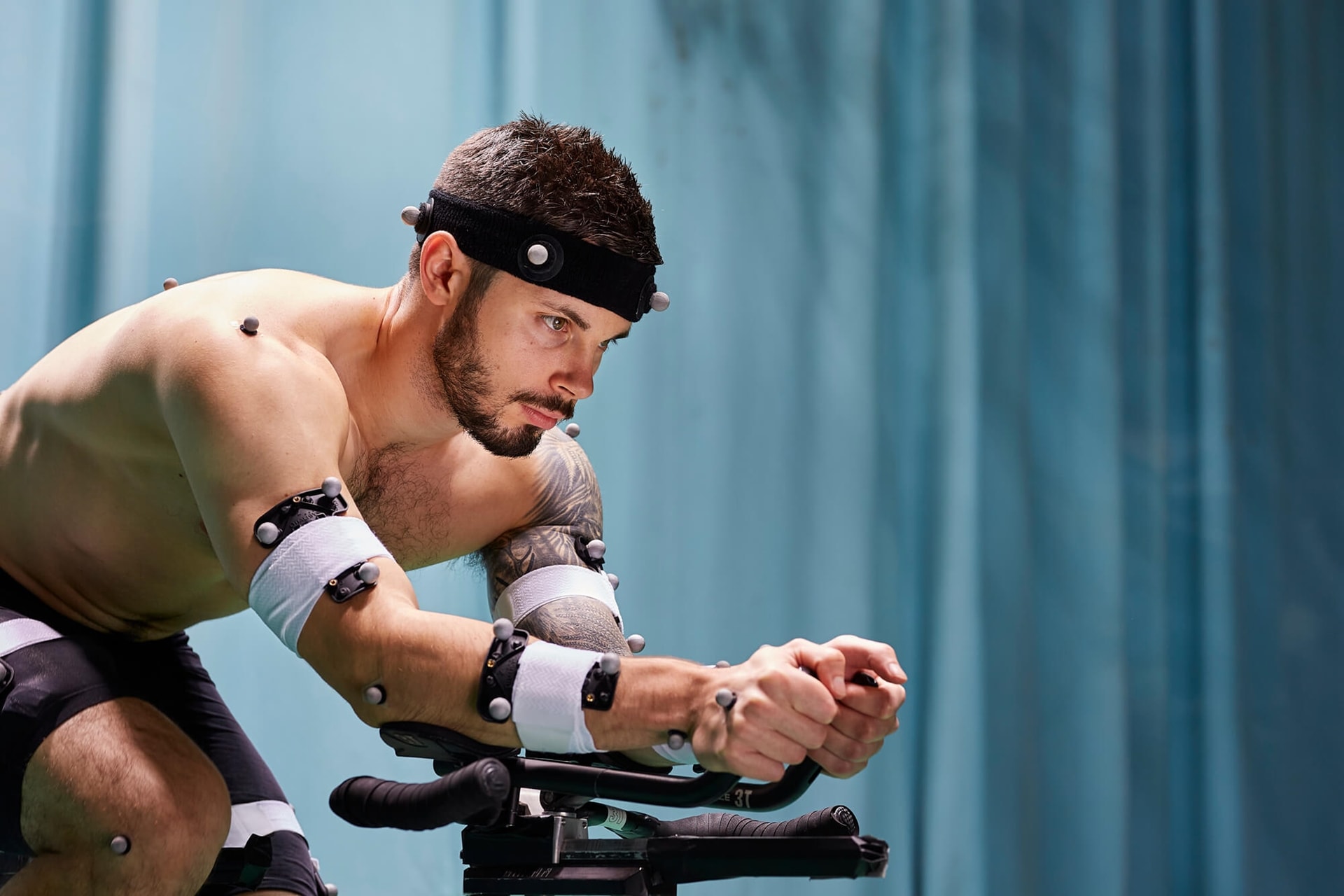
Biomechanics at Leeds Beckett University Take a look at the different equipment, software and activities you'll use to understand, test and analyse the biomechanics of human movement.
Carnegie School of Sport Human Movement Laboratory Dr Gareth Nicholson highlights key features of the Human Movement Laboratory. The lab not only benefits our students but also local sporting partners such as Leeds United.
Discover all there is to know about the course, from entry requirements and fees to exploring the school you’ll be joining - we’ve got it covered.
Applicants should either have at least a second class honours degree in the cognate subjects of Sport & Exercise Science, Physical Sciences, Engineering, Physics, Biomechanics, Sports Technology, Sports Therapy, Physical Education or Podiatry, at least a second class honours degree in a non-cognate subject supported by evidence of an aptitude for the subject applied for, or have equivalent experience or training, normally from within the work environment. All applications should be supported by a reference, either academic or professional; you can download our reference template for completion.
All applicants should satisfy our English Language requirements . Please note the IELTS requirement for this course are IELTS 6.5 with no skill below 6.0. Further details about acceptable equivalent qualifications can be found on our International Student information pages .
Applicants should either have at least a second class honours degree in the cognate subjects of Sport & Exercise Science, Physical Sciences, Engineering, Physics, Biomechanics, Sports Technology, Sports Therapy, Physical Education or Podiatry, at least a second class honours degree in a non-cognate subject supported by evidence of an aptitude for the subject applied for, or have equivalent experience or training, normally from within the work environment. All applications should be supported by a reference, either academic or professional; you can download our reference template for completion.
All applicants should satisfy our English Language requirements . Please note the IELTS requirement for this course are IELTS 6.5 with no skill below 6.0. Further details about acceptable equivalent qualifications can be found on our International Student information pages .
All applicants should satisfy our English Language requirements . Please note the IELTS requirement for this course are IELTS 6.5 with no skill below 6.0. Further details about acceptable equivalent qualifications can be found on our International Student information pages .
We may use selection criteria based on your personal attributes; experience and/or commitment to the area of study. This information will be derived from your personal statement and reference and will only be used if you have met the general entry requirements.
Independent study is a crucial part of learning at university and you will be required to undertake many hours of self-directed research and reading, and preparation and writing of assessments. Your course is delivered through a number of modules, which will help you to plan your time and establish a study routine. Outside of your lectures, workshops and tutorials, a range of support is available to assist with your independent study. Our subject-specific librarians will be on hand to direct you to the specialist learning and study-skill resources. You’ll also be assigned an academic advisor to give you tailored feedback and support.
UK
The tuition fee for the year for students entering in 2026/27 is £10400. The amount you will pay may increase each year to take into account the effects of inflation.
International 2026
The tuition fee for the year for students entering in 2026/27 is £18440. The amount you will pay is fixed at this level for each year of your course.
For students entering in 2026
The tuition fee for the year for students entering in 2026/27 is £10400. The amount you will pay may increase each year to take into account the effects of inflation.
Your tuition fees cover the cost of registration, tuition, academic supervision, assessments and examinations.
The following are also included in the cost of your course:
In many cases, costs associated with your course will be included in your course fee. However, in some cases there are ‘essential’ additional costs (those that you will be required to meet in addition to your course fee), and/or ‘optional’ additional costs (costs that are not required, but that you might choose to pay). We have included those essential or optional additional costs that relate to your course, below.
Other study-related expenses to consider: materials that you will need to complete your course such as books (whilst the library provides access to readings recommended for your modules, you may wish to purchase your own copies of some books); you can also make suggestions for books to be added to Library stock; placement costs (these may include travel expenses and living costs); student visas (international students only); printing, photocopying and stationery (you may need to pay for multiple copies of your dissertation or final project to be printed and bound); events associated with your course such as field trips; study abroad opportunities (travel costs and accommodation, visas and immunisations). Other costs could include academic conferences (travel costs) and professional-body membership (where applicable). The costs you will need to cover for graduation will include gown hire and guest tickets, and optional extras such as professional photography.
As well as your mobile phone, you will also need access to a desktop computer and/or laptop to complete assignments and access university online services such as MyBeckett, your virtual learning environment. You can book and borrow AV equipment through the media equipment service accessed online via the student hub and located in the library at each campus. Equipment includes: 360 Cameras, iPads, GoPros, MacBooks, portable data projectors, portable projection screens, flipchart stands, remote presenters, digital cameras and camcorders, SLR cameras, speakers, microphones, headphones, headsets, tripods, digital audio recorders and PC/laptops (a laptop loans service is provided on campus in the library on both campuses). Student laptops are also available from the laptop lockers located in the libraries.
This list is not exhaustive, costs are approximate and will vary depending on the choices you make during your course. Any rental, travel or living costs are also in addition to your course fees. If you choose to study via distance learning, you may not be able to access all of the facilities listed if you are not able to visit us on campus.
For students entering in 2026
The tuition fee for the year for students entering in 2026/27 is £18440. The amount you will pay is fixed at this level for each year of your course.
Your tuition fees cover the cost of registration, tuition, academic supervision, assessments and examinations.
The following are also included in the cost of your course:
In many cases, costs associated with your course will be included in your course fee. However, in some cases there are ‘essential’ additional costs (those that you will be required to meet in addition to your course fee), and/or ‘optional’ additional costs (costs that are not required, but that you might choose to pay). We have included those essential or optional additional costs that relate to your course, below.
Other study-related expenses to consider: materials that you will need to complete your course such as books (whilst the library provides access to readings recommended for your modules, you may wish to purchase your own copies of some books); you can also make suggestions for books to be added to Library stock; placement costs (these may include travel expenses and living costs); student visas (international students only); printing, photocopying and stationery (you may need to pay for multiple copies of your dissertation or final project to be printed and bound); events associated with your course such as field trips; study abroad opportunities (travel costs and accommodation, visas and immunisations). Other costs could include academic conferences (travel costs) and professional-body membership (where applicable). The costs you will need to cover for graduation will include gown hire and guest tickets, and optional extras such as professional photography.
As well as your mobile phone, you will also need access to a desktop computer and/or laptop to complete assignments and access university online services such as MyBeckett, your virtual learning environment. You can book and borrow AV equipment through the media equipment service accessed online via the student hub and located in the library at each campus. Equipment includes: 360 Cameras, iPads, GoPros, MacBooks, portable data projectors, portable projection screens, flipchart stands, remote presenters, digital cameras and camcorders, SLR cameras, speakers, microphones, headphones, headsets, tripods, digital audio recorders and PC/laptops (a laptop loans service is provided on campus in the library on both campuses). Student laptops are also available from the laptop lockers located in the libraries.
This list is not exhaustive, costs are approximate and will vary depending on the choices you make during your course. Any rental, travel or living costs are also in addition to your course fees. If you choose to study via distance learning, you may not be able to access all of the facilities listed if you are not able to visit us on campus.
Discover more about our range of postgraduate funding options including a Master's Loan of up to £13,206, and our 20% alumni discount*
*Terms apply
Carnegie School of Sport Heritage We have a long history in sports education stretching back to 1933 and the prestigious Carnegie College of Physical Training. Today, alumni of this college and its successor institutions are leaders in national and international sport.
The applied practice opportunities on MSc Biomechanics of Human Movement have been invaluable. The opportunities have contributed to my logged continuing professional development (CPD) hours for the professional practice module, and I've gained skills in operating specialist equipment like the Biodex Isokinetic Dynamometer. It's also allowed me to experience biomechanics in a clinical setting, highlighting some of the routes the MSc could lead to, such as clinical gait analysis."
There’s a lot to consider when choosing a course. Take a look at the team you’ll be working with, employability statistics and career prospects to help make up your mind.
A range of career options will be available to you upon graduation. You’ll develop a unique specialisation in biomechanics, which could lead to or enhance your work within sport or healthcare settings. You could lead sport science support programmes for elite athletes, or work in industry for companies specialising in performance monitoring or medical device technologies.
Potential opportunities could include employment in health and clinical settings or with national governing bodies and sports organisations. You’ll also be very well placed to progress your expertise by conducting research at PhD level.
Other job roles you could work towards include:
I studied MSc Biomechanics of Human Movement part-time to gain practical experience alongside my studies. The supportive staff helped me develop hands-on skills and expand my knowledge. I'm now a research assistant on a project with Goalball UK, conducting a novel investigation into throwing mechanics in the sport. The experience gained through this - and other applied opportunities - has been invaluable, significantly increasing my confidence in working within the field of biomechanics."
Our biomechanics of human movement course offers a unique opportunity for those who are passionate about understanding the scientific principles of human movement and applying them to real world problems. From optimising performance to understanding injuries and rehabilitation strategies, this course will provide you with the tools and insights to explore associated neuromuscular and mechanical underpinnings.”
Catherine is a Senior Lecturer in Sport and Exercise Biomechanics. Catherine's research focuses on the biomechanics of different forms of gait. Catherine is also interested in understanding the biomechanical determinants of golf performance using 3D motion capture and other technologies.
Gareth Nicholson is a Course Director for the Postgraduate Suite of Sports Science courses, Academic Discipline-group Lead for Biomechanics and a Senior Lecturer in Sport and Exercise Biomechanics within the School of Sport.
Josh is a Senior Lecturer in Musculoskeletal Biomechanics in the Carnegie School of Sport and current Course Leader for MSc. Biomechanics of Human Movement, PG Cert. Musculoskeletal Biomechanics, and MSc. Sport & Exercise Science. His research interests include muscle-tendon mechanics, chronic neuromuscular responses to loading, injury, and rehabilitation, specifically following Achilles' tendon rupture, as well as the accuracy and reliability of measurement techniques in biomechanics.
Our careers service is not just there for undergraduates, we support our postgraduate taught and research students too.
Your postgraduate degree will boost your CV and help you stand out from the crowd. Whether you're just starting out on your chosen career path, changing careers or moving to the next level, we can provide you with expert advice and resources to help you take the next steps to achieving your goals.
At Leeds Beckett your experience is important to us, find out more about what to expect from your time on this course and life at uni.
Our state-of-the-art facilities and learning environments give you everything you need to succeed – whether that’s completing your current studies or joining our cutting-edge research teams.
With great music venues, culture, shopping, and parks - we've got it all. Leeds city centre has been named one of the Best Places to Live in the UK*.
*The Sunday Times Best Places to Live Guide, 2026





