

Leeds Beckett University - City Campus,
Woodhouse Lane,
LS1 3HE
How to become a special educational needs teacher
Help children with special needs reach their full potential in the classroom.
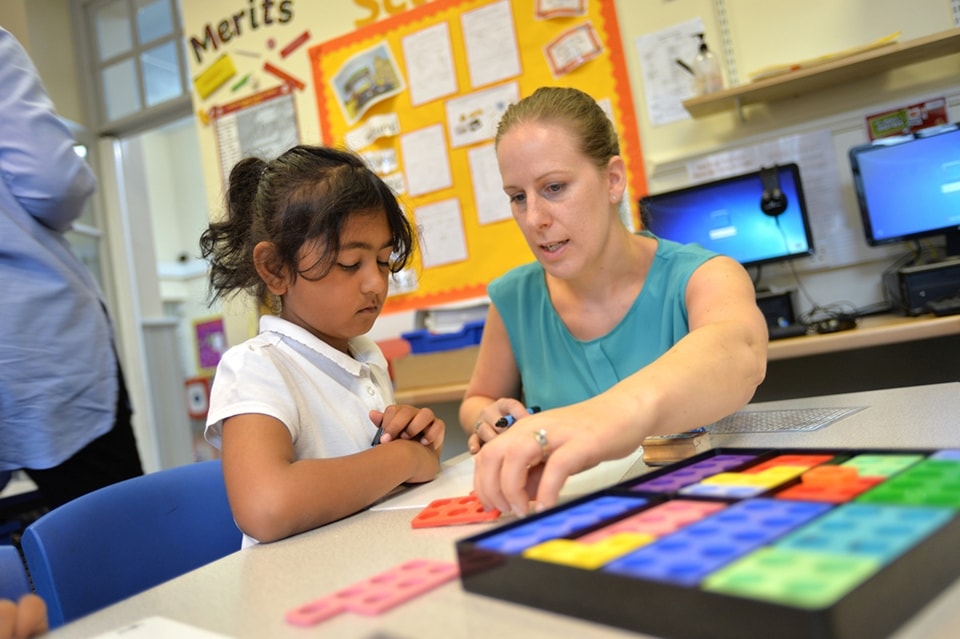
What is a special educational needs (SEN) teacher?
SEN teachers work in the classroom with children who need extra support with their learning. This can include children with a range of emotional, physical or learning challenges.
How do I become a SEN teacher?
Our specialist undergraduate degree, BA (Hons) Psychology in Education provides the theory and knowledge to underpin your understanding of SEN/SEND education in further qualifications you may take towards achieving QTS.
We'd also recommend the course as an additional qualification to expand and develop your expertise with the most up-to-date theory and practice if you're already a SEN/SEND practitioner or hold QTS status as a comprehensive programme to advance your career prospects or move into SEN/SEND education.
To qualify as a SEN teacher, you'll need a degree and qualified teacher status (QTS).
To achieve QTS you can take:
- An undergraduate Bachelor of Education (BEd) degree
- Or another BA / BSc (Hons) which includes QTS
- A degree apprenticeship
If you already have a degree you can gain QTS in other ways:
- Postgraduate Certificate in Education (PGCE) - available at many universities, colleges of higher education and teacher training led by schools
- Salaried teacher training - schemes which offer on-the-job training while you earn a salary
What would I do as a SEN teacher?
As a SEN teacher you'll make learning accessible and fun for children with a range of special needs.
You'll work with children with a range of physical, emotional, behavioural and communications difficulties. Their challenges might include autism, dyspraxia, dyslexia and ADHD, as well as impaired hearing or sight. As a SEN teacher, you could also work with gifted children, so you'll need to develop learning programmes to suit many different needs.
Typically, your responsibilities will include:
- Developing learning programmes, and planning and preparing lessons
- Adapting teaching materials and using special facilities and/or equipment
- Face-to-face teaching with students individually or in a class setting
- Assessing students' work and monitoring their progress
- Meetings and reviews with parents and other specialists, such as speech and language therapists, physiotherapists and educational psychologists
Becoming a SEN teacher could be for you if...
-
You have staying power
Working with special needs children can be challenging. You'll need to show empathy, understanding and patience.
-
You're flexible
Children's needs vary widely, so you'll need to adapt your approach to them.
-
You're committed to inclusion
You'll need to be committed to inclusion and inclusive practice in your role - day in, day out.
-
You're the one with the plan
You'll be planning, preparing, reporting and liaising with other professionals, as well as teaching, so you'll need to be super-organised.
-
You see the potential
You're dedicated to helping children with the most challenging behaviours to achieve their best.
What are the typical working hours for a SEN teacher?
You'll typically work school hours, usually 08:30 - 16:00, although you may need to work extra hours for special activities and parents' evenings.
New teachers receive a starting salary of £31,650 rising in stages to £43,607. As a SEN teacher, you might be able to receive an additional allowance of £2,679 to £5,285 depending on your qualifications, experience and level of responsibility. Teachers working in or near London may also be paid an enhanced salary.
With experience, SEN teachers can apply to move up to the next pay scale which ranges from £45,646 to £49,084.
Salaries for lead practitioners can rise to £76,050 and higher if you're based in London.





