

Leeds Beckett University - City Campus,
Woodhouse Lane,
LS1 3HE
 0009-0001-0379-3486
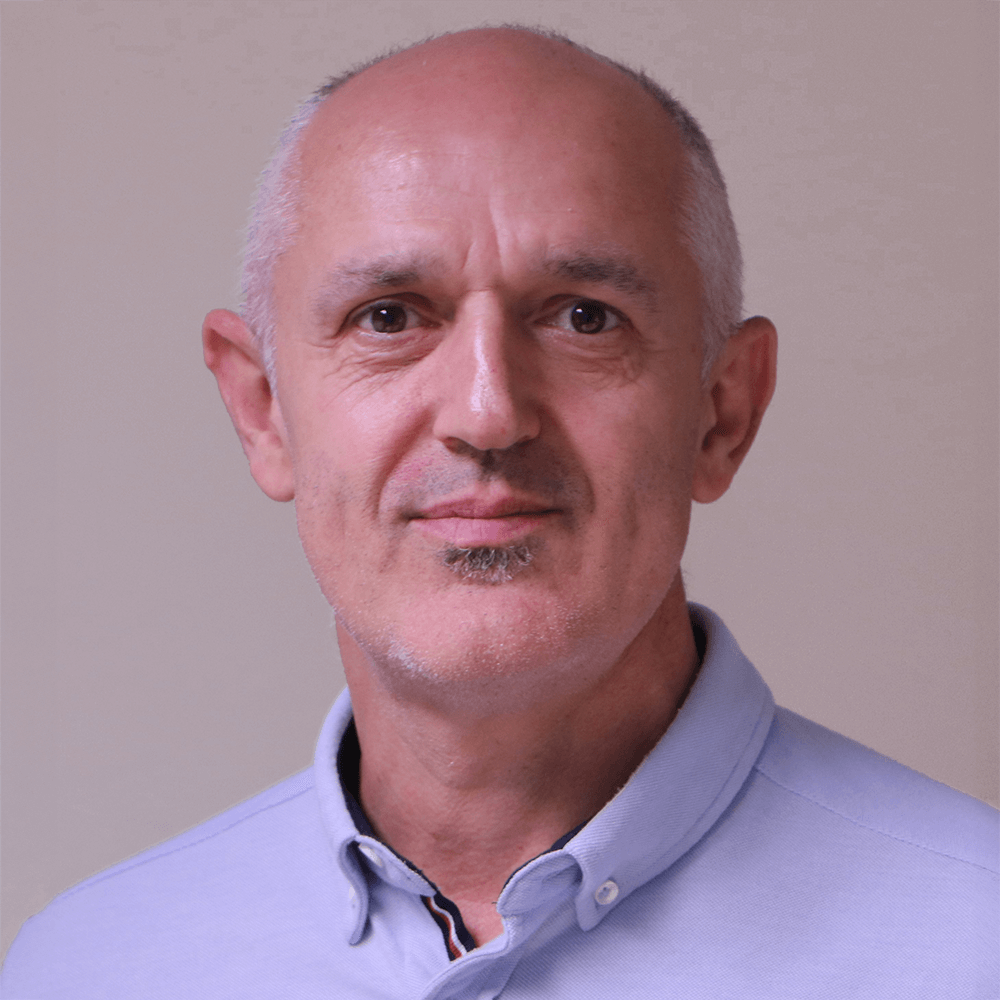
Dr Ladislav Petrovic
Sport Coaching International Adviser
Publications (15)
Sort By:
Featured First:
Search:
 01 April 2016
CoachLearn Project CoachLearn - Report #2 Recognition of Prior Learning and Work-Based Experience in Coach Development Author Publisher
01 April 2016
CoachLearn Project CoachLearn - Report #2 Recognition of Prior Learning and Work-Based Experience in Coach Development Author Publisher
 Hamalainen K, Minkhorst J, Lara-Bercial S, North J, Livningstone K, Petrovic L, Oltmanns K, van der Heijden B, van Benthem P
The recognition of prior learning and work experience (RPL&WBE) in coach development is a fundamental part of project CoachLearn. CoachLearn is co-funded by Erasmus+ under the Strategic Partnerships Action within Key Action 2 – Cooperation and Innovation for Good Practices. It seeks to enhance sport coaches' learning, mobility and employment through the development of a European Sport Coaching Framework. This report provides an introduction to the topic and subsequently presents the findings from a survey aimed at gathering the views of a cross-section of coach education stakeholders across the European Union. Stakeholders represented in the sample included national lead coaching organisations, national Olympic committees, national and international governing bodies of sport and vocational and higher education institutions. The main objectives were to identify key challenges faced by organisations in relation to RPL&WBE and existing models of good practice. Central to this goal was defining major factor for the development of successful systems.
European Sport Coaching Framework - Development Tool #1 Coaching System Mapping Tool
May 2017
European Sport Coaching Framework - Development Tool #1 Coaching System Mapping Tool
Lara-Bercial S, North J, Petrovic L, Minkhorst J, Hämäläinen K, Oltmanns K, Livingstone K 31 May 2017
Champaign, IL Human Kinetics
Lara-Bercial S, North J, Petrovic L, Minkhorst J, Oltmanns K, Hamalainen K 31 October 2013
Leeds Metropolitan University and the International Council for Coaching Excellence/European Coaching Council Leeds, UK
Duffy P, North J, Curado J, Petrovic LLeeds Metropolitan University (LMU), in partnership with the European Coaching Council (ECC), was successful in a bid to the European Commission under the Preparatory Action in the Field of Sport (EAC/18/2011). The project was designed to develop an innovative approach that would contribute to the strengthening of the organisation of sport in Europe as part of the ‘good governance, strand of the EU Preparatory Action in the Field of Sport. The primary objective was to examine ways in which the organisation of coaching could be enhanced in Europe, with a particular focus on the greater involvement of coaches in decisionmaking. In exploring ways to maximise the ‘voice of the coach’, the partnership between LMU and ECC was central to the project. ECC is the continental division of the International Council for Coaching Excellence (ICCE). Through its network, ECC was in a position to identify current organisational arrangements for coaching across Europe. LMU is a well established research and practice oriented university in the UK and played a lead role in coordinating the project and guiding the research methodology through its Sport Coaching and Physical Education (SCOPE) Research and Enterprise Centre. Varying arrangements for the development and management of coaching were observed through a study of European countries. Within this varied landscape, the representation of coaches was sporadic, ranging from no representative mechanism to a number of good practice examples that made provision for the tiered engagement of coaches depending on their role; sport and coaching status category. These examples included confederated models across sports; blended models across coaching status categories and single and multi-sport models for the engagement and representation of coaches. The study concluded that there is a need for a more considered approach to the involvement of coaches in decision-making, with a number of recommendations developed for consideration by member states and the European divisions of the International Federations. These recommendations proposed that the structure of ECC as the European arm of ICCE be reviewed, with the intention to more strongly engage organisations that have been established to represent the voice of coaches and leading to a re-structuring of the organisation. In this context, ICCE and ECC should play an even stronger advocacy, representative and action role in establishing coaching as a blended profession, which includes volunteer, part-time paid and full-time paid coaches. More coherent structures for the engagement of coaches in each sport and country are also recommended. This should occur as part of a wider commitment that the principle of listening to and hearing the voice of the coach should become more strongly embedded within the way in which sporting and related organisations operate. The EU is well placed to lead on this type of approach, ensuring the coaches are more fully engaged in social dialogue and in the process to further enhance the role of sport and coaching in Europe. Further research is also recommended on the nature, needs and demographics of the coaching workforce. All of these approaches need to be tempered with the realisation that coaches are individual decision-makers, operating in a wide variety of contexts and many of whom do not show a propensity for involvement in formal ‘representative’ structures. The need for alternative methods to connect with and engage coaches was, therefore, identified. These include a more segmented approach to engaging with coaches, depending on their coaching role and status, as well as the utilisation of more informal modes of web-based communication to connect directly with coaches in their daily lives. In all existing and future scenarios, the key role of federations at the national and international level in seeking, activating and allocating financial and other resources to connect with and support their coaches was highlighted. The findings have been notified to ICCE for formal consideration, leading to changes in the ways in which the voice of the coach is more clearly represented within the work of the organisation. ICCE should continue to work closely with the EU Sport Unit to ensure that the recommendations of this report are implemented and evaluated on an on-going basis.
From the Ground Up: Case Studies of Holistic Development Environments in Sport
18 November 2022
ICOACHKIDS From the Ground Up: Case Studies of Holistic Development Environments in Sport Publisher
Lara-Bercial S, Sargent-Megicks B, Navarro-Barragan R, Schipper-Van Veldhoven N, Balogh J, Horvath R, Petrovic L, Hulse H, Morlang K, Faber I, Ullrich D, Mitchell TIn 2015, the International Olympic Committee advocated for holistic development approaches in youth athletic development (Bergeron et al., 20151). Despite a growing holistic development agenda within talent development, there are few examples of good practice to support those in practice. ICOACHKIDS have complied real-life case studies of good practice from six different countries and sports. These case studies provide examples of how talent development environment seek to create holistic development outcomes. Each case study represents a version of holistic development in their context, each environment has its strengths and points of challenge. The case studies are written for those supporting or in talent development environments such as policy makers, managers, directors and coaches.
01 April 2016
CoachLearn Project CoachLearn - Report#3 - The context and motivations for the collection and application of sport coaching workforce data in 5 European countries Author
North J, Lara-Bercial S, Petrovic L, Livingstone K, Oltmanns K, Minkhorst J, Hamalainen KAn increasing trend in the United Kingdom (UK) has been to argue for, and attempt to use, more detailed coaching workforce data to inform sport coaching system and programme development (e.g. Lynn & Lyle, 2010; North, 2009; Sports Coach UK, 2008, 2012; Winder & Townend, 2010). There have also been similar pockets of research activity internationally notably in Australia (Dawson, Wehner, Phillips, Gastin, & Salmon, 2013) and Canada (Reade et al., 2009) although their connection to the policy process is less clear. Recently there have been a number of UK centred proposals to the Europe Commission to explore the possibilities of opening up these methodologies to European countries and beyond, from Leeds Beckett University as part of its partnership with the International Council for Coaching Excellence (ICCE), the European Coaching Council (ECC), and other European partners. This includes the 2011 Preparatory Action in the Field Of Sport bid CoachNet, written up in a final report by Duffy, North, Curado, and Petrovic (2013), and the 2014 Erasmus + bid CoachLearn, of which this project forms a part. As a result of early investigations related to the CoachLearn project it became clear that the UK context and motivations for the development and application of specific research methodologies, and the collection and use of coaching workforce data were fairly unique. This meant that some important assumptions underpinning recent successful bids with regard to coaching workforce data methodologies and their application across Europe required further examination. This paper explores the context and motivations for, and applications of, the collection and use of coaching workforce data in five European countries: Finland, Germany, Hungary, the Netherlands, and the UK to determine whether a common methodology and tools to underpin coaching workforce data collection is relevant, useful, and viable. In undertaking this work the paper faces into comparative issues concerning centralised ‘good practice’ frameworks, evidence based decision making, performance management, research and research methodology, which could inform wider debates both inside and outside sport.
01 April 2016
CoachLearn Project CoachLearn - Report #1 - Appendix #1 General and Coaching Specific Education Frameworks in the EU – Knowledge, Impact and Future Needs Survey Author
Lara-Bercial S, North J, Petrovic L, Livingstone K, Oltmanns K, Hamalainen K, Minkhorst JThe General and Coaching Specific Education Frameworks in the EU – Knowledge, Impact and Future Needs Survey is part of project CoachLearn. CoachLearn is co-funded by Erasmus+ under the Strategic Partnerships Action within Key Action 2 – Cooperation and Innovation for Good Practices. CoachLearn seeks to enhance sport coaches' learning, mobility and employment through the development of a European Sport Coaching Framework. The survey aimed to gather the views of a cross-section of coach education stakeholders across the European Union which included national lead coaching organisations, national Olympic committees, national and international governing bodies of sport and vocational and higher education institutions. The first half of the consultation revolved around the identification of common challenges faced by stakeholders, the various tools they have used to overcome them and the role played by existing generic and coaching specific qualification frameworks and mobility tools. The second half investigated the views of the participants in relation to the development of the future European Sport Coaching Framework.
01 April 2016
CoachLearn Project CoachLearn - Report #1 Qualification Frameworks and Employment and Mobility Tools in the European Union Implications for Sport Coaching and the European Sport Coaching Framework Author
Lara-Bercial S, North J, Petrovic L, Livingstone K, Oltmanns K, Minkhorst J, Hamalainen K 14 February 2022
International Sport Coaching Journal9(2):157-160 Human Kinetics
Lara-Bercial S, North J, Bales J, Petrovic L, Calvo GThis position statement is the result of a consultation process carried out in 2021 as part of project CoachForce (CF21), an Erasmus+ co-funded initiative co-led by the International Council for Coaching Excellence and Leeds Beckett University. It is organised in two parts. First, the principal and extended position statements are presented. Subsequently, a short background and rationale paper are offered as supplementary information. Development of these documents took place in four stages. Stage one saw the CF21 expert group develop an outline of the contents of the position statement. Stage 2 included the development of a first full draft of the statement and the rationale paper by the core authors. Stage 3 comprised of a global consultation with the ICCE member base. Finally Stage 4 entailed the development of the final version based on the feedback received. The statement is intended to cover the period 2021 to 2030, however, it will be subject to periodical review and, if necessary, amended.
International Council for Coaching Excellence Position Statement: “Professionalisation of Sport Coaching as a Global Process of Continuous Improvement
14 February 2022
International Sport Coaching Journal9(2):157-160 Human Kinetics
Lara-Bercial S, North J, Bales J, Petrovic L, Calvo GThe contribution that sport coaches make to society has received growing recognition among policy-makers over the last decade. Sport coaching is no longer only associated with professional and Olympic sport, trophies, and medals, and it is regularly proposed as an activity that contributes to the development of individuals, communities, and societies. Unfortunately, sport coaching has also been associated with negative outcomes, such as institutionalized doping, abuse of athletes, and match fixing. The level of scrutiny and expectations on coaches are higher than ever, and, therefore, more and more countries and sport organizations are examining how coaches are currently recruited, educated, developed, supported, employed, represented, and recognized. In the current landscape, the need to review the existing International Council for Coaching Excellence position statement on “Sport Coaching as a Profession,” written in 2011, is paramount. The 2021 position statement takes into account policy, practice, and research developments over the last decade to propose a way forward for sport coaching over the next 10 years.
11 October 2017
iCoachKids Audit of the Children's Coaching Workforce in Seven European countries Publisher
Rankin-Wright AJ, North J, Lara-Bercial S, Fix M, Veldhoven N, O’Leary D, Queen S, Van der Haegen K, Navarro R, García S, Lara-Bercial P, Petrovic L, Balogh J, Dudeniene L, Statkeviciene B 01 April 2016
CoachLearn Project CoachLearn - Compendium Best Practice Examples in Coach Education & Development Author Publisher
Lara-Bercial S, North J, Petrovic L, Livingstone K, Oltmanns K, Hamalainen K, Minkhorst J 16 May 2025
Youth5(2):1-13 MDPI
Lara-Bercial S, McKenna J, Hill M, Jowett G, Gledhill A, Sargent-Megicks B, Schipper-Van Veldhoven N, Navarro-Barragan R, Blaogh J, Petrovic LOrganised sport is one potential antidote to the global youth inactivity crisis. Therefore, under-standing why young people drop out constitutes a key research endeavour. In paper 1 of this se-ries, we developed and validated a new Youth Sport Dropout Questionnaire (YSDQ). In paper 2, we used the YSDQ-LV (49-item long version) to examine dropout in 1127 university students from seven European countries. A four-stage analysis investigated the relative and combined im-portance of dropout reasons. Three items – the rocks – were statistically more important: “I prior-itised schoolwork and had no time left to take part in sport”; and “I found other things that I en-joyed doing more than sport”; and “I found it stressful when I did not perform/play as well as I expected”. On average, however, these rocks were rated as “moderately important”, along with 18 reasons (the pebbles) rated as “slightly important to moderately important”, and the remain-ing 26 reasons (the sand) rated as “slightly important to not at all important”. These findings suggest that sport dropout is not caused by a single reason but is underpinned by a dynamic tricky mix of reasons – a series of rocks, pebbles and sand unique to each young person.
Research study on the UEFA Coaching Convention: A research report for UEFA
05 October 2016
North J, Piggott D, Lyle J, Lara-Bercial S, Muir R, Petrovic L, Norman L, Abraham A, Shaw WiCoachKids Erasmus+ Project
01 January 2019
Lara-Bercial S, North J, Till K, Norman L, Abraham A, Ashford M, Petrovic L, Livingstone K, Emmonds S, Mitchell T




