

Leeds Beckett University - City Campus,
Woodhouse Lane,
LS1 3HE
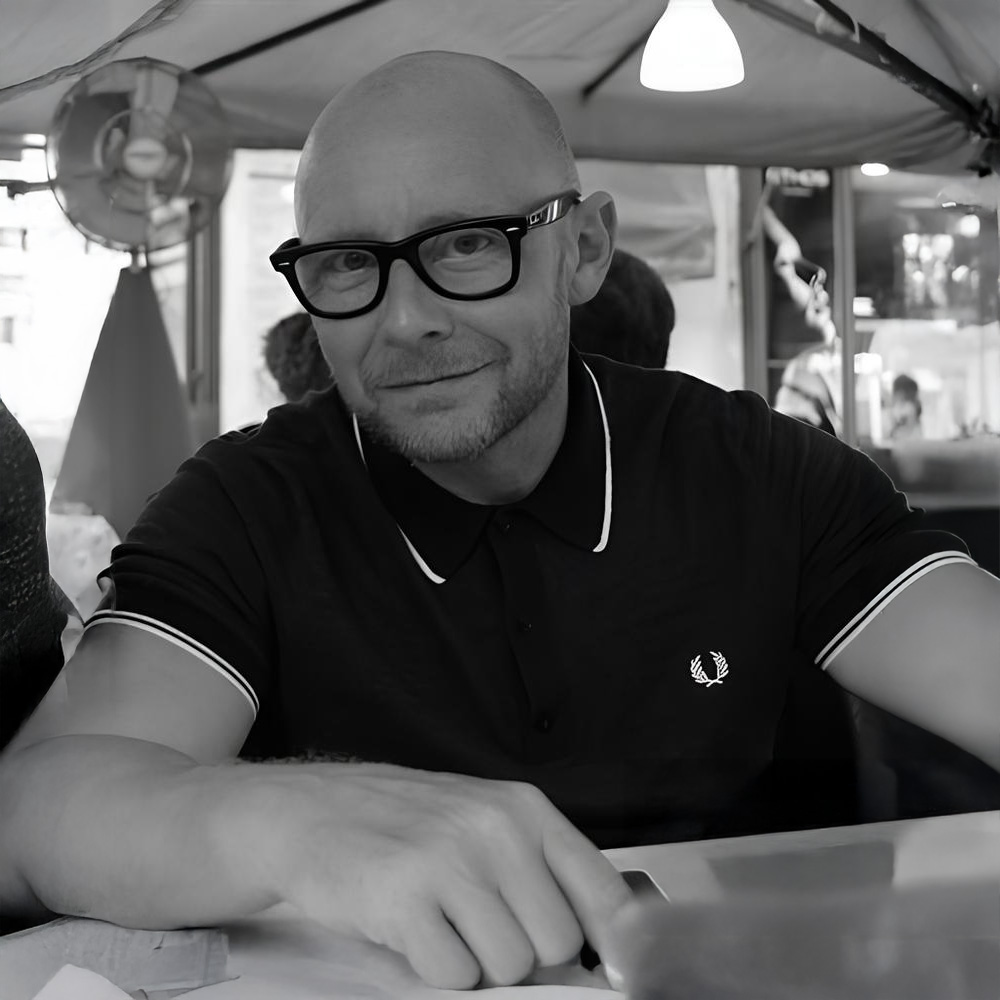
Dr Simon Rowlands
Senior Lecturer
Currently working as a Senior Lecturer in Health Promotion and Public Health at Leeds Beckett University having spent the previous 15 years as a practising Health Promotion Specialist working for the NHS in Bradford and Airedale.
 Scopus ID: 57191753068
About
Currently working as a Senior Lecturer in Health Promotion and Public Health at Leeds Beckett University having spent the previous 15 years as a practising Health Promotion Specialist working for the NHS in Bradford and Airedale.
Currently working as a Senior Lecturer in Health Promotion and Public Health at Leeds Beckett University having spent the previous 15 years as a practising Health Promotion Specialist working for the NHS in Bradford and Airedale. Much of his work in practice covered the areas of physical activity and nutrition for health improvement, working in partnership with health services, local authorities and third sector organisations.
During this time Simon also applied his health promotion knowledge and skills more generically in overseas water and sanitation, lane mine awareness and refugee camp health projects, predominantly in the Balkans and Eastern Europe.
For his PhD Simon critically examined men's use of weight management services and take a keen interest in men's health and gender more generally as a determinant of health.
Related links
Research interests
Simon is interested in men's health and is currently writing up several papers from my PhD. He has also been involved recently in an ongoing project that looks at the way men approach and cope with the demands of fatherhood.
Ask Me About
Publications (8)
Sort By:
Featured First:
Search:
What do parents believe are the causes of their Type 1 diabetic child's condition?
 02 April 2020
Health Education120(1):41-56 Emerald
02 April 2020
Health Education120(1):41-56 Emerald
 Allan A, Rowlands S
This paper aims to investigate parents' beliefs about the causes of their child's Type 1 diabetes to understand if this affects the way diagnosis is processed and if this impacts on sibling parenting. Online, semi-structured qualitative interviews with nine parents of children with Type 1 diabetes who have at least one non-diabetic child. The results were analysed using interpretative phenomenological analysis (IPA). Two interlinked themes were identified: “What ifs”: parents postulated underlying genetic reasons for their child's diabetes and had working theories about the triggers of diabetes that included stress, infection, vaccination or a virus. Developing a personal aetiology of their child's condition allowed some a feeling of control, while others focused on practical ways to manage diabetes. “Having something to blame”: narratives dwelt on the relationship between beliefs about causes and self-blame. Some believed that acting on an identified trigger reduced personal guilt. Although internet access is widespread in the UK, a limitation of this research is that it excluded those without internet access. The findings of this research may provide greater depth and a more holistic perspective to the health promoter to better support parents of Type 1 diabetics. The analysis of illness narratives that this research provides may offer a greater understanding of the social context in which health and illness develop. This research found some examples of parental confidence about the causes and triggers of their child's diabetes being positively associated with a sense of control. This might indicate the value of a more comprehensive larger-scale study to establish whether parents who are supported to develop a personalised conception of the aetiology of their child's diabetes develop a greater sense of coherence and well-being regarding their child's condition. There is very limited literature focusing on the beliefs of sufferers and their families about Type 1 diabetes causality. Of that which does exist, some research is heterogenous in its sampling of Types 1 and 2 diabetes sufferers. This study offers a rare, focused insight into the beliefs of parents about the background causes and more proximal triggers of their child's Type 1 diabetes.
Promoting Nutrition in Men’s Health
2017
Nutrition in Lifestyle Medicine Springer International Publishing
Food preferences, dieting practices and healthy eating are all interlinked and can be considered as socially constructed and gendered phenomena. As this chapter will discuss, men and women are thought to have different approaches to nutrition – although sex differences are often overstated and changing gender ideals suggest that the relationship between gender and food is complex, dynamic and context-bound. In this chapter, we look closely at ‘masculinity’ (or ‘masculinities’) and its important influence on men’s health generally and on nutrition specifically. We look beyond medical and psychological perspectives to social science theory and research of relevance to men’s food-related activities and highlight concepts which could inform recommendations for improving men’s engagement with healthy eating.
Students as Peer Researchers
10 July 2023
Advances in Higher Education and Professional Development IGI Global
Warwick-Booth L, Coan S, Rushworth S, Davies S, Cross R, Rowlands S, Ismaila MS, Uneke E, Osoro OI, Oladele D, Wagland JThis chapter reports learning from students participating as peer researchers in a pedagogically focused study. The chapter documents the peer research model used, its challenges, and its successes, to add to the evidence base about the reality of using participatory approaches, specifically with and for students. The chapter details findings from a study about the lived experiences of postgraduate students as they transition into learning at master's level. By exploring experiences qualitatively through the voices of students, lessons about the ways in which these inform lived experiences, enable better understanding of the wider circumstances affecting postgraduate student transitions, and their associated support needs are detailed. This chapter adds to the evidence base around postgraduate student transitions.
23 September 2015
Unlimited Potential Salford Dadz: Year 2 External Evaluation
Robertson S, Woodall J, Hanna E, Rowlands S, Long T, Livesley J 31 October 2016
Journal of Gender Studies27(5):562-573 Taylor & Francis
Hanna ES, Robertson S, Woodall J, Rowlands SThis paper explores the qualitative perspectives of women about a community embedded fathers initiative in Northern England. Projects to improve the wellbeing of men and their children are less common within the landscape of parent and child support, with mothers more often being the target recipients. Asking women about their perceptions of an initiative for fathers then offers original insights from women who are positioned as ‘related outsiders’, in that they were ‘outside’ the project but ‘inside’ the family and community. Findings suggest that women are able to see the positive impact of such a project, identifying that it offers a shared space for men and children, time for mothers without their children and can help with shifting roles and attitudes around child care and emotional labour in the home. The initiative was also seen by the women as offering men more healthy means of coping, including men moving away from traditional hegemonic practices, which in turn shifted some women’s long held gendered beliefs about men as fathers. This research then offers a relational gendered backstory to a father’s initiative, demonstrating how such initiatives can potentially ‘undo’ gender and the positive implications this could have for families.
23 December 2016
Health Promotion International33(3):daw090 Oxford University Press
Robertson S, Woodall J, Henry H, Hanna E, Rowlands S, Horrocks J, Livesley J, Long TAlthough under-researched and under-theorised compared to other settings, there is potential for the family setting to be harnessed to support the development of healthy children and societies and to reduce health inequalities. Within this setting, the role of fathers as health facilitators has yet to be fully understood and considered within health promotion. This paper draws on a two year evaluation of a community embedded intervention for fathers and children in an area of multiple deprivation in North West England. The evaluation integrated a variety of qualitative methods within a participatory evaluation framework to help understand the development and impact of a programme of work co-created by a social enterprise and fathers from within the community. Findings suggest that allowing fathers to define their own concerns, discover solutions to these and design locally appropriate ways to share these solutions can result in significant change for them, their children and the wider community. Key to this process is the provision of alternative spaces where fathers feel safe to share the substantial difficulties they are experiencing. This improved their confidence and had a positive impact on their relationships with their children and with significant others around them. However, this process required patience, and a commitment to trusting that communities of men can co-create their own solutions and generate sustainable success. We suggest that commissioning of services delivered ‘to’ people could be replaced, or supplemented, by commissioning appropriate organisations to work with communities to co-create solutions to needs they themselves have recognised.
Health Promotion. Global Principles and Practice
14 December 2020
240 Wallingofrd CABI
Cross R, Warwick-Booth L, Rowlands S, Woodall J, O'Neil I, Foster S 31 July 2025
Health and Social Care Delivery Research13(29):1-63 National Institute for Health and Care Research
Ells LJ, Brown T, Matu J, Clare K, Rowlands S, Maynard M, Kinsella K, Drew K, Marwood JR, Dhir P, Evans TS, Bryant M, Burton W, Radley D, McKenna J, Homer C, Martin A, Tebaldi D, Zabula T, Flint SW, Keyworth C, Marston M, Apekey T, Cade JE, Bakhai CBackground National Health Service England piloted a low-calorie diet programme, delivered through total diet replacement and behaviour change support via 1 : 1, group or digital delivery, to improve type 2 diabetes in adults with excess weight. Aim To coproduce a qualitative and economic evaluation of the National Health Service low-calorie diet pilot, integrated with National Health Service data to provide an enhanced understanding of the long-term cost-effectiveness, implementation, equity and transferability across broad and diverse populations. Research questions What are the theoretical principles, behaviour change components, content and mode of delivery of the programme, and is it delivered with fidelity to National Health Service specifications? What are the service provider, user and National Health Service staff experiences of the programme? Do sociodemographics influence programme access, uptake, compliance and success? What aspects of the service work and what do not work, for whom, in what context and why? Can the programme be improved to enhance patient experience and address inequities? What are the programme delivery costs, and policy implications for wide-spread adoption? Methods A mixed-methods study underpinned by a realist-informed approach was delivered across five work packages, involving: semistructured interviews with service users (n = 67), National Health Service staff (n = 55), service providers (n = 9); 13 service provider focus groups; and service user surveys (n = 719). Findings were triangulated with clinical data from the National Health Service England’s first cohort analysis (n = 7540). Results Fifty-five per cent of service users who started total diet replacement completed the programme and lost an average of 10.3 kg; 32% of those with data available to measure remission achieved it. Examination of programme mobilisation identified barriers around referral equality and the impact of COVID-19, while effective cross-stakeholder working and communication were key facilitators. Service delivery and fidelity assessments identified a drift in implementation fidelity, alongside variation in the behaviour change content across providers. Perceived barriers to programme uptake and engagement aligned across service providers and users, resulting in key learning on: the importance of person-centred care, service user support needs, improvements to total diet replacement and the social and cultural impact of the programme. Early National Health Service quantitative analyses suggest some socioeconomic variation in programme uptake, completion and outcomes. Insights from the evaluation and National Health Service data were combined to develop the programme theory and underpinning context, mechanisms and outcomes. These were used to develop a list of recommendations to improve the cultural competency of programme delivery, total diet replacement delivery, peer support and address psychological support needs. Cost-effectiveness analyses using short-term follow-up data indicated there is potential for the programme to be cost-effective, but not cost saving. Conclusions The National Health Service low-calorie diet can provide a clinically effective and potentially cost-effective programme to support weight loss and glycaemic control in adults with type 2 diabetes. However, this evaluation identified areas for improvement in referral equity, uptake and completion, and fidelity of delivery, which have informed the development of the programme, which has now been rolled out nationally. Ongoing programme monitoring and long-term follow-up are now required. Future work and limitations The real-world setting limited some data collection and analysis. Future work will focus on the analysis of long-term clinical and cost-effectiveness, and addressing inequalities. Funding This article presents independent research funded by the National Institute for Health and Care Research (NIHR) Health and Social Care Delivery Research programme as award number NIHR132075.
Current teaching
Simon teaches on the MSc in Health Promotion and Public Health in various formats, leading on Foundational and Health Policy modules. This is delivered onsite at Leeds Beckett as well as online and in various African countries. He also teaches sociology and social science related content on various undergraduate courses including nutritional and dietetics, nursing and environmental health.
Teaching Activities (2)
Sort By:
Featured First:
Search:
Teenagers in Hospital - The Forgotten Age
01 October 2023 - 27 November 2029
Joint supervisor
Msc Public Health - Health Promotion
02 October 2017 - 31 August 2018
Grants (1)
Sort By:
Featured First:
Search:





