

Leeds Beckett University - City Campus,
Woodhouse Lane,
LS1 3HE
Dr Waqas Tufail
Reader
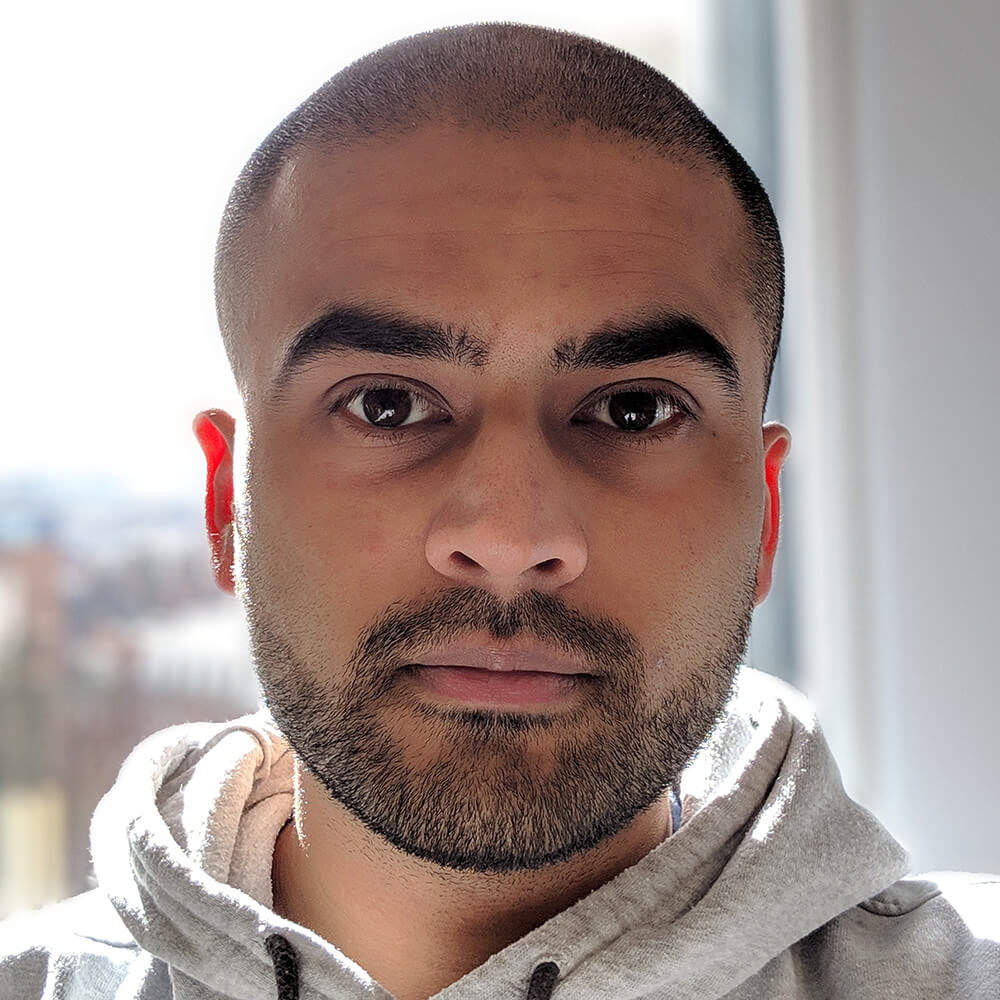
Dr Waqas Tufail is a Reader in Criminology in the School of Social Sciences. His teaching and research interests include policing, racism and anti-racism, Islamophobia/anti-Muslim racism and the racialisation and criminalisation of minority groups.
 0000-0002-4656-048X
About
Dr Waqas Tufail is a Reader in Criminology in the School of Social Sciences. His teaching and research interests include policing, racism and anti-racism, Islamophobia/anti-Muslim racism and the racialisation and criminalisation of minority groups.
Dr Waqas Tufail is a Reader in Criminology in the School of Social Sciences. His teaching and research interests include policing, racism and anti-racism, Islamophobia/anti-Muslim racism and the racialisation and criminalisation of minority groups.
Waqas serves on the Editorial Board of the Sociology of Race and Ethnicity journal and is a Board Member of the International Sociological Association (ISA) Research Committee on Racism, Nationalism, Indigeneity and Ethnicity. He has completed two periods as a Visiting Fellow at the Faculty of Law at the University of New South Wales, Sydney, Australia, most recently in 2019.
Waqas has delivered invited keynote lectures internationally at institutions including the University of Versailles, France, and has written for and worked closely with a number of UK-based and international race equality and human rights groups including the Institute of Race Relations, The Runnymede Trust and the Transnational Institute.
An activist and community organiser, Waqas is co-founder of the Northern Police Monitoring Project, a grassroots initiative that works with communities affected by police harassment, brutality and racism. His activism very much informs his academic work.
Research interests
Waqas in his research examines the racialisation of crime, the societal impact this has on communities and the implications this has for anti-racism and social policy. His most recent and long-term research project has utilised qualitative and ethnographic methods to explore the racialisation of what came to be known in the UK as the 'grooming gang' child sexual exploitation scandals. Waqas has published numerous sole and co-authored peer-reviewed journal articles and book chapters from this project. This project has led to significant impact, including influencing policymakers - in December 2020, the Home Office published a report citing Waqas' joint research with Dr Ella Cockbain of University College London confirming there was no evidence that one ethnic group is disproportionately engaged in crimes of child sexual exploitation.
Waqas has written for, provided commentary to and had his research profiled in media outlets including the BBC, The Guardian, The Independent and CNN. He is currently supervising doctoral student Katie Ismay on a project titled "How has the (re)emergence of the far right shaped 'ethnic minority' citizens perceptions of Britishness?" and welcomes expressions of interest from prospective doctoral students related to any area of his research interests.
Ask Me About
Publications (23)
Sort By:
Featured First:
Search:
 06 January 2020
Race & Class61(3):3-32 SAGE Publications
06 January 2020
Race & Class61(3):3-32 SAGE Publications
 Cockbain E, Tufail W
‘Muslim grooming gangs’ have become a defining feature of media, political and public debate around child sexual exploitation in the UK. The dominant narrative that has emerged to explain a series of horrific cases is misleading, sensationalist and has in itself promoted a number of harms. This article examines how racist framings of ‘Muslim grooming gangs’ exist not only in extremist, far-right fringes but in mainstream, liberal discourses too. The involvement of supposedly feminist and liberal actors and the promotion of pseudoscientific ‘research’ have lent a veneer of legitimacy to essentialist, Orientalist stereotypes of Muslim men, the demonisation of whole communities and demands for collective responsibility. These developments are situated in the broader socio-political context, including the far Right’s weaponisation of women’s rights, the ‘Islamophobia industry’ and a long history of racialising crime. We propose alternative ways of understanding and responding to child sexual exploitation/abuse. We contend that genuinely anti-racist feminist approaches can help in centring victims/survivors and their needs and in tackling serious sexual violence without demonising entire communities.
Muslim and Dangerous: ‘Grooming’ and the Politics of Racialisation
2016
Fear of Muslims: International Perspectives on Islamophobia Springer
Authors: Tufail AW, Poynting S, Editors: Pratt D, Woodlock R 2015
International Journal for Crime, Justice and Social Democracy4(3):30-43 Queensland University of Technology
For over a decade, British Muslims have been at the forefront of political, media and societal concerns in regards to terrorism, radicalisation, women’s rights, segregation and, most recently, the sexual exploitation and abuse of young women. Demonised, marginalised and criminalised due to inflammatory political rhetoric, inaccurate, irresponsible and sensationalist media reporting, discriminatory counter terrorism policies and legislation and state surveillance, British Muslims have emerged as a perceived racialised threat. This has continued apace with the onset of the Rochdale and Rotherham ‘grooming’ child sexual abuse scandals which in popular discourse have been dominated by representations focusing on race, ethnicity and the dangerous masculinities of Muslim men. This disproportionate and racist narrative served to both frame and limit the debate relating to the sexual exploitation and violence experienced by young female victims at a pivotal moment when the issue had been brought to national attention. This article compares and contrasts the representations and discourse of racialised and non-racialised reporting of child sexual abuse and situates the ‘grooming’ scandals in the context of anti-Muslim racism. It argues that the development of the British Muslim as a racialised threat is a current and on-going legacy of colonialism in which this group experiences discriminatory ‘othering’ processes resulting in their marginalisation.
07 December 2016
The Howard Journal of Crime and Justice55(4):540-541 Wiley
Police corruption and community resistance
Justice Denied: Police Accountability and the Killing of Mark Duggan
02 April 2015
Contention: The Multidisciplinary Journal of Social Protest2(2):37-55 Punctum Books
Jeffery R, Tufail WThis article explores the social dynamics in the city of Salford at the time of the Pendleton riot, which took place amidst the four days of national rioting that began with the killing of Mark Duggan in Tottenham by the Metropolitan Police Service. Attempting to counter what we see as a dominant narrative of the riots as 'shopping with violence', this article explores the development of the significant disorder in Salford through a triangulation of accounts, including an extensive review of journalistic accounts, alongside interviews from a dozen people who witnessed the riots as police officers, residents and spectators. Beginning with an overview of the events of August 9th 2011, we argue that the deployment of officers in riots gear in the vicinity of Salford Precinct proved provocative, and created a focal point for the widespread antagonism felt towards the police. Furthermore, we suggest that an understanding of local contextual factors is critical both in terms of answering the question ‘why Salford?’, but also in terms of explaining the ferocity of the violence targeted towards officers of Greater Manchester Police (in contrast to the focus on looting in nearby Manchester city-centre). Interpreting the riots as a response to punitive policing policies that have accompanied state-directed policies of large-scale gentrification, we highlight the degree to which the 'contestations over space' that characterised the riot pointed to an underlying politics of resistance (despite lacking 'formal' political articulation).
01 November 2013
International Journal for Crime, Justice and Social Democracy2(3):43-54 Queensland Uuniversity of Technology
Tufail W, Poynting SSince mass immigration recruitments of the post‐war period, ‘othered’ immigrants to both the UK and Australia have faced ‘mainstream’ cultural expectations to assimilate, and various forms of state management of their integration. Perceived failure or refusal to integrate has historically been constructed as deviant, though in certain policy phases this tendency has been mitigated by cultural pluralism and official multiculturalism. At critical times, hegemonic racialisation of immigrant minorities has entailed their criminalisation, especially that of their young men. In the UK following the ‘Rushdie Affair’ of 1989, and in both Britain and Australia following these states’ involvement in the 1990‐91 Gulf War, the ‘Muslim Other’ was increasingly targeted in cycles of racialised moral panic. This has intensified dramatically since the 9/11 terrorist attacks and the ensuing ‘War on Terror’. The young men of Muslim immigrant communities in both these nations have, over the subsequent period, been the subject of heightened popular and state Islamophobia in relation to: perceived ‘ethnic gangs’; alleged deviant, predatory masculinity including so‐called ‘ethnic gang rape’; and paranoia about Islamist ‘radicalisation’ and its supposed bolstering of terrorism. In this context, the earlier, more genuinely social‐democratic and egalitarian, aspects of state approaches to ‘integration’ have been supplanted, briefly glossed by a rhetoric of ‘social inclusion’, by reversion to increasingly oppressive assimilationist and socially controlling forms of integrationism. This article presents some preliminary findings from fieldwork in Greater Manchester over 2012, showing how mainly British‐born Muslims of immigrant background have experienced these processes.
The racialised and Islamophobic framing of the Rotherham and Rochdale child sexual abuse scandals
11 February 2019
The Routledge International Handbook of Islamophobia Routledge
Authors: Tufail W, Editors: Imran A, Irene ZFor over a decade, British Muslims have been at the forefront of political, media and societal concerns in regards to terrorism, radicalisation, women’s rights, segregation and, most recently, the sexual exploitation and abuse of young women. Demonised, marginalised and criminalised due to inflammatory political rhetoric, inaccurate, irresponsible and sensationalist media reporting, discriminatory counter terrorism policies and legislation and state surveillance, British Muslims have emerged as a perceived racialised threat. This has continued apace with the onset of the Rochdale and Rotherham ‘grooming’child sexual abuse scandals which in popular discourse have been dominated by representations focusing on race, ethnicity and the dangerous masculinities of Muslim men (Cockbain 2013; Gill and Harrison 2015). This disproportionate and racist narrative has served to both frame and limit the debate relating to the sexual exploitation and violence experienced by young female victims at a pivotal moment when the issue had been brought to national attention. This chapter compares and contrasts the representations and discourse of racialised and non-racialised reporting of child sexual abuse and situates the ‘grooming’scandals in the context of anti-Muslim racism.
06 November 2017
Islamophobia: Still a Challenge For Us All Runnymede Trust
Authors: Cohen B, Tufail W, Editors: Elahi F, Khan OIn order to understand Islamophobia in the UK, the state’s relationship with Muslim communities must also be examined. Following the commencement in 2001 of the ‘war on terror’, the UK government acted to restrict civil liberties and to enact laws giving the state enhanced powers to combat terrorism and to protect its citizens specifically against the threat posed by ‘Islamist extremists’, foreign and domestic.
Media, Crime and Racism
06 April 2018
391 Springer
Bhatia M, Poynting S, Tufail WThis collection critically reflects on a number of globally significant topics including the vilification of Muslim minorities, the portrayal of the refugee ‘crisis’ and the representations and resistance of Indigenous and Black ...
2015
Justice, Resistance and Solidarity: Race and Policing in England and Wales Runnymede Trust
Authors: Tufail W, Editors: El-Enany N, Bruce-Jones E 2015
Journal on European History of Law6(1):118-128
Jeffery B, Tufail W, Jackson WIn light of increasing concerns in relation to police accountability, this article reviews the history of public order policing for one large provincial force (Greater Manchester Police). Explaining our misgivings about those narratives that discern a trend towards 'negotiation' and 'facilitation' between protestors and the police, we outline a critical framework for the analysis of police practice. This account is centred upon an understanding of the development of policing as the cornerstone of the fabrication of bourgeois social order, but stresses that this is mediated through its formal subservience to the rule of law, conflicting priorities and the need to establish 'patterns of accommodation' with the populations that are to be policed. All of this makes for the reproduction of 'local social orders', influenced by particular urban political contexts, as well as wider cultural currents. This article suggests that this is clearly evident in the facts surrounding the four major riots, and numerous other public order policing engagements, that mark the history of this particular provincial force.
Police Corruption and Community Resistance
Media, State and ‘Political Correctness’: The Racialisation of the Rotherham Child Sexual Abuse Scandal
04 April 2018
Media, Crime and Racism Palgrave Macmillan
Authors: Tufail AW, Editors: Tufail W, Poynting S, Bhatia MPolice Deviance
31 March 2015
Shades of Deviance A Primer on Crime, Deviance and Social Harm Routledge
Authors: Jeffery R, Tufail W, Editors: Atkinson RCriminalisation of political activism: a conversation across disciplines
01 April 2023
Critical Studies on Security11(2):106-125 (20 Pages) Informa UK Limited
Cristiano F, Dadusc D, Davanna T, Duff K, Gilmore J, Rossdale C, Rossi F, Tatour A, Tatour L, Tufail W, Weizman EThis Intervention presents a conversation amongst a collective of scholars who are in the process of establishing a research network studying the criminalisation of dissent. The new UK Police, Crime, Sentencing, Courts Act 2022 is just one recent example of attempts by ‘liberal democratic’ states to criminalise political activism and restrict the right to protest. Similar legislative measures, repressive policing practices, and discourses delegitimating dissent can be observed across a variety of geographic and socio-political contexts. In this discussion, we interrogate both the concept of ‘criminalisation of political activism’ and the practices through which criminalisation is enacted by sharing examples and analyses from our research. We approach criminalisation as a process that changes with circumstances and is shaped by a multiplicity of state and non-state actors and agencies, and question the analytical gentrification that narrows resistance and rebellion to the exclusionary category of activism. Our different disciplinary and regional foci bring together the historical and the contemporary, the (liberal) settler colony and (colonial) liberal democracy, to reflect collectively on the formal and informal tools, technologies and strategies used to criminalise dissent. The conversation took place in November 2022 and was then transcribed and lightly edited for clarity.
Policing Muslims
22 June 2023
The Routledge International Handbook on Decolonizing Justice Routledge
Tufail W, Poynting SThis chapter examines the policing of Muslims in the UK and Australia, within the context of the racialized moral panic known as the War on Terror. Whilst sharing distinct colonial histories, the policing of Muslim communities in both countries has been driven by state-led Islamophobia in the form of counter-terrorism programmes. Such programmes have disproportionately focused on and harmed Muslim communities through techniques such as racial profiling, community surveillance, entrapment, and the infiltration of educational spaces. In this chapter, we highlight how counter-terrorism policing in the UK and Australia has relied on and fed into Islamophobic stereotypes. In the same vein as the globally resonant Black Lives Matter movement, we engage with and centre the ongoing legacies of racist and oppressive histories of colonialism and imperialism. The success of the Black Lives Matter movement in generating mass public support for protests against police brutality and racial injustice has led to a renewed wave of anti-racism under the banner of decolonization, to which we contribute.
Muslim and Dangerous: ‘Grooming’ and the Politics of Racialisation
2016
Boundaries of Religious Freedom: Regulating Religion in Diverse Societies Springer International Publishing
Tufail W, Poynting SContemporary Islamophobia, certainly since 9/11, has become globalised. In a characteristic interrelationship between the global and the local, there has accumulated a global stock of clichés, stereotypes and folk myths about the Muslim ‘Other’ to be drawn upon to inform common sense about local circumstances and local events. Ideological elements involving the racialisation of Muslims are electronically circulated internationally and virtually instantaneously, and this process can lend itself to a seemingly never-ending series of moral panic spirals in which the perceived deviance of Muslims is amplified. This chapter traces the playing out of just such a relationship between the global and the local in the case of demonising of Muslim communities that took place after public outrage following a case of ‘grooming’ and sexual violence centred on Rochdale in north-west England. One set of crimes by nine men became a focus point and a metaphor for the otherness—and indeed dangerousness—of Muslims, nationally and globally. Islamophobic moral panic has instilled fear and hopelessness in British Muslim communities, entrenching feelings of exclusion and alienation among an already ‘othered’ population.
Book review: Race Defaced: Paradigms of Pessimism, Politics of Possibility by Christopher Kyriakides and Rodolfo D. Torres
2015
Sociology of Race and Ethnicity1(2):338-339 SAGE Publications
Racism, Violence and Harm Ideology, Media and Resistance
30 November 2023
261 Springer Nature
Bhatia M, Poynting S, Tufail W... harm. In doing so, multiple harms, be they structural, institutional, personal and interpersonal, can be unpacked and compre- hended within their given context. The harms analysed by the authors in this ... Violence and Harm 7 ...
Inclusive Match Day Toolkit
Developing inclusive and welcoming events and stadia
2022
The England and Wales Cricket Board
Fletcher T, Albert B, Dashper K, Dowson R, Kilvington D, McGoldrick M, Norman L, Tufail WCurrent teaching
- 'Race', Crime and Social Exclusion
- Terrorism, Policing and Security
- Decolonising Criminology
Grants (1)
Sort By:
Featured First:
Search:
Developing inclusive and welcoming events and venues
Featured Research Projects
Developing more inclusive events and venues
The England and Wales Cricket Board has committed to a wide-ranging action plan to tackle discrimination and promote inclusion and diversity at all levels of the game. Leeds Beckett University has made a significant contribution to this through its work into inclusive and welcoming events and venues.





