

Leeds Beckett University - City Campus,
Woodhouse Lane,
LS1 3HE
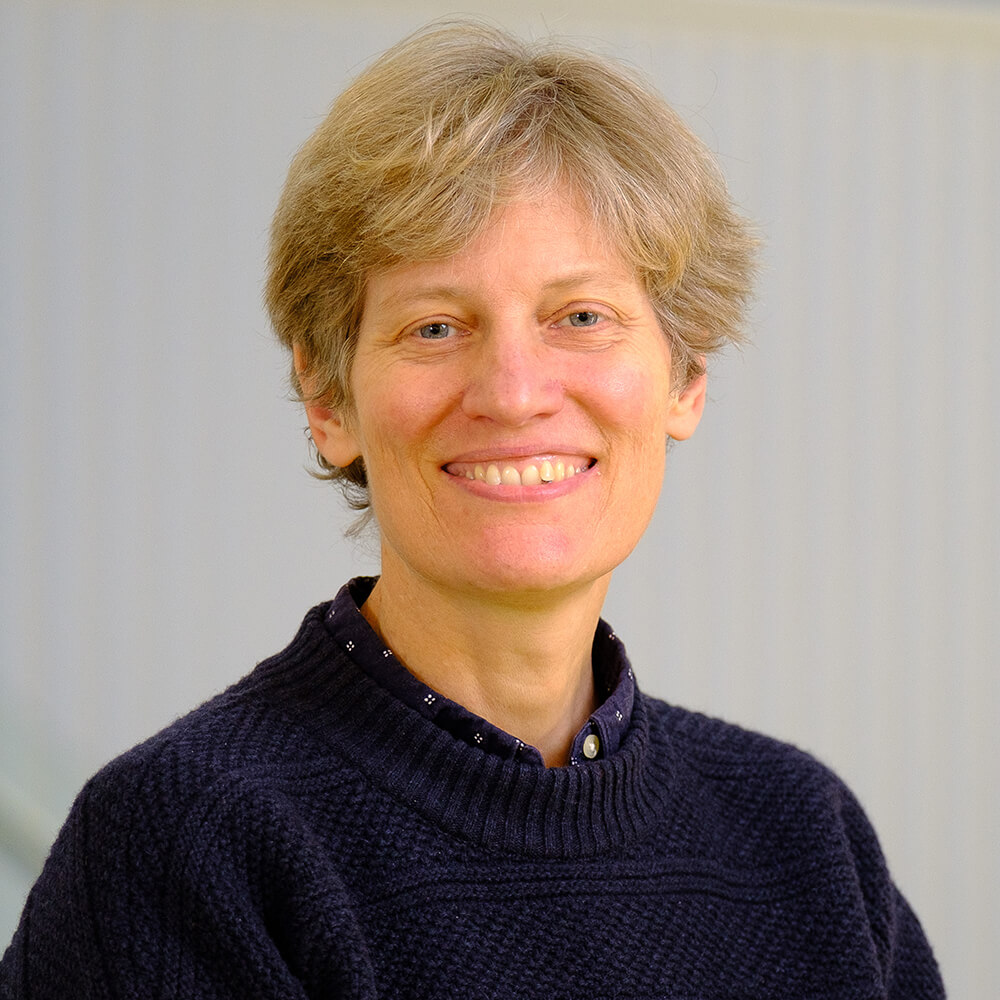
Professor Rachel Julian
Professor
Professor Rachel Julian is a Professor of Peace Studies who researches, teaches and works on nonviolence, unarmed civilian peacekeeping, peace and conflict. She has over 30 years experience in resistance and peacebuilding, including UK and international NGOs and community organisations.
 0000-0003-4766-777X
About
Professor Rachel Julian is a Professor of Peace Studies who researches, teaches and works on nonviolence, unarmed civilian peacekeeping, peace and conflict. She has over 30 years experience in resistance and peacebuilding, including UK and international NGOs and community organisations.
Professor Rachel Julian is an internationally recognised researcher working on Unarmed Civilian Peacekeeping/Protection and the way we recognise the lives and voices of those affected by violence and crisis. Her work challenges the widespread acceptance of violence in International Relations and the assumption that peacekeeping requires soldiers.
In working with community partners in South East Asia and East Africa, Rachel has explored how civilians protect one another from violence, increase their capacity and agency to act, the voices of survivors in influencing policy and how a nonviolent feminist analysis generates creative approaches in the midst of complex challenges.
Rachel's interdisciplinary research uses arts, creative and technology methods and is widely published and funded through research grants from AHRC-UKRI, Global Challenges Research Fund, British Academy and United States Institute for Peace. She is working in three international networks and regularly presents her research at international conferences. She has been invited as an expert to speak at a UN meeting and German Parliament sub committee and is always interested in new and exciting projects and methods.
Rachel teaches undergraduate and postgraduate in nonviolent resistance, civilian protection and developing and managing projects. She supervises PhD students researching peace, nonviolence, conflict and protection.
Degrees
PhD
Leeds Beckett University, Leeds, United Kingdom | 01 September 2005 - 06 June 2012
Related links
LBU strategic research themes
United Nations sustainable development goals
Research interests
Professor Julian has published substantial evidence that unarmed civilians can de-escalate violence without using weapons. International Relations is underpinned by theories that assume violence works in creating peace and that armed soldiers are necessary for managing violence and peacekeeping. Drawing on data from practice, she demonstrates the power of civilian action in the midst of armed conflict.
Working with partners in Myanmar, Rachel has explored how arts and lived experience reveal more about the reality of armed conflict and the way that women work in their communities to understand inequality in broad terms. In Mindanao, Philippines, she has enabled the collection of civilian views on their roles and tasks in protecting other civilians and community early warning.
In a network across East Africa, Rachel's work includes building capacity in using participatory methodologies in community-led research and involving the voices and narratives of human trafficking survivors in influencing policy.
Rachel is Co-I in the global UKRI-GCRF funded Network+ 'Creating Safer Sapce'. This network of 26 projects has produced pioneering new insights and theories on how civilians protect one another in armed conflict, and the efficacy of harnessing civilian agency to reducce violence. Her book 'Transforming Protection' reconceptualises Protection to address militarism, power and oppression as key influences, and how civilian protection can be a transformative tool in building peace.
Rachel's genuinely collaborative research is building capacity and changing lives through exploring the inter-relationship between feminism, peace, conflict, resistance, culture and power in a range of partnerships.
Publications (66)
Sort By:
Featured First:
Search:
Why is it time to take pacifism and nonviolence studies more seriously?
 07 September 2022
Virtual
07 September 2022
Virtual
Presentation to Roundtable at Conflict Research Society Conference 2022
Modelling Inclusion: Using Participatory Methods for Equitable Research on Inequalities in Marginalized Groups
30 September 2025
Societies15(10):275 MDPI AG
 Julian R, Mir G, Singh R
This paper explores the methodological implications, processes, and opportunities relating to the use of participatory approaches in the study of intersecting inequalities. Within the context of an international, interdisciplinary project (Partnerships for Equality and Inclusion (PEI)), four sub-projects elected to use participatory methodologies to engage with marginalized and excluded communities so that their needs, voices, and knowledge were included in the data collection process and the dissemination of findings at micro (community) and macro (policy) levels. The four project teams in Kenya, Vietnam, Myanmar, and Nigeria engaged with training and research processes so that participants with lived experience could contribute both as peer researchers and in focus groups that contributed study data. In this paper, we bring together the findings and learning from each project about how these methods contributed to equity in the research process. We conclude with insights and recommendations on how participatory methods can enable an intersectional and grounded perspective from people facing multiple inequalities in periods of crisis and political change.
A Determination to Protect : The State of the Art
01 December 2015
Unarmed Civilian Peacekeeping Hintergrund- und Diskussionspapier Bonn, Germany Minden, Germany Bund für Soziale Verteidigung (Federation for Social Defence)
 Featured
18 May 2021
Journal of Peacebuilding and Development17(1):22-41 Routledge
Bliesemann de Guevara B, El Refaie E, Furnari E, Gameiro S, Julian R, Payson A
Featured
18 May 2021
Journal of Peacebuilding and Development17(1):22-41 Routledge
Bliesemann de Guevara B, El Refaie E, Furnari E, Gameiro S, Julian R, Payson AThis article argues that arts-based methods such as drawing are particularly useful as means to explore experiential insights into how violent conflict impacts on individuals and communities in specific socio-cultural contexts and shapes their views of development and peace. It illustrates this through the discussion of a drawing workshop with members of violence-affected communities in Kachin state, Myanmar. Reflecting on the workshop findings and dynamics, and on the positive impacts the methods’ adoption had on practices of an international civilian protection NGO in Myanmar, the article concludes that, when implemented with care, arts-based methods do not only help accessing deep context-specific insights to complement outsider-expert analyses; by creating a safe space to share experiences, they also enable new engagements among local actors and with outside organizations, which can strengthen the primacy of local actors in peacebuilding and development initiatives.
26 September 2019
Gandhi Symposium - Symposium zur aktiven Gewaltfreiheit aus Anlass von Gandhis 150 http://www.gandhi-symposium.info/ Linz, Austria
Civilians, using nonviolence to protect themselves and others from direct and immediate violence, challenges widespread assumptions that peace and protection can only be delivered with the threat of force. Unarmed Civilian Peacekeeping (UCP), with 35 years of evidence from projects worldwide, demonstrates that the use of nonviolence can challenge the exclusive role of military in peacekeeping and focus on the agency of unarmed civilians in midst of violence.
Featured
2019
International Peacekeeping26(1):22-54 Taylor & Francis
Julian R, Gasser RThe assumption that peacekeeping requires soldiers carrying weapons is widespread; 35 years of successful peacekeeping by unarmed civilians is often overlooked. The original definition of peacekeeping is being confused with peace enforcement and peace operations. Limited interest has led to underfunding of unarmed civilian peacekeeping (UCP) with fewer resources for both study and praxis. Marginalization of civilian peacekeeping has restricted the options for complex interventions; this reduced vision of peacekeeping is open to challenge in the light of evidence from the field. This paper first examines what is meant by peacekeeping and UCP. The relationship of UCP to nonviolence, feminism, and peace studies is considered. The constraints and limits of peacekeeping by armed military personnel during, or after, violent conflict are outlined. The core tasks of peacekeeping are analysed, and evidence from the field is presented to show that these core tasks can be (and have been) successfully undertaken by unarmed civilians for three decades, world-wide. The argument that armed military personnel are necessary, even essential, for peacekeeping is not supported by the evidence of civilian success in undertaking the core tasks. The paper ends with conclusions and a call for a new paradigm for peacekeeping.
Featured
01 April 2016
International Journal of Managing Projects in Business9(3):505-527 Emerald
Abstract Purpose Many development interventions fail to report results that are important to local people (intended beneficiaries of the intervention) but not of strategic importance to the donors funding the work. Failure to report unexpected results, or those not linked to strategic goals, contributes to an overly negative view from external evaluations by donors and agencies. The causes of the mismatch between actual and demonstrated results failure were studied through stakeholder interests. Design/methodology/approach Nine project and programme managers of similar but unrelated projects were interviewed. From the interviews, previous studies and project publications, the challenges posed by differing interests and different perceptions in reporting stakeholder activities, outputs and outcomes, were identified. The complex environment of many development interventions was analysed and the work was contextualized with a peacebuilding project in Sri Lanka, which the author has previously studied. A stakeholder role and perception analysis was used to map the challenges at four times in the project cycle, producing a dynamic stakeholder analysis. Findings The failure to fully report intervention results was linked to the changing role of competing stakeholder interests as a project proceeds, the conflicting perceptions of stakeholders, the structural over-simplification of a complex environment, and power differentials that allow donors to misappropriate the role of clients. Practical implications Current practice in designing and evaluating projects needs to improve reporting of beneficiary interests. Originality/value To the author's knowledge there are no prior publications in this area of research (under-reporting of development intervention results); the paper is considered highly original.
Raising Silent Voices
Unarmed Civilian Peacekeeping
2017
German newsletter
schweitzer C, Furnari E, Julian RInsert to German newsletter on Unarmed Civilian Peacekeeping
20 June 2022
Loughborough University
Invited presentation at Institute for Advanced Studies, Loughborough Roundtable for international hybrid seminar series
Lives and Voices Research Programme
Peace for interdisciplinary volume
Featured
24 March 2024
Civil Wars26(1):1-26 Taylor & Francis (Routledge)
The demand for protection for civilians threatened by direct violence is huge, and most responses draw on ‘Protection of Civilians’ (PoC) by military peacekeepers. In Myanmar and the Philippines, civilians use nonviolence to protect people in their communities from direct violence showing that PoC is carried out by local actors and in sites outside military peacekeeping missions. Evidence from those communities, and the use of Unarmed Civilian Protection, challenges the assumption that only the military can do PoC, and provides the basis for broadening the scope of PoC to better protect civilians from direct violence.
Featured
15 July 2023
Aberystwyth University Aberystwyth, Wales, UK Creating Safer Space Working Paper series Publisher
Julian R, Delsy R, Rexall KThis report examines the contribution of unarmed civilians to Civilian Ceasefire Monitoring (CCM) in Mindanao, Philippines, based on a research project funded by USIP in 2018–2020 to study the roles and tasks of civilians in Mindanao in unarmed civilian protection and monitoring. The research partners are Nonviolent Peaceforce Philippines and Leeds Beckett University. The research contributes to our understanding of how CCM works. It demonstrates that local communities have capacity, skills, and agency, and that with training, use of informal mechanisms, and recognition, they can contribute to the maintenance of ceasefires and long-term peace.
Featured
06 June 2024
Sustainability16(11):1-22 MDPI
Mir G, Durrani N, Julian R, Kimei Y, Mashreky S, Doan TTDSocial inequities have widened divisions between diverse population groups. Inequity is associated with social exclusion, structural and physical violence and reduced development, which in turn are linked to civil unrest, conflict and adverse health and social outcomes. Public services are key institutions through which social inequities are created and maintained, but evidence on viable interventions to reduce institutional exclusion is limited for low- and middle-income (LMIC) contexts. We identify common drivers of institutional exclusion across diverse populations in LMICs and inclusion strategies that could potentially work across populations, public service sectors and country contexts. Seven studies engaged with over 385 key stakeholders in healthcare, education and local government settings in Bangladesh, Kazakhstan, Kenya, Myanmar, Nepal, Nigeria and Vietnam. Participatory research, in-depth interviews, policy reviews and multi-stakeholder workshops focused on a range of disadvantaged groups. A multi-sector partnership co-produced recommendations at each site. Findings were synthesised to identify common themes and a framework for social inclusion across disadvantaged populations. The invisibility of disadvantaged communities in public service planning and delivery processes helped maintain their exclusion from opportunities and resources. A spectrum of neglect, restrictions and discriminatory practice reflected structural violence linked to poor life chances, illness, physical abuse and death. Key recommendations include the representation of disadvantaged groups in service staffing and decision-making and the transformation of public service policy and practice to develop inclusive, targeted, collaborative and accountable systems.
People Protecting People Speak
16 September 2022
USIP Civilian Ceasefire Monitoring
Julian R, Delsy R, Kaalim RThis report examines the contribution of unarmed civilians to Civilian Ceasefire Monitoring in Mindanao, Philippines, based on a research project funded by USIP in 2018 2020 to study the roles and tasks of civilians in Mindanao in unarmed civilian protection and monitoring. The research partners are Nonviolent Peaceforce Philippines and Leeds Beckett University. The research contributes to our understanding of how CCM works. It demonstrates that local communities have capacity, skills and agency, and that with t raining, use of informal mechanisms, and recognition, they can contribute to the maintenance of ceasefires and long-term peace.
13 April 2022
Presentation on the practice of Unarmed Civilian Protection (UCP) in Mindanao, exploring nonviolence, re-humanization, and the role of witnessing in transforming violent conflicts and protecting communities.
Unarmed Protection: Nonviolent strategy and methods
September 2009
Protecting people in Conflict and Crisis: Responding to the challenges of a changing word Oxford University
Making Conflict Transformation more effective and efficient by adapting project management tools.
Report for MapAction Case Study Evaluation of Haiti Mission September-October 2008
The role of Nonviolent Intervention in creating peace.
The roles of civilians: unarmed protection can create space for local peacebuilding
09 September 2009
Conflict and Complexity II: Theory, Evidence and Practice” Conflict Research Society
Featured
15 April 2015
Peace Review: a journal of social justice27(1):1-8 Taylor & Francis
Julian R, Schweitzer CSustainable Peace: the role of unarmed protection in supporting civil society in Sri Lanka
04 December 2008
International Conference: Whatever Happened to Civil Society?” INTRAC International Conference.
Large scale non-violent intervention
Networking Nonviolent Peaceforce in Brussels
Challenges to data collection in organisations preventing violent conflict
A toolbox for Nonviolent Intervention
A study of the market opportunities and constraints, and business models for the exploitation of the STREAM project”
November 2008
European Union Fp7 STREAM Project
Confidential 100 page report to European Union funded project, STREAM (Technology to Support Sustainable Humanitarian Crisis Management)
Comparative study of unarmed civilian peacekeeping: contexts, processes and impacts.
12 August 2014
International Peace Research Association Conference Istanbul
Julian R, Furnari EThe Nonviolent Peaceforce implemented unarmed civilian peacekeeping (UCP) projects in Sri Lanka from 2003-2011, in Mindanao, Philippines beginning in 2007, and in the South Caucuses beginning in 2011. Drawing on the authors work and evaluations of these projects, the paper examines the differences and similarities in the projects in terms of context, implementation and impact. This leads to reflection on lessons learned regarding the appropriate use of UCP, to directly protect civilians nonviolently and the challenges of implementation in contexts where the threats to civilian security are quite diverse.
Who built the peace? Applying systemic evaluation methods to peacebuilding and conflict transformation
Featured
08 May 2015
Peacebuilding3(3):297-313 Informa UK Limited
Furnari E, Olenhuis H, Julian RWhile large multilateral peace operations arrive with agendas extending into governance, economics, and other reforms, unarmed civilian peacekeeping (UCP) interventions focus on contributing to sufficiently safe space for local efforts at peacebuilding to proceed, at the request of local partners. They use a variety of nonviolent methods to increase the safety for local leaders and everyday people to engage in (re)building peace infrastructures and governance, within their own culture and contexts. This paper examines the potential for international interveners to support local efforts based on local invitations, local staff, conflict and context analysis, and living in conflict affected communities, followed by a case study of the Nonviolent Peaceforce South Sudan project. This project is helping to revitalize or create community peace infrastructures in coordination with local partners, other peacekeepers and humanitarian agencies, local government, army and other armed actors. This has saved lives, contributed to improved policing, improved relations between ethnic groups, supported local peace actors, and increased the effectiveness of multilateral peace operations and humanitarian aid work focused on physical safety.
Unarmed Civilian Protection/Peacekeeeping
14 June 2021
The Palgrave Encyclopedia of Peace and Conflict Studies Palgrave Macmillan
Authors: Bliesemann de Guevara B, Furnari E, Julian R, Editors: Richmond O, Visoka GThis encyclopaedia provides a comprehensive overview of major theories and approaches to the study of peace and conflict across different humanities and social sciences disciplines. Peace and conflict studies (PCS) is one of the major sub-disciplines of international studies (including political sciences and international relations), and has emerged from a need to understand war, related systems and concepts and how to respond to it afterward. PCS has become an important site for inter-disciplinary studies, spanning war studies, security and development; state formation and statebuilding; law and human rights; civil society and political authority; philosophy and religion; the anthropology and history of political order; environmental dimensions; as well as the arts and literature, psychology, and material conditions of peace, peacemaking, peace agreements, the peaceful state, the nature of regional and international cooperation, and organisation, and more. The Palgrave Encyclopaedia of Peace and Conflict Studies will bring together leading scholars from different disciplines to provide the most comprehensive and up-to-date resource on peace and conflict studies ever produced.
21 June 2022
Digital Storytelling Conference 2022 Loughborough University
How do we help rural women of South Sudan have control over their stories… What does being a ‘content creator’ mean in rural South Sudan? ….because they are doing amazing work protecting other civilians without using weapons or violence… ….we can learn a lot from them. Presentation at Digital Storytelling Conference 2022
Featured
January 2020
Global Society34(1):99-111 Taylor & Francis (Routledge)
Civilians, working together, and using nonviolence to protect themselves and others from direct violence, challenges widespread assumptions that peace and protection can only be delivered by the military and with the threat of force. Unarmed Civilian Peacekeeping (UCP), with 35 years of evidence from projects worldwide, demonstrates that the assumption that an armed actor will not yield to anything except a weapon is false, therefore challenging the exclusive role of military in peacekeeping. In this paper we argue that i) by conceptualising UCP as part of peacekeeping we provide new insights into the approaches and mechanisms for preventing violence, ii) by exploring its relationship with nonviolence theory we can present it’s transformative capacity. Whilst the use of the military and a threat of violence is seen as a norm in security and protection, this paper uses evidence from the practice of UCP from the organisations involved (including Peace Brigades International and Nonviolent Peaceforce) to set out how we can create different approaches to peacekeeping
Unarmed Civilian Peacekeeping
Unarmed Civilian Peacekeeping : Effectively Protecting Civilians Without Threat of Violence
External evaluation of Nonviolent Peaceforce South Causus Project
Participatory training materials for community research
Featured
Rachel Julian Inaugural Lecture
30 August 2022
Leeds Beckett Expanding Opportunities to deepen women’s participation in decision making processes and initiatives for peace and reconciliation in Rakhine, Northern Shan and Kachin
Kabakki R, Pandey A, Bernal M, Pi M, Raw NS, Popoaung LA, Julian R, Mir GIn 2011, Myanmar’s political and economic reform agenda was launched, and the President U Thein Sein invited Ethnic Armed Organisations (EAOs) to take part in a three-step plan: bi-lateral ceasefires, nationwide ceasefire and political dialogue1. During the NCA talks process there was no meaningful engagement to foster the participation of women or include gender perspective in the issues covered. This on-going exclusion of women poses a substantial risk to achieve sustainable peace in Myanmar2. The exclusion of women is further aggravated by the military coup in 2021, which is overriding human rights guarantees. The history, culture and politics in Myanmar have resulted in a fractured society with many excluded and feeling distant from regional and national peace processes, where there is a broad meaning of peace (social cohesion, land rights, livelihood, health and education). To respond to this reality Nonviolent Peaceforce Myanmar (NPM) created a new advisor network to feed in experience of challenging exclusion on land rights, health and education. This was established with support from Partnerships for Equity and Inclusion, an international equity-focused network, which enabled NPM to work with the ‘emerging women leaders’ network of Civil Society Organisations (CSOs) in 4 states in Myanmar Chin, Kachin, northern Shan & Rakhine States. Hence NPM trained the 5 identified partners who are impacted not only by the armed conflict but also by structural inequalities that prevent them to enjoy fully their rights. The following study explores specific enablers and obstacles to women’s participation in politics and peace negotiations in Myanmar. The study was conducted in and influenced by the context of women’s broader socioeconomic marginalization. It identifies positive and enabling practices from various contexts that can inform recommendations for the increased and equal participation of women in public affairs in Myanmar. According to the research findings, there are huge barriers for women to participate in peace initiatives and their experiences, needs and capacities are not included in discussions for peace. As a result, the peace process is developing policies without a gender perspective. Findings show that women’s equal participation in politics and peace processes, as well as in communities and legal structures, is needed to provide women’s unique perspectives, networks, skills, and abilities to contribute to governance, prioritise women’s and girls’ needs and avoid discriminatory practices. It is critical to strength women’s confidence and capacity which has been weakened as a result of historical exclusion and gender-biased education or lack of formal education. Women’s political engagement also requires support for childcare, the competing demands of domestic responsibilities and for public safety and security owing to the fear of gender-based violence. Women have a valuable contribution to make towards improving education, increasing facilities for health-care or infrastructure that targets the basic needs of the communities in which they live. The inclusion of women and their priorities at all levels of public decision making and management is thus fundamental to achieving sustainable peace and development.
Competition or collaboration: how stakeholder expectations influence the results demonstrated in areas affected by violent conflict.
March 2013
Building an evidence base for humanitarian action: methodologies and approaches for the collection and analysis of information and evidence in humanitarian action New York/Online
Dealing with violent conflict at a civil society level is a process requiring many actors and stakeholders to collaborate in planning and implementation in order to achieve results However when we try to demonstrate the results of these activities and processes in a way which is relevant to the stakeholders, we are mostly tied to evaluation methods and approaches that focus on what happened in the project and then what changes were produced. This excludes our understanding and application of what the interests of the many stakeholders involve. To what extent does the variety of interests of the stakeholders help or hinder the demonstration of results – is it collaboration or competition? If conflict transformation and peacebuilding activities are to support humanitarian action, we need to be able to communicate the benefits and impact that can be made. This paper, with research from my PhD, draws on stakeholder analysis and evaluation frameworks, and applies them to the challenge of finding out how satisfactorily useful results can be demonstrated by focusing on two difficulties. The first difficulty arises because we use primarily logical, linear evaluation methods to understand what is happening in violent or highly tense conflict situations, which are commonly understood as having characteristics of complex adaptive systems. I summarise how this mismatch can be overcome by applying conventional linear and systemic evaluation methods to a nonviolent protection case study in order to show that results can meet the interests of different stakeholders depending on which methodology is chosen. The second difficulty is that all the stakeholders in a project want to see different results from one another. With the in-depth stakeholder analysis overlaid onto the project cycle that I propose in this paper, we can start to understand how possible it is to meet these different expectations using current evaluation practice, or how much those shared or competing expectations influence what results are produced. This will therefore influence how well results are accepted and acknowledged as useful and convincing by different stakeholders. In this paper I look closely at the role and expectation of external major funders. This paper intends to show that understanding the stakeholders’ expectation of what they will learn from the evaluation data and knowing the impact of evaluation methodology choice will increase our chances of being able to demonstrate useful and acceptable results from the field.
Who Built the Peace? Comparing evaluation methods in peacebuilding and conflict transformation.
Huddersfield Quakers Annual Peace Lecture
08 May 2014
This paper considers the question of who owns our assets, our hospitals, schools and housing and the impact this is having on the right to peaceful protest and it is something we should all be concerned about because the ownership of property gives you power. There is much written about the economic issues of community ownership, but in this paper I am addressing the political issues and in particular the role I suggest community ownership can play in large scale nonviolent social change. In the 18th Century, following concerns about the restrictions, gates and barricades by private owners of large parts of London (Minton n.d.) and the rise of local government, ownership was transferred so that local and national governments owned much of the property that encompasses public space. The mass sell off and privatisation since the 1980's and inefficient PFI system has meant that not only have we lost any democratic control over the buildings because they have been sold to the private sector, we now find the democratic institutions themselves now using buildings owned by private companies, who restrict protest, amongst other activities. This paper considers the following three arguments: • Firstly addressing the threats to legitimate peaceful protest because of the private ownership of buildings, including examples where this has already happened. • Secondly the more immediate impact that genuinely community owned buildings can have on community cohesion and as part of principled nonviolence. 'Be the change you want to be', and • Thirdly the necessity of community owned and controlled space in long term strategic nonviolent change. Using Lakey and Moyer as strategic tools the paper concludes that massive social change is coming and building our capacity to handle it nonviolently should be one of our priorities. Whilst community ownership has an economic component to social transformation, the role it can play in challenging exclusive private ownership has not yet been fully developed and the evidence that the right to peaceful protest has been removed from areas of 'public' space, and buildings used by the public sector, should be our warning that private ownership only serves the elite who will put up gates and barricades to protect them and their assets. Effective nonviolent social change depends on our ability to mobilise, and as well as community ownership being a strategy which is within our control it is one which could protect future nonviolent leaders and help us manage the unrest which will occur. Since Gandhi, and through numerous nonviolent resistance movements, the provision and creation of alternative structures has been a core part of the strategy of social change. I suggest that community ownership can be part of our strategy (alongside the transition movement, etc) and we should see the community buildings, cafe's, social enterprises and cooperatives as part of our grand strategy for a radical nonviolent revolution.
Competition or collaboration: how stakeholder expectations influence the results demonstrated in conflict transformation
Demonstrating results in complex non-profit project management.
28 October 2014
Managing Projects in the Non-Profit Sector University of Limerick
The tendency, when we think about results in complex humanitarian and conflict transformation work, is to look at evaluation for evidence, but if we examine project management as the framework within which results actually happen and within which we gather evidence, then we can see this must be a focus of research and development if we are to improve results in these fields. This paper examines the evidence for contrasting the real complexity of projects with the primarily overwhelming use of linear-based tools and approaches by practitioners. It focuses on the evidence of complexity created by the range of stakeholders involved and their competing interests. Drawing on recent research (Cropper, Spurk, and Church and Rogers), and research carried out with practitioners in which the narrative about their projects indicates they view their projects as complex (for example new situation, new methods and multiple stakeholders), I argue that most of the tools we use to rely on linear planning and implementation approaches, most notably characterised by the logical framework. Although research shows that project managers appreciate the clarity and recognise the necessity of the log frame they also recognise they are not able to plan and measure all the results from their projects and that much of their implementation work is primarily iterative, not linear and they use some informal tools to compensate for this. This primary focus on linearity extends through project management and into evaluation, but we can see that some systemic tools are beginning to emerge, such as reflection, and it is clear that we must bring evaluation and project management closer together in order to integrate this to demonstrate results. In this paper I show the many challenges of dealing with complexity in non-profit project management, such as the lack of direct causal links in conflict transformation activities, difficulty measuring attitudinal and behavioural change, and lack of clarity about who is client, but I will focus on the complexity created through the large number of stakeholders with competing interests and levels of power and the impact that this has on demonstrating results. Within conflict transformation, this paper argues that one of the complexities is the large number of identified stakeholders involved with a project - not only because of the number but also because of the differences in what they expect from the results. They come with their own ‘success criteria’ or their own ‘mental models’ of what a successful project might deliver and in analysis these success criteria often compete. The needs and expectations of the stakeholders cover a huge range, from wanting to know what success a project has had on the strategic and national level (requiring it to be politically aligned, and relevant to their strategic interests), to the field level concern with what changed at a village level. In between there may be organisational, process and financial interests and motivations. The tension created by the potentially different demands is something that can influence whether results are accepted as valid and useful. This tension can be explored through the way in which monitoring data collected during the project, and used in evaluation, has different meaning for various stakeholders, and the nature of 'the client' in non-profit management aimed at grassroots change. The nature of project management means that data in results will be collected at the local level. However the data will be used at a national level when reports are collated from a programme and strategic perspective and there is a risk that the data will appear less convincing. For example, the climate in which a donor operates is strategic and probably relies on statistical data, and a submitted report which contains only stories and narrative from a village or small project, whatever the validity of the data, and however successfully local needs were met, will not be seen as a set of useful results. As well as the clear powerful role of donors as a stakeholder, the definition of the ‘client’ is also problematic. In conventional project management the client is the individual or the group of people who are set to benefit from the outcome of the project. They have the final say and control over the progress of the project, and they sign off the project as complete. In project management aimed at grassroots change, the clients should be the people on the ground whose lives will be changed for the better. The project is for them, but they very rarely have the corporate client’s control over the project. The decisive ‘go/no go’ is most often dependent on funding decisions rather than the beneficiaries’ approval of the project design. Project management is about managing and facilitating change. Evaluation is about measuring change. Looking at the complexity there are numerous areas of overlap between them and this supports the claim that there could be a more extensive integration between the project and evaluation cycles. We currently measure results and impact through evaluation, but I argue that we must bring project management and evaluation closer together if we are to address the issues which hinder our ability to produce and demonstrate results in complex projects. The complexity we face in many nonprofit projects (and I particularly research those in areas of violent conflict) means that a linear progression from early conception to final results in unlikely and therefore to enable the depth of understanding and use of appropriate tools, the connection between project management and evaluation is essential. The combined use of appropriate tools and a in-depth understanding of the competing needs of stakeholders will enable project management in complex non-profit programmes to both achieve and demonstrate better results.
Overcoming the challenge of causality and attribution in conflict transformation projects in order to show results and evaluate outcomes.
Peacekeeping with Nonviolence: Protection Strategies for Sustainable Peace.
2009
Civilian Peacekeeping: A Barely Tapped Resource Belm-Vehrte: Sozio-Publishing
Authors: Julian R, Editors: Schweitzer CUnarmed Civilian Peacekeeping: the state of the art.
Why do we have peace studies?
Featured
13 May 2020
Civil Wars22(4):427-452 Taylor & Francis (Routledge)
Bliessemann De Guevara B, Furnari E, Julian RThis article discusses the merits and challenges of qualitative-interpretive research into violent conflict, which gives local research associates a central, fairly independent role at the data-generating stage. Specifically, we reflect on our collaboration with three Burmese research associates in organising and implementing two arts-based workshops with participants from violence-affected communities in Myanmar’s Kachin and Rakhine states. Against the context of research in a controlling semi-authoritarian state, we focus on how structures and multi-directional flows of power and dynamics of trust/mistrust shaped the way in which the workshops unfolded, which in turn co-determined what kind of textual and visual data was gathered. We conclude that re-search in ‘mixed teams’ of Global North researchers and Global South research associates is able to overcome some of the limitations of conflict research by cultural outsiders such as trust-building with research participants and language and cultural under-standing, but that especially in short-term projects these merits may come at the price of ‘losing control’ over the quality and type of research data, with both positive and negative effects.
Featured
Transforming Protection The Implications of Unarmed Civilian Protection
26 June 2025
186 Policy Press
This book argues that while UCP is useful and transformative in its own right, its principles and values mean it has the potential to transform our responses in a range of social contexts where there is violence.
Featured
30 September 2025
Societies15(10):1-22 MDPI AG
Julian R, Mir G, Singh RThis paper explores the methodological implications, processes, and opportunities re-lating to the use of participatory approaches in the study of intersecting inequalities. Within the context of an international, interdisciplinary project (Partnerships for Equality and Inclusion (PEI)), four sub-projects elected to use participatory methodolo-gies to engage with marginalized and excluded communities so that their needs, voices, and knowledge were included in the data collection process and the dissemination of findings at micro (community) and macro (policy) levels. The four project teams in Kenya, Vietnam, Myanmar, and Nigeria engaged with training and research processes so that participants with lived experience could contribute both as peer researchers and in focus groups that contributed study data. In this paper, we bring together the findings and learning from each project about how these methods contributed to equity in the research process. We conclude with insights and recommendations on how participatory methods can enable an intersectional and grounded perspective from people facing multiple inequalities in periods of crisis and political change.
Featured
Local Civilians’ Role in the Protection of Civilians: Expanding UN-Led Protection through Community-Led Approaches
Featured
Innovations in Peace and Security in Africa
29 August 2023
Ngala JA, Julian R, Henriques J1-235 (235 Pages) Palgrave Macmillan Cham
Editors: Ngala JA, Julian R, Henriques JThis edited volume harnesses African expertise to examine the local and global dimensions of peace. It is an outcome of a workshop in Nairobi, Kenya that convened African academics and practitioners with diverse specialisations. The authors’ contributions foreground local voices across a broad scope of inquiry, including rural community structures, health, trauma, sexual violence, peacekeeping and cybersecurity. African knowledge is essential to understanding peace on the continent – the complexities of conflict and insecurity, the lived experiences of individuals and communities, and their responses to such phenomena. This analytical approach underpins the book, creating fertile ground to identify and develop innovations that hold the promise for sustainable African solutions.
From expert to experiential knowledge: exploring the inclusion of local experiences in understanding violence in conflict
30 May 2021
Feminist Interventions in Critical Peace and Conflict Studies Routledge
This book provides a feminist intervention in Peace & Conflict Studies. It demonstrates why feminist approaches matter to theories and practices of resolving conflict and building peace.
Featured
08 April 2019
Peacebuilding7(2):210-225 Taylor & Francis (Routledge)
Critical peace and conflict scholars argue that to understand fully conflict dynamics and possibilities for peace research should incorporate ‘the local’. Yet this important conceptual shift is bound by western concepts, while empirical explorations of ‘the local’ privilege outside experts over mechanisms for inclusion. This article explores how an epistemology drawing on feminist approaches to conflict analysis can help to redirect the focus from expert to experiential knowledge, thereby also demonstrating the limits of expert knowledge production on ‘the local’. In order to illustrate our arguments and suggest concrete methods of putting them into research practice, we draw on experiences of the ‘Raising Silent Voices’ project in Myanmar, which relied on feminist and arts-based methods to explore the experiential knowledge of ordinary people living amidst violent conflict in Rakhine and Kachin states.
03 June 2024
Authors: Woodward J, Editors: South J, Julian RBackground. This research aimed to explore how Friends Groups work with local authorities and other partners to ensure their local urban green spaces are a well maintained and utilised amenity for public health. Good quality green space, close to where people live, improves health and wellbeing yet, in deprived areas with worse health, there is less access to this health-promoting resource. Improving green space in these areas could help tackle health inequalities. Friends Groups, local people who act together to improve their local green space, are a growing phenomena. There is a lack of evidence however regarding how they develop and are sustained, especially in deprived areas, and whether relying on them contributes to or mitigates against inequality. Methods. This study utilised qualitative methodology, influenced by ethnography. Seven case studies, in disadvantaged neighbourhoods, participated: five established Friends Groups and two developing. Data collection included participant observation, interviews, focus groups, and ‘walk and talks’. Developing group data was collected longitudinally, over three years. Semi-structured interviews were conducted with local authority park staff. Analysis was initially by case to produce narrative accounts, and then cross-case to identify explanatory success factors. Results. A conceptual framework was developed that identifies four domains affecting the success, or otherwise, of Friends Groups: Place, People, Process and Power. Each domain identifies the most pertinent factors influencing group development and sustainability. Leaders play a key role. Commitment, perseverance and motivation are vital whilst being confident, capable, with authority and connections improves chances of success. Place also affected success. Groups operating in informal spaces found it harder to become established than those in traditional parks. Having formal structures, regular activities and in-built sociability helped groups succeed. The relationship between local authorities and Friends Groups was often challenging, with conflict and disagreement leading to frustration and stress. Different perceptions of participation and control contributed to tensions. Parks teams were often unaware of issues relating to inequality. Implications. This study raises concerns that, as the model currently operates, it could exacerbate green space inequalities. Deprived neighbourhoods are less likely to have leaders with the required qualities and connections for success, and parks teams show a preference for working with more capable groups, who are likely to be in more affluent areas. Recommendations centre on supporting Friends Groups in disadvantaged areas to strengthen capabilities and working with local authorities to encourage greater sharing of control.
12 September 2022
Julian R, Malinowski R, Redhead R120 Leeds Leeds Beckett
10 Years of Countering Human Trafficking in Kenya: 2010-2020 is a publication that assesses the progress of Kenya's Counter Trafficking in Persons Act from 2010 to 2020. The publication includes research articles, interviews, a speech, and art. It is organized into four areas of action: prevention, protection, prosecution, and partnership.
05 September 2024
Society for Social Medicine & Population Health Annual Scientific Meeting Glasgow, UK
Background Good quality green space, close to where people live, improves health and wellbeing. In deprived areas, where health is worse, there is less access to this health-promoting resource. Improving green space in these areas could help tackle health inequalities. Friends Groups consist of volunteers who act together to improve their local green space. Approximately 6000 such groups exist in the UK. This study aimed to explore how Friends Groups in deprived areas operate and whether relying on them to maintain green spaces, contributes to or mitigates against inequality. Methods This study utilised qualitative methodology, influenced by ethnography. Seven case-studies in disadvantaged neighbourhoods in England participated: five ‘established’ Friends Groups and two ‘developing’. Data collection took place over three years and included participant observation, interviews, focus groups and ‘walk and talks’. Semi-structured interviews were conducted with local authority park staff. Interviews / discussions were audio-recorded and transcribed verbatim, reflective field-notes were kept throughout. Data analysis was initially by case to produce narrative accounts and then cross-case to identify explanatory success factors. Results Successful Friends Groups were able to transform neglected, under-used green spaces into thriving community places, much used and appreciated by local people. A conceptual framework was developed that identified four domains affecting the success of groups: Place, People, Process and Power. Group leaders played a key role. Commitment, perseverance and motivation were vital, whilst being confident, capable, with authority and connections improved chances of success. The relationship between local authorities and Friends Groups was often challenging, with conflict and disagreement leading to frustration and stress. Different perceptions of participation and control contributed to tensions. Park teams were often unaware of issues relating to inequality. Conclusions The findings raise concerns that, as the model currently operates, it could exacerbate green space inequalities. Some of the identified success domains pattern with deprivation. Deprived neighbourhoods, for example, are less likely to have leaders with the required qualities, capacity and connections for success, and park teams show a preference to working with more capable groups, who are likely to be in more affluent areas. Recommendations include supporting Friend Groups in disadvantaged areas to strengthen their capabilities and capacity, and working with local authorities to encourage greater sharing of control with these potentially transformative community-based groups.
Feminist Interventions in Critical Peace and Conflict Studies
02 April 2021
McLeod L, O'Reilly M
Authors: Group TF, Editors: McLeod L, O'Reilly MThis book provides a feminist intervention in Peace & Conflict Studies. It demonstrates why feminist approaches matter to theories and practices of resolving conflict and building peace. Understanding power inequalities in contexts of armed conflict and peace processes is crucial for identifying the root causes of conflict and opportunities for peaceful transformation. Feminist scholarship offers vital theoretical insights and innovative methods, which can deepen our understanding of power relations in peacebuilding. Yet, all too often feminist research receives token acknowledgement rather than sustained engagement and analysis. This collection highlights the value of feminist analysis to contemporary Peace and Conflict Studies. Drawing on cases studies from around the world - including Croatia, Myanmar, Iceland, Nepal, India, Afghanistan, and Timor-Leste – it demonstrates why paying serious attention to feminist scholarship prompts useful insights for peacebuilding policy, practice and scholarship. Feminist theory, epistemology, and methodology provide a rich resource for critically analysing peacebuilding practices. In particular, the chapters highlight the value of feminist reflexivity, the contributions of a feminist corporeal analysis, and the significance of a feminist reading of core concepts in Peace and Conflict Studies – including hybridity, the local and the everyday.
Academic's research considers unarmed approaches to keeping the peace Read more at: https://www.yorkshirepost.co.uk/news/academic-s-research-considers-unarmed-approaches-to-keeping-the-peace-1-9221261
Professional activities
Rachel is Chair of the Professoriate at Leeds Beckett University and leads the development of research impact in the School of Humanities and Social Sciences. She is Chair of the trustees of UK's only Peace Museum and trustee of the Commonweal Collection.
Activities (14)
Sort By:
Featured First:
Search:
Featured
Radio 4 Sideways
50 years of Peace Studies
Policy event
Conference for Detached Youthworkers
Network for Social Change keynote
Summative
Huddersfield Quaker Meeting
PGDip Conflict Resolution
pacifism and nonviolence
Nonviolent Peaceforce South Sudan
Visiting Fellow Loughborough university
International Peacekeeping
Chair of the Professoriate
MA Peace Studies
Current teaching
- Civilian Protection
- Theories of Peace and Conflict
- Developing and Managing Projects
Teaching Activities (3)
Sort By:
Featured First:
Search:
Introduction to Peace
01 February 2014
Featured
Civilian Protection
23 September 2018
INDIGENOUS CONFLICT RESOLUTION: THE NILOTIC LWO IN SOUTH SUDAN
02 February 2014
Lead supervisor
Grants (18)
Sort By:
Featured First:
Search:
Creating Safer Space
An informed and indepth understanding and approach to Peacekeeping which challenges the dominant paradigm that suggest force and the military are required components.
Demilitarising Peacekeeping
Creating Safer Space
Partnerships for Equality and Inclusion
The Right to Peaceful protest and private ownership
Including survivor voices in policy oriented research leading to counter human trafficking protection and prevention policies in Kenya
Indigenous voices in climate Crisis in Africa
Writing workshop with partners in East Africa.
Civilians monitoring the Philippines Framework
Solutions in Community: better understanding of community resilience
Publishing results from Indigenous comnutiy security and culture project
Work with Women Peacemakers Programme in Philippines and Myanmar.
Strengthen international partnerships on unarmed civilian peacekeeping
Featured
Raising silent voices: Harnessing local knowledge for communities’ protection from violence in Myanmar.
Writing Workshop in Nairobi on climate and conflict. Lives and Voices (SHSS), History (SHSS), Participte (School of Arts) and Research England ODA funding
ODA - Conflict Resolution Burji community
ODA LBU funding
Impact
Professor Julian's research is used by INGOs and civil society in training, advocacy and policy influence. She has been invited to address government and intergovernmental meetings, and her work is cited in briefings for high levelmeetings. She provides training and support to civil society and NGOs working to develop their own research and teaches civilian protection at Masters level and contributes ot the UCP Academy.
Rachel uses stories and radical hope to study the ways people power is ignored and dismissed in order to create opportunities for communities to use their voice and be heard.

News & Blog Posts
Influencing United Nations policies to make people safer from violence - Policy Week 2024

Global Networking on using nonviolence to protect civilians: activist academics - #RKEFest23

Nonviolence and Peace work throughout our lives and work

Creating Safer Space: international partnership wins multi-year research grant





