

Leeds Beckett University - City Campus,
Woodhouse Lane,
LS1 3HE
Digital Capabilities
Digital Capabilities Hub for staff and students
Digital capability is described by Jisc as “the skills and attitudes that individuals and organisations need if they are to thrive in today's world.“ What it means to be digitally capable will vary for each person. It will depend on the requirements of their role, their subject specialism, career choice, personal and other contextual factors.
A Digital Capabilities Hub for staff and students is currently being developed by Library and Learning Services.
The Digital Capabilities Hub will:
- Provide dedicated areas for staff and students, with links to resources and training available at Leeds Beckett as well as selected external resources
- Link to the Jisc Discovery Tool which allows staff and students to self-assess their digital skills and ensure they can make digital technologies work for them
The hub is due to launch in September 2026. If you have any questions before then, please contact the Library Academic Engagement team.
Jisc building digital capabilities framework: the six elements defined
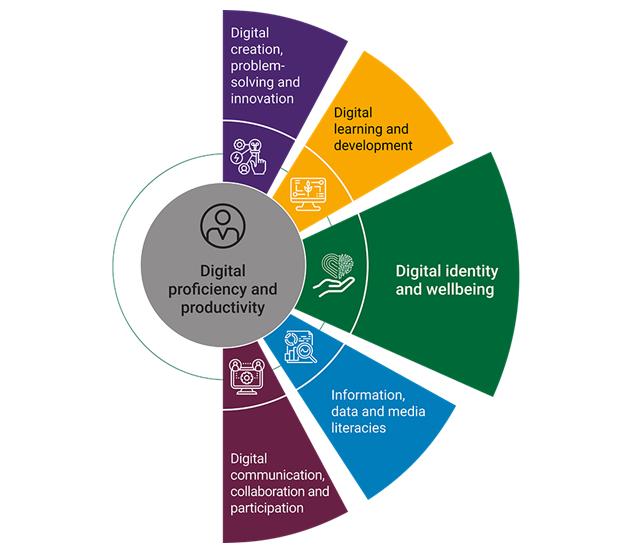
About the framework
What it means to be digitally capable will vary for each person. It will depend on the requirements of their role, their subject specialism, career choice, personal and other contextual factors. The Jisc Digital capabilities framework looks more closely at what this means for individuals.
Jisc have used this framework to develop a series of role profiles which highlight the digital capabilities that are relevant to particular roles. They used these profiles to create reflective questions in the discovery tool, which is designed to help staff and students reflect on their digital capabilities and identify current strengths and areas for development.
Digital proficiency is the ability you have to use digital devices, networks, applications, software and services
Digital productivity is how you use your digital skills to accomplish tasks
Information literacy is your ability to find, evaluate, organise and share information, whether you are using it for learning, research or professional purposes
Data literacy is how you handle data as a special form of information
Media literacy covers all the ways you receive and respond to messages in digital media
Digital creation is about digital production of content
Digital problem-solving is your ability to solve problems, make decisions and answer questions
Digital innovation describes your willingness to try new practices and look for new solutions with digital technology
Digital communication is any communication using digital media and networks
Digital collaboration is the ability to take part in digital teams and working groups to meet specific goals, using shared tools and media
Digital participation means taking part in a more open-ended way than collaboration, over a longer time, and in a range of different settings
Digital learning is the ability to turn digital opportunities into personal learning gains
Digital teaching is the ability to support and develop others in digital settings
Digital identity is how you develop and project a digital identity – or several identities – and how you manage your digital reputation
Digital wellbeing is about the impact of using digital devices, tools, services and systems on you as a person





