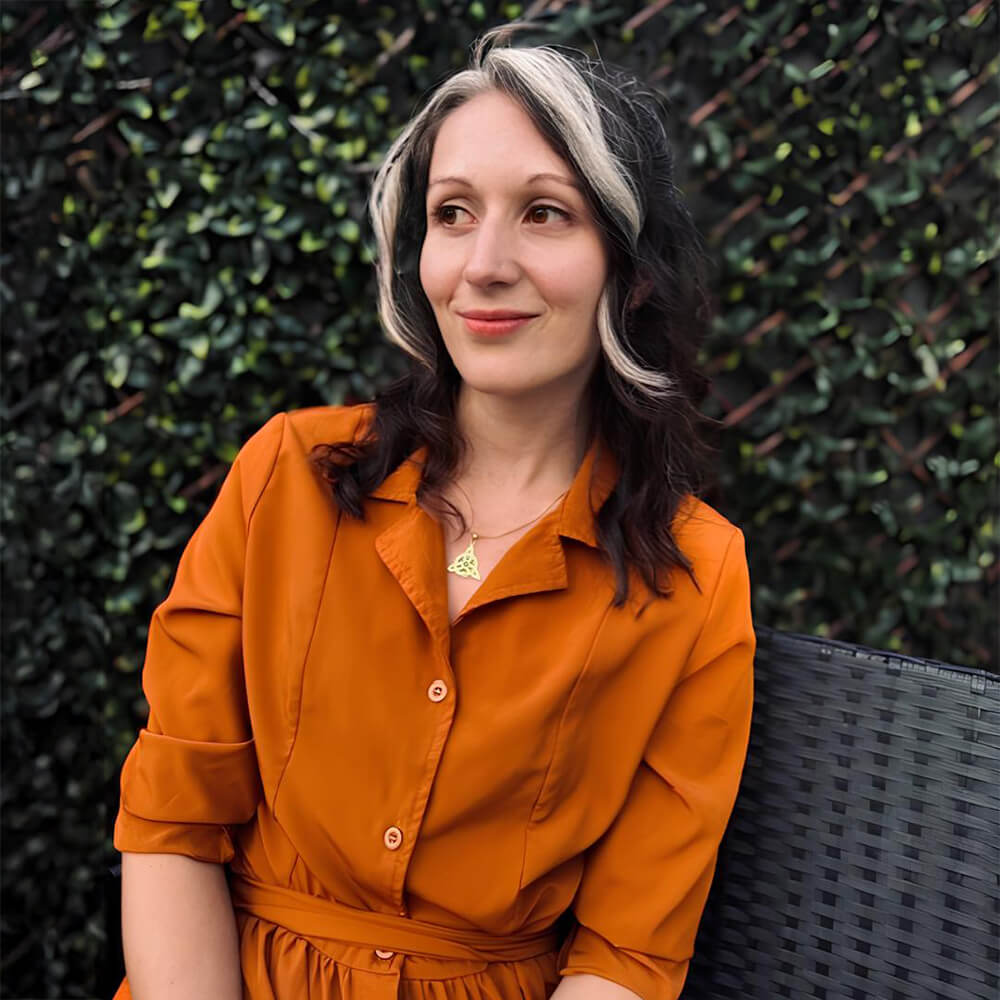
Dr Chloe Bradwell

Research Fellow

Dr Chloe Bradwell is a Research Fellow at the Centre for Dementia Research. Her work focuses on integrating creativity into daily dementia care and fostering community connections for care home residents through co-creation.

Orcid Logo 0000-0002-4368-7610
Chloe Bradwell staff profile image

About

Dr Chloe Bradwell is a Research Fellow at the Centre for Dementia Research. Her work focuses on integrating creativity into daily dementia care and fostering community connections for care home residents through co-creation.

Dr Chloe Bradwell is a Research Fellow at the Centre for Dementia Research. Her work focuses on integrating creativity and play into everyday dementia care and fostering meaningful community connections for care home residents through co-creation.

Chloe has worked with people living with dementia for over a decade. Her research builds on her previous experience as a wellbeing manager in dementia care homes, where she developed a strong commitment to enhancing quality of life through creative engagement. Her work places particular emphasis on people in the later stages of dementia.

Chloe is currently leading an NIHR-funded study exploring the impact of intergenerational practices with nursery children on care home residents with dementia, alongside an AHRC-funded project examining how care home staff and artists can collaborate to embed creativity into everyday care practices.

Research interests

Chloe has a particular interest in intergenerational care, co-creative practices and in developing methods to better include people in later stages of dementia in research.

Publications (3)

Sort By:

Journal article
(not) lovely: Enacting solidarity in dementia care through participatory Arts
Featured 07 August 2025 Journal of Aging Studies75:1-8 Elsevier BV

This article considers how artists can help highlight the value of negative emotions for care home residents living with dementia. It continues the discussion on arts and health in dementia care by looking at wellbeing beyond mere individual happiness and considering sadness as an integral part of it. This study focuses on Entelechy Arts, a participatory arts company creating cultural programmes for isolated older adults and those in care environments. Focusing on a specific interaction from their Walking Through Walls programme, this article offers a thick description and theoretical analysis of how the creative practitioners fostered solidarity among artists, residents, and staff by validating a resident's feelings of sadness and anger through kinaesthetic attunement. The study argues that by attuning to negative emotions, artists can challenge notions of utopian happiness. This counters the idea that negative emotions must be suppressed to promote wellbeing and enact solidarity as a collective and activist act of care. This is critical in the context of care home residents living with dementia, for whom negative feelings are often interpreted as challenging behaviours that can lead to medication and isolation. Instead, this paper suggests that artists can help re-frame such behaviours as important relational acts that challenge the normalisation of oppressive institutional systems.

Journal article

Co-creating resilience with people living with dementia through intergenerational arts

Featured 02 January 2021 Research in Drama Education: The Journal of Applied Theatre and Performance26(1):137-152 Informa UK Limited

This article considers how intergenerational arts can help support the resilience of people living with dementia. Theorising a moment of process from Magic Me’s Reflections of Stepney, it analyses how art facilitators help a child and care home resident to overcome the challenge of relating and create a performance together. It particularly considers the possibilities offered by touch as a way for participants to connect. It argues that a creative process which focuses on a physical relationship can help facilitate resilient responses in the co-creation of meaningful relationships between participants living with and without dementia.

Journal article
The Value of Playwork for Care Home Residents Living With Dementia: A Pilot Study
Featured 02 August 2025 Dementia25(3):1-20 SAGE Publications

Playwork is a profession that focuses on enabling and enriching children’s play experiences, creating a space for spontaneous, self-directed play. The application of playwork principles to dementia care holds promise and resonates with a relational approach to care. However, this area of practice has not yet been explored. This study aimed to explore if and how playwork approaches could be applied with people living with dementia and their impact on residents and those delivering the programme. A five-week playwork programme, delivered by undergraduate playwork students and lecturers, was piloted in a care home, with residents living with dementia. Interviews were conducted with care home staff, students, and playwork lecturers, and reflective diaries of the playwork sessions were maintained by students and lecturers. The findings indicate that playworkers can feasibly adapt their approaches so they are appropriate for older adults living with dementia. Playworkers can encourage agency and support free expression and exploration for residents. The sessions were perceived as having a positive impact on residents’ emotional wellbeing, sense of recognition, social interaction, and engagement, as well as on some staff members’ assessments of residents’ abilities. The study also highlights the crucial role of care staff expertise during the sessions, particularly in addressing the medical and physiological needs of residents. However, engaging care staff proved challenging, resulting in a lack of continuity after the project concluded.

Grants (3)

Sort By:

Grant

Embedding creativity in a dementia care home:piloting and evaluating an artist-in-residency project using qualitative and creative methods

Arts and Humanities Research Council - 01 May 2026
Dementia is one of the most pressing challenges facing health and social care in the UK. Over 440,000 people live in care homes, and around 70%experience dementia or memory problems. Alongside the medical and physical demands of care, residents and staff also face challenges around communication, connection, and wellbeing. Many residents experience loneliness, distress, or anxiety, while staff often feel over-stretched andunder-supported. These pressures contribute to high workforce turnoverand a system that struggles to meet rising demand. There is strong evidence that creative engagement can improve quality oflife for people living with dementia. The arts can help residents expressthemselves, connect with others, and reduce feelings of isolation. However,most arts programmes in care homes are short-term, externally deliveredsessions—visiting workshops that do not become part of everyday care.Once these projects end, the benefits are often lost. Staff may feel thatcreativity is something “extra” rather than a tool they can use in their dailywork. This project will pilot a new approach: embedding an artist directly into thedaily life of a care home for a full year. Rather than delivering workshops,the artist will work alongside staff—care workers, nurses, cleaners, cooks,and managers—to bring creativity into ordinary routines such asmealtimes, personal care, and informal conversations. The artist will notreplace staff expertise but will help unlock creative ways of working thatstrengthen relationships, improve communication, and support wellbeing. The research team will work closely with residents, families, staff, andartists to evaluate how this embedded model works in practice. They willobserve everyday interactions, hold focus groups and creative workshops,and co-design practical tools that make creativity sustainable beyond thelife of the project. Importantly, the study is designed in partnership withpeople living with dementia and care staff, ensuring it reflects their livedexperience and responds to real needs. The aims are threefold: 1. To test an embedded artist-in-residency in a dementia care home andmeasure its impact on residents and staff. 2. To co-design a training model for artists and care staff that can bereplicated in other homes. 3. To create a strategy for scaling creativity-integrated care across the widersector. The potential benefits are significant. For residents, creativity can providejoy, expression, and comfort, reducing distress and enhancing dignity. Forstaff, creative tools may boost confidence, job satisfaction, and resilience,helping to reduce burnout in a sector facing severe workforce shortages.For society, the project offers a pathway to more humane, relationship-centred care, particularly in rural areas where cultural opportunities are often limited. The outputs will include a training guide, a short illustrated film, and sectorengagement events. These will provide practical resources for careproviders, policymakers, and creative organisations, showing howcreativity can be woven into everyday care. The findings will alsocontribute to international debates on creative health and dementia,supporting the UK’s role as a leader in innovative care. Ultimately, this project seeks to reimagine creativity not as an optionalextra, but as a vital part of care. By embedding it within daily life, theresidency has the potential to transform how we support people living withdementia—making care more compassionate, sustainable, and connected.
Grant

Exploring the impact of intergenerational practices on residents with dementia

NIHR - 01 March 2026
Background Care homes (CHs) with a co-located and adjacent children’s nursery/pre-school children’s groups are expanding in the UK. However, research on intergenerational (IG) interactions between people living with dementia (PLWD) and nursery-age children in these settings is scarce. Early studies and stakeholder consultations reveal mixed outcomes for PLWD. These studies often overlook the diverse needs of people with advanced dementia and rarely consider how broader social and cultural contexts impact IG experiences. Aim To understand the experiences, impacts, and best practices of IG work in CHs with co-located nurseries, on-site pre-school groups or regular IG activities with pre-school children, for people living with all severities of dementia to share best practices and develop recommendations for good practice. Objectives 1. Explore the nature and extent of IG activities between residents living with different degrees of dementia and children in care homes, focusing on understanding who is involved, when and how, the nature of activities and interactions, and the physical, social and cultural environment in which they occur. 2. Examine the role of care and nursery staff/pre-school group facilitator in facilitating IG interactions and identify barriers, enablers and best practices to implementing IG practices in co-located sites. 3. Investigate the impact of co-located nurseries, pre-school groups and associated IG activities on PLWD and other participants, including PLWD who do and do not actively take part. Methods Focused ethnographic case studies in 3-6 sites will explore experiences of living in an IG co-located CH for PLWD, including aspects that work well and aspects that could be improved. This will include: • Focused observations • Semi-structured interviews with up to 30 participants including CH and nursery staff, residents, and family members of children and residents • Creative approaches (collage and aligned visual arts) for up to 16 participants, including children from pre-school age and residents with advanced dementia to support their participation • Analysis of resident care plans, activity schedules, and training materials Data analysis will be ongoing and iterative, using reflexive thematic analysis to identify patterns and themes within the data. Preliminary findings will be shared with participants at two key check-in points during data collection and analysis for feedback.
Grant

Developing research skills for enhancing staff practice in dementia care through arts-based approaches

NIHR - 01 September 2025
This award supports the development of skills to design a study to explore how artists could collaborate with care professionals to enhance person-centred care for residents with advanced dementia using Realistic Review (RR) and Participatory Action Research (PAR).
{"nodes": [{"id": "29151","name": "Dr Chloe Bradwell","jobtitle": "Research Fellow","profileimage": "/-/media/images/staff/dr-chloe-bradwell.jpg","profilelink": "/staff/dr-chloe-bradwell/","department": "School of Health","numberofpublications": "3","numberofcollaborations": "3"},{"id": "22817","name": "Nicky Everett","jobtitle": "Senior Lecturer","profileimage": "/-/media/images/staff/nicky-everett.jpg","profilelink": "/staff/nicky-everett/","department": "School of Health","numberofpublications": "9","numberofcollaborations": "1"},{"id": "2711","name": "Michael Wragg","jobtitle": "Senior Lecturer","profileimage": "/-/media/images/staff/mike-wragg.jpg","profilelink": "/staff/michael-wragg/","department": "School of Health","numberofpublications": "10","numberofcollaborations": "1"}],"links": [{"source": "29151","target": "22817"},{"source": "29151","target": "2711"}]}
Dr Chloe Bradwell
29151
login